This site is supported by our readers. We may earn a commission, at no cost to you, if you purchase through links.

A snake’s water bowl can cause trouble faster than most owners expect. Too deep, and a small snake may struggle to drink without dipping its head too far, tip the bowl while climbing out, or avoid it altogether. Too shallow, and the soaking benefit that aids hydration and shedding is lost. That’s why the question of how deep a snake’s water bowl should be isn’t trivial—it’s a safety decision.
The right depth depends on factors like body width, age, species, and bowl shape. A few small adjustments can transform routine care into a preventable problem overnight.
Table Of Contents
Key Takeaways
- A snake’s water bowl should be shallow enough for easy drinking and safe exit, because a bowl that is too deep or narrow raises the risk of stress, spills, and accidental submersion.
- A good general guide is about 0.5–1 inch for hatchlings, 1–2 inches for most snakes, around 1–1.5 inches for medium adults, and 2–2.5 inches for larger adults.
- The safest hard rule is to never make the water deeper than half of your snake’s body width at its thickest point, and to adjust the bowl as the snake grows.
- Wide, shallow, stable bowls made of ceramic or stainless steel and cleaned daily are safer than deep, slick, or plastic bowls, especially during shedding when snakes may soak more often.
Why Water Bowl Depth Matters
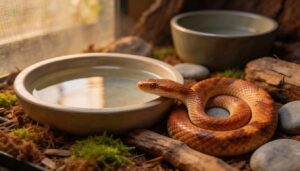
Water bowl depth affects more than comfort; it changes how easily your snake can drink, soak, and get back out safely. If the bowl is too deep, too narrow, or hard to climb from, small problems can turn into stress, spills, or real risk.
This guide to the right snake water dish depth shows how safer sizing prevents stress, spills, and soaking problems.
A snake’s water bowl should be shallow and easy to escape, because poor depth can quickly turn comfort into danger
The next points show what proper depth does for daily hydration, shedding, and overall enclosure safety.
Drinking Access Without Forced Submersion
Think about what happens when a snake has to dip its entire snout underwater just to get a sip — that’s a drowning hazard waiting to happen.
Proper guidelines for snake water bowl depth prioritize surface tension access, meaning rim height and bowl angle should let your snake drink without full submersion. Edge lip design and water temperature both influence how confidently your snake approaches the bowl.
Safe Soaking During Shedding
If drinking shouldn’t force submersion, shedding shouldn’t either. During pre-shed and shed soaking behavior, follow guidelines for snake water bowl depth and temperature control:
- shallow warm water, 77–82 F
- Soak duration: 10–20 minutes
- Post-soak care: let loosened skin release naturally
That balance shows the impact of water depth on shedding while preventing drowning hazards in reptile enclosures during tough sheds.
Hydration Support and Stress Reduction
After soaking, your snake should return to calm and easy access. Proper water bowl depth helps steady drinking, protects breathing posture, and makes the bowl feel usable instead of being risky, which improves hydration.
| Cue | Benefit | Reason |
|---|---|---|
| Room Temperature Water | calm use | comfort |
| Water Temperature Stability | hydration needs | met |
| Low Noise Environment | Gentle Lighting | stress reduction |
| Predictable Routine | bowl stability | spill prevention |
Drowning and Tipping Risks From Excessive Depth
Calm access matters, but excessive water bowl depth changes the risk picture fast. In deep water bowls, Submerged Head Risk rises, Escape Angle shrinks, and drowning hazards increase, especially during shedding.
A wider Surface Area Ratio improves tipping prevention, lowers Spill Momentum, and raises the Tipping Threshold. Keep bowls shallow enough for safe exits, never beyond mid-body width for safety.
How Deep Should a Snake Water Bowl Be?
There isn’t one perfect water depth for every snake, because size, age, and body width all matter. The safest setup is usually shallow enough for easy drinking and soaking, without making exit difficult.
Here’s a simple depth guide to help you match the bowl to your snake.
Hatchlings: About 0.5 to 1 Inch
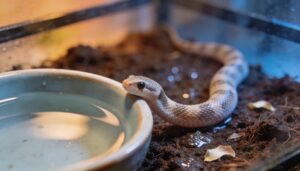
- Keep hatchling water depth at 0.5–1 inches.
- Limit drowning risk; prioritize bowl stability.
- Support Growth Monitoring and Feeding Frequency with daily checks.
- Maintain a safe Temperature Gradient and Humidity Stability nearby.
- During Early Shedding, refresh water daily for bacterial contamination prevention. If the dish forces head submersion, it’s too deep for a newborn body size.
Remember to perform daily visual inspections to catch early health issues.
Most Snakes: About 1 to 2 Inches
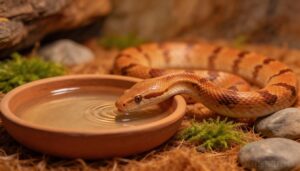
Most snakes do best with 1 to 2 inches of water bowl depth, a practical middle ground. Proper water depth for snakes depends on Species-specific depth, Temperature influence, and Rim angle design.
This guide to why snakes soak in their water bowls also helps you match bowl size, depth, and stability to your snake’s needs.
Use Hydration monitoring and Behavioral cues to judge comfort.
This fits Snake water dish safety guidelines and reduces the Impact of bowl depth on snake drowning risk well.
Medium Adults: About 1 to 1.5 Inches
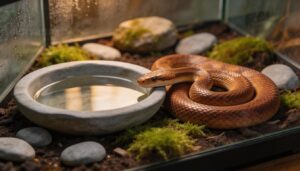
Usually, for an adult medium snake, aim for 1 to 1.5 inches of water depth, even though the broader range is 1 to 2 inches. That water bowl size facilitates drinking, light soaking, and easy exit, which matters for snake water dish safety guidelines.
Use Behavioral Observation, Health Monitoring, Enclosure Humidity, Seasonal Adjustments, and Lighting Impact to fine-tune it safely.
Larger Adults: About 2 to 2.5 Inches
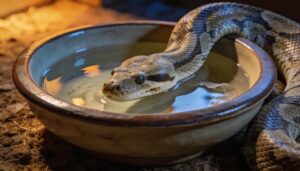
Think of it as a shallow bath, not a bucket: for an adult large snake, aim for 2 to 2.5 inches of water bowl depth. That range allows drinking and shed-time soaking without raising safety risk.
Keep Rim Height low, prioritize Bowl Weight and bowl stability, use water bowl size, monitor Water Temperature, Behavioral Observation, and Thermal Placement.
Never Deeper Than Half The Snake’s Body Width
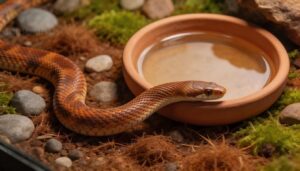
There’s one rule that overrides everything else: water bowl depth should never exceed half your snake’s body width. Measure at the thickest mid-body point and use that number as your hard cap.
Owner awareness here is non-negotiable — as your snake grows, recalculate. Proper water bowl safety means the bowl stays shallow enough for safe exits, preventing accidental submersion and respiratory distress.
Wide and Shallow is Safer Than Deep and Narrow
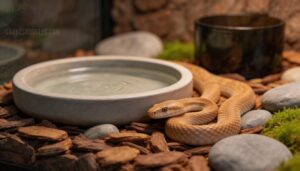
A wide, shallow bowl is the safer design—full stop. Aim for one to three inches, shallow enough for safe exits, with a wide base for stability.
Compared with a bowl 13 inches deep, it improves Temperature Regulation, Improved Airflow, Enhanced Visibility, Simplified Monitoring, and Reduced Bacterial Growth. That makes your risk assessment of water dish depth much easier daily.
What Changes The Ideal Depth?
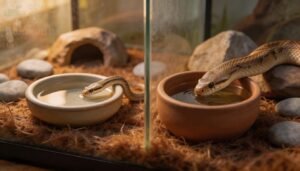
The right depth isn’t one-size-fits-all, because your snake, its habits, and the bowl itself all change the answer. setup that works for one species or life stage can be risky for another.
factors below will help you match the bowl depth to your snake and enclosure.
Snake Size and Growth Stage
Because snakes outgrow bowls, Growth stage adjustments to water bowl size should track body length, bowl diameter, and bowl depth, not age alone, as it matures.
- Hatchling Size Benchmarks: 0.5-1 inch.
- Juvenile Growth Spurts need checks.
- Growth Rate Factors change water capacity.
- Adult Size Limits need larger bowls.
- Seasonal Growth Variations can shift Guidelines for water capacity based on snake size.
Species That Drink More Than They Soak
As growth changes bowl size, drinking-first species need a modest water bowl depth, not a bathtub. Like Desert Camels or other Water-Intensive Species built around hydration needs, these snakes prioritize drinking over soaking, so follow water bowl size guidelines and species-specific water requirements for calm, safe access.
| Pattern | Guide |
|---|---|
| High-Volume Reptiles | shallow drinking |
| Large Mammal Hydration / Aquatic Mammal Drinking | not snake models |
Species That Soak More Often
By contrast, Semi-Aquatic Species and High Humidity Snakes show stronger soaking behavior. Moisture-Loving Reptiles often follow Seasonal Soaking Patterns and use Thermoregulatory Soaking to cool down.
That shifts water bowl depth, plus water bowl placement and microclimate control.
Match species-specific water requirements for common pet snakes to hydration and soaking requirements for reptiles, not guesswork, in a deeper, wider dish.
Extra Soaking Needs During Shedding
- Water Temperature Control and Shed Skin Softening help longer, calmer soaks during sheds.
- Humidity Microclimate Management facilitates Humidity management using water bowls.
- Match Shedding Cycle Timing to Water Surface Area and species-specific water requirements.
- The Impact of water depth on shedding is immediate.
- Therapeutic soaking methods for dehydrated corn snakes show the Impact of water bowl size on snake health.
Body Width, Coiled Size, and Bowl Shape
Because body shape changes how water sits around your snake, use Body Width Proportion, coiled width, and midbody girth to set bowl depth. Good bowl shape depends on Coil Diameter Fit, bowl diameter, Bowl Width Ratio, Rim Height Ratio, and Side Angle Gradient.
If the snake must climb to drink or struggles to back out, the bowl is too deep.
How to Keep The Bowl Safe
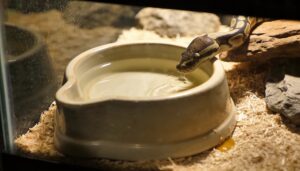
safe water bowl does more than hold water—it lets your snake drink or soak without getting stuck, stressed, or surrounded by spills. Small design choices, like wall shape, base width, and easy entry and exit, matter more than many keepers realize.
points below will help you spot those details before a bowl turns into a problem.
Choose Shallow Sides for Easy Exit
Low Profile Rims, Edge Grip Design, Uniform Shallow Depth, Smooth Rim Flow, and Exit Angle Optimization improve water bowl safety.
The right water bowl depth lets your snake turn and leave quickly, while spillproof edges and stability features to prevent snake escape support risk assessment of water dish depth.
Avoid Steep, Smooth Walls
Choose a bowl with a Gentle wall slope, not slick, vertical sides. A Textured rim, Convex edge, Rounded inner lip, and Non-slip surface give your snake traction to drink and climb out without snout irritation.
Match water depth and bowl size to the animal. Even a stable water bowl with non-slip surfaces and spillproof edges fails if walls are smooth.
Use a Wide Base to Prevent Spills
- Favor a wide base.
- Use Anti Tip Design.
- Add a Non Slip Base.
- Match Base Width Ratio.
These steps improve water bowl stability and spill prevention.
Weighted Base Benefits and Friction Enhancements matter; follow water bowl size guidelines and weight and stability considerations for water bowls, especially with active snakes daily.
Make Sure The Snake Can Enter and Leave Easily
Easy access matters. Match water depth to bowl size guidelines, then give the snake an Entry Ramp, Edge Grip, Clear Exit Space, and Bowl Orientation.
| Feature | Benefit | Fix |
|---|---|---|
| Ramp | entry | slope |
| Anti‑Slip Feet | stability | grip |
Weight and stability considerations for water bowls, plus non‑slip surfaces and a wide base, keep exits smooth. Leave two inches beside the rim; ceramic improves exit traction for snakes overall.
Signs The Bowl is Too Deep for Your Snake
Too-deep bowls announce themselves fast:
- Climbing Effort at the rim.
- Avoidance Behavior despite fresh water.
- Thrashing Movements, slipping, or quick bail-outs.
- Body Entrapment or Belly Dragging on exit.
During snake behavior observation, these signs mean water depth is raising drowning hazards, snake stress, and even skin maceration during repeated soaking. So correct the bowl before your snake starts coping unsafely.
Which Bowl Design Works Best?
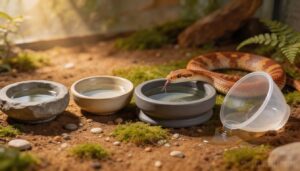
The best snake water bowl isn’t just about depth, because design matters too. Material, shape, and placement all affect how safe, clean, and easy the bowl is for your snake to use.
options below will help you choose a setup that fits both your snake and your enclosure.
Best Materials: Ceramic and Stainless Steel
Balancing function and hygiene, ceramic and stainless steel are my material recommendations for water bowl safety. Both offer strong Bacterial Resistance, solid Weight Stability, and reliable Dishwasher Compatibility.
Ceramic adds Aesthetic Options and steadier Heat Conductivity, helping water stay cooler. Match them to water bowl depth and water bowl size guidelines, and your snake gets safer, cleaner access every day.
Why Plastic is a Poor Choice
That same safety margin disappears with plastic reptile water bowls. Plastic harbors pathogens in Bacterial Scratches, raises Chemical Leaching concerns, and can shed fragments through Microplastic Release. Add: Heat Deformation near warm enclosures, poorer plastic water bowl safety, and real Environmental Impact.
For Materials safety for reptile water bowls, avoid plastic; chemical leaching is reason enough for most keepers anyway.
When Glass Can Become a Hazard
After plastic, glass dishes may look cleaner, but Glass Breakage Risks are real. Edge Chip Injuries, Tip Over Hazards, Temperature Stress Cracks, and poor Hidden Cracks Detection can turn a routine bowl into a hazard.
For water bowl safety, follow water bowl depth and water bowl size guidelines closely, because damaged glass raises drowning hazards and cut risk fast, unexpectedly.
Wide, Shallow Bowls for Better Access
Instead, choose a wide, shallow dish with low Rim Height, a gentle Edge Slope, and a Non-slip Base. That setup improves Water Visibility, helps Humidity Regulation, and keeps water depth easy to manage.
Good water bowl size guidelines favor a wide base and smart water bowl placement, because better access usually means better water bowl safety for your snake overall.
Daily Water Changes and Weekly Deep Cleaning
Usually, daily water changes are your first defense against bacterial contamination, especially when water bowl depth traps shed flakes and substrate. Good Spot Cleaning Practices support Water Quality Monitoring and steady water quality.
Pair that with weekly deep cleaning, strict Cleaning Schedule Consistency, and proper Disinfectant Contact Time for real Bacterial Growth Prevention, not just a quick rinse each week.
Cool-side Placement to Support Clean, Usable Water
Because placement changes cleanliness, keep the bowl on the cool side of the terrarium, where Sunlight Blocking and Airflow Separation improve Temperature Stability.
Good water bowl placement and microclimate control also increase Substrate Waste Distance and facilitate Escape Path Placement, so water bowl depth stays usable, bacterial contamination slows, and water quality monitoring becomes simpler, faster, and more reliable for you.
Frequently Asked Questions (FAQs)
How deep should my snakes water bowl be?
Keep the water one to three inches deep, but never deeper than half your snake’s body width.
shallow bowls improve Water Quality, aid Monitoring Hydration, reduce bacterial contamination, and help prevent drowning in reptile enclosures.
What water temperature is safest for snakes?
Safest water temperature is lukewarm: room temperature for drinking, 84–87°F for Lukewarm Soaking.
Temperature Monitoring for Cold Shock Prevention and Overheating Avoidance, with Enclosure Temperature Alignment to support thermal regulation within the proper thermal gradient.
Should I use dechlorinated or distilled water?
Pure isn’t always practical: choose dechlorinated water over distilled water for Chlorine Removal, Mineral Retention, Water Conductivity, and Health Impact.
It wins on Cost and Availability; good water quality limits bacterial growth and water contamination.
How can I tell if my snake is dehydrated?
Watch for a failed Skin Elasticity Test, sunken Eye Appearance, poor Shedding Quality, dark Urine Color, and low Activity Level.
Those signs suggest dehydration, even when water bowl size and hydration needs seem correct otherwise.
Can frequent soaking signal a husbandry problem?
Like a canary in a coal mine, frequent soaking can signal a husbandry problem: Humidity Imbalance, Temperature Mismatch, Hygiene Concerns, Infection Risk, or Behavioral Stress Signals.
Check pre-shedding behavior, hydration signs, and water-bowl microclimate control.
What bowl diameter fits my snake best?
Match the bowl’s interior diameter to your snake’s coiled width.
A three-foot snake fits a six-to-eight-inch bowl; a five-to-six-footer needs ten to twelve inches, allowing comfortable soaking without crowding the enclosure.
Conclusion
Finding the perfect water bowl depth is critical, just like choosing the right food or habitat. A bowl that’s too deep can be deadly, while one that’s too shallow can cause dehydration.
So, how deep should a snake water bowl be? It depends on your snake’s size, species, and needs. Generally, a depth of 1-2 inches is safe for most snakes.
By prioritizing your snake’s safety and understanding its needs, you’ll guarantee a happy, healthy pet.