This site is supported by our readers. We may earn a commission, at no cost to you, if you purchase through links.
Most keepers change their snake’s water when it looks dirty. The problem is that contamination starts long before the water looks wrong. Saliva breaks down within hours, and bacteria multiply rapidly in a warm enclosure—sometimes doubling every 20 minutes. By the time the water turns cloudy, your snake has likely been drinking from a compromised dish for days.
Knowing the signs a snake’s water dish needs cleaning means catching problems early, before your snake avoids the bowl entirely or absorbs pathogens through soaking. The signals are specific, observable, and worth knowing cold.
Table Of Contents
Key Takeaways
- Bacteria double every 20 minutes, meaning the water is already compromised long before it looks cloudy or smells off.
- Cloudy water, slimy bowl walls, floating debris, and ammonia-like odors are concrete warning signs that demand cleaning within 24 hours — not at your next scheduled change.
- Your snake’s behavior tells the truth: prolonged soaking, avoidance of the dish, or restless circling near the bowl all signal the water has gone bad.
- Daily full water changes, weekly scrubbing with a nylon brush, and monthly disinfection with a bleach soak (6 minutes minimum contact time) form the baseline that keeps your snake safe.
Visible Signs of Dirty Snake Water
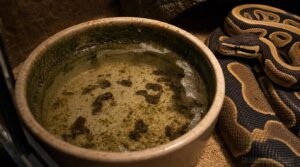
Your snake’s water dish tells you when it’s done — you just have to know what to look for. Most warning signs are right there in plain sight, no guesswork needed.
If you’re not sure what "dirty" even looks like, this guide to snake water dishes breaks it down with clear, beginner-friendly examples.
Here are the five visible red flags that mean it’s time to clean.
Cloudy, Murky, or Discolored Water
Most cloudiness tells you something specific. Air Bubble Clouding clears within minutes — not a threat. However, Suspended Particle Turbidity, Tannin Brownness, or a Metallic Rust Tint won’t disappear on their own. These are Signs of a Dirty Water Dish demanding action.
Watch for:
- Murky water that stays cloudy after 10 minutes
- Brown or tan discoloration from organic debris
- A reddish tint signaling rust or metal contamination
Do a visual inspection now.
Greenish Tint or Algae Growth
Green water isn’t random — light exposure, warm temperature, and nutrient levels team up quickly. Even a few hours of direct light on standing water can trigger a cyanobacterial bloom within days.
| Cause | What You See | Fix |
|---|---|---|
| Light exposure | Opaque green tint | Reposition bowl |
| Nutrient levels | Biofilm, algae walls | Deep clean immediately |
| Limited circulation | Persistent green hue | Daily water changes |
This is a clear sign of a dirty water dish. Act now.
Floating Shed Skin, Substrate, or Feces
Algae isn’t your only visual cue. Look for shed skin layers breaking into translucent shedding flakes on the surface, substrate fiber float adding fine threads you’ll easily miss, and feces surface film spreading as dark, opaque patches.
Watch for:
- Debris clump formation along the bowl edge
- Waterline residue that recontaminates fresh water
- Cloudy water from dispersed fecal particles
Spot-clean immediately.
Black or Red Specks From Mites
Floating debris isn’t the only thing hiding in plain sight. Tiny black or red specks along the bowl’s edge often signal a mite infestation. These dots follow a predictable mite feeding cycle — nearly invisible before feeding, then darkening through a color change mechanism as they ingest blood.
Mites favor edge habitat preference spots and are most active at night. Spot-clean within 24 hours of spotting them to address the issue promptly.
White Calcium or Limescale Deposits
Hard water sources—like standard tap water—leave chalky white deposits behind as water evaporates or heats up in warm environments. Temperature influence accelerates this buildup significantly. Spot it early with these cues:
- White crust forming along the rim
- Rough, gritty texture inside the bowl
- Cloudy water sitting above heavy scale
Try the vinegar soak technique: submerge the bowl in white vinegar for 10 minutes, then scrub and rinse. Switching to distained water usage prevents future buildup entirely. For long-term water quality management, stainless steel vs. plastic bowls matters—plastic scratches more easily, trapping deposits. pH control of your water also helps; alkaline tap water accelerates scaling noticeably.
If you want a deeper clean beyond the bowl itself, this guide on deep cleaning a terrarium with vinegar and safe scrubbing methods walks through the full process step by step.
Smells That Signal Immediate Cleaning
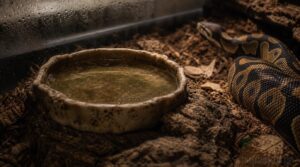
Your nose can catch problems your eyes might miss. Smell is one of the fastest ways to know your snake’s water has gone bad — and some odors mean clean it now, not later.
Here’s what to watch for.
Musty Odors From Stagnant Water
That earthy, basement smell rising from your snake’s bowl isn’t random — it’s anaerobic decay at work. When water sits still, dissolved oxygen drops, triggering microbial gas release and producing that unmistakable musty odor.
Small water volumes foul rapidly, especially with temperature acceleration in warm enclosures. Humidity condensation around the dish exacerbates the issue, creating ideal conditions for decay.
Don’t ignore early warnings: cloudy water and bad odor signal urgent water quality management needs.
Sour Smells From Bacterial Growth
A sour smell coming from the bowl means bacteria are already busy. Volatile fatty acids — produced when microbes break down waste — are the culprit. Pseudomonas grape odor mixes into this bacterial gas mixture, making it easy to detect.
Warm moisture boost accelerates biofilm buildup fast.
Daily water change is your best odor mitigation strategy before bacteria multiply further.
Sharp Ammonia-Like Odors
That sharp, stinging smell hitting your nose isn’t subtle — it’s ammonia volatilization doing exactly what it’s designed to do: alert you. Nitrogen waste breaks down rapidly in standing water, releasing compounds that trigger an irritating nasal sensation within seconds. Treat this as an urgent cleaning trigger, not background noise.
Watch for these critical odor detection cues:
- Water smells like cat urine or cleaning products
- Fumes sting your eyes or throat when leaning close
- Odor appears within hours of a water change
- Sharp smell lingers even after removing visible debris
- Ammonia returns quickly after rinsing — biofilm is holding the source
This poses a direct human health risk. Act immediately.
Odors That Persist After Rinsing
If rinsing didn’t fix the smell, the bowl itself is the problem. Plastic shows material absorption fast — odor molecules embed into micro-scratches and re-release once moisture returns.
Mineral film from hard water locks in biofilm the same way. High enclosure humidity slows evaporation, trapping volatile compounds longer.
Algae spore persistence and cleaning residue buildup make this worse.
Switch to diluted bleach and air-dry completely.
When Smell Indicates Deep Cleaning is Needed
If the smell returns within hours of cleaning, hidden microbial growth is already embedded—not floating freely in the water. Biofilm, cumulative waste buildup, and material odor retention all work together as odor control fails.
Temperature-driven odor gets stronger fast in warm enclosures. That’s your cue to deep-clean the bowl now. Don’t wait for the weekly deep-cleaning cycle.
Biofilm and Bowl Surface Warning Signs
Sometimes the warning signs aren’t in the water — they’re on the bowl itself. Biofilm, scratches, and surface damage can quietly harbor bacteria even after you’ve done a rinse.
Here’s what to look for on the bowl’s walls and floor.
Slimy Pink or Orange Film
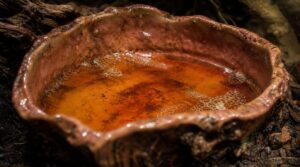
That pinkish-orange slime coating your bowl isn’t random — it’s Serratia marcescens, a bacteria that produces a reddish pigment called prodigiosin. Moisture-driven growth develops rapidly when organic residue like shed skin or waste sits in standing water.
Watch for these four signs:
- Slimy film clinging to bowl walls
- Pink, peach, or salmon discoloration
- Slippery texture that won’t rinse off easily
- Color shifting to orange-red near the edges
Biofilm resistance makes it difficult to remove without disinfection.
Slippery Bowl Walls or Floor
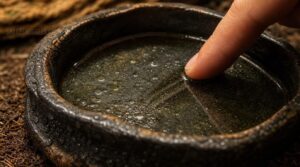
That biofilm doesn’t just look bad — it makes the bowl genuinely slippery. Edge leakage leaves mineral scaling along contact points, while condensation film coats the exterior without any visible spill. Grease transfer from enclosure floors and cleaning residue from partial rinsing compound the problem.
Run your finger along the bowl floor. If it slides, spot-clean immediately — nonporous surfaces shouldn’t feel slick between clean rinse water dish cycles.
Rough Texture Inside The Dish
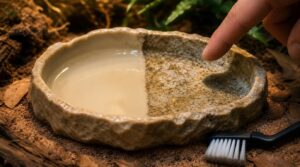
Slipperiness fades once you rinse well — but rough texture is a different problem entirely. Glaze imperfections and mineral deposits increase surface area, giving biofilm more places to anchor.
Run your fingertip inside the bowl; grit means trouble. Use an angled brush technique to reach micro-crevices.
Track texture durability through regular surface integrity checks, since material fatigue signals replacement time.
Scratches That Trap Bacteria
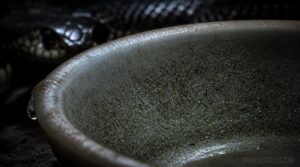
Rough texture is bad — but scratches are worse. Scratch geometry creates micro-channels where bacterial shape fit determines survival: rod-shaped bacteria wedge into narrow grooves and resist complete rinsing. That’s surface micro-roughness working against you.
These become biofilm nucleation sites, building disinfection resistance over time. Run your nail across the bowl interior. Any catch means material integrity checks are overdue.
Cracks, Chips, or Permanent Stains
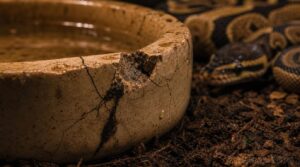
Cracks and chips are structural failures, not merely cosmetic. A chip wider than a few millimeters compromises material durability and exposes porous substrate, allowing permanent stains to penetrate.
Thermal stress from enclosure lighting deepens both issues over months. Regularly check material integrity during inspection cycles.
Replace the bowl immediately when cracks reach the rim or chips sharpen. Stainless steel outlasts plastic and withstands repeated disinfection better.
Snake Behavior Around Dirty Water
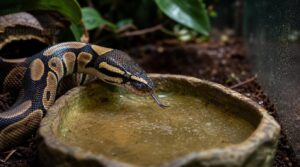
Your snake can’t tell you the water’s gone bad — but it’ll show you. Watch how it acts around the dish, and you’ll catch problems before they turn into vet bills.
Choosing the right dish helps too — safest water bowl materials for snakes like stainless steel and glazed ceramic resist the bacterial buildup that turns clean water foul fast.
Your snake cannot speak, but its behavior around the water dish will always tell you the truth
These five behaviors are your clearest early warning signs.
Unusual Long Soaking Sessions
Most snakes soak occasionally — but when yours is camped in the bowl for hours on end, that’s hydration stress talking. Dirty water triggers this. Metabolite accumulation, biofilm buildup, and cloudy water all drive snakes to seek relief through soaking.
Think of it as your first real signal for water quality management in enclosures. Change the water immediately.
Snout Pushing Near The Bowl
Watch your snake’s snout — repeated pressing along the bowl rim signals poor water quality. This behavior transfers residue, shed skin, and debris onto the waterline ring, accelerating biofilm buildup. The roughness of the lip traps particles even after rinsing, while surface waves keep cloudy water stirred and murky.
Effective water quality management in enclosures begins with preventing biofilm buildup. This requires recognizing residue transfer and actively monitoring water clarity and odor as critical health indicators.
Agitation Around The Water Dish
Restless circling or repeated pushing at the bowl isn’t random — it’s your snake telling you something’s wrong. Agitation stirs up debris, accelerates biofilm mixing, and muddies water clarity fast.
Bowl edge design and weighted bowl solutions reduce this cycle. Pair them with anti-slip mats and smart enclosure placement strategy to cut daily disturbance, protect hydration balance, and support your snake’s overall health.
Reduced Drinking or Avoidance
A snake that won’t drink is waving a red flag. Water aversion cues—like hovering near the bowl without drinking—signal contaminated water or stress-linked thirst. Watch for these dehydration indicators:
- Dry, wrinkled scales
- Sunken eyes
- Prolonged avoidance of the dish
- Seeking hydration alternatives like wet substrate
Daily water changes cut bacterial load and prevent reduced intake from escalating into a health crisis.
Visible Mites on The Bowl Edge
Tiny white specks crawling the bowl rim aren’t debris — they’re snake mites. The rim moisture cycle creates a perfect breeding ground, where edge residue accumulation keeps conditions damp. Use this mite identification guide to act fast:
| What You See | What It Means |
|---|---|
| Pale specks near rim | Active mites present |
| Residue at water line | Edge residue accumulation |
Targeted rim cleaning with a bleach solution beats the heat vs. chemical methods debate — bleach wins. Daily cleaning stops mite eggs before reinfestation starts.
When to Clean The Water Dish
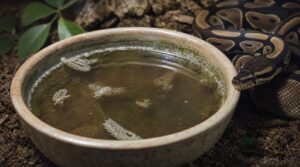
Knowing the signs is only half the job — acting on them at the right time is what keeps your snake safe. Cleaning on a schedule beats waiting for something to look or smell wrong.
Here’s exactly when you should be cleaning that water dish.
Daily Water Change Routine
empty the bowl completely — don’t just top it off. Old water carries saliva, shed particles, and invisible microbial buildup.
Your Daily Water Change Routine keeps that slate clean before problems start.
- Match fresh water to enclosure temperature for consistency
- Refill immediately after emptying — don’t let the bowl sit
- Check clarity while pouring; cloudiness means clean first, refill second
Spot-Cleaning Within 24 Hours
Daily changes buy you time — but not always enough. When you spot debris, discoloration, or a sour smell, don’t wait for tomorrow’s routine.
Rapid debris removal within 24 hours keeps bacterial load reduction on track. Scoop visible waste, do a targeted surface wipe, and do a partial water refresh.
That’s your spot-clean schedule working exactly as intended.
Weekly Deep Cleaning Triggers
Spot-cleaning addresses obvious stuff—but some buildup hides in plain sight. Rim residue rings, tacky bowl interiors, or cloudy water returning within days all signal it’s time for weekly deep cleaning.
Scrub with a nylon brush and food-grade soap to tackle hidden grime. Plasticware, biofilm patches, and multi-snake usage accelerate the need for more frequent cleaning.
Monthly Disinfection Warning Signs
Deep cleaning keeps things tidy, but it won’t replace a proper Monthly Disinfection Protocol. Watch for stain ring persistence along the waterline, bowl seam buildup that survives scrubbing, and biofilm returning within days. These are clear signs of bowl degradation.
Disinfectant residue or reduced contact time signals insufficient soak—your bleach solution needs a full 6 minutes wet on the surface.
More Frequent Cleaning in Humid Enclosures
Humid enclosures demand tighter schedules. Condensation transfer carries organic particles directly into the bowl, and humidity-driven debris accumulates faster than in drier setups.
Shorter water turnover — sometimes every 12 hours — limits biofilm before it grips the bowl surface. Rapid disinfection cycles every 2–3 weeks replace the standard monthly timeline.
Daily cleaning and proper water bowl sanitation protocols reduce the impact of temperature and humidity on bacterial growth, protecting material suitability long-term.
Rotating Bowls for Complete Drying
Rotating two bowls keeps clean water available without rushing the drying process. While one bowl is in use, the other completes a full air-dry cycle — 15 to 30 minutes on a rack with optimized airflow.
- Air-dry the bowl completely before refilling.
- Use materials with coatings that resist water cling.
- Log each cycle for maintenance logging and bearing longevity.
- A two-bowl rotation system ensures a continuous clean water supply.
Frequently Asked Questions (FAQs)
What bowl materials resist bacterial growth best?
Stainless steel wins, hands down. Its non-porous surfaces and antimicrobial alloys resist bacterial growth better than glazed ceramic bowls or plastic bowls.
Add excellent scratch resistance, material longevity, and dishwasher safety — it’s the clear choice.
Can dirty water cause scale rot in snakes?
Yes. Dirty water raises bacterial load on wet scales, and moisture retention prevents skin from drying. That combination drives scale infections fast, especially when biofilm coats the bowl and immune suppression follows.
Watch for early scale rot signs, such as brownish discoloration, to catch the problem promptly.
How does sunlight help after cleaning a bowl?
After rinsing, set the bowl in direct sun. UV sterilization kills surface microbes, accelerated drying suppresses biofilm reformation, algae inhibition kicks in fast, and odor mitigation follows.
Air-dry the bowl completely — 15 minutes minimum — before refilling.
Should multiple snakes share one water dish?
It’s not ideal. Shared bowls raise disease risk and competition stress fast.
For hygiene protocol, each snake needs its own bowl — species compatibility and preventing cross-contamination between multiple snakes matter more than convenience.
How often should plastic water bowls be replaced?
Plastic bowls wear out like old tires — quietly, then suddenly. Replace them every 6–12 months. Scratches, cloudiness, or cracks? Swap sooner. Warm enclosures demand replacement closer to the 6-month mark.
Conclusion
Clean water is your snake’s first line of defense—and the dish is where that defense either holds or breaks down. Knowing the signs a snake’s water dish needs cleaning means you stop problems before they start, not after your snake stops drinking.
Cloudy water, slick bowl walls, odd smells, behavior shifts—each one is a signal worth catching early. Don’t wait for obvious signs.
Change the water daily. Scrub the bowl weekly.