This site is supported by our readers. We may earn a commission, at no cost to you, if you purchase through links.
A corn snake gliding across a student’s desk isn’t a disaster waiting to happen—it’s a lesson worth remembering for life. But that moment goes sideways fast without the right tool in your hand and a clear plan behind it. Snake handling hooks for classroom environments aren’t just safety gear; they’re the difference between a controlled, confidence-building demonstration and a scramble that spooks the animal and the kids.
Getting the hook length, material, and technique right matters more than most educators realize before their first live demo. The specifications of hook length, material, and technique are critical to ensuring both safety and educational value. Without proper preparation, even well-intentioned lessons can escalate into chaotic situations that harm the snake and frighten students.
Table Of Contents
- Key Takeaways
- Choosing Classroom Snake Handling Hooks
- Match Hook Length to Snake Size and Handler Experience
- Use 24–30 Inch Hooks for Small Classroom Snakes
- Choose 35–40 Inch Hooks for General Demonstrations
- Select Longer Hooks for Added Distance and Control
- Compare Aluminum, Stainless Steel, Carbon Fiber, and Polycarbonate Materials
- Prioritize Foam Grips, Balanced Weight, and Non-slip Control
- Avoid Oversized Tools That Reduce Precision in Classrooms
- Top 6 Snake Handling Tools
- Safe Classroom Handling Steps
- Identify The Snake Species Before Any Handling
- Confirm The Snake is Healthy, Calm, and Appropriate for Students
- Avoid Feeding The Snake at Least 48 Hours Before Demonstrations
- Let The Snake Acclimate to Classroom Temperature Before Handling
- Clear Desks, Cords, Bags, and Student Traffic From The Demonstration Area
- Lift The Snake Gently at Mid-body Using Slow Movements
- Keep The Hook Low Over a Secure Surface
- Return The Snake to Its Enclosure Before It Becomes Stressed
- Hooks, Tongs, and Containment
- Use Hooks for Guided Movement and Gentle Support
- Use Tongs Only When Extra Distance or Controlled Restraint is Necessary
- Choose Wide, Smooth Jaws to Reduce Injury Risk
- Pair Tools With Secure Transport Bags or Ventilated Containers
- Keep a Backup Enclosure Ready During Demonstrations
- Store Foldable Hooks Near The Classroom Habitat
- Inspect Cables, Grips, Jaws, and Hook Tips Before Use
- Student Safety and Hygiene Rules
- Set a No-touch Rule Unless Supervised Handling is Planned
- Keep Students Seated and Outside Striking Distance
- Require Handwashing After Any Reptile Contact
- Keep Children Under Five Away From Direct Handling
- Use Gloves, Eye Protection, and Closed-toe Shoes When Appropriate
- Teach Students Not to Grab, Chase, or Crowd The Snake
- Have an Escape-response Plan Before Every Demonstration
- Contact Trained Wildlife Professionals for Unknown or Venomous Snakes
- Frequently Asked Questions (FAQs)
- What is the best snake for the classroom?
- What are the risks of using snake hooks?
- How do I budget for classroom snake hook equipment?
- Can students with snake phobias attend handling demonstrations?
- What certifications should a classroom snake handler hold?
- How often should hooks be replaced or professionally inspected?
- Are there legal restrictions on keeping snakes in schools?
- Conclusion
Key Takeaways
- Match your hook length to both the snake’s size and your experience level — a 24–30-inch hook works best for small classroom snakes, while a 35–40-inch hook gives you the reach you need for snakes up to five feet.
- Always run a pre-demo checklist: no feeding within 48 hours, a 24-hour temperature acclimation period, and a cleared, clutter-free demonstration area before any snake leaves its enclosure.
- Your tool choice shapes your control — hooks guide calm snakes with gentle mid-body support, while tongs stay in reserve for defensive or agitated animals that need extra distance.
- Student safety runs on clear rules: seated observers at least six feet away, a no-touch policy unless supervised, mandatory handwashing after contact, and a practiced escape-response plan ready before the demo begins.
Choosing Classroom Snake Handling Hooks

Picking the right snake hook isn’t complicated, but the wrong choice can make a calm demo go sideways fast. Hook length, material, and grip all matter more than most people expect.
A quick look at beginner snake hook sizing and selection tips can save you from learning those lessons the hard way.
Here’s what to look for before you buy.
Match Hook Length to Snake Size and Handler Experience
Matching your snake hook to both the animal’s size and your own experience level is the foundation of safe handling of snakes. Beginner hook selection usually starts at 24–30 inches—short enough to build real precision. As your confidence grows, mid-level length guidance points you toward 35–40 inches. Think of it as an experience-driven length ratio: your skill and the snake’s size should always scale together.
A longer handle also helps maintain a safe distance, providing a long handle safety advantage.
Use 24–30 Inch Hooks for Small Classroom Snakes
Once you’ve nailed your length baseline, a 24–30 inch snake hook hits the sweet spot for small classroom snakes like corn snakes or ball pythons.
- Keeps your demonstration pacing calm and controlled
- Enables safe handling of snakes without crowding students
- Allows clear visual focus cues for observers
- Protects hook tip and snake skin during lifts
- Guides proper student hand positioning naturally
Choose 35–40 Inch Hooks for General Demonstrations
When your classroom snakes measure 3–5 feet, a 35–40 inch hook provides the ergonomic reach needed without sacrificing precision. Weight distribution is critical—a balanced shaft eliminates the awkward tip-forward feeling during mid-lift.
Look for features like nonconductive coating, a quick release mechanism, and color coding to ensure fast selection during group demonstrations. It is your standard reptile hook sweet spot.
Select Longer Hooks for Added Distance and Control
Once you’ve nailed the 35–40 inch sweet spot, sometimes you need more reach. A professional field snake hook extending 18–24 inches beyond your body creates a meaningful safety buffer — especially with larger or more unpredictable snakes.
Longer hooks work through lever mechanics and flexural stiffness to give you steady, secure distance. They prioritize control without crowding, particularly in educational or professional settings. Key features include:
- Weight distribution stays balanced with ergonomic grip designs
- Standard 4412 snake hook profiles resist flex under load
- Herpetology tools for professionals and educators prioritize control without crowding students
Compare Aluminum, Stainless Steel, Carbon Fiber, and Polycarbonate Materials
Every material choice shapes how your snake hook feels and performs. Here’s a quick Weight Comparison and Cost Analysis at a glance:
| Material | Key Trait |
|---|---|
| Aluminum hook construction | Lightweight, affordable |
| Stainless steel hook | Durable, corrosion resistance |
| Carbon fiber | Best strength-to-weight ratio |
| Polycarbonate | Smooth surface feel |
| Titanium tool durability | Premium, long-lasting |
Carbon fiber and polycarbonate together give you impressive control without fatigue.
Prioritize Foam Grips, Balanced Weight, and Non-slip Control
The right snake hook grip makes a real difference when you’re mid-demonstration. Grip Texture Optimization and Slip-Resistant Coatings keep your tool steady even with damp hands or protective gloves for snake handling. Ergonomic handle design and weight distribution benefits reduce fatigue quickly.
When selecting snake handling equipment, look for these essential features:
- Foam Material Hygiene — antimicrobial foam resists classroom germs
- Non-slip rubber grip — textured surface holds firm under gloves
- Ergonomic design of reptile handling tools — contoured grips reduce grip force
- Balanced weight — reduces tremor for precise snake hook control
Avoid Oversized Tools That Reduce Precision in Classrooms
Bigger isn’t better for snake handling tools in a classroom. Oversized hooks reduce clear sightlines for watching students, and a heavy, unbalanced shaft makes fine adjustments harder than they need to be.
Stick with a rigid shaft, narrow jaw tips, and an ergonomic handle — balanced weight keeps your movements calm, confident, and easy for every student to follow.
Top 6 Snake Handling Tools
Not all snake handling tools are built the same, and the right one can make a real difference in your classroom.
These six options cover a solid range of needs, from foldable tongs to extendable hooks. Here’s a closer look at each one.
1. ICLOVER Foldable Snake Catcher Tool
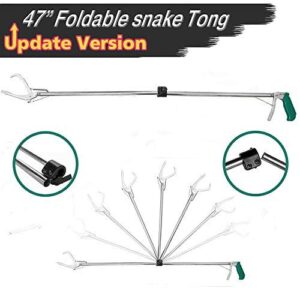
The ICLOVER Foldable Snake Catcher Tool is a solid pick for educators who need flexibility without bulk. Its design prioritizes both functionality and storage efficiency, making it ideal for classroom or field use.
It extends to 47 inches, providing ample distance to ensure safety and comfort for users and students alike. When collapsed, it reduces to about 26 inches, allowing easy storage in desk drawers or supply cabinets.
For added peace of mind during handling, following a health-first snake handling protocol helps prevent cross-contamination between your collection and any new arrivals.
The tool features wide-angle jaws that grip gently, ensuring the animal remains unharmed during handling. A rubber-coated handle enhances grip security, even in slippery conditions, while the inclusion of a spare cable adds practical value.
| Best For | Outdoor enthusiasts, wildlife rescuers, and backyard homeowners who need a safe, portable way to relocate snakes without getting too close. |
|---|---|
| Material | Stainless steel |
| Handle Grip | Rubber-coated |
| Max Length | 47 in |
| Tool Type | Tong |
| Use Case | Wildlife capture |
| Animal Safety | Non-lethal jaws |
| Additional Features |
|
- Extends to 47 inches so you keep a safe distance, then folds down to 26 inches for easy packing in a bag or drawer
- Wide-angle jaws grip gently without hurting the animal, great for catch-and-release
- Rubber-coated handle stays comfortable even when your hands are sweaty or wet
- Some units arrive missing the lock pin, which makes secure handling unreliable
- The joint connection can weaken under load, and a few users reported breakage
- Struggles with larger, heavier snakes — best suited for small to medium sizes only
2. 4Fit 52 Inch Pro Snake Tongs
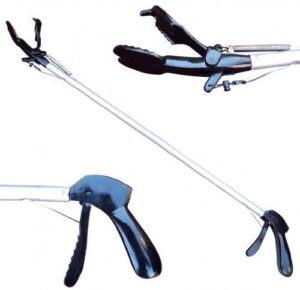
The 4Fit 52 Inch Pro Snake Tongs offer serious reach without sacrificing control. At 52 inches, they maintain real distance between students and snakes—a critical feature in busy classrooms.
The wide, spring-loaded jaws distribute pressure evenly, ensuring snakes can be secured without harm. This design prioritizes both safety and animal welfare during handling.
Weighing just under a pound, the tongs are manageable for most adults. However, the aluminum shaft may feel front-heavy during extended use, making shorter demonstrations ideal.
| Best For | Educators, wildlife handlers, and homeowners who need to relocate snakes safely without getting too close. |
|---|---|
| Material | Aluminum |
| Handle Grip | Pistol-grip |
| Max Length | 52 in |
| Tool Type | Tong |
| Use Case | Yard relocation |
| Animal Safety | Spring-loaded jaws |
| Additional Features |
|
- 52-inch reach keeps you at a comfortable distance from venomous or unpredictable snakes
- Spring-loaded jaws hold snakes securely without injuring them
- One-piece design means no assembly—just grab it and go
- Front-heavy feel can wear you out during longer handling sessions
- Aluminum shaft and cable have been known to bend under pressure, raising durability concerns
- Jaw opening may be too narrow for larger snakes, limiting versatility
3. DocSeward Balanced Snake Hook
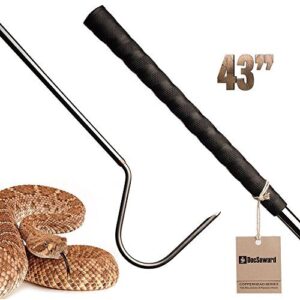
Balance matters more than you’d think when guiding a nervous 5-foot corn snake in front of 25 curious students. The DocSeward hook earns its reputation here, offering reliable support in high-pressure situations.
Its copper ferrule shifts weight toward the handle, preventing wrist fatigue during extended use. This ergonomic design ensures comfort without compromising functionality.
At 43 inches, the tool maintains a safe distance while enabling precise control. The stainless-steel tip gently slides beneath the snake, prioritizing both handler and animal safety.
A rubber grip provides a secure hold, even with gloved hands, enhancing stability in demanding environments.
Built to last, this USA-made instrument combines durability with practicality, all at a price of $61.
| Best For | Educators, wildlife handlers, and outdoor enthusiasts who regularly work with snakes and need a reliable, well-balanced hook that holds up over time. |
|---|---|
| Material | Stainless steel |
| Handle Grip | Rubber golf-club |
| Max Length | 43 in |
| Tool Type | Hook |
| Use Case | Field handling |
| Animal Safety | Beveled hook tip |
| Additional Features |
|
- Balanced design keeps your wrist from tiring out during long handling sessions or classroom demos
- Stainless-steel tip with a beveled edge slides under snakes smoothly without causing harm
- Rubber grip stays secure even with wet or gloved hands
- At $61, it’s a tough sell if you’re only moving the occasional garden snake
- The 43-inch max length can feel limiting with very large or heavily coiled snakes
- Takes practice—the hook won’t make up for poor handling technique on its own
4. AAProTools Heavy Duty Snake Hook
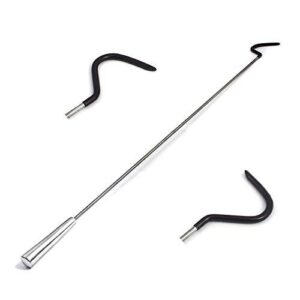
If the DocSeward’s balance won you over, the AAProTools Heavy Duty Snake Hook makes a strong case on durability. At 40 inches, it hits that classroom sweet spot — enough reach to keep you comfortable, not so much that you lose control.
The stainless-steel shaft resists corrosion, withstands repeated cleaning easily, and won’t flex mid-demonstration.
One heads-up: the polished metal handle can get slippery. Wearing gloves or wrapping the grip helps a lot during longer sessions.
| Best For | Biology and herpetology teachers who need a reliable, easy-to-clean hook for regular classroom demonstrations. |
|---|---|
| Material | Stainless steel |
| Handle Grip | Polished metal |
| Max Length | 40 in |
| Tool Type | Hook |
| Use Case | Classroom education |
| Animal Safety | Smooth hook |
| Additional Features |
|
- Stainless steel holds up to heavy use and cleans up fast
- 40 inches gives you comfortable reach without losing control
- Built to last — corrosion-resistant and solidly made
- Polished metal handle gets slippery, especially with wet hands
- No rubber grip means less control during longer handling sessions
- Not the best choice if you need a softer contact surface for live reptiles
5. Bytcew Telescopic Snake Hook
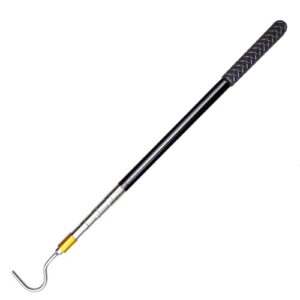
The Bytcew offers flexibility with its five-section telescoping design, collapsing to 16 inches and extending to 61 inches. This accommodates both close work in tanks and wider demonstration spaces.
Its twist-lock collars hold firm at each setting, preventing unexpected collapses during use.
Weighing under 2.5 pounds fully extended, students can comfortably handle it.
Note: It is rated for snakes up to 2 pounds only.
Larger snakes risk the vertebral misalignment and chronic stress described in this guide to safe snake hook handling techniques, so always match your equipment to your snake’s size.
| Best For | Hikers, hobbyists, and beginners who need an affordable, portable hook for safely handling small snakes in the field or at home. |
|---|---|
| Material | Stainless steel |
| Handle Grip | Rubber non-slip |
| Max Length | 61 in |
| Tool Type | Hook |
| Use Case | Yard and trail |
| Animal Safety | Rounded hook |
| Additional Features |
|
- Telescopes from 16 to 61 inches, so it works in tight tank spaces and open areas alike
- Incredibly light at 0.35 lb — easy to carry on a trail or tuck into a kit
- At $9.99, it’s a low-cost entry point for reptile enthusiasts
- Only rated for snakes up to 2 lb, so larger specimens are a no-go
- Hook size can feel too small for anything beyond small to medium snakes
- Some users have flagged durability issues — probably not the right pick for professional use
6. Aquaneat Extendable Stainless Steel Snake Hook
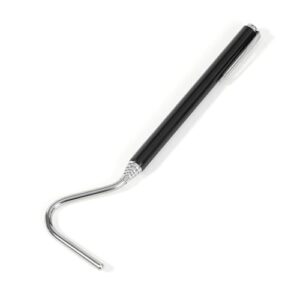
If the Bytcew’s telescoping range felt like a lot to manage, the Aquaneat keeps things refreshingly simple. It extends from 7 inches to 36 inches — enough reach for most classroom terrariums without the bulk.
The angled hook tip is smooth and rounded, so you won’t stress a ball python or corn snake during repositioning.
Its stainless steel build resists rust, the non-slip grip holds firm even with damp hands, and the locking mechanism won’t slip mid-demonstration.
| Best For | Beginner snake keepers and hobbyists who need a lightweight, affordable hook for handling small, non-venomous snakes like ball pythons or corn snakes. |
|---|---|
| Material | Stainless steel |
| Handle Grip | Non-slip grip |
| Max Length | 26 in |
| Tool Type | Hook |
| Use Case | Terrarium handling |
| Animal Safety | Rounded hook tip |
| Additional Features |
|
- Extends from 7 to 26 inches, giving you enough reach to reposition snakes safely without crowding the terrarium
- Rounded hook tip is gentle on skin, so you’re not stressing your animal during handling
- Collapses down to pocket size and weighs almost nothing, making it easy to take anywhere
- Build quality feels flimsy to some users — it may bend or break with repeated use
- Not built for larger or more muscular snakes; the hook just isn’t strong enough to support the weight
- No good option for venomous species, so experienced keepers will likely need something more heavy-duty
Safe Classroom Handling Steps
Good handling starts long before you pick up the hook. A few simple steps before and during the demonstration make all the difference for both the snake and your students.
Here’s what to do every time.
Identify The Snake Species Before Any Handling

Before you pick up any snake, know exactly what you’re dealing with. A quick look at the right visual indicators can tell you a lot.
Use regional field guides and habitat cues to confirm the species in your area.
- Check head shape and neck constriction for venomous markers
- Observe pupil shape — vertical slits often signal venomous snakes
- Analyze scale pattern and tail base for nonvenomous snake identification
- Cross-reference dorsal coloring using field guides and environmental education resources
- Use shed skin or photos for scale pattern analysis before contact
Confirm The Snake is Healthy, Calm, and Appropriate for Students
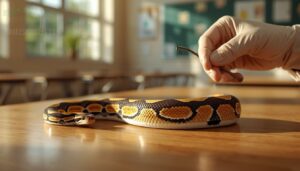
Before handling, perform a health check. Look for consistent shedding patterns, clean scales with full scale integrity, and a steady breathing rhythm.
Use your snake hooks to observe temperament assessment from a safe distance. A snake that is calm, at a healthy body weight, and responsive — not defensive — is your green light.
Avoid Feeding The Snake at Least 48 Hours Before Demonstrations
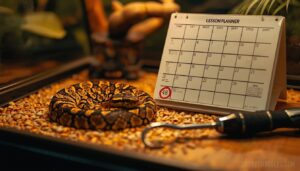
Always stick to a strict feeding schedule—don’t handle your snake within 48 hours of its last meal. A digesting snake carries real regurgitation risks and elevated behavioral calmness issues that catch students off guard. Health monitoring before demos keeps everyone safer.
Never handle a snake within 48 hours of feeding — a digesting snake is an unpredictable one
- Skip feeding 48 hours before class
- Watch for digestive stress signs like reduced movement
- Postpone if the snake seems restless or uncomfortable
- Document feeding dates in your lesson plan
Let The Snake Acclimate to Classroom Temperature Before Handling

Before you reach for your snake handling tools, give your snake time to settle into the room. A proper Thermal Gradient Setup—warm zone around 82–86°F, cooler end near 72–76°F—fosters calm behavioral indicators you can actually read.
Allow at least 24 hours acclimation duration, and monitor temperature and humidity closely.
Trust your hooks for guiding snakes only once the snake is genuinely relaxed.
Clear Desks, Cords, Bags, and Student Traffic From The Demonstration Area

Before using snake hooks, ensure your space is ready. Clear desk surfaces to provide at least 2 feet per student, route cords through cable channels, and enforce strict bag storage away from the demo zone. These steps eliminate clutter and prevent accidents.
Use floor tape to direct student traffic efficiently, creating clear pathways. Simultaneously, set up sanitation stations at entry and exit points to maintain hygiene.
A tidy room keeps both students and snakes safe.
Lift The Snake Gently at Mid-body Using Slow Movements

Think of lifting a snake like picking up something fragile — slow hands make all the difference. With your hook positioned for mid-body support, raise at roughly 5–10 cm per second, keeping balance point alignment centered on the thickest section.
- Maintain gentle grip pressure — never pinch
- Watch for stress signal monitoring cues like gaping or tail thrashing
- Use smooth, controlled lift speed with no sudden pauses
Your snake hooks are only as safe as your technique.
Keep The Hook Low Over a Secure Surface
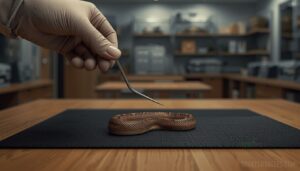
Low hook positioning is your best friend here. Keep your snake hooks just above the surface — this level reduction limits the snake’s vertical reach and helps it feel grounded.
Use a clean, non-slip mat for reliable surface grip, and have a secondary surface prepped nearby.
Consistent hook height across every session builds students’ trust and keeps safe handling of snakes and reptiles predictable for everyone in the room.
Return The Snake to Its Enclosure Before It Becomes Stressed

Watch for the warning signs — hissing, tail twitching, rapid breathing — and act fast. Aim for Quick Return Timing, ideally within 30–60 seconds.
Use your Collapsible Reptile Hook to guide it smoothly, relying on Pathway Clearance and Enclosure Scent Familiarity to ease reentry.
Match Temperature Gradient Matching in the habitat, then apply calm Lid Closure Technique. That’s humane snake capture done right.
Hooks, Tongs, and Containment
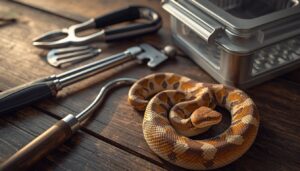
Getting your tools sorted before a demonstration isn’t just good practice—it’s what keeps both you and the snake safe. Each tool in your kit has a specific job, and knowing when to reach for a hook versus tongs makes all the difference.
Here is a closer look at how to use them together.
Use Hooks for Guided Movement and Gentle Support
When guiding a snake through a classroom demonstration, your hook does the heavy lifting — literally. Mid-body Guidance keeps the animal balanced and calm, while Hook Angle Control lets you steer without crowding.
Think of tools like the DocSeward snake hook or Midwest Standard 40 Hook as extensions of your hand.
Maintain Wrist Neutrality, Guarantee Surface Clearance, and you’ve got Stress-free Motion every time.
Use Tongs Only When Extra Distance or Controlled Restraint is Necessary
Hooks work beautifully for calm snakes — but when a snake curls defensively or goes head-shy, that’s your cue for Selective Tong Deployment. Snake tongs provide Strike Zone Extension, keeping your body outside the danger window.
Reserve them for Stress Mitigation moments: transporting agitated animals or managing Reach Management across wider demonstration spaces.
Risk-Based Tool Selection means tongs remain secondary — powerful, yet purposeful.
Choose Wide, Smooth Jaws to Reduce Injury Risk
Wide, smooth jaws aren’t just a design preference — they’re your first line of Scale-friendly contact protection. Jaw Pressure Distribution across a broader surface means no pinch points digging into delicate scales.
- Edge Rounding Benefits prevent tissue nicks during repositioning
- Friction Reduction Design lets jaws glide without catching scales
- Material Grip Balance keeps contact stable without over-squeezing
- Wide jaw handling tool surfaces maintain midline alignment naturally
Pair Tools With Secure Transport Bags or Ventilated Containers
Once your tools are down, containment takes over. Pair your stainless steel hook with a Snake Bagger Replacement Inner Bag — bag zipper security prevents accidental openings from becoming classroom chaos.
Snake restraining tubes and ventilated snake transport containers maintain healthy ventilation flow rates, reducing stress on the animal.
Check material compatibility before cleaning, follow labeling standards, and adhere to your cleaning protocols after every session.
Keep a Backup Enclosure Ready During Demonstrations
Even a smooth demonstration can take an unexpected turn. That’s why your backup enclosure needs to be ready before students walk in — checked against an Enclosure Checklist, set to proper Temperature Control, and humidity-verified.
Follow your Transfer Protocol calmly if a swap becomes necessary. Keep snake bags, snake tubes, or a Mini Observation Container close.
Emergency Drills make the difference between panic and precision.
Store Foldable Hooks Near The Classroom Habitat
Your foldable hooks belong right beside the habitat — not across the room. Mount them on a magnetic hook rack for instant access, and use clear acrylic dividers to separate hook sizes. Color-coded labeling removes any guesswork mid-demonstration.
Store your portable, foldable snake capture tools in a moisture-controlled case, and run quarterly inventory checks so nothing goes missing between sessions.
Inspect Cables, Grips, Jaws, and Hook Tips Before Use
Before every session, run a quick check—your tools are only as reliable as their weakest part. Look over each component with fresh eyes.
- Cable wear inspection: Check the steel cable for fraying, kinks, or corrosion.
- Jaw alignment verification: Confirm jaws open, close, and meet evenly.
- Hook tip condition: Spot any bends, burrs, or rounding.
- Grip surface integrity and fastener security check: Ensure no peeling foam or loose screws.
Snake handling safety starts before you pick anything up.
Student Safety and Hygiene Rules

Safety rules aren’t just classroom policy—they’re what keep everyone calm, confident, and bite-free. Before any snake enters the room, your students need to know exactly what’s expected of them. Here’s what to put in place.
Set a No-touch Rule Unless Supervised Handling is Planned
A no-touch rule isn’t about fear — it’s about building trust between students and animals. Until Supervisor Authorization is granted, all interactions stay visual.
Visual Demonstrations let students learn without risk. Use Signage and Floor Markings to define Designated Observer Zones clearly.
| Rule | Purpose | Who It Applies To |
|---|---|---|
| No touching without approval | Prevents accidental bites | All students |
| Stress Indicator Monitoring | Stops handling if snake reacts | Supervising staff |
| Designated Observer Zones | Keeps students at safe distance | Entire class |
| Supervisor Authorization required | Ensures readiness before contact | Handler and supervisor |
| Visual Demonstrations only | Reduces unnecessary handling risk | General audience |
Keep Students Seated and Outside Striking Distance
Distance is your first line of defense. Use Boundary Markings and color-coded floor tape to establish a clear no-approach zone — students stay seated, six feet back every time. Thoughtful Seating Geometry, like U-shaped rows, keeps everyone visible and settled.
Your Observer Placement and Behavioral Cues help you spot restlessness instantly, letting you pause before things escalate. Smart Classroom Layout protects both students and snake.
Require Handwashing After Any Reptile Contact
Handwashing isn’t optional — it’s the rule after handling reptiles. Scrub every surface for 20 seconds, including between fingers and under nails, using proper soap technique.
Post clear educational signage near the sink to reinforce hygiene protocols.
For compliance monitoring, assign a student checker to oversee adherence to safety procedures.
Keep sanitizer ready when soap isn’t available as a backup measure.
Keep Children Under Five Away From Direct Handling
Hygiene sets the stage — now let’s talk about the littlest learners.
Children under five don’t belong in direct handling situations, full stop.
Here’s what works instead:
- Use Visual Demonstrations with snake handling equipment behind a clear barrier
- Apply Barrier Implementation and Age-appropriate Signage at every session
- Maintain Adult Supervision with a dedicated spotter at all times
- Swap touching for Interactive Storytelling about snake handling best practices
This keeps student wildlife education safe and meaningful.
Use Gloves, Eye Protection, and Closed-toe Shoes When Appropriate
PPE matters for every handler in the room, not just the person holding the hook.
Before any session, run a quick Glove Inspection — check for tears, confirm fit, and remember your Disposable Glove Policy: one use, then out.
Eye Protection Standards call for sealed goggles, not just glasses.
Footwear Selection means closed-toe, non-slip shoes.
Follow your PPE Donning Protocol before the snake ever leaves its enclosure.
Teach Students Not to Grab, Chase, or Crowd The Snake
Once your gloves are on and students are in their viewing zones, the real test begins — keeping them there. Establish a no-chase rule before the snake ever appears.
Teach students to read body language cues like coiling or rapid tongue-flicking as signals to step back. Rotate observers in small groups, use a calm voice, and remind everyone: still and quiet wins every time.
Have an Escape-response Plan Before Every Demonstration
Before the snake leaves its enclosure, your escape plan should already be in place. Map clear escape routes, post quick‑reference signage near the demo area, and assign roles — lead handler, observer, student helper.
Use agreed communication signals, not shouting, to maintain calm.
Run quarterly drill debriefs so everyone moves on instinct, not panic.
Contact Trained Wildlife Professionals for Unknown or Venomous Snakes
If you spot an unknown or venomous snake on school grounds, don’t touch it — call a licensed wildlife expert immediately.
Share the exact location, a photo (if safely possible), and a description of its behavior.
Your Emergency Contact Protocol should include a venomous snake response team. Good professional response coordination, documentation requirements, and training agency partnerships turn a scary moment into a manageable one.
Frequently Asked Questions (FAQs)
What is the best snake for the classroom?
The corn snake tops the list for temperament suitability, manageable growth potential, simple housing requirements, and feeding simplicity.
It’s a nonvenomous snake that fits naturally into Environmental Education and Animal Activity Kits.
What are the risks of using snake hooks?
Hooks can cause scale abrasion, spinal compression, and elevated cortisol if misused.
Poor technique also reduces sensitivity to behavioral cues, raising snakebite risk.
Hook malfunction can startle both snake and handler.
How do I budget for classroom snake hook equipment?
Think of your budget like a field kit: every slot has a purpose. Start with mid-range hooks, factor in spare parts, and plan for warranty service before spending more.
Can students with snake phobias attend handling demonstrations?
Opt-out policies, anxiety accommodations, and safe observation zones ensure students with snake phobias can attend without penalty.
Consent procedures and alternative activities maintain inclusion and comfort for all participants.
What certifications should a classroom snake handler hold?
You’ll need Venomous Handling Certification, First Aid Certification, and Species Identification Credential.
You must renew these certifications every two to three years. You must also keep Liability Insurance Documentation on file.
Additionally, your school may require permits.
How often should hooks be replaced or professionally inspected?
Inspect hooks before every use and schedule formal reviews annually. In heavy-use settings, bump reviews to every six months.
Replace immediately if you spot cracks, corrosion, or wear exceeding 15% of the throat width.
Are there legal restrictions on keeping snakes in schools?
Legal considerations for snake handling vary by location. Many regions require permits, species documentation, and facility compliance checks. Liability insurance is often mandatory.
Some areas enforce species prohibitions.
Always verify local rules before bringing any reptile into school.
Conclusion
A seasoned zookeeper once said the hook doesn’t calm the snake—your calm does. The tool just gives that calm somewhere to go.
When you choose the right snake handling hooks for classroom environments and follow a clear protocol, you stop reacting and start teaching. This approach transforms chaos into control, enabling educators to move deliberately and make the unpredictable feel manageable.
Students don’t remember chaos. They remember the educator who held steady, moved deliberately, and made something wild feel approachable. That steady presence—not the tool itself—is what leaves a lasting impression.
That’s the lesson no textbook delivers—but the right hook helps you give it.