This site is supported by our readers. We may earn a commission, at no cost to you, if you purchase through links.

A boa constrictor hatches at roughly 18 inches—small enough to curl inside a coffee mug. Three years later, that same snake may stretch past six feet. Few reptiles in the hobby pack that kind of growth into such a short window, and the pace genuinely catches new keepers off guard.
Understanding the boa constrictor size timeline isn’t just satisfying trivia—it shapes every decision you’ll make about enclosures, feeding schedules, and long-term care. Females can push ten feet and tip the scales past 20 pounds, while males usually top out a foot or two shorter. The numbers matter, and knowing what to expect at each stage keeps surprises manageable.
Table Of Contents
- Key Takeaways
- Boa Constrictor Growth Timeline
- Newborn to Juvenile Size
- Subadult and Adult Size
- Sex Differences in Boa Size
- Subspecies Size Variations
- Growth Factors Affecting Size
- Top 10 Boa Size Comparison Items
- 1. TigerHart Gustavo Giant Green Anaconda Plush
- 2. Boa Constrictor Pet Care Guide
- 3. Hozzi Giant Boa Constrictor Plush
- 4. Higherbros Realistic Plastic Python Snake
- 5. HyDren Giant Boa Constrictor Plush
- 6. Melissa Doug Giant Boa Constrictor Plush
- 7. Hozzi Giant Boa Constrictor Plush Snake
- 8. Uandme Realistic Rubber Snake Toy
- 9. UANDME Realistic Snake Figurines
- 10. MaoGoLan Giant Snake Plush Set
- Frequently Asked Questions (FAQs)
- Conclusion
Key Takeaways
- Boa constrictors grow fastest in their first 3–5 years, often adding 1–2 feet annually, so your enclosure needs to grow with them—not after.
- Females consistently outgrow males, reaching 7–10 feet compared to males’ 6–8, and that size gap shapes everything from housing to handling.
- Genetics set the ceiling on how big your boa can get, but your feeding schedule, temperatures, and enclosure size determine how close it gets there.
- Growth never fully stops—boas keep adding to their size slowly throughout their 20–40 year lifespan, so long-term care planning isn’t optional.
Boa Constrictor Growth Timeline
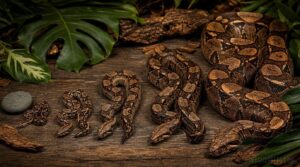
Boa constrictors don’t just wake up one day fully grown — their gradual growth journey unfolds from a palm-sized newborn to a powerful, room-filling adult. Every stage brings something different, and knowing what to expect makes you a much better keeper.
Tracking those changes is easier when you have a boa constrictor size comparison chart by growth stage to reference alongside your own observations.
Here’s how the growth timeline actually plays out.
Newborn Size: 15–20 Inches and 50–100 Grams
At birth, boa constrictors measure 15–20 inches and weigh 50–100 grams — roughly the size of a large banana. Accurate measurement techniques matter right away; a simple growth chart for snakes helps you track newborn to juvenile progress from day one.
Neonate care begins here: weight monitoring, hatchling feeding, and noting early shedding patterns all feed into reliable growth curve modeling later.
First-year Growth Expectations: 22–36 Inches
Once your boa outgrows that newborn stage, growth accelerates rapidly. By month 12, most reach 22–36 inches — nearly doubling their birth length. A consistent feeding schedule drives this development:
- Feed every 7–14 days
- Match prey size to width
- Track growth spurts monthly
- Note seasonal variation in appetite
Stress management and stable temperatures ensure growth hormones function efficiently.
Juvenile Growth From 1–3 Years
Between ages 1 and 3, juvenile development stages of boas shift noticeably. Hormonal growth spurts drive length gains, while muscle mass accretion begins shaping their characteristic girth. Females often exhibit early sexual differentiation through increased body mass.
Seasonal feeding fluctuations are normal—don’t panic if appetite declines temporarily. Activity enrichment significantly impacts well-being during this phase, so prioritize a spacious juvenile enclosure.
Consistently track growth monthly to monitor progress.
Adult Size Range: 6–10 Feet on Average
Once your boa clears that juvenile phase, expect a noticeable slowdown — but size keeps building. Most adults settle between 6 to 10 feet, shaped by boa constrictor size ranges tied to genetics, habitat influences, and metabolic requirements. Skeletal limitations ultimately cap most at 10 feet.
Here’s a quick size chart utilization for boa owners:
- Average adult length: 6–10 feet
- Average weight: 10–15 kg
- Females typically: 7–10 feet
- Males typically: 6–8 feet
- Skeletal limitations cap most at 10 feet
Long-term Growth After Sexual Maturity

Sexual maturity doesn’t flip an "off switch" on growth. Because of indeterminate growth, your boa will continue to grow throughout its lifespan — just slowly. Vertebral remodeling, metabolic rate shifts, and hormonal influence all shape adult size over time. Seasonal weight fluctuations are normal too.
With captive longevity effects stretching 20–40 years, genetic and environmental effects on snake size, plus sexual dimorphism in boa constrictors, keep things quietly moving.
Why Boas Grow Fastest in The First 3–5 Years
Consider the first 3–5 years your boa’s biological overdrive. A hormonal surge triggers cellular proliferation and a metabolic spike, powering rapid musculature development — often adding 1–2 feet annually. Shed frequency increases to every 4–6 weeks, signaling active juvenile growth. After this window, growth slows dramatically.
Nutrition, temperature gradient maintenance, and consistent feeding all fuel this critical phase. These factors directly impact the reptile’s developmental trajectory during its accelerated growth period.
Newborn boas measure about newborn boa length of 2 ft at birth, marking the starting point of this transformative lifecycle stage.
Newborn to Juvenile Size
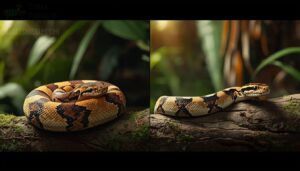
Baby boas come into the world surprisingly small, but they don’t stay that way for long. Watching a hatchling grow through its first year is one of the more rewarding parts of keeping these snakes.
Here’s what you can expect as your boa goes from a palm-sized newborn to a sturdy juvenile.
Typical Birth Length and Weight
Most newborns are born at just 12–18 inches long and weigh 20–60 grams — roughly the size of a thick marker. This variance in birth size begins before hatching.
Key factors shaping these early measurements include:
- Clutch size correlation: Smaller litters often produce slightly larger hatchlings
- Maternal nutrition influence: Well-fed mothers produce heavier neonates
- Hatchling weight benchmarks: Most land between 20–60 grams
- Early temperature impact: Warmer incubation produces stronger hatchlings
- Subspecies genetics: Some lines simply run smaller at birth
Monthly Growth During The First Year
In the first month, your boa usually gains 1.5–2 inches in length — a quiet but steady growth spurt. Weekly feeding gains matter here; each small meal bumps metabolic rate increase and drives juvenile development stages of boas forward.
By month two, tracking growth through a simple size chart helps you catch early molting timing and confirms that your husbandry is working.
When Baby Boas Begin Gaining Girth
Girth doesn’t show up overnight — it builds quietly, usually within 2–3 weeks of consistent feeding. That’s when early muscle development kicks in, and metabolic rate shifts begin driving real body mass.
Body condition scoring helps track this progress. Use weight monitoring tools and weigh weekly to ensure healthy growth.
The importance of stretch space can’t be overstated; room to move facilitates healthy juvenile development stages in boas.
Healthy Weight Gain Versus Overfeeding
Overfeeding is one of the easiest mistakes to make with a young boa — and one of the hardest to reverse. Caloric Balance matters more than frequency. Watch for these red flags using Body Condition Scoring and Girth Monitoring:
- Rapid weight gain between sheds
- Mid-body widening faster than length increases
- Weight Variability spiking sharply each cycle
- Early Metabolic Stress Indicators like sluggish digestion
Obesity prevention starts now.
How Feeding Frequency Affects Juvenile Size
How often you feed matters as much as what you feed. Shorter meal interval timing—say, every five to seven days—gives your juvenile’s gut a digestive enzyme boost that drives faster growth. Think of it like steady kindling versus one big log.
Caloric density balance keeps growth rate climbing without hitting growth plateau triggers too early in juvenile development stages of boas.
Tracking Length, Weight, and Shed Cycles
Keep a simple log — length, weight, and shedding date every two weeks. Growth Chart Templates make this easy to spot trends.
After each shedding process, measure again; juveniles often show the clearest size jumps post-shed.
Photographic Progress Tracking adds a visual layer that numbers alone can’t capture.
Consistent Weight Trend Analysis across juvenile development stages helps you catch problems before they become serious.
Subadult and Adult Size
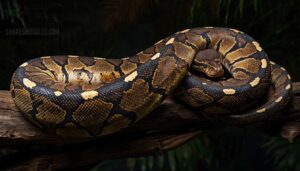
By age two or three, your boa is no longer that small, manageable juvenile you brought home. This is the stage where size starts to feel real — and where planning ahead really matters.
Here’s what to expect as your boa moves through subadulthood and into full adult size.
Expected Size at 2–3 Years Old
By age 2–3, most boas are typically between 4 and 6 feet — a window where Growth Variability becomes obvious.
Feeding Impact and Temperature Effects substantially influence juvenile development during this period. These factors play a critical role in shaping growth trajectories.
Sexual Dimorphism Onset begins to show here, with females surpassing males in average length and weight.
Regional Size Differences also become significant, as subspecies start to diverge notably in growth patterns.
When Boa Constrictors Reach Adult Length
Most boas hit their adult stage somewhere between 3 and 4 years old. That’s when Growth Hormones slow down, and the growth rate drops noticeably.
Captive vs. wild conditions make a real difference here—well-fed captives often reach maximum length faster.
Metabolic Rate, Seasonal Molting patterns, and Longevity’s influence all shape how quickly juvenile development stages of boas give way to full maturity.
Average Adult Male Size
Most male boa constrictors settle between 6 and 8 feet once they hit their growth plateau. That’s the sweet spot for the species.
Regional length variance plays a real role here — mainland males often run larger than island populations.
Track morphological measurements and body condition index regularly. A size chart helps you spot male size trends and catch any concerns early.
Average Adult Female Size
Female boas are the larger sex — that’s one of the clearest examples of sexual dimorphism and size differences in boa constrictors. Most average adult boa constrictor females measure between 7 and 10 feet, with weight ranging from 10 to 15 kg.
Female redtailed boas and boa constrictor size ranges shift with regional variations across subspecies, reflecting real size variation among boa subspecies.
Why Adult Growth Slows but Continues
Once a boa hits sexual maturity, hormonal decline occurs, shifting energy allocation away from rapid growth. These metabolic trade-offs are real—your snake’s body now prioritizes reproduction and maintenance over size gains.
Despite this shift, indeterminate growth patterns in snakes mean growth never fully stops. Environmental impacts, such as temperature regulation and metabolic effects in boas, plus nutrition’s influence on reptile development, still drive subtle size gains for years.
Size Expectations for 10-year-old Boas
By age 10, your boa has likely settled into its plateau length — usually 8 to 9 feet, with girth maturity and weight stability defining this stage more than raw inches.
Here’s what to watch for:
- Health Indicators: Firm muscle tone, clear eyes, consistent shed cycles
- Longevity Impact: Stable weight promotes organ health into its 20s
- Growth Rate: Nearly negligible but still technically ongoing
- Size Chart Utilization: Compare against boa constrictor size ranges to catch outliers early
Sex Differences in Boa Size
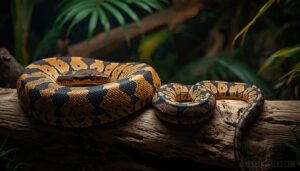
Not all boas are built the same — and sex plays a bigger role in size than most people expect.
Females tend to be noticeably longer and heavier than males, which can catch new keepers off guard. Here’s a closer look at exactly how those differences break down.
Why Female Boas Grow Larger Than Males
Ever wonder why your female boa seems to just keep growing? It comes down to biology. Sexual dimorphism runs deep in this species, with females experiencing an Extended Growth Phase before sexual maturity, giving them a size head start.
Estrogen influence drives greater fat storage capacity and wider girth, further contributing to their size advantage. This hormonal factor ensures females develop a more robust physique compared to males.
Egg-carrying demands also necessitate a bigger, more muscular body. Genetics, hormones, and metabolic rate variation collectively ensure females maintain their growth trajectory, stacking biological factors in their favor.
Female Length Range: 7–10 Feet
Most adult females land somewhere in that 7–10 foot range — but where yours falls depends on more than luck. Wild vs captive environments, metabolic rate, and reproductive burden all shift the outcome.
Sexual dimorphism and size differences in boa constrictors are real, and longevity correlation matters too: older females often push toward the upper end, especially in stable, climate-consistent captive setups.
Male Length Range: 6–8 Feet
Males usually land in the 6–8 foot range — shorter than females, but still a solid, impressive snake. Captive growth patterns often push males toward that upper end, while wild population sizes skew lower due to resource competition. Regional length variation, genetic size potential, and temperature growth impact also influence the final size.
- Most males reach 6–8 feet at full maturity
- Genetics set the ceiling; care determines how close you get
- Wild males often stay closer to 6 feet
- Captive males with consistent feeding may approach 8 feet
- Sexual dimorphism in boa constrictors is most visible here
These factors collectively shape the size outcomes, with sexual dimorphism and environmental conditions playing pivotal roles in observed variations.
Girth Differences Between Males and Females
Length tells part of the story, but girth reveals the rest. Females exhibit noticeably wider chest girth variation compared to males—a direct result of fat deposition patterns and reproductive tissue in the trunk.
Sexual dimorphism in boa constrictors is evident here: females appear stockier, males slimmer.
Feeding also influences girth, as overfeeding accelerates this gap faster than genetics alone.
Tail Length as a Visual Sexing Clue
girth clues lead you somewhere useful — but tail base morphology can add another layer to your reading. Males carry longer tails to house hemipenes, though the difference is subtle.
- Tail base width often matters more than length
- Observer perspective bias skews visual judgment
- Seasonal shedding effects alter perceived tail proportions
- Non-invasive verification works best by combining multiple cues
Sexual Maturity Timing and Growth Changes
Sexual maturity brings real, measurable changes. Males hit their age of maturity around 18–24 months; females closer to 3–4 years. That gap ties directly into sexual size dimorphism — females require extended time to develop larger frames for reproductive output.
| Developmental Stage | Males | Females |
|---|---|---|
| Age of maturity | 18–24 mos | 3–4 yrs |
| Metabolic rate shift | Earlier | Later |
| Maturity weight thresholds | Lower | Higher |
| Seasonal breeding triggers | Aligned with body condition | Aligned with body condition |
Subspecies Size Variations
Not all boas grow to the same size — and a big reason for that comes down to subspecies. Where a boa’s lineage originates shapes everything from its adult length to how fast it gets there.
Here’s a look at how the most common subspecies compare.
Boa Constrictor Constrictor Size Range
Think of Boa constrictor constrictor as the "classic" on your boa constrictor size chart — the standard everyone else gets measured against.
Captive versus wild environments shift growth rates noticeably; captive individuals commonly reach 7–10 feet, while predation pressure and limited prey keep wild boas leaner.
Regional climate and metabolic correlation also shape juvenile development stages of boas, influencing size variations among boa subspecies considerably.
Boa Imperator Size Expectations
Most keepers underestimate the morphometric variability exhibited in Boa constrictor imperator. Males typically reach 5–7 feet, while females grow to 6–8 feet — noticeably smaller than their constrictor cousins. Subspecies size differences in boas are real, and the imperator subspecies maintains a manageable scale.
Juvenile development in boas is influenced by hormonal growth triggers tied to seasonal metabolic shifts, which can lead to surprising annual variations in weight-length ratio readings. These natural fluctuations reflect the species’ adaptive growth patterns.
Colombian Boa Size Potential
Colombian boas sit near the top regarding subspecies size differences in boas. These snakes reflect how habitat influence and regional prey shape growth potential over decades.
- Females commonly reach 7–10 feet; males 6–8 feet
- Maximum weight in females can hit 60–100 pounds
- Longevity’s impact means growth continues past age 10
- Captive record-holders exceed 10 feet under ideal care
- The growth rate during early life stages of boas is rapid, often tripling their birth size by year one
Nicaraguan Boa Adult Size
Nicaraguan boas are compact by boa constrictor imperator standards—a key detail on any boa constrictor size chart. Size variations among boa subspecies are real, and Nicaraguans sit on the smaller end.
| Feature | Nicaraguan Boa |
|---|---|
| Male adult length | 5–6 ft |
| Female adult length | 6–7 ft |
| Captive‑wild size gap | Minimal |
| Regional prey influence | Moderate |
| Longevity size correlation | Low plateau |
Health-related size variation and seasonal growth spikes can shift these numbers slightly, but most never approach the average length of a fully grown boa constrictor at its maximum recorded length.
Tarahumara Boa Adult Size
Tarahumara boas are the quite outliers of boa constrictor imperator — genetically wired small. Genetic dwarfism shapes their boa constrictor size ranges dramatically.
Adult size typically follows these patterns:
- Males average 3–4 ft
- Females reach 3–4.5 ft
- Longevity correlation plateaus early, around age 3
Habitat influence and nutrition scaling matter, but breeding size stays modest. Size variations among boa subspecies don’t get more compact than this.
Hog Island Boa Dwarf Growth Pattern
Hog Island boas are nature’s compact edition. Island prey size and seasonal activity patterns naturally cap their growth — females top out around five to six feet, males closer to four. That’s island dwarfism at work, not poor husbandry.
Captive vs. wild growth rate differences matter here. Use a size chart to track juvenile development stages and avoid growth hormone regulation issues from overfeeding.
Mainland Versus Island Boa Size Differences
The size gap between mainland and island boas tells a story written by evolution. Island prey size stays small, so resource-limited growth kicks in — boas adapt through dwarfism evolution, reaching barely half the length and one-fifth the weight of mainland relatives.
Tail length ratio and reproductive investment also shift. It’s genetics meeting environment, and it’s one of the clearest examples of species variation in boa constrictor size you’ll find.
Growth Factors Affecting Size
A boa’s final size isn’t just luck — it comes down to a handful of things you actually control. From what you feed them to how warm their enclosure runs, each factor nudges growth in one direction or another.
Here’s what matters most.
Genetics and Inherited Growth Potential
Think of genetics as your boa’s built-in blueprint. Growth hormone genetics and IGF1 polymorphisms quietly shape how fast and how large your snake can grow — before you even offer a first meal. Lineage-specific alleles and epigenetic growth regulation mean two boas raised identically can still reach different sizes.
Before your boa eats its first meal, genetics have already written the blueprint for its final size
Key genetic factors include:
- Subspecies lineage sets the ceiling on genetic potential
- Polygenic size prediction explains why siblings vary noticeably
- Hereditary genetics impacts on snake growth starts at conception
- IGF1 pathways influence bone length and overall girth
Diet, Prey Size, and Feeding Schedule
Genetics sets the ceiling — but your feeding choices determine how close your boa gets to it. Meal interval planning and prey variety rotation matter more than most keepers realize. A well-structured feeding schedule keeps growth steady without straining their stomach capacity limits.
| Life Stage | Feeding Frequency |
|---|---|
| Hatchling | Every 5–7 days |
| Juvenile | Every 7–10 days |
| Adult | Every 14–21 days |
Match prey size to your boa’s widest point, rotate prey types for nutrient balance, and track caloric intake estimates over time.
Temperature Gradients and Digestion Efficiency
Feeding schedules drive growth—but your enclosure’s temperature gradient design is what makes digestion actually work. Enzyme kinetics peak when your boa’s core temperature sits between 30–34°C. Think of prey warming as a head start for those enzymes.
- Basking spot: 86–90°F
- Ambient: 78–85°F
- Cool side: 75–80°F
Hydration interplay matters too—poor hydration slows gut transit even at ideal temperatures.
Humidity Levels and Healthy Shedding
Shedding is basically your boa’s report card—and humidity is the grade. Maintain consistent monitoring between 60–80% using a digital hygrometer positioned away from spray zones. A moisture retention substrate, like coconut fiber, helps stabilize levels naturally.
| Stage | Humidity Range | Key Practice |
|---|---|---|
| Newborn | 65–80% | Humid hide setup daily |
| Juvenile | 62–75% | Humid spike scheduling midweek |
| Adult | 60–75% | Mold prevention practices weekly |
| Pre-shed | 70–80% | Increase fogger sessions |
| Post-shed | 60–65% | Reduce moisture gradually |
Humidity control and shedding health in boas go hand in hand—too low means stuck skin, too high invites mold.
Enclosure Size and Muscle Development
Your boa’s enclosure is more than a home—it’s a gym. Without enough horizontal space to stretch and vertical height to climb, muscle development stalls.
- Branch density encourages grip and core strength
- Substrate variety facilitates burrowing and full-body conditioning
- Regular enclosure audits ensure space keeps pace with juvenile development stages
Growth factors influencing boa size include movement—so enclosure requirements for juvenile and adult boas matter more than most keepers realize.
Obesity Prevention in Captive Boas
Overfeeding is the silent growth disruptor most keepers overlook. Captive boas gain excess fat quickly when prey size limits and meal intervals are ignored.
Keep prey under 10% of body weight and feed adults monthly. Monitor your Body Condition Index regularly.
| Sign | Action |
|---|---|
| Rounded, bulging body | Reduce prey size |
| Spine hard to feel | Extend meal intervals |
| Lethargy post-feeding | Check enclosure exercise |
| Distorted scale pattern | Review supplemental nutrition balance |
| Reduced mobility | Consult a reptile vet |
Using Feeding Logs to Monitor Growth
Think of your feeding log as a living size chart — one that tells the story of your boa’s growth curve visualization in real time. Log consistency transforms scattered notes into actionable data.
Track these four essentials weekly:
- Weight in grams for weekly weight calculation
- Length in centimeters for growth rate comparison
- Prey size and feeding response for appetite trend analysis
- Shed dates to align digestion cycles
Keeper collaboration ensures records remain accurate across multiple caretakers.
Top 10 Boa Size Comparison Items
Wrapping your head around boa sizes is a lot easier when you have something familiar to compare them to. These ten items range from plush toys to care guides, giving you a practical sense of just how big your boa will get at each stage.
Take a look and see which ones help you visualize the growth ahead.
1. TigerHart Gustavo Giant Green Anaconda Plush
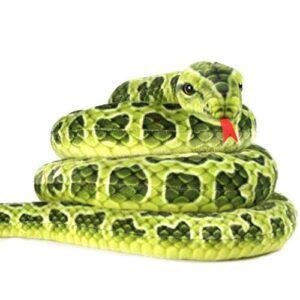
Gustavo, the TigerHart Giant Green Anaconda Plush, stretches a full 100 inches—that’s about 8.3 feet end to end.
It’s soft, lightweight at just 1.7 pounds, and safe for kids 3 and up.
The realistic green-and-brown pattern gives a true sense of an adult anaconda’s length.
At $37.99, it’s a surprisingly handy visual reference for any snake enthusiast or curious kid.
| Best For | Kids ages 3 and up, snake lovers, and parents looking for a giant plush that doubles as a sensory toy or bedtime buddy. |
|---|---|
| Material | Polyester/polypropylene plush |
| Primary Use | Plush toy/comfort |
| Snake Species | Anaconda |
| Retail Price | $37.99 |
| Age Recommendation | 3 years and up |
| Safety Certified | CPSIA, ASTM F963-11 |
| Additional Features |
|
- At 100 inches long, it’s genuinely impressive—kids can wrap it around themselves, drag it everywhere, or use it as a cozy companion
- Light as a feather at 1.7 lbs, so even little ones can handle it easily
- Passes all the major safety checks (CPSIA, ASTM) and comes with a fun educational booklet to boot
- Some buyers ran into stitching issues pretty quickly, which is a concern for a toy that’ll get dragged around daily
- Hand-wash only makes cleanup a bit of a chore, especially if it becomes a favorite
- At $37.99, it sits on the pricier end for plush toys, so the durability concerns sting a little more
2. Boa Constrictor Pet Care Guide
If you’re serious about keeping a boa, this 134-page guide is worth having on your shelf. Written by two keepers with over 30 combined years of experience, it covers everything from enclosure setup and temperature gradients to feeding schedules and health checks.
At $14.22, it’s an affordable starting point—especially before you bring a snake home. Just note it’s light on photos, so pair it with visual resources for setup reference.
Think of it as your practical foundation.
| Best For | New boa owners who want a solid, no-nonsense foundation before bringing their snake home. |
|---|---|
| Material | Paper/cardstock |
| Primary Use | Educational guide |
| Snake Species | Boa constrictor |
| Retail Price | $14.22 |
| Age Recommendation | Adult/all ages |
| Safety Certified | Not specified |
| Additional Features |
|
- Written by keepers with real, hands-on experience — not just theory
- Covers all the essentials: enclosures, feeding, health, and breeding in one place
- At $14.22, it’s a low-risk investment before committing to a long-term pet
- Barely any photos, which makes it tough when you need visual references for setup or anatomy
- The Kindle version has reported typos and formatting issues worth knowing about
- Too introductory for experienced keepers looking for deeper, science-backed detail
3. Hozzi Giant Boa Constrictor Plush
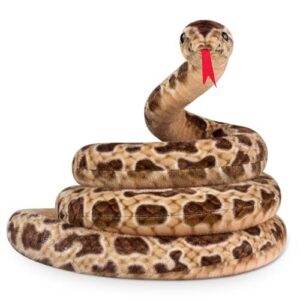
The Hozzi Giant Boa Constrictor Plush offers a hands-on size comparison experience, bringing the realistic proportions of an adult boa directly into your living room—no feeding schedule required. Stretching 80 inches (200 cm) long, it replicates the scale of a full-grown snake, with a realistic scale pattern and tapered tail to emphasize its authentic design.
Its soft, poseable, and safe-for-kids construction ensures practicality, making it a low-stakes way to visualize six-plus feet of snake without risks. This plush transforms abstract measurements into a tangible, interactive experience, ideal for curious minds or reptile enthusiasts.
| Best For | Reptile enthusiasts, Halloween prop hunters, and anyone who wants a life-size snake experience without the actual snake. |
|---|---|
| Material | Polyester/polypropylene plush |
| Primary Use | Toy/prop/pillow |
| Snake Species | Boa constrictor |
| Retail Price | Not listed |
| Age Recommendation | All ages |
| Safety Certified | Not specified |
| Additional Features |
|
- At 80 inches long, it genuinely replicates the size of a real boa — great for scale comparisons or just wowing people
- The flexible vertebral design lets it coil, drape, or stand upright, so it actually looks like the real thing
- Doubles as an oversized pillow for your couch, bed, or floor — surprisingly practical for something so goofy
- Eight feet of plush snake needs somewhere to live — tight spaces won’t love this thing
- Spot-clean only, so if it gets dirty, you’re stuck dabbing at it by hand
- Bulky and heavy enough that hauling it around for events or travel gets old fast
4. Higherbros Realistic Plastic Python Snake
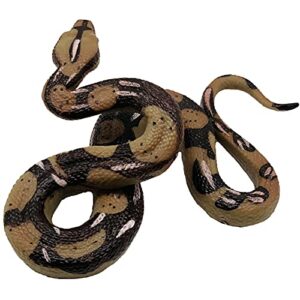
Not every size comparison needs to be soft and huggable. The Higherbros Realistic Plastic Python Snake takes a different approach — it’s a small, rigid figure measuring just 4.3 by 5.9 inches, roughly the size of a newborn boa’s head.
Made from rubber and ABS plastic, it’s durable and surprisingly detailed, with textured scales and reptilian eyes.
At $9.99, it works well as a quick visual reference or a convincing desk prop.
| Best For | Kids who love reptiles, prank enthusiasts, or anyone who needs a cheap, convincing desk prop or party decoration. |
|---|---|
| Material | Rubber/ABS plastic |
| Primary Use | Toy/prank prop |
| Snake Species | Python |
| Retail Price | $9.99 |
| Age Recommendation | Child-safe |
| Safety Certified | ASTM, ICTI |
| Additional Features |
|
- Super affordable at $9.99 — easy to grab in bulk for classrooms or party bags
- Durable rubber and ABS plastic holds up to repeated handling and outdoor use
- Realistic enough to get a genuine reaction at a glance
- Rigid and fixed — you can’t pose or stretch it at all
- Smaller than most people expect, which can kill the prank
- Up close, the plastic feel gives it away pretty quickly
5. HyDren Giant Boa Constrictor Plush
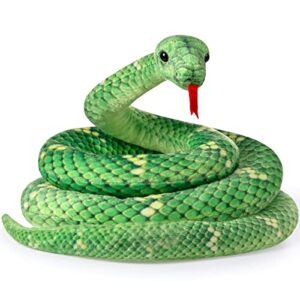
If you want something that actually feels life-size, the HyDren Giant Boa Constrictor Plush delivers. Stretching 80 inches — about 203 centimeters — it falls comfortably within the range of an adult boa, as real female boas average 7–10 feet.
The plush is flexible enough to coil and pose, while remaining soft enough for children. Its design balances durability and comfort, making it both a playful and educational tool.
Weighing roughly 4–6 pounds, the plush also serves as a surprisingly solid reference for understanding the physical presence of a mature boa constrictor.
| Best For | Kids and snake fans who want a giant, poseable plush for play, pranks, or room décor. |
|---|---|
| Material | Polyester/polypropylene plush |
| Primary Use | Toy/pillow/prop |
| Snake Species | Boa constrictor |
| Retail Price | Not listed |
| Age Recommendation | Child-rated |
| Safety Certified | Not specified |
| Additional Features |
|
- At 80 inches long, it’s genuinely life-size and makes a big impression straight out of the box.
- Flexible enough to coil around shoulders or drape over furniture without any internal wires poking through.
- Works as more than just a toy — floor cushion, party prop, car scare — it earns its space.
- The polypropylene filling can shift and clump over time, so it may lose that satisfying firmness.
- Eight feet of stuffed snake needs somewhere to live — storage gets tricky in smaller spaces.
- No internal frame means the seams can stretch if kids (or adults) get too rough with it.
6. Melissa Doug Giant Boa Constrictor Plush
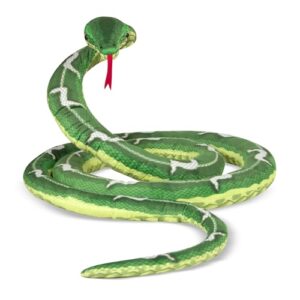
At 14 feet long, the Melissa & Doug Giant Boa Constrictor Plush is one of the closest life-size comparisons you’ll find on a shelf. Real adult boas average 6–10 feet, so this plush actually pushes past that range — closer to a large female’s upper limit.
It weighs just 1.85 pounds, making it easy to handle. Realistic markings and soft polyester construction ensure it serves as a genuinely useful size reference, especially for younger learners.
| Best For | Kids 3 and up who love animals, imaginative play, or anyone who wants a jaw-dropping room centerpiece that doubles as a huggable companion. |
|---|---|
| Material | Plush fabric |
| Primary Use | Plush toy/play |
| Snake Species | Boa constrictor |
| Retail Price | Not listed |
| Age Recommendation | 3 years and up |
| Safety Certified | Not specified |
| Additional Features |
|
- At 14 feet long, it’s a genuinely impressive size — great for pretend play, cuddles, or just showing off
- Realistic markings make it feel like the real deal, and it’s soft enough to use as a pillow or travel buddy
- Coils up for storage, so it’s not as space-hungry as you’d expect for something this massive
- It stays curved — you can’t fully straighten it out, which limits how you can use it
- The price is on the higher end compared to other jumbo stuffed animals out there
- The slightly oversized head is a small quirk that bothers some people who want it to look more realistic
7. Hozzi Giant Boa Constrictor Plush Snake
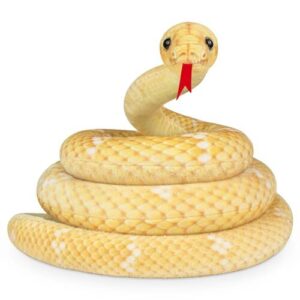
At 80 inches (about 200 cm), the Hozzi Giant Boa Constrictor Plush lands right in the middle of a typical adult male’s length range, making it a surprisingly handy reference point.
Crafted from soft polyester throughout—with no hard frames—it offers versatile flexibility. You can coil it, drape it, or wrap it around furniture or your shoulders, mimicking a real boa’s behavior.
Its realistic green scaling and tapered tail deliver an authentic appearance, all without the weight of an actual snake.
| Best For | Anyone who wants a giant, flexible plush snake for play, decoration, pranks, or themed events — great for kids and adults alike. |
|---|---|
| Material | Polyester/polypropylene plush |
| Primary Use | Toy/pillow/prop |
| Snake Species | Emerald tree boa |
| Retail Price | Not listed |
| Age Recommendation | All ages |
| Safety Certified | Not specified |
| Additional Features |
|
- At 80 inches long, it’s genuinely impressive and works as a pillow, prop, or decorative piece all in one.
- The vertebral stitching lets it hold coiled or upright poses without any internal wire — surprisingly satisfying to play with.
- Realistic emerald tree boa markings give it an authentic look that works well for Halloween, cosplay, or jungle-themed rooms.
- It’s a big item — storing or moving it around takes real effort, especially for younger kids.
- The polypropylene filling can attract dust, so it needs regular fluffing and spot-cleaning to stay fresh.
- The realistic look is a double-edged sword — anyone with a fear of snakes probably won’t appreciate finding this around the house.
8. Uandme Realistic Rubber Snake Toy
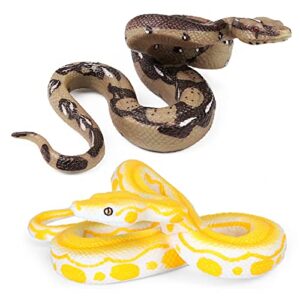
This rubber toy stretches about 27–30 inches when fully extended — roughly the size of a healthy two-month-old boa. It’s flexible enough to coil naturally, which makes it a decent visual stand-in for a juvenile in the field.
Made from non-toxic rubber, it’s safe to handle and easy to clean with soap and water. Just keep it out of direct sunlight to prevent fading.
It won’t replace a growth chart, but it gives beginners a surprisingly useful sense of juvenile boa proportions.
| Best For | Parents, pranksters, and garden defenders who want a realistic-looking snake without any of the actual snake. |
|---|---|
| Material | Hard plastic |
| Primary Use | Prank/décor prop |
| Snake Species | Boa constrictor |
| Retail Price | Not listed |
| Age Recommendation | Adult |
| Safety Certified | Phthalate/lead-free tested |
| Additional Features |
|
- Looks convincingly real — great for scaring off birds and critters in the garden or pulling off a solid prank
- Made from safe, non-toxic plastic, so no worries about kids handling it
- You get two figures in one pack, which is solid value for the price
- Smaller than it looks in the photos, so don’t expect a full-sized showstopper
- Completely rigid — you can’t reposition or coil it yourself
- Realistic enough to genuinely freak out anyone with a snake phobia, so use with some common sense
9. UANDME Realistic Snake Figurines
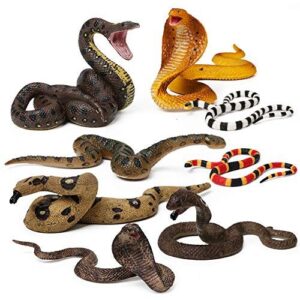
This set gives you eight species in one box — including a boa constrictor, python, and green anaconda — making it handy for side-by-side size comparisons. Each figurine is hand-painted with realistic scale detail, and the largest piece runs about 7.5 inches. That’s roughly a newborn boa in miniature.
They’re certified non-toxic and safe for kids, so they work well in classrooms. Don’t expect poseable joints, though — these are rigid display pieces, not flexible models.
| Best For | Teachers, parents, and reptile fans looking for an affordable, educational set that covers multiple species at once. |
|---|---|
| Material | Rigid molded plastic |
| Primary Use | Educational/prank prop |
| Snake Species | Multi-species set |
| Retail Price | $24.99 |
| Age Recommendation | 3 years and up |
| Safety Certified | EN71, ASTM, HR4040 |
| Additional Features |
|
- Eight species in one box makes it easy to compare sizes and markings side by side
- Hand-painted details look surprisingly realistic for the price
- Certified non-toxic and kid-safe, so they’re classroom-ready
- Rigid plastic means no posing — what you see is what you get
- The figures run smaller than some photos suggest, so don’t expect desk-sized display pieces
- Hard plastic won’t hold up well to rough, bendy play
10. MaoGoLan Giant Snake Plush Set
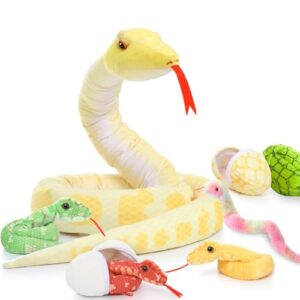
Want a plush that actually shows you what a full-grown boa looks like? The MaoGoLan Giant Snake Plush stretches 118 inches — nearly 10 feet — putting it squarely in adult female boa territory. It comes with four mini baby snakes and three eggs tucked inside a rear zipper, so you can visualize a whole life stage at once.
It’s soft, washable, and makes a surprisingly effective teaching prop for demonstrating just how big these animals really get.
| Best For | Snake enthusiasts, curious kids, and anyone who wants a wild conversation piece or teaching tool that shows just how massive a real boa constrictor can get. |
|---|---|
| Material | Plush/PP cotton |
| Primary Use | Plush toy/gift |
| Snake Species | Boa constrictor |
| Retail Price | Not listed |
| Age Recommendation | Children |
| Safety Certified | Not specified |
| Additional Features |
|
- At nearly 10 feet long, it’s genuinely impressive — great for showing kids the real scale of a boa constrictor
- The zipper compartment is a clever touch; baby snakes and eggs tuck right inside for easy storage and transport
- Soft, plush, and washable — it holds up to regular use without being precious about it
- Stuffing can feel a bit thin out of the box and may need some fluffing, especially after washing
- Quality control isn’t always consistent — some sets have shown up with loose stitching or a missing egg
- Ten feet of snake needs somewhere to live; storage can get awkward fast in a smaller space
Frequently Asked Questions (FAQs)
Can boas reach record lengths in the wild?
Yes, boas can reach impressive lengths in the wild — some hit 12 to 14 feet. But those giants are rare. Most wild adults stay under 10 feet.
How long do boa constrictors typically live?
In captivity, boa constrictors commonly live 25 to 30 years, with many reaching 35 to Wild boas usually top out around 20 to 25 years due to predators and harsher conditions.
Do captive boas grow larger than wild ones?
Controlled living can work in a boa’s favor.
Captive boas often match or slightly exceed wild counterparts in size, thanks to steady meals, stable warmth, and no predators stealing their peace of mind.
What health issues affect boa growth rates?
Health issues hit growth hard. Parasites, respiratory infections, and poor husbandry all slow a boa down. When your snake’s sick, energy goes to recovery — not growing.
How does stress impact a boas size development?
Stress is a quiet thief. It raises corticosterone, tanks IGF-1, and kills appetite — all of which steal energy from growth. Chronic stress means a smaller boa, plain and simple.
Conclusion
A boa’s growth is like a slow tide—easy to miss day by day, but substantial over years. Following the boa constrictor size timeline, from a coffee-mug hatchling to a powerful ten-foot adult, isn’t just about the numbers. It’s a gradual, transformative process that demands attention.
This journey requires staying ahead of every enclosure upgrade, feeding adjustment, and developmental stage the snake moves through. Understanding these phases ensures preparedness, preventing surprises that could disrupt care.
Ultimately, this foresight defines good keeping. When you anticipate your snake’s needs at each stage, you create an environment where it can thrive—and that’s what responsible stewardship truly looks like.