This site is supported by our readers. We may earn a commission, at no cost to you, if you purchase through links.
A boa constrictor that barely reaches your shoulder at two years old can eventually stretch longer than a full-sized pickup truck bed. That gap between juvenile and adult reality catches more keepers off guard than almost anything else in the hobby.
Adult boa constrictor length varies dramatically depending on sex, geographic origin, and the care they receive. Females from Amazon Basin populations regularly push past 10 feet, while island-dwelling subspecies max out around 6.5 feet, practically a different animal by comparison.
Knowing which subspecies or regional population you’re acquiring shapes everything from enclosure sizing to feeding schedules, so reviewing a comprehensive boa constrictor selection guide before you buy helps you match the animal to your actual setup.
Knowing where your specific boa falls on that spectrum shapes every decision you’ll make, from enclosure dimensions to feeding schedules.
Table Of Contents
Key Takeaways
- Female boa constrictors regularly reach 8–13 feet and can exceed 14 feet under ideal conditions, making them significantly larger than males, who typically top out around 9 feet.
- Your boa’s final size is roughly half determined by genetics and lineage, with the other half shaped by factors you control—nutrition, enclosure size, and temperature gradients.
- Overfeeding doesn’t make your boa longer; it makes it fatter, which disrupts reproductive cycles, organ function, and molting, so stick to prey sized at 20–40% of body length every 10–14 days.
- Most boas reach full adult length between ages four and six, so plan your enclosure upgrades early—juveniles need a size increase every 12–18 months to support healthy skeletal development.
How Long Do Adult Boas Get?

Boa constrictors are impressive animals, and their size is one of the first things you’ll want to wrap your head around before bringing one home.
Adults typically reach 6–10 feet long, so it’s worth reading up on what owning a boa constrictor actually involves before you commit.
Adults span a surprisingly wide range depending on sex, genetics, and origin.
Here’s what you can expect regarding length, weight, and how males and females compare.
Average Adult Length
Most adult boa constrictors settle into a length distribution of 6–10 feet, with a median length hovering around 8 feet for healthy, well-maintained specimens.
Full adult size usually arrives between ages four and six, after which a natural growth plateau sets in.
Maximum lengths near 13 feet occur but remain rare — don’t expect average adult length to reach that territory.
Male Length Range
Males generally land in the 6–9 foot range once they hit their maturity thresholds, with length distribution clustering tighter than in females.
Subspecies comparisons reveal real differences: Amazon basin males push toward the upper end, while island lineages are smaller.
Size outliers occasionally reach 10 feet in captive settings, which is outside typical lengths for most growth patterns.
Female Length Range
Females tell a different story. Where males cap out at around 9 feet, females’ length regularly reaches 8–13 feet in captivity — and the maximum recorded length for females in ideal conditions has pushed past 14 feet.
Sexual size dimorphism here isn’t subtle. Females often grow larger than males, a pattern driven by hormonal regulation tied to reproductive demands. Age-specific growth patterns continue well into years four through six, sustaining this divergence.
Typical Adult Weight
Size and weight together provide a complete picture of a boa’s condition. A fully grown boa typically weighs 22–55 pounds (10–25 kg), though this range varies based on factors like sex, diet, and origin.
The sex weight gap is significant: females consistently are heavier due to their larger overall frames.
Tracking both body weight and length using weight and length charts creates a reliable body condition index that should be monitored monthly.
Male Versus Female Boa Length
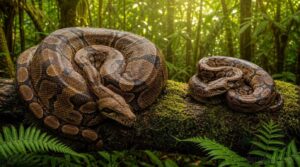
Not all boas are built the same, and sex plays a bigger role in size than most people expect.
Females tend to be noticeably larger than males, but the differences go beyond just total length. Here’s what sets them apart.
Female Size Advantage
In adult boa constrictors, sexual dimorphism runs deeper than a simple number on a tape measure — female length directly shapes survival and reproduction. This size dimorphism gives females real biological leverage:
- Greater Reproductive Output and larger litter sizes
- Greater Energy Reserves during gestation
- Stronger Predator Deterrence through sheer body mass
- Competitive edge in Nest Site Competition
- Increased Mate Preference from prospective partners
Females often growing larger than males isn’t a coincidence — it’s biology doing its job.
Male Tail Proportions
Here’s something worth noticing when you look closely at a male boa: his tail is proportionally longer than a female’s, a direct result of hemipenis positioning and the tail musculature needed for mating grip. This structural adaptation underscores a functional biological distinction between sexes.
This length-sex index reflects hormonal tail growth tied to reproductive function. Despite overall size dimorphism keeping males shorter, that extended tail region is where his biology quietly concentrates its investment, prioritizing mating success over overall body length.
Mature Body Differences
Beyond length, mature adult boa constrictors diverge in ways that reveal the full picture of size variability between sexes:
- Girth Disparities — Females carry noticeably greater midbody mass, reflecting higher Body Condition Index scores.
- Tail Muscle Development — Males show denser tail musculature despite slower overall growth rate.
- Reproductive Organ Size — Hemipenal tissue directly influences male tail bulk.
- Scale Count Differences — Subcaudal scales visibly distinguish sexes at full adult size.
Regular weight‑bearing exercise can help counteract muscle loss, as exercise slows sarcopenia.
Breeding Size Considerations
Pair size matching matters more than most keepers realize. For adult boa constrictors in breeding programs, keeping weight differential guidelines tight — within 10 percent — reduces dystocia risk and facilitates smoother courtship.
| Factor | Recommendation | Impact |
|---|---|---|
| Weight Differential | ≤10% between pair | Reduces dystocia risk |
| Courtship Space | +20% enclosure increase | Facilitates natural mating behavior |
| Stress Hideouts | Multiple per enclosure | Stabilizes reproductive hormones |
Courtship space allocation, stress hideouts, and proper thermal gradients all feed reproductive hormone support, directly influencing ovulation timing and litter size.
Boa Length by Type and Region
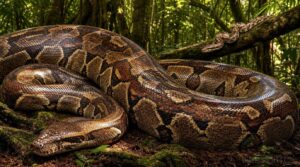
Not all boas are built the same, and where a boa comes from plays a bigger role in their size than most people realize.
Subspecies, geography, and even captive lineage can push that final length anywhere from a modest 6 feet to 13 or more. Here’s how the numbers break down across the main types and regions.
Mainland Boa Sizes
Mainland populations of adult boa constrictors are where the most impressive size data are found. Prey abundance and population density allow for unrestricted growth, enabling average adult length to commonly reach 6–10 feet. Growth rate peaks in early years, with historical size records approaching 12 feet.
Both conservation status and growth seasonality influence how consistently individuals attain their genetic potential. These factors determine whether boas achieve their maximum size under optimal conditions.
Island Boa Sizes
Island boas tell a different story. Genetic isolation and habitat specialization have driven insular dwarfism across island populations, where average adult length rarely exceeds six meters — markedly smaller than their mainland relatives.
Tail proportion remains longer relative to body size, and prey availability is a key limiting factor.
Sexual dimorphism is also less pronounced, distinguishing these populations through clear subspecies differentiation and constrained geographic distribution.
Amazon Basin Giants
The Amazon Basin is where boa constrictors reach their full growth potential. Specimens from these tropical rainforests regularly approach 4 meters, with the longest scientifically documented individual just over 4 m — the confirmed record length for the species.
Mainland giants from this region set the true average adult size standard, dwarfing island populations considerably.
Smaller Locality Boas
Not every boa is built like an Amazon giant. Smaller locality boas, including Boa constrictor ortonii, reflect Island Dwarfism Effects and Prey Availability Impact — their average length usually falls between 6–12 feet. Forest Habitat Growth and Seasonal Growth Variation shape their size estimation considerably.
Key characteristics include:
- Adults average 6–12 ft in the wild
- Island populations rarely exceed 2 m
- Females outsize males by 2–3 ft
- Habitat preference directly limits maximum growth
- Captive Care Optimization can push individuals toward the upper range
Captive Lineage Differences
Captive lineage differences can be just as striking as regional variation. Founder diversity shapes genetic potential for growth, meaning two captive specimens raised under identical conditions may reach noticeably different adult lengths.
Lineage growth outcomes improve when breeding compatibility is carefully matched, and nutrition tailoring aligns with each animal’s ancestry.
Enrichment protocols and genetics together determine whether captive breeding programs consistently produce larger, healthier adults.
What Affects Adult Boa Length?
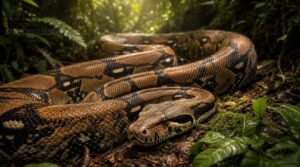
A boa’s final size isn’t just luck — it’s shaped by a handful of factors you actually have control over. Get these right, and your snake has a real shot at reaching its genetic potential.
Here’s what makes the biggest difference.
Genetics and Lineage
Think of your boa’s genetics as its built-in blueprint — one you can’t rewrite. Genetic makeup accounts for roughly 50% of length variability, meaning your snake’s lineage largely determines its ceiling.
Your boa’s genetics are its growth blueprint — and lineage determines roughly half of its final size
Mitochondrial haplotypes, Y‑chromosome markers, and lineage‑specific genes all shape genetic potential for growth. These factors collectively influence the inherent limits of a boa’s size.
Population phylogeny and genetic drift across subspecies explain why genetic variability in size is so wide, even within the same species. This diversity arises from evolutionary processes acting on distinct populations over time.
Feeding and Nutrition
Nutrition is where your boa’s genetic potential either gets realized or quietly stalled. High-quality protein intake — primarily thawed frozen rats sized at roughly 20–40% of your snake’s body length — facilitates steady linear growth.
Feeding frequency of every 10–14 days prevents obesity without sacrificing nutrient balance. This schedule ensures optimal health while supporting consistent development.
Hydration practices matter too; always offer fresh water, as proper hydration directly facilitates digestion and healthy shedding cycles.
Temperature and Humidity
Temperature regulation shapes how efficiently your boa metabolizes food and converts it into growth. Maintain a thermal gradient spanning 24–27 °C on the cool end and 29–32 °C at the basking zone. Thermometer placement at both ends ensures accurate readings.
Humidity management between 60–70% promotes healthy shedding. Ventilation strategies prevent stagnant moisture buildup.
Monitoring seasonal fluctuations helps maintain an ideal gradient year-round.
Enclosure Space
Space shapes growth more than most keepers realize. Your boa needs a minimum enclosure of 6 × 2 feet, with 12–18 inches of vertical clearance and enough floor depth allowance for comfortable resting. The linear length requirement ensures full 360-degree turning space without wall contact.
Proper enrichment placement planning within those enclosure dimensions allows skeletal development to reach its genetic ceiling.
Overfeeding Risks
Overfeeding your boa doesn’t accelerate growth — it redirects it toward fat gain instead of length. Obese boas face digestive overload, organ stress, and molting issues that compound over time.
Excess weight disrupts reproductive cycles and throws off natural feeding schedule rhythms.
Meeting your boa’s actual nutritional requirements means controlled, appropriately spaced meals — because health issues obesity in reptiles creates rarely reverse quickly.
Measuring Your Adult Boa Safely
Keeping tabs on your boa’s size isn’t just satisfying—it’s one of the smartest things you can do for their long-term health. Done right, it’s also safe and straightforward, even with a large, powerful snake.
Here’s what you need to know to track your boa accurately and confidently.
Length Tracking Methods

Tracking your boa’s length isn’t guesswork — it’s a discipline. A flexible tape measure laid along the natural curve of the body gives the most honest picture of true size, while noting curved vs. straight measurements adds precision to records.
- Use standardized units (inches or centimeters) consistently for clean data visualization.
- Document measurement techniques and posture in each entry to ensure comparability.
- Digital tape calibration guarantees your tools remain accurate across sessions.
Measuring Frequency

Monthly measurements are your baseline—don’t let the intervals slip. Just as frequency counters and spectrum analyzers track signal cycles with calibrated precision, your growth monitoring schedule demands the same discipline. Oscilloscope measurement principles apply here: consistent intervals reveal drift.
Log your data every 30 days using standardized measurement techniques. This transforms raw numbers into a meaningful growth story worth trusting.
Girth and Weight Checks
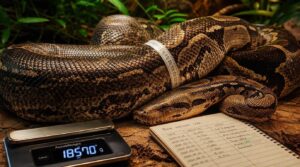
Beyond length, girth measurement technique and baseline weight tracking reveal what raw inches can’t. A soft tape behind the front legs, when weighed against consistent body weight records, tells the full story.
- Use a flexible tape—no girth stick needed
- Check frequency guidelines: weekly for growing boas, monthly for adults
- Flag girth-weight ratio analysis shifts immediately
These growth tracking numbers protect your animal.
Housing Size Adjustments
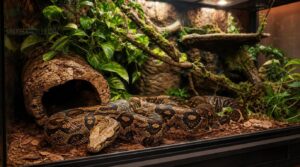
Those girth and weight numbers you’re logging don’t just reveal health — they tell you when housing space needs to change. Plan enclosure expansion timing around growth milestones: upgrade every 12–18 months for juveniles, targeting a gradual volume increase of at least 40%.
Adult enclosure dimensions for pet boas should meet vertical clearance standards, proper substrate depth planning, and a hide space ratio covering 10–15% of floor area.
Safe Handling Support

Once your enclosure upgrades are in place, safe snake handling becomes the next priority.
For boas over 6 ft, team handling isn’t optional — a second person helps distribute weight and respond if the snake constricts unexpectedly. Wear protective gear and use proper handling equipment like snake hooks, while keeping the area calm.
Stress reduction during handling sessions protects both you and your boa.
Frequently Asked Questions (FAQs)
How long do boas live in captivity?
In captivity, boas commonly live 25 to 35 years, with well-cared-for captive specimens occasionally reaching Lifespan factors like Veterinary Care, Nutrition Impact, and stable Enclosure Climate directly shape your boa’s life expectancy.
At what age do boas reach full length?
Most boas hit full length between four and six years. Juveniles grow fastest, subadults slow down, and adults mainly add girth — your growth curve analysis tells the real story.
Can boas keep growing their entire lives?
Yes — but barely. After hitting their adult length plateau, growth slows to a crawl due to metabolic aging effects and hormonal growth control.
Senescent growth slowdown means older boas add girth, not length.
What is the longest boa ever recorded?
Remarkably, the Guinness Record holder reached 24 feet — a captive giant far beyond wild counterparts.
Most verified record length measurements top out at around 18 feet, with historical claims beyond that rarely meeting modern verification standards.
Do captive boas grow longer than wild ones?
Not always — but under ideal conditions, captive specimens can match or exceed wild boas in total length. With proper nutrition, stress reduction, and enrichment, growth rates can approach record measurements.
Conclusion
Think of adult boa constrictor length like a river—slow-moving and easy to underestimate until you’re standing on the bank. A female Amazon Basin boa that fits in your arms at two years old may demand an eight-foot enclosure by year five.
Genetics, diet, and environment quietly shape every inch of that journey. Respect the trajectory early, plan your setup around the animal’s full potential, and you’ll never be caught unprepared.