This site is supported by our readers. We may earn a commission, at no cost to you, if you purchase through links.

Watch a corn snake without a hide and you’ll see the same loop: nose pressed to glass, tongue flicking, restless circling that never quite settles. That’s not curiosity. That’s a snake with nowhere to feel safe.
So do corn snakes need hides to feel secure? Clinically speaking, yes—hides aren’t decor, they’re biological necessities. Without one, cortisol climbs, digestion stalls, and appetite gets shaky.
Good news: solving this takes more know-how than money. From placement along the thermal gradient to picking the right material, getting hides right transforms a stressed snake into a confident one.
Table Of Contents
Key Takeaways
- Hides are biological necessities, not decor—without them, corn snakes show elevated stress, stalled digestion, and shaky appetite.
- Provide at least two or three hides covering different temperature zones (warm side 28–32°C, cool side 22–26°C), plus an optional humid hide with damp sphagnum moss for shedding support.
- Size hides so your snake can coil snugly inside (about 1.5 times curled girth) with entrances 1.25–1.75 times head width, using smooth, non-toxic materials to prevent scale damage.
- Clean hides every two to four weeks with reptile-safe disinfectants, dry them fully before reuse, and replace damaged ones within 24 hours to keep the habitat safe and stress-free.
Do Corn Snakes Need Hides?
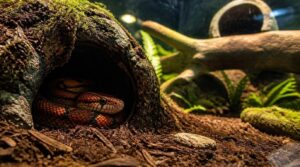
Short answer: yes, your corn snake absolutely needs hides, and it’s not negotiable.
Without a fully enclosed, light-blocking hide, your snake will feel exposed and stressed, so check out these corn snake hide placement tips to set things up right.
Without one, your snake lives in a constant state of "exposed and on edge," which takes a real toll on its body and mood. Let’s break down exactly why hiding spots matter so much, starting with the basics.
Yes, Hides Are Essential
Skip the hides and watch what happens: your corn snake stops eating, paces the glass, and stays wound tight with stress. Hides aren’t optional decor—they’re biological necessities tied to digestion, moisture regulation, and behavioral thermoregulation.
Wild corn snakes hide constantly, ducking predators and harsh daylight. Replicate that instinct, and you’ll see real confidence building, a steadier appetite, and a calmer, more secure snake overall. This sense of security is essential, as many species rely on compromise camouflage strategies to survive in changing environments.
Security and Privacy Needs
Picture being out in the open 24/7, no walls, no door to close. That’s life without secure hiding spots—privacy through shelter isn’t a luxury, it’s what lets your corn snake’s nervous system stand down.
Privacy through shelter isn’t a luxury, it’s what lets a corn snake’s nervous system finally stand down
Multiple entry and exit points matter too. A hide with one way in feels like a trap, not a sanctuary. Give your snake real choices, and confidence building follows naturally.
Stress Reduction Benefits
That closed door isn’t just privacy—it’s hormonal regulation in action. Secure hiding spots keep stress hormones from staying elevated, which trickles down into real benefits:
- Better sleep quality, with less restless shifting
- Improved digestive comfort after meals
- Sharper mental clarity and emotional stability
Chronic tension wears on snake behavior over time. A solid sense of security through stress reduction keeps your corn snake calmer, steadier, and noticeably more settled.
Natural Hiding Behavior
Wild corn snakes don’t hide because they’re shy—it’s pure survival instinct. Predation triggers send them straight for cover, while light sensitivity, temperature shifts, and sudden movement responses all factor into where they retreat.
| Trigger | Snake’s Response |
|---|---|
| Predator nearby | Seeks burrow immediately |
| Bright light | Moves to shaded spot |
| Loud noise | Retreats fast |
| Social stress | Chooses solitary hide |
Corn snake hides simply honor instincts already hardwired in.
Why Hides Help Corn Snakes
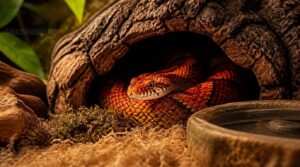
A hide isn’t just a hiding spot, it’s basically a tiny stress-relief station for your snake. Once you understand what’s happening biologically when your corn snake tucks itself away, the benefits start to click into place. Here’s exactly how hides work in your snake’s favor, one perk at a time.
Reduces Anxiety and Tension
A stressed corn snake doesn’t sit still—it paces, presses against glass, or stays half-exposed. Hiding spots interrupt that cycle by cutting visual stimulus and offering environmental stability.
Once tucked inside, your snake can skip the constant scanning and just relax. That quick recovery from disturbances matters: a snake that resets fast develops a real sense of security, not just survival mode.
Supports Healthy Appetite
Skip a meal or two and most owners panic—but often the real culprit is a snake that never feels safe enough to eat. Post-meal rest matters: corn snake hides let digestion happen undisturbed, supporting hunger signaling stability.
What keeps appetite steady?
- Temperature-regulated digestion via warm-side retreats
- Stress-induced refusal avoided through quick escape options
- Shedding and feeding comfort from humid hides
- Predictable safe spots reducing exposure anxiety
- Calmer handling days supporting consistent eating
Encourages Confident Exploration
Ever notice a snake darting straight back to cover after one cautious lap? That’s confidence building, not fear. With a secure retreat nearby, your corn snake risks more — sampling different microhabitats, testing height variation on branches, exploring fresh substrate.
This spatial awareness grows through repetition. Rotate hides seasonally and watch exploratory curiosity spike again — proof that behavioral enrichment starts with a reliable hiding spot, not an open, exposed tank.
Helps Digestion After Meals
A full belly turns your corn snake into a homebody, and that’s exactly the point. Tucked into a secure hiding spot, digestion stability improves through reduced movement and steady thermal regulation. Picture it like a post-Thanksgiving nap, just scalier:
- Post-meal resting in one spot
- Minimizing disturbances from handling
- Warm-side access helps metabolism
- Less pacing, fewer chills
- Reinforced sense of security
Promotes Nighttime Activity
Lights out doesn’t mean lights off for your corn snake—nightfall kicks off nocturnal thermoregulation cycles as it patrols between hides searching for ideal warmth.
| Trigger | Behavior |
|---|---|
| Cooling air | Seeks warm hide |
| Scent trails | Navigation cues |
| Dark period | Activity peaks |
| Secure hiding spots | Confident exploration |
This microhabitat exploration builds genuine behavioral enrichment, satisfying natural behaviors while reinforcing that quiet sense of security.
Best Hide Placement Strategy
Having a hide is only half the job, where you put it matters just as much. Your snake needs options at different temperatures so it can regulate its body without ever feeling exposed. Here’s exactly where each hide should go for the best results.
Warm-side Hide Placement
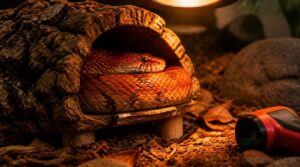
Picture a snake digesting dinner in the open, exposed and vulnerable. That’s stress, not comfort. Your warm side hide needs heat source proximity for digestion microclimates, without sacrificing security.
Verify floor temps with infrared verification — aim near basking range. A slight air gap (raise it on small risers) prevents overheating while preserving warmth, letting your corn snake settle into a genuine sense of security.
Cool-side Hide Placement
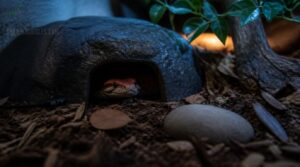
Now flip to the far end of the enclosure, away from your heat source. The cool side hide gives your corn snake a true thermal gradient access point — somewhere to retreat after digesting or just cool off.
- Substrate level entry, no climbing required
- Dark, snug interior for sightline security
- Easy retreat accessibility from the front
- Verified with thermoregulation monitoring via probe thermometer
Central Humid Hide Option
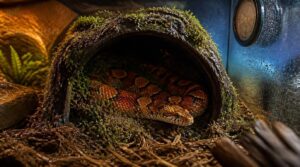
Set a third hide somewhere between those two zones — this is your humid hide, and it’s less about temperature, more about moisture regulation. Pack it with damp sphagnum moss for shedding cycle support and scale rot prevention.
Localized humidity beats misting the whole tank: you get microclimate stability right where it counts, without soggy substrate everywhere else. Check it with a hygrometer for real humidity control.
Temperature Gradient Access
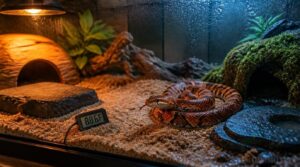
Here’s the thing your three hides need to share: temperature gradient access, so your snake can sense and reach each zone without barriers in the way.
- Keep warm side around 28-32°C
- Cool side at 22-26°C
- Avoid sharp drops
- Use thermostatic control accuracy
Substrate depth and seasonal swings affect this gradient, so check it often.
Avoid Exposed Open Areas
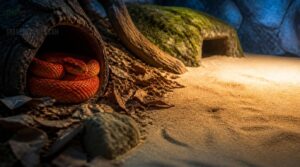
A wide-open tank looks tidy, but to your snake it screams danger. Without visual coverage, every shadow and footstep becomes movement disturbance, triggering instincts built for predator mimicry.
| Exposed Setup | Secure Setup |
|---|---|
| No sense of security | Multiple hiding spots |
| Light sensitivity stress | Shaded hide box |
| Constant alertness | Calm, natural instincts |
Cover those open patches—your corn snake will thank you.
How Many Hides Are Needed?
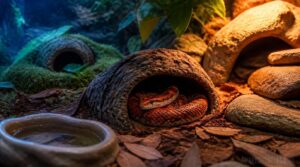
So how many hides does your corn snake actually need? More than one, that’s for sure, and the number you choose says a lot about how secure your snake will feel. Let’s break down exactly what your setup should include.
Minimum Two Hides
Two is the magic number: any fewer, and your corn snake’s stuck choosing between feeling safe and feeling comfortable. One hide per temperature zone keeps thermal gradient access intact while preserving that all-important sense of security.
Look for snug coiling wall contact and crevice simulation in each spot. Bonus points for multi-exit design—nobody likes a dead-end burrow when danger feels close.
Warm Hide Requirement
Why does your corn snake need a hide on the warm side? Without one, thermal stability turns into exposure anxiety.
Your warm hide needs:
- Heat-efficient materials (avoid insulating plastics)
- 28-32°C interior temps, checked with infrared monitoring
- Ventilation preventing condensation buildup
- Easy thermoregulation access nearby
This sense of security lets your snake bask confidently, supporting healthy thermoregulation without sacrificing comfort on the warm side.
Cool Hide Requirement
Ever wonder where your snake goes to cool off and just breathe? That’s the cool hide’s job.
| Feature | Target Range | Why It Matters |
|---|---|---|
| Interior temp | 72-78°F | Prevents metabolic stress |
| Placement | Far cool side | True concealment vs exposure |
| Darkness | Dim, snug | Helps with thermoregulation |
Monitor with a probe thermometer for real microclimate accuracy—not guesswork. A solid cool hide keeps your gradient honest.
Optional Humid Hide
Picture a personal spa tucked into the warm side—that’s your humid hide. Pack it with damp sphagnum moss to lock in moisture; it holds humidity far longer than loose substrate alone.
Aim for 70-90% relative humidity inside, especially during shedding cycles. Check weekly, dampen when dry, and swap moss out if mold starts creeping in. It’s a small addition with big shedding payoff.
Extra Hides for Enrichment
Three’s the minimum, but more hides mean serious habitat enrichment. Try vertical stacking, multiple entry tunnels, or rotating hides seasonally for novelty.
- Coconut husk for texture variety
- Stackable hides for vertical interest
- Ceramic for cool microclimates
- Wood for warmth retention
- Irregular openings for problem-solving
Different types of corn snake hides create distinct microclimates throughout your enclosure, turning basic shelter into genuine exploration.
Choosing Safe Corn Snake Hides
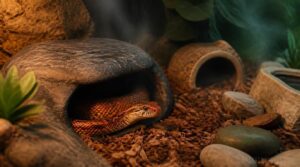
Not every hide on the pet store shelf deserves a spot in your snake’s tank. Picking the right one comes down to a handful of safety checks, not guesswork. Here’s exactly what to look for before you buy.
Snug but Not Cramped
Sizing your corn snake’s hide box is a balancing act. Too roomy, and your snake feels exposed; too tight, and it can’t coil comfortably. Aim for interior space 1.5 times their curled girth, with room for three full coils.
Entrances should run 1.25–1.75 times head width—snug, not suffocating. Adjust as they grow, since hiding spots need resizing right alongside your snake.
Smooth Interior Surfaces
Fit matters, but texture seals the deal. Run your finger along the interior—any rough patches or splinters mean it’s time to look elsewhere.
Smooth edges prevent scale damage, plus they’re part of proper snake proofing for any hide box.
Why smooth wins:
- Non-porous materials resist bacteria buildup
- Easier surface cleaning, less microbial harboring risk
- Moisture resistance keeps mold away, with bonus aesthetic appeal
Non-toxic Hide Materials
Smooth surfaces protect scales, but what the hide’s made of matters just as much. Stick with nontoxic wood, cork bark, ceramic, or newer options like mushroom leather and biobased polymers.
| Material | Key Benefit | Best For |
|---|---|---|
| Cork bark | Natural insulation | Warm-side hides |
| Ceramic | Thermal buffering | Heat retention |
| Mushroom leather | Breathable, compostable | Eco-conscious owners |
| Biobased polymer | Safe for mouths | Easy disinfecting |
| Recycled plastic | Odor-resistant | High-humidity zones |
Easy-to-clean Designs
Picture cleanup day with a hide that wipes spotless in seconds, no scrubbing required. Look for these:
- Non-porous materials—ceramic and resin resist bacteria buildup
- Smooth surfaces with no textured grooves trapping grime
- Plastic containers that handle frequent disinfecting without warping
These maintenance-friendly features mean faster cleaning cycles and better sanitization efficiency, keeping your corn snake’s hide genuinely hygienic between deep cleans.
Avoid Sharp Edges
Run your fingers along every interior surface before buying—preventing scale snagging matters as much as cleanliness. Smooth edge radii, beveled openings, and softened entry points protect your corn snake from abrasions. Inspecting material burrs or chipped seams catches hazards early.
Choose nontoxic materials with continuous curves; rough or cracked reptile shelters injure scales. Every careful keeper checks edges, not just looks.
Top 5 Corn Snake Hide Items
Knowing what makes a hide safe is one thing, finding the right products is another. You don’t need a fancy setup, just a few smart picks that check every box. Here are five items worth adding to your snake’s personal spa.
1. Jedew Mini Digital Hygrometer
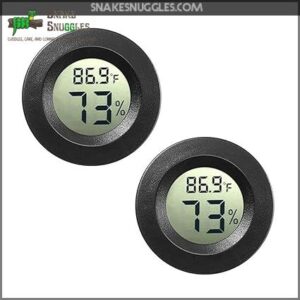
Want to know exactly what’s happening inside that hide without cracking the lid every five minutes? The Jedew Mini Digital Hygrometer reads temperature and humidity together, updating every 10 seconds, so you catch swings before your snake does.
Its compact housing tucks behind decor easily, and switching between Fahrenheit and Celsius takes one button press. With ±1°F accuracy, you’ll keep that humid hide properly damp without guessing—because soggy moss or bone-dry moss both spell shedding trouble.
| Best For | Reptile keepers and terrarium owners who need quick, reliable temperature and humidity checks without disturbing their pet’s enclosure. |
|---|---|
| Reptile Use | Humidity monitoring for enclosures |
| Primary Function | Temperature/humidity gauge |
| Material | ABS plastic case |
| Maintenance Needed | Periodic battery replacement |
| Weight | 40 g |
| Setup Effort | Insert battery and place |
| Additional Features |
|
- Updates every 10 seconds, so you catch humidity and temperature swings fast
- Compact, easy-to-hide housing with simple Fahrenheit/Celsius switching
- Long battery life (up to 10 months) with a backup cell included
- Humidity accuracy (±3-5% RH) may not be precise enough for high-end cigar humidors or lab use
- Humidity readings can lag behind rapid changes compared to temperature readings
- Working temperature range is limited to 32°F-122°F, narrower than its full display range
2. Reptile Terrarium Plant Decoration Kit
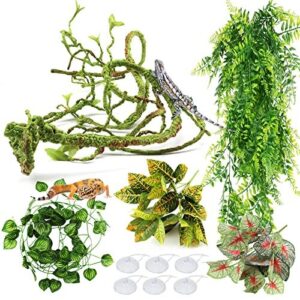
Bare enclosures look stark, and your corn snake notices. A reptile terrarium plant decoration kit adds layered hanging vines, ivy clusters, and leaf foliage—instant cover that doubles as climbing routes for exploration.
These pieces mount with suction cups onto glass, rearranging in seconds without tools. Non-toxic, waterproof materials handle regular misting fine.
One catch: foam vines sag under heavier snakes, so treat them as visual texture and security, not load-bearing hides. Clean glass first—dirty surfaces wreck suction grip fast.
| Best For | Reptile and amphibian keepers who want to add climbing structure and visual cover to a terrarium without the upkeep of live plants. |
|---|---|
| Reptile Use | Climbing and hiding decor |
| Primary Function | Artificial terrarium foliage |
| Material | Foam, plastic, iron wire |
| Maintenance Needed | Cleaning and repositioning |
| Weight | 10.22 oz |
| Setup Effort | Mount with suction cups |
| Additional Features |
|
- Suction cups make setup and rearranging quick, with no tools required
- Non-toxic, waterproof materials hold up well to regular misting
- Bendable wire-core foliage lets you customize climbing routes and hiding spots
- Foam vines can sag under the weight of larger or heavier snakes
- New pieces may carry a plastic smell that needs airing out before use
- Suction cups lose their grip on dirty or textured glass, so surfaces need cleaning first
3. Sukh Sphagnum Reptile Moss
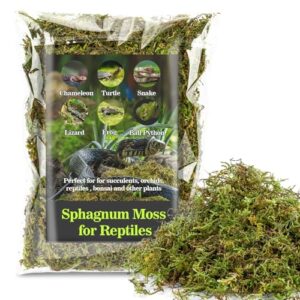
Soft, springy, and surprisingly thirsty—this stuff soaks up moisture like a sponge and releases it slowly, holding humidity for several days post-misting. Tuck a handful into your humid hide and you’ve built a shedding-friendly microclimate without saturating the whole tank.
Your corn snake gets a cushioned burrowing surface too. Just don’t go overboard: layer it thin, watch for that telltale mildew smell, and refresh every few weeks. It’s a humidity assist, not a standalone substrate.
| Best For | Reptile and amphibian keepers who need a natural humidity boost for snakes, frogs, geckos, and other moisture-loving species, as well as hobbyists growing orchids or succulents. |
|---|---|
| Reptile Use | Burrowing and humidity hide |
| Primary Function | Moisture-retaining substrate |
| Material | Natural sphagnum peat moss |
| Maintenance Needed | Regular misting and replacement |
| Weight | 5.6 oz |
| Setup Effort | Mist and place in tank |
| Additional Features |
|
- Holds moisture exceptionally well, keeping humidity stable for several days after misting
- Soft, expandable texture makes great nesting spots and supports natural behaviors like burrowing and shedding
- Doubles as a planting medium for orchids, ferns, and succulents
- Not suitable as a standalone substrate—needs to be mixed with other materials for drainage
- Can turn dusty or powdery over time, requiring periodic replacement
- Needs regular misting and monitoring, since over-wetting can lead to mold issues
4. Fluker’s Reptile Terrarium Scrub Brush and Cleaner
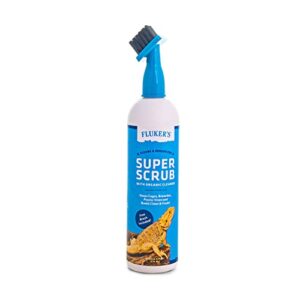
Hides only stay snake-safe if you actually clean them, and that’s where Fluker’s Scrub Brush and Cleaner earns its spot. The built-in bristle brush gets rid of stuck-on waste one-handed while you spray—no separate scrubber needed.
The organic enzyme formula dissolves grime on rocks, hides, and bowls without leaving chemical residue behind. It deodorizes too, so your tank smells fresh, not just "masked." Just store it upright; the bottle’s prone to leaking otherwise.
| Best For | Reptile owners who want a one-handed, chemical-free way to scrub and deodorize enclosures for bearded dragons, geckos, snakes, and turtles. |
|---|---|
| Reptile Use | Enclosure cleaning solution |
| Primary Function | Enzyme cleaner with brush |
| Material | Non-toxic enzyme formula |
| Maintenance Needed | Regular reapplication for cleaning |
| Weight | 1.28 lbs |
| Setup Effort | Spray and scrub |
| Additional Features |
|
- Built-in stiff-bristle brush scrubs while you spray, no extra scrubber needed
- All-natural enzyme formula cuts through grime and odors without chemical residue
- Safe to use on glass, water bowls, food bowls, hides, and decor
- Bottle can leak if not stored upright or once it’s partially empty
- Built-in brush gets awkward on tall or vertical surfaces
- Doesn’t disinfect against parasites, so deep cleans may need extra products
5. Resin Reptile and Fish Cave
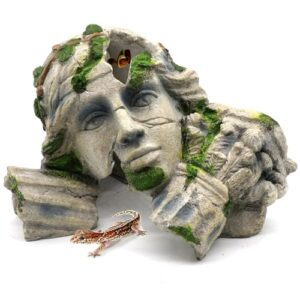
Picture a jungle boulder that fits in your palm—that’s this resin cave. Five entry points plus swim-through chambers mean your corn snake never feels cornered, and the one-piece construction resists cracks better than wood ever could.
At 7.9 x 5.9 x 5.9 inches, it suits juveniles through adults. Soak it 10-15 minutes before first use, then wipe clean every few weeks. Bonus: it doubles as a basking perch when placed near your heat source.
| Best For | Reptile and aquarium keepers who want a durable, naturalistic hideout for snakes, amphibians, fish, shrimp, or crustaceans that need a private, dark retreat to feel secure. |
|---|---|
| Reptile Use | Hiding and privacy spot |
| Primary Function | Resin hide cave |
| Material | Safety resin |
| Maintenance Needed | Soaking before first use |
| Weight | 1.7 lbs |
| Setup Effort | Soak then place in tank |
| Additional Features |
|
- Multiple entry points and swim-through chambers give pets plenty of ways to explore and hide, reducing stress
- One-piece resin construction holds up better against cracking than wood-based alternatives
- Works double duty as a basking perch when set near a heat source, plus aeration holes keep aquatic setups healthy
- Needs a 10-15 minute cold water soak before first use, so it’s not ready straight out of the box
- Gray coloring may look duller in person than in marketing photos
- Delicate species like Betta fish should be watched closely for potential fin snagging on the textured surface
Cleaning Hides for Snake Security
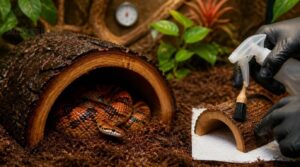
A great hide loses its charm fast if it turns into a germ hotel. Keeping things secure isn’t just about placement, it’s about upkeep too. Here’s exactly how to keep those hiding spots safe and snake-approved.
Clean Every 2-4 Weeks
A grimy hide isn’t just gross—it’s a bacteria buffet waiting to happen. Clean every two to four weeks as your baseline, tightening to weekly if your snake sheds or eliminates inside it. Sanitation isn’t optional housekeeping; it’s essential enclosure maintenance.
Set a calendar reminder. Consistent sanitization protocols catch mold and buildup before they become a respiratory problem, keeping your snake’s "personal spa" actually relaxing instead of risky.
Use Reptile-safe Disinfectants
Not every cleaner belongs near a snake. Reach for a reptile-safe disinfectant like F10SC (1:500) or chlorhexidine (1:100); never use bleach mixed with ammonia—that combo creates toxic fumes.
Test compatibility on a hidden spot first; wood warps, but plastic doesn’t. Stick to non-porous surfaces for harsh chemicals, and always let everything dry completely before reassembly. Your snake’s lungs will thank you.
Check Mold and Mildew
Mold doesn’t announce itself—it sneaks in through seams and crevice growth areas where moisture lingers. Watch for fuzzy, powdery, or slimy patches in white, black, or green; a musty smell often means trouble before you see it.
- Check the moist hide underside (poor airflow)
- Sniff for musty odors
- Inspect crevices weekly
- Watch humidity levels closely
Left unchecked, dampness invites scale rot too.
Fully Dry Before Replacing
Once a hide is scrubbed clean, resist the urge to pop it right back in. Fully dry hides stop mold before it starts and keep bacteria from setting up microenvironments behind the surface.
Lingering moisture also warps substrate and weakens sealant over time. Air-dry completely—24 hours minimum—so your humidity gradient stays stable and your snake’s hiding spots stay genuinely safe.
Replace Damaged Hides Quickly
Cracks, chew marks, or warping mean it’s time to act—within 24 hours, not "someday." Damaged corn snake hides become hiding spots for bacteria, not your snake.
Keep 1-2 spare hides ready so rapid replacement is painless. Match size and entry points to the original, then watch your snake for 3-7 days afterward. A little stress monitoring goes a long way.
Frequently Asked Questions (FAQs)
Do corn snakes need a hide box?
Yes—absolutely. A corn snake enclosure without hiding spots leaves your snake exposed, triggering stress instead of psychological security.
Hides support behavioral thermoregulation, satisfy instinctual burrowing urges, and double as smart habitat enrichment options for genuine snake wellbeing.
How do you hide a corn snake?
Picture two snug retreats, one warm, one cool, sized so your snake’s body touches every side. Proper hide sizing matters most: too roomy feels exposed, too tight feels trapped. That balance is what makes hiding spots actually work.
Are bigger enclosures better for corn snakes?
Bigger really is better here: more floor space means stronger thermoregulation gradients, room for multiple corn snake hides, and richer enrichment.
Just remember, larger terrarium setups scale up maintenance demands and require tighter escape-proofing—secure lids and sealed vents are non-negotiable as enclosure size grows.
Why is a corn snake enclosure important?
Your corn snake’s enclosure is more than a box—it’s the foundation for thermal regulation, escape prevention, and habitat stability. A secure, well-designed corn snake enclosure encourages natural behaviors, reduces stress, and keeps your snake thriving long-term.
Do corn snakes need a hide?
Imagine a corn snake left in a bare tank, pacing endlessly, refusing food. That restlessness fades fast with proper cover.
Absolutely, hides are non-negotiable—they satisfy predator avoidance instincts, support behavioral thermoregulation, and trigger natural nocturnal activity, turning a stressed reptile into a confident one.
Can corn snakes have too many hides in their tank?
Yes, you can overdo it. Too many corn snake hides cause enclosure crowding, blocking movement and navigation flow.
Stick to two or three well-placed reptile shelters—enrichment shouldn’t mean clutter. Balance hiding spot density with open space for healthy exploration.
Should hide placement change as snakes grow larger?
Picture outgrowing your childhood bedroom—comfy once, cramped now.
Same goes for corn snake hides through growth stage upgrades: hatchlings, juveniles, and adults all need bigger spaces, but keep warm and cool spatial memory preservation intact to ease moving stress and thermoregulation consistency.
Conclusion
Some keepers still treat hides like throw pillows—nice if you have room, optional if you don’t. Your snake disagrees, and its cortisol levels back that up.
So do corn snakes need hides to feel secure? Clinically, unquestionably yes. Two hides, correct gradient placement, clean and snug, and you’ve solved 90% of stress-related issues before they start.
Skip this step, and you’re just guessing why your snake won’t eat. Give it shelter, and watch confidence replace that anxious glass-pressed pacing for good.
- https://www.happydragons.com/buying-guides/corn-snake-deluxe-buying-guide
- https://internetreptile.com/blogs/care-sheets/corn-snake-care-sheet
- https://reptifiles.com/corn-snake-care-guide/corn-snake-terrarium-size
- https://www.rspca.org.uk/adviceandwelfare/pets/other/cornsnake
- http://www.jensensreptiles.com/corn-snakes