This site is supported by our readers. We may earn a commission, at no cost to you, if you purchase through links.

Every spring, somewhere beneath the frost line of Manitoba, tens of thousands of red-sided garter snakes wake up—and the first thing the males do is find a female. Not one at a time. All at once. The result is a writhing mass of coiled bodies, sometimes a hundred males deep, competing for a single receptive female in what biologists call a mating ball.
It sounds chaotic, and it is. But beneath the tangle, this behavior follows precise biological logic—temperature cues, pheromone gradients, sperm competition, and thermal physics all converging in a narrow two-to-three-week window. The snake mating ball phenomenon is one of the most concentrated reproductive events in the vertebrate world, and understanding it reveals just how complex "simple" animal behavior can be.
Table Of Contents
Key Takeaways
- Mating balls aren’t random chaos — they’re a tightly timed reproductive strategy where dozens of males compete simultaneously for a single female, driven by pheromone signals detectable up to 50 meters away.
- Females benefit from this frenzy too, storing sperm from multiple males to produce genetically diverse offspring that are more resilient to disease.
- The entire event hinges on a razor-thin seasonal window of just one to three weeks, triggered by soil temperatures crossing 5–10°C and lengthening daylight, meaning a single cold snap can shut it all down.
- Climate change is quietly disrupting this ancient timing — warmer springs push male emergence earlier before females peak in pheromone production, reducing how many successful mating balls actually form.
What is a Snake Mating Ball?
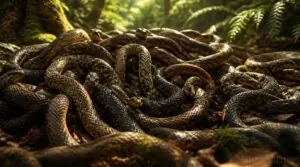
If you’ve ever stumbled across a writhing knot of snakes and wondered what on earth you were looking at, you’re not alone — and there’s actually a fascinating explanation behind it. A snake mating ball is one of nature’s more surprising spectacles, and understanding it starts with getting a few key things straight. Here’s what you need to know before we go further.
From garter snakes to pythons, these synchronized snake mating behaviors vary surprisingly across species and regions, shaped by everything from climate to evolutionary history.
Simple Definition
A snake mating ball is exactly what it sounds like: a writhing cluster of snakes, often dozens of males coiled around a single female, competing to mate with her.
Think of it as nature’s most chaotic courtship ritual — no candlelit dinners here. The term describes a reproductive aggregation, not aggression, and it’s completely natural snake behavior.
Scientific Term
In biology, this behavior carries a precise label: reproductive aggregation. More specifically, researchers working in reproductive ecology and sexual selection classify it as a mating ball — a term standardized across field studies and peer-reviewed literature to describe the multi-male clustering around a single receptive female.
With the red-sided garter snake (Thamnophis sirtalis parietalis), the term anchors a much broader body of research into chemical communication and mate competition.
Common Misconceptions
That precise label invites its own set of myths. Many assume every mating ball contains one dominant male — in reality, dozens compete simultaneously.
Ball size varies widely, driven by female receptivity and local male density, not habitat size.
Seasonal timing is misread too; cool spring temperatures don’t prevent formation.
And touching snakes to get a closer look? That disrupts the very behavior you came to witness.
Species Most Associated
When discussing mating balls, one genus dominates the conversation: Thamnophis — the garter snakes. Across North America, they’re the archetype for this behavior, forming balls reliably enough that researchers treat them as the reference species.
The standout example is Thamnophis sirtalis parietalis, the red-sided garter snake of Manitoba’s Narcisse Snake Dens — where up to 100,000 individuals gather annually.
Mating Versus Brumation
Before mating can happen, snakes must first survive winter — and they do it through brumation, a metabolic dormancy triggered by dropping temperatures and shortening days.
Unlike hibernation, brumation isn’t a deep sleep; snakes remain physiologically suspended, reproductive systems paused.
When spring emergence begins and warmth returns, hormonal cycles restart, cueing the red-sided garter snake into the intense, brief breeding window where mating balls form.
Research shows that proper brumation improves clutch size, leading to higher fertility rates in many species.
Why Snake Mating Balls Form
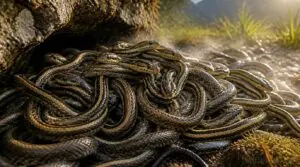
Snake mating balls don’t just happen by accident — there’s a chain of biological events driving every single one. Understanding what triggers them makes the whole spectacle far more fascinating than it might first appear. Here’s what’s actually going on beneath that writhing mass of scales.
Spring Breeding Rush
Every spring, red-sided garter snake males break brumation with urgency, not patience. Temperature-driven activity kicks in around 10–15°C, flooding their systems with hormones that fuel male competition and relentless spring emergence toward receptive females — all before peak prey arrives.
- Mating ball clusters form fast
- Northern windows shrink every season
- Regional timing shifts south to north
- Hormonal surges override hunger drives
Female Pheromone Signals
What draws dozens of males to a single female isn’t sight — it’s chemistry.
Receptive females release a mixture of long-chain methyl-ketone pheromones through shed skin, detectable up to 50 meters away.
Males collect these airborne particles with their forked tongues and deliver them to the Jacobson’s organ, which translates chemical signals into precise directional information, pulling every nearby male toward her location.
Male Competition
Once that pheromone trail lands, male competition erupts.
Rising testosterone drives red-sided garter snakes into wrestling and grappling, each coiling tightly around rivals to reach the female first. In mass mating aggregations, sheer size wins.
- Dominance displays quickly establish hierarchy before contact
- Physical combat outcomes determine copulation order
- Sperm competition continues even after mating
- Sexual selection ultimately favors persistent males
Short Northern Mating Windows
Time is ruthless for the red-sided garter snake.
Spring emergence phenology gives northern populations just one to three weeks when daytime temperatures consistently clear 10°C and nights stay above freezing — a compressed breeding season that drives every mating ball into frenzied urgency.
Photoperiod cues and snowmelt-warmed microclimates trigger the window, but a single cold snap can shut it down completely.
Reproductive Advantage
The mating ball isn’t chaos — it’s a reproductive strategy refined over millennia. Polyandry lets females store sperm from multiple males, producing litters with genetic diversity that makes offspring more resilient to disease. Sperm competition pushes males toward peak condition, and females often favor larger, more persistent suitors.
The mating ball is not chaos but a millennia-refined strategy where polyandry, sperm competition, and female choice converge to strengthen the next generation
Every wrestle inside that writhing ball shapes which genes survive the winter.
Inside a Garter Snake Mating Ball
Once a female garter snake surfaces from the den, things move fast — and what unfolds is more structured than it looks from the outside. A single ball can involve dozens of competing males, each with a very specific biological agenda. Here’s what’s actually happening at every stage.
One Female, Many Males
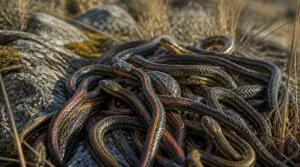
When a single female red-sided garter snake surfaces, the response is almost instant. One female is surrounded by up to one hundred males within minutes, each tracking her female pheromone signal. This isn’t chaos — it’s male competition shaped by biology. Polyandry delivers measurable genetic benefits:
- Multiple paternity increases offspring robustness
- Sperm competition filters stronger genetics
- Female mate selection shapes the future lineage
Inside the mating ball, evolution is simply doing its work.
Coiling and Wrestling

What unfolds is a male combat dance.
Males use coiling behavior to press inward, sharing body heat while displacing rivals. Male competition plays out through wrestling — pushes and grapples that reward physical strength. Tactile social cues guide each move in the mating ball.
| Behavior | Function |
|---|---|
| Coiling | Heat conservation |
| Wrestling | Rival displacement |
| Pushing | Positional control |
This mating ritual is surprisingly raw.
Cloacal Alignment
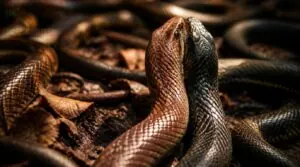
Once a male wins position, the real precision begins. Cloacal alignment — the coordinated positioning of both animals’ cloacas — determines whether copulation actually succeeds. The male curves his posterior ventrally, guiding the hemipenis toward the female’s urogenital opening with muscular contractions that tighten or ease depending on temperature and rival pressure.
Warmer muscles respond faster, making alignment quicker and more stable despite the writhing mass around them.
Heat Conservation
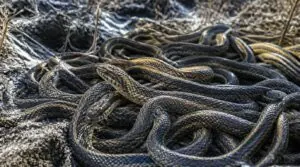
That precision of alignment isn’t just about reproduction — it’s also about survival against the cold.
The mating ball functions as a thermal collective, where metabolic heat sharing and coiling surface reduction cut heat loss dramatically. Tightly wound bodies limit conductive heat loss to the ground, while solar radiation absorption on the ball’s outer layer warms the entire cluster — microhabitat thermal buffering at its most instinctive.
Copulation and Guarding
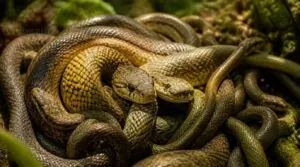
When copulation finally occurs, the successful male doesn’t simply move on — he guards. Postcopulatory guarding can persist for hours, reducing the female’s chances of remating and securing paternity against sperm competition.
That vigilance carries real costs: reduced foraging, predator exposure. Yet for a male who’s already paid the price of the mating ball, protecting his investment is the only reproductive strategy that makes biological sense.
How Many Snakes Are Involved?
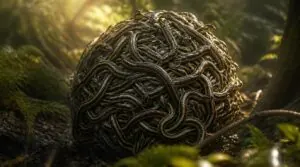
The numbers behind a snake mating ball are genuinely hard to wrap your head around — we’re not talking about a dozen snakes, but potentially dozens to thousands packed into a single writhing mass.
Several factors shape just how large these gatherings get, from the size of the female at the center to how many males have emerged that season.
Here’s what actually drives the scale of these events.
Typical Ball Size
Most mating balls involving the red-sided garter snake contain 4 to 12 individuals, though that number shifts with local conditions. Higher population density drives more males toward a single female faster, sometimes pushing counts above 15 during peak emergence.
Early spring sees the largest balls; late-season ones shrink as males disperse. Shared body heat within the cluster helps everyone stay active longer.
Narcisse Snake Dens
If there’s one place on Earth that redefines scale, it’s Narcisse Snake Dens in Manitoba, Canada.
Each spring, the limestone karst hibernacula release between 70,000 and 100,000 red-sided garter snakes, making mating ball formation almost constant. Key facts:
- Up to 20,000 snakes per den
- Four documented hibernacula
- World’s largest annual snake gathering
- Strong site fidelity among returning individuals
- Reliable regional health indicator for garter snake populations
Large Female Attraction
Larger females draw disproportionate attention. Their bodies produce greater pheromone concentrations — long-chain methyl-ketone compounds detectable by males up to 50 meters away — because elevated estrogen levels during peak receptivity improve pheromone signaling.
That chemical potency translates directly into bigger mating balls surrounding a single female.
Polyandrous mating follows, with females storing sperm from multiple males, quietly exercising cryptic female choice over which sire ultimately contributes to offspring.
Male-Biased Emergence
Males emerge 7–14 days before females, flooding den exits before a single female surfaces.
Testosterone-driven aggression spikes fast, ramping up metabolic costs as males begin spatial patrolling patterns across the surrounding terrain.
Their pheromone detection sharpens precisely when it matters most — priming them for the mass mating frenzy that defines red-sided garter snake mating season.
Population Density Effects
At Narcisse, sheer numbers change everything. When 70,000 to 100,000 red-sided garter snakes converge on four dens, pheromone concentration levels skyrocket, pulling males toward receptive females far faster than sparse populations ever could.
That density also compresses social interaction rates, intensifying male competition and accelerating mating ball formation — but crowding raises pathogen transmission risks, making healthy habitat maintenance genuinely critical.
When and Where They Happen
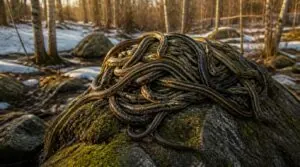
Snake mating balls don’t happen randomly — they’re tied to very specific moments in the calendar and very specific places on the map. Knowing when and where to look makes all the difference between stumbling across this phenomenon and actually understanding it. Here’s what shapes the timing and location of these impressive gatherings.
Late April to May
By late April, three environmental shifts converge to trigger snake mating behavior:
- Ground temperatures climb above 5°C
- Daylight duration increases by 1–2 minutes each day
- Soil moisture rises with returning spring rains
These overlapping cues pull red-sided garter snakes out of brumation simultaneously, compressing the entire mating ball season into a narrow, fiercely competitive window of just a few weeks.
Hibernacula Den Exits
When those environmental cues align, red-sided garter snakes don’t simply pour out randomly — they funnel through south-facing den exits designed by geology itself.
At the Narcisse Snake Dens, hibernacula openings orient toward sunlit slopes, channeling snakes along thermal pathways that improve warmth.
Dense ground cover nearby shields them from predators, while rock ledges overhead block wind chill without blocking the sun.
Temperature Triggers
Ground temperature rising above ~5°C triggers temperature-dependent emergence, shifting metabolic rates and pulling snakes toward den exits with urgency.
- Thermal threshold impacts activate hormonal readiness
- Metabolic rate shifts fuel intense mate-seeking
- Microclimate selection concentrates snakes at warm exits
- Pheromone diffusion rates rise sharply in warmer air
Warmer spring temperatures compress the breeding window, packing the mating ball frenzy into days.
Photoperiod Cues
Temperature isn’t the only clock snakes follow. As days grow longer, photoperiod cues register through light-sensitive photoreceptors, syncing with the circadian clock to confirm spring’s arrival.
This overlap — the external coincidence model — triggers hormonal readiness only when daylight duration aligns with internal timing. Day length stays consistent year to year, giving snakes a reliable seasonal signal that temperature alone can’t provide.
Manitoba’s Narcisse Dens
About six kilometers north of Narcisse, Manitoba, limestone sinkholes carved by water erosion through karst terrain descend deep enough to shelter between 70,000 and 100,000 red-sided garter snakes each winter. Subterranean chambers maintain consistent humidity, protecting overwintering snakes from lethal frost.
Each spring, that same geology funnels them upward into one of Earth’s most impressive displays of male competition and mating ball formation.
Safety, Ethics, and Conservation

Watching tens of thousands of snakes writhing together is genuinely unforgettable, but it comes with real responsibility.
Whether you’re planning a trip to Narcisse or simply want to understand the bigger picture, knowing how to engage with this phenomenon ethically matters. Here’s what you should keep in mind regarding safety, conservation, and respectful observation.
Observe Without Touching
You don’t need to touch a mating ball to understand it. Stay 6 feet back, binoculars raised, letting the red-sided garter snake’s movements tell the story.
Simple nonintrusive methods work best:
- No flash photography
- Log time, weather, and location quietly
- Track shadows rather than approach
At the Narcisse Snake Dens, passive observation protects both snake mating behavior and wildlife tourism.
Protect Hibernation Dens
Protecting the limestone hibernacula at the Narcisse Snake Dens means more than keeping people back — it means preserving the microclimate conditions that let red-sided garter snakes survive winter underground. Buffer zones around den entrances prevent trampling and debris accumulation that disrupts airflow and humidity.
Seasonal closures, riparian buffers, and habitat conservation work together to safeguard every mating ball you witness next spring that had a safe place to shelter first.
Avoid Road Mortality
Roads cut through red-sided garter snake corridors, causing habitat disruption and road mortality during spring emergence. Three interventions help:
- Wildlife underpasses channel snakes safely beneath traffic.
- Roadside signage and traffic calming alert drivers during mating ball season.
- Citizen science maps hotspots for fencing and barriers.
Habitat connectivity between dens and foraging grounds reduces how often snakes need to cross roads at all.
Climate Timing Changes
Warming ground temperatures are shifting spring emergence earlier by days or even weeks, compressing the mating window that red-sided garter snakes depend on.
When snowmelt accelerates but females haven’t yet peaked in pheromone production, phenological desynchronization disrupts the delicate timing between male arrival and receptive females — fewer mating balls form, reducing reproductive success across the population.
Responsible Wildlife Viewing
At Narcisse, Manitoba, the viewing platforms exist for a reason — stay on them.
Keep your voice low, leave flash photography off, and resist the urge to reach toward a mating ball of red-sided garter snakes. Don’t touch, don’t feed, don’t crowd. Your restraint is what makes ecotourism here sustainable, protecting both the snakes and the experience for everyone who comes after you.
Frequently Asked Questions (FAQs)
How many snakes can be in a mating ball?
The numbers can stop you cold: 50 to 100 males may encircle a single red-sided garter snake female, with Narcisse Manitoba recording up to 20,000 snakes per den during peak emergence.
Do baby snakes return to their mothers birth den?
No, baby snakes don’t return to their mother’s birth den. Neonate independence begins almost immediately after birth, with young dispersing quickly to reduce competition and predation risk, leaving maternal bonds practically nonexistent in most species.
What predators target snakes during mating aggregations?
Ironically, the very numbers that offer safety in a mating ball become a beacon. Crows, raptors, and minks exploit pheromone scent tracking and dense movement, making predator vulnerability peak precisely when male competition leaves snakes most exposed.
How do garter snakes navigate back to the same den?
Garter snakes rely on olfactory trail following and pheromone scent marking left by returning conspecifics, while also detecting thermal gradients along routes — a remarkably precise navigational system that locks each snake to its home hibernacula year after year.
Conclusion
That writhing mass of bodies in the Manitoba spring is nature’s own clock—wound tight by cold, released by warmth, and driven by something far older than instinct. The snake mating ball phenomenon isn’t chaos. It’s precision wearing a wild face.
When you witness it, you’re watching millions of years of biological negotiation play out in real time. Respect the dens. Watch without disturbing.
What looks like disorder is, quietly, one of nature’s most elegant solutions.