This site is supported by our readers. We may earn a commission, at no cost to you, if you purchase through links.

Most snake owners clean their hides when something smells off — and that’s already too late. By then, ammonia from waste has been soaking into porous surfaces for days, creating the exact conditions bacteria and mold need to take hold.
Snake hides trap moisture, shed skin, and waste in a way most enclosure surfaces don’t. That dark, humid microclimate your snake loves? It’s equally inviting to pathogens.
Knowing how often to clean a snake hide — and when to drop everything and clean immediately — is one of the highest-impact habits you can build as a keeper. The schedule is simpler than you’d think, and the steps take less time than a coffee break.
Table Of Contents
Key Takeaways
- Daily spot checks, weekly wipe-downs, and monthly deep cleans form a layered defense that keeps bacterial buildup from ever gaining a foothold in your snake’s hide.
- Certain situations — visible mold, mites, liquid waste, or a sick snake — demand immediate cleaning regardless of where you are in your regular schedule.
- Chlorhexidine, hypochlorous acid, and diluted bleach are the go-to disinfectants, but contact time and thorough rinsing matter just as much as the product you choose.
- Over-cleaning is a real risk: stripping familiar scents and repeating harsh disinfection stresses your snake and degrades the hide itself over time.
Clean Snake Hides Every 1–3 Months
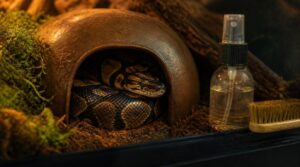
Cleaning a snake hide isn’t a single event on your calendar — it’s a layered routine built around your snake’s daily life. The schedule breaks down into five key intervals, each serving a different purpose in keeping the enclosure safe and stress-free. Here’s what each stage looks like and when it applies.
Understanding why humid hides matter for ball python shedding can help you prioritize which cleaning intervals deserve the most attention.
Daily Spot Checks
Every single day, spend 2–5 minutes scanning each enclosure before anything else.
Check for feces, urates, or shed fragments near snake hides. Glance at the water bowl — it should be clear, not cloudy or slimy. Verify latches seal tight and confirm your temperature gradient is holding. Wrinkled skin signals dehydration. Log what you find. Small catches prevent big problems.
Weekly Hide Wipe-Downs
Daily spot checks catch the obvious problems. Weekly hide wipe-downs stop waste from quietly building into something worse.
Once a week, wipe all interior hide surfaces — corners included. Work clean to dirty to avoid spreading contamination. Apply a reptile-safe disinfectant at the label’s dilution, let it sit for the full contact time, then rinse and dry completely before replacing.
You can use dual-sided cleaning wipes to handle both gentle polishing and stubborn dirt removal.
Moisture trapped inside a hide breeds bacteria fast.
Monthly Sanitation Routine
Weekly wipe-downs handle surface grime, but once a month, go deeper.
Pull every hide, scrub seams and equipment seals, and apply your reptile-safe disinfectant at full contact time — don’t rush it. Rinse completely, then air-dry before replacing.
Log the date, product, concentration, and anything unusual. That sanitation record keeps your habitat hygiene consistent and catches patterns before they become problems.
Seasonal Deep Cleans
Once a month gets the surface work done — but every season, go all the way. Schedule a 4–6 hour block at the start of each new season to fully disassemble, scrub, disinfect hides, and reset your snake enclosure from the ground up.
Test any new cleaner on a small area first. Document the date and observations to track enclosure health over time.
Emergency Cleaning Triggers
Some situations can’t wait for a schedule. If you spot feces or urates inside the hide, act immediately — waste absorbs into surfaces, breeds bacteria, and releases ammonia odors fast.
Watch for these emergency triggers:
- Visible mold or mildew
- Mite speckling or movement
- Liquid waste pooling inside
- Contamination from a sick snake
When any appear, disinfect hides now — not tomorrow.
When to Clean More Often
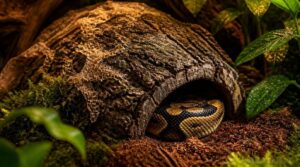
The 1–3 month schedule works well under normal conditions, but certain situations call for immediate action.
If your snake is already showing defensive behavior, knowing the warning signs early can make all the difference — recognizing and preventing pet snake aggression before it escalates is far easier than reversing it.
Your snake’s hide can go from clean to hazardous faster than you’d expect — and waiting isn’t always the right call. Here are the specific triggers that mean it’s time to clean right now.
Feces Inside The Hide
Solid waste tucked inside a hide is a slow-building problem. Hidden feces raise humidity, accelerating bacterial growth and producing sulfurous, ammonia-like odors that intensify with heat.
| Warning Sign | Risk | Action |
|---|---|---|
| Odor from one hide | Fecal accumulation | Spot-clean immediately |
| Soft substrate around base | Moisture saturation | Replace substrate |
| Ventral scale irritation | Skin dermatitis risk | Disinfect interior corners |
Clean that hide the same day you find it.
Urates or Liquid Waste
Urates don’t smell as sharp as feces at first — but don’t let that fool you. That chalky, paste-like deposit left behind still breaks down into odor-producing residue, especially on porous surfaces where liquid waste soaks in fast.
Clean the hide the same day you spot it. Dried urate stains cling hard, and residue buildup darkens quickly without prompt removal.
Mold or Mildew
Fuzzy patches or a musty smell mean clean now — not tomorrow. Mold spreads fast in humid hides, and what looks like a small spot on the surface can already be penetrating deeper into porous materials.
If scrubbing doesn’t clear the odor, replace the hide entirely. No disinfectant fixes growth that’s already embedded in the material.
Mite or Parasite Concerns
Mites don’t announce themselves — you’ll spot them as tiny dark specks clustered near hide openings or moving across your snake’s scales. If you see them, clean the hide immediately and repeat every few days.
Mites survive off the host, so treating your snake alone won’t break the cycle. Non-porous hides are far easier to fully disinfect; consider replacing porous ones entirely. Use dedicated tools per enclosure to prevent spread.
Sick or Quarantined Snakes
A sick snake turns its hide into a petri dish fast. Respiratory secretions, excess waste, and viral shedding on surfaces mean you can’t stick to a fixed schedule — clean as contamination appears, often daily.
Use dedicated tools per enclosure and follow any veterinary sanitation protocols closely. Log every cleaning. If symptoms worsen, increase frequency and contact your vet immediately.
How to Clean Snake Hides
Cleaning a snake hide isn’t complicated, but the order you do things in matters. Skip a step and you risk leaving behind bacteria or chemical residue that’s worse than the mess you started with. Here’s exactly what to do, from start to finish.
Clean in the right order, or the cure becomes worse than the contamination
Remove Your Snake Safely
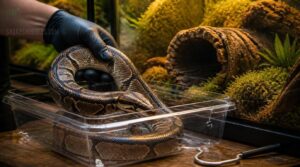
Before touching anything, secure your snake first. Place a clear, escape-proof container near the enclosure and guide your snake inside using a hook or tongs — keeping at least 1.8 meters of distance between you and the animal.
If you can’t identify the species or suspect it’s venomous, don’t guess. Call a licensed professional instead.
Scrub Away Debris
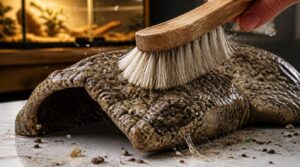
With your snake secured, pick up a soft bristle brush and get to work. Start from the top, scrubbing corners and seams where feces and urates tend to hide — firm, even pressure works best.
- Target vertical and horizontal surfaces
- Remove shed skin and substrate bits first
- Avoid metal brushes that create surface microgrooves
No moisture pockets left behind.
Apply Reptile-Safe Disinfectant
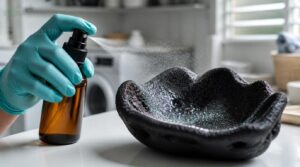
Once the debris is gone, coat every surface with your chosen disinfectant. Chlorhexidine at 1:30–1:40 and hypochlorous acid sprays work well for routine hides.
Let the solution sit — contact time matters — don’t wipe it immediately. Skipping that dwell period leaves pathogens alive. Work in a ventilated space to protect yourself from fumes during application.
Rinse Thoroughly With Water
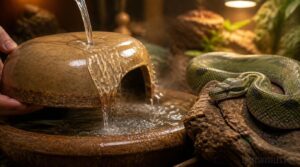
Once the disinfectant has done its job, rinse every surface with warm, clean water — top to bottom, so runoff carries residue away. Spend at least 15–30 seconds per surface. Distilled or dechlorinated water is ideal for sensitive reptile skin.
Watch for:
- Visible soap film or slick surfaces
- Chemical smell still lingering
- Pooling in corners or seams
Repeat the rinse if anything looks off.
Air-Dry Before Replacing
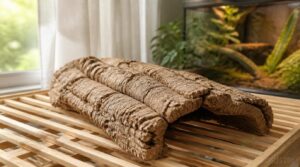
Patience here pays off. Before returning any hide to the snake enclosure, let it air-dry completely — usually 6 to 24 hours depending on material thickness. Trapped moisture is a fast track to mold growth and bacterial buildup.
Place hides in a well-ventilated area away from direct sunlight. Tap the surface, check for any musty smell, and confirm uniform stiffness. Dry means dry.
Best Cleaners for Snake Hides
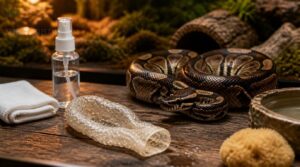
Not every cleaner on the shelf is safe for your snake. The wrong product can leave behind fumes or residues that do real damage — so knowing what actually works matters. Here are the best options to keep your snake’s hide clean without putting them at risk.
Chlorhexidine Solutions
Chlorhexidine gluconate is one of the safest disinfectants you can use on snake hides. It’s gentle on resin and plastic hides without leaving harmful residues.
Dilute it to a 0.5% working solution using deionized water — hard tap water can form insoluble salts that weaken its effectiveness. Apply it, let it sit for at least five minutes, then rinse thoroughly.
Diluted Bleach Mixes
Bleach works — when mixed right. A 1:10 bleach-to-water dilution yields roughly 500 ppm sodium hypochlorite, enough to eliminate bacterial buildup on resin or plastic hides.
Three rules for safe use:
- Mix with cold water to minimize fumes
- Wear gloves and work in a ventilated space
- Discard unused solution within 24 hours
Let it sit 1–2 minutes, rinse well. Skip metal fixtures — corrosion sets in fast.
Hypochlorous Acid Sprays
HOCl is the quieter upgrade from bleach — same pathogen control, far less harshness. It works by disrupting microbial membranes on contact, neutralizing bacteria, fungi, and viruses without leaving stubborn residue.
| Factor | Detail | Why It Matters |
|---|---|---|
| Concentration | 50–200 ppm | Balances efficacy and reptile safety |
| Contact time | 30 sec–2 min | Ensures full bacterial buildup elimination |
| Residue risk | Minimal after air-dry | Safe for reptile-safe disinfectant protocols |
| Breakdown | Degrades into salt and water | Environmentally responsible choice |
| Storage | Cool, dark location | Preserves sanitization potency |
Spray evenly, hit every crevice, then let it air-dry completely before your snake returns.
Dawn Dish Soap Use
Dawn isn’t a disinfectant — but it’s a reliable pre-scrub step before your sanitization protocols kick in.
- Dilute first: one drop in warm water prevents surface damage
- Surfactant action lifts grease and waste from hide surfaces fast
- Rinse thoroughly — residue irritates reptile skin
- Safe on resin, plastic, and cork hides in moderation
- Biodegradable and non-toxic — gentle enough for a daily spot-clean
Cleaners to Avoid
Some cleaners do more damage than the mess they’re removing. Ammonia-based products, Pine-Sol, and standard household sprays release fumes that overwhelm a snake’s sensitive chemoreceptors — and can trigger bacterial buildup from residue left on surfaces.
Skip anything not labeled reptile-safe. Even "green" options can contain surfactants that irritate skin, so don’t let eco-friendly packaging fool you.
Reduce Stress During Cleaning
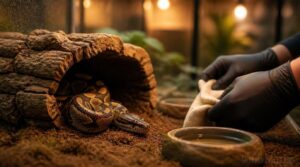
Cleaning day is low-key stressful for your snake — even if the process is quick and routine. A few simple habits can make a real difference in how your snake bounces back afterward. Here’s what to keep in mind before, during, and after you clean.
Keep Hides in Place
Snakes are creatures of habit — returning to the same hide repeatedly creates a sense of safety. If that hide shifts every time they enter, it breaks that routine.
Wedge hides into corners or against enclosure walls, and nestle them 2–4 cm into cypress mulch or aspen shavings. Ceramic hides with textured bases resist sliding far better than smooth plastic. Check placement after every cleaning.
Preserve Familiar Scents
Your snake memorizes its hide by smell — that scent is part of what makes the space feel safe.
When you deep-clean, set aside one scent-carrying item like a favorite branch or cork piece. Store it in a breathable bag at 50–60% humidity to slow odor loss by roughly 30%. Return it unchanged after cleaning.
Clean Quietly and Slowly
Scent preservation sets the stage — now your movements need to match that calm.
- Use microfiber cloths over stiff brushes
- Work in slow, deliberate passes
- Choose 50-decibel vacuums nearby
- Use vibration-dampening tools throughout
Sudden scrubbing sounds spike stress fast. Keep your pace steady, your tools soft, and your cleaning routine predictable — your snake notices everything.
Watch Post-Cleaning Behavior
Once the hide is back, watch closely for the first 30 minutes. Most snakes pause 2–5 minutes before exploring.
| Signal | Timeframe | Meaning |
|---|---|---|
| Tongue-flicking at entrance | Under 60 seconds | Normal reassessment |
| Repeated rapid tongue-flicks | Over 60 seconds | Stress signal |
| Coiled sleep posture resumed | 2–4 hours | Full comfort |
Refusal to re-enter within 15 minutes often suggests scent mismatch — place familiar substrate nearby.
Track Cleaning Dates
Consistent logging turns guesswork into a system. Record every cleaning on a rolling 30–90 day cadence, using YYYY-MM-DD format so patterns emerge over time. Seasonal humidity spikes can accelerate contamination — that’s why noting room conditions matters.
A simple logbook beats memory every time. Track the cleaner used, dilution ratio, and contact time to keep your sanitation protocol airtight.
Frequently Asked Questions (FAQs)
How to clean snake hides?
Dirty hides harbor bacteria fast — yet a quick, structured clean keeps your snake safe. Remove, scrub, disinfect, rinse, and air-dry fully before returning hides to the enclosure.
Can hides be cleaned inside the enclosure?
Yes, hides can be cleaned inside the enclosure. Apply a reptile-safe disinfectant, wipe all interior surfaces, then rinse thoroughly. Let it air-dry completely before returning your snake to prevent moisture buildup.
What hide materials are easiest to disinfect?
Nonporous materials — resin, smooth plastic, and ceramic — are easiest to disinfect. They don’t absorb waste or bacteria, tolerate reptile-safe solutions without damage, and dry fast after rinsing.
How many hides does one snake need?
Two hides are the baseline — one on the warm end, one on the cool end. That gives your snake full use of the thermal gradient without ever sacrificing security for comfort.
Should humid hides be cleaned differently than dry hides?
Humid hides demand a tighter cleaning routine. Moisture accelerates mold growth, so spot-clean within 24 hours of waste and allow thorough drying before reintroducing substrate. Dry hides offer more flexibility between sessions.
Can you over-clean a snake hide?
Over-cleaning is a real risk. Stripping familiar scent cues stresses your snake, while repeated disinfection damages protective coatings and dries out hides — reducing moisture retention and potentially leaving chemical residues behind.
Conclusion
How often should you clean a snake hide? The answer lives in what you see every day. Daily spot checks, a weekly wipe-down, and a monthly deep clean aren’t busywork — they’re the difference between a safe enclosure and a bacterial breeding ground.
Knowing how often to clean a snake hide keeps your animal healthy and your routine sharp. Clean hides mean a calmer snake. That’s the whole goal.