This site is supported by our readers. We may earn a commission, at no cost to you, if you purchase through links.
A snake’s respiratory system runs almost silently when healthy, so any audible sound during breathing already signals trouble. Snakes lack a diaphragm, which means they rely entirely on rib muscles to move air, and this makes them vulnerable to rapid decline once a respiratory infection takes hold. Owners often wait days after noticing a whistle or click, hoping it resolves on its own.
That delay costs time you don’t get back. Knowing when to see a vet for snake breathing issues separates snakes that recover fully from cases that spiral into pneumonia or sepsis.
Below, you’ll find the exact signs that distinguish normal respiration from a genuine emergency, plus what to check in your enclosure before that vet visit.
Table Of Contents
- Key Takeaways
- See a Vet for Abnormal Breathing
- Know Normal Snake Breathing
- Spot Respiratory Infection Symptoms
- Check for Mouth Rot Signs
- Fix Husbandry Before It Worsens
- Prepare for The Reptile Vet
- Frequently Asked Questions (FAQs)
- What does labored breathing look like in a snake?
- How to see if a snake is breathing?
- When should you take a snake to the vet?
- How much does a snake vet visit cost?
- Can a snake recover from pneumonia at home?
- What antibiotics treat snake respiratory infections?
- How long does snake respiratory infection treatment take?
- Is snake respiratory infection contagious to other reptiles?
- Conclusion
Key Takeaways
- Since snakes breathe silently and lack a diaphragm, any audible sound—wheezing, clicking, gurgling, or bubbling at the nose or mouth—signals a respiratory problem needing prompt veterinary attention.
- Open-mouth breathing at rest, a raised head or stretched neck, and persistent lethargy paired with heavy breathing are urgent red flags that warrant same-day emergency care.
- Signs of mouth rot—red or swollen gums, cheesy pus, foul odor, or blood-tinged discharge—can spread into the respiratory tract and require prompt professional diagnosis.
- Correcting husbandry issues like improper temperature, humidity, ventilation, and substrate helps prevent and support recovery from respiratory infections, but can’t replace veterinary diagnostics and antibiotic treatment.
See a Vet for Abnormal Breathing
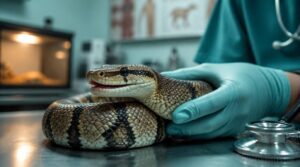
Snakes don’t breathe loudly by nature, so any effort you can see or hear is your body’s cue to pay attention. A handful of warning signs point straight to trouble in the airways or lungs, and none of them are subtle once you know what to look for. Here’s what tells you it’s time to call the vet.
Open-mouth breathing, wheezing, or clicking sounds are red flags—very different from the moisture-related shedding hiccups covered in this guide to fixing stuck shed on a snake’s tail.
Wheezing, clicking sounds, open-mouth breathing, and mucus around the nose are among the common signs of respiratory distress in snakes worth watching for.
Open-mouth Breathing at Rest
Rarely does a healthy snake sit with its jaws parted for no reason. Open-mouth breathing at rest signals air is bypassing the nostrils entirely, often paired with visible throat effort during inhalation. Oral moisture drops as airflow shifts, drying tissue and thickening mucus. Left unaddressed, this labored pattern raises hypoxia risk fast. Don’t wait it out; this warrants same-day veterinary evaluation.
A healthy snake never sits open-mouthed without reason—it’s a sign air is bypassing the nostrils and hypoxia risk is climbing fast
Wheezing, Clicking, or Gurgling
Sound tells you as much as posture does. A high-pitched whistle points to airway narrowing, while clicking often signals obstruction near the larynx or trachea. Gurgling means fluid mixing with air, mucus buildup thick enough to bubble. Crackling suggests fluid shifting mid-breath.
Any of these paired with reduced breathing effort means respiratory disease has progressed past home management.
Bubbles Around Nose or Mouth
Froth at the nostrils or lips means air is mixing with fluid, whether saliva, nasal mucus, or aspirated liquid from a recent feeding. Persistent bubbling always signals abnormal airway fluid, even if your snake seems alert.
- Watch for foam after feedings
- Note bubble frequency
- Check for nasal aeration
- Rule out aspiration
- Schedule veterinary attention promptly
Thick Mucus or Crusting
Once bubbles fade, check what’s left behind at the nares. Thick, gelatinous mucus often points to dehydration, while crusting signals airflow obstruction from stagnant secretions.
| Mucus Appearance | Likely Cause |
|---|---|
| Clear, thin | Early irritation |
| Thick, discolored | Chronic inflammation |
| Crusty, dried | Prolonged blockage |
Discoloration or infectious stomatitis warrants same-week veterinary attention before nasal discharge worsens.
Raised Head or Stretched Neck
Watch how your snake holds its head at rest—a chin tilted upward, neck stretched taut, isn’t alertness; it’s respiratory compensation.
Red flags include:
- Chin straining with a tense throat
- Front body tension while lying flat
- Posture unchanged by handling
- Stretching around feeding times
- Head-lift persisting during rest
These clinical symptoms signal respiratory disease. Schedule a vet visit before distress escalates.
Know Normal Snake Breathing
Before you can spot trouble, you need a baseline for what’s normal. Healthy snakes breathe quietly, rest calmly, and show only minor variations tied to feeding or waking up. Here’s what typical breathing actually looks like.
You might also spot your snake stretching its jaws wide in a slow, deliberate motion—if you’re curious whether that’s normal, here’s what snake yawning really means.
Quiet, Barely Visible Breaths
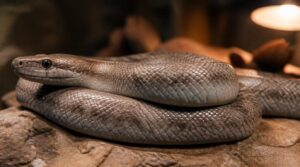
Ever tried to catch a snake breathing? Blink and you’ll miss it. Quiet respiration shows up as minimal torso movement, not chest motion, with no sound at all.
| Normal Trait | What You’ll See |
|---|---|
| Airflow | Silent, no audible respiration |
| Torso movement | Slight, rhythmic expansion |
| Head/jaw | Still, mouth closed |
That steady rhythm is your baseline for spotting true respiratory distress later.
Calm Resting Posture

A relaxed snake settles into stillness, head and neck unstretched, body loose rather than braced. Neck extension and repeated throat movement signal effort, not calm. Five checks for normal posture:
- Head stays low, not lifted
- Neck relaxed, no stretching
- Throat barely moves
- Body stays still
- Settles fully after warming
Post-soak settling into this stillness confirms healthy, unlabored breathing.
Occasional Post-feeding Breathing Changes
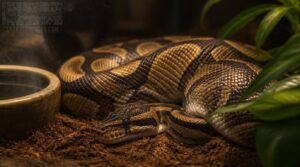
Feeding triggers real mechanical shifts in a snake’s airway: swallowing motion briefly alters glottis airflow, and post-swallow jaw repositioning can cause momentary noise. Digestion’s energy surge also shifts blood flow, sometimes producing faint gurgling from esophageal reflux. These sounds should settle within minutes.
Heavy breathing, mouth bubbling, regurgitation, or lethargy that persists afterward isn’t normal digestion — that warrants a vet visit.
Brief Yawning Versus Repeated Yawning
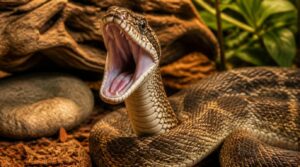
A single yawn lasting a few seconds, tied to waking or settling in, is normal — a rest shift behavior, nothing more.
Repeated yawning without that context is a warning sign, especially with airway sound correlation like clicking or gurgling.
This reflex is a deep inhalation process that usually lasts between 4 and 7 seconds.
Watch for:
- Gape frequency increasing over minutes
- Posture change (raised head, stretched neck)
- Open-mouth breathing between yawns
- Lethargy accompanying the pattern
That combination signals respiratory infection, not sleepiness.
Spot Respiratory Infection Symptoms
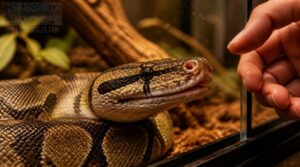
A respiratory infection rarely announces itself with just one symptom. Instead, it builds a pattern across your snake’s breathing, appetite, and energy level that gets clearer the longer you watch. Here’s what that pattern usually looks like.
Labored or Noisy Breathing
Labored breathing sounds different from normal respiration, and your ears will tell you before anything else does. Audible airway sounds—wheezing, crackling, or gurgling—signal mucus or inflammation narrowing the tract. Watch for visible throat vibration or exaggerated abdominal effort with each breath.
Heavy breathing at rest, especially paired with these sounds, isn’t exertion. It’s respiratory distress requiring same-week veterinary evaluation.
Nasal Discharge or Mouth Bubbles
Sound isn’t the only clue—check the nostrils and mouth corners next. One-sided discharge usually means something’s lodged in that nostril, not a whole-airway infection.
Bubbles forming during breathing signal mucus in the upper tract. Watch discharge color: clear suggests mild irritation, while yellow, green, or foul-smelling secretions point to infection.
If your snake shows any of these warning signs together, the ball python labored breathing symptoms guide can help you recognize when it’s time to act fast.
Crusting can block airflow entirely, worsening symptoms fast.
Lethargy and Weak Reactions
A snake going quiet on you, barely tongue-flicking or resisting handling, is often showing oxygen deprivation from ongoing respiratory infection. Watch for muscle strength loss too weak to hold posture.
Sluggish behavior that worsens over hours, not days, means energy levels are dropping fast. Pair this with heavy breathing and it’s a warning sign that warrants an urgent vet visit.
Refusing Food With Breathing Changes
Refusing food while showing heavy breathing points to more than pickiness. Swallowing coordination issues develop when a snake can’t sync breathing with eating, and a prey item sitting near the airway raises mucus interference risks.
That’s why a strained feeding response, paired with respiratory discomfort triggers, signals infection.
- Refuses prey entirely
- Breathes heavily post-attempt
- Regurgitates after swallowing
- Approaches, then retreats from prey
- Shows labored breathing between offers
Any combination warrants a vet visit.
Weight Loss or Visible Spine
A snake losing its appetite alongside breathing trouble often loses body condition fast. Track weight weekly on the same scale — a dramatic decline from baseline signals trouble before appearance changes.
Watch for spinal contour visibility, flattened dorsal shape, and muscle wasting along the trunk. Combined with dehydration’s tighter, dull skin, these findings point toward nutrient reserve depletion requiring prompt veterinary diagnosis.
Check for Mouth Rot Signs
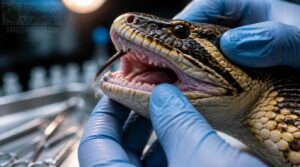
Mouth rot rarely stays confined to the mouth for long, since the bacteria causing it can spread straight into the respiratory tract. Catching it early means checking your snake’s mouth directly, not just watching how it breathes. Here’s what to look for during that inspection.
Red or Swollen Gums
Red gums along the gumline aren’t cosmetic — they’re diagnostic. Mouth rot (infectious stomatitis) often starts subtly:
- Puffy, inflamed tissue around crowded teeth
- Redness that spreads across multiple teeth, not just one
- Gums that bleed with light contact
- Puffiness tied to stress-induced inflammation or humidity-driven dryness
- Gradual worsening in older snakes from age-related gum changes
Substrate particle irritation can trigger it too. Veterinary diagnosis catches it early, before abscesses form.
Cheesy Pus Inside Mouth
Curdlike white or yellow material pooling inside the mouth signals active infectious stomatitis, not routine debris. Unlike watery saliva, this exudate thickens, crusts at the edges, and often reaccumulates within days if untreated.
| Exudate Sign | What It Means |
|---|---|
| Cheesy texture | Bacterial infection |
| Recurs after wiping | Untreated mouth rot |
| Crust with raw tissue beneath | Advancing abscess risk |
Any cheesy pus warrants an immediate vet visit.
Sour Mouth Odor
Ever caught a whiff that stops you mid-handling? Trust your nose. Saliva normally washes away food debris, so when dehydration sets in, bacteria accumulate faster and odor intensifies.
A smell that lingers after cage cleaning often points to mouth rot rather than simple hygiene lapses. Pair it with reduced appetite or breathing changes, and it’s time for a vet visit.
Black or White Mouth Patches
Color changes inside the mouth aren’t all the same threat. Black or white patches signal necrosis, fungal overgrowth, or benign pigmentation—context matters.
- White patches: fungal thrush or leukoplakia from chronic irritation
- Black spots: melanotic macules (usually benign) or trauma-induced lesions
- Persistent, spreading discoloration: possible oral melanoma
- Any mouth rot symptom warrants a same-week vet visit
Don’t guess—distinguishing benign pigmentation from infection or respiratory infection risk requires professional evaluation.
Bloody Mucus or Discharge
Blood mixed into oral mucus is never incidental. Pink, rust, or brown tints signal bleeding within inflamed tissue, while dried crusts crack and reveal fresh wet blood underneath. Even faint blood streaks matter—they indicate escalating irritation, not a one-off scrape.
Combined with mucus or bubbles, gurgling breaths, or vent discharge, this pattern points toward respiratory infection. These warning signs demand a same-week vet visit.
Fix Husbandry Before It Worsens

Once mouth rot or infection is ruled out, the enclosure itself deserves scrutiny, since respiratory symptoms often trace back to how the tank is set up and maintained. Small environmental missteps compound fast, turning a healthy snake into a struggling one within days. Here’s what to check first.
Check Warm-side Temperatures
Heat and breathing are linked more than most keepers realize. If the warm side runs cold, digestion slows and lethargy sets in—breathing looks labored even without infection.
Verify thermostat calibration accuracy and measure surface temperature at basking spots, not just air readings. Check probe placement to prevent heat burns, and reassess after seasonal temperature shifts, since room conditions drift and disrupt your gradient.
Correct Humidity and Ventilation
Temperature swings don’t act alone—humidity and airflow compound the problem fast. Stagnant, moisture-laden air breeds the bacteria behind open-mouth breathing, wheezing, and gurgling sounds.
Place vents high for warm air exhaust, low for substrate airflow, creating cross-ventilation. Use a hygrometer for accurate humidity adjustments. Wipe condensation daily, and maintain humid hides without soaking substrate—trapped moisture around liners invites the crackling sounds signaling respiratory trouble.
Remove Irritating Substrates
Airflow only helps so much if the substrate itself is working against your snake. Loose, fine-textured bedding kicks up dust with every movement, clinging to snout mucus and worsening congestion. Damp patches breed mold and biofilm, while soiled substrate releases ammonia gas.
Switching to low-dust, easy-clean bedding removes these irritants outright, letting inflamed tissue actually heal instead of facing constant re-exposure.
Reduce Stress After Rehoming
Rehoming stress suppresses immune function fast, opening the door to opportunistic respiratory infections. Minimize handling for the first two weeks; keep movements slow and predictable when you must handle at all.
Preserve familiar scent cues (old substrate, paper towel), dim lighting, and stable room temperature. Watch daily for open-mouth breathing or lethargy, comparing behavior against notes from the previous owner whenever possible.
Keep Enclosure Clean and Dry
Once your snake settles in, enclosure hygiene becomes your daily defense against illness. Spot-clean waste within hours, since feces and shed trap moisture and fuel microbial growth.
Empty and scrub the water dish regularly, biofilm raises local humidity fast. Choose aspen or paper substrate over wood that holds dampness.
Make sure there’s good ventilation airflow to prevent mold, condensation signals trouble brewing.
Prepare for The Reptile Vet

Once you’ve spotted warning signs, what you do in the next hour matters as much as what happens at the clinic. A little preparation on your end helps the vet zero in on the problem faster, especially when breathing distress is involved. Here’s what you need to have ready before you walk through that door.
Call for Same-day Emergencies
Not every breathing issue can wait for a routine appointment. Open-mouth breathing, audible wheezing, or bubbling at the nostrils are clinical urgency cues demanding same-day emergency care, not a "watch and wait" approach. Rapid assessment prevents pneumonia or airway inflammation from progressing.
When to call immediately:
- Open-mouth breathing at rest
- Blood-tinged discharge
- Complete lethargy
- Audible gurgling
- Two-week food refusal
Fast triage often avoids hospital admission entirely.
Record Symptoms and Timing
Your vet can’t examine what already passed. Tracking onset—the exact date, time, and whether symptoms crept in gradually or hit suddenly—turns a vague complaint into a diagnosable timeline.
Note episode duration, breathing pattern changes, and severity levels (mild wheeze versus open-mouth breathing). Record triggers: feeding, temperature drops, handling. Don’t forget appetite loss or behavioral changes alongside respiratory issues; these details sharpen diagnosis fast.
Bring Husbandry Details
Why did the open-mouth breathing start? Your vet needs husbandry context, not just symptoms. Note warm-side and cool-side temperatures, thermostat probe placement, and hygrometer readings for humidity.
Mention substrate type and dust levels, ventilation airflow patterns, and water bowl cleanliness. These details separate a true infection from an environmental husbandry problem, speeding diagnosis and treatment considerably.
Transport Warm and Secure
A cold snake in crisis burns energy it can’t spare. Use an insulated carrier with indirect heat, secure ventilation, and no loose bedding.
- Insulated, ventilated carrier
- Indirect heat source, secured
- Snake positioned to prevent shifting
- Latched shut, escape-proof
Keep it level, out of drafts, and don’t peek — every opening costs warmth this exotic animal emergency can’t afford.
Expect Exams and Diagnostics
Once at the clinic, expect a thorough physical exam — palpation to check body tissue and swelling, plus respiratory sound auscultation for wheezing or crackles.
Radiographs and bloodwork often follow, since radiograph interpretation reveals lung changes bloodwork alone can’t catch. Culture sensitivity testing identifies exact bacteria; endoscopy diagnostic benefits include direct airway visualization. Fecal testing rules out parasites. These veterinary diagnostics build one clear treatment picture.
Frequently Asked Questions (FAQs)
What does labored breathing look like in a snake?
Ironic, isn’t it — a creature with no vocal cords can still sound an alarm. Watch for prolonged mouth gaping, audible wheezing or clicking, nasal bubbles, mucus buildup, and a stretched-neck posture. These warning signs often point toward pneumonia or mouth issues.
Pair those physical cues with behavioral shifts like skipped meals or ignored prey, since this guide to snake illness symptoms shows how the two often surface together.
How to see if a snake is breathing?
Watch the area just behind your snake’s head rather than its ribs — snakes lack chest expansion. Detecting subtle movements there reveals breathing rhythm. Open-mouth breathing, wheezing, or stalled rhythm are warning signs demanding emergency care.
When should you take a snake to the vet?
Take your snake in the moment you spot open-mouth breathing, wheezing, or bubbling at rest, these signal pneumonia or infection. Persistent noisy breathing, lethargy, or food refusal needs same-day emergency care; don’t wait for symptoms to worsen before seeking respiratory support.
How much does a snake vet visit cost?
Picture a euro sign fogging with each labored breath — that’s your cost curve rising. German exams run €30–€120, but bloodwork, X-rays, and emergency surcharges for pneumonia stabilization push totals into the hundreds fast.
Can a snake recover from pneumonia at home?
Not fully. Antibiotic necessity stands, since bacterial pneumonia rarely clears alone. Steam therapy, warmth, and humidity offer real supportive care, but they’re adjuncts, not cures. Worsening breathing means stop home efforts and seek clinical stabilization immediately.
What antibiotics treat snake respiratory infections?
Ironically, there’s no single "snake antibiotic" — Enrofloxacin covers broad bacterial pathogens, Ceftazidime targets gram-negative infections, and Trimethoprim-sulfamethoxazole works well too.
Route and choice depend on culture and sensitivity testing, not guesswork, often paired with nebulization therapy for respiratory infections.
How long does snake respiratory infection treatment take?
Most cases run 2 to 4 weeks on antibiotics, with improvement often visible within 5 to 10 days. Severity, husbandry fixes, and culture results affect duration. Complete the full course, don’t stop at symptom relief, and schedule follow-up before ending treatment.
Is snake respiratory infection contagious to other reptiles?
Yes, especially serpentoviruses, which spread via shared water bowls, handling tools, and aerosol contact. Subclinical carriers can silently infect multispecies collections. Effective quarantine protocols and separate equipment for sick snakes remain your best defense against outbreak transmission.
Conclusion
A snake’s lungs are a one-way street with no shoulder to pull over on; once breathing falters, there’s nowhere safe to stall. That’s why knowing when to see a vet for snake breathing changes outcomes, not just comfort.
Clicks, bubbles, and gaping mouths aren’t quirks—they’re distress signals. Fix the husbandry, but don’t let temperature charts substitute for diagnostics.
Trust your eyes, trust the timeline, and call sooner than you think you need to. Hesitation is the real predator here.