This site is supported by our readers. We may earn a commission, at no cost to you, if you purchase through links.
Your baby boa won’t stay baby-sized for long. That cute 20-inch hatchling can pack on 3-4 feet in its first year alone, and its enclosure needs to keep pace every step of the way.
Too small, and your snake feels exposed and stressed. Too big, too soon, and it struggles to find its warm spots. Getting boa constrictor enclosures for juveniles right means matching size, heat, and humidity to each growth stage.
Ready to build a setup that grows with your boa instead of against it? Here’s your roadmap, from first hide box to full-grown habitat.
Table Of Contents
- Key Takeaways
- Choose The Right Juvenile Enclosure Size
- Pick a Safe Enclosure Style
- Set Up Heat and Lighting
- Control Humidity and Substrate
- Add Hides and Enrichment
- Frequently Asked Questions (FAQs)
- What is the minimum enclosure for a boa constrictor?
- What is the best enclosure for a boa constrictor?
- What size cage does a baby boa constrictor need?
- How cold is too cold for a boa?
- How often should I clean the enclosure?
- What warranty coverage comes with enclosure purchases?
- Can I use a cabinet stand for any enclosure?
- How do I introduce a boa to a new enclosure?
- Whats the price difference between wood and PVC enclosures?
- Conclusion
Key Takeaways
- Size your boa’s enclosure to its growth stage, starting with an 18x12x12 hatchling tub and scaling up to a 4x2x2 or larger habitat as it approaches its adult length of 6-10 feet.
- Maintain a proper thermal gradient with a 90-95°F basking zone and a 70-82°F cool side, using a thermostat like the VE-200 to prevent burns and keep temperatures stable.
- Keep humidity between 60-70% using moisture-holding substrate and a digital hygrometer to prevent shedding problems and mold growth.
- Choose a secure, front-opening PVC or glass enclosure with strong locks and add hides, climbing branches, and enrichment to reduce stress and support your boa’s natural behaviors.
Choose The Right Juvenile Enclosure Size
Sizing your boa’s home right isn’t guesswork—it’s the foundation for a happy, healthy snake. Your setup will need to grow right alongside your boa, from hatchling to full-grown adult. Here’s exactly how to plan each stage, so you’re never caught off guard.
Since that hatchling could grow into an eight-foot adult, check out this snake enclosure size guide before you buy anything, so you can budget for the space they’ll truly need.
Hatchling Starter Setups
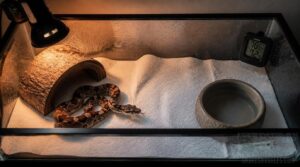
Your new baby boa doesn’t need much room—just safety and stability. An 18x12x12 inch enclosure works great for the first 6-12 months.
Keep waste patterns visible on paper towel substrate to catch problems early and prevent impaction.
Focus on temperature regulation and humidity control from day one, and your hatchling settles in fast.
Body-Length Sizing Rule
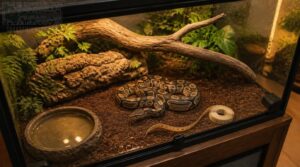
Once your snake outgrows that starter tub, size the next home to its actual body, not guesswork. Aim for 1.5 to 2 times current length, giving room to stretch fully without wall contact.
- Measure snout-to-tail every few months
- Keep two body lengths of clearance
- Prevents tail whipping during fast moves
- Track 12–20% annual growth
- Reassess every 3–6 months
4x2x2 Growth Upgrade
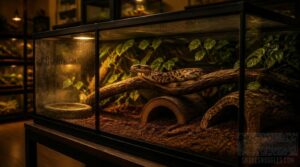
4x2x2 enclosures mark the real growth upgrade for your boa constrictor. This footprint gives room to roam while keeping temperature control manageable.
Best part? Modular expansion lets you stack vertically later, no full rebuild needed. Plan your move timing around body length, not the calendar. Smart footprint planning now saves you from repeat terrarium setups down the road.
Floor Space by Age
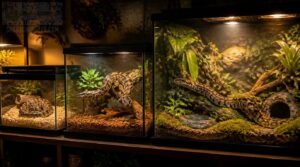
Your boa’s space needs grow fast, so tracking growth milestones keeps you prepared. Up to 12 months: 18×18 inches. At 12-24 months: 24×18. By 2-3 years: 30×24 inches, giving room for real coiling space.
Think of it as scaling habitat zones alongside your snake, not guessing. Modular panel transitions make each jump easy—no rebuilds, just species-appropriate comfort.
Planning for Adult Size
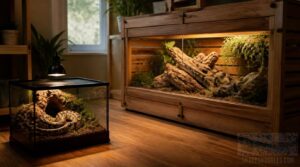
Ever wonder how big your snake will actually get? Adult boas stretch 6-10 feet, so future footprint scaling matters now.
Target an 8x3x2.5 setup within 12-18 months using modular panel increments. This stackable and expandable approach makes smart long-term volume planning easy—true reptile husbandry without costly rebuilds down the road.
Pick a Safe Enclosure Style
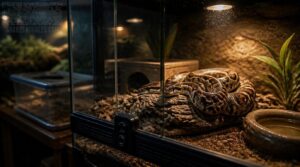
Size isn’t the only thing that matters here. The style of enclosure you pick shapes your boa’s comfort and your daily routine too. Here’s what to look for before you buy.
Whatever enclosure you choose, pair it with a solid temperature setup—this guide on corn snake lighting and heating needs breaks down how to build proper gradients your boa can thrive in.
Front-Opening Doors
Quick access without the stress — that’s what front-opening doors bring to your snake habitat.
Instead of lifting a lid from above, these doors swing open at eye level. Less startling for your boa, easier on your back.
Look for hinge durability and hidden hardware. Cam latches or magnetic closures keep things secure. A quick maintenance tip: lubricate hinges regularly so your reptile enclosure setup stays smooth for years.
PVC Versus Glass
Which material wins for your growing boa? Depends on your priorities.
PVC resists impact and won’t shatter — safer during handling. It offers lower thermal conductivity, helping microclimate management stay steady with less energy waste.
Glass gives unbeatable visual clarity for spotting health cues, plus easy cleaning methods with non-porous surfaces. It’s heavier though, and scratches faster than sturdy PVC panels. Plus, PVC helps with better humidity retention for tropical species.
Locking Door Security
Escape artists, boas are. That’s why door security matters as much as size.
Deadbolt strength resists forced entry. Look for multi-point locking and reinforced strike plates on front opening doors — like the Vivarium Series Black Sliding Door Enclosure. Want extra peace of mind? Smart lock alerts and anti-tamper sensors notify you of tampering, giving your growing boa a secure, species-appropriate habitat built for real comfort.
Modular Expansion Options
Your boa won’t stay small forever, and your enclosure shouldn’t either.
Horizontal expansion adds side-by-side floor space fast, while vertical stacking builds up using a Deluxe Stacking Spacer. Both rely on secure latching systems and electrical pass-through for shared heat sources.
Module reconfiguration means true habitat customization — turning your Vivarium Series Black Sliding Door Enclosure into a complete habitat bundle that actually grows with your snake.
Stress-Reducing Design Features
A calm snake is a healthy snake, and design does the heavy lifting.
Look for biophilic textures like cork bark and matte, non-reflective walls — they cut glare and dampen sound. Dappled lighting mimics natural gradients, while tactile hide interiors and visual scenery access ease handling stress.
These small touches replicate wild conditions, giving your boa the species-appropriate comfort and enrichment it craves.
Set Up Heat and Lighting
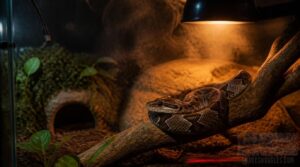
Heat and light aren’t just extras—they’re what keep your boa healthy. Get the setup right, and your snake can regulate its body temperature with ease. Here’s what you need to build that perfect gradient.
Warm Basking Zone
Give your juvenile a proper basking spot with surface temps of 90–95°F. Mount a 40 Watt Radiant Heat Panel overhead, paired with a VE-200 Thermostat for safe, steady control.
This setup builds a real heat gradient, letting your snake thermoregulate naturally—moving toward or away from warmth as needed. Check readings often with an infrared thermometer for accuracy.
Cool-Side Temperature Range
Heat’s only half the equation. The cool side needs its own stable range, usually 70–82°F, giving your boa somewhere to retreat and cool off.
That gap between zones creates the thermal gradient driving natural thermoregulation. Keep the cool zone slightly darker, use digital probe accuracy over dial gauges, and watch for seasonal temperature shifts that throw off your gradient stability.
Thermostat-Controlled Heat
Thermostats aren’t optional gear—they’re the safety net for your whole setup. A VE-200 thermostat paired with any heat source prevents thermal burns by cutting power before temps spike.
Dual probe setups let you monitor basking and ambient zones separately. Add thermal cutoff safety and regular sensor calibration checks, and your heat regulation system holds the gradient steady, no guesswork needed.
Probe Thermometer Placement
Placement makes or breaks your readings. Set the tip at basking zone centering—the geometric center, not the edge—and bury it to substrate mid-depth for true numbers.
- Keep it 1-2 inches from the heat surface, avoiding conduction artifacts
- Check the cool side too, confirming gradient consistency
- Run calibration verification with your VE-200 setup regularly
Accurate probes mean safer heat regulation systems and real species-appropriate comfort.
Optional UVB Lighting
Wonder if boas even need UVB? Not required, but it pays off. UVB lighting for reptiles helps with calcium metabolism benefits and steadier growth.
Try the Arcadia Lumenize Forest 3 Smart UVB Kit—simple bulb type selection for beginners. Watch UVB bulb lifespan (6-12 months) and measure UV intensity with a meter. Position for preventing overexposure, giving your boa shaded retreats and true species-appropriate comfort alongside your heat regulation systems.
Control Humidity and Substrate
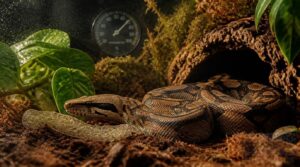
Heat and light aren’t the whole story—humidity plays a huge role in your boa’s shedding and comfort too. Get the moisture balance wrong, and you’ll see problems fast. Here’s what you need to know to keep your enclosure’s humidity and substrate right where they should be.
60–70% Humidity Range
Sweet spot: 60–70% humidity. Dip below that and your boa risks retained shed and dull, patchy skin. Push too high without airflow, and mold creeps in.
Keep a digital hygrometer near the basking zone for real-time monitoring. Warmer temps naturally hold more moisture, so expect to mist more often during cooler seasons to stay in range.
Moisture-Holding Substrates
Picking the right substrate does half the humidity work for you. Coir vs Peat both hold water well, but coir dries evenly and resists mold better.
- ReptiChip Coconut Chips
- Coir-perlite blends
- Peat-vermiculite mixes
- Bioactive substrate layers
- Cypress mulch combos
Vermiculite moisture storage paired with perlite drainage benefits creates a lasting gradient while preventing substrate compaction over time.
Paper Towels for Hatchlings
Your hatchlings don’t need fancy substrate right away—plain paper towels work best. They’re cheap, clean, and let you monitor waste patterns easily.
| Benefit | Why It Matters |
|---|---|
| Easy cleanup | Reduces bacteria buildup |
| Waste visibility | Flags health issues fast |
| No loose fibers | Prevents ingestion risk |
Choose unscented, dye-free towels only. Replace daily, keep humidity steady, and wash hands first. Simple habits build a healthy start.
Water Dish Placement
Where you put that water dish matters as much as what’s in it. Set it at your boa’s head level for easy drinking, away from heat sources to keep temperatures stable.
Use a shallow, wide dish—reduces spillage and helps keep humidity in. Rinse daily following basic hygiene protocols, and watch hydration patterns to confirm your setup truly mirrors natural habitat replication.
Unsafe Woods to Avoid
Not every branch is safe for your enclosure. Skip cedar and pine—their aromatic oil irritants hurt young lungs fast. Cherry and apricot carry cyanogenic wood dangers, while pitch pine brings toxic resin risks to bare skin.
Damp or moldy wood? Toss it—moldy wood hazards breed fungal spores. Oak bark’s tannins cause gut upset too. Stick to cork branch decor for safe environmental enrichment and true habitat replication.
Add Hides and Enrichment
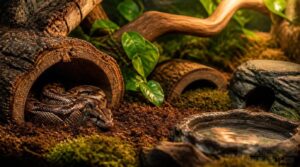
A bare enclosure won’t cut it—your boa needs spots to hide, climb, and feel secure. The right mix of hides and enrichment turns a plain box into a real home. Here’s what to add to get it right.
Warm and Cool Hides
Give your Boa Constrictor two solid retreats: one warm, one cool. The warm hide sits on the basking side, snug enough that your snake can’t fully stretch out—tight walls mean tactile security.
The cool hide mirrors it in size on the opposite end. Together they support your thermal gradient, letting your boa choose comfort on its own terms. Simple, safe, species-appropriate.
A matching warm and cool hide lets your boa choose its own comfort along the thermal gradient
Secure Climbing Branches
Boas aren’t just baskers—they climb. A cork branch or two turns your enclosure into real reptile decor with purpose.
- Branch load capacity: hold 5kg minimum
- Grip texture: rough, non-slip bark
- Diameter: 1.5–2.5cm for hatchlings
- Layout: wide forks, 60°+ angles
- Material safety: no oils, no decay
This builds natural movement enrichment your Boa Constrictor craves.
Cork Bark Tubes
Cork bark tubes take that climbing setup and add a hideout to it. Cut from real cork oak bark, they keep a rough grip texture and resist rot naturally—no chemical treatments needed.
Bake or boil new tubes before use to disinfect them. Brush off debris regularly, and swap tubes out if mold shows up. Their earthy tone adds realistic reptile decor while creating a stable, cool microclimate your boa can retreat into.
Artificial Plant Cover
Bare branches look empty fast. Draping silk plants across your climbing setup breaks up open space and eases stress in glass tanks.
- Material durability: high-density plastic won’t crack or bend
- Aesthetic realism: mixed leaf shapes mimic real foliage
- Cleaning: wipe with mild soap—no watering required
UV-resistant colors stay vibrant for years, giving your boa a true tropical habitat feel.
Feeding and Handling Space
Mealtime deserves its own corner, not just leftover space. Set a feeding zone on the warm side, at least 12 inches from hides, with non-absorbent flooring you can wipe clean.
| Do | Avoid |
|---|---|
| Use feeding tongs | Handling right after meals |
| Keep strike distance clear | Loose, ingestible substrate |
| Sanitize after each meal | Feeding under heat lamps |
| Stay calm, quiet | Sudden movement near enclosure |
Frequently Asked Questions (FAQs)
What is the minimum enclosure for a boa constrictor?
For a hatchling, think 2ft x 5ft x 1ft minimum. As your snake grows, you’ll need more stretching room — a 36 x 18 x 18 setup like the Juvenile Central American Boa Complete Habitat Bundle works great before upgrading further.
What is the best enclosure for a boa constrictor?
A PVC or melamine enclosure wins for snake husbandry: better thermal retention, smooth interior finishes, secure locking doors for escape prevention, and room for vertical space and bioactive enclosure setups that mimic tropical habitat simulation as your reptile grows.
What size cage does a baby boa constrictor need?
Small, right? Baby boas need about 2 feet long, 5 feet wide, and 1 foot high — snug enough for security, roomy enough for full-body stretches without constant wall contact.
How cold is too cold for a boa?
Below 75°F (24°C) is too cold. Cold-blooded bodies slow down fast, causing metabolic slowdown, appetite loss, and shedding complications. Watch for lethargy or respiratory infection signs, and keep backup heating ready for seasonal drops threatening your boa’s tropical comfort.
How often should I clean the enclosure?
Daily spot cleaning takes care of waste and dirty water. Do a weekly sanitation routine with reptile-safe cleaner, change substrate every 7–10 days, scrub the water dish daily, and disinfect decor weekly to keep humidity and habitat maintenance on track.
What warranty coverage comes with enclosure purchases?
You’re covered like Fort Knox! Every enclosure carries a 5-year warranty protecting structural components against manufacturer defects.
This covers your reptile enclosure and vivarium accessories, so your Juvenile Central American Boa complete Habitat Bundle stays claim-ready with simple documentation whenever you need it.
Can I use a cabinet stand for any enclosure?
Not quite. Match dimension compatibility, weight limits, and surface leveling to your specific reptile enclosure.
A mismatched cabinet stand risks tipping, poor cable management, or uneven support — hardly the species-appropriate comfort your Boa Constrictor’s exotic pet supplies deserve.
How do I introduce a boa to a new enclosure?
No need to rush this part. Place your boa gently inside, then step back. Give a full 7 to 10 day acclimation window, watching for exploratory movement and mild feeding pauses—normal signs your Juvenile Central American Boa Complete Habitat Bundle already feels like home.
Whats the price difference between wood and PVC enclosures?
Wood runs $100–$350 upfront; PVC costs $150–$500. Wood needs regular resealing, while PVC skips that maintenance labor. For a growing reptile enclosure with real humidity retention needs, PVC’s durability often wins the long-term investment analysis.
Conclusion
Growing pains? Your boa won’t have any. Every upgrade you make—size, heat, humidity—builds a home that grows right alongside your snake, not behind it. That’s the real secret to boa constrictor enclosures for juveniles: staying one step ahead of your pet, not scrambling to catch up.
Get the gradients right, secure those doors, and watch your hatchling settle in like it owns the place. Because honestly? Soon enough, it will.