This site is supported by our readers. We may earn a commission, at no cost to you, if you purchase through links.

A tiny fleck of dried saliva at the corner of your snake’s mouth rarely raises alarm. Most keepers wipe it away and move on. Yet that small clue can mark the first sign of infectious stomatitis, better known as mouth rot, a bacterial condition that spreads fast once it takes hold in oral tissue.
Catch early stage mouth rot in your snake, and treatment stays simple: a course of antibiotics, better husbandry, close monitoring. Miss it, and you’re facing abscesses, bone damage, even tooth loss. The gums, the drool, the way your snake approaches its next meal all tell a story worth reading closely.
Table Of Contents
- Key Takeaways
- What is Early Snake Mouth Rot?
- Early Mouth Rot Symptoms
- Common Causes and Risk Factors
- How Reptile Vets Diagnose It
- Treatment, Care, and Prevention
- Frequently Asked Questions (FAQs)
- Can snake mouth rot go away on its own?
- How to tell if a snake has mouth rot?
- What are the early signs of mouth rot?
- Can mouth rot spread to other snakes?
- How long does early mouth rot take to heal?
- Can early mouth rot resolve without antibiotics?
- Is early stage mouth rot contagious to other snakes?
- How much does mouth rot treatment typically cost?
- Can early mouth rot be treated at home safely?
- Conclusion
Key Takeaways
- Watch for early warning signs like stringy saliva, red or swollen gums, petechiae, appetite loss, and retained shed around the lips, since catching mouth rot at this stage keeps treatment simple and prevents bone or tissue damage.
- Mouth rot usually takes hold after something weakens your snake’s defenses first, such as oral injuries, poor temperature or humidity, dirty water and substrate, chronic stress, or vitamin A deficiency.
- A proper vet diagnosis combines an oral exam, bacterial cultures, bloodwork, and sometimes jaw radiographs to confirm severity and guide targeted antibiotic treatment rather than guesswork.
- Effective treatment blends vet-guided antibiotics, safe saline flushing, supportive fluids and pain relief, and strict daily hygiene, with most snakes showing improvement in 1 to 2 weeks and full healing in 4 to 8 weeks.
What is Early Snake Mouth Rot?
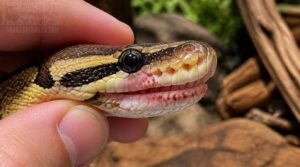
Mouth rot, or infectious stomatitis, starts small but deserves your full attention. Catching it early can mean the difference between a quick fix and a serious battle. Here’s what you need to know before the warning signs show up.
If you’re unsure what to look for, this guide on milk snake care requirements breaks down the housing and health basics that help prevent stomatitis in the first place.
Infectious Stomatitis Basics
When your snake’s mouth looks off, it’s rarely one single culprit at work. Infectious stomatitis, commonly called snake mouth rot, involves opportunistic bacteria overwhelming oral tissue once normal defenses slip.
Cases vary widely:
- Mild ulcerative stomatitis
- Necrotic stomatitis with tissue death
- Viral-driven vesicular changes
- Fungal involvement secondary to imbalance
Lesions usually stay confined to oral mucosa, though systemic disease can follow untreated bacterial infection. Primary causes often include viral and parasitic agents that trigger the initial inflammation.
Why Early Detection Matters
Timing changes everything with this disease. Catching early signs before redness and swelling spread limits tissue damage and keeps bacteria from reaching the jawbone.
Early cases also respond better to medication, cause less pain, and lower dehydration risk since your snake keeps eating and drinking. Quick veterinary attention reduces bacterial transmission too, protecting other reptiles in your collection from cross-contamination.
Mild Versus Advanced Cases
Not every case of mouth rot looks the same, and that’s the point.
Mild cases stay localized, showing gum redness without deep necrosis, discharge, or major appetite decline.
More severe stomatitis spreads across oral tissue, producing pus, necrotic patches, and systemic illness risk.
Recognizing which stage you’re facing shapes how urgently you act, and how aggressively your vet treats it.
Early Mouth Rot Symptoms
Catching mouth rot early starts with knowing what to look for in your snake’s mouth and behavior. The signs can be subtle at first, but they’re there if you pay attention. Here are the five key symptoms every snake owner should watch for.
Stringy Saliva or Drooling
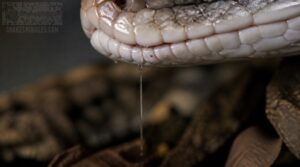
A wet chin is your first clue something’s wrong. Excessive salivation often shows up before any other sign of infectious stomatitis, so watch for saliva pooling or drooling into stringy strands.
This happens when swallowing impairment prevents normal clearing. Left unchecked, drooling can lead to skin maceration around the lips or, worse, aspiration if saliva reaches the airway.
Red Gums and Petechiae
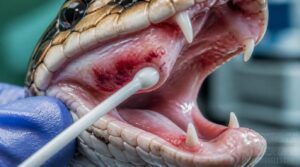
Open the mouth gently and look closely at gum color. Healthy gums stay pale pink; redness signals inflammation from bacterial infection.
While you’re checking, keep in mind that a snake’s occasional wide-open gape is a normal jaw-realignment behavior, not a health concern — see this guide on why snakes yawn and stretch their jaws for the full explanation.
Watch for petechiae—tiny, nonblanching red or purple dots from capillary bleeding.
If you spot these warning signs, this guide on recognizing snake mouth rot symptoms can help you confirm the diagnosis before starting targeted antibiotic treatment.
Quick check:
- Press gently
- Color stays (nonblanching)
- Spots cluster together
- Size stays 1-2mm
- Located on gums or mucosa
This spotting pattern signals oral mucosal infection and mucosal hemorrhage risk—early stomatitis warning signs.
Mouth Swelling or Sores

Swelling around the mouth margins often follows redness, giving the jawline a puffy, uneven look.
Small blisters or sores may form on gums or inner tissues—early ulcer progression, distinct from viral vesicle development seen in other species.
Left untreated, localized swelling risks abscess formation or spreading into deeper tissue, sometimes signaling systemic infection requiring prompt veterinary care.
Appetite Loss or Meal Refusal

Often, a snake’s first sign of trouble is simply turning away from food. Painful swallowing makes eating unpleasant, so feeding refusal sets in fast.
Watch for:
- Ignoring prey during normal feeding windows
- Striking but not following through
- Reduced tongue-flicking toward prey
- Partial bites, then abandoning meals
- Prolonged hiding instead of hunting
Dehydration risks climb quickly, and stress impacts compound the problem. Persistent refusal warrants veterinary attention.
Retained Shed Around Lips

A thin, papery band clinging at the mouth corners deserves a close look. This stuck skin traps moisture and debris, causing crusty lip discoloration and shed-induced irritation.
Left alone, it can cause lip constriction, uneven mouth contours, and worsening redness and swelling. Mild cases loosen with the next shed—true healing progress. Persistent, spreading irritation points toward mouth rot symptoms brewing beneath, often tied to poor hygiene.
Common Causes and Risk Factors

Mouth rot rarely shows up without a reason behind it. Something usually weakens your snake’s defenses first, opening the door for bacteria to take hold. Here’s what usually sets the stage for infection.
Oral Cuts and Abrasions
A tiny nick in the mouth is all bacteria need to get started.
- Feeding-related lacerations from struggling prey
- Mechanical trauma against cage walls or décor
- Chemical or thermal burns from unsafe substances
Each creates a break in the mucosa, inviting bacterial infection. Redness and swelling often follow within days, so treat any wound seriously and start proper wound management right away.
Poor Temperature or Humidity
Your snake’s enclosure is a life-support system, and getting it wrong invites disease.
A snake’s enclosure is a life-support system, and getting it wrong invites disease
Improper temperature slows metabolism, weakening immune responses your snake needs to fight early infection.
Low humidity dries oral tissue through evaporative water loss, letting minor irritation progress.
High humidity does the opposite, feeding humidity-induced biofilms and bacterial growth.
Stagnant air traps moisture near the mouth, so ventilation matters as much as numbers on a gauge.
Dirty Water and Substrate
Water bowls and substrate get dirty fast, and that grime does more than look unpleasant.
Biofilm accumulation on tank bottoms harbors opportunistic bacteria, releasing them into water your snake drinks and soaks in. Substrate dust irritates gums directly, while waste decomposition breeds toxins. Even careful cleaning backfires through cleaning tool cross-contamination—reused buckets spread bacteria to fresh water. Poor husbandry here is a leading contributor to snake mouth rot.
Stress and Weak Immunity
Stress-induced immunosuppression is a quieter risk factor, but no less real. Overcrowding, constant handling, or poor hides raise glucocorticoid levels, suppressing immune cell activity and causing lymphocyte depletion.
That leaves less defense against bacterial infection. Add sleep disruption and chronic inflammation cycles, and you’ve got a weakened immune system primed for stomatitis—proof that environmental stressors affect far more than mood.
Vitamin a Deficiency
Diet gaps matter too. Vitamin A deficiency weakens mucosal barrier integrity, causing keratinization that dries oral tissue and invites bacteria.
Watch for:
- Xerophthalmia-like eye dryness
- Slowed growth in juveniles
- Recurrent infections despite good husbandry
These early signs signal immune system impairment—another quiet contributor to snake mouth rot alongside stress and poor sanitation.
How Reptile Vets Diagnose It
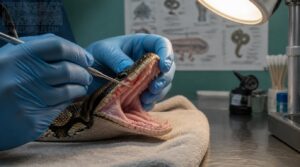
Once you spot the warning signs at home, your vet takes over with a more thorough workup. Diagnosing mouth rot properly means looking beyond the visible redness to what’s actually happening in the tissue. Here’s what that exam usually involves.
Oral Examination Findings
A hands-on look tells your vet more than any history you can give. During the oral examination, expect close inspection of the gumline for redness, petechiae, or discoloration, plus checks for swelling, pus, foul odor, and mucosal texture changes.
| Finding | Suggests |
|---|---|
| Red, swollen gums | Early stomatitis |
| Discharge, foul smell | Severe infection |
Gape behavior and secretion consistency round out the picture.
Swabs and Bacterial Cultures
Swabbing gives your vet a pathogen identification tool, not just a guess. A proper sample uses lesion sampling technique—firm contact on viable tissue—placed in liquid transport media, since dry swabs kill bacteria before laboratory analysis.
Prompt options:
- Aerobic culture
- Anaerobic culture (needs special transport)
- Cytology
- Sensitivity testing
- Prompt submission
Results guide antibiotic sensitivity choices, not blind treatment.
Bloodwork and Parasite Checks
A CBC reveals white cell patterns and red cell counts that flag systemic infection or anemia. Elevated eosinophils hint at parasites, though allergies cause them too.
Serology detects antibodies but isn’t foolproof; blood smears catch circulating parasites directly. Vets pair these with fecal parasite testing, matching each test to the suspected organism rather than guessing blindly.
Jaw Radiographs When Needed
How far does mouth rot really reach? That’s where imaging steps in. Visual vs radiographic exam catches what your eyes can’t: hidden bone changes beneath healthy-looking gums.
Vets choose panoramic vs periapical views depending on the case—wide screening versus tooth-level detail. Radiographs excel at detecting bone lesions and mapping lesion borders, giving clinical diagnosis real precision beyond bacterial culture testing alone.
Severity and Spread Assessment
Where exactly does snake mouth rot live, and how far has it traveled? Vets check lesion localization first, then map spread across oral structures.
- Gumline sores versus deep mucosa involvement
- Saliva consistency shifting stringy to thick
- Feeding behavior changes signaling pain
- Pus or discharge with foul odor
- Tissue necrosis suggesting systemic infection
Bacterial culture testing confirms severity, guiding whether treatment stays simple or turns aggressive.
Treatment, Care, and Prevention

Once your vet confirms mouth rot, the real work begins at home and in the clinic. Treatment works best as a team effort between medical care and daily attention on your part. Here’s what that process usually looks like, from antibiotics to knowing when it’s time to call for help.
Antibiotics Guided by Cultures
Antibiotics for snake mouth rot work best when guided by culture results, not guesswork. Vets swab oral lesions before treatment starts, since prior doses can suppress bacterial growth and skew results. Susceptibility panels reveal which drugs actually work against the specific organism.
This allows targeted de-escalation from broad-spectrum coverage, reduces resistance risk, and lets your vet monitor healing—less drooling, calmer gums—to confirm the chosen antibiotic is working.
Safe Oral Flushing
Rinsing a mouth rot lesion isn’t just about washing it—done wrong, it can push bacteria deeper into the oral cavity infection.
- Prop up the head to prevent aspiration
- Use sterile saline, never tap water
- Apply gentle, low-pressure flushes only
- Let debridement happen naturally, don’t scrub
- Watch for pus, discharge, or bleeding
Clean tools and calm handling matter just as much as the rinse itself.
Supportive Fluids and Pain Relief
A snake in pain often stops drinking, so subcutaneous fluids become a lifeline for hydration. Vets dose these based on weight and dehydration severity.
Pain relief comes from prescription reptile analgesics like meloxicam, never human medications, which can harm kidneys or the gut. If your snake seems overheated, gentle cooling helps—overheating worsens dehydration and stress.
Daily Hygiene and Cleaning
Medicine only goes so far—habitat sanitation does the rest. Rinse and refill the water bowl daily, spot-clean waste immediately, and replace damp substrate rather than let it linger.
Scrub feeding dishes after every meal, disinfect handling tools between uses, and wash your hands before and after contact. Consistent hygiene habits close the loopholes bacteria exploit.
When to Call Your Vet
Good hygiene prevents problems, but you still need to watch for warning signs. Call immediately for emergency breathing signs, appetite loss lasting a day, or visible mouth bleeding.
- Gasping or open-mouth breathing
- Refusing multiple meals
- Blood or discharge in the mouth
- Thick, stringy saliva
- Gum discoloration or swelling
Early veterinary attention prevents pus, discharge, and serious infection.
Frequently Asked Questions (FAQs)
Can snake mouth rot go away on its own?
Wishful thinking won’t cure a bacterial infection. Mouth rot rarely resolves alone—husbandry improvements help, but persistent symptoms and delayed care let it worsen. Veterinary attention remains essential for true healing, not just optimism.
How to tell if a snake has mouth rot?
Watch for stringy saliva, mucus threads, or gum discoloration near petechiae. Check for subtle swelling, feeding hesitation, red swollen gums, pus or discharge, and foul smell—these snake mouth rot signs warrant prompt veterinary evaluation.
What are the early signs of mouth rot?
Look for cloudy or stringy saliva, lip smearing at the mouth corners, and abnormal mouth carriage. Gums often show redness, subtle bleeding, or petechiae.
Hesitant feeding, faint discharge, or foul smell can follow—early signals worth a prompt vet check.
Can mouth rot spread to other snakes?
Like typhoid Mary passing illness unknowingly, contaminated tools spread mouth rot fast.
Yes—shared feeding tools, dirty water bowls, and bare-hand handling create cross-contamination risks. Disinfect equipment and wash hands between snakes to stop pathogen transmission before it starts.
How long does early mouth rot take to heal?
With prompt veterinary attention, you’ll often see improvement within 1 to 2 weeks. Full healing usually takes 4 to 8 weeks, though severity and how quickly antibiotic therapy started can shift that timeline considerably.
Can early mouth rot resolve without antibiotics?
Sometimes, yes—if you catch it before it snowballs into a full-blown siege. Topical antiseptic rinses, like diluted saline, can clear mild redness. But watch for pus or discharge signaling deeper spread, where antibiotic therapy becomes necessary.
Is early stage mouth rot contagious to other snakes?
Yes—it’s contagious. Contaminated saliva and pus spread through shared water bowls, feeding tongs, or handler-mediated transmission. Bacteria survive on moist surfaces, so isolating affected snakes and disinfecting equipment between contacts prevents spread to healthy cage-mates.
How much does mouth rot treatment typically cost?
It’s not cheap, but catching it early saves your wallet down the road. Expect Exotic Vet Fees for the initial visit, plus Diagnostic Lab Costs, antibiotic therapy, and possible Follow-up Visit Budget expenses as your reptile veterinarian tracks healing progress.
Can early mouth rot be treated at home safely?
Only for mild cases: gentle saline cleaning and improved hygiene help. But avoid human medicine—no ointments or rinses. Watch for urgent signs like pus or swelling; antibiotic therapy from your vet remains essential for true recovery.
Conclusion
A quiet gum or a swollen jaw: small signs, big consequences. That contrast is the whole lesson here.
Catching early stage mouth rot in your snake turns a dangerous infection into a manageable one, treated with antibiotics and better husbandry before bone or tissue pays the price. Skip the exam table, and you’re gambling with your snake’s future. Check the mouth often. Trust what you see. Your attention, more than any medicine, is what keeps your snake’s smile intact.