This site is supported by our readers. We may earn a commission, at no cost to you, if you purchase through links.
A single day can separate manageable gum inflammation from a jaw abscess that requires surgery. Mouth rot, known clinically as infectious stomatitis, progresses fast in snakes because their oral tissue offers little resistance once bacteria or fungi gain a foothold. Reptile keepers often mistake early symptoms for minor irritation, delaying care until the infection reaches bone.
Knowing when to see vet mouth rot symptoms appear can mean the difference between a short antibiotic course and months of reconstructive treatment. Your snake can’t tell you its mouth hurts, but its behavior and appearance will.
Here’s how to read those signals, from the first swollen gum to the emergency signs demanding immediate care.
Table Of Contents
- Key Takeaways
- See a Reptile Vet Promptly
- Watch for Early Mouth Rot Signs
- Recognize Emergency Warning Signs
- Know What The Vet Checks
- Protect Your Snake Before Treatment
- Frequently Asked Questions (FAQs)
- Does mouth rot go away on its own?
- What are the early signs of mouth rot?
- Can chlorhexidine be used to treat snake mouth rot?
- Can mouth rot be treated at home?
- Can mouth rot in snakes be contagious to other reptiles?
- How long does mouth rot treatment usually take?
- Will a snake with mouth rot need surgery eventually?
- Can mouth rot come back after successful treatment?
- Conclusion
Key Takeaways
- Mouth rot never heals on its own, so any redness, swelling, or discharge in your snake’s mouth needs a vet’s attention right away, not a wait-and-see approach.
- Watch for early clues like red or bleeding gums, foul breath, ropey saliva, and sudden appetite loss, since catching these signs early usually means a short antibiotic course instead of months of recovery.
- Yellow cheesy discharge, black dying tissue, facial swelling, open-mouth breathing, or severe lethargy are emergency signs that call for immediate veterinary care, not a wait-until-tomorrow decision.
- While you wait for your vet appointment, keep the enclosure clean, maintain proper heat and humidity, skip home antiseptics, and follow feeding guidance closely to avoid making things worse.
See a Reptile Vet Promptly
Mouth rot never gets better on its own, no matter how mild it looks at first. Your snake’s outcome depends heavily on how quickly you act once symptoms appear. Here’s what you need to know about getting your snake the care it needs.
Knowing the early warning signs makes all the difference, so take a look at this guide to identifying mouth rot symptoms in snakes before assuming it’s nothing serious.
Mouth Rot Requires Treatment
Mouth rot, or stomatitis, won’t resolve on its own. This bacterial oral infection requires veterinary care involving antibiotics, since untreated cases progress toward osteomyelitis and systemic sepsis.
Effective treatment combines timely antibiotic therapy with supportive measures: hydration support, assisted feeding, and pain management. Environmental disinfection practices matter too, addressing the contaminated conditions that caused infection in the first place.
Skipping veterinary treatment isn’t an option your snake can afford.
Early Care Prevents Complications
Catching stomatitis at the gum-redness stage, not the jawbone-swelling stage, is what separates a short antibiotic course from months of recovery. Early diagnosis lets your vet target the oral cavity infection directly.
While waiting for your appointment, isolation protocols, temperature stability, sanitation, and pre-killed feeding limit bacterial spread and buy your snake precious time before treatment even begins.
Never Wait for Improvement
A "wait and see" approach with stomatitis almost always backfires. Once gum inflammation appears, act quickly rather than watching for changes.
- Redness spreading beyond gums
- Appetite refusal past 48 hours
- Thick saliva thickening further
- Any swelling near the jaw
Seek help immediately, monitor closely at home, and follow vet instructions exactly. Untreated infection in the oral cavity progresses toward bone involvement fast.
Watch for Early Mouth Rot Signs
Mouth rot rarely appears out of nowhere; your snake’s mouth usually gives you clues well before the infection turns serious.
Catching those clues early gives you the best shot at a fast, uncomplicated recovery.
Here are five warning signs worth checking for during every handling session.
Red or Swollen Gums
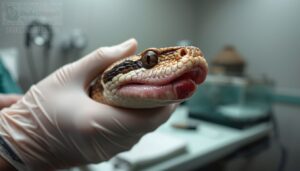
Healthy snake gums look pink and firm—so redness or swelling is your first red flag. Bacterial causes red gums often, especially Aeromonas or Pseudomonas, producing yellow-white plaques. Fungal overgrowth like Candida creates cottage-cheese patches instead. Poor humidity impact gum health dramatically, while nutrition deficiencies (vitamin A, calcium) worsen inflammation. Your vet assesses swelling on a 0–3 scale.
Pinpoint Mouth Bleeding

Since even tiny wounds hint at trouble, spotting pinpoint bleeding along the gumline matters. Fresh drops look bright red; older stains turn brown or black. Bacterial infection raises vascular permeability, so bleeding worsens with time.
If gumline bleeding persists or worsens, it’s worth reviewing this guide to identifying skin lesions in pet snakes before your vet visit.
- Gingival margin oozing
- Rough substrate irritation
- Live prey injuries
- Blood mixed with saliva
- Bleeding past 24 hours
Persistent bleeding signals a lesion needing urgent veterinary attention.
Foul-Smelling Breath
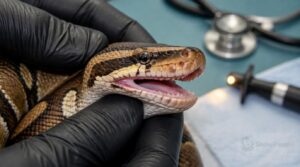
A snake’s breath shouldn’t stop you in your tracks, so trust your nose. Sulfur compounds from bacterial breakdown, worsened by tongue coating, dry mouth, and pus formation, signal brewing oral infection.
Persistent odor accompanying swelling and redness or loss of appetite points toward gum disease or active oral lesions—don’t dismiss it as "just snake smell.
Thick, Ropey Saliva

Saliva that turns stringy or rope-like signals a shift in oral moisture balance, often from dehydration or reduced saliva flow. Rising mucin concentration thickens secretions once water content drops.
Excessive salivation paired with ropey texture points to oral lesions irritating tissue. Left unaddressed, dry mouth triggers worsen, raising infection risk and warranting prompt veterinary evaluation.
Sudden Appetite Loss

A snake that suddenly turns its nose up at food deserves attention, not a shrug. When a rapid appetite drop happens within a day or two, it often precedes visible lesions. A rapid loss of appetite may signal an underlying health issue that warrants prompt veterinary evaluation.
Mouth rot causes oral pain that makes food handling uncomfortable. Any food refusal lasting over 48 hours warrants veterinary diagnosis, since systemic infection can trigger appetite loss before bacterial culture confirms the cause.
Recognize Emergency Warning Signs
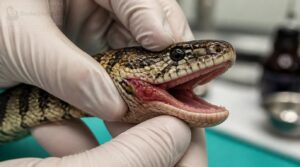
Some mouth rot cases move fast, turning a manageable infection into a life-threatening emergency within days. Your snake can’t tell you something’s gone seriously wrong, so you need to know what to look for yourself. Here are the warning signs that mean it’s time to get to a vet immediately, not tomorrow.
If your snake is also due for a shed, watch closely — a cloudy snake eye after shedding alongside mouth rot symptoms can signal a more serious health crisis that needs urgent attention.
Yellow, Cheesy Mouth Discharge
Cottage cheese in your snake’s mouth is never normal. This caseous yellow pus, ranging from lemon to mustard tones, signals severe bacterial stomatitis and persists for days rather than drying like saliva. Expect a rancid odor detectable from arm’s length.
Your vet will collect a culture, since Aeromonas hydrophila causes most cases, before starting antibiotics.
Black or Dying Tissue
Black tissue means dead tissue, not just discoloration—true oral necrosis, often from Aeromonas or Pseudomonas infection.
Necrotic patches show well-defined, raised borders against healthy pink mucosa and won’t bleed, since the vessels beneath have collapsed.
Untreated, dying tissue spreads roughly 3mm daily.
Left untreated, dying oral tissue in a snake spreads roughly 3mm every single day
This is a surgical emergency: your vet needs debridement plus imaging to assess depth before healthy tissue can regenerate.
Facial or Neck Swelling
Necrosis spreading unchecked often triggers swelling next, as infection burrows into deeper tissue. Facial swelling frequently signals dental abscesses; neck swelling suggests lymphadenitis or, in snakes, gas-producing bacteria under the skin.
Three warning signs demand attention:
- Firm, raised swelling near the jaw
- Swelling appearing within 48 hours
- Any crackling sensation beneath the skin
Imaging reveals abscess cavities—don’t wait.
Open-Mouth Breathing
Swelling that reaches the airway often produces the next red flag: your snake holding its mouth open to breathe. This isn’t normal nostril breathing—it’s respiratory distress, usually meaning infection or swollen tissue is blocking the airway. Whether it’s stress-panting or true airway obstruction, don’t guess. Open-mouth breathing means emergency care, now, no exceptions.
Severe Weakness or Lethargy
Airway distress isn’t the only sign your snake’s body is losing the fight. Severe lethargy often means bacterial infection has spread beyond the mouth, triggering systemic inflammation, dropping blood glucose, and suppressing immune function. A snake that won’t right itself, stays motionless for hours, or feels unusually cool signals possible septicemia—a life-threatening emergency requiring immediate veterinary care, not a wait-and-watch approach.
Know What The Vet Checks
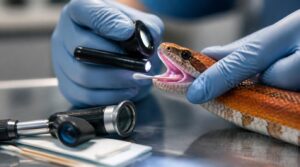
Once you’re in the exam room, your vet won’t just glance at your snake’s mouth and call it done. A proper diagnosis takes several steps, each one building a clearer picture of what’s really going on. Here’s what that process usually involves.
Complete Mouth Examination
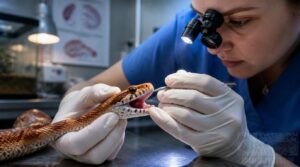
Your vet starts with a thorough oral cavity inspection under bright light, checking gums, tongue, and palate for lesions. Jaw palpation follows, feeling for swelling, loose teeth, or tenderness. They’ll complete dental charting to document each tooth’s condition, then perform radiographic assessment and saliva flow evaluation to gauge infection severity and physical injuries.
Bacterial and Fungal Cultures
Cytology and cultures pinpoint the exact culprit. Your vet swabs the lesion with sterile technique, preventing contamination, then selects media targeting Aeromonas and Pseudomonas—common mouth rot bacteria. Colony isolation separates mixed organisms; identification methods distinguish bacteria from fungi.
Why it matters:
- Confirms true infection
- Guides antibiotic choice
- Reveals fungal involvement
- Prevents wrong treatment
- Sensitivity testing ensures effective drugs
Jawbone Imaging
When gum disease creeps toward the jaw, imaging tells you what your eyes can’t. Xrays and digital radiography catch early bone loss; CT scans reveal density changes signaling deeper infection. Ultrasound checks soft tissue around mandibular structures, while MRI maps cranial structures without radiation. 3D reconstruction helps your vet spot jaw deformities before they become permanent, guiding the full vet workup.
Infection Severity Assessment
Numbers turn guesswork into a plan. Your vet assigns a clinical score from 0 to 4, weighing swelling, redness, and discharge, then measures necrosis extent and bacterial load via culture or PCR.
- Score 3-4: ulceration, systemic risk
- Necrosis over 30%: possible surgery
- Bacterial load above 10^6 CFU/mL: chronic infection
- Elevated white blood cells: severe involvement
This severity index directs how aggressively treatment begins.
Husbandry and Nutrition Review
Infection rarely happens in a vacuum. Your vet reviews feeding frequency, prey size, and hydration checks, then inspects substrate safety and enclosure cleaning habits for the bacterial sources fueling mouth rot.
Nutritional gaps, especially Vitamin A deficiency, weaken oral defenses. Expect environmental adjustments too — humidity, temperature gradients, and hygiene routines all factor into why the infection took hold, and what husbandry and nutrition changes will keep it from returning.
Protect Your Snake Before Treatment

Getting your snake to the vet is only part of the equation, since what happens at home matters just as much during this waiting period. Your actions in the days before treatment can either support recovery or unintentionally make the infection worse. Here’s what you need to focus on before that appointment.
Contact an Exotic Vet
Not every vet treats reptiles, so search the AVMA exotic practitioner directory and verify licensing before calling.
Ask about same-day appointments for suspected infection, and describe your snake’s species, weight, and symptoms clearly.
Prepare a secure, ventilated transport container in advance.
Contacting an exotic vet quickly, before you attempt any environmental adjustments, gives mouth rot the fastest path to proper diagnosis.
Keep The Enclosure Clean
Poor hygiene fuels stomatitis, so enclosure sanitation matters while you wait for your appointment.
- Substrate replacement every 2–4 weeks
- Water bowl maintenance with bleach disinfection
- Hide box disinfection weekly
- Proper ventilation airflow
- Prompt waste removal within 12 hours
Clean water quality and consistent cleaning and disinfection won’t cure existing infection, but they stop reinfection from undoing your vet’s treatment plan.
Maintain Correct Heat
Sanitation alone won’t help if the thermal gradient stays off. Temperature and humidity below range weaken immune defenses, giving stomatitis room to advance.
| Zone | Target Range |
|---|---|
| Warm side | 88–92°F |
| Cool side | 75–80°F |
Verify with calibrated digital probes, adjust seasonally, and recheck after any power outage or heat source swap.
Avoid Home Antiseptic Treatments
Heat and hygiene set the stage, but reaching for a home antiseptic is where owners often do real harm. Diluting chlorhexidine incorrectly, or using human mouthwash, risks tissue necrosis, delayed diagnosis, and masked symptoms that let mouth rot advance untreated.
Veterinary guidelines restrict oral antiseptics to specific, supervised formulations. Skip the home remedy. Call your exotic vet instead.
Follow Feeding Instructions
Diagnosis isn’t the finish line. Feeding schedule consistency matters just as much during recovery, so stick to vet-approved timing and prey size guidelines.
Skip assisted feeding unless instructed. Nutritional imbalances and poor hygiene invite relapse, so keep logging meals and watching for symptom identification signs like drooling or swelling before resuming normal frequency.
Frequently Asked Questions (FAQs)
Does mouth rot go away on its own?
No — think of it as a fire smoldering under the floorboards, not one that burns out alone. Mouth rot rarely self-resolves; poor hygiene, temperature swings, and nutritional imbalances overwhelm your snake’s immune system, letting bacteria persist untreated.
What are the early signs of mouth rot?
Look for gum discoloration turning glossy red, thickened saliva forming ropey strands, feeding refusal, and behavioral changes like isolation. Foul breath and oral sensitivity during handling also signal early mouth rot before open-mouth breathing develops.
Can chlorhexidine be used to treat snake mouth rot?
An ounce of prevention beats a pound of cure. Yes, but only as dilute chlorhexidine rinses under vet guidance, twice daily for mild cases. Never full-strength, never as a standalone fix for infection treatment.
Can mouth rot be treated at home?
Only mild cases, with strict hygiene and monitoring. Antiseptics, nutritional support, and clean enclosures help—but bacteria and immune compromise often outpace home care. Watch weight loss closely;
severe infection or antifungal-resistant strains demand veterinary treatment, not DIY fixes.
Can mouth rot in snakes be contagious to other reptiles?
Yes, when caused by infectious stomatitis. Contaminated water dishes, shared handling tools, and direct contact spread pathogens between reptiles. Quarantine affected snakes, disinfect equipment, and wash hands between handling to limit cross-species transmission and environmental contamination.
How long does mouth rot treatment usually take?
Like waiting for a wound to close, mouth rot healing takes patience: mild cases resolve in 21 to 28 days, moderate ones need 4 to 6 weeks, and severe infections may stretch 8 to 10 weeks with proper antibiotics and debridement.
Will a snake with mouth rot need surgery eventually?
Not always. Surgical debridement for necrotic tissue removal becomes likely only with deep ulcers, black dead tissue, or poor antibiotic response. Superficial infection severity often heals through cleaning and antiseptic care alone, avoiding surgery entirely.
Can mouth rot come back after successful treatment?
Recurrence happens more often than owners expect. Residual bacteria in bone or submucosal tissue, poor husbandry, weakened immunity, or incomplete debridement all raise relapse risk.
Post-treatment monitoring and strict oral hygiene catch reinfection early, before infectious stomatitis rebuilds its foothold.
Conclusion
A little mouth trouble rarely stays little in snakes. Tissue that looks mildly irritated today can turn necrotic within days, so when to see vet mouth rot symptoms emerge isn’t a question to sit on.
Redness, odor, or a skipped meal are your snake’s only language for distress. Answer quickly, and antibiotics do the work. Wait, and surgery might.
Trust the signs, act on them, and your snake’s recovery stays simple, swift, and complete.