This site is supported by our readers. We may earn a commission, at no cost to you, if you purchase through links.
Your snake just finished shedding, and one eye still looks foggy, like it never got the memo. You check the shed skin, and sure enough, the eye caps didn’t come off clean. This happens more than you’d think, and it isn’t always a reason to panic.
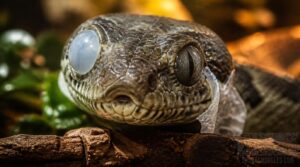
A snake eye cloudy after shed usually points to a retained eye cap, a thin scale that sometimes sticks around after ecdysis. Most cases clear up with better humidity and a little patience. But some don’t, and knowing the difference protects your snake’s vision and keeps small problems from becoming vet visits.
Table Of Contents
- Key Takeaways
- Why Snake Eyes Turn Cloudy
- Cloudy Eyes After Shedding
- Signs of Retained Eye Caps
- Safe Care for Cloudy Eyes
- When to Call a Reptile Vet
- Frequently Asked Questions (FAQs)
- Should I feed my snake when its eyes are cloudy?
- Can a cloudy eye clear up on its own?
- What do cloudy eyes on a snake mean?
- How long after a snake’s eyes turn blue will it shed?
- Why do snakes’ eyes get cloudy when shedding?
- Can cloudy eyes indicate snake stress levels?
- Do all snake species shed eye caps?
- How often should snakes shed their skin?
- Can substrate type affect eye shedding problems?
- Are cloudy eyes contagious between pet snakes?
- Conclusion
Key Takeaways
- Cloudy eyes after shedding usually mean a retained eye cap, a thin scale that didn’t fully release, and most cases resolve with better humidity rather than intervention.
- Normal post-shed cloudiness clears within 24-48 hours and affects both eyes equally, while cloudiness in only one eye or lasting longer signals a real problem.
- You can safely help a stuck eye cap release by raising humidity to 80-90%, offering a humid hide, providing fresh water, and trying supervised warm soaks, but you should never pull or scrape the cap off yourself.
- Call a reptile vet if cloudiness persists past two days, if you see swelling or discharge, or if stuck eye caps keep happening, since repeated retention often points to a husbandry issue that needs fixing.
Why Snake Eyes Turn Cloudy
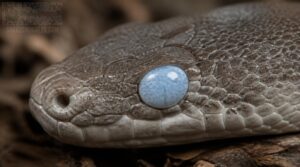
A cloudy eye can look alarming the first time you see it, but most of the time, it’s just your snake’s body doing what it’s built to do. There’s a clear reason behind that milky haze, and it starts long before shedding day arrives. Here’s what’s actually happening beneath the surface.
This cloudiness comes from a fluid layer forming between the old and new skin, a normal part of the shedding cycle explained in this complete guide to why your snake’s eyes turn cloudy.
Normal Pre-shed “blue” Phase
Every ball python owner learns this one eventually: eyes turning milky blue and skin going dull mean shedding is near. This "being in blue" phase happens when fluid builds between old and new skin layers.
Expect it to last:
- 1-2 weeks total
- 3-5 days cloudy
- Reduced appetite
- Clearing before shed
Vision drops sharply now, so feeding refusal and hiding are completely normal responses.
Eye Caps and Spectacles
That blueish clouded look comes from your snake’s spectacle, the fixed transparent scale covering each eye, permanently. Before shedding, a separate eye cap forms over it as protection.
The spectacle itself never comes off. Only the eye cap sheds, ideally in one clean piece, leaving that scale clear again once the shedding cycle finishes.
Temporary Vision Changes
While that eye cap forms, light doesn’t pass through clearly, so your snake’s reduced visual clarity is expected. Pupil definition softens, and sensory reliance shifts toward smell and touch.
You’ll notice:
- Blurred shapes
- Muted light response
- Slower tracking
- Startled reactions
- Gradual vision recovery post-shed
This clears once shedding finishes and cloudy eyes resolve naturally.
Defensive Shed Behavior
With vision blurred, your snake feels exposed, so it leans on instinct. Watch for hooding, tighter coiling, or sudden hissing. These responses are part of various defensive mechanisms and tactics used to help it survive.
| Behavior | Purpose | What You’ll See |
|---|---|---|
| Visual threats | Deter predators | Hooding, gapes |
| Freeze vigilance | Avoid detection | Stillness, shallow breath |
| Escape motion | Quick retreat | S-curve pivots |
Give it space until shedding finishes.
Cloudy Eyes After Shedding
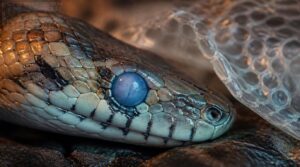
Shedding should clear things up, and most of the time it does. But sometimes that cloudy look sticks around longer than it should. Here’s how to tell what’s normal and what needs your attention.
If the haziness lingers well past a normal shed cycle, it’s worth reading up on what causes prolonged cloudy eyes before shedding so you can catch a problem early.
When Cloudiness is Normal
Right after your snake finishes shedding, don’t be alarmed if the eyes still look a bit hazy. This is your snake’s spectacle fluid finishing its job.
Cloudiness is normal if:
- Both eyes look the same
- It clears within a day or two
- Your snake acts and eats normally
Vision returns fully once the old cap releases.
Signs It is Not Normal
What if the haze just won’t quit? That’s your cue something’s off.
Watch for persistent opacity lasting more than two days, a milky film that won’t clear, or one eye clouding while the other stays clear. Add in abnormal rubbing, discomfort, or vision trouble, and you’re likely looking at retained eye caps or infection. Don’t wait it out — call your reptile vet.
One Eye Versus Both Eyes
One eye or both — does it matter? Yes, and it tells you a lot.
Single eye retention usually points to a localized problem, like stuck shed on one spectacle. Dual eye recovery after a normal shed is systemic and temporary. Watch for asymmetrical vision cues: a snake striking off-target on one side often has ocular opacity limited to that eye, not a whole-body shedding issue.
How Long to Monitor
Give it a day or two, and clarity should return on its own.
That’s your monitoring window: 24 to 48 hours post-shed for eyes to clear fully.
- Track daily improvement in eye clarity
- Watch for disorientation or clumsy strikes
- Note any lingering shed skin near the eyes
- Flag red-flags like discharge or swelling
- Schedule veterinary consultation if cloudiness persists past day two
Signs of Retained Eye Caps
Sometimes shedding doesn’t go as planned, and a spectacle gets left behind. Your snake can’t tell you something’s wrong, so you have to know what to look for. Here are the signs that point to a retained eye cap.
If the cap stays put after a gentle soak, check your snake’s scales for dull patches or rough spots, and use this guide to abnormal snake skin texture and when to see a vet.
Checking your snake’s skin texture is a good first step—knowing how to identify abnormalities beneath your snake’s scales can help you catch retained eye caps before they become a serious problem.
If you’re checking for shedding issues, it also helps to understand how a snake’s flexible jaw handles oversized meals, since a rough or difficult feeding can sometimes throw off the whole shedding cycle.
Dull Milky Eye Surface
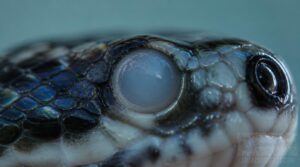
A dull, milky eye that lingers after shedding usually means spectacle layer alignment failed. Light scatter and ocular surface haze make the eye look foggy instead of glossy.
| Normal Post-Shed | Retained Cap |
|---|---|
| Clears in hours | Stays cloudy |
| Even glossy sheen | Dull, flat look |
| Both eyes match | Often one-sided |
Watch for residual moisture buildup and tear film irregularities—these signal true retention, not simple ecdysis leftovers.
Missing Shed Eye Holes
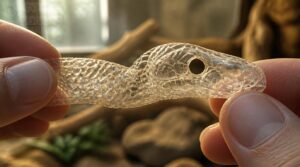
Grab the shed skin and hold it up to the light. This Shed Integrity Check confirms eye cap presence—clear, hole-shaped openings mean successful ecdysis.
No holes, or intact caps still embedded? That’s your Spectacle Removal Verification failing.
Examining discarded skin is the fastest way to catch retained eye caps before stuck shed causes lasting eye trouble.
Visible Cap Edges
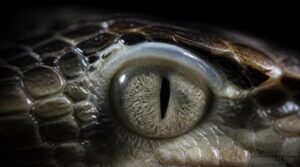
Look closely at the eye, and you may spot a boundary line where old and new tissue meet. This edge often looks thicker or more opaque than the surrounding haze.
Check for:
- Uneven milky border thickness
- Surface glare shifting with light angle
- Slow cap edge progression instead of full clearing
These patterns point to a stuck shed, not normal cloudiness.
Head Rubbing Behavior
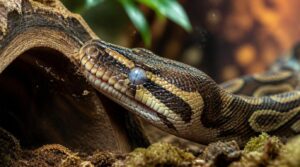
Watch how your snake interacts with its surroundings. Frequent head rubbing behavior against branches or hides often means retained eye caps are causing irritation.
This is mechanical skin loosening mixed with vision impairment frustration. Your snake is trying to soothe itself and remove stuck tissue through texture-based rubbing.
Stick to smooth surfaces. Rough substrate raises friction safety risks and can lead to eye infection if scales tear.
Layered Old Spectacles
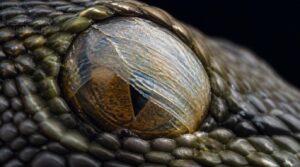
Get close and look at the eye at an angle. If you spot layered old spectacles, thin edges or ridges stacked over the true eye surface, that’s retained tissue, not a fresh shed.
- Uneven thickness patterns catch light differently
- Light scattering creates patchy cloudiness
- Residual film feels textured, not smooth
- Spectacle surface conditioning stalls underneath
- Repeated shed layers signal deeper trouble
Safe Care for Cloudy Eyes
Once you’ve spotted a retained eye cap, the next step is helping your snake shed it safely. Most fixes start with small changes to the enclosure, not hands-on removal. Here’s what you can do, in order, before ever reaching for tape or a vet visit.
Raise Enclosure Humidity
Humidity is your first line of defense against stuck eye caps. Target 70-80% during pre-shed, then push to 80-90% once shedding starts.
A digital hygrometer beats guesswork every time. Place moisture sources near your snake’s warm side to build a humid microclimate without soaking its body, and mist regularly to prevent sudden humidity drops that can re-stick loosening spectacles.
Add a Humid Hide
Setting up a humid hide gives your snake a dedicated microclimate instead of soaking the whole tank. Place it on the warm side, near your heat source, and line it with damp sphagnum moss or coconut fiber.
- Keep entry holes clear and easy to access
- Refresh substrate moisture every 2–3 days
- Check for mold or sour odors often
- Monitor humidity right at the hide
- Avoid standing water in the substrate
Offer Fresh Water
Hydration plays a bigger role in shedding than most owners realize. Offer clean, dechlorinated tap water at room temperature, never cold, since chilled water often gets refused. Place the bowl on the cooler side, away from heat sources, and swap it daily. Scrub away biofilm with hot water regularly.
Dehydration worsens cloudy eyes and retained eye caps, so consistent access matters most.
Try Supervised Warm Soaks
A warm soak can loosen a stuck cap gently. Fill a clean tub with water at 90–95°F, checked with a thermometer, deep enough to cover your snake’s body but not submerge its head.
Soak for 10–15 minutes, watching skin response closely. Afterward, pat your snake dry with a soft damp cloth—lingering moisture invites skin issues, undermining the shed and overall reptile health.
Avoid Forceful Removal
Your fingers are not the tool for this job. Pulling or pinching a stuck eye cap risks eye tissue damage, bleeding, and lasting harm.
Your fingers aren’t the right tool—pulling or pinching a stuck eye cap risks real damage to your snake’s eye
- Never pinch or pry the cap
- Skip mechanical scraping with cloth or tools
- Watch for resistance signs during handling
- Stop if your snake shows discomfort
- Call your vet if soaking fails
Stressful handling only worsens retained eye caps. Let humidity do the work.
When to Call a Reptile Vet
Home care solves most cloudy eye cases, but not all of them. Some situations need a trained eye and the right tools to fix safely. Here’s when it’s time to pick up the phone and call your vet.
If moisture is the missing piece, our guide on helping a snake with a stuck tail shed walks you through safe, humidity-based fixes before it becomes a vet visit.
Knowing when to step back is just as important, and understanding when and how to separate baby snakes from their parents helps you time that transition without disrupting their natural development.
Swelling or Discharge
A puffy ring around the eye or fluid seeping from it isn’t shed residue — it’s your snake telling you something’s wrong. Watch for yellow or green discharge (infection), foul odor, or swelling that worsens within hours. One-sided puffiness often means a localized problem.
These signs, paired with discomfort or a partly closed eye, warrant a vet visit, not a wait-and-see approach.
Persistent Cloudy Eyes
A shed that’s finished but eyes still cloudy? That’s your cutoff for waiting. Give it a day, maybe two — genuine retained eye caps don’t self-correct.
Watch feeding response and rubbing behavior as clues to vision loss. Left alone, low humidity keeps causing repeat retention, and untreated caps invite chronic irritation or eye infections. No improvement means it’s time to call your vet.
Repeated Stuck Eye Caps
One stuck eye cap is a fluke. Two or three in a row means something in your setup is off, not the snake.
Repeated stuck eye caps usually trace back to low humidity, poor substrate texture, or nutritional gaps affecting snake shedding. Mites can irritate eyes too. Fix husbandry patterns now, or you risk long-term vision damage from layered, hardened caps piling up over time.
Injury or Infection Signs
Bad husbandry causes stuck caps, but infection changes the picture entirely. Watch for redness spreading outward, facial swelling, or discharge that’s yellow, white, or crusty instead of clear.
- Cloudy discharge with foul odor
- Eyes held partly closed or flinching when touched
- Abnormal breathing sounds
- Eye shape distortion or bulging
These signs mean infection or injury, not simple shedding trouble.
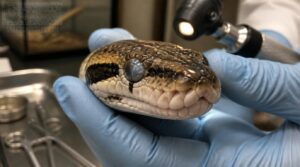
Professional Eye Cap Removal
Once infection or injury is ruled out, removal becomes a controlled procedure. You’ll be gently restrained to keep your head still, and I’ll use sterile ocular-safe tools under magnification.
| Step | Purpose |
|---|---|
| Restraint | Prevent thrashing |
| Magnification | See brille clearly |
| Gentle traction | Avoid corneal damage |
If the cap won’t release easily, we stop rather than force it.
Frequently Asked Questions (FAQs)
Should I feed my snake when its eyes are cloudy?
Even Samson lost his edge once his sight failed him—your snake’s no different. Hold off feeding during cloudy, blue eyes; impaired vision hurts prey strike accuracy, appetite naturally drops, and the body’s busy prioritizing shedding over digestion anyway.
Can a cloudy eye clear up on its own?
Yes, in most cases. Spontaneous eye clearing happens as sloughing finishes and the old spectacle detaches.
Watch the post-shed clarity timeline closely—if eyes stay milky past a few days with no resolving milky appearance, that signals a retained cap, not normal ocular health.
What do cloudy eyes on a snake mean?
Cloudy eyes usually signal the blue phase of sloughing, when fluid builds under old skin to loosen the spectacle. This causes temporary vision impairment, but if opacity lingers past shedding, it may point toward retained caps or eye inflammation.
How long after a snake’s eyes turn blue will it shed?
Most snakes shed 3 to 7 days after their eyes turn blue, though it can stretch to 10 depending on species, humidity, and temperature. Higher humidity speeds things along, so keep monitoring your enclosure closely during this window.
Why do snakes’ eyes get cloudy when shedding?
During shedding, fluid builds between old and new skin, forming a milky blue layer over the spectacle. This cloudiness marks natural ecdysis, temporarily dulling vision, and clears within days as the old skin loosens for sloughing.
Can cloudy eyes indicate snake stress levels?
Picture a snake squinting through frosted glass, unable to spot the "danger" that’s really just your hand — no wonder it strikes first.
Vision-induced anxiety drives real defensive behavior: reduced exploration, handling stress triggers, and irritability often signal genuine discomfort, not just routine sloughing.
Do all snake species shed eye caps?
Yes. Every species has eye caps formed from fused embryonic skin, replacing eyelids entirely. This spectacle sheds with the body during each molt. Shedding ease varies by species, humidity, and health, but the anatomy stays universal across all snakes.
How often should snakes shed their skin?
Frequency depends on age, growth rate, and nutrition—young snakes shed every few weeks, adults every 1–3 months. Seasonal cycles and health also play a role, and any change in behavior or cloudy eyes signals it’s time to watch closely.
Can substrate type affect eye shedding problems?
The devil’s in the details here: dusty bedding and coarse grain abrasion irritate spectacles during shedding. Burrowing friction, poor substrate moisture levels, and low bedding cleanliness all raise your snake’s risk of stubborn, cloudy eyes.
Are cloudy eyes contagious between pet snakes?
Not always, but it’s possible. Some infections spread through direct contact, shared water bowls, or mite-borne pathogens. Practice good enclosure hygiene and quarantine new snakes to limit fomite spread and protect your whole collection.
Conclusion
A thousand snakes could shed in your living room and still, one foggy eye would stop you cold. That instinct matters.
A snake eye cloudy after shed is rarely an emergency, but it’s always worth watching closely. Give it humidity, give it time, and check again in a week. If the fog lingers, don’t wait it out. Trust your eyes to catch what your snake’s can’t tell you.