This site is supported by our readers. We may earn a commission, at no cost to you, if you purchase through links.

A baby ball python gets separated too early, refuses its first meal, and suddenly you’re three weeks into a force-feeding nightmare that one shed would have prevented.
Here’s the twist: most mother snakes abandon their babies the moment they hatch, but a few, like king cobras, guard their nests for weeks.
Timing separating baby snakes from parents wrong stresses the neonates, triggers feeding strikes, and puts you within striking distance of a defensive mother.
The good news? Your babies tell you exactly when they’re ready, through their first shed, their wandering, and their first tongue flicks at prey.
Table Of Contents
- Key Takeaways
- When to Separate Baby Snakes
- Signs Baby Snakes Are Independent
- How to Separate Baby Snakes Safely
- Set Up Separate Neonate Enclosures
- Feed and Monitor Separated Baby Snakes
- Avoid Common Baby Snake Separation Mistakes
- Frequently Asked Questions (FAQs)
- How long do baby snakes stay with their mom?
- How to separate baby snake plant from mother?
- Can a baby snake survive without its mother?
- When you see a baby snake, is the mother nearby?
- Can baby snakes survive without any parental care?
- How do you differentiate male from female neonates?
- What vaccinations or health checks do baby snakes need?
- Do siblings compete or harm each other after separation?
- Do baby snakes recognize their siblings after separation?
- Can separated neonates be housed together safely?
- Conclusion
Key Takeaways
- The first shed — typically within 7 to 14 days of hatching — is your most reliable signal that a baby snake is ready to separate, and rushing before it puts both the neonate and your feeding success at serious risk.
- Most snakes provide zero maternal care after birth or hatching, but species like king cobras guard nests for weeks, so knowing your species’ parenting behavior is essential before you touch a single baby.
- Up to 60% of hatchling deaths stem from poor enclosure setup, not genetics, making proper thermal gradients, escape-proof housing, and minimal clutter non-negotiable from day one.
- Roughly 90% of neonate feeding strikes trace back to premature separation or handling stress, which means patience and timing aren’t just good practice — they’re the difference between a thriving clutch and a feeding nightmare.
When to Separate Baby Snakes

So, when’s the right time to pull baby snakes from their parents? It depends on three things: whether your species lays eggs or gives live birth, how much maternal care it actually provides, and one universal cue that trumps everything else.
For example, how snake reproduction and maternal care works varies a lot—pythons brood their eggs, while many live-bearing species offer no parental help at all.
Get these three right, and you’ll split the family at exactly the right moment.
Egg-Layers Versus Live-Bearers
In the snake breeding world, your timeline depends on reproduction mode. Oviparous species lay eggs, so you wait for hatching, then schedule hatchling separation once feeding stabilizes. Viviparous species skip incubation entirely; neonates arrive ready to go.
Either way, plan for individual enclosures early. Temperature and photoperiod shape clutch and litter size, so track your conditions.
Species-Specific Maternal Care
Here’s the twist: most snakes provide zero parental care, but a few break the rules. Species-specific maternal care shapes your separation timeline.
- Pythons brood eggs until hatching, then walk away
- King cobras guard nests for weeks
- Vipers may linger briefly post-birth
Know your species’ script. Maternal defense displays fading is a reliable separation cue, reflecting reptile parenting evolution.
Once the mother retreats, her signals shift quickly, and this guide to snake stress communication helps you read those subtle changes.
First Shed Timing
Once maternal care ends, watch for the first shedding cycle. Most neonates shed within 7 to 14 days of hatching or birth, and a clean, complete shed is your strongest separation cue. Before it, expect milky eyes and sluggish behavior. Keep humidity at 60 to 70 percent. Post-shed feeding response confirms those neonate independence markers.
If the tail tip sticks to the old skin, this guide to fixing a stuck shed on a snake’s tail walks you through safe removal.
Before you start, make sure the rest of the shed has come off cleanly, since a stuck shed on a corn snake often signals low humidity in the enclosure.
Signs Baby Snakes Are Independent
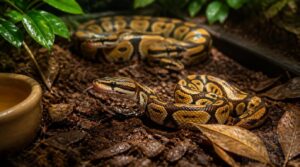
Timing tells you when to look. Behavior tells you if they’re ready. Watch for these independence markers before you reach for the tubs.
First, movement. A neonate that travels away from the clutch site consistently over 2 to 7 days is broadcasting a clear separation cue. Erratic, self-driven retreats when housed near siblings? Same message: it wants its own territory.
Second, feeding. First independent feeding usually lands 4 to 14 days post-hatch. One meal is luck. Feeding establishment means multiple small meals inside a 1 to 2 week window. That’s your green light.
Third, the senses. By day 8 to 14, olfaction and depth perception shift from following mom to self-directed prey detection. Pupils track, heat pits work, tongue flicks lead.
Bottom line: a baby that hunts, eats, and ignores maternal cues has outgrown maternal care. Its neonate survival odds now depend on you, not her.
How to Separate Baby Snakes Safely
The moment has arrived, and how you handle it matters. Get the sequence wrong and you’re dealing with a stressed mother, a defensive neonate, or worse. Here’s the order that keeps everyone safe: calm handling, mother secured first, and a hard line on venomous species.
Minimize Handling Stress
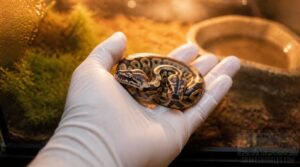
A neonate’s first week is a stress gauntlet. Every unnecessary touch burns energy it needs for feeding establishment.
Follow three rules:
- Wait until after the first shed before any contact.
- Scoop gently from below, never pin or grab.
- Cap handling frequency at seconds, not minutes.
Pre-warm containers, dim the lights, and skip scented soaps. Stress reduction now means better feeders later.
Secure The Mother First
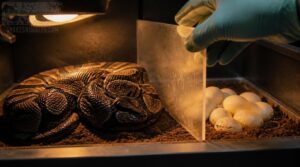
Before you touch a single baby, contain the mother. Snake maternal behavior varies, but secure the mother first always. Slide a barrier between her and the clutch, keep her basking area undisturbed, and preserve body heat.
| Step | Action | Why |
|---|---|---|
| 1 | Latch her hide | Prevents escape |
| 2 | Insert divider | Blocks interference |
| 3 | Leave her coil | Retains warmth |
Follow reptile breeding guidelines: calm mothers mean calm neonates.
Venomous Species Require Professionals
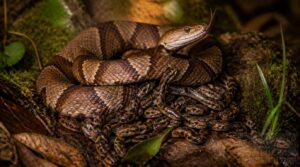
Picture a copperhead coiled over her wriggling brood, mouth ready. That’s your cue to step back, not in.
Venomous snake handling demands trained pros with antivenom on-site, proper PPE, and proven snake removal techniques like tubes and hooks. They’ll sort babies into individual enclosures, manage the feeding establishment phase, and dial in each thermal gradient. Your ego isn’t worth a necrotic finger.
Set Up Separate Neonate Enclosures
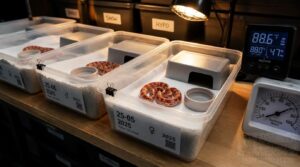
Here’s a number that stops most new breeders cold: up to 60% of hatchling deaths trace back to poor enclosure setup, not genetics or disease. Your individual enclosures matter more than any pedigree.
Start with a solid-walled tub or glass terrarium, no gaps over 0.5 cm, lid locked tight. Baby snakes are escape artists with no respect for your sleep schedule. Skip loose sand entirely; paper towel or washable liner keeps things hygienic and non-ingestible.
Build your thermal gradient properly: 32°C basking spot, 25–28°C cool end, overnight drop under 5°C. Two heat sources, thermostat controlled, no exceptions. Humidity sits at 40–60% with a hygrometer, not guesswork.
Keep it simple. Hide box, water dish, done. Clutter during the feeding establishment phase just adds stress. Label each snake, photograph the setup, and you’re ready.
Feed and Monitor Separated Baby Snakes
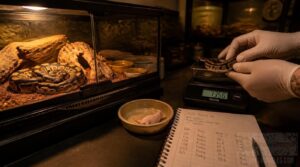
Here’s the truth: a snake that won’t eat won’t thrive. Your job after separation is to turn appetite into data.
Offer appropriately sized prey within the first 24–48 hours. Use pre-killed items for fragile neonates; live prey shortens feeding latency but invites injury. If your babies shed right before separation, expect first meals within 3–7 days. No shed yet? Give it 1–2 weeks. Log every shed alongside every feeding attempt, because feeding patterns tell stories. Nothing by 72 hours means act now.
Feed small and often: 4–6 meals weekly beats one big gut-bomb, cutting regurgitation risk.
Daily, you’ll weigh each snake and chase 2–6% weekly gains. Run health checks for dehydration, dull eyes, or tremors. Keep temps at 28–32°C, humidity 60–70%. Boring records save lives.
Avoid Common Baby Snake Separation Mistakes
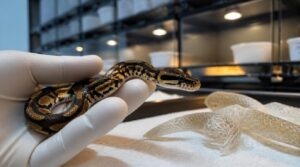
Most separation failures come down to impatience, not incompetence. You’ve done the hard work, so don’t fumble the finish line. The biggest mistakes breeders make:
- Pulling neonates mid-shed, when they’re fragile and defensive
- Ignoring maternal aggression signals and forcing the transfer anyway
- Skipping individual enclosures, inviting cannibalism and disease spread
- Rushing feeding attempts before babies settle and self-warm
Respect the shedding cycle. If a neonate hasn’t completed its first shed, it stays put. Period. Watch for stable movement and consistent prey interest before you act.
Stress reduction matters more than speed. Transfer during cool, quiet periods, support the body fully, and never grab a tail tip. Nail your temperature management in each new enclosure before the move, not after.
When in doubt, wait a day. Snakes forgive delay; they don’t forgive mishandling.
When in doubt, wait a day—snakes forgive delay, but never mishandling
Frequently Asked Questions (FAQs)
How long do baby snakes stay with their mom?
How long do baby snakes stay with their mom? Barely any time. Egg-layers abandon the clutch; live-bearers disperse within hours to days. Maternal coiling ends at hatch, so neonate dispersal is basically immediate.
How to separate baby snake plant from mother?
Start when pups hit 1–2 inches. Use sterile pruners at the root crown, keeping roots intact. Harden off in indirect light, then pot in individual enclosures, a quiet warm area, well-draining mix.
Can a baby snake survive without its mother?
Can a baby snake survive without its mother? Yes, absolutely. Most snakes are independent from birth, hunting alone within days. Neonate development requires no parental care; your job is proper reptile husbandry: warmth, humidity, and appropriately sized prey.
When you see a baby snake, is the mother nearby?
Is the mother nearby? Usually not for long. Egg-layers abandon clutches; live-bearers leave neonates within days. If she’s coiled defensively, wait. Maternal care is species-dependent, so know your snake’s normal behavior.
Can baby snakes survive without any parental care?
Can baby snakes survive without any parental care? Absolutely, most can. Snakes show precocial development: neonates are independent from birth, hunting after their first shed. Parental investment tradeoff means eggs carry the resources instead.
How do you differentiate male from female neonates?
Sexing baby snakes starts with tail length and thickness: males run longer, thicker tails past the vent. Hemipenal bulges appear around 10–14 days post-hatch but stay unreliable until months pass.
Subcaudal scale counts firm up after the first shed. For ambiguous species, DNA sexing from a tail clip settles it definitively.
What vaccinations or health checks do baby snakes need?
What vaccinations or health checks do baby snakes need? No routine vaccines exist for neonate snakes. Instead, schedule a veterinary wellness exam: hydration, body condition, fecal parasite testing, and weight tracking.
Check the umbilical infection site, retained yolk, first shed, and breathing quality.
Do siblings compete or harm each other after separation?
Do siblings compete or harm each other after separation? Usually not much. Take a hypothetical clutch of corn snakes: split into individual enclosures with food and hides, they show calm, evenly spaced movement, rarely biting. Competition and stress spike only with crowding or hunger, so surplus resources keep things peaceful.
Do baby snakes recognize their siblings after separation?
Short answer: no. Snakes show no meaningful sibling recognition after separation. House them individually, not out of social concern, but to prevent stress, competition, and cannibalism.
Can separated neonates be housed together safely?
It’s rarely safe. Sibling aggression surprises even experienced breeders, and co-housing neonates creates serious stress, feeding competition, and real injury risk. Individual enclosures give you full control over each hatchling’s development, feeding responses, and health.
Conclusion
Roughly 90% of neonate feeding strikes trace back to premature separation or handling stress, not bad luck. Separating baby snakes from parents at the right moment, after that first shed and first independent movement, changes everything.
Watch your babies closely. They signal readiness louder than any calendar date or breeder rule ever will. Get the timing right, nail the enclosure setup, and those first prey strikes will feel exactly like the payoff you actually earned.