Skip to Content

How Do Snakes Mate? Courtship, Reproduction, and Mating Rituals Explained (2026)

This site is supported by our readers. We may earn a commission, at no cost to you, if you purchase through links.

how do snakes mate

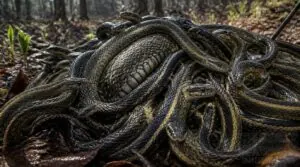
Few animals have a sex life stranger—or more strategically intricate—than snakes. A female garter snake emerging from hibernation can attract over 100 males simultaneously, triggering a writhing mass of bodies all competing for the same opportunity. That’s not chaos. That’s evolution running a ruthless efficiency test.

Snake reproduction involves paired hemipenes, sperm stored for up to seven years, and females who can delay fertilization when conditions aren’t right. The mechanics alone are worth understanding—but the behavior layered on top makes it genuinely fascinating. From boid courtship rituals to asexual reproduction in certain pythons, how snakes mate reveals something bigger about how life finds a way under pressure.

Table Of Contents

Key Takeaways

  • Male snakes track receptive females using pheromone-sensing tongue flicks, then anchor a single hemipenis — complete with spines and hooks — inside the female’s cloaca for sperm transfer that can last anywhere from three minutes to 28 hours.
  • Females aren’t passive participants — they actively evaluate mate quality through scent, stamina, and body condition, and can store viable sperm in specialized tubules for up to seven years, giving them full control over when fertilization actually happens.
  • Snake mating balls aren’t chaos; they’re a live competition filter where dozens of males converge on one female, and both physical dominance and sperm quality determine who ultimately wins fertilization.
  • Snakes use four distinct reproductive strategies — egg-laying, live birth, internal egg retention, and even asexual parthenogenesis — each one a precise evolutionary trade-off shaped by climate, habitat, and survival pressure.

How Do Snakes Mate?

how do snakes mate 1

Snakes don’t need hands — evolution gave them something far more efficient. Males track receptive females through chemical signaling, flicking their forked tongues to sample pheromone trails left behind.

The tongue essentially works as a chemical GPS — dive deeper into how snake tongue flicking detects pheromones to see just how precise that system really is.

Once contact is made, courtship rituals unfold, followed by cloacal alignment, where the male everts a hemipenis secured by spikes or hooks. Males can use either of two hemipenes to complete the process. Mating lasts minutes to hours depending on species.

Females then store sperm in sperm storage tubules, controlling fertilization timing — sometimes years later.

Snake Reproductive Organs

snake reproductive organs

Snake reproduction starts with some surprisingly specialized anatomy. Both males and females have unique structures that make the whole process work — and a few of them might genuinely surprise you. Here’s a closer look at what each sex is working with.

Female: Vagina, Oviducts, Ovaries, Clitoris

Female reproductive anatomy runs deeper than you’d expect. The cloaca opens into paired ovaries that drive hormonal cycles through ovarian hormones like estrogen and progesterone. The oviducts handle oviduct transport and internal fertilization — including egg coating and shell formation.

  • Vaginal lubrication protects tissue and eases copulation
  • Sperm storage tubules keep sperm viable for up to seven years
  • Clitoral sensitivity exists, though its full role is still being studied
  • Oviparity begins here, with specialized oviduct regions managing everything from fertilization to egg storage

Male: Hemipenis, Testes, Sperm Duct

Males have their own equally intricate setup — and it starts with the paired hemipenes, tucked inside the tail, inverted and out of sight until mating begins. Through hemipenis eversion mechanics, blood flow and erectile tissue push one outward into position. Only one deploys at a time, but having two is a genuine advantage — males can alternate sides or compensate if one sustains damage during competition.

Each hemipenis carries the sulcus spermaticus, a groove that channels sperm from base to tip during transfer. Species-specific spines, hooks, or ridges anchor it inside the female — nature’s version of a locking mechanism, and a key driver of hemipenial species recognition.

Behind all of this, the testes manage sperm production through testicular seasonal activity, ramping up after brumation in temperate climates. Sperm travels through the sperm duct transport system, maturing along the way before reaching the cloaca for delivery.

Snake Mating Season

snake mating season

Snakes don’t just mate whenever the mood strikes — timing is everything. The right season can mean the difference between a successful clutch and a wasted effort, so evolution has fine-tuned their internal clocks to match their environment. Here’s how mating season breaks down depending on where a snake lives.

Springtime After Hibernation (temperate Climates)

Winter ends, and snakes don’t ease back in — they hit the ground running. In temperate climates, surface temperatures rising above 10°C are enough to pull snakes out of brumation, and the first priority isn’t food. It’s mating. Energy stored before winter fuels courtship before a single meal is caught.

Here’s what makes spring the perfect breeding window:

  1. Males track female pheromones the moment they emerge from communal dens
  2. Basking near den sites quickly raises body temperature for reproduction
  3. Synchronized mass emergence reduces individual predation risk

Day length grows, hormones surge, and post-brumation shedding signals a metabolism fully back online — perfectly timed so offspring develop through peak summer warmth.

Multiple Mating Seasons in Tropical Climates

Most tropical snakes don’t have a single mating season — they have several. Stable year-round temperatures remove the one constraint that forces temperate species into a single breeding window, so the real trigger becomes rainy season peaks and the prey abundance that follows.

When rains arrive, prey populations surge. Females respond by initiating ovulation, and males ramp up pursuit. Male competition intensifies fast — multiple suitors will pursue one receptive female, and her female choice is active, not passive.

Breeding Phase Key Reproductive Event
Early Rainy Season Copulation peaks; sperm transfer begins
Mid Rainy Season Secondary follicle development
Late Rainy Season Gestation progresses
Dry Season Lull Follicle enlargement; mating preparation
Year-Round Baseline Flexible, low-level breeding activity

Sperm storage adds another layer — females can hold viable sperm for years, allowing fertilization to be timed precisely when conditions favor offspring survival.

Dependent on Climate and Ecosystem

Climate shapes every snake’s reproductive cycle from the ground up. Temperature-driven breeding kicks in when spring warmth signals the body to shift gears — hormones respond fast. Rainfall timing mating matters just as much; prey rebounds after rains, giving females the energy reserves needed to ovulate. Habitat shifts mating patterns too, as elevation range changes push some populations up to 200 meters per decade, forcing entirely new breeding season windows.

  • Seasonal phenology mating aligns courtship with peak prey availability
  • Thermal regulation governs when males become reproductively active
  • Environmental triggers like photoperiod fine-tune mating onset regionally
  • Ecosystem stability determines a species’ mating season flexibility

Delay in Reproduction if Risky Behavior is Required

Sometimes the smartest reproductive move is simply waiting. If courtship demands risky displays — dodging predators, enduring brutal mating competition, or burning through energy reserves — females won’t rush ovulation. That’s Female Ovulation Postponement in action, and it’s surprisingly strategic.

Predator-Induced Timing can push delays by weeks or even months. Risky Courtship Delay also compounds when high male competition means females wait through multiple rounds before a suitable mate emerges. The Energy Cost Delay matters too — exhausted females simply can’t support a viable clutch.

Here’s the clever part: sperm storage tubules let females hold viable sperm for up to seven years, so delayed fertilization isn’t a loss. It’s just patience with a biological backup plan already built in.

Selection of Most Suitable Period for Birthing

Timing isn’t luck — it’s biology. Female snakes don’t just reproduce when conditions feel right; they align birth timing with environmental windows where offspring survival peaks. This is seasonal birth timing working at its finest, shaped by millions of years of pressure.

Temperature, prey availability, and shelter all factor into the equation. Warm conditions accelerate hatchling metabolism. Abundant prey means young snakes feed immediately after emergence. Stable cover reduces predation risk during those vulnerable first days.

Whether through oviparity or viviparity, females sync their ideal gestational week to seasonal rhythms — fundamentally their own version of delivery decision criteria:

  • Warm temperatures boost hunting success in newborns
  • Prey cycles align with post-birth feeding windows
  • Adequate shelter reduces early predation pressure
  • Stable weather protects fragile hatchlings from climate extremes

Snake Courtship Rituals

snake courtship rituals

Snake courtship isn’t subtle — it’s physical, competitive, and surprisingly varied across species. Before a single scale-to-scale connection happens, males put on quite the performance. Here’s how different snakes go about winning that chance.

Male Initiation and Performance

Males don’t wait for an invitation — they go looking. Using tail flicking and scent marking, a male picks up the female’s pheromone trail and follows it like a map. Once he finds her, the performance begins.

He adopts deliberate male posturing — head raised, body coiled — then shifts into a silent approach to avoid startling her. From there, courtship rituals kick in: chin rubbing, body undulations, tail quivering. The occasional vocal hissing adds another layer of signal.

Behavior Mechanism Purpose
Scent trailing Vomeronasal organ Locates receptive female
Body undulation Muscle contractions Signals fitness
Cloacal alignment Hemipenes positioning readies mating postures

Stroking, Scratching, Vibration (boid Snakes)

Boid snakes don’t flirt with words — they communicate through touch. Using their vestigial pelvic spurs, tiny ancestral limb remnants, males stroke and scratch along the female’s body in a slow, deliberate sequence that reads more like a negotiation than a seduction.

Gentle neck stroking along her jawline triggers a measurable response — slower tongue flicking, relaxed coiling, reduced startle reflex. That’s touch-induced calm working in real time. The dorsal rub response follows, with rhythmic pressure behind her head signaling reproductive intent without triggering defense.

  • Scale scratch sensitivity activates sensory receptors beneath her scales, building trust through friction
  • Vibrational courtship signals travel along her body via low-frequency pulses she detects through ventral scales
  • Coordinated touch sequences gradually cue mating postures and cloacal alignment readiness

Patience — not aggression — drives these courtship rituals.

Chasing, Biting, Head-jerking (colubrid Snakes)

Not every snake courts gently. Where boids rely on touch and patience, colubrids lean into chase dynamics and aggression — courtship that looks almost combative from the outside.

A male detects a female’s pheromone trail through his vomeronasal organ, then launches into pursuit — short, explosive bursts that close distance fast. He’s not attacking. He’s auditioning. Bite mechanics here are deliberate, targeting her neck or dorsal scales with a side-to-side jaw motion that signals dominance without causing serious harm.

Head-jerking runs alongside all of this — rapid lateral snaps that communicate reproductive readiness through motion rather than scent. It’s chemical communication backed up by physical proof.

Females aren’t passive. They’re selecting the male whose stamina and persistence outlast every competitor.

Entwining Bodies (coraline Snakes)

Coraline snakes take a completely different approach. Instead of chasing or biting, they wrap — bodies coiling together in a mating embrace that’s more synchronized than combative.

The spiral grip dynamics here are deliberate. Both snakes align horizontally, ventral scales interlocking for traction, front portions gradually elevating to signal readiness and achieve precise cloacal contact.

Here’s what makes this courtship ritual stand out:

  1. Body tension and movement communicate readiness between partners.
  2. Entwined sessions can last several minutes to over an hour.
  3. Female movement within the grip adjusts which male maintains ideal cloacal access.

That last point matters — she’s not passive. She’s choosing.

Competition Among Males (topping)

Not every courtship ritual is elegant. While coral snakes entwine in a slow, synchronized grip, many other species settle things differently — through raw competition.

When a female releases her lipid pheromones, nearby males don’t just show up. They compete hard. This is called topping, and it’s exactly what it sounds like: dominant males physically mount rivals to drive them away from the female. Gaboon vipers strike with closed mouths; North American rat snakes pin competitors’ heads to the ground. No injuries — just ritualized combat that filters for strength.

Behavior Function Example Species
Closed-mouth striking Deter rivals Gaboon viper
Head pinning Assert dominance North American rat snake
Mounting rivals Topping behavior Various colubrids
Body contortions Signal strength Multiple species
Tail rapid movement Challenge display King snakes

Sperm priority goes to whoever wins.

Snake Mating Process

Once courtship wraps up, the real mechanics kick in — and they’re surprisingly complex. The mating process unfolds in a few distinct stages, each shaped by competition, choice, and some very specialized anatomy. Here’s exactly how it plays out.

Formation of Mating Ball

formation of mating ball

Picture a single female garter snake emerging from brumation — and within minutes, dozens of males are already closing in. That’s the mating ball in action. She releases pheromone trails from her cloaca, and the chemical signal triggers a rapid, almost synchronized surge of male movement toward her location.

Here’s what’s actually happening inside that writhing knot:

  1. Pheromone attraction draws males from surprising distances, concentrating competitors fast
  2. Ball size variation ranges from just a few snakes to over 100 individuals
  3. Mating ball timing peaks in early spring as temperatures rise post-brumation
  4. Competitive positioning drives relentless jostling for direct cloacal access
  5. Male swarm dynamics help bring about fertilization despite the chaos

Male Aggression and Competition

male aggression and competition

Once that mating ball forms, competition shifts from chemistry to combat — fast. Larger males consistently win confrontations, using sheer body mass to shove and coil around rivals in ritualized wrestling matches that establish who gets cloacal access. Testosterone spikes during this window, and you can almost feel the hormonal escalation radiating through the knot.

But here’s the twist: winning the physical fight isn’t the finish line. Multiple males may achieve intromission, triggering sperm competition inside the female’s sperm storage tubules — turning fertilization itself into the final round. The biggest male wins the brawl; the best sperm wins the war.

In snake reproduction, the biggest male wins the brawl, but the best sperm wins the war

Female Selection of Mate

female selection of mate

Beneath all the chaos of the mating ball, the female is quietly running the show. She doesn’t just accept whoever wins the brawl — she actively evaluates her options, using scent signal assessment to process pheromone cues from multiple males simultaneously through her vomeronasal organ.

Her selection criteria come down to three key indicators:

  1. Body size and symmetry — larger, proportionally balanced males signal developmental stability and stamina
  2. Tail and scale condition — smooth skin and an intact tail indicate parasite resistance and overall health
  3. Courtship display intensity — vigorous, synchronized mating displays confirm peak reproductive fitness

She can even store sperm for up to seven years, making cryptic mate choice the definitive final word.

Anoxic Kiss to Induce Compliance

anoxic kiss to induce compliance

Here’s something that makes even seasoned herpetologists pause — some male snakes use a tactic called the anoxic kiss to reduce a female’s resistance during courtship. By directing a brief, controlled exhalation of deoxygenated air toward her, the male creates a transient hypoxic environment that temporarily impairs her motor function through oxygen deprivation.

This suppression mechanism operates alongside conventional mating competition, not as a standalone move. It’s primarily documented in garter snake populations during post-brumation aggregations — right when hypoxic courtship pressure peaks.

  • The breath control tactic doesn’t override female selection; she still uses chemical communication and pheromone cues to evaluate males
  • Ethical concerns remain, since confirming this behavior’s prevalence requires careful, non-invasive field observation across multiple populations

Insertion of Hemipenis and Release of Sperm

insertion of hemipenis and release of sperm

Once the male aligns his cloaca with hers, hemipenis eversion begins — the organ pushes outward through muscular pressure, exposing the grooved sulcus spermaticus that channels sperm directly into her reproductive tract. One hemipenis extends at a time, while the other stays retracted.

Copulatory alignment has to be precise. Species-specific spines and hooks anchor the hemipenis in place, preventing early separation and improving sperm transfer efficiency. Muscular contractions then drive sperm through the tract.

Feature Function Example Species
Spines/hooks Anchor during copulation Garter snakes
Sulcus spermaticus Directs sperm flow Most snake species
Sperm storage tubules Enable delayed fertilization Boa constrictors

Some males also deposit a gelatinous plug post-mating — in effect blocking competing sperm from reaching her eggs.

Why Do Snakes Mate in a Ball?

why do snakes mate in a ball

Mating balls aren’t random chaos — they’re actually one of the more strategic behaviors in the snake world. Several factors explain why this group interaction works so well for reproduction. Here’s what’s really driving it:

Allows for Multiple Males to Compete for a Female

Think of the mating ball as a live audition — only the most competitive males earn the role.

When dozens of males converge on a single receptive female, the competition becomes intensely physical. Each male pushes for position, applying body pressure and wrestling rivals to secure cloacal alignment with the female. This is Mating Ball Dynamics in full effect — raw, strategic, and relentless.

Here’s what that multi-male rivalry actually filters for:

  • Stamina and strength separate persistent males from those who tap out early
  • Sperm Competition Strategies kick in when multiple males successfully mate
  • Female Choice Influence shapes which copulation leads to fertilization
  • Territorial Access Behavior determines who dominates the ball’s core
  • Chemical signaling helps females assess male quality through pheromone cues

The result? Only the strongest genetics advance.

Increases Chances of Successful Mating

The mating ball is fundamentally reproductive insurance — it doesn’t just crown a winner, it ensures the female actually gets fertilized.

Here’s why that matters:

  1. Pheromone concentration intensifies inside the ball, sharpening chemical signaling and tightening the mating window
  2. Collective body heat from dozens of males raises local temperature, directly improving sperm viability
  3. Extended courtship rituals give the female time to process scent trails and evaluate male body condition
  4. Prolonged contact increases the probability of successful cloacal alignment and sperm transfer

More competitors don’t just raise the stakes — they raise the odds.

Facilitates Female Selection of The Strongest Male

Raising the odds is only half the equation — the other half is picking the right winner.

Females aren’t passive in the mating ball. Through cryptic female choice, they’re actively evaluating every male pressing against them. Pheromone cues signal body condition and genetic quality, while stamina display — who holds position longest, who keeps pushing — filters out the weak.

Males showing dominant combat outcomes and larger builds get priority. That’s sexual selection doing exactly what it’s designed to do. The strongest male doesn’t just outlast rivals; he broadcasts fitness through color signals, size, and relentless courtship — and females notice every bit of it.

Promotes Genetic Diversity Within The Population

Picking the strongest male is just step one — the bigger win is what happens across the whole population.

When multiple males contribute to fertilization, outcrossing benefits kick in fast. Diverse mate choice spreads distinct alleles across a clutch, reducing the risk of harmful recessive traits stacking up. That’s hybrid vigor in action — offspring carrying broader immune gene repertoires handle pathogens and environmental shifts better.

Sexual reproduction shuffles genetic material in ways parthenogenesis simply can’t match. Each mating ball is, in effect, a gene flow corridor compressing admixture advantages into one event.

How Long Do Snakes Mate?

how long do snakes mate

Snake mating isn’t a quick affair — depending on the species, a single session can stretch anywhere from a few minutes to well over a day. Several factors push that duration longer than you might expect. Here’s what’s actually driving it.

Mating Can Last for Hours, Depending on The Species

Few biological processes reveal species variation quite like the sheer range in snake copulation duration. Some colubrids wrap things up in under an hour, while larger species like green anacondas can stay locked in a mating knot for several hours.

Temperature plays a real role here — cooler conditions slow the entire mating process down, while warmer environments keep things moving. After brumation, rising spring temperatures basically restart the biological clock, nudging snakes back into active mating behavior.

Even within a single species, no two mating rituals run on exactly the same schedule.

Prolonged Mating Helps Ensure Successful Fertilization

Staying locked together isn’t just endurance — it’s strategy. The longer a mating knot holds, the better the odds that sperm transfer timing lines up with female ovulation synchronization, giving fertilization a real shot.

Here’s what’s actually happening during extended copulation:

  • The hemipenes deliver multiple sperm packets, boosting the total count available for the fertilization process
  • Sperm storage duration can stretch years inside the female’s oviduct tubules — one mating, multiple clutches
  • Male pheromone influence during prolonged contact chemically nudges the female’s hormones toward receptivity
  • Longer sessions reduce the risk of rival sperm displacing what’s already been deposited

Mating duration evolution has pushed natural selection to favor males that can sustain copulation longer. That persistence isn’t accidental — it’s a reproductive advantage baked into the species over generations.

Spikes or Hooks on The Hemipenis Prolong Intercourse

Think of the hemipenis as a biological grappling hook. Hemipenial spine function comes down to one thing — staying put. Spines, hooks, and ridges grip the female’s reproductive tract, creating a hook retention mechanism that resists dislodgement even as both snakes shift and move.

Spine density impact is real: denser ornamentation correlates with longer copulatory bouts, giving sperm more time to reach storage tubules. That’s not coincidence — it’s spine evolution selection shaping the mating process across thousands of generations.

  • Species with elaborate hook arrangements tend to achieve more consistent prolonged copulation spines, directly improving fertilization outcomes in competitive mating rituals where rival males are never far away.

Mating Duration Varies Based on Environmental Factors

Temperature isn’t just a backdrop — it’s an active player in how long snakes mate. Cold slows ectothermic metabolism, stretching copulation into multi-hour sessions. Heat accelerates it.

Population density matters too: more rival males means longer bouts to lock in fertilization. When food and water are abundant, snakes sustain prolonged mating; scarcity cuts it short. Even drought shifts timing entirely.

Every environmental variable — temperature, resources, season — quietly shapes the duration of each encounter.

Snake Reproduction Methods

snake reproduction methods

Not every snake reproduces the same way — and that’s actually one of the most fascinating things about this group of animals. Evolution has handed snakes four distinct reproductive strategies, each shaped by environment, body type, and survival pressure. Here’s how each method works.

Oviparous: Laying Eggs (most Species)

About 70% of all snake species lay eggs — making oviparity the most common form of snake reproduction by far. Clutch size ranges from just 2 eggs to well over 100, depending on the species.

Here’s what shapes a successful clutch:

  • Nest selection directly determines hatchling survival
  • Rotting logs, leaf litter, and burrows offer stable humidity
  • Egg incubation lasts roughly 40 to 90 days
  • Leathery shells allow oxygen exchange while retaining moisture

Most oviparous species don’t guard their eggs after laying. The nest choice has to be right from day one — there’s no second chance once the eggs are down.

Viviparous: Giving Birth to Live Young (colder Climates)

Cold climates don’t just challenge snakes — they reshape how they reproduce entirely. Viviparous species like garter snakes and copperheads skip external eggs altogether, keeping embryos inside the body through extended gestation that can stretch several months. That’s viviparity at work, and it’s a genuinely smart evolutionary trade-off.

Maternal thermoregulation drives the whole process. Pregnant females actively seek sunlit basking spots to stabilize internal temperatures — classic ectothermic behavior used with precision. Placental transfer delivers oxygen and nutrients directly to developing embryos, reducing developmental error along the way.

  • Spring birth timing aligns delivery with rising temperatures and available prey
  • Reduced litter sizes reflect the high energetic cost of carrying young through brumation
  • Newborns emerge fully mobile, ready to hunt within minutes

These reproductive strategies let viviparous snakes occupy habitats where exposed eggs simply wouldn’t survive.

Ovoviviparous: Laying Eggs That Hatch Inside The Body

Ovoviviparity sits right between egg-laying and live birth — and it’s one of the more fascinating tricks in snake reproduction. The female retains soft-shelled eggs inside her body, where internal egg development unfolds entirely on yolk reserves, no placenta involved. Once the embryos are ready, they hatch internally and emerge as fully formed juveniles.

Embryo protection is the real payoff here. Rattlesnakes use this strategy precisely because carrying eggs internally shields them from predators, temperature swings, and moisture loss that would doom exposed clutches.

Parthenogenesis: Asexual Reproduction Without Mating (rare Cases)

No mate? No problem — at least for some snakes. Facultative parthenogenesis lets female boas, pythons, and Brahminy blind snakes produce offspring entirely from their own genetic material. The mechanism behind it — automixis or genome duplication — restores a full diploid cell without sperm ever entering the picture.

Here’s what makes this strategy notable:

  • Spermless embryos develop from unfertilized eggs
  • Offspring skew heavily female in most documented cases
  • Genetic homozygosity increases, raising health risks
  • Only triggered when mates are scarce or absent
  • Documented across captive and wild populations

This evolutionary flexibility isn’t a glitch — it’s a survival switch.

Different Reproduction Methods Across Species (e.g., Nest-building, Thermogenesis)

Parthenogenesis shows just how far snake reproduction can stretch — but that’s only one piece of a much bigger picture. Across species, reproductive strategies vary in ways that feel almost engineered for survival.

Oviparity, viviparity, and ovoviviparity each reflect a different trade-off between maternal energy and offspring protection. King cobras take brood site choice seriously, weaving leaf litter into insulated mounds. Python mothers use shivering thermogenesis — rhythmic muscle contractions — to transfer body heat directly to their clutch, a process called parental heat transfer that keeps egg incubation heat stable when the environment won’t cooperate. Boas and sea snakes skip eggs entirely through viviparity, while vipers use ovoviviparity for internal protection.

  • King cobras actively guard leafy nest mounds
  • Python muscles generate warmth for developing eggs
  • Sea snakes deliver live young underwater
  • Reproductive mode shifts align with climate and habitat demands

Offspring and Development

offspring and development

Once the eggs hatch or live young are delivered, a whole new chapter begins. Snake offspring are surprisingly self-sufficient from day one — no parental coaching required. Here’s what happens next for young snakes as they enter the world.

Young Snakes Emerge and Search for Food and Shelter

The second a hatchling breaks free from its shell, survival becomes the only agenda. There’s no parent waiting — just instinct and cover. Within 24 hours, most hatchlings move just 2 to 10 meters from their birth site, probing the air with their tongues to detect nearby prey. They target insects, small lizards, and amphibians, striking fast and retreating immediately.

Shelter selection is equally instinctive. Sunlit rock crevices, leaf litter, and fallen logs offer warmth and concealment — both critical when you’re small, exposed, and basically on every predator’s menu.

Snakes Lay Eggs That Hatch Into Young Snakes

Behind every hatchling’s first breath is a clutch of eggs that quietly did all the heavy lifting. Oviparity covers roughly 70% of snake species — most lay leathery, porous eggs that absorb moisture and allow gas exchange throughout development.

Nest site selection matters enormously. Warm burrows, leaf litter, and rotting logs provide the stable microclimates that keep embryos alive. Here’s what shapes a clutch’s odds:

  1. Egg incubation duration — usually 40 to 90 days
  2. Moisture levels during development
  3. Temperature effects on growth rate and hatchling size
  4. Egg guarding behavior in select species
  5. Egg tooth function — the temporary tool hatchlings use to break free

Hatchling independence kicks in immediately after emergence — no parental guidance, just instinct.

Post-Mating Behavior

post-mating behavior

Once mating ends, the story doesn’t stop there. Snake behavior shifts in some genuinely interesting ways — and it varies quite a bit depending on the species. Here’s what usually happens next.

Male and Female Snakes Separate After Mating

Once copulation ends, rapid disengagement kicks in — and it’s almost jarring how quickly both snakes move on. There’s no bonding, no shared shelter. The male retracts his hemipenes and begins male foraging return, often resuming his search for additional mates within hours.

The female, meanwhile, enters a hormonal reset phase — her pheromones fade, her receptivity drops, and her focus shifts entirely toward gestation or egg development.

Spatial distance benefits both animals by reducing stress and competition between them. Neither sex invests energy in the other after this point.

Behavior Male Female
Post-mating priority Locate new mates Egg development or gestation
Pheromone activity Actively detects new signals Reproductive scent fades
Movement pattern Resumes wide-range foraging Seeks ideal microhabitat
Social interaction Minimal, pursuit-focused Increasingly territorial
Hormonal state Spermatogenesis cycle resumes Quiescent phase begins

Female Snakes May Become Hostile After Mating

Most female snakes don’t ease into post-mating life — they flip a switch. Once copulation ends, hormonal surges of progestins and gonadal steroids reshape her entire behavioral profile. She’s no longer receptive. She’s guarding.

Here’s what that shift actually looks like:

  1. Head-raising and coiled retreat signal she wants distance — immediately.
  2. Hissing, striking, and open-mouth displays warn off males attempting re-approach.
  3. Territorial guarding around her microhabitat limits unnecessary contact during gestation.
  4. Temporary feeding refusal reduces risky exposure while she’s gravid.

This gravid aggression isn’t random — it’s calculated survival. If you’re keeping a female snake, minimize handling after mating. Her copula vigilance is biology doing exactly what it’s supposed to.

Snakes May Build Nests for Their Eggs

Not every snake just drops her eggs and walks away. Some species — especially oviparous snake species — invest real effort into nest construction before laying their clutch of eggs.

The king cobra is the standout here. She spends several days gathering leaves, twigs, and decaying plant matter, using her body to pile and shape the material into a mound nest. That’s not just tidying up — decomposing vegetation generates heat, creating a stable microenvironment that regulates both temperature and humidity throughout egg incubation.

Nest location matters too. She picks shaded spots near water, away from flood risk, where temperatures stay consistent. Smart real estate, honestly — the nest’s thermal stability directly influences hatchling size and vitality.

Snakes May Protect or Abandon Their Eggs

What a snake does after laying her clutch of eggs depends almost entirely on the species. Egg Guarding Behavior is real — pythons coil tightly around their eggs, using muscular contractions to regulate warmth and manage Incubation Temperature Control throughout development. King cobras guard actively too, defending the nest against predators.

But most oviparous species practice Parental Care Absence, slipping away once the eggs are laid. That’s not neglect — it’s strategy. When the nest site is thermally stable, abandonment costs almost nothing.

  • Predation Risk Influence shapes whether a female stays or leaves
  • Stable microclimates make abandonment the smarter energy trade-off
  • Nest Site Fidelity means females often return to proven locations across seasons
  • Hatchlings emerge ready to hunt — no parental feeding required
  • Snake reproduction success hinges more on nest quality than maternal presence

Frequently Asked Questions (FAQs)

How does a male snake mate with a female snake?

Think of it as nature’s most precise lock-and-key system. Males follow pheromone trails to locate receptive females, align cloacae for hemipenis insertion, and transfer sperm — a process shaped by chemical detection, courtship, and species-specific anatomy.

How do garter snakes mate?

Garter snake mating kicks off in spring, as males emerge from brumation and follow pheromone trails to swarm a single female — sometimes forming a writhing mating ball of dozens of rivals.

How long do snakes mate?

As the old saying goes, "good things take time" — and snakes take that seriously. Mating duration ranges from three minutes to 28 hours, depending entirely on the species.

How do boid snakes mate?

Boid snakes — like boa constrictors and reticulated pythons — use pelvic spurs to stroke the female, align cloacae, and insert a hemipenis for direct sperm transfer during extended courtship.

Why do snakes mate & reproduce?

Snakes don’t mate for survival — they mate because survival demands it.

Genetic diversity, species propagation, and reproductive success aren’t optional. Every mating event is evolution’s way of keeping a lineage competitive, resilient, and alive.

How do egg laying snakes mate?

Oviparous snakes align their cloacas so the male can insert a hemipenis and transfer sperm. Females store sperm for weeks, fertilize eggs when conditions are right, then lay a clutch in a warm, secure nest.

How do snakes mate?

The male aligns his cloaca with the female’s, everts one hemipenis, and transfers sperm. Sperm storage tubules let females delay fertilization for years, while hemipenal spines maintain connection throughout.

Why do snakes have a mating ball?

Think of it like a tournament — only the strongest competitor earns the prize. Pheromone signaling draws dozens of males to one female, and the mating ball ensures only the most vigorous male wins fertilization.

How do snakes mate in hibernation?

Brumation mating doesn’t happen mid-sleep — snakes mate shortly after emerging, triggered by rising spring temperatures and pheromone trails females release, while sperm storage lets females delay fertilization until conditions are ideal.

Why do snakes mate in spring?

Spring is prime time for snake mating because everything lines up at once — warming temperatures, longer days, and rising humidity all trigger hormonal shifts that restart reproductive systems dormant since brumation.

Conclusion

Snake reproduction makes human dating look embarrassingly uncomplicated. No mating balls. No seven-year sperm storage. No asexual backup plan when partners are scarce.

Understanding how snakes mate exposes something genuinely humbling—these animals have been refining their reproductive strategy for 100 million years, and it shows. Every ritual, every delayed fertilization, every hemipenis hook fulfills a evolutionary purpose.

Nature didn’t design this system for spectacle. It designed it to work, and it absolutely does.

Avatar for Mutasim Sweileh

Mutasim Sweileh

Mutasim is a passionate author in the snake pet niche, with a deep love for these scaly companions. With years of firsthand experience and extensive knowledge in snake care, Mutasim dedicates his time to sharing valuable insights and tips on SnakeSnuggles.com. His warm and engaging writing style aims to bridge the gap between snake enthusiasts and their beloved pets, providing guidance on creating a nurturing environment, fostering bonds, and ensuring the well-being of these fascinating creatures. Join Mutasim on a journey of snake snuggles and discover the joys of snake companionship.