This site is supported by our readers. We may earn a commission, at no cost to you, if you purchase through links.
A milky blue eye on a corn snake usually means nothing more than an upcoming shed. But that same cloudiness, if it lingers past day ten or shows up on only one side, can point to something your snake needs help with.
That’s the tricky part about snake eye discoloration causes: normal biology and genuine trouble can look almost identical at first glance. A retained cap, a bacterial infection, even a scratch from rough substrate, all start with a change in that clear spectacle covering the eye.
Knowing the timeline of a healthy shed, and what falls outside it, is what separates a routine week from a vet visit.
Table Of Contents
- Key Takeaways
- What Snake Eye Discoloration Can Mean
- Normal Shedding Causes Cloudy Blue Eyes
- Health Problems Causing Eye Discoloration
- Husbandry Issues Behind Discolored Eyes
- What to Do About Discolored Eyes
- Frequently Asked Questions (FAQs)
- What are the possible causes of eye discoloration?
- Why did my snakes’ eyes turn white?
- What do liver failure eyes look like?
- What is the 2 rarest eye color?
- How does branch placement affect eye cap removal?
- Can vitamin A deficiency alone cause cloudy eyes?
- How often should enclosure humidity levels be checked?
- What behaviors signal a snake is in discomfort?
- Conclusion
Key Takeaways
- Normal shedding turns your snake’s eyes milky blue for about 3-4 days as fluid builds up between old and new skin layers, clearing on its own once the shed is done.
- Watch for red flags like cloudiness that lasts past 5-7 days, affects only one eye, or comes with swelling and discharge, since these point to real problems like infections, retained caps, or blocked tear ducts rather than routine shedding.
- Never try to peel off a stuck eye cap yourself, as this risks tearing delicate tissue and causing permanent vision damage—humid hides and proper humidity levels help caps release naturally instead.
- Good husbandry, keeping humidity between 40-60%, choosing low-dust substrates, and feeding a balanced diet with enough vitamin A, prevents many of the eye problems owners mistake for shedding trouble.
What Snake Eye Discoloration Can Mean
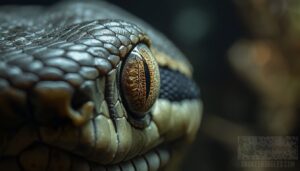
A cloudy or discolored eye can mean a dozen different things, and figuring out which one you’re dealing with starts with asking the right questions. Some clues matter more than others: which eye is affected, when the change showed up, and how fast it happened. Let’s walk through what each of these signs can tell you.
If your snake’s eyes have gone milky and it’s not shedding season, this guide to identifying milky eye caps in snakes breaks down what’s normal and what’s not.
Cloudy, Blue, or White Eyes
A cloudy or bluish eye often just means shedding fluid is doing its job, lubricating the spectacle for release. But white or persistently milky eyes outside that cycle can signal trouble: retained caps, infection, or cataracts.
If a spectacle stays cloudy or wrinkled after shedding ends, your snake may have retained eye caps, which can lead to infection or corneal damage if left unaddressed.
Color and timing matter. Think of it as your snake’s early warning system, worth reading closely rather than ignoring.
One Eye Versus Both
Here’s a quick trick: check both eyes side by side. Healthy snakes show matching clarity, so asymmetrical retained caps or unilateral cloudiness point toward localized trauma, infection, or a stuck spectacle, not normal shedding.
Two cloudy eyes together usually mean shedding or a bilateral infection pattern, sometimes tied to vitamin A deficiency. One-sided swelling or discharge signals trauma requiring attention.
Timing Within Shedding Cycles
Symmetry matters, but so does the calendar. A hormone release kicks off the preshed period, triggering fluid buildup that causes spectacle cloudiness, "being in blue." The opaque phase runs several days, then clearing starts one to two days before actual shedding. Track where your snake sits in this shed cycle before worrying about retained eye caps.
Sudden Versus Gradual Changes
Ask how fast it happened. Sudden trauma onset points to injury: a red patch from ruptured vessels, or hyphema after impact, needing urgent care.
Gradual haze fits retained spectacles, low humidity, or gradual pigment deposition from chemicals. Chronic clotting patterns build slowly too. Fast change means emergency; slow change means checking shedding, eye caps, and ocular discharge first.
Normal Shedding Causes Cloudy Blue Eyes
Before you worry about your snake’s cloudy eyes, know this: it’s usually just biology doing its job. Shedding involves a handful of predictable stages, each one explaining a piece of that hazy look. Here’s what’s actually happening under the surface, step by step.
Protective Spectacle Function
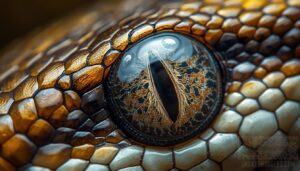
Think of the spectacle as built-in safety goggles your snake never takes off. This fixed, transparent scale has a protective spectacle function, shielding the eye while blood vessels keep it nourished.
A snake’s spectacle is built-in safety goggles it never takes off, nourished by blood vessels while it shields the eye
Thickness varies by lifestyle: burrowers like pipe snakes carry roughly 244 μm of armor, while vipers get by on just 74 μm.
Pre-shed Fluid Buildup
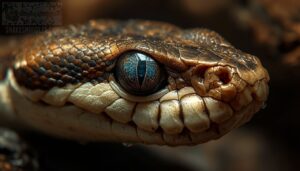
Before any visible shedding starts, your snake’s body brews a lubricating fluid between old and new spectacle layers, water, electrolytes, and oils that keep the old cap from sticking. Eyes turn milky blue around day four, peak by day seven, then clear as reabsorption begins.
If the milky-eye stage drags on too long or looks paired with discharge or swelling, it’s worth checking how to identify snake eye infections to rule out something more serious.
| Day | Eye Appearance | What’s Happening |
|---|---|---|
| 4 | Milky blue | Fluid building |
| 7 | Peak cloudiness | Vision impaired |
| 8-9 | Clearing | Reabsorption |
| 10 | Clear | Shed begins |
Opaque and Clearing Phases
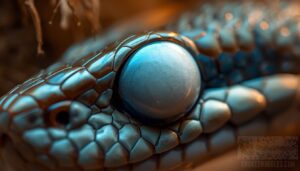
Once fluid peaks, your snake enters the opaque phase: vision blurs, so expect defensive strikes. Relief comes from the Harderian gland, whose fluid gets pulled back through nasolacrimal ducts into the mouth.
- Fluid reabsorption begins
- Bluish tint fades
- Spectacle transparency returns
- Clearing precedes shed by 1-2 days
- Ocular health signals readiness
Typical Discoloration Duration
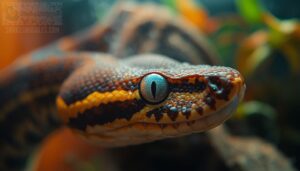
So how long should those blue eyes actually stick around? For most corn snakes, 3 to 4 days is normal, though cooler tanks or humidity under 40% can stretch it toward 5 or 6.
Warmer setups (80°F) speed clearing; the whole shedding process runs 7-14 days.
Longer cloudiness often points to retained eye caps or infection, not just typical spectacle cloudiness.
Normal Post-shed Appearance
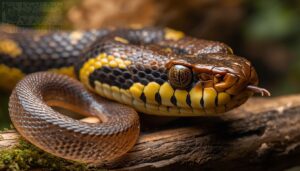
A healthy shed leaves your snake looking brand new. Eyes turn completely clear, smooth, and glossy, matching surrounding scales with no rings or rough patches.
Colors pop noticeably brighter too.
Watch for these signs:
- Restored vision and sharper strikes
- Increased exploring and climbing
- Return to normal feeding within hours
Check the discarded skin: complete eye caps confirm a clean shed.
Health Problems Causing Eye Discoloration
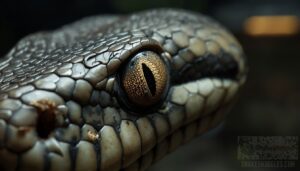
Not every cloudy eye is just your snake getting ready to shed, though. Sometimes that discoloration is your snake’s way of telling you something’s actually wrong. Here are the health issues most likely behind it, and how to spot each one.
Retained Eye Caps
A stuck spectacle isn’t just cosmetic. When a shed leaves cloudy, wrinkled patches behind, that’s a retained eye cap, usually from low humidity or dehydration during shedding. Skip the temptation to peel it off yourself.
Instead, run a humidity soak, set up a proper humid hide, and call your vet if it lingers past one cycle.
Bacterial or Fungal Infections
Not every cloudy eye traces back to shedding. Bacterial infections, often Pseudomonas, cause sudden swelling, discharge, or pus, while fungal culprits like Ophidiomyces ophiodiicola progress slowly with duller cloudiness. Since symptoms overlap, your vet needs a bacterial culture or fungal workup to identify the pathogen. Guessing wrong means treating with antibiotics that won’t touch a fungus, or vice versa.
Spectacle Ulcers and Trauma
Infection isn’t the only trigger for cloudy eyes; physical trauma leaves its own mark. A corneal ulcer often forms geographic, map-like borders from substrate abrasion, retained cap edges, or foreign body penetration during feeding. Watch for punctate lesions under magnification.
Superficial ulcers heal in one to three weeks; post-operative care with lubricating drops helps, though deep wounds can scar permanently.
Blocked Tear Ducts
Trauma scars the eye’s surface, but sometimes the problem sits deeper.
A blocked nasolacrimal duct stops tears draining into the mouth, so fluid backs up behind the spectacle. This subspectacular fluid buildup causes swollen eyes and a persistent bulge that looks like retained caps.
A reptile veterinarian can run drainage pathway assessment and discuss surgical intervention options.
Subspectacular Abscesses
When drainage fails, bacteria or fungi can pool behind the eye entirely, often via nasolacrimal duct involvement from mouth rot or septicemia. You’ll notice swelling, excessive tearing, and mucuslike discharge as the spectacle bulges outward.
Vets confirm it through subspectacular fluid analysis, then use abscess drainage methods followed by culture-guided antibiotics and careful post-operative monitoring care.
Husbandry Issues Behind Discolored Eyes
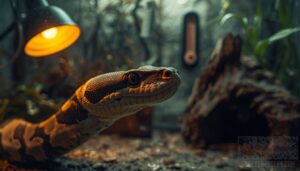
Sometimes cloudy eyes have nothing to do with infection or biology at all. Your snake’s enclosure setup plays a bigger role in eye health than most owners realize. Here’s what to check in your husbandry routine.
Low Humidity and Dehydration
Dry air is a sneaky thief: it pulls moisture straight from skin and airways, throwing off fluid balance before your snake ever acts thirsty.
Watch for:
- Persistent milky eyes past normal shed
- Dry, flaky skin patches
- Lethargy or reduced appetite
- Wrinkled or loose-looking skin
- Stalled shedding cycle progress
Keep humidity between 40-60% RH; below 30%, dehydration and shedding problems climb fast.
Dusty or Sharp Substrates
Bedding matters more than most owners realize. Fine aspen dust settles on the spectacle within 30 minutes, while jagged cypress edges scratch it outright.
| Substrate | Eye Risk |
|---|---|
| Aspen (unshredded) | High dust |
| Cypress mulch | Sharp edges |
| Coconut husk | Low risk |
Weekly replacement, moisture around 50-60%, and mesh screening cut irritation dramatically, without inviting bacterial infections or eye cap retention.
Chemical Cleaner Exposure
Since snake enclosures need routine sanitation, cleaner choice matters more than owners think. Spray mists drift onto spectacles, causing chemical irritants to trigger burns or chronic inflammation. Always rinse residue thoroughly, ventilate the room, and never mix products, dangerous fumes can form fast. Skip harsh disinfectants; soap, water, or reptile-safe disinfectants protect eyes without the risk.
Poor Enclosure Hygiene
A messy enclosure does more than smell bad, it breeds trouble near your snake’s eyes. Standing water grows Pseudomonas within days. Leftover food debris feeds bacteria fast. Dirty substrate holds moisture against the skin, and neglected décor lets biofilm buildup persist through cleanings.
Daily spot-checks and thorough monthly scrubs keep these reservoirs from ever reaching your snake’s spectacles.
Nutritional Deficiencies
What you feed your snake matters as much as what’s in the tank. Skimpy diets lead to vitamin A deficiency, weakening the spectacle itself. Zinc, B complex, iron, and calcium/vitamin D balance all support tissue repair and healthy sheds.
Fix it with proper vitamin A supplementation, whole prey, and good hydration for shedding success, not just humidity tweaks.
What to Do About Discolored Eyes
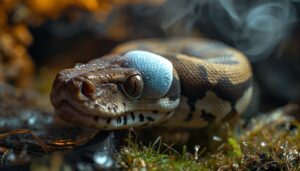
Once you’ve ruled out infection or trauma, most cloudy-eye cases come down to fixable habits at home. You don’t need fancy equipment, just a clear plan and a little patience. Here’s what actually helps, step by step.
Review Recent Shedding
Grab your notes: when did the blue phase start, how long did opaque eyes last, and did clearing follow the normal 1-3 day pattern? A shed cycle stretching past 5-7 days without clearing points to trouble.
If eyes cleared but skin caps stayed cloudy after body shed, you’re likely dealing with retained eye caps, not routine shedding.
Correct Humidity Safely
Low humidity is often the culprit, so check your digital hygrometer first, don’t guess. Mist with dechlorinated water, reposition the water bowl to the warm side, and cover part of the screen top to cut excess airflow. Adjust gradually.
Sudden spikes to 90-100% invite fungal growth, and stagnant air causes its own problems.
Provide a Humid Hide
Once humidity checks out, add a humid hide with sphagnum moss kept damp, not soggy, in the warm corner. Monitor moisture with a hygrometer, clean every 4-6 weeks, and swap moss every 2-3 weeks.
This microclimate eases the shedding process and helps prevent retained eye caps, supporting healthy ocular function overall.
Never Remove Eye Caps
That damp hide helps caps release on their own, which is exactly why you should never force one off yourself.
Manual removal risks tearing tissue and causing permanent vision damage. Skip fingers, tweezers, even cotton swabs.
- Fingers tear membranes
- Tweezers cause abrasion
- Swabs trap bacteria
- Multiple sheds increase risk
- Vets use safe techniques
Seek Reptile Veterinary Care
So when do you actually pick up the phone? Call a reptile veterinarian if cloudiness lingers past the normal shed window, comes with swelling, discharge, or lethargy, or hits only one eye.
Vets use ophthalmoscopes and fluorescein stains for early detection of infection, then tailor treatment and follow-up care to what they find. Don’t guess; seeking veterinary care protects your snake’s vision.
Frequently Asked Questions (FAQs)
What are the possible causes of eye discoloration?
Think of a foggy window: sometimes it’s just morning dew, sometimes it means trouble brewing inside. Cloudy snake eyes work the same way, caused by spectacle fluid buildup, retained caps, infections, duct blockage, vitamin A deficiency, or substrate irritation from low humidity.
Why did my snakes’ eyes turn white?
Most likely, they’re prepping to shed: fluid builds under old spectacles, clouding vision temporarily. If whiteness lingers past the shed or looks uneven, suspect retained eye caps, low humidity, or early ocular infection needing veterinary assessment.
What do liver failure eyes look like?
Liver failure eyes look like scleral icterus: a uniform yellow tint (not localized patches) from bilirubin accumulation.
Unlike ocular infection in snakes, this jaundice eye symptom signals liver dysfunction and possible septicemia risk, not simple shedding trouble or vision impairment.
What is the 2 rarest eye color?
In humans, true violet and red eyes rank rarest, under 1%, followed closely by amber at less than 5%. Snakes don’t share this trait, though; their eye clarity depends on shedding health, not pigment genetics.
How does branch placement affect eye cap removal?
Place rough-textured branches near a humid hide, at eye level and multiple heights, so snakes can rub against them during blue phase, using branch height adjustment and humidity soaks to loosen retained spectacles naturally.
Can vitamin A deficiency alone cause cloudy eyes?
Yes. Deficient diets, especially insect-only feeding without gut-loading, cause corneal xerosis: a hazy bilateral cloudiness from reduced tear production. Unlike shedding, it persists after shed completion and often pairs with prolonged shedding cycles and dull skin.
How often should enclosure humidity levels be checked?
Check humidity daily, plus after misting, substrate changes, or weather shifts. During active shedding, verify readings more often, since proper humidity control directly aids spectacle separation and prevents the shed problems tied to eye clouding.
What behaviors signal a snake is in discomfort?
Think of a snake reading its own body language like a warning label. Watch for resistance during handling, sudden thrashing, tail whipping, escape attempts, enclosure rubbing, head rubbing, eye twitching, excessive tearing, swelling, or other behavioral changes signaling real discomfort.
Conclusion
Picture a small blue veil settling over your snake’s eye, then lifting to reveal a clear, glassy stare beneath. That transformation is nature’s own timeline, and most snake eye discoloration causes follow it precisely.
Trouble shows up when the veil lingers, turns cloudy on one side only, or hides swelling and discharge. Trust the calendar, watch the details closely, and act early. Your snake can’t tell you it’s struggling. Its eyes already are.