This site is supported by our readers. We may earn a commission, at no cost to you, if you purchase through links.

A snake’s droppings tell you more about its health than almost any other daily observation you’ll make. That chalky white urate cap, the firm brown log beneath it, the way it dries within an hour under proper heat, all of it forms a baseline you’ll come to recognize without thinking twice.
Trouble starts when that baseline shifts. Blood streaks, tarry black stool, a sudden shift to yellow or green: these aren’t random variations, they’re your snake’s gut telling you something specific went wrong, whether that’s a parasite load, a husbandry gap, or something more urgent.
Recognizing abnormal snake stool symptoms early gives you the chance to act before a minor digestive hiccup turns into an emergency. You’ll learn what normal actually looks like, what each abnormal sign points to, and exactly when it’s time to call your vet instead of waiting it out.
Table Of Contents
Key Takeaways
- Healthy snake stool is medium-to-dark brown with a firm texture and a chalky white urate cap, and knowing this baseline is what lets you catch trouble early.
- Bright red blood, black tarry stool, and yellow or green discoloration each point to different problems—fresh bleeding, digested blood higher up, or bile and parasite issues—so color and texture tell you where to look.
- Husbandry gaps like wrong temperatures, low humidity, oversized prey, or handling stress can throw off digestion just as much as parasites or infection can, so check your setup before assuming illness.
- Blood, black tarry droppings, or vomiting call for same-day vet care, while persistent diarrhea, ongoing discoloration, or missed bowel movements past two weeks need testing rather than a wait-and-see approach.
What Does Normal Snake Stool Look Like?
Before you can spot trouble in your snake’s droppings, you need a clear picture of what healthy elimination actually looks like. Normal stool follows a fairly predictable pattern in color, texture, and timing, even though some of that pattern shifts with species and age.
Once you know what’s normal, it’s much easier to catch the warning signs covered in this guide to identifying abnormal snake feces, from color changes to concerning textures.
Here’s what to expect when your snake’s digestive system is working the way it should.
Healthy Color and Consistency
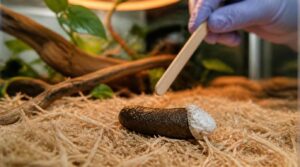
A quick glance tells you most of what you need to know. Healthy stool runs blackish brown to medium brown, holds a smooth cylindrical form, and yields slightly under gentle pressure without falling apart. Look for a chalky white urate cap crowning the mass.
That semi-solid texture, paired with consistent brown coloring, reflects proper hydration status and normal gastrointestinal transit. This general standard for stool colors and shapes applies across species, with medium to dark brown coloring signaling healthy digestion.
Normal Odor and Dryness
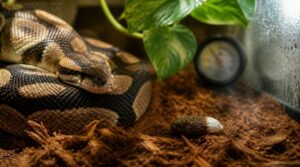
Your nose can diagnose too. Expect a strong, pungent smell, not foul, that fades within 2-3 hours. Stool starts drying in 30-60 minutes, staying softer longer in humid setups.
Watch for:
- Odor lasting past 3 hours
- Drying under 15 minutes (low humidity)
- Wetness beyond 6 hours (possible diarrhea)
- Sudden odor spikes after substrate changes
Firm White or Cream Urates
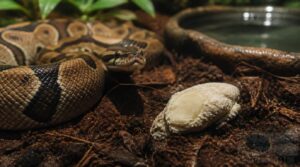
Alongside each fecal deposit, you’ll find urates: chalky white or cream material formed when uric acid binds ammonia in the cloaca. Fresh urates start pasty, then harden within hours as water evaporates, concentrating uric acid nanocrystals. This process conserves water while neutralizing toxins.
Soft, yellowed, or crumbly urates often signal dehydration, so check your humidity levels and consult your vet if this persists.
Species and Age Differences
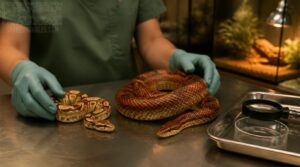
Urate hardness aside, what counts as "normal" shifts with the snake itself. Pythons run softer stools than Pantherophis on identical prey, while juvenile stool coloration often runs paler than adult droppings.
Hatchlings defecate more frequently, reflecting faster gut motility and shorter age-related transit time, closer to 24 hours versus 24-72 in adults.
Typical Bowel Movement Frequency
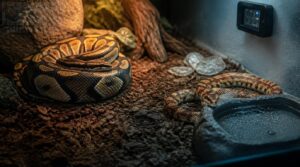
Rarely does a healthy snake follow a human schedule.
Feeding size impact matters most: adult ball pythons defecate 10-14 days post-meal, juvenile corn snakes in 4-5. Temperature swings and activity level shift timing further, while dehydration delays elimination by 3-5 days. Skipping a full digestive cycle now and then is normal, unless it becomes a pattern.
Common Abnormal Snake Stool Symptoms
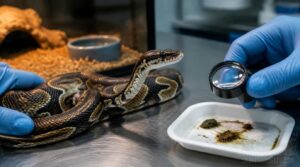
Once you know what healthy droppings look like, spotting trouble becomes a lot easier. Your snake’s stool can tell you a great deal about what’s happening inside its body, long before other symptoms show up. Here are the five warning signs you shouldn’t ignore.
If you’re ever unsure whether you’re looking at urates or feces, this guide on how to spot clean snake substrate properly breaks down exactly what to remove and how.
Bright Red Blood Streaks
Bright red streaks mean fresh blood, not old. Look for surface coating blood rather than blood mixed throughout, often signaling lower-tract bleeding near the cloaca.
Causes: straining, minor tears, or irritation. Still, any gastrointestinal bleeding in reptiles warrants veterinary attention.
Watch for recurrence, and collect a fresh sample for fecal analysis.
Black, Tarry Droppings
Once you spot droppings that look tarry and jet black, think blood, not pigment. Melena forms when blood sits in the stomach 12-24 hours, converting hemoglobin into black iron compounds. Sources include ulcers, gastritis, or upper GI bleeding. It smells foul and sticky, unlike food staining. Treat this as same-day emergency, since significant blood loss and anemia may follow.
Yellow or Green Stool
Yellow or green stool usually traces back to bile pigments moving through too fast for enzymes to convert them to brown. Rapid transit, diet influence (beta-carotene-rich prey), or fat malabsorption can all play a role.
Intestinal parasites, digestive enzyme deficiency, and certain medication effects deserve consideration too, especially if the color persists beyond two feedings.
Watery Stool With Mucus
A jelly-like sheen in loose droppings isn’t just gross, it’s a red flag. Watery stool with mucus signals intestinal inflammation, gut infection, or stress-driven digestive slowdown. Coccidia often top the suspect list.
Check hydration levels and recent prey size first. If mucus shows up again within two bowel movements, that pattern warrants veterinary attention rather than a wait-and-see approach.
Abnormal Urates and Odor
That white crystal sitting beside the stool tells you as much as the feces itself. Urate color changes matter: yellow or green hints at dehydration or kidney trouble, while a metallic odor with gritty texture suggests gout.
Watch for:
- Chalky white urates (normal)
- Yellow, dry urates
- Green, watery urates
- Sour fecal odor
- Sharp, concentrated smell
Persistent shifts need veterinary eyes.
What Abnormal Stool Symptoms May Mean
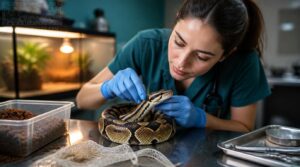
Once you’ve spotted something off in your snake’s stool, the next step is figuring out what’s actually causing it. Abnormal droppings rarely point to just one problem, and the color, texture, or timing can steer you toward very different culprits. Here’s what each pattern usually signals.
Fresh Versus Digested Blood
Color tells you where and when bleeding started. Bright red streaks mean fresh blood, likely from the lower colon or rectum. Black, tarry stool signals digested blood from higher up, often the stomach. The shift from red to black usually takes 2 to 4 hours. Either finding warrants same-day veterinary attention, no exceptions.
Parasites and Gut Infections
Blood isn’t the only red flag. Foul odor, mucus, or persistent diarrhea often points to intestinal parasites in snakes, especially coccidia, which trigger protozoan diarrhea in stressed juveniles. Roundworms and tapeworms cause bloating with intermittent stool changes.
Since parasites spread through fecal-oral contact, contaminated enclosures perpetuate infection. Fecal analysis for reptiles remains your best pathogen detection tool, catching bacterial overgrowth and protozoans before symptoms worsen.
Poor Digestion From Prey
Not every abnormal stool traces back to parasites. Sometimes the culprit is simpler: prey size and digestibility. Oversized meals, mismatched prey types, or feeding schedules too frequent for your snake’s digestive rhythm overwhelm its enzymes.
You’ll spot undigested fur or bone fragments in the stool, a clear sign digestion never finished properly before elimination.
Dehydration and Kidney Problems
Undigested prey isn’t the only culprit behind odd stool.
Dehydration causes kidney strain fast, showing up as yellow or orange urates instead of white. Left unchecked, hydration status affects renal function directly, risking gout or failure. Daily soaking and 40-60% humidity protect kidney tissue. Watch urate color changes closely, they’re your earliest warning sign.
Constipation or Impaction Signs
A snake that hasn’t defecated in weeks isn’t being shy, it’s likely impacted. Watch for abdominal swelling, straining in an S-curve posture, appetite loss, and regurgitation. Radiographs confirm dense masses blocking the gut.
A snake that hasn’t defecated in weeks isn’t being shy, it’s likely impacted
Untreated constipation turns dangerous fast: dehydration, substrate ingestion, and irregular feeding schedules all raise risk, and cases become life-threatening after 21 days.
Husbandry Problems That Change Snake Stool
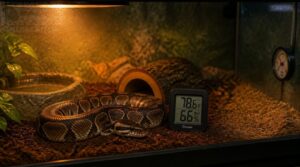
Before you blame parasites or infection, take a hard look at the enclosure itself. Snakes digest food through a precise chain of physical conditions, and even small setup errors throw that chain off balance. Here’s what to check first.
Incorrect Digestive Temperatures
Get the thermal gradient wrong, and digestion stalls before it starts. Corn snakes need 28-32°C for peak enzyme activity; drop below 20°C and passage time stretches to a week.
Digestive enzymes like trypsin lose roughly 50% efficiency at ±5°C off target. Without postprandial thermophily access, expect mucus-heavy, unformed stool from incomplete digestion.
Improper Humidity and Hydration
Water tells its own story in the stool. Chronically low humidity or a hard-to-reach dish leaves urates chalky and stool drier than normal, while poor drinking access raises dehydration risk.
Check your setup:
- Water dish size and placement
- Humidity within species range
- Substrate moisture consistency
Assess hydration status by skin turgor and urate texture before considering rehydration methods.
Oversized or Inconsistent Prey
A meal too big for your snake’s gape can stall the whole gut for weeks. Match prey to girth, not habit, using a string test at each feeding.
| Prey Size | Digestive Effect | Stool Timeline |
|---|---|---|
| Matched | Normal transit | 5-7 days |
| Oversized | Impaction risk | Delayed weeks |
| Inconsistent | Irregular motility | Unpredictable |
Inconsistency confuses gut rhythm as much as size does.
Handling and Enclosure Stress
Stress leaves fingerprints on stool. Handle two to three times weekly, sessions under 10 minutes, never within 48 hours of feeding. Glass-walled enclosures without hiding spots spike corticosterone and delay defecation.
- Watery stool after a stressful week
- Regurgitation from post-feeding handling
- Delayed defecation following cool handling
- Reduced appetite in fully visible tanks
- Irregular bowel patterns from inconsistent routines
Add opaque sides and multiple hides.
Dirty Substrate and Habitat
Damp bedding does more than smell bad. Left uncleaned, it breeds Aeromonas and Pseudomonas, softens belly scales, and raises scale rot risk three to four times when humidity climbs past 70%.
Spot-clean daily, replace substrate every two to three months, and choose particle sizes between 1-3mm. Paper towel or aspen minimize substrate impaction risk while keeping hygiene simple.
When Abnormal Stool Needs Veterinary Care
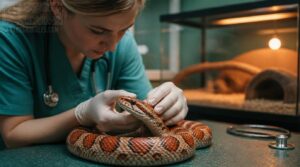
Not every odd stool means an emergency, but some do, and knowing which is which protects your snake. You don’t need to guess at this decision on your own. Here’s what tells you to grab the phone versus watch and wait.
Same-Day Stool Warning Signs
When your snake’s droppings turn worrying, timing matters more than you’d think. Certain signs can’t wait for a "let’s watch it" approach.
- Blood streaks with lethargy
- Vomiting blood or coffee-ground material
- Fever or dehydration alongside abnormal stool
Any of these calls for same-day veterinary attention, not tomorrow, not "if it happens again.
Persistent Diarrhea or Discoloration
Not every abnormal stool means an emergency trip, but persistent diarrhea lasting weeks, or discoloration that won’t resolve, still needs a vet visit.
Loose stool three or more times daily points to fluid imbalance, bile problems, or fast gut transit. Watch for chronic dehydration, parasitic infection, or gut flora disruption.
Ongoing yellow, green, or pale stool signals something’s off internally.
Missing Bowel Movements
Discoloration is one thing, but a snake that stops eliminating altogether is another problem entirely. Missing bowel movements often signal constipation or slowed gut motility, sometimes tied to dehydration or poor temperature gradients.
Watch for:
- No droppings past your snake’s usual schedule
- Straining or repeated cloacal attempts
- Visible belly swelling
Fecal buildup risks worsen with delay. Correct husbandry first, but persistent absence warrants veterinary attention.
Collecting a Fresh Stool Sample
Once you’ve spotted a problem, your vet will likely want a fresh fecal sample, not a description. Wash your hands first, then use the provided scoop to collect a grape-sized amount. Label the container with the date, seal it tightly, refrigerate if needed, and dispose of collection tools properly. Fresh samples make fecal analysis far more reliable.
Fecal Tests and Diagnosis
Once your reptile veterinarian has that fresh sample, the fecal exam usually checks three things:
- Ova and parasites under microscopy
- Bacterial overgrowth or unusual flora
- Reducing substances, flagging malabsorption if levels exceed 0.25 mg/dL
Diagnostic accuracy depends heavily on sample freshness. Results guide whether you’re facing a simple husbandry fix or something requiring medication, so trust the lab work over guesswork.
Frequently Asked Questions (FAQs)
Can stress alone cause abnormal snake stool?
Yes, absolutely. The stress response triggers cortisol surges, disrupting peristalsis, suppressing immunity, and reducing enzyme output, causing stress dehydration effects and stool color changes, even without husbandry errors or infection present.
Does shedding season affect stool appearance temporarily?
During shedding, appetite loss and reduced activity slow digestion, so stool comes less often and looks duller. Once shedding completes, feeding resumes within 24-48 hours, and firmer, well-pigmented stool follows as hydration and gut function normalize.
How long can abnormal stool go untreated safely?
Blood or black, tarry droppings call for same-day veterinary evaluation. Watery stool or missed bowel movements can wait a few days but shouldn’t stretch past two weeks; beyond that, parasitic infections, dehydration, or constipation likely need diagnostic testing to sort out.
Are certain snake species more prone to parasites?
Picture a Boidae carrying mostly nematodes while a dipsadid nearby harbors protozoans instead. That’s species-specific parasite loads in action: wild-caught exposure, geographic variation, and immune response differences all shape which species face heavier parasite control challenges.
Conclusion
A snake’s stool acts like a diary, written daily in color and consistency, waiting for you to read it.
Catching abnormal snake stool symptoms early rarely requires guesswork, just consistent observation and honest comparison against your snake’s baseline. Blood, black tar, or watery mucus each point toward specific problems, from parasites to organ stress. Trust the pattern, not a single bad day. When something looks wrong for more than one cycle, call your vet. That habit alone protects your snake for years.