This site is supported by our readers. We may earn a commission, at no cost to you, if you purchase through links.

Step on a garter snake in the garden and you’ll get a nip, a musky spray, and little else. No fangs, no venom glands built for humans, just a startled reptile doing what it can to escape. That reaction alone explains why Thamnophis sirtalis ranks among North America’s most encountered, most misunderstood snakes.
You’ll find them near creek banks, pond edges, and damp garden beds from Canada to the Gulf Coast, sporting the same three-striped pattern across thirteen subspecies. Understanding their size, bite risk, and daily habits turns a startled backyard moment into simple recognition.
Table Of Contents
- Key Takeaways
- What Are Common Garter Snakes?
- Common Garter Snake Size and Pictures
- Habitat, Diet, and Natural Behavior
- Common Garter Snake Bite Information
- Reproduction, Lifespan, and Fascinating Facts
- Frequently Asked Questions (FAQs)
- What time of day do garter snakes come out?
- What animal kills garter snakes?
- What is the friendliest snake?
- How big can common garter snakes get?
- What is the size of a common garter snake?
- What does a garter snake bite?
- How big are garter snakes in inches?
- How many teeth do garter snakes have?
- How long do garter snakes typically live?
- What predators prey on garter snakes?
- Conclusion
Key Takeaways
- Garter snakes aren’t dangerous to people—they’re mildly venomous through rear teeth (not fangs), so a bite feels like a quick pinprick with minor swelling that fades in a day.
- You can identify one by its three yellow stripes running head to tail and its rough, keeled scales, with females typically growing larger (up to 90 cm) than males.
- These snakes stick close to water, hunting frogs, worms, and small fish by day and settling into brumation once temperatures drop in fall.
- Females give birth to live young (6 to 40 at a time) instead of laying eggs, and while wild snakes usually live 4 to 10 years, captive ones can reach 20.
What Are Common Garter Snakes?
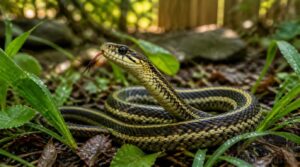
If you’ve spotted a striped snake in your backyard, chances are you’ve met a common garter snake. It’s one of the most familiar and widespread reptiles in North America, but there’s more to it than meets the eye. Here’s what actually defines this snake, from its scientific classification to how it differs from lookalikes.
If you’d like to welcome garter snakes as natural pest control, here’s a guide to creating a snake-friendly backyard habitat with the shelter and food sources they need.
Taxonomy and Scientific Name
When you spot a garter snake, you’re looking at Thamnophis sirtalis, its binomial name under genus Thamnophis. This colubrid belongs to suborder Serpentes, family Natricidae (once classified under Colubridae). Taxonomic authority confirms the genus-species format: Thamnophis (genus), sirtalis (species), written in italics.
This naming convention follows the binomial nomenclature system standardized by Carolus Linnaeus in the 1750s. Thirteen recognized subspecies exist, but that’s a story for the next section.
Subspecies and Regional Diversity
Those thirteen subspecies aren’t just paperwork. Geographic color variations show up fast: Thamnophis sirtalis sirtalis in the east, T. s. parietalis on the plains, T. s. infernalis and T. s. concinnus out west, T. s. dorsalis further south. Regional stripe patterns and body size shift north to south, and island populations often show shorter tails. Overlapping ranges still interbreed freely.
Key Identification Features
Once you know which subspecies you’re looking at, the next step is learning what to actually look for on the snake itself. Three longitudinal stripes, usually yellow, run the body’s length with clean dorsal stripe width and symmetrical lateral stripe placement. Feel the keeled scales: ridged, not smooth. Genus Thamnophis, family Colubridae, suborder Serpentes.
- That flash of yellow down the spine
- Rough, dragon-like scale texture underfoot
- Perfectly mirrored side stripes
- A pattern telling millions of years of survival
Similar Snake Differences
Confusing garter snakes with lookalikes happens often, especially with the ribbon snake (Thamnophis sauritus) or giant garter snake (T. gigas). Check scale texture first: garter scales feel smooth, not rough. Head shape matters too, narrow with high-set eyes versus broader skulls elsewhere.
Habitat and diet diversity help most: garters favor wetlands and eat amphibians, fish, and invertebrates that specialists skip.
Common Garter Snake Size and Pictures
Size is often the first thing you notice about a garter snake, and it varies more than you’d expect. Males and females don’t grow the same way, and their stripes and scales tell their own story too. Here’s what to look for, size by size and feature by feature.
Average Male and Female Size

Pick up a garter snake and you’ll likely notice the females feel heavier in hand. Males run 46 to 76 cm, females 50 to 90 cm. Snout-to-vent length averages 20-30 cm (males) versus 25-40 cm (females).
- Females: longer, thicker-bodied
- Males: shorter, slimmer
- Regional size varies: coastal populations often outgrow inland ones
Maximum Length and Weight

The largest recorded Thamnophis sirtalis stretched 137 cm (54 in), though most wild adults max out between 2 and 3 feet. Rare specimens near 4 feet do occur, usually where prey stays abundant year-round.
For a closer look at how size varies across the genus, this guide to garter snake species and their typical lengths breaks down what drives such dramatic differences.
| Metric | Typical Range | Maximum Recorded |
|---|---|---|
| Length | 22-30 in | 54 in (137 cm) |
| Weight | 40-150 g | 150 g (5.3 oz) |
| Sex | Female-biased | Female |
Growth rate, food access, and regional climate all shape final size.
Stripe Colors and Patterns

Look closely and you’ll spot three longitudinal stripes running head to tail, usually yellow but sometimes white, green, or brown. This dorsal stripe variation reflects color polymorphism tied to genetics and diet.
If these harmless stripers keep turning up despite their coloring quirks, check out this guide on how to get rid of garter snakes naturally to make your yard less inviting.
Stripe patterns fall into recognizable types:
- Solid continuous lines
- Broken or dashed segments
- Narrow, thread-like stripes
- Wide bands several millimeters across
- Faded stripes from sun exposure
Keeled Scales and Body Shape
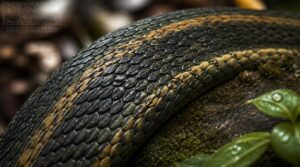
Run a finger along a garter snake’s back and you’ll feel it: a rough, matte texture rather than smooth shine. That’s from keeled scales, each bearing a raised ridge down its center, arranged in 19 to 23 dorsal rows at midbody.
Body shape shifts with age too. Juveniles stay slender, while well-fed adults thicken toward a cylindrical, tapered form.
Photo Identification Guide

Identifying a garter snake from a photo starts with the dorsal stripe pattern: three lines running neck to tail, often yellow, against olive or brown scales. Check head features next, a rounded snout and narrow neck distinguish true garters from lookalikes.
Note size proportions and habitat context, snakes near water in grassy margins, 23 to 35 inches long, likely belong to one of many regional subspecies.
Habitat, Diet, and Natural Behavior

Common garter snakes turn up almost anywhere there’s water nearby, and that habit shapes everything else about how they live. Their range, diet, and daily rhythms all connect back to one thing: staying fed and staying warm. Here’s what you need to know about where they live and how they spend their days.
North American Geographic Range
Few reptiles claim as much ground as the common garter snake. Its continental distribution stretches from the southernmost tip of the Northwest Territories in Canada down through the U.S. to Mexico’s central highlands, spanning sea level marshes to mountain slopes.
Regional subspecies variation reflects this reach, while habitat connectivity corridors link populations across the continent, from northern range limits to southern range extensions near Florida.
Preferred Habitats Near Water
That range means little without water nearby. You’ll find garter snakes hugging wetland edges, freshwater meadows, creek banks, and pond or lake shorelines, wherever marshy grasses, reeds, or cattails offer cover within a meter or two of the waterline.
Riparian forest fringes add cool, moist leaf litter. Fallen logs near streams double as basking spots and quick retreats.
Wild Diet and Hunting
All that shoreline vegetation isn’t just cover, it’s a pantry. Garter snakes hunt earthworms, frogs, tadpoles, and small fish, relying on tongue-flicking to detect chemical cues rather than pure eyesight.
They combine ambush with active foraging, striking fast near reeds. Diet shifts seasonally: amphibians and insects dominate warm months, while opportunistic feeding on invertebrates carries them through leaner, colder stretches.
Daily Activity and Thermoregulation
Hunting pauses once the sun climbs high enough to matter. Garter snakes are diurnal, most active late morning through early afternoon, when they seek sunlit logs or rocks for 10 to 20 minutes of basking.
This thermoregulation raises body temperature quickly, then snakes retreat to shade, cycling along a thermal gradient to avoid overheating while keeping metabolism primed for foraging.
Brumation and Seasonal Movement
As days shorten and temperatures drop, that basking routine fades. Falling temperatures and shrinking daylight trigger brumation, a dormancy where you’ll see snakes seeking hibernacula near water, sheltering in rock crevices or burrows for months. They wake occasionally to drink.
Come spring, warming cues spark emergence and spring dispersal, as snakes move outward to establish territories or find mates.
Common Garter Snake Bite Information

That question probably crossed your mind the first time a garter snake struck at your hand. It’s a fair thing to wonder about, especially if you spend time gardening or hiking. Here’s what actually happens if one bites you, and what to do about it.
Are Garter Snakes Venomous?
Yes, but not in the way most people assume. Garter snakes are mildly venomous, producing toxic saliva from Duvernoy’s glands rather than injecting venom through fangs like vipers do. That’s venom vs poison confusion cleared up:
- No hollow fangs
- Small rear teeth only
- Venom delivered through chewing
Human bite effects stay minor. These remain harmless, nonvenomous-acting North American snakes for practical purposes.
Bite Symptoms and Severity
A pinprick, not a punch. That’s how most bites feel, mild pain peaking within minutes and fading within hours.
| Symptom | Onset | Duration |
|---|---|---|
| Redness spread | Minutes | Under 24 hrs |
| Swelling | Immediate area | Subsides in a day |
| Itching | With redness | Fades during recovery |
Toxic saliva causes irritation, not danger. Recovery time stays short: you’re back to normal within a day or two.
Safe Bite First Aid
Grab soap and warm water first. Wash the site for several minutes, flushing with a hydration bladder if soap isn’t handy, then pat dry.
Apply an alcohol wipe or povidone-iodine, follow with bacitracin ointment, and cover with a sterile bandage. Check your tetanus status, boosters older than 10 years need a clinic visit within 48 hours. Watch for spreading redness or fever afterward.
Musk and Other Defenses
That "wet dog" smell trailing a startled garter snake isn’t accidental. Cloacal musk glands, technically postanal glands, release a foul-smelling musk with sulfurous compounds that irritate predators and linger for minutes.
Snakes also inflate their bodies, vibrate tails against leaves to mimic rattlesnakes, and coil defensively. These predator avoidance tactics buy escape time rather than cause harm.
Safe Handling and Encounters
A little patience goes further than a quick grab. Approach slowly, let the snake sense you’re not a threat, and retreat if it coils tight.
Never restrain the body; use a hook for brush. If bitten, wash with soap and water. Give space near water, and always release healthy snakes exactly where found.
- Move slow
- Skip the squeeze
- Release nearby
Reproduction, Lifespan, and Fascinating Facts

Beyond size and bite risk, garter snakes have a life story worth knowing. Their mating habits, birth process, and lifespan reveal a lot about how they survive in the wild. Here’s what you should know about their reproduction, longevity, and a few facts that might surprise you.
Mating and Live Birth
When spring temperatures climb past 15°C, male garter snakes emerge from brumation ready to mate, sometimes forming dense mating balls around a single female. Courtship involves head bobbing, tongue flicking, and tail lifting.
Females can store sperm for months, delaying fertilization. Garter snakes are ovoviviparous, so after roughly 60 to 70 days of gestation, mothers give birth to fully formed live young, no eggs required.
Garter snakes store sperm for months, then give birth to live young after two months of gestation, no eggs required
Litter Size and Young
That live-birth strategy pays off in numbers. A single female can deliver 6 to 40 offspring in one litter, with larger females consistently producing bigger broods.
Newborns receive zero parental care. They’re independent at birth, already capable of hunting small prey within days, a fast start that’s typical for many colubrid species going through early neonatal development.
Wild and Captive Lifespan
Those newborns face a tough road ahead. Wild garter snakes average just 4 to 10 years, while captive individuals often reach 10 years or more, with some living 12 to 15 under attentive care.
Much of that gap comes down to husbandry, and a garter snake pet care guide covers the habitat, feeding, and temperature basics that help pets live longer.
The gap comes down to predation, disease, and temperature stress in the wild versus stable food and veterinary support in captivity, a stark reptile lifespan variability worth noting.
Predators and Survival Challenges
That fragile survival math explains why garter snakes rely on sharp defenses. Herons, raccoons, hawks, and larger snakes all hunt them, so rapid tongue flicks detect chemical cues before danger closes in. Zigzag retreats confuse pursuers, and some individuals even shed tail skin to escape a grip.
Juveniles lean on cryptic coloration, freezing motionless in leaf litter across their varied habitat.
Surprising Common Garter Snake Facts
Even outrunning predators isn’t a garter snake’s only trick. Females hold stored sperm through winter, fertilizing eggs only when spring conditions favor survival.
Their saliva carries mild toxins that subdue prey, while musk deters attackers. Stripe shades shift with age.
Well cared for, captives can reach 20 years, double the wild average.
Frequently Asked Questions (FAQs)
What time of day do garter snakes come out?
You’ll spot them basking within an hour of sunrise, then hunting hardest from late morning through early afternoon. Activity tapers by evening as they retreat to cover, with timing shifting seasonally, cooler regions favor afternoon foraging over early starts.
What animal kills garter snakes?
A hawk perched above a field, waiting, tells the story best: predator birds, mammalian hunters like raccoons, aquatic threats such as herons, larger snakes, and rodent opportunists all hunt garter snakes across their range.
What is the friendliest snake?
Corn snakes and ball pythons often top the list, but garter snakes rival them in friendliness. Their calm temperament, tolerance for handling, and preference for retreat over biting make them ideal for beginners seeking gentle, low-stress pet care.
How big can common garter snakes get?
Most Thamnophis sirtalis reach 22 inches (55 cm), though females grow larger than males. Rare individuals hit a maximum of 54 inches (137 cm). Size varies by region and subspecies, with northern populations often outgrowing their southern relatives.
What is the size of a common garter snake?
Your typical garter snake runs 22 to 30 inches (55–76 cm), though some stretch past 34 inches. Regional size variation and growth rate factors, like prey and habitat, shape final length more than genetics alone.
What does a garter snake bite?
More bark than bite, really. A garter snake bite feels like a quick pinprick, sometimes mild swelling that fades within a day. Weak venom rarely causes issues, though it may also release foul-smelling musk as a harmless defense.
That opportunistic streak shows up at mealtime too, since garter snakes will happily scavenge, and this guide to garter snake feeding habits breaks down what they’ll eat when live prey is scarce.
How big are garter snakes in inches?
Most measure 20 to 30 inches, though females often surpass males in length and weight. Growth rate depends on region and food supply. Rare individuals near ideal habitats stretch past 34 inches, approaching the documented maximum of 54 in (137 cm).
How many teeth do garter snakes have?
The devil’s in the details," and here that’s true down to the teeth. This colubrid of suborder Serpentes carries dozens of small, curved teeth across both jaws, replaced continuously, built for gripping, not chewing.
How long do garter snakes typically live?
In the wild, you’ll rarely see one past 2 to 4 years; predators and harsh climates take a toll. In captivity, with steady food and shelter from brumation stress, garter snakes often reach 6 to 10 years, sometimes longer.
What predators prey on garter snakes?
Your snake faces threats from every direction. Birds of prey like hawks and owls, mammalian hunters including raccoons and foxes, aquatic threats such as bass, catfish, and snapping turtles, plus reptile rivals and suburban dangers like housecats all target garter snakes.
Conclusion
A million backyard encounters have probably ended in needless fear, and that’s the real tragedy here.
Once you understand common garter snakes size bite information pictures and facts, that fear turns into simple recognition.
This snake isn’t a threat. It’s a quiet gardener’s ally, managing slugs and rodents near every pond edge.
Respect its space, skip the pickup attempt, and let it work. That small, striped visitor deserves your patience, not your panic.