This site is supported by our readers. We may earn a commission, at no cost to you, if you purchase through links.

Rough green snakes don’t eat mice. That single fact surprises most new keepers, who assume all snakes follow the same rodent-based feeding model. Opheodrys aestivus is a strict insectivore, built by evolution to hunt soft-bodied invertebrates through canopy foliage and understory vegetation, not to constrict prey or swallow vertebrates whole.
Getting the rough green snake diet right separates a thriving animal from a declining one. These snakes carry narrow nutritional tolerances, and wrong feeder choices, poor sizing, or supplementation gaps compound quickly.
What they eat, how often you offer it, and how you prepare each session determines long-term health.
Table Of Contents
- Key Takeaways
- What Do Rough Green Snakes Eat?
- Insects Rough Green Snakes Eat
- Frogs, Snails, and Other Wild Prey
- Best Captive Feeder Insects
- Can Rough Green Snakes Eat Mealworms?
- Foods Rough Green Snakes Should Avoid
- How Often Should You Feed Them?
- Choosing Safe Prey Sizes
- Gut-Loading and Supplementing Feeder Insects
- Feeding Techniques and Appetite Problems
- Frequently Asked Questions (FAQs)
- What should I feed my rough green snake?
- Will a rough green snake bite you?
- How often should I feed a rough green snake?
- How long do rough green snakes typically live?
- How does hydration affect a rough green snakes appetite?
- Can rough green snakes fast safely during shedding?
- Do seasonal changes affect how much they eat?
- How does enclosure setup influence feeding behavior?
- Conclusion
Key Takeaways
- Rough green snakes are strict insectivores — crickets, silkworms, hornworms, and dubia roaches make up the core captive diet, and rodents or fish will cause serious metabolic harm.
- Rotating two to four feeder species, gut-loaded 24–48 hours before each session and dusted with calcium every other feeding, is what separates a thriving snake from one in slow nutritional decline.
- Prey size is non-negotiable: nothing wider than the snake’s head width, or you’re risking choking, jaw strain, and regurgitation — when in doubt, size down.
- Feeding frequency scales with age — juveniles need food every one to two days, adults every two to four days — and a consistent evening schedule keeps hunger cues reliable and prey acceptance high.
What Do Rough Green Snakes Eat?
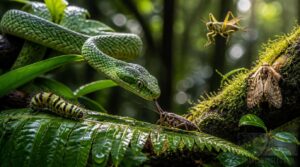
Rough green snakes are insectivores through and through — their diet in the wild revolves almost entirely around soft-bodied invertebrates, with the occasional frog or snail rounding things out.
Unlike their close relatives, rough vs. smooth green snake diet and habitat differences reveal that smooth green snakes are far more likely to snack on slugs and snails.
In captivity, replicating that variety isn’t just good practice; it’s what keeps them healthy long-term.
Here’s a closer look at exactly what they eat and why the range of prey matters.
Insect-based Diet Overview
Opheodrys aestivus is, first and last, a dedicated insectivore. Five feeders define its diet:
- Small crickets – reliable insect protein source
- Caterpillars, hornworms, silkworms – soft, highly digestible
- Waxworms – elevated fat content, occasional only
- Small mealworms – chitin digestion effects limit frequency
- Varied feeders – amino acid balance and micronutrient variety
Protein content spans 40-65% dry matter across these species, making variety essential. Research confirms that essential amino acid levels in feeder insects generally meet WHO adult requirements, reinforcing why dietary variety matters for best reptile nutrition.
Wild Versus Captive Diets
Wild rough green snakes encounter seasonal prey shifts – crickets in summer, caterpillars in spring – that naturally rotate nutrients and drive adaptive foraging.
Captive diets replace that variability with gut-loaded, supplemented feeders on a consistent schedule.
Wild-caught specimens often arrive parasitized and stressed.
Captive-bred snakes establish on feeder insects far more reliably, giving you a much stronger foundation from day one.
Why Dietary Variety Matters
That consistency helps, but rotating the same two feeders indefinitely works against your snake. Dietary variety isn’t optional for an insectivore.
Different prey items deliver unique amino acids, bioactive compounds, and micronutrients that no single feeder can cover completely. Rotating properly gut-loaded feeders, paired with a calcium supplement every other feeding, closes nutritional gaps and helps long-term gut health.
Insects Rough Green Snakes Eat
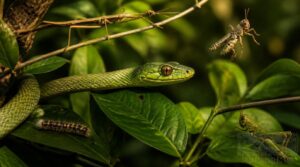
Rough green snakes are remarkably selective hunters, and their insect preferences reflect millions of years of arboreal predation. Understanding exactly which insects they target — and why — gives you a real edge when building a captive diet that works.
Millions of years of arboreal predation shaped the rough green snake into a remarkably selective hunter
Here’s a breakdown of the main insect types that make up their natural menu.
Crickets and Grasshoppers
Crickets and grasshoppers are the most practical live prey for this insectivore, soft-bodied, digestible, and widely available. Both belong to order Orthoptera and offer good nutritional value. Gut-load them 24–48 hours ahead, then dust with calcium every other feeding.
- Keep prey within head width
- Feed live in the evening
- Rotate cricket and grasshopper sizes
- Feed juveniles more frequently than adults
Caterpillars, Moths, and Larvae
Caterpillars offer the soft-bodied prey safety you want in a feeder. Their segmented bodies digest cleanly and carry strong larval nutrition benefits. Hornworms and silkworms top the list in captivity.
Gut-load feeder insects 24-48 hours beforehand, then dust insects with calcium every other feeding. Moths add variety too, and their erratic movement in the enclosure triggers a natural hunting response.
Beetles and Soft-bodied Insects
Beetles on flowers and low vegetation make natural targets for Opheodrys aestivus. They carry solid beetle nutrition value, but careful selection matters. Chitin risk avoidance is non-negotiable. Hard shells impede digestion.
Three soft-bodied insects worth rotating in:
- Flour beetles
- Wax moth adults
- Small darkling beetles
Gut-load live feeder insects 24-48 hours beforehand. Nothing offered should exceed the snake’s head width.
Spiders and Other Arthropods
Spiders round out Opheodrys aestivus wild prey. In nature, they target web-dwelling spiders, bypassing spider silk entirely and taking the soft abdomen directly. Spider venom immobilizes prey quickly, and the body digests cleanly. Leg segments carry a chitin exoskeleton, but the load stays minimal. Small crickets, hornworms, silkworms, and waxworms replicate this nutritional range in captivity.
| Arthropod | Digestive Note | Captive Match |
|---|---|---|
| Spiders | Low chitin, soft body | Small crickets |
| Caterpillars | Minimal exoskeleton | Hornworms, silkworms |
| Waxworm larvae | Higher fat content | Occasional only |
Frogs, Snails, and Other Wild Prey
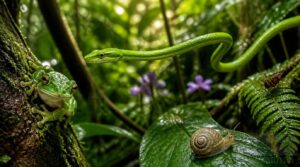
Insects make up the bulk of a rough green snake’s diet, but they’re not the whole story. In the wild, Opheodrys aestivus rounds out its nutrition with a few other prey types that might surprise you. Here’s what else they hunt — and what you need to know before considering any of it in captivity.
Tree Frogs as Occasional Prey
Rough green snakes do take tree frogs in the wild, but it’s opportunistic, not routine.
Small gray and green tree frogs fall within the prey-size limit governed by head-width clearance, and they deliver protein and calcium that insects alone don’t fully cover.
In captivity, rotating feeders like silkworms, hornworms, and caterpillars reliably meet that nutritional need more safely and consistently.
Extracting Snails From Shells
Rough green snakes consume only the snail’s soft body, discarding the shell entirely. In captivity, you’ll need to extract it yourself:
- Stabilize the shell firmly with a damp cloth
- Apply steady, even pressure at the shell lip
- Grip the body gently using blunt forceps
- Dust with calcium supplement before offering
Place the extracted snail on damp substrate to recover briefly.
Opportunistic Small Lizards
Small lizards show up as opportunistic prey during arboreal foraging in the tree canopy, not as a regular food source.
Prey usually ranges from 1 to 4 centimeters, bounded strictly by the snake’s gape size limit. Warmer months increase encounter rates as lizard activity peaks.
In captivity, this category is unnecessary when your gut-loaded insect rotation covers nutritional needs fully.
Wild Prey Safety Concerns
Lizards from the wild come packaged with hazards you can’t see.
- Parasite transmission risk: frogs and snails carry parasites
- Pesticide contamination: field insects may be chemically exposed
- Water source safety: contaminated prey spreads bacterial infections
- Shell injury hazard: hard mollusk shells can cut the throat
- Choking prevention: prey must never exceed head-width limits
Captive feeders are the cleaner, safer choice.
Best Captive Feeder Insects
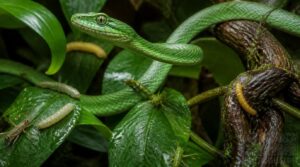
Not every feeder insect pulls its weight equally for rough green snakes. Some offer better nutrition, softer bodies, and more natural movement that actually triggers a hunting response. Here’s what consistently works best in captivity.
Silkworms and Hornworms
Caterpillars are underrated feeders. Silkworms and hornworms rank among the best captive options you can offer, and both are soft-bodied, which keeps impaction risk low.
| Feeder | Key Benefit |
|---|---|
| Silkworms | Soft-bodied, high protein |
| Hornworms | High moisture, calcium-rich |
| Both | Gut-load 24–48 hours prior |
Gut-load both 24–48 hours before feeding. Silkworms accept calcium dust easily; hornworms can reach 3–4 inches, so size appropriately.
Dubia Roaches and Crickets
Both roaches and crickets work well, but they aren’t interchangeable. Dubia roaches offer lower chitin content, improving digestibility, and their slow movement triggers a cleaner strike. Crickets deliver higher protein at 66% versus 46% in roaches, but their phosphorus load undercuts calcium without consistent dusting.
Gut-load both 24-48 hours before feeding, and size-match to the snake’s head width.
Black Soldier Fly Larvae
Where roaches and crickets demand consistent calcium dusting, black soldier fly larvae arrive with naturally elevated calcium already built in, containing 40-42% crude protein on a dry matter basis.
- High calcium content reduces supplementation load
- Soft bodies carry minimal impaction risk
- Gutload feeder insects 24 hours before offering
- Rotate into your feeding and diet schedule 2-3 times weekly
Waxworms as Occasional Treats
Waxworms carry a fat content around 24 to 25 percent, making them calorie-dense treats rather than staples. Offer 1 to 3 per session, no more than once weekly.
Their soft bodies digest easily and absorb calcium dust well. Gut-load them 24 hours before offering to squeeze out extra nutritional value.
Reserve waxworms for enticing a reluctant feeder, not as a daily fixture in your insectivorous diet rotation.
Rotating Feeders for Variety
A rotating feeder removes the guesswork from diet diversity. Load two to four cavities with crickets, silkworms, hornworms, or caterpillars, set a gentle rotation speed that won’t crush live prey, and let the mechanism present each type in sequence.
Disassemble and clean each compartment after every session. Modular designs let you swap cavity counts as your snake’s appetite shifts.
Can Rough Green Snakes Eat Mealworms?
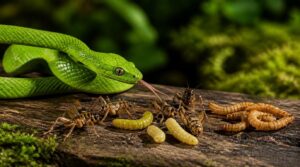
Mealworms are one of those feeders that seem convenient but come with a real catch. Their tough outer shells are high in chitin, which your rough green snake’s digestive system isn’t built to break down efficiently, making impaction a genuine risk with regular use.
Here’s what you need to know about mealworm concerns, safer alternatives, and how to use them responsibly if you choose to at all.
High-chitin Impaction Concerns
Mealworms carry a structural problem that most keepers underestimate. Their exoskeletons are dense with chitin, a fibrous compound rough green snakes can’t fully digest.
When fed regularly, this material accumulates in the gut, slowing stomach emptying and raising the risk of gastrointestinal impaction. Poor hydration makes this worse. Keep mealworm feedings infrequent and always pair them with adequate daily misting.
Safer Soft-bodied Alternatives
Soft-bodied prey is where Opheodrys aestivus genuinely thrives. Three feeders stand out as reliable mealworm replacements:
- Silkworms: low-fat, clean, and easy to gut-load with calcium
- Hornworms: high moisture content helps with hydration and protein delivery
- Waxworms: fat-rich and palatable; use sparingly to support shedding
Rotating all three diversifies the nutrient profile across feeding sessions.
Limiting Mealworm Frequency
Even a single mealworm too many can visibly slow digestion in Opheodrys aestivus. Keep your feeding frequency controlled and deliberate.
| Age Group | Max Mealworm Frequency |
|---|---|
| Juvenile | Once per week |
| Adult | Once every two weeks |
| Stressed or recovering | Remove from rotation |
After each mealworm feeding, monitor stool and weight carefully. Firm output signals tolerance; pale or dark stools mean cut back.
Foods Rough Green Snakes Should Avoid

Not every food item belongs in a rough green snake’s bowl, and feeding the wrong thing can cause real harm fast.
Some prey types fall outside their natural diet entirely, while others carry hidden risks that aren’t obvious until something goes wrong.
Here are the foods you should keep off the menu.
Rodents and Fish
Rough green snakes don’t eat rodents or fish. Their digestive systems aren’t equipped for vertebrate prey that dense, and rodents and fish are outside their natural diet entirely. Offering either can cause serious metabolic stress. Stick to insects.
Oversized or Hard-shelled Prey
Size matters more than you might think. Any prey wider than the snake’s head creates an immediate choking risk, and hard-shelled insects compound the problem by resisting both swallowing and digestion.
Oversized or hard prey can trigger gagging, jaw injuries, impaction, and repetitive regurgitation. Keep crickets small, stick to soft-bodied feeders like hornworms and silkworms, and size every item carefully.
Unidentified Wild-caught Insects
Skipping hard-shelled prey is smart, but another risk is just as easy to overlook. If you’re catching insects from your yard or a nearby field, you can’t always confirm what you’ve got.
Wild-caught insects carry parasites and potential pathogens that captive-bred feeders don’t. Stick to commercially raised insects unless you can positively identify the species.
Pesticide-exposed Feeder Insects
Wild-caught insects aren’t the only concern. Commercially raised feeders can carry pesticide residues too, particularly when gut-loaded on treated substrates. Crickets raised on treated greens accumulate measurable residues within two to four weeks.
- Source insects from reputable suppliers offering pesticide-free certification
- Request published residue testing results before buying
- Rotate your feeder species regularly to limit reliance on one production line
How Often Should You Feed Them?
Feeding frequency isn’t one-size-fits-all with rough green snakes — age, size, and activity level all shape how often yours needs a meal.
Get the schedule wrong in either direction and you’re looking at a sluggish, malnourished snake or one that simply stops eating altogether.
Here’s what a solid feeding routine actually looks like across each stage of their care.
Juvenile Feeding Schedule
Juveniles have a narrow metabolic window. Feed them every 1 to 2 days, offering 2 to 6 prey items per session in the early evening. During molting, reduce frequency slightly to ease digestion. Consistent timing builds predictable hunger cues.
| Age Stage | Feeding Frequency |
|---|---|
| Hatchling | Every 1 day |
| Young juvenile | Every 1–2 days |
| Subadult | Every 2 days |
Adult Feeding Frequency
Adults do well on feedings every 2 to 4 days, adjusted to the snake’s size and visible appetite response. Females carrying eggs benefit from slightly more frequent meals.
Keep intervals consistent — irregular schedules disrupt hunger cues and risk both underfeeding and weight creep.
Offer live prey in the evening, when natural activity peaks.
Insects Per Feeding
Quantity varies with age and body size: match prey to head width first, then set the count per session accordingly.
- Juveniles: 1-3 insects per meal
- Adults: 5-8 insects per session
- Gut-load feeders 24-48 hours before offering
- Dust with calcium without D3 every other feeding
- Rotate prey types to limit refusal
Rotating prey species fills nutritional gaps a single feeder can’t.
Evening Feeding Timing
Rough green snakes are naturally most active as daylight fades, so early evening feeding aligns directly with that window. Tongue-flicking increases, posture sharpens, and prey acceptance rates climb.
Use dim, indirect lighting to avoid startling the snake, and keep enclosure temperatures between 78 and 85°F throughout the session. A consistent evening schedule also helps reliable digestion after each meal.
Twenty-minute Feeding Window
The 20-minute feeding window isn’t arbitrary. Whatever your snake eats within that time defines the meal, so don’t keep adding insects after the first portion is ignored. Remove uneaten feeders promptly, since loose insects stress a naturally shy species and can cause injury.
Track how many were consumed each session. A consistent drop in feeding response signals something worth addressing.
Choosing Safe Prey Sizes
Prey size is one of those details that looks simple but gets overlooked more than you’d think. The rule isn’t complicated, but getting it wrong can lead to real problems — choking, regurgitation, or worse. Here’s what you need to know to size prey correctly at every stage of your snake’s life.
Head-width Sizing Rule
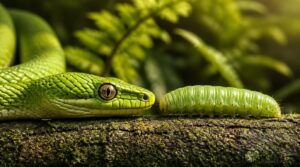
The head-width rule is simple but non-negotiable. Measure prey at its widest point, then compare it directly to your snake’s closed-mouth head width. If the prey exceeds that measurement, don’t offer it.
Overstuffing is one of the fastest ways to trigger regurgitation and other health setbacks, so if you’re troubleshooting feeding or breeding issues, the guide to common snake breeding problems and solutions covers what to watch for.
Oversized live prey causes gaping, repeated swallowing attempts, and regurgitation, all of which stress the animal and create real choking risk. When in doubt, size down.
Adjusting Portions by Age
Age shapes how much your snake needs at every stage of its life. Juveniles eat every 5-7 days, while adults need 2-3 feedings per week.
For a deeper look at what’s normal when appetites stall, how long a ball python can safely go without eating varies by age, season, and overall health.
As your snake grows, age-appropriate snake enclosure setup advice can help you plan space, enrichment, and routine health tracking.
- Juveniles: 2-3 small insects per session
- Sub-adults: 4-5 appropriately sized feeders
- Adults: 5-8 insects per feeding
- All ages: prey sized to head width
Scaling portions correctly prevents overfeeding young snakes and underfeeding more active adults.
Signs Prey is Oversized
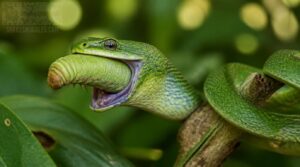
When prey is too large, the snake’s body makes it plain. Watch for jaw and neck stretching, a widened mouth gape that won’t close, or the snake coiling tightly around live prey without swallowing progress.
| Sign | Behavior | Risk |
|---|---|---|
| Swallowing resistance | Body twists hard | Ingestion failure |
| Jaw stretching | Neck visibly expands | Tissue strain |
| Partial swallow pause | Prey halts mid-throat | Regurgitation |
Preventing Choking and Impaction
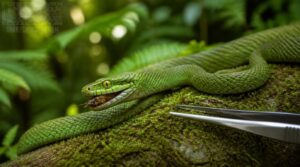
Once you’ve spotted those warning signals, the response is methodical. Limit prey to one item per session, sized no wider than the snake’s head. Use long feeding forceps, and wait for a complete swallow before continuing.
After feeding, enforce 30 minutes of post-feeding rest. Freshly killed prey removes the unpredictable movement that live insects introduce, reducing choking risk a lot.
Gut-Loading and Supplementing Feeder Insects
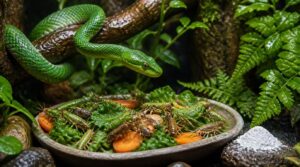
Feeder insects are only as nutritious as what they’ve eaten before landing in your snake’s enclosure. That’s where gut-loading and supplementation come in — two steps that directly shape your rough green snake’s long-term health. Here’s what you need to know to get both right.
Just as diet quality matters for feeder insects, your choice of substrate matters too — snake-safe substrates for handling and everyday care can help you avoid hidden health risks like mold and allergen buildup in your enclosure.
Gut-loading Before Feeding
Every feeder insect you offer is only as nutritious as what it last ate. Gut-load feeder insects 24 to 48 hours before feeding, using leafy greens, fruit, or a commercially formulated diet. Insects accumulate nutrients within that window, making each prey item far richer.
Dubia roaches and silkworms respond especially well to this prep, delivering measurably better nutrition per feeding.
Calcium Dusting Frequency
Once gut-loading is handled, calcium dusting becomes your next lever. Juvenile dusting needs are higher: dust 4 to 5 times per week during active growth. Adult maintenance dusting drops to 1 to 2 times weekly.
Oversupplementation risks are real, and daily dusting disrupts appetite and skews mineral ratios. Time dusting schedule adjustments to coincide with feeding days for consistent intake.
Choosing Calcium Without D3
Since rough green snakes under UVB lighting make D3 independently, calcium without D3 is the correct supplement form. Dust insects with a phosphorus-free calcium carbonate powder to protect Ca:P balance before feeding.
Choose products that meet these criteria:
- 0.0 IU vitamin D3 confirmed on the label
- Phosphorus-free formulation
- Ultrafine powder for consistent insect adhesion
- No starch, sugar, or artificial additives
Weekly Multivitamin Use
Calcium controls bone density, but vitamins cover the nutritional gaps your feeder insects can’t provide alone. Dust feeders with reptile multivitamin powder once weekly, right after gut-loading and just before offering. Use products with preformed vitamin A (retinol acetate or palmitate), not beta-carotene, which rough green snakes convert poorly. Juveniles need weekly dosing; adults often do fine every other week.
Avoiding Oversupplementation
Too much tips the balance fast. Vitamin D3 toxicity causes hypercalcemia, leading to lethargy, joint swelling, kidney stress, and constipation.
Watch for these signs:
- Appetite loss or constipation
- Swollen limbs or joint pain
- Increased thirst and urination
- Unexplained lethargy
Use calcium without D3 when UVB lighting is adequate. Keep multivitamins to once weekly. Regular vet bloodwork catches problems early.
Feeding Techniques and Appetite Problems
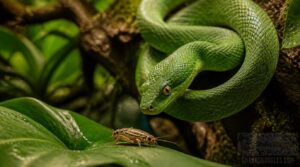
Getting your rough green snake to eat consistently takes more than just dropping insects into the enclosure. How you present food, when you offer it, and how you respond when appetite drops all make a measurable difference in long-term health. Here’s what you need to know to get feeding right — and what to do when something goes wrong.
Using Long Feeding Forceps
Long feeding forceps keep your hand clear of strike range. Use fine, curved tips to position live prey at the center of the snake’s mouth. After each feeding session, clean with warm water and mild soap, then dry.
| Feature | Spec | Purpose |
|---|---|---|
| Shaft length | 15–25 cm | Keeps hand clear |
| Tip opening | 2–5 mm | Grips small insects |
| Construction | Stainless steel | Resists humidity |
Encouraging Natural Hunting
Live prey activates the stalking instinct that defines Opheodrys aestivus in the wild. Move insects during feeding and vary placement height throughout the enclosure to engage this behavior.
- Position prey at vertical heights for arboreal ambush
- Feed at dusk for crepuscular activity simulation
- Simulate ambush predator behavior with live movement
- Gut-load feeders before each session
- Respect prey size limitations strictly
Reducing Stress During Meals
Feeding a nervous snake guarantees poor results. Soft ambient lighting, a stable feeding surface, and a low-distraction setup address the most reliable stress triggers. Time each session consistently, and don’t handle your snake beforehand. A quiet feeding environment helps gut-loaded live prey get taken.
| Factor | Problem | Fix |
|---|---|---|
| Light | Harsh glare | Dim, soft |
| Surface | Wobble | Firm base |
| Schedule | Irregular | Fixed evening |
Wild-caught Feeding Refusal
Even in a calm setup, wild-caught specimens refuse prey regularly. Scent unfamiliarity is often the first trigger, since these snakes rely on olfactory cues to identify safe prey. Prey size mismatch compounds this, and cooler temperatures reduce hunting drive further. Any handling before a session shuts feeding down.
Captive-bred snakes established on gut-loaded feeders sidestep most of these issues from the start.
When Veterinary Care is Needed
Persistent refusal beyond two weeks warrants a vet visit. Watch for mouth rot symptoms like excessive salivation or cheesy gum discharge, labored or open-mouth breathing, or visible mites between scales.
Sudden weight loss, a prominent spine, and abnormal droppings point to internal parasites or nutritional deficiency. Any prolapse, burn, or deep wound is an emergency. Don’t wait on these signs.
Frequently Asked Questions (FAQs)
What should I feed my rough green snake?
Think insects first. Rough green snakes thrive on a varied insect diet, including crickets, silkworms, and dubia roaches, gut-loaded and dusted with calcium. Feed during evening hours for best results.
Will a rough green snake bite you?
Rough green snakes rarely bite, and when they do, it’s because they feel cornered or threatened. Non-venomous and docile by nature, any bite amounts to little more than a brief pinprick.
How often should I feed a rough green snake?
Feed juveniles 2 to 3 times weekly, offering 2 to 6 small insects per session. Adults need only 1 to 2 feedings per week, with 4 to 8 insects per sitting.
How long do rough green snakes typically live?
In the wild, rough green snakes average around 5 years. Captivity changes that a lot, with well-cared-for individuals commonly reaching 8 to 12 years, and some pushing past 12 under ideal conditions.
How does hydration affect a rough green snakes appetite?
Like a dimmer switch on hunting instinct, dehydration drops arousal fast. A dry snake won’t chase prey. Offering fresh water restores feeding responsiveness within 15-30 minutes, so daily misting and clean water access aren’t optional.
Can rough green snakes fast safely during shedding?
Yes, rough green snakes can safely skip meals during shedding. Resume normal feeding once the shed is complete. Prioritize fresh water throughout, as dehydration slows the process and dulls appetite afterward.
Do seasonal changes affect how much they eat?
Yes, seasonal shifts drive real changes in appetite. Warmer temperatures and longer days ramp up metabolism and feeding response, while winter slows digestion noticeably, often leading to skipped meals or reduced portions.
How does enclosure setup influence feeding behavior?
Your enclosure isn’t just housing — it’s the hunting ground. Vertical complexity and naturalistic substrate directly trigger exploratory foraging, while adequate hides reduce stress, making feeding sessions calmer and more successful.
Conclusion
It’s no coincidence that the snakes most keepers lose to nutritional decline are the exact ones fed with the least feeder variety.
The rough green snake diet demands precision: right insects, right size, right supplementation, every single session. Get those three elements right and the animal thrives. Miss one consistently and the decline is slow, quiet, and entirely preventable. Feed with the rigor you’d apply to any strict specialist, and this snake will reward it.