This site is supported by our readers. We may earn a commission, at no cost to you, if you purchase through links.

Most snake habitat problems begin before the animal comes home. A hatchling corn snake may look comfortable in a small glass tank, then outgrow it before its second birthday, while a ball python can refuse meals because a hide feels too exposed.
Good snake home setup advice starts with the species, not the enclosure photo posted online. Your snake needs a warm-to-cool gradient, humidity that matches its biology, secure cover, and room to move without feeling on display.
Plan for the adult animal, watch its behavior, and build safety into every detail. That foundation makes heat, furnishing, cleaning, and handling easier.
Table Of Contents
- Key Takeaways
- Plan for Your Snake’s Needs
- Choose a Safe, Spacious Enclosure
- Set Temperature, Humidity, and Lighting
- Add Substrate, Hides, and Enrichment
- Maintain a Healthy Snake Home
- Frequently Asked Questions (FAQs)
- What is the best setup for a beginner snake?
- Do snakes get bored in their enclosure?
- What do you put at the bottom of a snake enclosure?
- How do you care for a snake enclosure?
- How do I create a safe home for my scaly snake?
- How do you build a snake home?
- How do you set up a snake enclosure?
- How do you keep a pet snake healthy?
- How do you keep a snake happy?
- What lighting do snakes need daily?
- Conclusion
Key Takeaways
- Design the enclosure around your snake’s species, adult size, humidity needs, climbing habits, and stress sensitivity rather than copying a generic setup.
- Provide an escape-proof enclosure with enough room to stretch, secure hides on both warm and cool sides, safe substrate, clean water, and enrichment that supports natural movement.
- Maintain a stable warm-to-cool temperature gradient with thermostat-controlled heat, digital gauges at snake level, and humidity matched to the species.
- Protect your snake’s health through daily checks, prompt waste removal, regular disinfection, careful feeding and handling, and routine inspections for shedding, behavior, and equipment problems.
Plan for Your Snake’s Needs
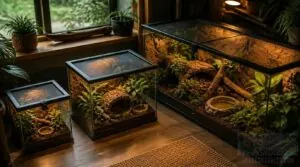
Your snake’s species, adult size, and temperament should shape every housing decision. Plan for its full lifespan, not just its first few months at home. Start with these enclosure options and requirements.
Include essential snake habitat supplies that support secure hiding, climbing, and species-appropriate natural behaviors.
Species-Specific Habitat Requirements
Every species arrives with a different rulebook. Before buying supplies, confirm these three points:
- Temperature gradient needed from warm end to cool retreat.
- Species-specific humidity range and ventilation balance.
- Enclosure security, climbing needs, and preferred hiding spots.
A corn snake may thrive with aspen and moderate humidity, while a ball python needs higher humidity, snug hides, and moisture-retaining substrate safety. Copying another snake’s setup is how problems begin. Adequate food, water, shelter, and space also helps a snake’s health and natural behavior.
Adult Size and Growth
Match the habitat to the snake it will become, not the hatchling in your hand. Most species reach adult size in 2–4 years, and females may finish larger.
| Stage | Plan | Check |
|---|---|---|
| Hatchling | Starter enclosure | Weekly weight |
| Juvenile | Upgrade space | Monthly length |
| Adult | Full enclosure | Body condition |
| Lifetime | Enrichment budget | Lifespan plan |
Record weight and sheds. Provide adult space and enrichment before rapid growth turns a starter enclosure crowded.
Temperament and Stress Sensitivity
Adult size matters less if the snake feels exposed or overwhelmed. Corn and milk snakes often accept routine handling, while ball pythons may withdraw and king snakes can become defensive when stressed.
Provide secure hiding spots, humidity control, a temperature gradient, and enclosure ventilation. Watch for freezing, wall-climbing, hissing, tail flicking, or strikes. These signs mean stress reduction comes before handling.
Lifespan and Care Commitment
A calm snake can still be a long-term commitment. Many species live 10 to 20 years, and large pythons may live longer with excellent care.
Plan for adult housing, yearly costs, and emergency veterinary care now. Track weight, length, appetite, sheds, and stool quality. Schedule vet checkups every 6 to 12 months, because early health monitoring prevents small problems from becoming expensive ones.
Choose a Safe, Spacious Enclosure
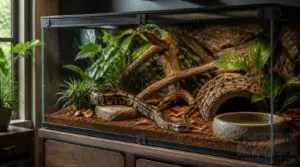
Your enclosure is the foundation of a safe, low-stress home. It needs enough room for normal movement, reliable security, and a stable place in your home. Use the following points to choose a setup that will serve your snake now and as it grows.
Minimum Enclosure Dimensions
Choose enclosure size from expected adult length, not today’s body size. Provide 1.5 times adult length, 0.75 times adult length in width, and height equal to body length.
For space-saving setups, explore these boa constrictor apartment enclosure ideas that still accommodate adult dimensions.
- Full-body stretch space
- A usable temperature gradient
- A secure basking spot
- Four inches for substrate selection
- Room for cleaning access
Small species need at least 24 × 12 inches. Mid-sized snakes need 12 inches of base height.
Glass Versus PVC Enclosures
Although Glass terrariums offer clear viewing, they lose heat faster and can crack. PVC enclosures retain humidity, support a steady temperature gradient, and weigh less.
| Material | Best use | Watch for |
|---|---|---|
| Glass | Display-focused rooms | Heat loss |
| plastic vivariums | Humid species | Scratched panels |
Either works when sized correctly; PVC better helps create an escapeproof enclosure for active snakes. For homes, PVC offers easier control.
Secure Lids and Locks
When a snake tests every seam, secure lids become essential, not optional. Use locking lugs, cam locks, or a hasp with a padlock that cannot be lifted free.
Check ventilation gaps, door tracks, and cable ports before bringing your snake home. Add weatherstripping where needed without blocking airflow. During quarantine protocols, inspect seals daily; escapeproofing fails at its smallest opening.
Escapeproofing fails at its smallest opening, so inspect every gap, track, port, and seal daily
Stable Indoor Placement
Stable indoor placement protects both your snake and the secure enclosure. Set it on a sturdy, level stand or cabinet with non-slip feet, never a wobbly table or carpeted floor.
Keep it away from busy walkways, doors, heat vents, and drafts. This prevents bumps while preserving the temperature gradient and humidity control. Use a moisture-resistant surface beneath it, because spilled water bowls happen.
Future Enclosure Upgrades
Plan upgrades before purchase. A snake can outgrow its home, and equipment needs change.
- Reinforced corners support 24-inch stack heights.
- Modular panels expand widths to 48 inches.
- Corrosion-resistant hardware resists humidity up to 90 percent.
- Quick-swap inserts simplify digital thermometers, hygrometers, and hiding spots.
- Replace parts every five years.
Keep secure lids intact and recheck the temperature gradient after changes.
Set Temperature, Humidity, and Lighting
Temperature, humidity, and light shape how safely your snake rests, digests, sheds, and behaves. Small mistakes can create ongoing stress, so set these conditions with reliable equipment rather than guesswork. Start with the five habitat controls below.
Warm and Cool Zones
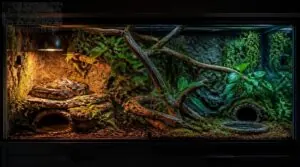
Build a temperature gradient, not a uniformly heated box. Place the basking spot at one end, usually 28–32°C for many boas and pythons, while maintaining a 22–26°C cool zone at the other.
Your snake uses this range for thermal regulation. Keep hides available on both ends, and consider enclosure materials, insulation, and room temperature when checking whether each zone stays consistent.
Thermostat-Controlled Heat Sources
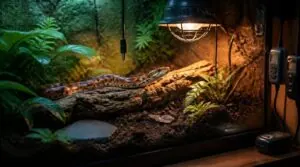
Once the gradient is established, give every heat source its own reliable thermostat. A ceramic heat emitter, heat mat, and undertank heaters can overheat quickly without one.
- Match thermostat wattage to the heater.
- Position probes at snake level.
- Keep probes from direct contact.
- Use guarded overhead fixtures.
- Test shutoff before introduction.
Thermostat placement helps with safe temperature monitoring and prevents burns.
Digital Temperature Monitoring
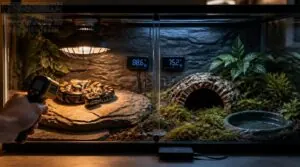
Use two digital thermometers to verify the thermal gradient, one at the basking area and one at the cool end, both at snake eye level.
Check readings daily, and compare them with an infrared thermometer across surfaces and hides. Remote temperature monitoring can log changes every few minutes, but don’t trust a dashboard blindly. Confirm probe position after cleaning, feeding, or enclosure rearrangement.
Species-Specific Humidity Levels
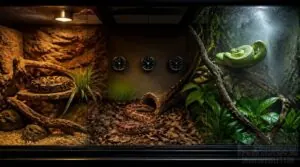
After confirming temperatures, set species-specific humidity for the snake, not a generic care chart. Track humidity levels with a calibrated hygrometer at snake height.
- Ball pythons: 50–60%.
- Corn snakes: 30–40%.
- Green tree pythons: 70–90%.
- Run misting systems sparingly, with airflow.
- Match substrate selection to moisture needs.
Constant humidity over 70% encourages mold and respiratory trouble.
Lighting and Photoperiod
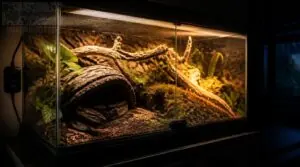
Humidity controls moisture; light sets your snake’s daily clock. Provide a natural photoperiod of 12 hours on and 12 hours off with a timer, then adjust toward 14 hours only for species that benefit.
During daylight, UVB lighting and a guarded basking spot can support normal behavior and clear temperature gradients. Keep nights dark and offer shaded hides.
Add Substrate, Hides, and Enrichment
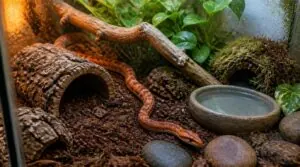
Once heat and humidity are stable, build the enclosure around security, comfort, and movement. Your choices here affect how safely your snake rests, sheds, drinks, and explores. Start with these essential habitat materials and furnishings.
Safe Substrate Options
Choose substrate based on your snake’s moisture needs, digging behavior, and habits.
Aspen shavings stay light and spot-clean easily for dry-climate species. Coconut husk, coconut fiber, and cypress mulch suit setups needing moisture.
Paper towels provide the cleanest quarantine option. Reptile carpet can cover loose bedding, but wash it often. Skip Astroturf, which traps waste and is hard to sanitize.
Toxic Materials to Avoid
Always practice toxic avoidance when selecting decor, bowls, backgrounds, and sealants. Keep lead, mercury, cadmium, arsenic, old enamel paint, poorly glazed ceramics, and chipped acrylic out of reach.
Avoid PVC with unknown additives, petroleum sealants, calcium sand, pesticide-treated soil, and fragranced cleaners. Let materials air out, select reptilesafe materials and nontoxic plants, and clean surfaces only with a reptilesafe cleaner.
Warm and Cool Hides
Every snake needs two hides: one warm, one cool. Place the warm hide on the heated side, between 82-88°F. The cool hide goes on the opposite end, completing your thermal gradient.
Good hide options include:
- Commercial hide boxes
- Rock caves
- Log hides
- Opaque hiding spots
- Moist hide boxes for shedding
Keep the warm hide dry, the cool hide slightly moist.
Water Bowl Placement
Your water bowl does more than hydrate your snake. Place it on the cool side of the enclosure, away from heat sources that speed bacterial growth. Keep it off loose substrate to prevent soggy mold spots.
Swap out water daily for fresh, clean water, and scrub the bowl weekly. Use stainless steel or ceramic; plastic scratches and traps bacteria fast.
A heavy ceramic snake water bowl resists tipping and is easy to disinfect between weekly scrubs.
Branches and Enrichment
Snakes aren’t purely floor creatures. Vertical climbing space reduces stress and mimics natural movement patterns. Even ground-dwelling species benefit from a branch or two.
Stick with dried hardwoods like oak or maple. They resist mold and hold weight reliably. Match branch diameter to your snake’s body size. Too thin, and they can’t coil properly; inspect monthly for splinters.
Maintain a Healthy Snake Home
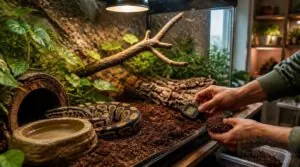
Setting up the enclosure is just the beginning — keeping it in good shape is where real snake care happens. A few consistent habits protect your snake’s health and catch problems before they escalate. Here’s what to stay on top of:
Spot Cleaning and Disinfection
Think of spot cleaning as your daily defense. Remove feces, shed skin, and soiled substrate every day before bacteria can build up.
Weekly snake cage cleaning means scrubbing your hiding boxes and enclosure walls with an EPA-registered disinfectant, letting it sit for the label’s full contact time. Always rinse well after. Keep a dedicated cloth per enclosure to avoid cross-contamination.
Feeding Area Management
Your feeding routine matters as much as the food. Juveniles eat every 5 to 7 days; adults need one to two meals weekly.
Pairing consistent feeding schedules with a well-maintained habitat is key — our guide to reptile enclosure care and upkeep walks you through everything your snake’s environment needs to thrive.
Use a dedicated feeding mat and sanitize it before and after each session. Remove uneaten prey within two hours.
Offer prey no larger than 1.5 times your snake’s girth, use tongs for presentation, and rinse water dishes.
Shedding and Health Checks
Each shed reveals your snake’s health status.
Watch for cloudy blue eyes and dull skin 7-14 days before a shed. Keep humidity at 50-70% to prevent patchy shedding.
Post-shed, check for:
- Retained eye caps
- Stuck tail skin
- Skin redness or swelling
- Parasites on shed skin
- Return to normal feeding within 48 hours
A complete one-piece shed confirms your setup works.
Monthly Safety Inspections
After a shed, schedule monthly safety inspections at a fixed date and time, and assign a responsible adult. Notify stakeholders three days ahead, then log findings, photos, owners, and due dates.
Check escapeproof lids, locks, seams, racks, cords, and backup heat. Confirm temperature gradients within ±2°C, species humidity levels, and substrate maintenance after the weekly wash. Retain records for 12 months.
Low-Stress Handling Routine
After inspections, keep snake comfort and stress reduction predictable. Handle only when active, never within 24–48 hours after feeding or during shedding. Read snake behavior before lifting.
- Wash hands, remove food scents, and secure doors for escape prevention.
- Use handling techniques, support mid-body and front third.
- Start at 2–3 minutes, stop for hissing, musking, or coiling.
Frequently Asked Questions (FAQs)
What is the best setup for a beginner snake?
Choose a calm, small species and provide a secure enclosure, proper temperature gradients, species-appropriate humidity levels, easy-clean substrate, and two hiding spots. Start with minimal handling, monitor conditions daily, and plan for the snake’s adult size.
Do snakes get bored in their enclosure?
Snakes can become under-stimulated. Habitat enrichment through branches, rotating hides, scent trails, and safe enrichment items helps natural behaviors, sensory stimulation, and stress reduction without forcing interaction or constant handling.
What do you put at the bottom of a snake enclosure?
Use safe substrate such as aspen shavings, cypress mulch, or paper towels. Aspen allows burrowing, while paper towels simplify cleaning. Avoid Astroturf, cedar, pine, and sand, which can harbor bacteria or cause irritation.
If you’re still deciding on the full enclosure layout, our snake tank setup guide walks through heating, hides, and placement too.
How do you care for a snake enclosure?
Trouble often starts quietly: check temperature gradients and humidity levels daily, remove waste-soiled substrate, refresh water, and inspect the basking spot. Match cleaning frequency and equipment checks to your snake’s species-specific needs as it grows.
How do I create a safe home for my scaly snake?
Build a secure enclosure sized for adult length, with warm and cool temperature gradients, species-appropriate humidity levels, safe substrate, and snug hiding spots at both ends.
Add clean water, thermostat-controlled heat, escape-proof locks, and daily checks.
How do you build a snake home?
Choose enclosure size for your snake’s adult length, then create temperature gradients with an 88–92°F basking spot and cooler end. Add safe substrate, two secure hiding spots, water, branches, ventilation, and escape-proof locks.
How do you set up a snake enclosure?
Start with species-appropriate enclosure size, then add safe substrate, warm and cool hiding spots, and a shallow water bowl. Maintain thermostat-controlled temperature regulation and humidity control, using digital gauges at both ends.
How do you keep a pet snake healthy?
Maintain temperature regulation, humidity control, a reliable feeding schedule, and clean water. Perform regular health checks for appetite, shedding, mites, and breathing changes. Keep the enclosure secure, clean, escape-proof, and fitted with proper hides.
How do you keep a snake happy?
Keep your snake secure and comfortable with hiding spots, enrichment items, a correctly heated basking spot setup, and fresh water bowl. Check thermostat placement daily, feed appropriately, and handle calmly only when your snake is receptive.
What lighting do snakes need daily?
The theory that all snakes need UVB lighting is false. Provide a 12-hour photoperiod, species-appropriate UVB, and a basking spot setup. Verify thermostat placement and surface temperatures with infrared thermometers, preventing overheating and supporting rhythms.
Conclusion
A well-built enclosure is a quiet harbor, giving your snake warmth, cover, and predictable space to behave normally. Good snake home setup advice means measuring, choosing reliable equipment, and adjusting care when behavior signals discomfort. Check temperatures, humidity, locks, and body condition routinely. Then let consistency do its work.
When your snake can thermoregulate, hide, drink, shed, and explore without stress, you have built more than a tank, you have built a secure life.