This site is supported by our readers. We may earn a commission, at no cost to you, if you purchase through links.

An eastern milk snake clutch can look unremarkable at first: a tight cluster of cream-colored ovals tucked beneath a rotting log or inside a rock crevice. Yet each egg needs a narrow balance of warmth and moisture, and a small handling mistake can disrupt development.
For keepers and field observers, recognizing healthy eggs matters. Plump shells, stable temperatures near 28–29°C, and damp, never soggy, nesting material give embryos the conditions they need.
Eastern milk snake eggs all you need to know starts with their appearance, laying season, and incubation needs, then follows the hatchlings through pipping, shedding, and their first meals.
Table Of Contents
- Key Takeaways
- What Do Eastern Milk Snake Eggs Look Like
- When and Where Eggs Are Laid
- How Eastern Milk Snake Eggs Incubate
- Hatching and Early Hatchling Care
- Top 3 Eastern Milk Snake Products
- Frequently Asked Questions (FAQs)
- How many eggs does an eastern milk snake lay?
- What do eastern milk snakes eat?
- What is an eastern milk snake?
- How long do eastern milk snakes live?
- When do milk snakes lay their eggs?
- Are eastern milk snakes good pets?
- How long does it take for milk snake eggs to hatch?
- How many eggs do Eastern milk snakes lay?
- Can I feed my milk snake eggs?
- What do you need to know about milk snakes?
- Conclusion
Key Takeaways
- Healthy eastern milk snake eggs are plump, pale cream to tan, and should be incubated at a steady 28–29°C with humidity held between 70–85% for the full 60–75 day development window.
- Females lay one clutch of 2–17 eggs per year, typically in June or July, tucked into warm, moist spots like rotting logs or rock crevices where heat and humidity stay naturally stable.
- Marking the top of each egg with a pencil before any handling — and never rotating it — is one of the simplest ways to protect the developing embryo from fatal disruption.
- Once hatched, young milk snakes shed within 7–14 days and are ready for their first pinky mouse right after, needing a feeding every 2–3 days to support healthy early growth.
What Do Eastern Milk Snake Eggs Look Like
Eastern milk snake eggs have a few distinct features you can check without disturbing the nest. Their appearance can offer useful clues about condition and development. Here’s what to look for when examining a clutch.
For broader context, this guide to which snakes lay eggs and how explains why clutches vary among species.
Egg Color and Texture

Eastern milk snake eggs are usually pale cream to light tan, with a smooth, faintly glossy shell. In clutches of 2 to 17, color is often uniform. In chickens, eggshell color is genetic and depends on breed-specific pigment deposition.
- Thin, fragile shells
- Firm texture suggests calcium
- Faint tip speckling may occur
- Soft shells need attention
- Dark or slimy patches warn of decay
Color remains stable through the 28 to 39-day incubation period. Healthy eggs later produce hatchlings with smooth scales, measuring 14 to 28 cm.
Typical Egg Shape

Beyond color, shape tells you a lot. Snake eggs from this species are oval and elliptical, with one end slightly pointed and the other broader and blunt. That form isn’t random.
Clustered in groups of 2 to 17, their elliptical shape allows tight packing that distributes heat evenly during the incubation period, supporting the healthy development of hatchlings.
Egg Size and Weight

Elliptical snake eggs here measure 25 to 35 mm and weigh 0.8 to 1.5 grams. For a small constrictor, that’s right on track.
Five measurements worth knowing:
- Egg length: 25 to 35 mm
- Egg weight: 0.8 to 1.5 g
- Mid-development: about 1 g
- Clutch range: 2 to 17 eggs
- Hatchling size: 14 to 28 cm
Clumped Egg Masses

Those elliptical eggs don’t land scattered. Females lay them in tight clusters, with clutch sizes running from 2 to 17 eggs. In old fields or beneath rotting logs, the clumped mass traps humidity close to the developing eggs. That shared moisture buffer helps the full 28- to 39-day incubation, eventually producing hatchlings measuring 14 to 28 cm.
| Feature | Detail |
|---|---|
| Clutch size | 2 to 17 eggs |
| Mass shape | Rough hemisphere |
| Common sites | Old fields, under logs |
Fertile Versus Bad Eggs

Not every egg in a clutch of 2 to 17 is viable. Fertile eggs show a circular germinal disc and develop blood vessels during the 28 to 39-day incubation, producing hatchlings from 14 to 28 cm. Infertile ones stay uniformly pale with no vessel growth.
Around day four, candling ball python eggs helps reveal developing veins and identify clear, nonviable eggs early.
Remove bad eggs from rotting logs or humus nests before mold reaches healthy elliptical eggs.
When and Where Eggs Are Laid

Knowing when and where eastern milk snakes lay their eggs takes a lot of the guesswork out of caring for them, whether you’re watching a wild population or managing a captive female.
Timing and location aren’t random — these snakes follow predictable patterns tied to temperature and season.
Here’s what you need to know about each stage of that process.
Spring Mating Season
Warmth is what sets everything in motion. When temperatures climb above 60°F in spring, eastern milk snakes emerge from dormancy and begin seeking mates.
Males track females using chemical cues, then engage in courtship through tail waving and gentle body contact.
Snake reproduction peaks during these brief warm windows, setting the stage for clutch sizes of 2 to 17 eggs.
June and July Laying
By June and July, females usually deposit one clutch of 6–20 eggs after spring mating. Snake reproduction is timed so embryos develop during reliably warm weather; July clutches may be larger than June clutches, especially from older, larger females.
The egg laying season allows for a 60–70-day incubation period, so hatchlings measuring roughly 6–8 inches emerge in late summer or early fall.
Natural Nesting Sites
Females hide eggs in warm, protected cavities, including rock crevices, hollow logs, leaf litter, decaying wood, and abandoned rodent burrows. These sites hold moisture while limiting overheating. Around old buildings, sheltered ledges can serve the same purpose.
Eastern milk snakes hide eggs in moist, sheltered cavities beneath logs, litter, rocks, or old buildings
At lower elevations in Vermont, such cover allows incubation for 28 to 39 days, producing hatchlings measuring from 14 to 28 cm long.
Typical Clutch Size
Most eastern milk snakes lay 6 to 20 eggs in one nesting event. Your female’s body size, age, nutrition, and spring prey supply largely determine her clutch size.
- Small adults: 6–9
- Average adults: 10–14
- Large adults: 15–20
- Poor years: fewer snake eggs
- Favorable years: larger clutches
This variation affects how many hatchlings move through the snake life cycle after the incubation period.
Female Reproductive Frequency
Most females lay one clutch yearly, but wild individuals may reproduce only every second year when body reserves are limited.
After snake maturity, snake reproduction depends on food and condition. Eggs complete an incubation period of 28 to 39 days, producing snake hatchlings that enter the next stage of the snake life cycle.
How Eastern Milk Snake Eggs Incubate
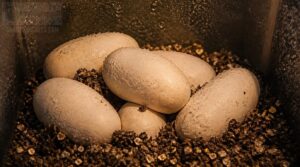
Eastern milk snake eggs need steady warmth, appropriate moisture, and minimal disturbance to develop normally. If you are incubating eggs yourself, reliable equipment makes these conditions easier to maintain. The following options can help you set up and monitor an incubator safely.
Incubation Temperature Range
Set the egg incubation temperature at 26 to 30°C, aiming for a steady 28 to 29°C. This helps development during the incubation period of 28 to 39 days.
- Keep temperatures stable day and night.
- Avoid readings below 24°C.
- Never allow temperatures above 32°C.
- Use a thermostat and separate probe.
Eastern milk snakes lack temperature-dependent sex determination. Steady conditions help snake eggs produce healthy snake hatchlings reliably.
Humidity and Moisture Control
Stable temperature only works when moisture is equally steady. Keep relative humidity near 70 to 85 percent for Lampropeltis triangulum eggs, checking with a hygrometer beside the clutch.
Use lightly damp sphagnum moss or leaf litter that feels moist, not wet. The substrate should hold its shape without releasing water when squeezed.
Avoid puddles and condensation. Excess moisture can promote mold and limit airflow, conditions unlike a well-drained snake habitat. Check moisture every two to three days.
Expected Incubation Period
With moisture held steady, the Expected Incubation Period is usually 60 to 75 days, or about 8 to 11 weeks. At 28 to 30°C, most snake eggs develop predictably.
- Cooler temperatures add days.
- Warm extremes raise losses.
- Fluctuations delay hatching.
- Healthy clutches hatch closely together.
This pattern helps herpetology studies of snake reproduction and snake behavior.
Safe Egg Handling
After 60 to 75 days of incubation, handle snake eggs only when necessary. Mark the top with a pencil before moving them, then keep that side upward. Turning an egg can disturb the developing embryo. Use a soft non-toxic graphite pencil to make a light mark without applying pressure to the shell.
Wash and dry your hands, or use clean disposable gloves. Support each egg gently, avoid squeezing, and return it to the same moist medium. Careful handling helps snake conservation, snake identification records, and studies of snake habitat use and snake diet.
Signs of Healthy Development
Healthy snake eggs stay plump, pale cream to tan, and free of dark, sunken areas or fuzzy mold. A gradual enlargement of the air cell also helps with proper gas exchange during snake incubation.
Candling can reveal a pinkish snake embryo, branching blood vessels, and gentle movement. Avoid frequent candling. As snake development continues, eggs should neither sweat heavily nor collapse, and healthy snake hatching usually follows on schedule.
Hatching and Early Hatchling Care

As hatching approaches, small changes in the eggs signal that healthy hatchlings are close to emerging. Once they pip, young milk snakes need a secure setup with proper warmth, moisture, and suitable first prey. The following enclosure options can help you prepare for this early stage.
Signs Hatching is Near
As hatch time approaches, Milksnake eggs may dimple slightly and show faint movement as embryos reposition. Candle only briefly: a dark, well-filled egg with visible veins usually indicates development. Expect less activity just before emergence.
Hatchlings, marked by a white Y on the back of their head, are carnivorous, like adults that constrict prey until it suffocates. In spring before emerging, avoid disturbance.
Egg Tooth and Pipping
The egg tooth is a small, hardened tip on the upper beak that Milksnake hatchlings use to break through the shell. This process, called pipping, begins when the hatchling applies steady pressure, creating a crack in the snake eggs.
Hatchlings then use strong neck muscles to expand the opening. Once through, the egg tooth falls off within a few days.
Hatchling Size and Color
A freshly emerged milk snake is small but vivid. Hatchling size and color are distinct: most measure 9 to 12 cm at birth.
- Reddish-brown blotches outlined in black run along the back
- The belly carries a white and black checkerboard pattern
- Adults grow to 2 to 3 feet long, sometimes reaching 43 inches
First Shed Timing
The first event after hatching is shedding. Most milksnake hatchlings complete their first skin shed within 7 to 14 days. Watch for the eyes turning cloudy and skin losing its sheen as it gets close. Consistent humidity helps things go smoothly.
Delayed shedding signals conditions that are too dry, which can slow normal snake activity patterns and hatchling growth rate.
Initial Feeding Needs
After the first shed, your hatchling is ready to eat. Pinky mice work well as starter prey, sized to match the snake’s mouth.
In the wild, milk snakes eat rodents such as voles, mice, and rats, constricted until it suffocates, then swallowed whole.
Feed yours every 2 to 3 days to support a healthy snake growth rate.
Top 3 Eastern Milk Snake Products
Getting the right gear makes a real difference when you’re caring for eastern milk snakes or incubating their eggs. Whether you’re setting up an enclosure or monitoring conditions closely, a few key products will do most of the heavy lifting. Here are three worth having in your setup.
1. VIVOSUN Reptile Heating Pad with Thermostat

A controlled heat source helps prevent cold, stalled development in an incubator setup. This VIVOSUN pad includes a digital thermostat adjustable from 40–108°F, allowing you to maintain a stable, appropriate temperature rather than relying on room conditions.
Its far-infrared heating membrane distributes warmth evenly, while the waterproof, UL-certified surface controls humid conditions. Mount it beneath or beside a container, never directly against eggs. Place the thermostat probe near the incubation medium, then confirm temperatures independently before use.
| Best For | Reptile keepers, amphibian and invertebrate owners, and DIY fermenters who need an adjustable, compact heat mat with a separate digital thermostat. |
|---|---|
| Product Type | Heating mat |
| Power Source | AC power |
| Mounting Options | Bottom or side |
| Intended Use | Heat regulation |
| Species Supported | Reptiles, amphibians |
| Enclosure Type | Terrarium, incubator |
| Additional Features |
|
- Adjustable digital thermostat supports controlled temperatures from 40–108°F.
- Waterproof IP67-rated surface and UL-certified construction support safer use in humid setups.
- Flexible, space-saving pad can be mounted on the bottom or side of an enclosure.
- Some users report that the pad does not reach its advertised maximum temperature.
- Adhesive backing may not hold reliably on every surface.
- Temperature adjustments are limited to whole-degree increments.
2. Zoo Med Digital Thermometer Humidity Gauge

A thermostat controls heat, but you still need to confirm conditions where the eggs sit. The Zoo Med TH-31 provides separate temperature and humidity readings through two remote probes, helping you spot differences between the incubation medium and surrounding air.
Place the waterproof temperature probe beside, not against, the egg container. Keep the humidity probe dry, since moisture on it can produce falsely high readings. Its 39-inch cords allow flexible placement, while suction cups help secure probes. The clear digital display runs on one LR44 battery.
| Best For | Reptile keepers and incubator users who need separate temperature and humidity monitoring in enclosed habitats or egg setups. |
|---|---|
| Product Type | Digital thermometer/hygrometer |
| Power Source | LR44 battery |
| Mounting Options | Suction cups |
| Intended Use | Temp/humidity monitoring |
| Species Supported | Reptiles, amphibians |
| Enclosure Type | Terrarium, enclosure |
| Additional Features |
|
- Dual probes provide separate temperature and humidity readings.
- Waterproof humidity probe supports placement in humid terrarium environments.
- Long-lasting LR44 battery and suction cups make installation convenient.
- Humidity readings can run high if the probe gets wet.
- Display is difficult to read in low light or from certain angles.
- Suction cups may lose adhesion over time.
3. Zoo Med Reptisun 50 Mini UVB Lamp
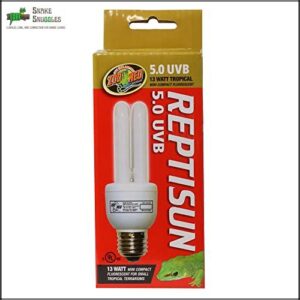
Your probes confirm incubation conditions, but lighting plays a different role. This 13-watt compact fluorescent fits threaded dome fixtures and provides 5 percent UVB plus UVA. It produces little heat, so it can’t replace a regulated heat source.
Eastern milk snake eggs should stay in a dark, stable container, and they don’t need UVB. Use the lamp only for tropical reptiles or amphibians, not as incubator lighting. Check output and fixture fit.
| Best For | Tropical reptile and amphibian keepers who need a compact 5.0 UVB bulb for a standard dome fixture, not snake egg incubation. |
|---|---|
| Product Type | UVB compact lamp |
| Power Source | AC power |
| Mounting Options | Vertical or horizontal |
| Intended Use | UV lighting |
| Species Supported | Reptiles, amphibians |
| Enclosure Type | Terrarium, enclosure |
| Additional Features |
|
- UVB-transmitting quartz glass supports vitamin D3 synthesis and reptile health.
- Compact 13-watt design works in many standard threaded dome fixtures.
- Can be positioned vertically or horizontally for flexible enclosure setup.
- Not appropriate for eastern milk snake egg incubation or other dark incubation setups.
- Produces little heat and requires a separate regulated heat source.
- Lifespan, brightness, fixture fit, and ignition reliability can vary between units.
Frequently Asked Questions (FAQs)
How many eggs does an eastern milk snake lay?
An eastern milk snake usually lays 2 to 17 eggs in one clutch, with about 10 being typical. Larger, well-fed females often produce more eggs, usually placing them in warm, moist sites during June or July.
What do eastern milk snakes eat?
Like a quiet barn guardian, eastern milk snakes eat mice and voles most often. They also take birds, eggs, lizards, amphibians, and small snakes. Young snakes favor smaller prey, while captive animals usually eat thawed rodents.
What is an eastern milk snake?
An eastern milk snake is a nonvenomous constrictor, Lampropeltis triangulum triangulum, found across eastern North America. It eats rodents and other small animals, helping limit pests around farms, fields, and buildings.
How long do eastern milk snakes live?
How long can they live? Wild eastern milk snakes commonly survive 12 to 16 years, though some reach
With proper care, captive snakes can live 15 to 20 years, and rare individuals exceed range.
When do milk snakes lay their eggs?
Milk snakes mate in spring, then females usually lay eggs in June and July. They select warm, humid sites such as rotting logs, leaf litter, boards, or spaces beneath rocks, often soon after emerging from hibernation.
Are eastern milk snakes good pets?
Yes, eastern milk snakes make good beginner pets. They’re calm, non-venomous, and manageable in size at 2 to 4 feet. With consistent handling and a stable routine, they adapt well to captivity.
How long does it take for milk snake eggs to hatch?
Just when summer heat peaks in June, incubation hits its stride too. 60 to 70 days is the typical window at ideal warmth, though cooler conditions near 24°C can push hatching closer to 90 days.
How many eggs do Eastern milk snakes lay?
Eastern milk snakes usually lay 2 to 17 eggs per clutch, with most clutches averaging around Larger females tend to produce bigger clutches, while smaller individuals often lay fewer eggs.
Can I feed my milk snake eggs?
Offering eggs to your milk snake is like handing a sprinter a heavy coat right before a race. It just slows things down. Stick to rodents, since eggs cause digestive stress and nutritional imbalances.
What do you need to know about milk snakes?
Milk snakes are nonvenomous constrictors found across much of the eastern U.S. They’re secretive, adaptable reptiles that thrive in fields, old buildings, and stone walls, feeding mainly on rodents.
Conclusion
Picture that tight cluster of cream-colored ovals hidden quietly beneath a rotting log, each shell holding a life not yet started.
With eastern milk snake eggs, all you need to know centers on three main things: temperature, moisture, and patience are what separate a healthy clutch from a failed one. Watch closely for firm, plump shells. Keep your humidity steady. Give hatchlings enough time after pipping. Small, consistent choices shape every outcome in the end.