This site is supported by our readers. We may earn a commission, at no cost to you, if you purchase through links.

Your ball python doesn’t know the car is moving. It only knows the world has started to shake, the temperature is drifting, and there’s no hide in sight. That’s often enough to trigger a stress response that slows digestion and sends a recent meal back up.
Most pet parents never see it coming, because snakes rarely show distress until something goes wrong. Yet a few small choices, made weeks before you leave, commonly decide whether the trip is calm or risky.
Here’s how to reduce snake stress while traveling, from the vet visit to the first hour after you arrive.
Table Of Contents
- Key Takeaways
- Prepare Your Snake for a Low-Stress Trip
- Set Up a Safe Snake Travel Carrier
- Maintain Species-Appropriate Temperatures Throughout Snake Travel
- Minimize Handling and Monitor Snake Travel Stress
- Help Your Snake Settle Safely After Arrival
- Frequently Asked Questions (FAQs)
- How to calm down a stressed snake?
- Are snakes out in 100 degree weather?
- What smell do snakes hate most?
- Can I leave my snake alone for a week?
- Can snakes get motion sickness during car rides?
- Is it safe to travel with a snake by plane?
- Should I leave my snake in the car unattended?
- How do I travel with a snake in winter?
- Can I bring multiple snakes in one carrier?
- Conclusion
Key Takeaways
- Feed your snake 3 to 7 days before you leave and book a vet checkup 2 to 4 weeks ahead, since stress slows digestion and raises the risk of regurgitation.
- Use a hard-sided, insulated carrier with locking latches and ventilation holes under 1/4 inch, and place your snake in a breathable cloth bag inside it so it can’t escape.
- Keep a warm side and a cool side in the carrier (around 88-92°F for ball pythons) with a thermostat-controlled heat source, and check two thermometers every 30 minutes, never leaving your snake in a parked car.
- Handle your snake as little as possible on the road, then give it a dark, quiet enclosure with familiar hides and leave it alone for 48 to 72 hours, calling your vet if you see regurgitation, lethargy, or weight loss.
Prepare Your Snake for a Low-Stress Trip
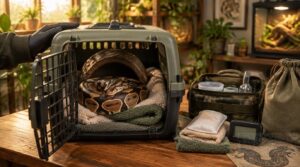
A calm trip starts well before you pack the carrier, and your preparation often matters more than anything you do on the road. Reptile vets commonly recommend two steps to plan ahead, and you’ll find them below. Let’s walk through each one so you know what to expect.
Since a smooth trip often begins with a smooth appointment, it helps to know what reptile health checkup procedures typically involve before you ever leave home.
Veterinary Checks and Pre-Travel Feeding
You’ll get the most from veterinary visit preparation by booking a checkup 2 to 4 weeks ahead, bringing a fresh stool sample, and recording your snake’s weight.
Plan fasting before transport: feed 3 to 7 days out, since stress often slows digestion and raises regurgitation risk.
Ask your vet about a secure container, temperature gradient maintenance, and escape prevention methods. Keep in mind that a warm and cool side temperature gradient is necessary for proper thermoregulation, so your snake’s travel setup should allow it to adjust its body temperature.
Planning Longer Trips and Required Documents
starts 2 to 3 weeks ahead. Check destination laws, since pet parents often face quarantine regulations or permit requirements.
For a step-by-step walkthrough of crate setup, temperature control, and handling during transit, see this guide on how to transport a pet snake safely.
- Book a USDA-accredited vet.
- Request a health certificate.
- Confirm permit requirements.
- Ask about quarantine regulations.
- Carry originals and copies.
Keep everything together, because border stations may hold pets lacking proper paperwork. You’ll thank yourself later.
Set Up a Safe Snake Travel Carrier
A secure carrier is the first thing that keeps your snake safe and calm on the road. As a reptile vet, I often see that the right setup comes down to two things: choosing the container and knowing what supplies to pack. Here’s what pet parents like you will want to look at, starting with the carrier itself.
For a closer look at keeping your pet secure and stress-free outside the house, this guide to taking a ball python out in public covers carrier choices and handling tips.
Choosing Secure, Ventilated Travel Containers
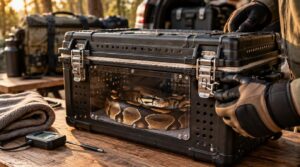
You might think any sturdy box will do, but snakes test every seam. A secure escapeproof container matters more than size or looks.
Choose a hardsided wellventilated carrier with screw-down or double-locking latches, and check them after each use. Container ventilation should be holes under 1/4 inch (6mm), placed on the sides or top. An insulated carrier helps too, since it steadies temperature.
Essential Travel Supplies and Budget
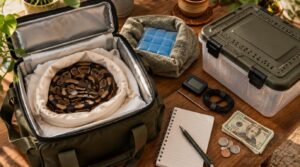
Once your secure escapeproof container is chosen, stock it with a few basics. Most pet parents spend roughly $40 to $90 in total.
Line the bottom with plain paper towels, and place your snake in a breathable cloth bag inside the insulated carrier. Add reptilesafe heat support, like a reusable phase-change pack, plus a digital probe thermometer for temperature control.
Maintain Species-Appropriate Temperatures Throughout Snake Travel
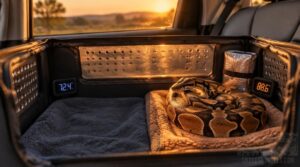
You can’t control the weather, but you can control your snake’s thermal regulation during travel. Reptile thermoregulation depends on outside heat, so your snake can’t warm or cool itself without help. Start with the preferred temperature zone for your species, which commonly runs 88-92°F for ball pythons. Then keep these habits going:
- Create temperature gradient zones by heating one side of the carrier only.
- Use a thermostat-controlled heat pad, never hand warmers.
- Place two digital thermometers, one warm and one cool.
- Pack an insulated backup heat source for power failures.
Temperature monitoring should be steady, so check readings every 30 minutes through a clear window.
If your snake turns lethargic or soaks excessively, adjust heat and call your vet.
Minimize Handling and Monitor Snake Travel Stress
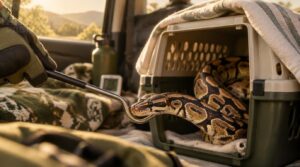
You can lower your snake’s stress by minimizing disturbance in transit, starting with how little you touch it. Use a snake hook or tongs to guide it into the carrier, approach slowly from the side or rear, and never reach from above. If you must lift your snake, support its full body instead of gripping the head. These handling minimization techniques commonly make a real difference.
Cover the carrier with a breathable cloth and keep the car quiet. Stress reduction in captive snakes also means watching. Hissing, striking, constant hiding, pacing, or nose rubbing often signal trouble. Posttravel recovery monitoring matters too: regurgitation, lethargy, food refusal, or odd shedding deserve a call to your vet. Keep a quiet enclosure postarrival.
Help Your Snake Settle Safely After Arrival

Think of arrival day like a jet-lagged traveler checking into a hotel: your snake needs a dark, quiet room before anything else.
Arrival day is like checking into a hotel after a long trip: your snake needs a dark, quiet room first
Before you unpack, finish a quiet enclosure postarrival with familiar hides and fresh water. Insulated outer container use and humidity control in transit likely kept things steady, so match those conditions at home.
Here’s what to do, pet parents:
- Leave your snake alone for 48 to 72 hours; no handling or feeding.
- Check surface temperatures with a probe thermometer, not air readings.
- Do your substrate replacement planning, changing it only after your snake settles.
Use posttravel recovery monitoring: clear eyes, quiet breathing, normal exploring. Refusing food for two weeks is common, but call your vet if weight drops.
Frequently Asked Questions (FAQs)
How to calm down a stressed snake?
Picture a ball python hissing in a hot car. For stress reduction, move it to a secure container, dim the light, and use temperature control.
Watch stress signs; book a vet checkup if they persist.
Are snakes out in 100 degree weather?
Are snakes out in 100°F heat? Rarely, pet parents. They usually shelter until dusk to avoid serious temperature injury.
Watch for overheating signs, use a secure ventilated container, ambient car temperature control, and thermostat-monitored heating.
What smell do snakes hate most?
Smoke is the smell snakes dislike most, since they commonly link it with fire. Pungent garlic, vinegar, and citrus come close. Keep these away from your carrier, pet parents, to prevent musking and defensive striking.
Can I leave my snake alone for a week?
A closed door is a promise, and your snake trusts yours. Most healthy adults handle a week alone, since fasting is normal, but have someone check water, enclosure temperature monitoring, and heating every few days.
Can snakes get motion sickness during car rides?
Most pet snakes stay comfortable near 75 to 85°F, so heat beats motion sickness during car rides, which snakes don’t get. A secure plastic tub, temperature control, and hydration assessment aid stress reduction in reptiles.
Is it safe to travel with a snake by plane?
Think of a flight as a sealed, noisy train station for a creature that prefers quiet. It can be done, but only through airline cargo, never the cabin. With escapeproof containers, steady temperature control, and a vet certificate, snake travel stress stays manageable.
Should I leave my snake in the car unattended?
Even a quick errand is risky: 85°F outside becomes 104°F inside within 10 minutes. During car travel, don’t leave your snake in its carrier alone. Bring someone, keep temperature control steady, or go home first.
How do I travel with a snake in winter?
Wondering how to keep your snake safe in the cold? Plan cool-weather trips around temperature control: use an insulated cooler, add thermostat-monitored heating, and keep the enclosure stable during the move.
Can I bring multiple snakes in one carrier?
No, pet parents shouldn’t. Snakes are solitary, so sharing a bag often triggers stress or injury. Give each snake its own secure inner bag inside one escape-proof box, with small ventilation holes and stable positioning.
Conclusion
What does a calm trip really look like for a snake? Mostly, it looks like nothing happened. That’s the goal when you learn how to reduce snake stress while traveling: a secure carrier, steady warmth, minimal handling, and a quiet room waiting at the other end.
Pet parents who plan ahead commonly find the journey is the easy part. Give your snake time to settle, and watch for appetite and behavior over the following week.