This site is supported by our readers. We may earn a commission, at no cost to you, if you purchase through links.

You reach into the enclosure, and your ball python deposits something warm, oily, and absolutely foul onto your hand. Congratulations, you’ve just been musked.
Snakes musk as a hardwired survival reflex, firing off a sulfur-heavy secretion from glands near their tail base the moment they feel cornered, chased, or handled too aggressively. It’s their way of telling a predator, "I’m more trouble than I’m worth." Understanding why snakes musk, and what actually triggers it, helps you handle your snake more confidently and cut down on those unpleasant surprises.
Table Of Contents
Key Takeaways
- Snakes musk involuntarily — it’s a hardwired stress reflex triggered by handling, cornering, or sudden movement, not a sign of aggression toward you personally.
- The secretion comes from cloacal glands near the tail and contains sulfur compounds that hit fast and an oily residue that lingers for days, so wash with soap and warm water immediately (skip the hand sanitizer).
- Musking isn’t purely defensive — snakes also use the same glands to broadcast pheromone signals during courtship and to mark territory, making it a surprisingly sophisticated chemical communication system.
- You can dramatically reduce musking incidents by keeping handling sessions short, moving slowly, giving new snakes several acclimation days, and providing a low-stress enclosure with adequate hides.
What is Snake Musk, and Where Does It Come From?
The foul surprise your snake just deposited on your arm has a name: snake musk. It’s a semi-solid, oily secretion produced by cloacal glands tucked just behind the cloaca, near the tail base. Think of them as scent grenades your snake carries everywhere it goes.
These glands—and exactly why snake musk smells so repulsive—are worth understanding before your next handling session.
The musk composition is genuinely interesting. It’s packed with volatile sulfur compounds and fatty acid esters, chemicals that hit the air hard and fade within hours. The oily musk secretion itself is another story. It dries into a waxy residue that clings to skin and surfaces for days.
These musk glands near the tail aren’t purely defensive, either. In many colubrid species, the same glands also produce pheromonal compounds, giving them a dual communicative role.
Why Do Snakes Musk When They Feel Threatened?

So those scent grenades exist for a reason. Musking is a defensive mechanism wired into your snake’s nervous system, triggered automatically when its brain registers danger. It’s not a choice; it’s a pure threat response.
Understanding why snakes musk and how their nervous system triggers it can help you respond calmly instead of reinforcing the fear cycle.
When a snake feels cornered, grabbed, or startled by enclosure vibrations, its stress levels spike fast. That spike pushes the cloacal glands to fire off a musk secretion like a chemical alarm, a short-range signal saying "I’m not worth eating." A coiled posture and rapid head movement usually mean a musk event is seconds away.
This predator deterrent strategy works because the smell is genuinely awful. Handling aggression and recent feeding can both increase the response, making even gentle post-meal contact a risky move.
Does Snake Musk Have a Role Beyond Defense?

Defense isn’t the whole story. Musk pulls double duty in ways that’ll genuinely surprise you.
Chemical signaling beyond threat response plays a real role during courtship. Some species release musk alongside pheromone communication blends during breeding season, conveying reproductive status or male quality to potential mates. It’s a biological resume, delivered chemically.
During breeding season, snakes chemically broadcast their reproductive résumé through musk-blended pheromone signals
Musk also functions in conspecific spacing and territorial marking, helping snakes advertise their presence in shared den sites without direct confrontation. Less fighting, more chemistry. Quite clever.
This chemical "keep-away" system is part of why so many snakes on the non-aggressive species that rarely escalate beyond scent signaling can share territory with surprisingly little conflict.
Composition even shifts after molting, hinting at reproductive behavior status cues linked to life cycle stage. In den environments, musk residues may also suppress microbial growth on the substrate, adding a hygiene function nobody asked for but everyone benefits from.
Which Snakes Musk, and What Triggers Them?
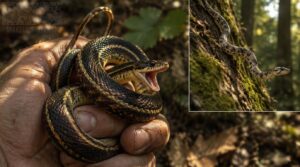
All that chemical sophistication still comes down to one simple question: which snakes musk, and what triggers them? Garter snakes and water snakes top the list, musking almost reflexively the moment you pick them up. Rat snakes aren’t far behind, especially juveniles who treat every hand like a predator.
Triggers tend to cluster around three predictable scenarios:
- Physical handling or restraint, even brief contact with nervous individuals
- Cornering or prolonged chasing, which rapidly spikes stress hormones
- Nest or territory defense, especially in wild-caught animals
King snakes and rattlesnakes musk readily under pressure too. Small enclosures intensify the response, since confined snakes hit their stress threshold much faster. Prior handling experience does help, though, and well-socialized snakes musk far less often.
How Can You Reduce Musking and Remove The Smell?

The good news: musking is manageable. A calmer snake in a well-set-up enclosure will reach for the stink bomb far less often. Here’s what to address first, and how to clean up when musk happens anyway.
Reducing Handling and Habitat Stress
Less stress means less musk. Keep handling sessions under 90 seconds and use soft, minimal-contact restraint; grabbing firmly triggers an immediate stress response, ramping up gland output fast.
Give a new snake several acclimation days, good hides, and enrichment before any routine checks. Reduce enclosure foot traffic and noise too. A calmer environment means far fewer aromatic surprises for everyone.
Cleaning Musk From Skin and Surfaces
Wash your hands immediately with soap and warm water. Alcohol-based sanitizers won’t cut it for musk removal, so skip the shortcut.
For stubborn odor elimination on skin, try diluted white vinegar as a rinse, then re-wash.
On fabric, a paste of baking soda and water absorbs lingering smell before washing.
Always wear gloves when scrubbing gear to avoid skin irritation.
Frequently Asked Questions (FAQs)
How to stop a snake from musking?
Keep sessions under 30 seconds, move slowly, and always support the body. Calm handling technique drops stress levels so the musk glands don’t fire that defensive mechanism. Fewer triggers means much easier musk removal too.
What smell do snakes hate most?
Snakes loathe sharp ammonia scents and pungent aromatics like cinnamon or clove oil. These powerful olfactory deterrents mimic chemical alarm cues, triggering predator avoidance instincts. Anything that overwhelms their sensitive chemoreceptors sends them retreating fast.
What does it mean if a snake musks you?
Getting musked means you’ve triggered a threat response. Those cloacal glands just released a foul-smelling liquid, which is nature’s best predator deterrent. It’s purely defensive, not personal. Improve your handling technique and it stops fast.
How to get rid of snake musk?
That oily musk secretion is your snake’s distress flag. For skin, soap and warm water handle musk removal fast. Hard surfaces need a 1:1 vinegar-water wipe for quick musk neutralization. Rewash fabrics twice; ventilate well.
Why do Snakes release musk?
Around 3,500 snake species exist worldwide, and most non-venomous ones readily rely on stress-induced secretion over biting. Cornered snakes activate cloacal glands near the tail, releasing a potent predator deterrent as their first threat response.
What does snake musk smell like?
Ever smelled rotten fish crossed with a skunk? Snake musk is an oily secretion, a foul-smelling liquid dense with sulfur compounds and volatile organic compounds, with intense stench persistence that clings stubbornly to your skin.
Why do snakes eat musk?
Picture a corn snake coating your hand in musk secretion the moment you pick it up. That’s musk in action, not on the menu. Snakes produce it through their musk glands. They don’t eat it.
Do snakes musk?
Yes, snakes absolutely do musk. Colubrids represent over 1,700 known species, and the vast majority use cloacal musk glands to squirt a foul, milky secretion when stressed or handled. Think skunk spray, but way oilier.
What is Rattlesnake musk?
Smelled something truly awful near a rattlesnake? That’s rattlesnake musk, a foul defensive secretion from musk glands near the tail. Its musk composition blends sulfur compounds and fatty acids, producing that sharp, skunk-like rotten smell.
Why does a snake musk fart?
One new handler once mistook this for gas. It definitely wasn’t. When threatened, snakes squeeze musk secretion from their cloacal glands, releasing a foul, oily chemical smell purely designed to repel predators and escape danger.
Conclusion
Picture a brand-new keeper, hand trembling after their first musking, ready to give up entirely. A little context changes everything.
Snakes musk because survival demands it, not because they hate you. Once you understand why do snakes musk, you can spot the triggers, adjust your approach, and earn your snake’s trust over time. Patience and consistency cut musking incidents dramatically. Stick with it, and those foul surprises become genuinely rare.