This site is supported by our readers. We may earn a commission, at no cost to you, if you purchase through links.

Ball pythons refuse meals for reasons most keepers never consider, and a snake that won’t eat is almost always telling you something specific about its environment, not its appetite. Get the prey size wrong by even one size grade, or let the enclosure cool a few degrees below range, and your snake will turn away from every offering.
Feeding a ball python correctly means matching prey to body weight, warming food to the right temperature, and giving your snake undisturbed time to digest. This guide walks you through every step, from choosing prey to recognizing when a vet visit is necessary.
Table Of Contents
- Key Takeaways
- What Ball Pythons Eat: Safe Prey Options and Frozen-Thawed Benefits
- How to Choose The Right Prey Size for a Ball Python
- How Often to Feed a Ball Python by Age, Weight, and Body Condition
- How to Feed a Ball Python Safely: Step-by-Step Method
- Troubleshooting Food Refusal, Regurgitation, and Veterinary Warning Signs
- Frequently Asked Questions (FAQs)
- How often should ball pythons be fed?
- How long can a ball python go without feeding?
- What is the best thing to feed a ball python?
- How to feed a ball python for beginners?
- Can a ball python go 2 weeks without food?
- Should I feed my ball python during the day or at night?
- How much should I feed my ball python?
- Should you feed your ball python in its cage?
- How do I feed my ball python for the first time?
- Is it better to feed ball pythons at night or day?
- Conclusion
Key Takeaways
- Prey size matters more than prey type — match the thickest point of the rodent to your snake’s midbody girth to prevent regurgitation and refusal.
- Your feeding frequency should shift with your snake’s age: every 5–7 days for hatchlings, 7–10 days for juveniles, and 14–21 days for adults.
- Always warm frozen-thawed prey to 98–105°F using warm water, never a microwave, and confirm your enclosure’s hot spot reads 88–92°F before every feeding.
- A single regurgitation usually signals a husbandry issue you can fix, but repeated regurgitation, open-mouth breathing, or persistent weight loss means it’s time to see a reptile vet.
What Ball Pythons Eat: Safe Prey Options and Frozen-Thawed Benefits

Ball pythons are obligate carnivores, and in captivity, their diet comes down to a short list of appropriate prey options. What you feed your snake, and how you prepare it, directly affects their health and willingness to eat. The options below cover every prey type you’ll realistically use.
For a deeper dive into prey selection and preparation strategies, ball python feeding tips and best practices can help you troubleshoot picky eaters and build a reliable routine.
Mice
The mouse is the most practical starting prey for a young ball python’s diet. They’re widely available from reputable suppliers and come in graduated sizes:
- Pinkies for newly hatched snakes
- Fuzzies for juveniles under 200g
- Adults for snakes approaching 300g
- Thawed and warmed mice are always preferred
Getting the prey size right keeps your feeding frequency stable and prevents regurgitation.
Rats
As your ball python grows past 300g, rats become the standard prey item. They’re more calorie-dense than mice, so your feeding frequency can drop slightly without compromising nutrition.
Frozen-thawed rats come in sizes from rat pinkies to large adults, making prey selection straightforward at every stage. Match the rat’s girth to your snake’s widest body point for safe, comfortable feeding.
And ASFs
ASFs are a lesser-known but valuable third option in your ball python diet. They’re higher in fat than mice of equal weight, so adjust your feeding schedule by age and body condition accordingly.
For a deeper look at how ASFs compare nutritionally to mice and rats, ball python food options and feeding tips can help you decide what works best for your snake’s size and life stage.
- Source ASFs from reputable breeders only
- Quarantine new batches before feeding
- Practice strict hygiene after every handling
- Rotate with mice or rats regularly to balance gut flora
Proper Prey Sizing
Regardless of which prey type fits your ball python diet, sizing matters more than weight. The prey size ratio rule is simple: the prey’s thickest point shouldn’t exceed your snake’s midbody diameter, which keeps swallowing manageable and reduces regurgitation risk.
As your snake’s growth rate climbs, step up prey size gradually. Your prey selection should reflect current girth, not age.
Frozen-Thawed Feeding Benefits
For most keepers, frozen-thawed rodents are the safest and most practical choice for responsible snake husbandry. They eliminate the risk of prey biting or scratching your snake during a meal, which can cause serious facial injuries over time.
They’re also nutritionally consistent and easy to source in bulk, letting you maintain your feeding frequency without scrambling for same-day live prey.
Safe Thawing And Warming
Because a frozen middle increases regurgitation risk, the thawing process needs to reach all the way through. Refrigerator thawing overnight is the most controlled option, though cold water in a sealed bag works faster. For the cold water method, keeping prey fully submerged in a reptile prey thawing bag prevents waterlogging and speeds up even thawing.
Warm your frozen-thawed prey to a prey temperature of around 30-40°C before feeding. Microwaving creates hot spots, so don’t use it. Once it’s warmed, feed promptly.
How to Choose The Right Prey Size for a Ball Python
Choosing the right prey size is one of the most important skills you’ll develop as a ball python keeper. Get it wrong, and you risk regurgitation, stress, or a snake that simply refuses to eat.
Prey size is the one feeding decision that can make or break your ball python’s health
The three rules below—weight-to-body ratios, life stage sizing, and when to switch from mice to rats—give you everything you need to feed with confidence.
Weight and Girth Rules
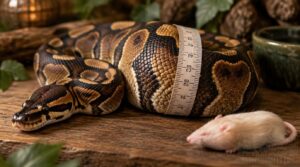
Weight alone doesn’t tell the whole story. Two ball pythons at the same body weight can have very different girths based on snake body condition, so prey size ratio matters more than the scale alone.
Measure your snake’s midbody circumference at its thickest point. Prey girth should stay close to that measurement. This keeps expansion comfortable and aids smooth digestion.
Sizes by Life Stage

A hatchling ball python is barely thicker than your thumb, and prey size should match that scale. Start at 70–100% of midbody girth and feed every 5–7 days. A hatchling ball python starter kit can simplify this early stage by bundling an appropriately sized enclosure with essential hides and heat sources.
Your ball python feeding schedule by age shifts as your snake grows. The juvenile phase calls for 1.0–1.25 times girth. Adult ball pythons settle into 0.9–1.2 times girth, offered every 14–21 days.
Switching Mice to Rats

Rats have more body mass than mice, so matching prey size is critical. Choose a rat that weighs close to your snake’s last accepted mouse to avoid snake feeding problems like feeding refusal or regurgitation.
- Match rat mass to the last mouse
- Use scent transfer during the prey switch
- Keep your normal feeding schedule
- Warm frozenthawed rodents fully before offering
How Often to Feed a Ball Python by Age, Weight, and Body Condition

Getting the ball python feeding schedule right is less about a rigid calendar and more about reading your snake.
- Hatchlings (0-3 months) eat every 5-7 days to fuel rapid early growth.
- Juveniles (3-12 months) shift to every 7-10 days as their metabolism stabilizes.
- Adults (3+ years) only need a meal every 14-21 days to avoid obesity.
Weight matters just as much as age. You’ll want prey size to equal 10-15% of body weight, and snakes over 1,500 grams can stretch their feeding frequency to once every four to six weeks.
Check body condition regularly. A healthy snake has a gentle spinal ridge with rounded sides, not a round sausage shape. Visible fat rolls near the tail mean you’re overfeeding your snake. Moving snakes from mice to rats should happen around 200 to 300 grams, and tracking every feed and refusal helps you follow a reliable ball python feeding schedule by age suited to your snake’s individual needs.
How to Feed a Ball Python Safely: Step-by-Step Method

The actual feeding process comes down to four steps, and getting each one right makes the difference between a clean meal and a stressful refusal. Technique, timing, and temperature all matter here. Follow these steps every time to build a reliable routine your snake can count on.
Thaw and Warm Prey
Prey temperature is what triggers your ball python to strike. Refrigerate frozen-thawed prey overnight, then submerge the sealed bag in warm water for 30 to 60 minutes. Never microwave it; uneven hot spots can burn your snake’s mouth.
Once it’s fully thawed, move it to hotter tap water, targeting 98 to 105°F. Pat dry, then present it with feeding tongs.
Check Enclosure Temperatures
Before you offer that warmed prey, check your enclosure temperatures directly with a digital thermometer. Your basking spot should read 88 to 92°F; the cool side, 76 to 80°F.
Your snake’s thermoregulation depends on this gradient being stable, not just set on the thermostat. If you’ve recently opened the enclosure or disturbed the substrate, give it time to restabilize first.
Present Prey With Tongs
With temperatures confirmed, pick up the warmed prey with feeding tongs and position it just in front of your snake’s snout. Keep it steady at face height, aligned with the snake’s head, so it can strike cleanly without hunting.
Once it bites, release the tongs and let the snake take over. Pulling back at that point risks a failed capture.
Allow Post-Meal Rest
Once your snake has secured its meal, close the enclosure and leave it alone. Post-meal disturbance elevates snake stress and can interrupt the digestive tract before it’s had time to settle. Even well-meaning handling at this point raises the risk of regurgitation.
Wait at least 48 hours before any further interaction. Snake digestion runs on warmth and calm, not speed.
Troubleshooting Food Refusal, Regurgitation, and Veterinary Warning Signs
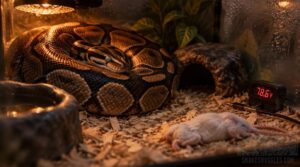
Food refusal is rarely random. Ball pythons most often skip meals because of low enclosure temperatures, recent handling, or a change in prey scent. Start by checking your hot spot and warm side before assuming illness.
If your python regurgitates, wait at least two weeks before offering food again. Rushing the next meal risks repeat regurgitation and gastric stasis, which puts stress on digestion. Keep handling minimal and enclosure temperatures stable during recovery.
One regurgitation can be a husbandry fix. Multiple events, however, need attention. Contact a reptile-experienced vet if you notice open-mouth breathing, mucus, persistent weight loss, or unusual lethargy. These are warning signs that snake stress alone doesn’t explain, and veterinary reptile care is the right next step.
Frequently Asked Questions (FAQs)
How often should ball pythons be fed?
Like clockwork, your ball python’s feeding frequency shifts as it grows. Hatchlings need food every 5–7 days, juveniles every 7–10 days, and adults don’t eat more than every 10–21 days as their growth rate slows.
How long can a ball python go without feeding?
Ball pythons can seemingly go months without a single meal, but that’s never truly safe. A healthy adult goes 4–6 weeks. Juveniles and thin snakes have far less tolerance, so track weight and respond quickly.
What is the best thing to feed a ball python?
Whole frozen-thawed rodents are your most reliable prey option overall. Mice work for juveniles, but you’ll want to switch to rats as your snake grows. Match prey size to its girth for safe, consistent feeding.
How to feed a ball python for beginners?
Start with frozen-thawed prey sized to match your snake’s girth, warm it thoroughly, and offer it with tongs. A reliable ball python feeding schedule runs every 5–14 days, adjusted by your snake’s age and condition.
Can a ball python go 2 weeks without food?
Two weeks without food? Yes, a ball python fasting period of that length is often normal, especially for adults. Juveniles have less reserve, so stick to your ball python feeding schedule by age more closely.
Should I feed my ball python during the day or at night?
Why does your snake consistently ignore food all day? Ball pythons are naturally nocturnal, so snake appetite and snake behavior both peak at night. Timing your feeding schedule to that feeding environment actually helps.
How much should I feed my ball python?
You could spend hours perfecting your python’s enclosure setup, but get meal sizing wrong and none of it matters. Feed prey at 10–15% of body weight per meal, so a 400g snake needs roughly 40–60g.
Should you feed your ball python in its cage?
You’ll want to feed your ball python inside its enclosure. The familiar environment and consistent heat give it the comfort and thermal support it needs to eat calmly, which lowers the chance of food refusal.
How do I feed my ball python for the first time?
Your first feeding will feel awkward, and that’s completely fine. Focus on the feeding process: warm your prey to 98°F, use long tongs for clean prey presentation, stay quiet, and let your ball python lead.
Is it better to feed ball pythons at night or day?
Night wins. Most captive ball pythons are nocturnal, and experienced keepers consistently report higher meal acceptance after dark. Feeding your ball python during this window reduces stress and builds a more predictable, successful feeding schedule.
Conclusion
A first-time keeper once panicked after three consecutive refusals, only to discover her enclosure had dipped four degrees below the warm side minimum. The simple fix took ten minutes.
Feeding a ball python correctly is mostly about controlling the variables you can measure: prey weight, surface temperatures, and post-meal rest. Get those right, and your snake will eat reliably. Stay consistent, pay close attention to what your snake shows you, and most problems solve themselves.