This site is supported by our readers. We may earn a commission, at no cost to you, if you purchase through links.
The wrong enclosure material won’t just frustrate you—it can quietly stress or harm your snake over months before you notice anything’s wrong.
A ball python sitting on a substrate that won’t hold humidity, or a boa slowly losing heat through thin glass walls, isn’t thriving; it’s compensating.
Material choice drives temperature stability, humidity retention, structural durability, and long-term safety in ways that no heat lamp or thermostat can fully correct. Knowing which recommended snake enclosure materials match your species, budget, and setup style makes the difference between a habitat that works and one you’re constantly fighting.
Table Of Contents
- Key Takeaways
- Best Snake Enclosure Materials
- PVC Enclosures for Heat Retention
- Glass Terrariums for Visibility
- Wood and Plywood Enclosures
- Melamine and Hybrid Builds
- Acrylic and Plastic Options
- Moisture-Resistant Sealants and Liners
- Safe Ventilation and Airflow
- Material Safety, Toxicity, and Edges
- Top 3 Snake Enclosure Accessories
- Frequently Asked Questions (FAQs)
- Where do snakes go in October?
- Is glass or PVC better for reptile enclosures?
- What is the best material for a snake enclosure?
- Is PVC better than glass for snake enclosures?
- What should I put in my snakes enclosure?
- Is wood or PVC better for reptile enclosures?
- How to choose a snake enclosure?
- What is the best substrate for a snake enclosure?
- How big is a DIY snake enclosure?
- What is the best material for a reptile enclosure?
- Conclusion
Key Takeaways
- PVC panels are your strongest all-around choice for snake enclosures because non-porous, foam-core construction holds heat and humidity better than glass or basic wood ever will.
- Glass works well for smaller species and close monitoring, but its poor insulation means you’ll constantly fight heat loss unless you pair it with strong supplemental heating.
- Whatever material you build with, sealing every joint and edge with aquarium-grade silicone or reptile-safe epoxy isn’t optional—moisture will find the gaps and quietly destroy your setup from the inside.
- Match your material to your snake’s actual adult size and climate needs first, then worry about aesthetics, because a habitat that can’t hold the right temperature or humidity is working against your animal no matter how good it looks.
Best Snake Enclosure Materials
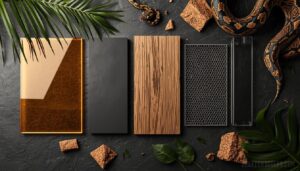
Picking the right material for your snake’s enclosure matters more than most keepers realize, since the wrong choice can affect humidity, temperature, and long-term safety. Each option on this list comes with its own strengths depending on your snake’s size, species, and the environment you’re trying to recreate.
For a deeper look at how these choices come together, safe pet snake enclosure design tips can help you match materials to your snake’s specific needs.
Here’s a breakdown of the five materials worth your attention.
PVC Panels for Humid Setups
PVC panels are your best bet for humid setups because their 100% vinyl composition delivers true Dimensional Stability, holding shape through daily humidity swings up to 90%.
Their Smooth Joint Design, sealed with aquarium-grade silicone sealants — a non-toxic sealant option — creates a watertight barrier that’s both Mold Resistant and easy to wipe clean.
Lightweight Structural Integrity makes DIY Installation Ease a genuine advantage here.
They also provide inherent humidity control for consistent interior conditions.
Tempered Glass for Clear Viewing
Where PVC excels at locking in humidity, tempered glass earns its place by giving you full visibility with zero optical distortion — a genuine advantage when you’re monitoring subtle behavioral changes.
- Safety Edge Design prevents injury during cleaning
- Anti-Reflective Coating sharpens observation clarity
- UV Protection safeguards snake and decor
- Cleaning Techniques stay simple with non-abrasive cloths
- Retain heat better using gasket-sealed frames
Marine-grade Plywood for Custom Builds
Marine-grade plywood opens the door to truly custom wood enclosures that glass and PVC simply can’t match in scale or shape.
Its cross-laminated hardwood veneers, bonded with phenolic resin, deliver excellent fastener compatibility and weight optimization across modular design layouts.
Seal every edge with reptile-safe, low-VOC coatings — edge banding protects cut surfaces — and choose smooth surface finishes to eliminate material toxicity and reptile health implications entirely.
Melamine-coated Boards for Budget Cages
If marine-grade plywood feels like overkill for your budget, melamine-coated particle board hits a practical sweet spot. Its core density impact directly affects screw-holding strength, so choose higher-density boards for DIY panel assembly.
Edge banding techniques seal exposed cuts — cost-effective sealing that blocks moisture. The scratch resistance levels hold up well, and paired with a nontoxic sealant, material toxicity isn’t a concern.
Food-grade HDPE and PP for Lightweight Enclosures
When portability matters most, food‑grade plastic containers built from high‑density polyethylene HDPE or polypropylene PP are hard to beat. Both materials weigh under one gram per cubic centimeter, so their low‑density weight keeps even larger enclosures manageable solo.
Their non‑porous surface resists moisture and facilitates easy cleaning, chemical resistance manages common disinfectants without degradation, DIY machining is straightforward with standard tools, and edge trimming safety is simple with smooth finishing trim — nontoxic materials with zero material toxicity and reptile health implications to worry about.
PVC Enclosures for Heat Retention
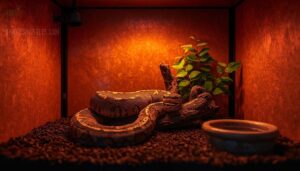
PVC enclosures have earned a strong reputation among reptile keepers for one simple reason — they hold heat exceptionally well.
If you’re housing a large snake that needs steady, stable temperatures around the clock, PVC is worth understanding inside and out. Here’s a closer look at what makes it stand out.
Superior Insulation for Stable Temperatures
Think of PVC as a thermal barrier layer wrapped around your snake’s world—its low conductivity inserts heat loss from the equation almost entirely. Foam-core PVC panels deliver genuine R-value enhancement and insulation cavity design that glass simply can’t match, maintaining thermal mass between heating cycles.
That temperature stability isn’t accidental; it’s the material working exactly as intended.
Best Choice for Large Snakes
Large snakes—think ball pythons pushing six feet or red‑tails that never seem to stop growing—need enclosures that can actually keep up with them structurally and thermally. PVC delivers on both fronts, combining weight bearing capacity with serious thermal mass, so your heating investment isn’t constantly fighting the walls themselves.
- Modular Frame Systems let you expand enclosure footprint without rebuilding from scratch
- Reinforced Corner Brackets maintain structural integrity even under the push of a powerful constrictor
- Adjustable Size Adjustments accommodate growth from juvenile to full adult without a complete rebuild
- Long-term UV Resistance keeps panels stable under overhead basking lamps for years
- Reptile-safe epoxy coatings and moisture resistance protect interior surfaces through countless cleaning cycles
Weight Distribution across PVC panels stays manageable even at room‑scale dimensions, which matters when you’re hauling a 200‑pound setup.
Humidity Control in Tropical Habitats
PVC’s non-porous walls make Humidity Zoning Techniques genuinely manageable—you’re not fighting the material itself.
Pair Substrate Moisture Layering (coconut fiber beneath a dry top layer) with Automated Fogging Controls, and RH stays locked between 65–85% without constant intervention.
A Sensor Redundancy Strategy using dual hygrometers prevents blind spots.
| Humidity Control Strategy | Practical Benefit |
|---|---|
| Misting Schedule Optimization | Prevents surface soaking while sustaining moisture |
| Substrate Moisture Layering | Stabilizes humidity through slow evaporation |
| Humidity Zoning Techniques | Maps microclimates across basking and ground levels |
| Automated Fogging Controls | Maintains consistent RH without manual misting |
| Sensor Redundancy Strategy | Catches fluctuations across larger enclosures reliably |
Heat Lamp Efficiency and Energy Savings
Because PVC’s thermal insulation does most of the heavy lifting, your heat lamp doesn’t have to work nearly as hard. Reflective Surfaces inside the enclosure direct radiant output exactly where it’s needed, while Smart Thermostats cut power the moment basking temps are reached.
Four strategies that boost energy efficiency:
- Use LED Heat Lamps for lower draw
- Apply Zoned Heating to warm only active areas
- Set Timed Operation via smart plugs
- Rely on thermal mass and heat retention to sustain warmth between cycles
Durability and Low-maintenance Cleaning
Mold-Resistant Panels and Easy-Wipe Surfaces make PVC genuinely low-effort to maintain — a nonporous surface means substrate stains, waste residue, and moisture wipe away with mild soap or a reptile cleaning solution in seconds.
Anti-Microbial Treatments and Self-Cleaning Finishes resist bacterial buildup between deeper cleans, while Scratch-Resistant Surfaces preserve structural strength across years of maintenance cleaning without degrading.
Glass Terrariums for Visibility
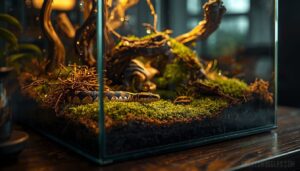
Glass terrariums have a lot going for them, especially if you’re keeping smaller snake species and want a clear view of what’s happening inside.
They’re not perfect for every setup, but knowing where they shine—and where they fall short—helps you make a smarter call.
Here’s what you need to think about before going with glass.
Best for Smaller Snake Species
Glass terrariums genuinely shine for smaller snake species — corn snakes, hognoses, and Kenyan sand boas thrive in setups built around species-specific enclosure requirements. Here’s why compact glass works so well for these animals:
- A compact footprint and low profile fit tight shelving without sacrificing habitat quality.
- Easy access lids simplify feeding and spot-cleaning.
- Airflow channels maintain fresh circulation without destabilizing temperature gradients.
Clear Viewing for Easy Monitoring
Once you’ve got your snake comfortably settled, a glass enclosure earns its keep by letting you actually see what’s going on.
Tempered glass fronts — especially with low-reflective glass or anti-glare coatings — transmit around 92% of available light, so you can spot behavioral cues, monitor a temperature gauge, and check shedding without guessing.
| Feature | Benefit |
|---|---|
| Sliding glass front | Easy access, unobstructed sightlines |
| Adjustable viewing angles | Full habitat inspection from any position |
Modular panel swaps, integrated camera ports, and acrylic enclosure inserts add long-term flexibility without sacrificing clarity.
Heat Loss and Insulation Limits
That clarity comes with a real trade-off, though — glass has a low R-value and poor thermal retention, meaning heat escapes quickly through walls with high heat conductivity.
Thermal bridging at corner joints worsens this, creating cold spots even with good heating. Watch for:
- Condensation signaling vapor diffusion issues
- Rapid overnight temperature drops from minimal thermal mass
- Reduced radiant barrier effectiveness without insulation backing
Pairing Glass With Strong Heating
To counteract heat losses, you’ll want a heating system that works with glass’s limitations rather than against them. Borosilicate glass withstands repeated heating cycles without cracking, and low expansion glass minimizes thermal stress across your temperature gradient.
Radiant heating integration beneath the enclosure distributes warmth evenly, while ceramic glass tolerance accommodates higher output elements.
Finish joints with a heat-resistant silicone seal, and your glass terrarium becomes a genuinely stable, reptile-safe setup.
When Glass Makes Sense Over PVC
When your snake is under 6 feet and your priority is Stress-Free Monitoring, tempered glass genuinely outperforms PVC panels.
Its near-perfect clarity facilitates an Easy Cleaning Routine, and the non-porous surface resists biofilm buildup far better than many glass versus plastic enclosures for reptiles, comparisons suggest.
Premium Aesthetic Appeal, Uniform Heat Distribution with a quality mat, and minimal material toxicity and reptile health implications make tempered glass a smart, safety-conscious choice.
Wood and Plywood Enclosures
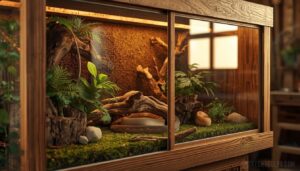
Wood and plywood enclosures have been a go-to choice for reptile keepers who want full control over size, layout, and aesthetics. They’re especially popular for medium to large snakes, where off-the-shelf options just don’t cut it.
Here’s what you need to know before building or buying one.
Marine-grade Plywood for Stronger Builds
Marine-grade or exterior-grade plywood earns its reputation through veneer density and phenolic adhesive bonding, which together create dimensional stability that cheaper boards simply can’t match.
That strength-to-weight ratio matters enormously for large snakes—your enclosure stays rigid without becoming impossible to move.
Proper sealants and careful edge sealing protect structural integrity long-term, making this material a genuinely durable foundation for serious custom builds.
Natural Look and Habitat Customization
Wood’s biggest advantage isn’t just structural—it’s aesthetic.
Organic texture integration happens naturally with plywood as a base, letting you layer cork bark accents, driftwood structures, and substrate layering design that genuinely mirrors your snake’s native environment.
Live plant placement adds depth without compromising reptile-safe materials standards, and the visual result—earthy, asymmetrical, alive—transforms a plain wood plywood cage into a custom snake habitat built for real habitat enrichment.
Moderate Insulation for Stable Temps
Plywood won’t win any awards for R-value optimization, but its moderate insulation properties — generally R3 to R6 for walls — reduce heat transfer by 25 to 40 percent compared to uninsulated setups.
Reflective barrier layers and ensuring vapor barrier sealing at seams helps maintain a reliable temperature gradient across your enclosure, keeps thermal bridge mitigation in check, and improves overall thermal retention without over-engineering the build.
Sealing Wood Against Moisture Damage
Sealing is your first line of defense — skip it, and even marine‑grade plywood will absorb moisture, warp, and harbor mold within months.
Start with Surface Moisture Testing to confirm wood stays below 15 percent moisture content, then apply Primer Compatibility checks before using reptile‑safe epoxy coatings or silicone sealant.
Proper Sealant Application Techniques, Edge Joint Reinforcement, and Reapplication Scheduling every one to three years maintain lasting waterproof sealing.
Best Uses for Medium and Large Snakes
For medium and large snakes, marine or exterior-grade plywood gives you the structural integrity to build genuinely spacious enclosures that support climbing perches, feeding platforms, and deep burrowing substrate without flexing under load.
Pair sealed plywood frames with PVC panels or high-density polyethylene HDPE liners to manage moisture, and plan your lighting spectrum and seasonal enrichment around a layout that truly fits your snake’s size and behavior.
Melamine and Hybrid Builds
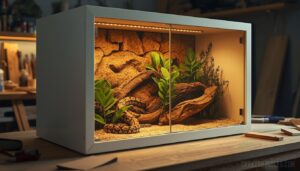
Melamine-coated boards hit a sweet spot that plain wood simply can’t match — they’re affordable, moisture-resistant, and surprisingly easy to work with for a DIY build.
Pair them with a glass front, and you’ve got a hybrid setup that looks clean, functions well, and won’t break the bank.
Here’s what you need to know before you build.
Water-resistant Finish With Sealed Edges
Melamine’s water-resistant finish is only as strong as its weakest point—the edges.
Without proper Edge Primer Application and Flexible Marine Adhesive, Capillary Wicking Prevention breaks down fast, letting moisture sneak into the substrate.
Sealing with UV-Stable Coatings, aquarium-grade silicone sealants, reptile-safe epoxy coatings, and edge protectors ensures Long-Term Seal Integrity, keeping your sealed hardwood core dry and moisture resistance reliable throughout the enclosure’s life.
Affordable Option for DIY Enclosures
Once your edges are sealed, the real appeal of melamine-coated particle board becomes clear: low entry cost with solid performance. A DIY terrarium built from standard sheets — paired with PVC panels for framing — keeps your budget tight without cutting corners on safety.
Here’s what makes it work:
- Low cost framing using corner beads and basic hardware
- DIY silicone sealing along every joint and edge
- Modular panel design for easy resizing or reconfiguration
- Budget lighting solutions mounted directly to the interior ceiling
Glass-front Hybrid Cage Designs
The budget-friendly base pairs exceptionally well with a glass-front hybrid design — where 6–10 mm tempered glass sits inside reinforced corner brackets, edge trim protection guards against chipping, and magnetic door seals keep the enclosure escape-proof and airtight.
Removable front panels simplify deep cleaning, while strategic temperature sensor placement near the glass ensures you’re monitoring heat distribution accurately across the entire habitat.
Maintenance Needs for Coated Boards
Keeping your melamine-coated particle board in top shape isn’t complicated, but it does demand consistency. Routine wipe downs with a soft, damp cloth — avoid abrasive cleaners entirely — prevent coating breakdown over time.
Prioritize edge seal inspection monthly, since exposed seams invite moisture faster than the surface itself.
Track moisture levels, dry surfaces thoroughly after cleaning, and plan a coating renewal schedule every one to three years.
When Melamine Outperforms Basic Wood
When humidity, scratches, and cleaning cycles are daily realities in your enclosure, melamine-coated particle board quietly outclasses basic wood plywood cages across every practical measure.
Its scratch resistance runs roughly 40 percent better than uncoated panels; moisture swelling stays minimal with sealed edges, and heat tolerance holds steady up to 180°F without warping.
Add cost efficiency and easy cleaning ease, and the material toxicity and reptile health implications remain reassuringly low.
Acrylic and Plastic Options
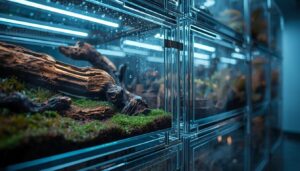
Acrylic and plastic enclosures don’t get as much attention as glass or PVC, but they solve problems that other materials simply can’t. If you’ve ever needed to move a snake quickly or set up a temporary quarantine space, you already know why weight and durability matter.
Here’s what you need to know about how these materials actually perform.
Lightweight Enclosures for Portability
When you need to move your snake—whether for a vet visit or temporary relocation—weight matters more than you’d think. High-density polyethylene (HDPE) and modular PVC panels keep most 4-foot setups under 25 kg, making transport genuinely manageable.
Tool-Free Assembly via Snap Joints and a Foldable Frame System with Weight Distribution Brackets mean quick, stress‑free breakdowns, while Compact Storage Design keeps your space practical between moves.
Impact Resistance Compared With Glass
Glass shatters—polycarbonate doesn’t. Where tempered glass fractures under moderate impact, polycarbonate toughness allows the material to deform and absorb force without catastrophic failure, a critical advantage if your enclosure takes an accidental hit.
Acrylic energy absorption sits between glass and polycarbonate, though it still outperforms standard panes.
Just note that UV degradation effects and temperature influence can compromise structural integrity over time.
Scratch and Warp Trade-offs
Acrylic’s surface hardness impact becomes obvious after a few cleaning cycles—micro-scratches accumulate fast, creating grooves that harbor bacteria and dull your view over time.
Thermal expansion stress compounds this, since temperature swings widen joint gaps and threaten joint seal integrity.
Moisture warping risk is real too: where high-density polyethylene HDPE holds its shape, thinner acrylics can bow, making scratch durability balance a genuine long-term concern.
Best Uses for Quarantine and Travel
For quarantine and isolation cages for new reptiles, lightweight construction and modular design make acrylic and plastic your most practical allies—compact storage folds neatly between uses, and quick assembly means you’re ready when a new arrival shows up unexpectedly.
- Temperature monitoring stays reliable when ventilation and humidity management are built into the panel layout.
- Transport regulations become easier to navigate with material safety for reptiles prioritized from the start.
- Custom snake cages adapt to temporary needs without permanent commitment.
Limits in Long-term Heat Stability
Plastic might handle quarantine duty well, but long-term thermal performance is where it quietly struggles.
Thermal fatigue from repeated heating cycles causes material creep, warping panels and widening joints over time, which increases heat loss and disrupts your heat gradient.
UV embrittlement weakens surfaces further, while expansion mismatch between fasteners and panels accelerates sealant degradation—leaving you with an enclosure that can’t maintain consistent temperature regulation.
Moisture-Resistant Sealants and Liners
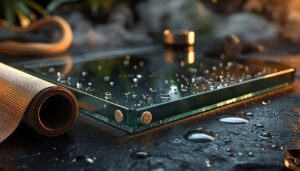
Even the best enclosure materials won’t hold up if the joints and surfaces aren’t properly sealed against moisture. That’s where the right sealants and liners do the real work, protecting your build from the inside out.
Here’s what you need to know about the most reliable options.
Aquarium-grade Silicone for Waterproof Joints
For sealing joints in your snake’s enclosure, aquarium-grade silicone sealants are the preferred choice for reptile-safe adhesives that prevent chemical leaching entirely once cured.
Key application points to follow:
- Clean and degrease surfaces thoroughly — Surface Preparation Steps determine Bond Strength Testing results
- Apply a smooth, continuous bead along every seam
- Follow Curing Time Guidelines: 24 hours handling, 72 hours full cure
- Enjoy UV Resistance Benefits in light-exposed builds
- Store unused tubes following Shelf Life Storage instructions — away from heat and moisture
Used correctly, these sealing and nontoxic coatings for terrarium construction make silicone sealant use genuinely dependable.
Reptile-safe Epoxy for Wood Surfaces
Where silicone joins joints, reptile safe epoxy coatings take over on raw wood surfaces, sealing exterior-grade plywood completely against moisture.
Marine-Grade Epoxy applied in thin Epoxy Application Layers — sanded between coats with 100–150 grit — creates a waterproof, non-toxic shell.
Follow your Epoxy Maintenance Schedule, keep Epoxy Safety Documentation on hand, confirm Epoxy Primer Compatibility before starting, and you’ll cover material toxicity and reptile health implications thoroughly.
Low-VOC Coatings to Reduce Off-gassing
Even after epoxy seals the wood, the finishing coatings you choose matter just as much for material toxicity and reptile health implications.
Low‑VOC sealants built on Waterborne Resin Systems — sometimes incorporating Silane Coupling Agents or Bio-based Polyols — cut off‑gassing by up to 60 percent.
Zero‑VOC Alternatives using Fast Curing Technologies lock in volatiles quickly, making reptile-safe coatings genuinely safer for your snake’s respiratory health.
Proper Cure Time Before Use
Those low-VOC sealants still need time to fully cure before your snake moves in.
Initial Strength Verification confirms the coating has hardened, but Surface Moisture Monitoring tells you whether off-gassing and material toxicity risks have actually cleared.
Your sealing protocol should include 24–72 hours of ventilation, following a Temperature Control Protocol between 10–27°C, with Curing Compound Usage and Moisture Retention Methods ensuring proper hardening throughout.
Preventing Mold and Water Damage
Preventing mold starts long before you spot those first dark patches on your enclosure walls. Keep ambient room humidity between 40–60% through consistent Humidity Calibration, and schedule weekly Sealant Inspection checks to catch failing joints early.
- Place a Moisture Barrier underneath substrates to block floor-level dampness
- Choose a Mold-Resistant Substrate and replace it every 3–6 months
- Improve Vent Mesh Design for cross-airflow without sacrificing humidity control
- Apply non-toxic coatings and sealing for terrarium construction, especially in large enclosures where bacterial growth prevention and moisture resistance considerations matter most
Safe Ventilation and Airflow
Ventilation is one of those details that are easy to overlook until something goes wrong — stale air, mold, a snake that won’t eat. Getting airflow right means balancing fresh circulation with the heat and humidity your snake actually needs.
Here’s what you need to know about each key factor.
Balancing Airflow With Humidity Control
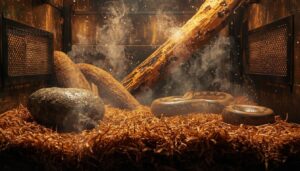
Think of airflow and humidity as a two-way conversation — push too hard in either direction, and your snake pays the price. Crossflow Optimization keeps air moving without draining moisture faster than Passive Mist Integration can replace it.
Pairing Adaptive Humidity Sensors with a Humidity Buffer Substrate lets you manage Vent Flow Timing precisely, so your ventilation design delivers consistent humidity control and reliable airflow management throughout the enclosure.
Vent Placement for Steady Circulation
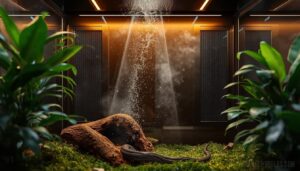
Where you position your vents matters as much as how many you use. Opposite Wall Vents create genuine Cross-room circulation, while Corner Diagonal Flow eliminates stagnant pockets where mold loves to hide.
High Sidewall Placement keeps dust low and heat stratified.
Match your Vent Size Ratio to the enclosure’s volume, maintain Draft-Free Zones near hides, and your ventilation design works quietly in the background.
Preventing Stagnant Air and Mold
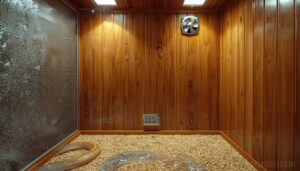
Stagnant air is basically an open invitation for mold. Active Air Circulation — aided by Exhaust Fan Scheduling during and after misting — keeps humidity below 50 percent, which is where mold struggles to colonize.
Pair that with Dehumidifier Usage during damp seasons, apply Mold-Resistant Sealants to every joint, and commit to regular Seal Integrity Inspection.
Your ventilation and airflow design in snake habitats simply can’t afford shortcuts.
Solid Panels Versus Mesh Sections
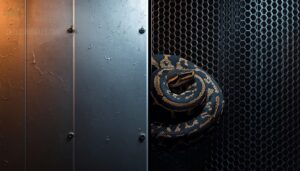
Solid panels and mesh sections each pull in opposite directions — one locks heat in, the other lets air out.
PVC panel enclosure benefits include noise dampening, structural rigidity, and cleaning efficiency, while ventilation mesh size determines your thermal gradient and escape prevention reliability.
Mesh framing that deforms creates gaps; solid panels seal joints completely, protecting both structural integrity and your snake’s safety.
Maintaining Heat While Improving Exchange
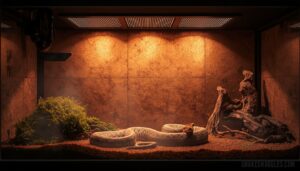
Balancing heat retention with fresh air exchange is the real thermal management in reptile habitats. Radiant panel placement on the back wall sustains your thermal gradient, while gasketed door sealing — with at least 1.5 mm compression — prevents warm air from escaping.
Heat shield implementation reflects energy inward, so heat exchange optimization through ventilation mesh size doesn’t cost you the stable 28–32°C zones that your snake depends on.
Material Safety, Toxicity, and Edges
Getting the materials right is only half the job — making sure they’re actually safe for your snake is the other half. Sharp edges, toxic adhesives, and off-gassing finishes can cause real harm, even when the enclosure looks solid from the outside.
Building a safe snake enclosure goes beyond materials — hidden edges, toxic adhesives, and off-gassing finishes can silently harm your snake
Here’s what to check before your snake ever sets foot inside.
Avoiding Harmful Fumes and Leaching
Even the most carefully built enclosure can quietly work against your snake if you’ve overlooked material toxicity.
Freshly assembled builds off-gas VOCs from sealants and treated wood, so tracking your air exchange rate and using off-gas monitoring strips during the 72-hour cure window matters.
Stick with low-VOC sealants, formaldehyde-free wood, BPA-free plastics, and non-toxic adhesives — reptile-safe materials aren’t optional.
Smooth Edges to Prevent Injuries
Sharp edges are where good intentions meet real risk.
Chamfered corners, beveled transitions, and rounded panel borders keep your snake from catching scales on a hard junction during exploration.
Soft gasket linings at enclosure openings and recessed fasteners eliminate the snag points most builders overlook.
Sand exposed edges to at least 180 grit, and your setup becomes genuinely safe to handle.
Secure Joints and Escape-proof Seams
Once edges are smooth, your next line of defense is the seam itself.
Overlap Locking Joints eliminate the gaps that snakes instinctively probe, while Continuous Adhesive Beads run along the full joint length, leaving no entry point.
Corner Reinforcement Blocks add rigidity where pressure concentrates the most.
For premium builds, the Ultrasonic Weld Technique or Heat‑Sealed Seam Process creates bonds that no snake can work apart.
Safe Adhesives and Fasteners
Once your seams are locked, what holds them together matters just as much.
- Non-toxic Silicone and aquarium-grade silicone sealants bond interior joints without off-gassing.
- Food-grade Epoxy and high-solids epoxy seal wood corners safely under enclosure heat.
- Low-VOC Sealants and contact adhesive plastic minimize respiratory risk in enclosed spaces.
- Stainless Fasteners with hidden joint design prevent corrosion and interior snag points.
Choosing Snake-safe Finishes and Coatings
The finish you choose is the last line of defense between your snake and chemical exposure. Water-based polyurethane, non-toxic oil treatments like food-grade linseed, and UV-resistant coatings all keep surfaces sealed without the harmful off-gassing that solvent-heavy products release.
Low-VOC sealants, reptile-safe epoxy coatings, and aquarium-grade silicone sealants cure inert — give them 48–72 hours of ventilation before your snake moves in.
Top 3 Snake Enclosure Accessories
Once you’ve sorted the structure and materials of your enclosure, the accessories are what really bring it to life for your snake. A few well-chosen additions can make a noticeable difference in comfort, hygiene, and overall habitat quality.
Here are three accessories worth considering for your setup.
1. Sukh Sphagnum Reptile Moss
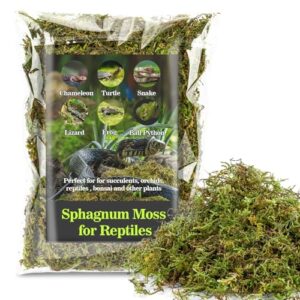
humidity control can make or break a tropical snake’s shedding cycle, and Sukh Sphagnum Moss manages that job exceptionally well. At just $6.99 for a 5-oz dry pack, it holds moisture for days without becoming waterlogged, releasing it gradually to buffer humidity swings that stress reptiles.
You can mix it with other substrates or tuck it inside a humid hide to create a reliable shedding zone. Just refresh it regularly — stagnant wet moss invites mold fast.
| Best For | Tropical reptile keepers — especially snake and gecko owners — who need reliable humidity control for shedding, egg incubation, or building a moist hide on a budget. |
|---|---|
| Primary Material | Sphagnum moss |
| Humidity Support | High moisture retention |
| Species Compatibility | Snakes, geckos, frogs, turtles |
| Maintenance Level | Frequent re-wetting required |
| Toxicity | Non-toxic, natural |
| Price | $6.99 |
| Additional Features |
|
- Holds moisture for days and releases it slowly, so humidity stays steady without constant misting
- Doubles as nesting material and a shedding aid — soft enough that reptiles can rub against it comfortably
- At $6.99 for a 5-oz dry pack, it stretches a long way when mixed with other substrates
- Can get moldy fast if it stays too wet, so you have to stay on top of maintenance
- Not great as a standalone substrate — it needs other bedding mixed in for proper structure
- Can get dusty or musty over time, and it may accidentally hide prey from active hunters like geckos
2. PietyPet Hanging Terrarium Plant Vines
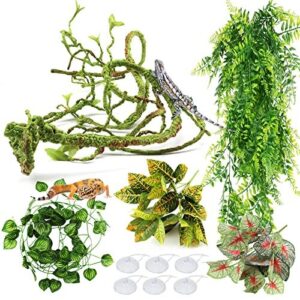
Structure matters as much as substrate when you’re building an enriching habitat, and the PietyPet Hanging Terrarium Plant Vines deliver that vertical dimension without the upkeep of live plants. The bendable iron-wire core lets you shape each vine into climbing routes or concealed resting spots, your snake will actually use.
Non-toxic foam-coated leaves wipe clean with mild soap and water, and the included suction cups mount securely to glass or acrylic walls — just inspect them monthly to maintain grip.
| Best For | Reptile and amphibian owners who want to add vertical climbing structures and natural-looking greenery to their terrarium without the hassle of maintaining live plants. |
|---|---|
| Primary Material | Foam-coated plastic & metal wire |
| Humidity Support | Increases surface area humidity |
| Species Compatibility | Bearded dragons, chameleons, geckos, tree frogs |
| Maintenance Level | Wipe or rinse clean |
| Toxicity | Non-toxic foam and plastic |
| Price | Varies by retailer |
| Additional Features |
|
- Bendable wire core makes it easy to shape vines into custom climbing paths or hiding spots that actually fit your enclosure.
- Totally waterproof and low-maintenance — just rinse or wipe down when dirty, no special care needed.
- Versatile mounting options (suction cups and zip ties) mean it works on glass, acrylic, and beyond.
- Suction cups can lose their grip over time, especially on textured glass, so you’ll need to check and clean them regularly.
- New pieces can have a noticeable plastic smell that needs airing or soaking before putting animals near them.
- Wire ends on the leaves can be sharp, which is worth checking before introducing smaller or more delicate animals to the enclosure.
3. Zilla Jungle Mix Organic Terrarium Bedding
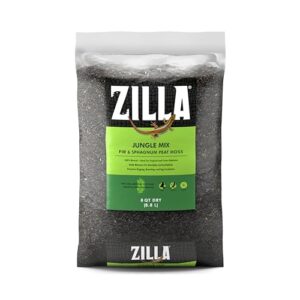
The Zilla Jungle Mix gives your tropical setup a proper foundation — a 100% organic blend of Douglas fir bark and sphagnum peat moss that holds moisture long enough to keep humidity-loving snakes comfortable between mistings. At 1–2 inches deep, it facilitates natural burrowing instincts while staying easy to spot-clean daily and fully replace every two to four weeks.
One practical note: the mix can dry out within 24–30 hours, so pair it with a reliable misting routine.
| Best For | Hobbyists keeping tropical and forest species — frogs, rainforest geckos, snakes, and amphibians — who want a natural, humidity-friendly substrate that supports burrowing and nesting. |
|---|---|
| Primary Material | Fir bark & peat moss |
| Humidity Support | Natural humidity control |
| Species Compatibility | Snakes, frogs, geckos, amphibians |
| Maintenance Level | Daily spot clean, monthly replace |
| Toxicity | Chemical-free, organic |
| Price | $10.95 |
| Additional Features |
|
- 100% organic and biodegradable, so no synthetic chemicals near your animals
- Holds moisture well and helps stabilize humidity in tropical setups
- Supports natural behaviors like digging, burrowing, and egg incubation
- Dries out fast — sometimes within 24 hours — so you’ll need a consistent misting routine
- Contains larger, sharper fir pieces that could be rough on delicate species like salamanders
- The bag may feel smaller than expected, meaning bigger enclosures might need multiple bags
Frequently Asked Questions (FAQs)
Where do snakes go in October?
In October, snakes head toward denning sites — rodent burrows, rock crevices, and fallen logs — as nighttime temperatures drop near freezing, triggering brumation.
They often pick south-facing, insulated spots to stay just above freezing.
Is glass or PVC better for reptile enclosures?
PVC wins for heat retention and humidity, making it ideal for large or tropical snakes.
Glass offers better visibility but loses heat faster.
Your choice depends on your snake’s specific temperature and humidity needs.
What is the best material for a snake enclosure?
The best material depends on your snake’s needs, but PVC panels top most lists — they retain heat, resist moisture, and hold up for years without warping or constant upkeep.
Is PVC better than glass for snake enclosures?
Think of PVC as a thermos and glass as a paper cup — one holds heat, the other lets it escape.
For most snakes, PVC wins on insulation, humidity control, and durability.
What should I put in my snakes enclosure?
Your snake’s enclosure needs hides, a water dish, appropriate substrate, and a thermal gradient with a warm basking zone and cooler retreat, giving it both security and the temperature control it instinctively seeks.
Is wood or PVC better for reptile enclosures?
Both materials work well, but PVC retains heat and resists moisture better long-term, while wood offers more natural customization.
For humid or large-snake setups, PVC wins; for naturalistic builds, sealed marine-grade plywood delivers excellent results.
How to choose a snake enclosure?
Start by matching the enclosure to your snake’s adult size, humidity needs, and temperature range. Then choose materials that support those conditions long-term without compromising safety or your budget.
What is the best substrate for a snake enclosure?
Aspen shavings work well for most species, offering solid absorption and easy burrowing. For tropical setups, cypress mulch or coconut fiber holds humidity better.
Always avoid cedar and pine — their oils are genuinely harmful.
How big is a DIY snake enclosure?
Your DIY snake enclosure should be at least as long as your snake, plus a 12-inch buffer — so a 4-foot corn snake needs roughly a 48-to-60-inch footprint minimum.
What is the best material for a reptile enclosure?
PVC panels are your best bet for reptile enclosures — they resist moisture, retain heat efficiently, and stay easy to clean, making them ideal for most species, whether you’re housing a small corn snake or a large boa.
Conclusion
Picture your snake coiled in a habitat where heat holds steady, humidity never wavers, and every surface is exactly what it should be—safe, smooth, and built to last. That’s not luck; that’s deliberate material selection working in your favor.
Choosing right recommended snake enclosure materials means your setup stops fighting against the animal living inside it and starts supporting it. Get the structure right first, and everything else—lighting, substrate, enrichment—falls into place naturally.