This site is supported by our readers. We may earn a commission, at no cost to you, if you purchase through links.

Most snake owners upgrade their care routine long before they think to upgrade the enclosure. The heat mat gets replaced, the thermostat gets calibrated, the feeding schedule gets dialed in—and the tank from two years ago just stays.
But a cramped enclosure doesn’t stay neutral. It actively works against everything else you’re doing right. Glass surfing, nose abrasions, failed sheds, and refused meals are often blamed on diet or disease when the real culprit is four walls sitting too close together.
Knowing the signs that your snake enclosure is too small gives you a fixable problem—and a clear path to fixing it.
Table Of Contents
- Key Takeaways
- Constant Glass Surfing and Pacing
- Nose Rubbing and Skin Damage
- Cannot Stretch Out Fully
- Hides and Decor Feel Crowded
- No Room for Natural Movement
- Stress is Affecting Feeding
- Shedding Problems Keep Happening
- Temperatures and Humidity Stay Unstable
- Adult Size No Longer Fits
- Top 3 Upgrade Essentials
- Frequently Asked Questions (FAQs)
- Are snake enclosures too small?
- Where do snakes go in October?
- How often should I clean my snakes enclosure?
- Which substrate materials are safest for snakes?
- Do snakes need enrichment items in their habitat?
- Can a snake recover from long-term enclosure stress?
- What humidity levels does my snake species need?
- Conclusion
Key Takeaways
- Glass surfing, nose rubbing, and refused meals aren’t random bad luck — they’re your snake telling you enclosure is too small.
- A cramped setup wrecks more than just movement: it destabilizes humidity, collapses thermal gradients, and makes clean sheds nearly impossible.
- Size your enclosure for your snake’s adult length, not its current size — a 4-foot snake needs at least 4 feet of usable floor space.
- Most stress-related health issues reverse within weeks once you fix the enclosure size, layout, and climate conditions.
Constant Glass Surfing and Pacing

Glass surfing is one of the clearest signs something’s off with your snake’s setup. It’s not random — repetitive pacing, wall-rubbing, and constant movement usually point to one thing: not enough space.
Getting the dimensions right from the start makes a real difference — check out this guide on appropriate snake enclosure sizes to make sure your setup isn’t the culprit.
Here’s what to watch for.
Repetitive Movement Along The Walls
Watch your snake closely during active hours. If it keeps looping the same wall path night after night, that’s edge-focused stress in action — not curiosity.
Route variety limitation and turn radius constraints from a small enclosure force movement pattern predictability.
A usable area shortage means the snake simply has no better option.
More horizontal floor space fixes this fast.
Side-rubbing at The Enclosure Edges
Side-rubbing is a step beyond pacing. When your snake repeatedly presses its body against the same edge, you’re seeing rubbing pattern analysis in real time — a clear behavioral indicator of enclosure layout optimization failure.
- Glass smoothness matters: rough seams or residue increase friction and accelerate scale damage.
- Barrier design flaws — clips, gaskets, raised edges — concentrate abrasion at fixed points.
- Edge seam friction wears down protective scales, opening the door to infection.
That’s a space requirements problem with real consequences.
Why Restless Behavior Often Signals Limited Space
Restless behavior isn’t random. When enclosure size limits your snake to narrow corridors, it can’t cruise, explore, or settle — that’s a Rest Zone Deficit playing out in real time.
Constrained Exploration and high Direction Change Frequency are classic behavioral stress signals. Spatial Monotony follows fast.
A snake that can’t separate its active zones from resting areas won’t stop moving — and that’s your warning.
Nose Rubbing and Skin Damage
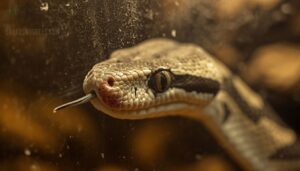
Nose rubbing might look harmless at first, but it’s one of the clearest distress signals a snake can give you. When a snake repeatedly pushes its snout against the glass or lid, the enclosure is usually the problem.
what’s actually happening — and why it matters.
Frequent Rostral Rubbing on Glass or Lids
When your snake keeps pressing its snout into the glass or lid edge, that’s not curiosity — that’s behavioral stress in action.
Rostral rubbing happens when a snake repeatedly pushes against enclosure surfaces, often triggered by environmental stress factors like insufficient enclosure size.
Lid Edge Modification and a Glass Surface Coating can help reduce contact, but first, check your enclosure size guidelines and the minimum recommended size.
Scrapes, Scale Damage, and Infection Risk
Repeated rostral rubbing doesn’t just look bad — it breaks the skin barrier, and once that happens, microbial colonization can take hold fast.
Abrasion reopens with every contact, and moisture management becomes critical because damp substrate worsens healing delays.
Stress-related health issues compound quickly without proper health monitoring protocols.
Watch for these warning signs:
- Raw or reddened tissue near the snout
- Swelling or discharge around abraded scales
- Wounds that aren’t closing between sheds
- Increased moisture or debris near the injury
- Worsening symptoms despite basic cleaning protocols
How Cramped Enclosures Trigger Barrier-focused Behavior
When floor space shrinks, everything narrows — including your snake’s choices. Limited escape paths push it toward the same edges repeatedly, creating predictable route loops and edge preference that normalize barrier contact.
Crowding reduces choice so drastically that walls become the default "safe" zone.
Restricted recovery space means there’s nowhere to reset between bursts of movement, so barrier-focused behavior reinforces itself with every lap.
Cannot Stretch Out Fully
Snakes need space to stretch — not just to move around, but to stay healthy. tank shorter than your snake’s full body length is one of the clearest signs it’s time to upgrade.
what you need to know before sizing a new enclosure.
Why Full-body Extension Matters
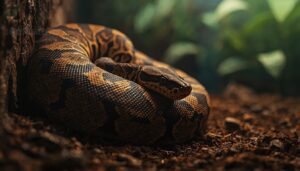
Full-body extension isn’t just a comfort thing — it directly affects your snake’s muscle development, circulatory flow, and respiratory health. When your snake can’t stretch to its full body length, it stays cramped, loses muscle tone, and struggles with thermoregulation efficiency. That physical restriction also chips away at stress resilience over time.
A snake that cannot fully stretch loses muscle, circulation, and the resilience to handle stress
Proper enclosure dimensions aren’t optional — they’re the foundation of a healthy snake.
Minimum Length Based on Adult Snake Size
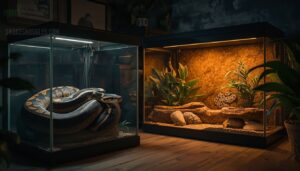
Plan for adult size — not the cute little juvenile in your hands right now.
Cramped enclosures increase stress‑related health issues, as shown by the enclosure size guidelines.
Adult length guidelines exist for a reason: your enclosure length must match or exceed your snake’s maximum adult length.
A 4-foot snake needs at least 4 feet of floor space.
A 6-foot species needs 6 feet.
Length-based sizing by species adult size reference:
- Corn and king snakes: 2–3× their full body length
- Ball pythons: minimum 36″ × 18″ floor space
- Boas and pythons: 4–6× their adult size
- Active racers: enclosure length at least 4× body length
Skipping this assessment of enclosure dimensions against adult snake size means you’ll be buying a new tank anyway — just after your snake has already paid the price.
Species growth forecast and future enclosure scaling should drive your purchase from day one.
Measuring Your Snake Correctly for Enclosure Planning
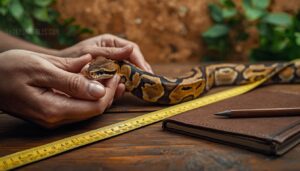
Grab a flexible measuring tape and run it along your snake’s midline — snout to tail tip — while it’s gently restrained. That’s the Midline Tape Method, and it’s your most accurate baseline.
Record both total length and Vent Length Recording for growth log tracking.
Avoid measuring right after feeding. Consistent Measurement Timing with Feeding Impact Adjustments gives you reliable data for measuring growth and planning future enclosure dimensions.
Hides and Decor Feel Crowded
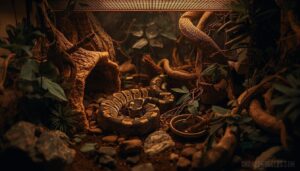
A hide is only useful if your snake can actually get to it. When decor fills the floor, even a well-designed enclosure starts working against you.
Here’s what to look for.
Too Little Open Floor Space Between Hides
Two hides placed too close together create a hide gap width problem that quietly stresses your snake. With minimal horizontal floor space between entrances, behavioral looping replaces natural cruising — your snake turns back instead of traveling freely.
This limits thermal zone access and shrinks feeding area. Aim for enclosure dimensions that give each hide breathing room while still leaving open floor for stress reduction and environmental enrichment.
Decor Blocking Normal Movement Paths
Decor placement matters more than most keepers realize.
Heavy anchored items across travel lanes, unstable loose items that shift into paths, and lid edge obstructions all create wall grazing bottlenecks that interrupt natural movement patterns. Narrow turn corners around hides force repeated rerouting instead of smooth cruising.
Keep horizontal floor space and vertical height clear so your snake can move without constantly weaving around obstacles.
When Enrichment Starts Reducing Usable Space
Enrichment is supposed to reduce stress — but too much of it can backfire.
When hides, branches, and water bowls cluster together in a cluttered enclosure design, they create constrained movement paths and a reduced exploration area. Your snake ends up weaving through a maze instead of cruising freely.
Follow smart enclosure planning strategies: balance vertical versus horizontal space requirements, rotate items with limited enrichment rotation, and always protect open floor space for hides and decor.
No Room for Natural Movement
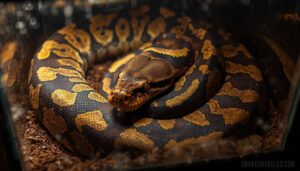
A snake that can’t move freely is a snake under constant stress. Whether your species burrows, cruises the ground, or climbs, the enclosure has to support that behavior — not just contain the animal.
Here’s where most setups fall short.
Limited Turning, Cruising, and Exploring
When the enclosure is too short, your snake can’t cruise in smooth, extended runs — it’s constantly redirecting.
Restricted pathways and narrow corridors force insufficient turning, choking off natural movement patterns. Limited linear space means your snake funnels into the same tight lanes instead of exploring freely.
check that enclosure dimensions provide adequate width and height for species-appropriate space requirements.
Burrowing Species Lacking Substrate Area
Burrowing species face a different problem. When substrate depth is too shallow, tunnel collapse risk rises, and burrow concealment loss leaves your snake exposed and stressed.
Grain size mismatch slows substrate selection and increases energy expenditure.
space optimization techniques start with appropriate habitat sizing — enough floor area to fully excavate, conceal, and move without constantly repositioning.
Arboreal Snakes Without Usable Climbing Space
Arboreal climbers need more than just height — they need usable height. A tall enclosure without solid branch placement strategy is wasted space.
Your snake can’t perch, cruise, or rest without stable climbing surface texture and connected vertical routes.
Poor height utilization efficiency forces wall-pacing instead.
For climbing species requirements, vertical versus horizontal space requirements always favor function: real perches at multiple levels beat empty air every time.
Stress is Affecting Feeding
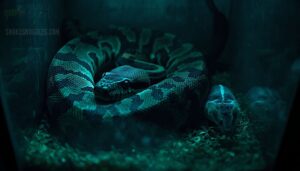
A cramped enclosure doesn’t just frustrate your snake — it messes with how they eat and process food. Chronic stress from limited space can shut down appetite, slow digestion, and even cause muscle loss or weight gain over time.
Here’s what to watch for.
Reduced Appetite and Delayed Feeding Response
A stressed snake doesn’t always show it dramatically — sometimes it just stops eating. Chronic stress from a cramped enclosure disrupts normal feeding behavior, causing delayed responses even with consistent Feeding Time Consistency and proper Prey Presentation. Noise Disturbances, Handling Frequency, and poor Lighting Conditions all pile on.
stress-related health issues signal your snake isn’t comfortable enough to eat.
Digestion Problems Linked to Chronic Stress
Even when your snake eats, chronic stress can quietly sabotage what happens next. A cramped enclosure triggers fight-or-flight responses that shut down digestion — and that’s where real damage builds up:
- Delayed gastric emptying slows food breakdown
- Gut motility changes cause irregular or incomplete digestion
- Microbiome imbalance disrupts nutrient absorption
- Nutrient malabsorption compounds reduced appetite over time
Stress-related health issues compound fast when size guidelines for snakes aren’t met.
Muscle Loss or Obesity From Inactivity
A snake that can’t move freely doesn’t just get bored — it gets sick. Muscle atrophy sets in when there’s nowhere to stretch, turn, or cruise.
Fat accumulation follows as metabolic slowdown takes hold. Overweight snakes face reduced mobility and compounding stress-related health issues.
Without space that meets size guidelines for snakes, the effects of cramped quarters on snake behavior and health are hard to reverse.
Shedding Problems Keep Happening
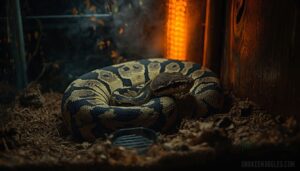
Recurring shedding problems are one of the clearest signs your snake has outgrown its space. cramped enclosure makes it nearly impossible to maintain the humidity and temperature gradients your snake needs to shed cleanly.
Here’s what’s likely going wrong — and why layout itself is part of the problem.
Incomplete Sheds From Poor Enclosure Conditions
A bad shed isn’t bad luck — it’s usually a layout problem. When humidity microclimates can’t form properly inside a cramped enclosure, your snake can’t find the right conditions to loosen its skin evenly.
- Retained eye caps and tail rings show up when enclosure layout flexibility is too limited.
- Airflow stagnation traps dry pockets, making substrate moisture levels uneven.
- Tight spaces prevent full repositioning during the shed cycle.
Small Enclosures and Weak Humidity Control
Small enclosures can’t hold stable humidity — it’s just physics.
The water bowl surface area evaporates quickly, ventilation leakage lets moisture escape before it spreads, and substrate moisture retention stays uneven.
Hygrometer placement matters too: one sensor won’t catch the dry pockets forming in corners.
Misting frequency helps, but small air volume means humidity spikes and crashes instead of staying steady.
Why Tight Layouts Make Shedding Worse
Tight layouts don’t just limit movement — they break the whole shedding process.
When your snake can’t fully extend, the head-to-tail sequence gets interrupted. Poor microclimate zoning means no reliable warm or cool zone to support skin separation. Here’s what a cramped setup actually disrupts:
- Insufficient substrate depth blocks burrowing and anchoring
- Constrained rest spots force constant repositioning mid-shed
- Reduced moisture retention dries the old skin before it lifts
- Limited light exposure disrupts natural activity cycles tied to shedding
Fix the space, fix the shed.
Temperatures and Humidity Stay Unstable
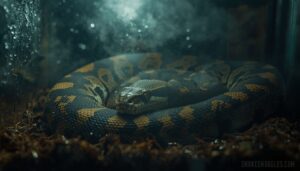
small enclosure doesn’t just cramp your snake — it wrecks the climate inside. When warm and cool zones overlap, your snake loses the ability to regulate its own body temperature.
Here’s how an undersized tank creates thermal and humidity problems you can’t fix with better equipment alone.
Inadequate Thermal Gradient in Short Enclosures
Short enclosures make it nearly impossible to build a reliable thermal gradient. When your heat source doesn’t have enough distance to work with, temperatures bleed together instead of separating into distinct warm and cool zones.
Gradient measurement errors are common here — one thermometer won’t catch it. Lid heat loss and substrate temperature mismatch make the problem worse, especially in compact setups.
Warm Side and Cool Side Overlapping
When warm and cool zones blur together, your snake loses its ability to thermoregulate properly — that’s Thermal Gradient Collapse in action. Heat Spill Effects from poor heat source placement or Insulation Deficiencies push warmth across the entire floor.
Without clear Zone Separation Strategies, Behavioral Thermoregulation Shifts kick in: your snake keeps repositioning restlessly, never fully settling, which compounds stress-related health issues over time.
Poor Airflow Creating Damp or Stale Conditions
Thermal gradient collapse isn’t the only casualty of a cramped setup — poor airflow compounds every problem you’ve already seen. A tiny Ventilation Gap Size means moisture from your snake’s breathing and water dish evaporation just sits there.
Watch for these warning signs:
- Condensation on Glass pooling on inner walls
- Mold Risk on hides, substrate, or décor
- Stale, musty odors from weak Air Circulation Fans or none at all
- Humidity spiking unpredictably near heat sources
Poor ventilation systems wreck humidity control fast. Reposition your Water Dish Placement to the cool side, upgrade ventilation optimization with cross-ventilation panels, and address airflow before respiratory problems develop.
Adult Size No Longer Fits
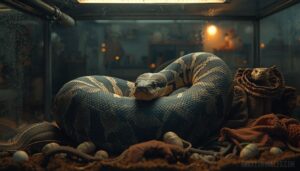
At some point, your snake simply outgrows its home — and no amount of rearranging hides will fix that.
Getting the dimensions right for an adult snake isn’t guesswork; there are real numbers that matter.
Here’s what to check for three of the most common pet snake species.
Length Should Match or Exceed Adult Body Length
enclosure length needs to match or exceed your snake’s full adult size — not its current size. That’s the foundation of adult length planning.
ball python might look fine in a 36-inch tank today, but if it’s still growing, you’re already behind.
Follow enclosure sizing guidelines and build in a growth buffer margin. space allocation rules start with length first.
Width Should Support Easy Turning and Movement
Width gets overlooked, but it’s just as critical as length. Your snake needs adequate lateral space to make clean, unhurried turns — not forced S-curves against the glass.
Without a clear turning path and an obstacle-free corridor across the floor space, your snake ends up wall-hugging instead of exploring. A sufficient width ratio means unobstructed movement in every direction, not just front to back.
Ball Python, Boa, and Corn Snake Sizing Checks
Each species has its own sizing sweet spot — here’s a quick check based on adult size and Species Specific Dimensions:
- Ball pythons (3–5 ft): minimum 36″ × 18″ × 12″
- Boas (6–12 ft): need 4–6× their Adult Length Ratios
- Corn snakes (3–5 ft): thrive in 48″ × 24″ × 18″
- All species: Enclosure Volume Calculations should account for growth rates
- Undersized setups: directly trigger stress-related health issues fast
Top 3 Upgrade Essentials
Once you’ve spotted the signs, the next step is knowing what to upgrade to. The right enclosure and cleaning setup can make a real difference in your snake’s health and daily comfort.
Here are three essentials worth looking at.
1. REPTI ZOO Collapsible Glass Terrarium
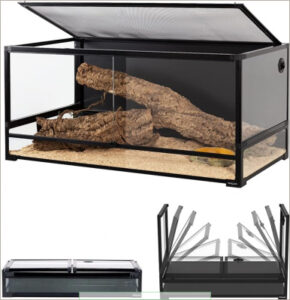
The REPTI ZOO Collapsible Glass Terrarium gives your snake the space it actually needs — 48" × 24" × 24" with about 8 square feet of floor area. That’s enough room for a proper thermal gradient, multiple hides, and real movement.
It assembles in roughly 3 minutes, and the front doors open one-handed for easy feeding and cleaning.
The blackout PVC back panel helps reduce stress, and the raised base fits substrate heaters.
At $434.98, it’s a serious upgrade for serious keepers.
| Best For | Reptile keepers who want a large, low-stress habitat for snakes, bearded dragons, or turtles — and don’t want to spend an hour putting it together. |
|---|---|
| Product Type | Reptile Enclosure |
| Pet Safe | Yes, with secure latches |
| Surface Compatible | Glass, aluminum, PVC |
| Odor Control | Ventilation-based airflow |
| Ease of Use | Assembles in ~3 minutes |
| Price Range | $434.98 |
| Additional Features |
|
- Assembles in about 3 minutes flat — no tools, no hassle
- Blackout back panel and front ventilation create a calmer, more natural environment for your pet
- One-hand front doors and a removable lid make feeding and cleaning way less of a chore
- The plastic swing-tab connectors feel a bit flimsy and can break if you’re not careful
- At 81 lbs, you’ll definitely want a second person when moving or placing it
- Cable pass-throughs are narrow — thicker power cords won’t fit without some workarounds
2. F10 SC Concentrated Veterinary Disinfectant
Cleaning a new or upgraded enclosure, the right way matters as much as the size itself.
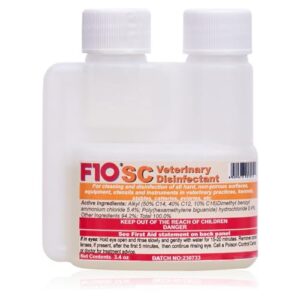
F10 SC Concentrated Veterinary Disinfectant is an EPA-registered broad-spectrum formula that kills bacteria, viruses, fungi, and spores — and it doesn’t require rinsing after application.
Mix roughly 3 teaspoons per gallon of water for general disinfection. It works on glass, hides, and water bowls without leaving harmful residue.
At 100 ml, one bottle goes a long way.
| Best For | Pet owners, shelter staff, and vet clinics who need a fast, no-rinse disinfectant they can trust around animals. |
|---|---|
| Product Type | Disinfectant Concentrate |
| Pet Safe | Yes, when properly diluted |
| Surface Compatible | Hard, non-porous surfaces |
| Odor Control | Eliminates pathogen odors |
| Ease of Use | Mix and apply, no rinse |
| Price Range | Budget-friendly concentrate |
| Additional Features |
|
- Broad-spectrum protection — knocks out bacteria, viruses, and fungi in one go
- No rinsing needed after it dries, which saves real time during cleanups
- One small bottle makes a lot of solution, so it lasts longer than you’d expect
- You have to nail the dilution ratio — too strong or too weak and you lose the benefit
- Mixed solution doesn’t keep well; you’ll want to use it within a week
- Won’t tackle coccidia or similar protozoan cysts on its own — you’ll need heat or steam alongside it
3. Rescue Veterinary Disinfectant Cleaner
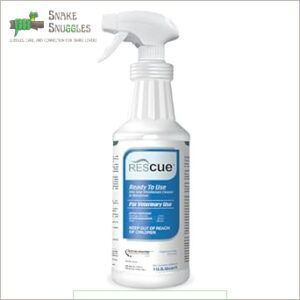
If F10 SC is your deep-clean solution, Rescue is your everyday workhorse. This ready-to-use veterinary disinfectant uses accelerated hydrogen peroxide to kill bacteria, viruses, and fungi — including tough pathogens like parvovirus and ringworm — in about one minute.
No mixing, no rinsing. Just spray until the surface is wet, wait, and you’re done.
It dries clear, leaves no sticky residue, and won’t overwhelm your snake with harsh fumes.
The 32 oz bottle manages routine spot-cleaning between full deep-cleans easily.
| Best For | Rescue is best for shelters, foster homes, and vet clinics that need a fast, no-fuss disinfectant for daily kennel and enclosure cleaning. |
|---|---|
| Product Type | Ready-To-Use Disinfectant |
| Pet Safe | Yes, no harmful residue |
| Surface Compatible | Kennels, crates, enclosures |
| Odor Control | Deodorizes on contact |
| Ease of Use | Spray and let dry |
| Price Range | Mid-range RTU spray |
| Additional Features |
|
- Ready to use straight out of the bottle — no mixing or rinsing needed, just spray and walk away
- Kills tough pathogens like parvovirus and ringworm in about a minute with no harsh fumes or sticky residue
- Works great for routine spot-cleaning between deep cleans, keeping enclosures fresh without a lot of effort
- No spray nozzle included, so you’ll need to grab one separately before you can use it
- Can leave streaks or a light film on clear acrylic panels, which means an extra wipe-down step
- Not reliable on soft fabrics that can’t be laundered — heavily soiled items may need to be tossed instead of disinfected
Frequently Asked Questions (FAQs)
Are snake enclosures too small?
Yes, many are. Most keepers underestimate how much space a snake actually needs. A cramped enclosure doesn’t just limit movement — it raises stress levels and triggers real health problems fast.
Where do snakes go in October?
In October, wild snakes start heading toward overwintering dens — underground burrows, rock crevices, or spots under logs.
They’re winding down, basking less, eating less, and settling in for brumation before the cold fully sets in.
How often should I clean my snakes enclosure?
Think of your snake’s enclosure like a kitchen — daily spot-cleaning keeps it functional, monthly substrate swaps reset it fully, and a deep disinfection every 2–4 months keeps things truly safe.
Which substrate materials are safest for snakes?
Aspen shavings work well for dry-climate species. Cypress mulch suits tropical setups. Coconut fiber holds humidity nicely. Avoid cedar, pine, and calcium sand — they cause real harm fast.
Do snakes need enrichment items in their habitat?
Snakes don’t just sit there — so why set up a bare box?
They need hides, climbing structures, and varied substrate to express natural behaviors, reduce stress, and stay physically and mentally healthy.
Can a snake recover from long-term enclosure stress?
Yes, but recovery depends on how quickly you act. Fix the enclosure size, layout, and conditions first.
Most snakes show improved feeding and calmer behavior within a few weeks of proper changes.
What humidity levels does my snake species need?
Get this wrong and your snake pays the price. Ball pythons need 70–90% humidity, corn snakes 50–70%, and rosy boas just 20–40%. Match your species — one number doesn’t fit all.
Conclusion
Think of your snake’s enclosure the way you’d think of shoes—the wrong size doesn’t just feel uncomfortable, it causes real damage over time.
The signs your snake enclosure is too small aren’t always obvious at first, but your snake’s behavior will tell you before health problems do.
Glass surfing, failed sheds, refused meals—these aren’t random. They’re feedback.
Listen to them, size up, and give your snake the space it was always supposed to have.