This site is supported by our readers. We may earn a commission, at no cost to you, if you purchase through links.
Watch a snake after a big meal, and you’ll catch it gaping wide, jaw stretched almost sideways, looking for all the world like it’s stifling a yawn during a boring lecture. It’s not tired, and it’s not bored. So why do snakes yawn?
Unlike your own reflexive yawn, this gape does a specific mechanical purpose: resetting jaw ligaments that stretched to their limit while swallowing prey whole. Snake jaws don’t unhinge, despite the popular myth—they rely on elastic tissue and independently moving bones to pull off that trick.
Understanding this behavior means knowing the difference between routine jaw maintenance and something that needs a vet’s attention.
Table Of Contents
- Key Takeaways
- Why Do Snakes Yawn? Usually to Stretch and Reset Their Jaws
- Is It Normal for Snakes to Yawn?
- How is Yawning Different From Other Mouth Gaping?
- When Does Snake Yawning Signal Illness?
- What Should You Do About Frequent Yawning?
- Frequently Asked Questions (FAQs)
- Is it normal for a snake to yawn?
- How do I know if a snake is happy?
- What snake is worth $100,000?
- Why do reptiles yawn?
- Do snakes yawn when they’re tired?
- Why is my ball python yawning so much?
- What does it mean when snakes open their mouths?
- Why do snakes stretch their mouths?
- Do all snake species yawn equally?
- Is yawning contagious among snakes?
- Conclusion
Key Takeaways
- Snake yawns aren’t about being sleepy or bored—they’re a mechanical reset for jaw ligaments that stretch out while swallowing prey whole.
- Snake jaws never actually unhinge; instead, elastic ligaments and independently moving bones let the mouth open wide without any bones popping loose.
- A healthy yawn is quick (under two seconds), closes cleanly, and shows up around feeding or rest—so it’s the prolonged, wheezy, or symptom-paired gapes you need to watch for.
- Frequent or labored gaping paired with mucus, swollen gums, or appetite loss can signal real problems like respiratory infection or mouth rot, and it’s worth calling a reptile vet if you notice that pattern.
Why Do Snakes Yawn? Usually to Stretch and Reset Their Jaws
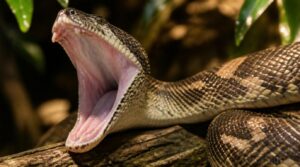
That wide-open gape isn’t a snake getting bored or dramatic; it’s basic jaw maintenance. Snakes rely on stretchy ligaments and loosely connected bones to swallow prey whole, and all that stretching needs regular resetting. Here’s what’s actually going on inside your snake’s mouth when it yawns.
This realignment lets the mandibles glide back into place, a process explained in detail in this breakdown of why snakes yawn to reset their jaws.
Stretching Flexible Jaw Ligaments
Elastic ligaments give a snake’s jaw its stretch, letting the mouth widen far past resting size without harm.
- Collagen and elastin fibers allow controlled stretch and recoil
- Stretch mechanics distribute force across the jaw, not one joint
- Elastic recoil pulls ligaments back to baseline within minutes
That yawnlike motion doubles as ligament stretch training, keeping jaw mechanics limber between meals.
Realigning Jaws After Feeding
That stretch training pays off the moment a meal goes down. The lower jaw segments move independently while swallowing, then need jaw bone realignment afterward.
Short, repeated gapes let muscles coordinate, sliding each half back onto its joint. Bigger prey means longer realignment—sometimes hours—since elastic ligaments stretched further need more careful resetting before the next meal.
Recovering After Swallowing Prey
Once prey disappears down the hatch, your snake’s body shifts gears entirely. Blood flow redirects toward the gut, kicking off digestion initiation as stomach acid ramps up. Heart rate stays elevated briefly, then settles as the digestive process takes over.
Meanwhile, those stretched ligaments still need attention—jaw realignment continues quietly in the background, even as the body focuses inward.
Clearing The Mouth and Airway
Beyond realignment, that big gape does double duty as airway clearance. With the glottis pushed forward during swallowing, mucus can pool—gaping expands the trachea, clears debris, and restores normal breathing.
Think of it as your snake’s own suction technique, repositioning the tongue and coordinating breath before returning to business as usual.
Why Snake Jaws Do Not Unhinge
Since "unhinge" implies bones popping loose, that’s actually a myth—jaw joint mechanics rely on flexible ligaments, not dislocation.
- No fused chin joint
- Quadrate bones guide motion
- Ligaments absorb stretch
- Bone alignment preservation stays intact
- Multiple sliding joints replace one hinge
This evolutionary jaw design grants jaw flexibility without fracture risk, unlike mammalian jaws. Snakes can achieve a wide gape due to their unique skull structure with multiple hinge points and elastic tissues. snake jaw anatomy allows them to swallow prey much larger than their head.
Is It Normal for Snakes to Yawn?
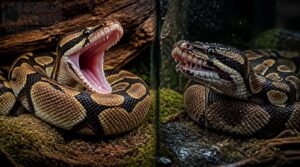
So yes, yawning is completely normal snake behavior, but "normal" still has some boundaries worth knowing. A healthy gape usually follows a predictable pattern, showing up at expected times and looking a certain way.
Since individual temperament plays such a big role, it helps to understand how much handling your snake can comfortably tolerate before deciding whether a gape is stress-related.
Here’s what to watch for so you can tell a routine stretch from something worth a closer look.
Brief and Infrequent Gapes
Blink and you’ll miss it: a healthy snake’s yawn usually lasts under two seconds. Sporadic mouth opening happens well outside feeding times too, not just as a post-feeding gape for jaw realignment.
| Trait | Normal Yawn | Concerning Gape |
|---|---|---|
| Duration | Under 2 seconds | Prolonged |
| Frequency | Sporadic, infrequent | Repeated, patterned |
| Trigger | Rest, jaw reset timing | Stress indicators |
Normal Jaw Closure Afterwards
Once the gape ends, closure happens fast: your snake’s jaw snaps back within 1-2 seconds, settling into a 1-3mm resting gap with no lingering tension.
- Muscles relax on cue
- Bite stays symmetrical
- Airflow normalizes instantly
- No grinding or odd sounds
That smooth jaw realignment is the real tell—healthy mechanics, not something to worry about.
Timing Around Feeding
Yawns cluster around mealtime for good reason. Right before eating, your snake gapes to loosen jaw ligaments for prey ingestion; afterward, it realigns bones jostled during swallowing.
Feeding every 7-14 days (adults) or 5-7 days (juveniles), with prey warmed near body temperature, keeps this rhythm predictable—so gaping right after dinner is expected, not alarming.
No Breathing or Mouth Symptoms
A healthy yawn should be a quiet, unremarkable event—no wheezing, no bubbles, no nasal discharge. Watch for silent yawning behavior with a clear airway and normal mouth closure right after.
There’s no open-mouth breathe pattern lingering afterward, no sign of respiratory distress. If breathing looks easy and the yawn ends cleanly, your snake’s fine—no respiratory infection lurking.
Species and Individual Differences
Two ball pythons in the same rack can yawn on totally different schedules, and that’s just personality showing through.
Research on snake behavior finds real boldness variation between individuals—some explore readily, others stay cautious—alongside differing thermal preference ranges and prey specialization patterns. Growth rate divergence and reproductive tactics vary too.
So don’t compare your snake’s habits to your buddy’s; species variation and individual quirks are perfectly normal.
How is Yawning Different From Other Mouth Gaping?
Not every open mouth means the same thing, and that’s where things get confusing for a lot of snake owners. A yawn stretching those jaw ligaments looks nothing like a defensive gape or a snake struggling to breathe, once you know what to watch for. Here’s how to tell these behaviors apart.
Defensive Open-Mouth Displays
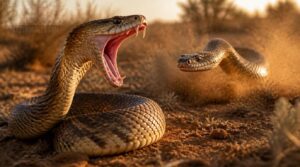
Picture a rival snake closing in fast — that gaping jaw isn’t stretching, it’s a warning to others. Threat level signaling ramps gape size up with danger, jaw muscles hold the pose steady, and bright mouth coloration flashes for effect. Add hissing, and you’ve got full defensive behavior, not the quiet, brief realignment yawning does after a meal.
Tongue Flicking and Scent Sampling

That threat display is all bravado; tongue flicking works the opposite way, quietly gathering airborne scent for the vomeronasal organ. It’s chemoreception in action—odor gradient sensing, pheromone detection, mate cue identification—not posturing.
This scent trail tracking looks nothing like a yawn’s brief jaw stretch or a defensive gape’s flashy warning.
Airway Clearing Movements

Airway clearing gapes look different: quick, forceful jaw stretches that pop the trachea open and let mucus or debris escape, distinct from jaw realignment yawns.
- Deep gape expands trachea
- Glottis pulls open
- Clears mucus/debris
- Restores normal breathing
Unlike gradual mucus clearance techniques in mammals, snakes lack airway vibration methods, postural drainage, or oscillating PEP devices—just gaping.
Prolonged Open-Mouth Breathing
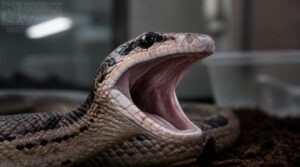
Now here’s the gape that should worry you: prolonged open-mouth breathing, held for minutes or longer, often paired with snorting, wheezing, or nasal obstruction. Unlike quick airway clearance movements, this signals real respiratory strain, sometimes a respiratory infection or early mouth rot.
Watch for these respiratory distress signs—labored breathing, mucus, lethargy—and don’t dismiss a snake that seems to openmouth breathe habitually.
When Does Snake Yawning Signal Illness?
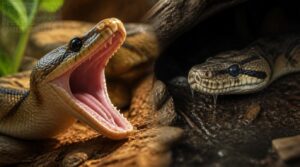
Every yawn isn’t a red flag, but a few patterns are worth paying attention to. Once gaping starts happening alongside other symptoms, or shows up too often, it stops being background behavior and starts being a message. Here’s what actually raises concern.
Repeated or Prolonged Gaping
One gape after a big meal is normal. A dozen over an hour isn’t.
A single yawn after a big meal is normal; a dozen within an hour signals something’s wrong
Repeated gaping past normal jaw realignment time can signal muscle fatigue or lingering enclosure conditions stress rather than simple stretching.
- Gaping over an hour post-feeding
- No prey or shedding trigger
- Gapes paired with head shaking
- Occurs during rest, not digestion
- Worsens with poor humidity
Wheezing or Labored Breathing
Listen closely: a healthy gape is silent. Wheezing or labored breathing during a yawn suggests airway obstruction, often from a respiratory infection thickening mucus in that single elongated lung.
Watch for effort, too. Normal jaw realignment doesn’t involve heaving sides or open-mouth breathing at rest. That’s your cue this isn’t jaw stretching anymore—it’s a breathing problem needing a vet’s assessment.
Mucus, Bubbles, or Nasal Discharge
A little foam near the mouth is normal—trapped air in saliva. But thick, bubbly mucus or nasal discharge tinted yellow, green, or bloody signals infection, not jaw stretching.
Dehydration thickens mucus, too, so check hydration first. Persistent bubbling, foul odor, or discharge lasting over a week means it’s time to call your vet.
Swollen Gums or Mouth Rot
Peek inside your snake’s mouth during a yawn. Healthy gums look pale pink and smooth; red, puffy tissue near the teeth suggests infection.
That’s mouth rot (infectious stomatitis)—plaque buildup or injury triggers gum inflammation, sometimes progressing to abscess formation with pus, tissue damage, or loose teeth.
Left untreated, it spreads toward respiratory infections. Any swelling, discoloration, or discharge warrants prompt veterinary care for your reptile’s oral health.
Appetite and Behavior Changes
A snake that yawns and then skips meals is telling you something. Watch for decreased appetite, lethargy, regurgitating meals, or abnormal stools alongside gaping—these behavioral feeding cues often signal illness, not routine jaw stretching.
Feeding frequency shifts, weight loss, or sudden disinterest in prey warrant attention.
Healthy yawning happens independent of appetite; sick snakes combine it with reduced interest in food.
What Should You Do About Frequent Yawning?

So you’ve noticed your snake yawning more than usual, and now you’re wondering what actually counts as action versus overreaction. The good news is you don’t need a herpetology degree to start figuring this out, just a bit of patient observation and a few practical checks. Here’s where to start.
Record Timing and Frequency
Grab a notebook and start tracking yawn frequency: jot down the date, time, and duration each time it happens. Note the feeding-yawn interval too, since gapes right after a meal signal normal jaw realignment.
Rest period yawning is typical; clusters outside that pattern deserve a closer look. Consistent health monitoring this way catches early signs of respiratory infection or mouth rot before they escalate.
Check Temperature and Humidity
Once the log shows a pattern, pull out the thermometer and hygrometer. Confirm the ambient temperature range sits between 24-30°C, with a basking spot near 32-34°C and a night drop to 20-22°C.
Verify your humidity gradient setup meets species needs—40-60% for most, higher for tropical species.
Poor environmental sensing often triggers stress-related gaping mistaken for illness.
Improve Ventilation and Enclosure Hygiene
If temperature checks out, look at airflow next. Poor enclosure hygiene and stale air are classic environmental stressors that trigger excess gaping.
Add intake/exhaust vents on opposite walls, keep filters on a maintenance schedule, and stick to a weekly cleaning schedule with daily spot-checks. Good substrate management and airflow regulation prevent ammonia buildup—often mistaken for respiratory infection or mouth rot symptoms.
Avoid Forced Jaw Handling
Cleaner air won’t help if your next move is prying open its mouth to "check things out." Resist that urge entirely—avoid direct jaw contact.
- Support the body, never the jaw
- Watch for gaping or hissing (stress signals)
- Skip forced mouth inspections
Rough handling risks jaw realignment issues. When in doubt, a vet controls it, not you.
Contact a Reptile Veterinarian
If gaping persists despite good husbandry, it’s time to contact a reptile veterinarian. Call during business hours, describe the yawning pattern, and request a same-day slot if breathing looks labored. Bring health records, your symptom log, and recent shedding notes. Expect diagnostics like bloodwork or radiographs, plus a follow-up call in 3–5 days to track progress.
Frequently Asked Questions (FAQs)
Is it normal for a snake to yawn?
Yes, completely normal. Yawning reflects jaw realignment, ligament elasticity maintenance, or postural reset behavior after resting, shedding, or eating. It’s rarely a red flag—think of it as routine behavioral adaptation, not sleepiness, and one worth noting during casual health monitoring.
How do I know if a snake is happy?
Think of a happy snake like a calm river, not a storm: relaxed coils, steady tongue flicks, curious exploring, regular feeding response, clean sheds, and easy tolerance during handling, all without defensive posturing.
What snake is worth $100,000?
A sunset or paradox ball python can hit six figures, driven by genetic rarity, breeder lineage, and collector demand—far removed from jaw mechanics, mouth gaping, or the feeding behavior that makes serpents yawn in the first place.
Why do reptiles yawn?
Reptiles yawn like a body doing a thousand tiny repairs at once: resetting jaw ligament stretch, aiding chemoreception, supporting thermoregulation, clearing airways, and prepping for shedding, all through one deceptively simple mouth gaping motion.
Do snakes yawn when they’re tired?
No—fatigue and circadian rhythm barely register here. Snakes yawn for jaw realignment and feeding behavior, not resting patterns. Their metabolic rate stays fairly steady regardless of sleep, so gaping reflects mechanical adaptation and oral health maintenance, not drowsiness like it does for you.
Why is my ball python yawning so much?
Picture a stretch after a long nap: your ball python’s jaw realignment works the same way. Most ball python yawning causes trace to post-meal readjustment or clearing the respiratory system—but frequent, wheezy gaping warrants a vet visit.
What does it mean when snakes open their mouths?
An open mouth usually points to jaw realignment, thermoregulation, or respiratory reset—normal behavior. Sometimes it’s a defensive bluff. Watch for prolonged gaping with wheezing or lethargy, though; that combo often signals respiratory illness needing a vet visit.
Why do snakes stretch their mouths?
Your snake stretches its mouth mainly for jaw adjustment, resetting elastic ligaments after feeding. This clears oral debris, resets breathing pathways, and matches jaw size to prey adaptation, keeping feeding behavior efficient without harming oral health in reptiles.
Do all snake species yawn equally?
Bulky boas and pythons gape often after big meals, while slender garter snakes yawn less, favoring quick scent-sampling flicks. Species variation ties directly to jaw mechanics, feeding behavior, and habitat—venomous or not.
Is yawning contagious among snakes?
Don’t count on social triggers here—yawns spread among reptiles by physiology, not imitation. Documented contagion evidence stays thin, since captive timing between yawns looks random rather than copied, tied to jaw realignment and olfactory needs, not shared threat assessment.
Conclusion
That wide-open gape is a small, honest window into a body doing quiet repair work, jaw ligaments snapping ligaments snapping back into place like a stretched rubber band finding its shape again. So why do snakes yawn? Mostly to recover, not to signal distress. Watch the pattern, not just the moment: brief, infrequent gapes tied to feeding are routine anatomy, while frequent, labored ones deserve your attention—and a vet’s trained eye.