
This site is supported by our readers. We may earn a commission, at no cost to you, if you purchase through links.

Most people picture a snake and instinctively want to back away. Ball pythons have a different effect on people—pick one up for the first time, and within minutes, you’re watching it calmly wind between your fingers like it’s been doing this its whole life.
That shift from nervous to confident happens faster than most new keepers expect. Ball pythons earn their beginner-friendly reputation not through marketing, but through temperament.
They’re small, slow-moving, and genuinely unbothered by human contact when handled correctly. A few straightforward techniques make all the difference between a snake that tenses up and one that drapes across your hand like it owns the place.
Table Of Contents
Key Takeaways
- Ball pythons are calm, slow-moving snakes that tolerate handling well, making them ideal for beginners.
- Safe handling starts with waiting 1–2 weeks after bringing your snake home, avoiding sessions during shedding or right after feeding.
- Building trust means using gentle, two-handed lifts, supporting the whole body, and keeping handling sessions short and consistent.
- A comfortable enclosure with proper temperature, humidity, and secure hides helps your ball python stay relaxed and easy to handle.
Are Ball Pythons Easy to Handle?
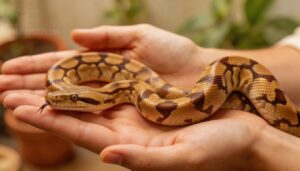
Ball pythons have a reputation for being one of the most beginner-friendly snakes out there — and honestly, it’s well-earned. That said, "easy to handle" means different things depending on the snake and the keeper.
Whether you’re just starting out or scaling up, knowing which snakes are easiest to breed can help you decide if ball pythons are the right fit for your setup.
Here’s what actually makes them manageable, and how to tell when your ball python feels comfortable in your hands.
Why Ball Pythons Are Considered Beginner-friendly
Ball pythons tick nearly every box for first-time reptile keepers. Their small size — usually 3 to 4 feet fully grown — makes them easy to hold and house.
A simple enclosure, low-cost feeding with frozen-thawed prey, and a lifespan of 20 to 30 years make long-term care manageable. These beginner-friendly ball python handling qualities keep the learning curve short and confidence high.
Docile Temperament Vs Individual Personality
That said, "docile" doesn’t mean identical. Ball pythons sit on a temperament spectrum — some stay loose and curious in your hands; others curl tight the moment you lift them.
These personality traits are real and vary by individual, not just morph or lineage. Watch their behavioral cues and consistency patterns over time. Regular handling helps, but each snake’s coping style is its own.
What Makes a Snake Feel Calm in Your Hands
Personality plays a role, but so does environment. A warm room, hands close to body temperature, and a predictable handling routine all help your snake stay calm. Keep the space low-vibration and your voice tone gentle — snakes feel vibrations easily.
Consistent light cycles and regular handling frequency build real trust over time. Simple, steady conditions make the biggest difference.
Signs a Ball Python is Comfortable Being Handled
Once your snake feels safe, its body tells the whole story. A relaxed ball python shows smooth body draping across your hands, steady breathing, and neutral head posture.
Watch for these four comfort signs:
- Minimal tongue flicking during contact
- Quick settling once lifted
- Tolerating slow repositioning without thrashing
- Returning to normal behavior after sessions
These cues confirm your taming techniques and handling frequency are building real trust.
When to Start Handling

Timing matters more than most new owners expect. Knowing when to handle — and when to leave your snake alone — makes a real difference in how comfortable they become with you.
These are the key moments to keep in mind.
Waiting 1–2 Weeks After Bringing Them Home
Think of it as a quarantine period for trust.
When you first bring your ball python home, give it 1–2 weeks of hands-off time. Snake acclimation depends on enclosure familiarity, scent acclimation, and thermal gradient stabilization, all settling in together.
During those first two weeks, a properly set up hide and stable temps do most of the heavy lifting — check out these ball python bite prevention techniques to stay safe if your new snake is still feeling unsettled.
Handling too soon disrupts feeding routine alignment and spikes stress. Wait until it’s eating reliably — then you’re ready.
Best Time of Day for Calm Handling Sessions
Early evening is your sweet spot. Ball pythons settle naturally when Evening Temperature Stability kicks in and Reduced Household Activity creates a calmer environment.
Dim Lighting Conditions mirror their crepuscular instincts, making trust building feel smooth.
For stress reduction, aim for Consistent Daily Timing — same days, similar hour.
A Nighttime Calm Period works because:
- Room noise drops naturally
- Fewer people means fewer startling movements
- Temperature gradient stays stable post-warmup
- The lighting cycle signals activity, not threat
- Regular handling at this hour builds a real routine
Why Not to Handle After Feeding
After feeding, your ball python needs time to rest undisturbed. Digestion Disruption from handling is a real concern — movement creates Behavioral Stress that raises Regurgitation Risk substantially. Thermal Stress kicks in too, since handling pulls the snake away from its warm side, causing Metabolic Slowdown.
For safe snake handling, wait 48–72 hours. That simple feeding frequency rule is your best risk management of regurgitation after feeding.
Why Shedding Periods Can Make Handling Harder
Shedding periods can flip your usually calm snake into a hands-off situation fast. During shed, cloudy eyes reduce vision, slippery skin makes gripping harder, and irritable behavior replaces the usual calm.
Watch for these shedding timing signals:
- Dull, patchy skin appearing across the body
- Milky, cloudy eyes indicating pre-shed
- Increased hiding and reduced activity
- Slippery skin from loosening outer layers
- Stuck shed or incomplete shed from low humidity
Skip handling entirely until the shed completes.
When Illness or Stress Means Hands Off
Your snake’s body tells you when it’s off-limits — learn to listen. Open-mouth breathing, wheezing, and clicking sounds are illness signs you can’t ignore. Visible mites, regurgitation, or neurological wobbling all call for hands-off recovery protocols immediately.
Even stress indicators like tight coiling, repeated striking, or frantic escape attempts mean you step back.
Snake handling safety always starts with knowing when not to handle.
Safe snake handling begins with knowing when to leave your snake alone
How to Handle a Ball Python Safely
Once you’re ready to pick up your ball python, a few simple habits make all the difference. Handling them the right way keeps both of you calm and builds trust faster than you’d expect.
Here’s what to keep in mind every time you reach into the enclosure.
Approaching From The Side Instead of Above

Coming in from above looks a lot like a predator diving in — and your ball python knows it.
Side approach benefits are real: approaching from the side expands their visual field, so your movement feels less threatening. Slow, lateral entry gives them time to read you.
Start midsection contact first, not the head, and you’ll notice far less defensive coiling right away.
Supporting The Full Body During Lifts
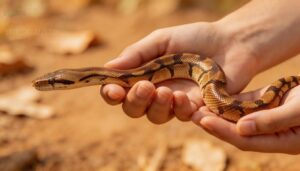
Once you’ve approached from the side, your next move matters just as much. Use a two-hand lift — one hand under the mid-body, one supporting the tail.
This weight distribution keeps your ball python in a natural S shape curve, so nothing hangs unsupported. It also helps with slip prevention.
When every section feels stable, they stay calm.
Using a Gentle, Secure Grip Without Squeezing

Once your ball python is lifted, think of your hands as a moving shelf, not a clamp. Hand placement matters — one hand under the mid-body, fingers loose with slack fingers, never pinching.
- Keep even pressure across a wide body section
- Allow neck freedom so breathing stays unobstructed
- Use a relaxed grip that follows their movement
- Loosen immediately if they pull away
That’s the whole technique.
Keeping The Head Away From Your Face

Your grip is sorted — now think about where the head points.
Head Direction Control is simple: hold the body low, below your chin, and keep your face out of the snake’s forward path. This is your Face Buffer Distance, and it matters.
If the head lifts or turns toward you, shift your body angle slightly sideways. Never bring the snake near your mouth or eyes.
Safe Handling Rules for Children and Beginners

Children can absolutely enjoy ball pythons — with the right setup.
Follow these snake handling safety rules for children:
- Adult Supervision Required — always stay within arm’s reach
- Low Surface Handling — sit on the floor or a low table
- Avoid Loud Noises — keep voices calm using a Gentle Voice Tone
- Kid Friendly Enclosure — let kids observe first before touching
How to Build Handling Trust
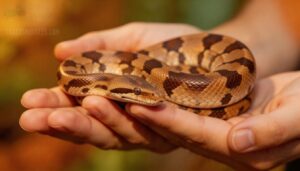
Trust doesn’t happen overnight — it builds one calm session at a time.
The good news is that ball pythons are wired to relax around you once they learn you’re not a threat. A few simple habits make all the difference.
Starting With Short 5–15 Minute Sessions
Keep early sessions short — five to fifteen minutes is plenty. Use gradual time increments rather than rushing progress. Set timer alerts so you don’t lose track.
Stick to a consistent daily routine in a quiet handling space, and observe stress signals like tight curling or restless movement.
These beginner-friendly ball python handling techniques build real trust through stress reduction and patience.
Handling 1–2 Times Per Week
Once or twice a week is the sweet spot for handling cadence — enough to build tolerance without overwhelming your snake. Regular handling at this session frequency gives your ball python time to recover and settle between visits.
Monitor progress by watching for calmer behavior over time, and if stress signs appear, simply adjust your intervals. Consistency matters more than frequency.
Moving Slowly to Avoid Defensive Reactions
Moving slowly is one of the simplest ways to keep defensive posture from showing up during handling. Gradual entry speed matters from the first moment — when your hand approaches, your ball python’s senses are already reading you.
Use a slow transfer technique** and controlled grip movements to minimize sudden motions.
Steady posture positioning builds the stress reduction and trust that make every session feel safer for both of you.
Using Clean, Scent-free Hands Before Handling
Your hands tell a story before you even lift your snake. Ball pythons rely on scent, so what’s on your skin matters.
- Hand Hygiene first — wash with unscented soap, rinse fully, and dry with scent-free towels.
- Avoid perfume, lotion, food smells, or disinfectant residue before contact.
- Glove use works when scent transfer is a real concern.
Clean hands build trust fast.
What Makes Handling Easier?
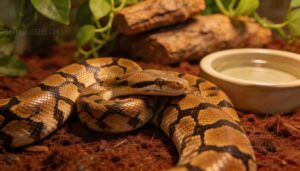
Handling gets a lot easier when your snake’s home is set up right. A comfortable enclosure doesn’t just keep your ball python healthy — it shapes how relaxed they’re when you pick them up.
Here’s what to get right before your next session.
Proper Temperatures for a Calm, Comfortable Snake
Temperature plays a bigger role in handling than most people expect. A well-set enclosure — warm side around 80–85°F, a basking spot near 90–95°F, and cool side safety around 75–80°F — lets your snake regulate its own body temperature through proper temperature gradients.
Use a thermostat to lock in those thermostat settings and allow a gentle nighttime temperature drop. A comfortable snake is a calm snake.
For detailed guidance, see the optimal temperature gradient.
Humidity Levels That Support Comfort and Shedding
Humidity matters more than most new keepers realize. Your ideal humidity range sits between 50–60% day-to-day, rising to around 70% as part of shed boost strategies during shedding.
A hygrometer placed near the warm-side hides gives you the most accurate read. Substrate moisture management — using cypress mulch or coconut fiber — keeps levels stable without soaking the enclosure. That ventilation humidity balance prevents shedding problems before they start.
Secure Hides That Reduce Fear and Defensiveness
Just like humidity sets the stage for comfort, your snake’s hide box does the heavy lifting for stress reduction. Hide Size Fit matters — snug beats spacious every time.
A properly sized entrance shape limits sightlines, while thermal placement near the warm zone keeps your snake settled. Interior texture and hide variety give them real enclosure enrichment, building trust session by session.
Quiet Enclosure Placement and Low-stress Surroundings
Where you place the enclosure matters more than most people think. Room Noise Reduction starts by choosing a low-traffic spot — away from speakers, washing machines, and busy hallways. Low-traffic placement keeps vibrations to a minimum during your snake’s rest cycles.
- Keep Stable Lighting Conditions with indirect, consistent light
- Practice Air Draft Management by avoiding HVAC vents
- Maintain an Odor-Free Environment using unscented cleaners nearby
Health Checks That Support Consistent, Easy Handling
A calm environment sets the stage, but regular health checks keep handling predictable. Weight Tracking and Appetite Monitoring tell you more than a quick glance ever will.
If your snake skips meals or loses weight, hold off on handling. Watch for stress signs, shedding problems, scale rot, and respiratory infections.
Parasite Screening, Skin Condition checks, and Respiratory Health monitoring together make every session safer and steadier.
Frequently Asked Questions (FAQs)
Is caring for a ball python difficult?
Ball python care isn’t hard, but it’s not hands-off either.
You’ll manage Habitat Size, Feeding Frequency, Disease Prevention, and Budget Planning — all are very doable with the right ball python beginner care checklist from day one.
How long do ball pythons typically live in captivity?
These snakes practically outlive your furniture.
With good care, ball python lifespan and longevity usually span 20 to 40 years in captivity — making the average lifespan a genuinely long-term commitment worth knowing before you bring one home.
What prey size is safe for ball pythons?
Match prey to your python’s midsection width — no bigger than 1 to 5 times that point.
A life stage chart simplifies rodent prey size selection and helps you avoid oversized meal risks entirely.
How often should adult ball pythons be fed?
Most adult ball pythons do well on a feeding interval of every 10 to 14 days. Watch body condition and adjust prey size as needed — that’s really all it takes.
What enclosure size does an adult ball python need?
For most adults, a 40-gallon minimum works, but 36×18×12 inches covers your minimum dimensions better. Bigger females need more enclosure size — think 4×2×2 feet for an appropriately sized habitat.
How much does a ball python cost to purchase?
Most ball pythons cost $50–$300 for common morphs. Morph price ranges climb to $1,500 for rarer varieties. Factor in starter setup costs of $300–$550 — enclosure, hides, and heating included.
Conclusion
Imagine handling a ball python so smoothly that it feels like an extension of your arm. With practice and patience, you’ll get there!
Ball pythons are indeed easy to handle, thanks to their calm nature and your newfound expertise. By following these simple tips, you’ll build trust and enjoy stress-free interactions.
Your ball python will thrive in your care, and you’ll discover the joy of a harmonious snake-owner relationship, making the experience truly unforgettable every time.
- https://www.arav.org/find-a-vet/
- https://journals.biologists.com/jeb/article/218/14/2279/14389/Snake-constriction-rapidly-induces-circulatory
- https://www.researchgate.net/publication/232678980_Sex_Differences_in_Body_Size_and_Ectoparasite_Load_in_the_Ball_Python_Python_regius
- https://www.reptifiles.com/responsible-reptile-breeding/
- https://www.hvreptilerescue.org/resources/care-guides/ball-python-care-guide