
This site is supported by our readers. We may earn a commission, at no cost to you, if you purchase through links.

Your ball python’s midsection looks thicker than usual—and it’s not because she just ate. When a snake’s stomach swells without an obvious meal to blame, you’re likely dealing with impaction, infection, or another internal issue that won’t resolve on its own.
Bloated snake stomach issues range from minor digestive slowdowns to life-threatening blockages, and the difference often comes down to how quickly you recognize the problem. Snakes can’t tell you when something hurts, so you need to read their body language: the subtle changes in posture, the refusal to move, the telltale firmness under gentle palpation.
Understanding what causes these symptoms—and what to do about them—can mean the difference between a simple fix and an emergency vet visit.
Table Of Contents
- Key Takeaways
- Common Causes of Bloated Snake Stomachs
- Key Symptoms of Stomach Bloating in Snakes
- Diagnosing Snake Stomach Issues
- Treatment Options for Bloated Snake Stomachs
- Preventing Stomach Bloating and Impaction
- Frequently Asked Questions (FAQs)
- Why does my snake look bloated?
- What are the symptoms of paramyxovirus in snakes?
- What is a snake’s stomach disease?
- How to tell if a snake is overfed?
- Can bloating resolve on its own without treatment?
- How long does recovery from impaction typically take?
- Are certain snake species more prone to bloating?
- Whats the difference between bloating and post-feeding bulge?
- When should I consider euthanasia for severe cases?
- Conclusion
Key Takeaways
- Bloated snake stomachs signal internal problems ranging from substrate impaction and overfeeding to infections, parasites, or tumors—and most cases won’t resolve without intervention.
- Key warning signs include visible abdominal swelling that persists beyond normal digestion, refusal to eat for weeks, straining without defecation, and unusual behavior like constant hiding or defensive snapping during handling.
- Prevention hinges on matching prey size to your snake’s girth, using safe substrates like cypress mulch instead of fine sand, maintaining precise temperature gradients (28–32°C basking, 22–26°C cool side), and keeping humidity at 40–60%.
- Mild bloating from dehydration may improve with warm soaks and hydration therapy within days, but severe impaction, foreign object blockages, or infections require immediate veterinary care including imaging, medications, or surgery.
Common Causes of Bloated Snake Stomachs
A bloated snake stomach doesn’t appear out of nowhere—it’s your snake’s body telling you something’s wrong inside.
If your snake’s enclosure temperature drops too low, digestion slows dramatically—and that undigested meal can lead to dangerous bloating and serious health complications from cold stress.
A bloated snake stomach is your pet’s distress signal that something has gone wrong internally
The causes range from simple husbandry mistakes to serious internal disease, and knowing the difference can save your pet’s life. Let’s walk through the five most common culprits behind that swollen abdomen so you know exactly what to watch for.
One of the most overlooked causes is impaction from improper substrate choices, which can lead to complete intestinal blockage if your snake ingests bedding material during feeding.
Impaction From Substrate or Foreign Objects
Substrate ingestion ranks among the most preventable causes of snake impaction—yet it happens often. When your snake swallows sand, gravel, or bark stuck to prey, those particles travel down and create gut obstruction.
Choosing a safer substrate and heat setup reduces both ingestion risk and thermal complications that silica-based materials often introduce.
Foreign object blockage from plastic plants or cage hardware can lodge where the intestine narrows, triggering coelomic swelling and intestinal damage that demands immediate veterinary attention.
Understanding the importance of substrate composition and safety can help prevent many impaction-related issues.
Overfeeding and Oversized Prey
Just as substrate can block the gut, prey that’s too large or too frequent puts enormous stress on your snake’s digestive health. When you feed meals larger than 1.5 times midbody width, you risk regurgitation, painful bloating, and snake impaction.
Overfeeding risks include:
- Stretched stomach triggering immediate swelling
- Fatty liver from chronic overload
- Regurgitation stripping protective gut lining
- Organ crowding that mimics gastrointestinal health crises
Proper prey size and feeding guidelines—matching diameter to your snake’s girth—keep digestive issues at bay and support long-term snake nutrition and reptile health.
It’s important to recognize that overfeeding risks in reptiles extend beyond digestion and can lead to organ damage and reduced life expectancy.
Dehydration and Poor Hydration
Even well-fed snakes can bloat when they lack water. Dehydration thickens feces and urates into chalky plugs, triggering snake impaction and visible swelling near the tail.
Poor Humidity Control and no soaking dish prevent normal Fluid Balance, so digestive issues worsen. Watch for Dehydration Signs—wrinkled skin, sunken eyes, firm bellies—and respond with Hydration Therapy: warm soaks encourage Water Absorption and often restart stalled bowel movements before bloating becomes critical.
Infections and Parasites
Infectious diseases hit snakes harder than dehydration alone—Cryptosporidium Infection thickens stomach walls, causing mid-body bulges and chronic regurgitation without effective cure.
Preventing such infections starts with maintaining proper enclosure hygiene and temperature gradients, which you can learn more about in this comprehensive corn snake care and maintenance guide.
Intestinal Worms, Protozoal Diseases, and Bacterial Enteritis flood the gut with gas and fluid, producing foul diarrhea and visible bloating.
Viral Infections weaken your snake’s immune system and slow gut motility, turning simple meals into abdominal emergencies that demand immediate reptile diseases expertise.
Tumors or Internal Growths
Internal tumors—renal adenocarcinomas, lymphomas, digestive-tract sarcomas—account for roughly 87 percent malignancy in documented snake oncology cases and trigger firm, progressive abdominal neoplasia that doesn’t shift like intestinal blockage.
These internal masses press on organs, mimic snake impaction or ascites, and demand tumor diagnosis through ultrasound and biopsy. Without early cancer treatment, median survival drops to one month versus five-plus with surgical excision.
Key Symptoms of Stomach Bloating in Snakes
Bloating in snakes doesn’t always announce itself with obvious distress—sometimes the signs are subtle until the problem has progressed. Recognizing what’s normal behavior for your snake makes it easier to spot when something’s off.
Keeping tabs on temperature and humidity levels in your snake’s habitat helps you catch stress-related digestive issues before they escalate into bloating.
Here are the key symptoms that signal your snake may be dealing with stomach bloating or a digestive blockage.
Visible Abdominal Swelling
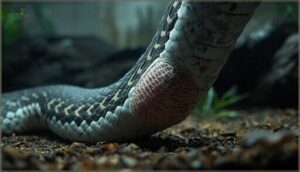
When you spot an abdominal bulge along your snake’s midbody, you’re looking at one of the clearest emergency signs in reptile care. This swelling differs from normal post-meal contours—snake impaction creates a firm, sausage-like mass in the lower body, while intestinal blockage produces irregular hardness.
Check snake anatomy carefully: digestive health issues show as persistent, non-moving bloating that demands immediate veterinary care.
Loss of Appetite and Lethargy
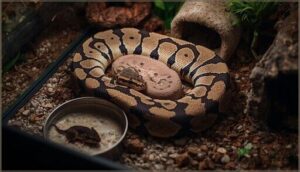
When your snake refuses favorite prey for weeks and barely moves, you’re often seeing the body’s shutdown response to digestive blockage or dehydration. Appetite changes and lethargy signs reveal critical digestive issues that demand swift health monitoring.
- Sudden refusal to eat lasting beyond normal feeding cycles signals intestinal blockage
- Hiding constantly with minimal exploration indicates discomfort from bloating
- Sluggish movement paired with anorexia suggests severe snake impaction or organ disease
- Lack of tongue-flicking shows reduced responsiveness linked to internal distress
- Weight loss during prolonged appetite decline marks advancing digestive issues requiring veterinary intervention
Straining Without Defecation

When your snake curls tight and pushes against surfaces for 10 to 20 minutes without producing waste, you’re watching digestive block in action.
Straining signs—repeated cloacal pressure, visible contractions, and no bowel movement—point directly to snake impaction or intestinal blockage. A constipated snake can develop cloacal prolapse from persistent straining, turning bloating into a surgical emergency fast.
Change in Body Shape or Contours
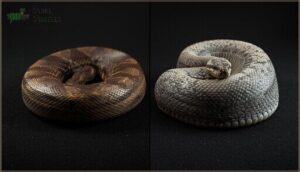
A healthy snake glides like a smooth cylinder—bloating rewrites that silhouette into something misshapen and wrong. When gastrointestinal issues or ascites set in, you’ll notice:
- Asymmetrical bulges that sit fixed instead of traveling like digestion normally does
- Scale patterns spreading apart over swollen segments, revealing skin between belly scales
- Ribcage visibility sharpening before or after the distended area, creating stark body contour changes
Snake impaction produces lumpy, segmented profiles where abdominal swelling interrupts natural taper.
Unusual Behavior or Discomfort

When gastrointestinal issues or snake impaction strike, your pet’s behavior tells the story its body can’t. Watch for restlessness signs—pacing, glass refusal, or constant soaking beyond shedding cycles.
Abnormal posturing like stiff coils or elevated front halves flags pain indicators clearly. Defensive snapping during gentle handling, combined with bloating and dehydration symptoms, signals digestive blockage needs immediate veterinary attention before discomfort signals escalate dangerously.
Diagnosing Snake Stomach Issues

Pinpointing what’s causing your snake’s bloated stomach isn’t guesswork—it requires a systematic veterinary workup. Your vet will use a combination of hands-on examination, imaging technology, and lab work to identify whether you’re dealing with impaction, infection, or something more serious.
Here’s how professionals diagnose stomach issues in snakes.
Physical Examination and Palpation
Your reptile vet starts with abdominal inspection—checking for swelling, asymmetry, or skin changes that signal trouble.
Palpation techniques follow: gentle, systematic pressure from head to tail reveals firm masses, fluid buildup, or that telltale hardness of snake impaction.
Proper snake handling during this coelomic evaluation lets the vet feel digestive blockage or bloating without causing harm, while your snake’s reactions reveal pain or discomfort.
Imaging (Radiographs, Ultrasound)
When palpation findings remain unclear, your reptile vet relies on diagnostic imaging to see what’s hiding inside.
Radiograph techniques produce X-ray silhouettes—gas shows black, impacted material gray—pinpointing snake impaction or digestive blockage with precision.
Ultrasound imaging adds real-time abdominal scanning of stomach walls and contents, tracking peristalsis and fluid.
Together, these medical visualization tools map your snake’s internal landscape for accurate diagnosis.
Laboratory Tests and Fecal Analysis
Beyond radiography and diagnostic imaging, your reptile vet draws blood and collects fresh droppings for microscopy tests. Bloodwork analysis reveals organ stress, dehydration markers, and infection flags.
A fecal exam detects parasite eggs, coccidia, and inflammatory cells that cause gut upset. Together, these tests distinguish digestive blockage from fecaliths, urate plugs, or hidden infections fueling your snake’s bloated stomach.
Environmental and Dietary Assessment
Your vet won’t stop at blood draws—they’ll ask detailed questions about your snake’s daily life. Enclosure design, temperature management, and humidity control all shape digestive health, so expect queries about wattage, gradients, and hygrometer readings.
Feeding practices matter just as much:
- Prey size relative to your snake’s girth
- Feeding frequency and meal intervals
- Substrate type and ingestion risk during strikes
This assessment connects husbandry gaps to bloating, revealing whether dietary needs or environmental flaws triggered the swelling.
Treatment Options for Bloated Snake Stomachs

Once your vet confirms what’s causing your snake’s bloated stomach, treatment can begin—and the approach depends entirely on severity.
Mild cases often respond to conservative therapies you can manage at home with guidance, while serious blockages may require clinical intervention or even surgery.
Here’s what you should expect across the spectrum of treatment options.
Hydration Therapy and Warm Soaks
When dehydration fuels bloating, rehydration methods can restore fluid balance and ease snake impaction. Veterinarians often administer 10–30 ml per kilogram per day for maintenance, scaling up to 40 ml/kg in severe cases. Warm water soaks—15 to 30 minutes daily at mid-70s to low-80s°F—soften hardened feces and encourage digestive relief.
| Soak Technique | Water Depth | Duration & Frequency |
|---|---|---|
| Shallow warm soak | Mid-body level | 15–30 min daily |
| Electrolyte bath | One-third diameter | 15–20 min as needed |
| Medicated rinse | Vent coverage | Short sessions only |
Always monitor your snake during soaks to prevent drowning or thermal burns, and combine electrolyte therapy with corrected enclosure humidity for lasting digestive relief.
Gentle Massage and Lubricants
When manual support can ease digestive blockage, you’ll use gentle circular strokes along the ventral midline—light pressure only—to encourage peristaltic motion without stressing delicate organs.
Water-based lubricants approved for reptile handling reduce friction on scales during massage techniques, but skip petroleum products that irritate skin. Monitor your snake’s breathing and stop if distress appears; palpation reveals firm masses requiring immediate veterinary care, not home treatment.
Medical Interventions (Enemas, Medications)
When warm soaks and massage fall short, your reptile vet steps in with targeted medication options and Enema Therapy to tackle severe snake impaction or digestive blockage tied to dehydration.
Common Medical Interventions:
- Osmotic laxatives (like lactulose) draw water into the gut, softening impacted material over hours to days
- Pain Management drugs (meloxicam, butorphanol) reduce discomfort during intensive Fluid Therapy and enema procedures
- Prokinetic agents stimulate upper gut movement when imaging rules out complete obstruction, preparing your snake for Surgical Relief if needed.
Surgical Solutions for Severe Cases
When conservative therapies fail to resolve snake impaction or digestive blockage, your reptile veterinarian may recommend surgical removal.
Laparoscopic Surgery with Robotic Assistance allows for precise access through small ports, cutting recovery time by 30–50 percent.
Endoscopic Techniques help locate and extract impacted material, while careful Abdominal Repair and temperature-controlled Postoperative Care protect delicate tissue and support metabolic healing.
Preventing Stomach Bloating and Impaction
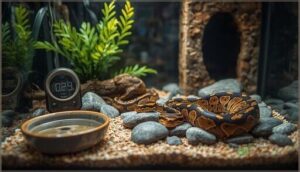
Prevention beats treatment every time—especially in the case of impaction and bloating in your snake. The good news is that most stomach issues are completely avoidable with the right husbandry practices.
Let’s break down the key areas you need to focus on to keep your snake’s digestive system running smoothly.
Proper Diet and Prey Size Selection
Feeding your snake the right prey at the right intervals is like maintaining a finely tuned engine—one misstep throws everything off. Proper meal portioning and prey rotation protect digestive health and prevent dangerous bloating that can spiral into impaction.
- Match prey size to girth: Feed items no wider than your snake’s thickest point to support safe snake digestion.
- Adjust feeding frequency by age: Juveniles eat every 5–7 days; adults thrive on monthly meals.
- Rotate prey types: Varying between rodents and birds ensures nutrient balance and sustained appetite.
Safe Substrate and Enclosure Setup
Your enclosure design forms the first line of defense against substrate ingestion—a leading cause of impaction. Choose medium-granule, dust-free options like cypress mulch or reptile carpet instead of fine sand that snakes can swallow during feeding strikes.
Make certain ventilation systems prevent moisture pooling without over-drying. Safe substrate selection paired with clean enclosure setup protects snake digestion and promotes long-term reptile health and wellness.
Maintaining Optimal Temperature and Humidity
Beyond substrate choices, temperature control and humidity levels shape your snake’s digestive efficiency. Basking zones at 28–32°C paired with cool retreats at 22–26°C—monitored through dual-zone climate monitoring—prevent gut slowdowns that trigger bloating. Pair stable heat sources with ventilation systems that sustain 40–60% humidity without trapping moisture. Consistent hydration and precise reptile care and husbandry stop dehydration before impaction starts.
- Your thermostat deadband keeps temperatures steady within 1–2°C—eliminating stress spikes
- Twice-daily sensor checks catch microclimates before they harm digestion
- Species-specific humidity prevents shedding problems that mask bloating symptoms
- A humid hide with damp moss aids post-meal comfort and gut motility
- Aligning feeding times with stable basking periods aids stomach breakdown and reduces risk
Regular Health Monitoring and Vet Checkups
Scheduled wellness visits with a reptile vet—ideally annual checkups or biannual for seniors—catch digestive red flags before bloating escalates. Your veterinary care professional performs palpation, reviews health record keeping, and adjusts snake nutrition plans as metabolism shifts. Document feeding dates, girth changes, and stool consistency between visits. Owner education during these appointments sharpens your eye for subtle cues, turning routine veterinary medicine into proactive reptile health and wellness.
| Visit Type | Frequency | Focus Areas |
|---|---|---|
| Wellness exam | Annual | Weight, digestion, parasites |
| Senior screening | Every 6 months | Organ function, mobility |
| Problem-focused | As needed | Imaging, bloodwork, treatment |
Recognizing Early Warning Signs
Beyond scheduled checkups, your daily observations are the front line against digestive issues. Early symptoms of snake impaction and bloating often appear subtly—abdominal distension paired with appetite loss, straining without defecation for 48 hours, or stretched scutes over a firm belly.
Watch for warning signs in snake behavior:
- Increased hiding despite normal heat gradients
- Shallow breathing with visible abdominal effort
- Dehydration cues like sunken eyes or dry mouth
Catching these digestive issues early prevents surgical emergencies.
Frequently Asked Questions (FAQs)
Why does my snake look bloated?
You might see swelling from impaction—substrate buildup blocking the gut—dehydration hardening waste, overfeeding stretching tissues, parasites like Cryptosporidium thickening stomach walls, or tumors causing localized distension in your snake’s anatomy.
What are the symptoms of paramyxovirus in snakes?
Paramyxovirus symptoms include respiratory issues like open-mouth breathing and wheezing, neurological signs such as head tremors or stargazing, gastrointestinal problems including regurgitation and anorexia, plus behavioral changes like lethargy—often progressing to high mortality rates.
What is a snake’s stomach disease?
Snake stomach disease encompasses a range of digestive issues in snakes—from impaction causes like substrate ingestion to gut health breakdowns from dehydration, infections, parasites, and blockages requiring immediate reptile vet attention.
How to tell if a snake is overfed?
Like stretching a rubber band too far, your snake’s body tells the story—watch for thick neck proportions, persistent abdominal swelling between feedings, reduced appetite, and sluggish movement signaling overfeeding signs and digestive health concerns.
Can bloating resolve on its own without treatment?
Some mild bloating from dehydration or constipation improves with hydration and gentle care within days.
However, snake impaction, infections, or foreign objects won’t self-resolve—digestive relief demands veterinary intervention for proper natural remedies and recovery.
How long does recovery from impaction typically take?
Recovery from impaction usually spans three days to six weeks.
Mild cases with prompt rehydration methods often improve within a week, while severe impaction requiring surgery demands longer post-surgery care and healing processes.
Are certain snake species more prone to bloating?
Yes—ball pythons and Burmese pythons face higher bloating risk from overfeeding or dehydration, while kingsnakes and corn snakes more commonly ingest substrate.
Species anatomy and feeding behavior directly influence susceptibility to impaction.
Whats the difference between bloating and post-feeding bulge?
A post-feeding bulge appears right after your snake eats and gradually shrinks as digestion progresses.
Bloating persists independently of meals, often signaling dehydration, impaction, or underlying digestive health problems requiring veterinary care.
When should I consider euthanasia for severe cases?
Studies show roughly 15% of exotic pet owners face end-of-life decisions annually.
Consider euthanasia when your snake experiences unrelenting pain, irreversible organ failure, or zero quality of life despite exhaustive veterinary interventions and compassionate care efforts.
Conclusion
Your snake’s body is a closed system—when something goes wrong inside, the signs show up outside. Bloated snake stomach issues don’t resolve through wishful thinking or delayed action.
You’ve learned to recognize the swelling, read the behavioral shifts, and understand when home care stops being enough. The moment you spot abnormal distension paired with lethargy or straining, your clock starts ticking.
Trust your observations, act decisively, and let your vet confirm what you’ve already suspected.
- https://lbah.com/reptile/snake-impaction/
- https://www.cabidigitallibrary.org/doi/pdf/10.5555/20093018983
- https://www.petplace.com/article/reptiles/general/lumps-and-bumps-in-snakes
- https://www.merckvetmanual.com/exotic-and-laboratory-animals/reptiles/clinical-procedures-for-reptiles
- https://www.vettimes.com/clinical/exotics/snakes-husbandry-and-common-health-problems-cpdreptiles