This site is supported by our readers. We may earn a commission, at no cost to you, if you purchase through links.

You won’t find a more forgiving reptile pet than a corn snake. These North American colubrids thrive on neglect that would stress out most other species—they don’t need daily interaction, elaborate setups, or constant monitoring.
With over 800 morphs ranging from fiery reds to ghostly whites, corn snake morphs offer stunning variety without the complexity of basic husbandry. A 30-gallon tank, weekly feedings, and occasional spot-cleaning keep them healthy for 15–20 years.
Whether you’re drawn to classic Okeetees or mesmerizing Snow morphs, you’ll discover which color variants match your skill level and how simple genetics create these appealing patterns.
Table Of Contents
- Key Takeaways
- Why Corn Snakes Are Low Maintenance Pets
- Popular Corn Snake Morphs for Beginners
- Morph Characteristics and Unique Traits
- Essential Care Requirements for Corn Snakes
- Handling, Health, and Maintenance Tips
- Ethical and Cost Considerations in Morph Selection
- Frequently Asked Questions (FAQs)
- Conclusion
Key Takeaways
- Corn snakes are exceptionally beginner-friendly pets that thrive with minimal effort—a 30-gallon tank, weekly feedings, and basic temperature control keep them healthy for 15–20 years without demanding daily interaction or complex setups.
- With over 800 morphs available, you can choose stunning color variations like Albino, Snow, or Okeetee without worrying about different care requirements since all morphs follow identical husbandry protocols regardless of their genetics or appearance.
- Their docile temperament isn’t tied to color genetics but develops through consistent handling and proper environmental conditions, making any morph suitable for first-time keepers who provide stable temperatures and gentle acclimation.
- Ethical purchasing matters—reputable breeders provide transparent health guarantees, documented lineage, and proper licensing while pricing ranges from $30–$100 for common morphs, making quality corn snakes accessible without breaking your budget.
Why Corn Snakes Are Low Maintenance Pets
If you’re new to reptiles, corn snakes are about as beginner-friendly as it gets. They don’t demand complicated setups or constant attention, and their calm personalities make them easy to work with.
Let’s look at what makes these snakes such low-maintenance companions.
Temperament and Behavior
Corn snakes are known for their docility and calm temperament, making handling a breeze even for first-timers. They’re naturally crepuscular—most active at dawn and dusk—so you’ll catch them exploring during those low-light hours.
Stress indicators like excessive hiding or striking are rare when you provide proper environmental enrichment, like climbing branches and hides. With consistent, gentle interaction, defensive behaviors fade quickly, and their handling tolerance improves noticeably within weeks.
Regular handling helps to keep the snake tame, and you can learn more about snake body language.
Lifespan and Health Overview
That calm nature you just learned about comes with an impressive captivity lifespan—your corn snake can live 15 to 20 years, with some reaching over 23 years under best care. Common ailments like respiratory infections and parasite rates around 38% are preventable with proper temperature control and annual veterinary care. Wild corn snakes usually live only 6-8 years. Here’s what keeps them thriving:
- Maintain correct humidity to prevent shedding issues
- Monitor for external mites requiring treatment
- Schedule yearly vet exams for early detection
- Keep temperatures stable to avoid respiratory factors
Ease of Care for Beginners
Beyond their long lifespan, these beginner pet snakes shine in day-to-day simplicity. A standard 30–40 gallon tank, one heat source with a thermostat, and frozen-thawed mice every two weeks keep your adult content.
Their docile temperament means you can handle them 1–2 times weekly without drama. Beginner-friendly corn snake morphs don’t demand misting systems or complex setups—just spot-clean substrate and refresh water weekly for routine maintenance success.
Popular Corn Snake Morphs for Beginners
Choosing your first corn snake morph doesn’t have to feel overwhelming. Some morphs are easier to find, gentler to handle, and need the same straightforward care you’re already learning about.
Let’s look at a few standout options that make great starting points for new keepers.
Morphs With Docile Temperament
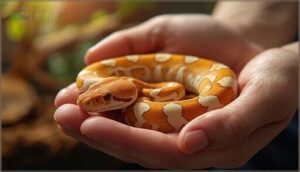
When you’re shopping for popular corn snake morphs, you’ll find that temperament isn’t tied to color—it’s shaped by captive-bred origin, enclosure conditions, and habituation handling. Individual variation matters more than genetics, so don’t worry if you fall for a stunning pattern.
Here’s what influences docility in any corn snake morph:
- Consistent handling frequency builds trust and reduces defensive behavior
- Stable temperature and humidity prevent stress-related nervousness
- Gentle acclimation after purchase helps your snake settle in calmly
Easy-to-Care-for Color Variants
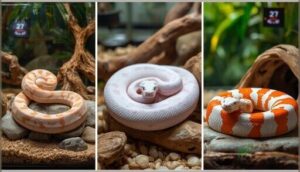
All beginner-friendly morphs—from Albino to Snow to Okeetee—thrive on identical care protocols. You’ll use the same 75–115 liter enclosure, maintain 24–29 °C warm-side temperatures, and feed pre-killed rodents every seven to ten days regardless of color.
Beginner-friendly corn snake morphs don’t demand morph-specific adjustments, so you’re free to pick the pattern that excites you most without worrying about extra work.
Readily Available Beginner Morphs
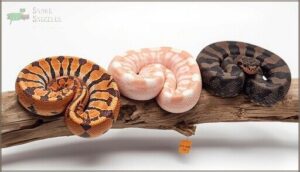
You’ll find Normal Corn Snake Morph hatchlings at most chain pet stores for around $30–40, making them the most budget-friendly option. Albino and Anerythristic variants sit in the $40–100 range, while Okeetee locality types generally cost $70–100.
These beginner morphs dominate captive breeding programs, so you’ll see dozens listed online at any time—availability is never an issue.
Morph Characteristics and Unique Traits

One of the most exciting parts of owning a corn snake is choosing from the vast variety of morphs available. Each morph has its own unique color patterns and genetic traits that make it stand out, and some are easier to care for than others.
Let’s explore what makes these morphs so special and which ones work best for beginners.
Color and Pattern Variations
Corn snake morphs offer an amazing rainbow—from jet-black anerythristics to creamsicle-orange amelanistics. You’ll find over 800 color variations and pattern genetics at work, including wild-type saddles, motley dashes, and even striped spines.
Corn snake morphs span over 800 color variations—from jet-black anerythristics to creamsicle-orange amelanistics and wild-type saddle patterns
Morph identification starts with understanding color mutations like albino (red eyes, no black) versus hypo (brighter reds). The rarest morphs, such as Palmetto with scattered speckles, showcase future morphs’ exciting potential in corn snake characteristics and traits.
Genetics Behind Morphs
Understanding how recessive inheritance and dominant influences shape corn snake morphs unlocks genetic traits you can predict. Most color variations—like albino and anerythristic—need two copies of a recessive gene to show up, so hidden genetics in normal-looking snakes can surprise you.
Identified genes such as CLCN2 control pattern formation, and breeding outcomes depend on knowing which genetic variations your snakes carry.
Notable Beginner-Friendly Morphs (e.g., Albino, Snow, Okeetee)
You’ll love that Albino genetics and Snow coloration won’t stretch your wallet—amelanistic snakes generally run $50–$75, while Snow morphs cost just a bit more. Okeetee origins trace back to South Carolina’s wild lines, and these beginner-friendly corn snake morphs stay under $100 in most cases.
The Amel Corn Snake Morph and Okeetee Corn Snake Morph offer stunning looks with standard care, and morph availability means you can find Albino Tessera and other beginner morphs easily.
Essential Care Requirements for Corn Snakes

Getting the basics right is what makes corn snakes such easy pets to care for. You don’t need anything fancy or complicated—just a proper setup that covers housing, temperature control, and feeding.
Let’s break down exactly what your snake needs to stay healthy and happy.
Housing and Enclosure Size
Your snake enclosure needs room to stretch—think at least 48 inches long by 24 inches wide for adults, not just the old 20-gallon tank baseline. Add vertical space with branches for climbing, keep substrate depth around 2–3 inches for burrowing, and plan for regular cleaning maintenance to keep the habitat fresh.
Security needs matter too, since these escape artists will find any gap.
Temperature and Humidity Needs
Once your habitat is set up, you’ll want that thermal gradient dialed in. Aim for a basking spot around 85–90°F and a cool end at 70–75°F.
Keep humidity monitoring consistent at 40–50% with a digital hygrometer for equipment accuracy, bumping it higher during shedding to avoid shedding issues.
A heat mat under one side creates the warm zone your snake needs for healthy reptile care.
Feeding Frequency and Diet Choices
Feeding schedules vary with age—you’ll feed hatchlings every 5–6 days, juveniles weekly, and adults every 10–14 days. Frozen-thawed mice are the preferred option, sized to match your snake’s girth. Here’s what matters most:
- Prey sizes: roughly 10–15% of body weight
- Thawing methods: refrigerator overnight, then warm water bath
- Refusal reasons: stress, shedding, or temperatures off-target
Supplement needs? Usually none—whole prey covers nutrition.
Handling, Health, and Maintenance Tips

Knowing how to handle your corn snake properly and spot early signs of trouble will keep your pet healthy for years to come. You’ll also want to understand what’s normal during shedding and how to maintain a clean, safe environment.
Let’s cover the practical habits that make corn snake ownership straightforward and rewarding.
Safe Handling Practices
When you’re ready to pick up your new corn snake, timing makes all the difference. Wait about a week before handling to allow for proper acclimation.
Approach your snake from the side, never above, and support the whole body gently. Keep handling sessions under 20–30 minutes to avoid stress.
Watch for stress recognition signals like rapid tongue flicking or hissing—these indicate it’s time to stop. Equipment use, such as hooks, can help nervous snakes feel safer initially.
Common Health Concerns and Prevention
Beyond handling, your corn snake’s health and wellbeing depend on prevention. Respiratory infections often stem from poor temperature control, while parasitic infestations can arrive with new snakes—quarantine newcomers for 30–90 days.
Stomatitis prevention starts with clean enclosures, and metabolic issues are rare when you feed whole prey.
Remember zoonotic risks like Salmonella: wash hands after every interaction. Annual veterinarian check-ups catch problems early.
Shedding and Hygiene Routines
Young corn snakes shed every 4–6 weeks, while adults slow to roughly every 3 months. Shedding frequency signals healthy reptile husbandry.
Maintain humidity levels around 50–70% during shed cycles—add a damp moss hide if needed.
Enclosure hygiene matters: spot-clean daily, disinfect monthly, and always wash your hands after handling.
Proper skin health routines prevent scale rot and keep your snake thriving through every shed.
Ethical and Cost Considerations in Morph Selection

Picking the right corn snake morph isn’t just about colors and patterns—it’s about making smart choices that benefit both you and the snake. Understanding how breeding practices, pricing, and breeder reputation work together helps you find a healthy snake at a fair price. Let’s break down what you need to know before you make your purchase.
Ethical Breeding Practices
When you’re choosing a corn snake morph, ethical breeding matters more than you might think. Responsible breeders prioritize genetic diversity to avoid health issues, track bloodlines carefully, and openly share any morph-linked concerns.
They maintain welfare standards for their breeding stock and won’t overbreed just to chase market demand. Snake breeding done right protects both the animals and you as a keeper.
Rarity, Demand, and Pricing Factors
Why do some morphs cost $50 while others top $2,000? Corn snake pricing hinges on several factors:
- Morph rarity and genetic complexity drive demand—single-gene morphs like basic Albino stay under $150, while multi-gene combinations can triple that.
- Market saturation matters—large clutch sizes flood the market, keeping most morphs affordable.
- Consumer demand for vivid, photogenic patterns boosts prices.
- Lineage factors and breeder reputation add value when genetics are documented.
Choosing Reputable Breeders
A trustworthy breeder operates transparently, like an open book you can verify. Look for seller licensing (England requires local authority permits; Colorado mandates breeder credentials for colubrids), detailed health guarantees, and an excellent community reputation on rating platforms like MorphMarket—some breeders hold 5.0 scores across dozens of reviews. Record transparency matters: reputable breeders provide hatch dates, feeding histories, and lineage documentation, ensuring ethical breeding practices that protect your investment.
| Red Flag | Green Flag | Why It Matters |
|---|---|---|
| Vague health policies | Written guarantees with clear timeframes | Protects you from pre-existing conditions |
| No reviews or ratings | 100% positive feedback, multiple transactions | Proves consistent quality and care |
| Missing hatch dates | Complete records: age, lineage, feeding history | Confirms snake is established and healthy |
| Poor communication | Responsive answers to husbandry questions | Shows breeder expertise and accountability |
Frequently Asked Questions (FAQs)
Can corn snakes live with other snakes?
Corn snakes seem social, but they’re solitary by nature. Housing multiple pet snakes together risks cannibalism, injury, and disease spread. Different species compatibility is even worse. Temperament concerns and enclosure size matter—single housing is safest for snake care.
Do corn snakes recognize their owners?
Your snake can tell you apart from strangers using scent-based recognition, especially when kept in enriched environments. However, limited sociality means this isn’t emotional bonding—it’s learned familiarity through handling and temperament conditioning over time.
What substrate works best for corn snakes?
You’ll find that aspen shavings and cypress mulch dominate habitat setup conversations—aspen for affordability, cypress when humidity levels need a boost.
Paper towels work temporarily, but adults crave substrate depth for burrowing and an enriching environment for corn snakes with proper hiding spots in their enclosure.
How often do corn snakes need veterinary checkups?
Most veterinarians recommend annual wellness exams for healthy adult corn snakes, though young or senior snakes benefit from semiannual visits.
Preventative care catches problems early, supporting their 15–20 year lifespan while reducing emergency costs.
Are corn snakes escape artists or climbers?
Picture a sleek body testing every seam—yes, your snake is both. Corn snake behavior includes natural climbing structures and escape artistry, so enclosure security with proper habitat setup prevents husbandry impact from arboreal enrichment needs.
Conclusion
Picking the perfect corn snake morphs means matching stunning colors with simple care. Whether you choose a bold Okeetee or a subtle Snow, you’re selecting a companion that won’t demand constant attention.
Your snake thrives on simplicity—weekly meals, stable temps, and minimal handling. That’s the beauty of these colubrids: they reward you with vibrant patterns and calm temperaments while asking remarkably little in return.
Your low-effort investment pays off for decades.