This site is supported by our readers. We may earn a commission, at no cost to you, if you purchase through links.

Picture a boa constrictor giving birth to 30 squirming babies, no eggs in sight. If you’ve always assumed snakes hatch from eggs, prepare to have your world flipped. So, do boa constrictors lay eggs? No, and the reason why is one of the coolest tricks in the reptile world.
These snakes practice ovoviviparity, growing their young inside their bodies until live babies emerge, fully formed and ready to go. That misconception matters, whether you’re a keeper planning a breeding project or just snake-curious.
Here’s how boa reproduction works, from mating to that first wriggling litter.
Table Of Contents
- Key Takeaways
- Do Boa Constrictors Lay Eggs?
- What is Ovoviviparity in Boa Constrictors?
- How Long Are Boa Constrictors Pregnant?
- How Many Babies Do Boa Constrictors Have?
- Boa Constrictor Birth Myths: Slugs, Membranes, and Maternal Care
- Frequently Asked Questions (FAQs)
- How many babies can a boa have at once?
- Do boa constrictors bond with humans?
- What is a predator to a boa constrictor?
- Are boa babies expensive?
- Do Boas lay eggs?
- How many babies does a boa constrictor have?
- How many eggs does a boa constrictor lay?
- Can a boa constrictor delay pregnancy?
- How do boa constrictors give birth?
- How do Baby boa constrictors hatch?
- Conclusion
Key Takeaways
- Boa constrictors don’t lay eggs—they’re ovoviviparous, meaning eggs are retained inside the mother’s body and embryos develop internally, nourished entirely by their yolk sac, before she gives birth to fully formed live babies.
- Gestation lasts roughly 100 to 150 days, starting from the post-ovulatory shed, and females can store sperm for months to time fertilization when conditions favor survival.
- A single litter contains 10 to 65 babies (averaging around 25-30), with larger, well-nourished females producing more offspring.
- Common birth myths are just that: "slugs" are actually shed skins or egg coats, translucent membranes around newborns are normal live-birth packaging, and mother boas provide little to no care after delivery.
Do Boa Constrictors Lay Eggs?

Why does everyone assume boas lay eggs? It’s one of the most common mix-ups in snake reproduction biology, and honestly, it makes total sense, since most people picture snakes depositing leathery eggs somewhere quiet and then walking away. But boa constrictors simply don’t do that.
Instead, they give birth to live young, as explained in this guide to boa constrictor egg laying myths.
These snakes are ovoviviparous, not egg layers, which means they bypass nesting entirely and give live birth instead. No external incubation, no shelled eggs left waiting to hatch. The entire process takes place safely inside the mother.
Since no nest is ever involved, anything that looks like a snake nest in the wild almost certainly belongs to a different species entirely.
Boa constrictors skip egg-laying entirely, giving live birth after developing their young safely inside the mother
That’s the short answer: boa constrictors give birth to fully formed, wriggling babies. Oviparity, or external egg-laying, just isn’t part of their reproductive playbook. And once you understand why, it changes how you think about caring for them.
What is Ovoviviparity in Boa Constrictors?
So you’ve learned that boa constrictors give birth to live young—but what exactly is going on inside that snake? The answer comes down to a reproductive strategy called ovoviviparity, and it’s genuinely fascinating. Here’s what you need to know about how it actually works.
Internal Egg Retention
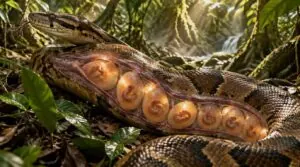
Although boa constrictors do produce eggs, those eggs never leave the female’s body. That’s internal egg incubation in action! In ovoviviparous reproduction, your boa retains eggs inside her oviducts, where internal incubation proceeds safely.
If you’re weighing a boa against an egg-laying species, this ball python vs. boa constrictor comparison breaks down how their reproduction and care differ.
Duration isn’t fixed, either; environmental cues and the female’s condition both influence timing. The eggs complete full embryonic development before she gives birth to live young.
Embryo Nourishment
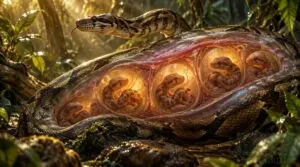
So once those eggs are retained internally, what actually feeds the growing embryos? Inside your boa’s body, each embryo draws nutrition directly from its yolk sac, a built-in food supply packed with lipids and proteins.
That’s ovoviviparity doing its job! Because internal incubation replaces an external nest environment, the yolk takes care of all embryo nutrition here, with no true placenta involved.
Oviparity Versus Live Birth
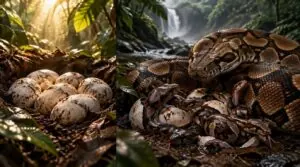
That yolk-based system is what sets boa constrictors apart from oviparous snakes, which lay eggs externally and depend on environmental heat for incubation. Your boa skips the nest entirely. With live birth, she delivers fully formed, mobile hatchlings directly into the world.
This ovoviviparous reproductive strategy keeps developing babies safer but demands a lot more maternal energy and resources throughout gestation.
How Long Are Boa Constrictors Pregnant?
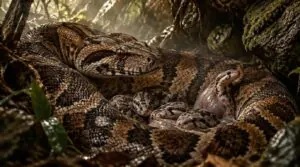
So, how long is a boa constrictor actually pregnant? The answer spans roughly 100 to 150 days, and the journey has three distinct stages. Let’s walk through each one so you know exactly what to expect.
Since stress can quietly affect a pregnant boa, it helps to keep your snake calm and stress-free during travel, especially if a vet visit comes up.
And if you’re still planning ahead, our guide to choosing the right mate for your snake covers everything that sets a healthy pregnancy in motion.
Mating and Fertilization
Here’s where things get wild: boa constrictors don’t just mate once and move on. During mating season, males track a female’s pheromone trail, then court her with head rubbing and wrapping.
Copulation can stretch across multiple nights, and females can store sperm for months! That means fertilization happens internally, on her schedule, long after the actual snake mating behavior ends.
Post-Ovulatory Shed
Watch for the post-ovulatory shed, your clearest confirmation that ovulation worked! Roughly one to six days after ovulation, your boa constrictor passes a thin, papery shed containing uterine membranes.
It’s her reproductive system hitting the reset button, pivoting fully into gestation. Mark the date, because gestation timing starts here, and females often hide more during this window.
Labor and Birth
Picture it: your boa’s midsection ripples with slow, rolling contractions, then tiny tails emerge, curled in clear membranes. That’s the birthing process in action!
Here’s what you’ll see during labor:
- Rhythmic muscular contractions push each baby out.
- Neonates break free of their membranes quickly.
- Newborns unfurl and start exploring immediately.
Because of ovoviviparity, boa constrictors deliver live birth, no eggs, just wriggling, independent babies!
How Many Babies Do Boa Constrictors Have?

Here’s a number that’ll stick with you: boa constrictors can deliver 10 to 65 babies in a single litter! That’s a serious family reunion, and it’s all thanks to live birth, since these snakes are ovoviviparous.
Your litter size depends on mom. Bigger, well-fed females produce more neonates, while smaller or undernourished ones carry fewer. Keeping a gravid female well-fed matters, so stocking up on quality frozen feeder rats makes the whole gestation period much easier.
Snake gestation runs 100–150 days before birth.
Key factors shaping litter size:
- Maternal body length and weight
- Subspecies and geographic population
- Nutrition during gestation
- Embryonic survival rates
Boa Constrictor Birth Myths: Slugs, Membranes, and Maternal Care

You’ve probably heard wild stories about boa births, and most of them are pure myth. Take the famous "slug" legend: some keepers swear boas lay slug-like masses. Nope! What you’re seeing is usually a shed skin or a gelatinous egg coat, not evidence of egg-laying. Boa constrictors don’t need slugs for any part of reproduction, period.
Then there’s the amniotic membrane. When babies are born wrapped in thin, translucent sacs that sometimes detach during delivery, people misread it as external hatching. It’s just live birth packaging!
And snake maternal behavior? Boas show little to no post-birth incubation. A female may pick a secure den, deliver her litter, and move on. Understanding the true reproductive biology of snakes helps you separate fact from folklore!
Frequently Asked Questions (FAQs)
How many babies can a boa have at once?
Like a piñata bursting open, a boa litter spills out all at once! You can expect 10 to 65 babies per litter, averaging around Bigger, well-fed females produce larger litters.
Do boa constrictors bond with humans?
Short answer: no, not really. Boa constrictors don’t form true bonds; they learn tolerance through handling. Consistent, gentle routines build trust-like calm, but that’s conditioning, not affection, even in captive breeding or snake captive care settings.
What is a predator to a boa constrictor?
Picture a boa as a shadow with scales: a predator is any hunter, from hawks and big cats to canids, that threatens it. Juvenile boas face the most danger; predator avoidance strategies like camouflage and dense cover protect them, shaping snake population patterns.
Are boa babies expensive?
A normal Columbian red-tail from a breeder might run you $150 to $300, while rare morphs hit thousands. Yes, boa babies can get pricey! Captive breeding, lineage, and exotic pet trade regulations all shape pricing.
Do Boas lay eggs?
Think of the boa as a living incubator! No, boas don’t lay eggs. They’re ovoviviparous, meaning eggs hatch inside the mother, and she delivers wriggling, fully-formed babies after roughly a 5-7 month pregnancy.
How many babies does a boa constrictor have?
Imagine lifting a wriggling bundle of tiny snakes! Boa constrictors deliver live birth with a typical litter size of 10 to 65 babies, averaging 25- Bigger, well-fed females produce more, boosting snake neonatal survival.
How many eggs does a boa constrictor lay?
Like a well-kept secret, the answer hides in plain sight: zero. Boa constrictors lay no eggs at all. Their snake reproduction skips oviparity entirely, and they give birth to live young, usually 10 to 65 neonates.
Can a boa constrictor delay pregnancy?
A seed waiting for rain, that’s your boa’s secret. Yes, she can delay pregnancy! By storing sperm for months, she times fertilization so her ovoviviparous, live-born babies arrive when conditions favor survival.
How do boa constrictors give birth?
Boa constrictors skip the egg stage entirely and deliver live young straight from the mother, no nesting required. During this snake birth process, pups emerge wrapped in thin membranes over hours, then wriggle free, fully independent.
How do Baby boa constrictors hatch?
Your baby boas don’t hatch from eggs outside the mother. Inside her, each embryo absorbs its yolk sac, completes the embryonic hatching process, breaks through membranes, and emerges as fully formed neonates during the snake birth process.
Conclusion
Picture that first tiny boa sliding out, still wrapped in its clear membrane, then pushing free and flicking its tongue at you. That’s live birth in action, no shell required.
So, do boa constrictors lay eggs? No. Their bodies handle everything internally, delivering fully formed babies after a long gestation.
If you’re breeding boas, watch for the post-ovulatory shed and count the weeks. Nature already wrote the blueprint; your job is simply to trust it.