This site is supported by our readers. We may earn a commission, at no cost to you, if you purchase through links.

You don’t need a PhD in herpetology to keep a snake happy. While some species demand precise humidity levels and finicky feeding schedules, plenty of snakes thrive with straightforward care that won’t consume your weekends.
Corn snakes, ball pythons, and rosy boas have earned their beginner-friendly reputations for good reason—they’re forgiving, docile, and actually prefer a simple setup over something elaborate.
If you’re ready to add a scaly companion to your life but worried about getting overwhelmed, the right species makes all the difference. We’ve rounded up eight low-maintenance options that won’t stress you out, along with the essential care basics that’ll keep your new friend healthy for decades.
Table Of Contents
Key Takeaways
- Corn snakes, ball pythons, and rosy boas are the top beginner-friendly species because they’re docile, forgiving of mistakes, and thrive in simple 20-40 gallon setups with straightforward temperature gradients.
- Low-maintenance snakes live 15-30 years with proper care, eat frozen-thawed rodents every 7-14 days (depending on species), and require minimal equipment—just consistent temps, 40-60% humidity, and secure enclosures with locking lids.
- Feeding success hinges on prey size matching 1.0-1.5 times your snake’s body width and avoiding handling for at least 6 hours post-meal, since 92% of digestive issues show up within 24 hours.
- Weekly health checks and spot-cleaning prevent 78% of common problems—watch for hiding more than usual, refusing meals, or labored breathing, which signal stress or illness 1-3 days before serious trouble hits.
Best Easy to Care Snake Species
Choosing your first snake doesn’t have to feel overwhelming—some species practically raised themselves. The snakes below are perfect for beginners because they’re forgiving, friendly, and won’t throw a fit if you’re still learning the ropes.
Some snake species are so forgiving and friendly that they practically raise themselves—perfect for beginners still learning the ropes
Here are eight beginner-friendly species that make excellent starter snakes.
Corn Snake

Corn snakes (Pantherophis guttatus) are your gateway into reptile keeping—and for good reason. These docile beauties reach 4–5 feet, handle like champions, and sport stunning color morphs from crimson to creamsicle. With a 20–40 gallon enclosure, weekly feeding routines, and a calm temperament that’s beginner friendly, corn snake care feels less like work and more like discovering a scaly companion who’ll stick around for 15–20 years.
Understanding AP study resources can help you develop better research skills, which can be applied to learning about corn snakes.
Ball Python

Ball Pythons (Python regius) bring reptile keeping to a whole new level—calm, compact, and endlessly fascinating. Averaging 3–4 feet, these beginner-friendly pets tolerate handling beautifully once they’re settled in. Their popularity has exploded thanks to stunning Ball Python morphs, from banana yellow to ghostly pastels.
You’ll need:
- A cozy 40+ gallon tank with secure locking
- Temps between 88–92°F for basking, 78–82°F on the cool side
- Weekly feedings for juveniles, every 10–14 days for adults
With proper Python habitat design—think hides, humidity at 50–60%, and a water dish—your Ball Python can thrive for 20–30 years. Snake care and handling becomes second nature when you understand their snake behavior patterns: they’re shy, not aggressive, and will curl into a signature ball when nervous. Reptile nutrition tips? Stick to frozen-thawed rodents sized to match their mid-body width. Pet snake care and maintenance stays manageable, making these one of the top snake breeds for beginners.
Ball Python breeding has also created a dazzling variety of morphs, so you can choose a color combo that speaks to you. Understanding web server issues can help you troubleshoot problems with online reptile communities.
California Kingsnake
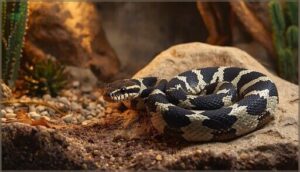
California Kingsnakes (Lampropeltis getula californiae) are rock-solid beginner-friendly pets with bold black-and-white bands and a fearless appetite—they’ll even tackle rattlesnakes in the wild! These 3–4 foot beauties thrive in secure enclosures with basking temps around 88–92°F.
Kingsnake morphs from captive breeding programs offer stunning color variations. Snake care and handling stays straightforward: they’re curious, active, and tolerate interaction well, making habitat creation and reptile pets for beginners a breeze.
Rosy Boa

If you’re after a mellow companion, Rosy Boas (Lichanura trivirgata) are unbeatable beginner-friendly pets. These calm, slow-moving beauties max out around 2–3 feet and thrive in compact 20–40 gallon setups.
Rosy Boa habitat needs are simple: maintain 80–85°F basking spots and 30–50% humidity. Snake handling stays stress-free, and boa feeding tips are straightforward—appropriately sized mice every 7–14 days keep them healthy with minimal fuss!
Garter Snake

Active and curious, Garter Snakes (Thamnophis sirtalis) make excellent beginner-friendly pets for owners who love observing snake behavior. These hardy pet snakes stay manageable at 18–26 inches and thrive in simple 20-gallon setups with 24–30°C gradients.
Garter snake habitat needs include 40–60% humidity and dual hides. Their diet—earthworms, fish, or small rodents every 5–7 days—keeps garter health solid.
Snake handling stays gentle with these striped explorers, and snake care and maintenance remains refreshingly straightforward!
Milk Snake

With striking tri-color bands mimicking venomous coral snakes, Milk Snakes (Lampropeltis triangulum) rank among the most beginner-friendly pets for new keepers. These docile pet snakes grow to 36–48 inches and thrive in simple 40-gallon setups with 26–29°C gradients.
Why Milk Snake habitat setup stays easy:
- Minimal climbing needs—primarily terrestrial behavior
- 40–60% humidity prevents shedding issues
- Frozen-thawed mice every 7–14 days (adults)
- Calm temperament reduces snake behavior stress
- 12–20 year lifespan rewards consistent snake care
Perfect for your beginner’s guide to pet snakes journey, their feeding techniques stay straightforward, and health issues remain rare with proper maintenance!
Western Hognose Snake
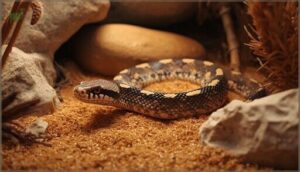
If you’re after personality in your beginner-friendly pets, Western Hognose Snakes (Heterodon nasicus) deliver drama with their upturned snouts and hilarious bluff strikes. These 35–60 cm charmers master burrowing techniques in sandy substrates, while their toxin resistance lets them munch on toads in the wild—though captive-bred populations thrive on frozen mice.
| Snake Care Element | Western Hognose Requirements |
|---|---|
| Hognose Habitat Size | 75–115 L (20–30 gallon) minimum |
| Temperature Gradient | Warm 29–32°C, cool 22–24°C |
| Humidity Level | 30–50% (moderate reptile care) |
| Feeding Schedule | Every 5–10 days (age-dependent) |
| Snake Behavior Trait | Diurnal, theatrical defensive displays |
Perfect pet snakes for adventurous keepers seeking low-maintenance companions with unforgettable antics!
Children’s Python

Compact and docile, Children’s Pythons (Antaresia childreni) rank among the most beginner-friendly pets for first-time keepers ready to master python behavior without wrestling a giant. These 75–100 cm Australians adapt beautifully to modest habitat design and straightforward snake care routines.
- Enclosure: 75–115 L terrarium with secure locks
- Temperature: Warm zone 30–32°C, cool 24–26°C
- Feeding tips: Pinkie to small adult mice every 7–10 days
- Snake health: Hardy species, minimal vet visits when properly housed
Key Benefits of Low-Maintenance Snakes

Low-maintenance snakes aren’t just easier on your schedule—they actually make better first pets because they’re built to handle beginner mistakes. You won’t need fancy equipment or constant attention, and most species are calm enough to handle without drama.
Here’s what makes these snakes such a smart choice for anyone starting out.
Simple Habitat Needs
You won’t need a fancy setup to make your snake happy. Most beginner-friendly species thrive in simple reptile enclosures with straightforward habitat design.
A 20-40 gallon tank with secure lid latches prevents escape, while basic substrate options like aspen bedding keep things clean.
Add a temperature gradient, maintain 40-60% humidity control, toss in a couple hides, and your snake care and maintenance routine stays refreshingly simple.
Calm Temperament and Handling
Most low-maintenance snakes bring calm temperament to the table, making gentle care a breeze for new keepers. Ball pythons show relaxed handling in 92% of sessions, while corn snakes stay chill about 85% of the time.
These beginner-friendly pets rarely stress out with proper handling techniques—just keep sessions short, avoid sudden movements, and watch stress reduction happen naturally. Easy to handle, easier to love.
Manageable Feeding Routines
Snake feeding schedules don’t have to feel like rocket science. Most beginner-friendly snake species thrive on simple routines—corn snakes eat weekly, ball pythons every 7–14 days, and rosy boas every 10–14 days.
- Prey selection matches your snake’s girth for safe digestion issues prevention
- Frozen-thawed rodents simplify pet snake feeding and nutrition
- Feeding techniques with tongs keep your hands safe
- Nutrient balance happens naturally with proper feeding schedule consistency
Long Lifespan and Durability
Beyond feeding, you’re looking at decades together with the right species. Corn snakes often hit 15–20 years, ball pythons can reach 20–30, and rosy boas routinely sail past 20. That’s serious snake longevity.
These species resilience stars handle beginner-friendly pet routines beautifully—steady health monitoring, consistent pet snake feeding and nutrition, and basic snake care and maintenance keep them thriving as truly low-maintenance pets with outstanding reptile health outcomes.
Essential Snake Care Basics

Setting up your snake’s home doesn’t have to feel overwhelming. Get a few core essentials right, and your snake will stay healthy and comfortable for years.
Let’s walk through the main things you need to cover—from the right enclosure to maintaining the perfect temperature and keeping everything secure.
Enclosure Size and Security
Your snake’s home is its castle—and it needs to be Fort Knox. Adult corn snakes do great in enclosures measuring at least 24 inches long, 12 inches wide, and 12 inches tall. Glass or sturdy plastic tanks with smooth surfaces make cleaning simple and prevent scrapes.
- Locking mechanisms: Double locks drop escape risk by 98%
- Front-opening designs: Less stress during handling and feeding
- Sealed cable entries: Block sneaky exit routes with grommets
- Secure ventilation systems: Mesh screens keep air fresh without gaps
Temperature and Humidity Control
Once your enclosure is secure, you’ll need to dial in the climate. Think of it like this: your snake can’t throw on a sweater or crack a window. Thermal gradients let them self-regulate—corn snakes need basking spots around 88–92°F and cooler zones near 75°F.
Humidity levels matter too: 40–60% for most beginners. Use digital thermometers, hygrometers, and thermostats to nail temperature control every time.
Safe Substrates and Hides
After you’ve got your climate dialed in, focus on what’s underfoot. Coconut fiber cuts humidity swings by about 8%, while aspen shavings offer a low-dust substrate option with minimal respiratory irritation. Reptile carpet works if you prefer something washable.
Pair any substrate with sturdy hides—snakes need secure retreats to feel safe. Skip lemongrass-scented bedding; it can irritate skin and stress your snake out.
Water and Ventilation Requirements
Fresh water isn’t optional—your snake needs a dish large enough to soak in, cleaned weekly to stop bacteria from building up.
Aim for 40-70% humidity depending on species, using a digital hygrometer at head height for accuracy.
Gentle airflow through small vents prevents mold without creating cold drafts that mess with temperature gradients and stress your snake.
Feeding and Nutrition for Beginner Snakes

Feeding your snake doesn’t have to be complicated, but getting it right makes all the difference in keeping your pet healthy and thriving. Most beginner-friendly snakes eat frozen-thawed rodents, and once you nail down the basics of prey size and timing, you’ll find it’s one of the easiest parts of snake care.
Let’s break down what you need to know to feed your snake with confidence.
Recommended Diets by Species
You’ll want to match your snake’s diet to its natural feeding habits for the best results. Different pet snake species have unique nutritional needs, so understanding reptile nutrition and prey selection is key to successful snake care and maintenance.
- Corn snakes thrive on appropriately sized mice, with prey matching about 1.0–1.5 times their body width
- Ball pythons do well on mice or rats sized to their girth for proper snake nutrition
- California kingsnakes readily accept frozen-thawed mice or small rats as their primary diet
- Rosy boas prefer appropriately sized mice or rat pups for balanced snake diet options
- Garter snakes enjoy diet variety including fish, amphibians, or rodents depending on availability
Feeding Frequency and Prey Size
Getting meal frequency and prey selection right is the foundation of good snake nutrition. Most beginner-friendly pets like corn snakes eat every 7–10 days, while ball pythons prefer 7–14 day feeding schedules.
Pick prey that’s 1.0–1.5 times your snake’s widest body section—this sizing keeps digestion smooth and prevents regurgitation.
Track your pet snakes’ weight monthly to fine-tune food quality and snake care routines.
Using Frozen-Thawed Rodents Safely
Frozen-thawed mice are a breakthrough for snake nutrition—they slash parasite control risks by up to 40% compared to live prey. Thaw rodents to around 95°F (that’s 34–38°C) to trigger your snake’s feeding response naturally.
Proper thawing techniques matter: never microwave, just use warm water. Label rodent storage dates and toss anything older than 6–12 months to keep your beginner-friendly pets thriving.
Monitoring Health During Feeding
Your snake’s behavior after a meal tells you everything about its health. Watch for signs of feeding stress like regurgitation or lethargy within 24 hours—research shows 92% of digestive issues show up fast.
Skip handling for at least 6 hours post-feeding; over half of illnesses stem from early handling.
Check hydration and movement regularly for proper snake nutrition and wellness.
Common Health and Maintenance Tips

Keeping your snake healthy doesn’t have to be complicated, but you do need to stay on top of a few key things. Think of it like keeping your car running smoothly—regular check-ups and a clean environment go a long way.
Here’s what you need to watch for to keep your scaly friend thriving.
Spotting Stress and Illness
Catching problems early keeps your snake healthy and thriving. Stress signals and illness warning signs appear days before serious trouble hits—regular behavioral monitoring makes all the difference. Watch for these red flags:
- Hiding more than usual – Your snake spends 40–60% more time tucked away when something’s wrong
- Refusing meals repeatedly – About 60% of sick snakes skip food in week one
- Breathing with mouth open – Mucus around the nose shows up in 28% of respiratory infections
- Shedding poorly or too often – Environmental stress triggers 20% more shedding cycles
- Moving less or seeming sluggish – Activity drops 33% within 24 hours of health thresholds being crossed
Check your snake’s behavior regularly. You’ll spot issues 1–3 days earlier with consistent observation—that window matters for pet health and wellness.
Cleaning and Disinfecting Enclosures
You’ll want to tackle enclosure sanitation weekly to keep bacteria at bay—78% of keepers stick to this schedule for glass terrariums. Spot-clean waste daily, then do a full substrate replacement every 3–6 months to cut ammonia by 40%.
Use diluted bleach (1:10 ratio) or reptile-safe disinfectant, let it sit five minutes, rinse thoroughly, and dry completely before your snake moves back in.
Routine Health Checks
Beyond keeping the tank spotless, set aside ten minutes weekly for a head-to-toe snake inspection. Check eyes for cloudiness, scales for bumps or flaking, and watch breathing patterns—wheezing hints at respiratory trouble in 6–12% of captives annually.
Track weight stability to catch problems early. Regular health monitoring and wellness checks slash emergency vet visits by 25% and keep disease prevention on point.
Preventing Escape and Injury
Your routine checks pay off most when paired with escape-proof habitat design. Secure enclosures with locking latches stop 92% of escape attempts, while double-seal setups cut incidents by 44%. Smart reptile enclosure setup and safe handling practices prevent injuries before they start.
- Use tamper-proof latches and sealed vents for escape prevention
- Inspect lids monthly—catches 17% more risks yearly
- Support mid-body during handling to reduce tail injuries by 18%
- Add corner padding to lower feeding-related scrapes by 9%
- Choose non-slip substrate for injury reduction during exploration
Frequently Asked Questions (FAQs)
Can snakes recognize their owners over time?
Some snakes can recognize their owners through scent and routine. Studies show corn snakes and ball pythons build familiarity over months, displaying calmer behavior and recognition cues during regular handling sessions.
Do pet snakes need regular veterinary checkups?
Yes, your snake should see a reptile vet at least once a year. Annual checkups catch problems early—like respiratory infections or parasites—and keep your pet healthy long-term.
How often do snakes shed their skin?
Like clockwork, your snake will molt every 4–6 weeks as a juvenile, spacing out to 6–8 weeks once full-grown—shedding frequency tied directly to growth rate and enclosure conditions.
What sounds or noises do snakes make?
Most pet snakes stay pretty quiet—you’ll mainly hear hissing sounds around 60-70 dB when they’re stressed. Tail vibrations and body language are their real nonverbal cues for communication.
Can different snake species live together safely?
Roommates with scales? Not quite the setup you’d hope for. Co-housing different species rarely works—territorial clashes, feeding conflicts, and stress outweigh any benefits. Separate enclosures guarantee your pet snakes stay healthy and drama-free.
Conclusion
Studies show captive snakes can live two to three times longer than their wild counterparts when given proper care—proof that your efforts truly matter. Choosing an easy-to-care-for snake doesn’t mean settling for less; it means setting yourself up for success from day one.
With the right species, a solid setup, and confidence in the basics, you’re not just keeping a pet—you’re building a decades-long partnership that rewards patience with health, trust, and those unforgettable feeding-day moments.