
This site is supported by our readers. We may earn a commission, at no cost to you, if you purchase through links.

Your ball python hasn’t eaten in three weeks, and when you picked her up yesterday, her belly felt strangely firm near the midsection. These aren’t typical fasting behaviors—they’re python digestive blockage symptoms, and they demand your attention now.
A blockage occurs when indigestible material or improperly sized prey creates a partial or complete obstruction in the intestinal tract, cutting off nutrient absorption and triggering a cascade of life-threatening complications.
The challenge lies in recognition: unlike mammals that show obvious distress, pythons mask their suffering until the obstruction has already damaged intestinal tissue or triggered sepsis. Understanding the difference between harmless fasting and genuine blockage—and knowing which symptoms require emergency intervention—can mean the difference between a routine vet visit and catastrophic organ failure.
Table Of Contents
- Key Takeaways
- What is Digestive Blockage in Pythons?
- Common Causes of Digestive Blockage
- Early Symptoms of Digestive Blockage
- Advanced Signs of Blockage in Pythons
- When to Seek Veterinary Attention
- Frequently Asked Questions (FAQs)
- How do I tell if my snake is impacted?
- What are the symptoms of a digestive blockage?
- How do you treat impaction in ball pythons?
- What are the 4 cardinal signs of bowel obstruction?
- Can warm baths help relieve minor blockages?
- How do vets diagnose digestive blockages accurately?
- What substrates are safest for python enclosures?
- Is surgery always required for severe blockages?
- How long can pythons survive with blockages?
- Conclusion
Key Takeaways
- Digestive blockages in pythons cause rapid, life-threatening decline that is easily mistaken for harmless fasting, demanding urgent recognition and action.
- Warning signs include sudden loss of appetite, no bowel movements for days, firm or swollen abdomen, and increased hiding or lethargy.
- Common causes are swallowing loose substrate, feeding prey that’s too large, dehydration from low humidity, and inadequate cage temperatures slowing digestion.
- Immediate veterinary care is critical when symptoms like severe swelling, regurgitation, or no stool for weeks appear, as untreated blockages can lead quickly to organ failure or death.
What is Digestive Blockage in Pythons?
Digestive blockage in pythons happens when something physically obstructs the intestinal tract, stopping waste from moving through. It’s not the same as occasional constipation—this is a complete shutdown that can turn deadly within days if you don’t catch it early.
Early recognition is critical—knowing how to spot the warning signs and apply safe home remedies for snake constipation can prevent a minor issue from becoming a life-threatening emergency.
Understanding what blockage actually means, how it differs from slower digestion, and why it escalates so quickly will help you recognize when your python needs immediate help.
Definition and Overview
A digestive blockage in pythons occurs when your snake’s digestive tract becomes partially or completely obstructed, preventing normal food and waste passage. This serious condition directly threatens reptile digestive health and overall snake wellness when left untreated.
- Wrong-sized meals or indigestible material accumulate in the stomach or intestines
- Blockage disrupts nutrient processing, leading to wasted energy and dehydration
- The condition differs from simple constipation through persistent refusal to eat and repeated regurgitation
- Early recognition depends on watching for reduced activity and subtle abdominal distention before severe signs develop
Difference Between Blockage and Constipation
Constipation causes gradual changes—your python’s stools become harder and less frequent over weeks, but some stool still passes. Digestive blockage, however, means complete intestinal blockage where nothing moves through at all.
You’ll notice blockage signs appear suddenly: your snake stops passing stool entirely within days, refuses food immediately, and shows intense discomfort when you touch its swollen belly. Constipated snakes stay mildly uncomfortable; blocked pythons decline rapidly, making reptile digestive health monitoring essential for impaction prevention.
For more on recognizing constipation signs in reptiles, review trusted veterinary resources.
Why Blockages Are Life-Threatening
A python’s body can’t tolerate blocked intestines for long. Blood flow stops, gut tissue dies, and bacteria flood into the bloodstream—causing sepsis within days.
Blocked intestines kill pythons fast—circulation fails, tissue dies, and sepsis floods the bloodstream within days
Here’s what happens inside:
- Intestinal damage from lost circulation leads to tissue death and perforation risk
- Sepsis risk spikes as bacteria invade through weakened gut walls
- Dehydration effects drop blood pressure, triggering shock
- Organ failure follows when kidneys and liver can’t keep up
It’s important to be aware of other common problems in pet snakes that may present similar symptoms or influence recovery.
Emergency care is your python’s only chance at survival.
Recognizing early warning signs of temperature stress can mean the difference between a quick fix and a life-threatening emergency.
Common Causes of Digestive Blockage
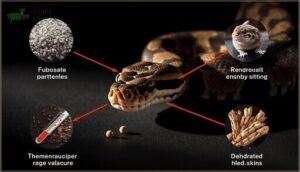
Understanding what causes digestive blockages in pythons gives you the power to prevent them before they start. Most blockages don’t happen by chance—they’re the result of specific husbandry mistakes that pile up over time.
Let’s look at the four main culprits that send pythons to the vet with life-threatening obstructions.
Substrate Ingestion
Loose bedding is one of the most common but preventable reptile health issues you’ll encounter. When your python strikes enthusiastically at prey, substrate like sand, gravel, or wood chips sticks to the meal and gets swallowed whole.
Once inside, these indigestible materials clump together, creating serious digestive problems in snakes and potentially full intestinal blockage—a true snake impaction emergency requiring immediate digestive care and ingestion prevention.
Improper Prey Size
Meal size matters more than most keepers realize—offering prey much wider than your python’s mid-body slows digestion dangerously and raises snake impaction risk. Oversized or heavily furred meals lodge in the intestine, while frequent small feedings overwhelm the gut before earlier prey fully passes.
Following prey size guidelines and proper feeding frequency protects digestive health, keeps food moving smoothly, and prevents serious digestive problems in snakes through smart meal portioning and reptile nutrition planning.
Dehydration and Low Humidity
Without enough water, your python’s digestive system grinds to a halt—dehydration signs appear as dry, compacted stool that plugs the lower intestine and blocks newer waste from moving through. Environmental factors like humidity control and water intake directly shape reptile hydration and prevent snake impaction:
- Low humidity pulls moisture from every breath, drying feces into dense, immovable plugs
- Limited water access hardens urates and stool, making bowel movements nearly impossible
- Dehydrated colons extract too much fluid, turning waste into a gut-blocking mass
- Proper humidity and fresh water keep digestive issues in snakes from escalating into reptile health emergencies
Inadequate Temperature
Temperature gradients drive every aspect of reptile digestion. When your python’s warm side dips too low, gut muscles slow to a crawl, food stagnates, and snake digestive problems like cold stress begin.
Heat management matters because inadequate basking temperatures stall enzyme activity, leaving meals in risky chunks that form blockages.
Thermal therapy and proper thermoregulation support normal motility, preventing reptile health issues from turning minor digestive slowdowns into life-threatening obstructions.
Early Symptoms of Digestive Blockage
Catching a digestive blockage early can mean the difference between a simple fix and life-threatening surgery. Your python won’t necessarily scream for help, but it will show you quiet, consistent changes that build over days or weeks.
Here are the first warning signs you need to watch for.
Loss of Appetite

When your python suddenly refuses prey it normally devours, that shift in eating habits signals deeper trouble—often digestive blockage rather than simple pickiness. This food refusal stems from internal discomfort that overrides hunger, and you’ll notice it persists across multiple feedings instead of just one missed meal.
Watch for these critical anorexia signs:
- Tracking prey without striking, showing interest through tongue flicks but failing to complete the hunt
- Refusal spanning several scheduled feedings, not just seasonal fasting patterns
- Decreased water intake accompanying the appetite changes, compounding reptile nutrition and diet concerns
Weight loss follows quickly when feeding issues persist.
Lack of Bowel Movements
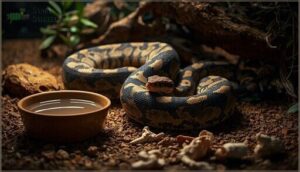
A clear red flag for digestive blockage appears when your python stops producing stool for several days beyond its usual post-feeding schedule. You’ll notice either complete absence of feces or only small, dry droppings instead of normal bowel movement patterns.
This stool passage problem signals intestinal blockages rather than simple constipation relief needs. A constipated snake may strain at the vent or show mild swelling near the tail base—early warnings demanding reptile impaction treatment before complete obstruction develops.
Lethargy and Hiding Behavior

When your python trades evening exploration for tight, motionless coils in its hide, you’re seeing lethargy signs that point toward internal trouble. Behavioral changes from digestive blockage show up as slower handling responses, fewer tongue flicks, and reluctance to climb usual decor—stress responses your snake uses to protect its abdomen.
Environmental factors like proper heat won’t fix hiding patterns driven by obstruction pain, making early attention critical for reptile health issues and snake health and wellness.
Advanced Signs of Blockage in Pythons
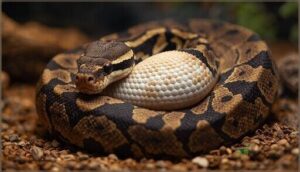
When a blockage worsens, your python’s body starts showing distress signals that are harder to miss. These severe symptoms often appear days or weeks after the initial slowdown, and they demand immediate attention.
Below are the critical warning signs that indicate your python’s condition has moved beyond early-stage constipation into dangerous territory.
Abdominal Swelling or Firmness
One of the clearest warning signs of digestive obstruction in your python is an abdominal mass you can see or feel. Swelling patterns often start subtly—a slight bulge along the lower third of the body—but firmness levels escalate as impacted material accumulates.
A constipated snake may show uniform distension early on, then develop a localized, hard area signaling intestinal blockage that demands urgent care.
Regurgitation or Vomiting
When abdominal pressure from blockage builds, your python may begin bringing up recently eaten prey—a stark contrast to normal snake digestion. Regurgitation signals serious digestive problems and often escalates alongside worsening esophageal issues. Watch for these vomiting causes:
- Undigested prey appearing hours or days after feeding
- Mucus-coated material suggesting stomach problems
- Repeated attempts to expel contents
- Accompanying lethargy or distress behaviors
These reptile health issues demand immediate veterinary assessment.
Weight Loss and Reduced Mobility
As digestive problems worsen, your python’s body begins breaking down muscle for energy—a metabolic change that signals serious trouble. You’ll notice weight loss concentrated along the spine and ribs, paired with mobility issues like sluggish movement or reluctance to explore.
This energy conservation response stems from poor nutrient absorption, and when combined with snake impaction, it creates a downward spiral requiring urgent intervention to restore digestive efficiency and reptile health.
Scale Changes and Discoloration
Beyond weight loss, your python’s scales often broadcast trouble through subtle color changes and texture shifts tied to metabolic disorders and skin irritation. Discolored patches—pale, milky, or darkened—may appear along the body, sometimes accompanied by rough or raised areas where digestive blockage disrupts normal shedding cycles and overall snake health.
- Irregular scaling patterns emerge as uneven patches from improper shedding or dehydration stress
- Bacterial infections produce circular redness and scale swelling that spreads without treatment
- Vitamin deficiencies create dull gray scales with a dry, cracking texture
- Substrate abrasions leave scored patches and trapped debris causing localized whitening
- Partial molts strand residual scales with obvious color differences until completion
When to Seek Veterinary Attention

Knowing when to call your vet can mean the difference between a treatable blockage and a life-threatening emergency. Some symptoms demand immediate action, while others require close monitoring over a day or two.
Let’s break down the specific warning signs that tell you it’s time to seek professional care.
Persistent Symptoms Over Several Days
If your python refuses food for several days, shows persistent lethargy, and hasn’t passed stool for more than a week, you’re witnessing snake impaction that demands emergency interventions. Digestive pain intensifies as abdominal distension worsens, and dehydration effects compound the blockage.
These behavioral shifts—chronic hiding, reduced activity, continued appetite loss—signal reptile health issues requiring immediate impaction treatment. Snake digestion stops entirely when digestive blockage progresses beyond the early stage.
Severe Abdominal Swelling
When your python’s belly swells noticeably—firm, distended, and often concentrated in the lower third—you’re likely looking at intestinal obstruction caused by substrate ingestion or digestive stasis.
This abdominal distension signals fluid buildup or abdominal masses pressing against organs, making impaction treatment urgent.
Reptile health issues escalate fast when digestive blockage creates this kind of visible, persistent swelling, demanding immediate veterinary intervention.
No Stool Passage for Weeks
When weeks pass without a single bowel movement—even after your python has eaten—intestinal blockage and fecal impaction have likely progressed beyond constipation relief at home. This prolonged digestive blockage signals severe bowel obstruction demanding urgent constipation treatment:
- No feces for 14+ days post-feeding indicates complete snake impaction
- Substrate ingestion creating rock-hard masses visible through skin
- Snake digestion halted entirely, escalating digestive issues toward organ failure
Emergency Signs Requiring Immediate Care
When your python shows sudden, severe abdominal bloating with a rock-hard belly, you’re looking at a veterinary emergency that demands immediate care. Repeated forceful regurgitation, rapid weight loss over 24 to 48 hours, or signs of dehydration like sunken eyes signal critical blockage symptoms requiring urgent veterinary intervention.
These respiratory symptoms and digestive issues can escalate to organ failure within hours without proper emergency response and critical care.
Frequently Asked Questions (FAQs)
How do I tell if my snake is impacted?
Watch for three red flags together: your snake refuses food for multiple feedings, hasn’t pooped in several weeks, and shows a firm, swollen section along its belly—especially near the rear third of its body.
What are the symptoms of a digestive blockage?
Loss of appetite, no bowel movements for days, lethargy, and abdominal swelling are key digestive blockage signs.
Watch for regurgitation, hiding behavior, and firmness when gently palpating the abdomen—these intestinal obstruction symptoms demand urgent veterinary care.
How do you treat impaction in ball pythons?
Treatment starts with warm water therapy at 80–85°F, paired with gentle massage to move softened stool.
Hydration support and temperature adjustment are essential, but severe blockages may require surgical intervention by a reptile veterinarian.
What are the 4 cardinal signs of bowel obstruction?
In pythons, the four cardinal signs of intestinal blockage include abdominal pain manifesting as restlessness, vomiting patterns from digestive distress, altered bowel habits with no stool passage, and visible abdominal swelling from substrate ingestion or impaction.
Can warm baths help relieve minor blockages?
Some keepers swear warm soaks cure everything—spoiler: they don’t. Bath Water Temperature around 85°F can ease simple constipation through Warmth Therapy Effects and Rehydration Methods, but true Snake Impaction or Digestive Blockage needs veterinary intervention.
How do vets diagnose digestive blockages accurately?
To accurately diagnose a digestive blockage in snakes, vets combine Radiograph Analysis, focused Physical Exam, Ultrasound Imaging, and Laboratory Tests.
Surgical Exploration may be used for tough cases—ensuring precise, life-saving Veterinary Care for Reptiles facing impaction.
What substrates are safest for python enclosures?
For safe enclosures that reduce digestive blockage risk, opt for paper liners or aspen substrate, or try coconut husk or a bioactive mix.
These choices, central in snake care, help avoid substrate ingestion issues common in reptile husbandry.
Is surgery always required for severe blockages?
Sometimes a detour saves the journey; not every severe digestive blockage needs surgical removal. Conservative care may resolve partial obstruction, but when Snake Impaction causes repeated regurgitation, massive swelling, or no progress, veterinary surgery quickly becomes the only safe choice.
How long can pythons survive with blockages?
Blockage Survival Time in pythons varies: most with a complete intestinal obstruction decline rapidly, often within three to seven days. Without Reptile Emergency Care, Python Mortality Rates rise quickly, making early intervention for gastrointestinal issues absolutely critical.
Conclusion
Just when you think you’ve spotted every sign, a silent threat can still lurk beneath your ball python’s calm demeanor. The difference between a routine fast and python digestive blockage symptoms is sometimes razor-thin—missing it means risking far more than skipped meals.
When firmness, swelling, or unexplained lethargy surface, you’re gambling with precious hours. Trust your instincts, act quickly, and remember: an attentive keeper is always the first, and best, line of defense against a hidden crisis.
- https://www.vetlexicon.com/exotis/reptiles/gastrohepatology/articles/gastrointestinal-obstruction/
- https://www.shadowsreptiles.com/post/impaction-in-reptiles
- https://pmc.ncbi.nlm.nih.gov/articles/PMC2857431/
- https://ultimateexotics.co.za/constipation-in-reptiles/
- https://azeah.com/small-mammals/gastrointestinal-hypomotility-syndrome