
This site is supported by our readers. We may earn a commission, at no cost to you, if you purchase through links.

A strong clutch starts long before the eggs hit the incubator. It begins with clean boxes, steady heat, and the right tools keeping every variable in check. Reptile breeding isn’t about luck—it’s precision done daily.
The difference between hatch success and heartbreak often comes down to something as small as an overlooked thermostat or a box that traps too much moisture. With the right reptile breeding supplies, you control the process from soil to shell, giving your animals the stable conditions they need to thrive and hatch strong.
Here’s what serious breeders rely on to keep results consistent.
Table Of Contents
- Key Takeaways
- Essential Equipment for Reptile Breeding
- Top 9 Reptile Breeding Supplies Reviewed
- Incubation, Temperature, and Humidity Control
- Lighting, Heating, and Habitat Essentials
- Health, Nutrition, and Husbandry Tools
- Frequently Asked Questions (FAQs)
- How often should breeding pairs be rotated?
- What permits are required for reptile breeding?
- How to prevent inbreeding in small collections?
- When do reptiles reach sexual maturity?
- How to record breeding and genetic lineage?
- What are bioactive substrates and are they necessary?
- How do I choose safe decor for breeding setups?
- Which plants are best for reptile breeding enclosures?
- Where can I find reliable reptile pedigrees or genetics info?
- What trends are shaping the reptile breeding supply market?
- Conclusion
Key Takeaways
- Consistent heat, humidity, and cleanliness are the backbone of successful reptile breeding and hatching.
- Reliable incubation boxes, thermostats, and humidity tools directly impact hatch rates and egg health.
- Proper terrariums, hides, and feeding containers keep adults and hatchlings stress-free and easy to manage.
- Tracking data, maintaining equipment, and controlling environments turn breeding from guesswork into repeatable success.
Essential Equipment for Reptile Breeding
Every breeder needs reliable gear to keep eggs safe and conditions stable. The right setups make a big difference regarding healthy hatch rates.
For a detailed walkthrough on humidity control and ideal temperature setups, check out this guide on optimizing ball python egg incubation conditions.
Here’s the core equipment to have ready before you start pairing or collecting eggs.
Incubation Boxes and Egg Trays
Incubation boxes and egg trays form the backbone of reptile breeding. Use food grade polypropylene for Incubation Materials—safe, reusable after cleaning.
Egg Tray Design holds 12 eggs in pockets above 1 cm water for Humidity Control. Add pin holes for Box Ventilation.
This setup boosts reptile hatching success in your incubation routine, ensuring steady reptile husbandry and care.
Breeding Terrarium Containers
You moved your incubation boxes into place; now you need breeding terrarium containers that keep adults steady and stress-free. Use PVC or similar non-porous Container Materials for easy cleaning and tight Humidity Control in your Breeding Environments.
Pick low, floor-space-focused Terrarium Designs with side-to-side Ventilation Systems. Add simple terrarium accessories and vivarium equipment; layer bioactive supplies only if you can maintain strict reptile husbandry.
Humidifier Hide Boxes
Once your breeding terrarium containers are stable, you add humidifier hide boxes for tight humidity control and shedding assistance. A good hide box design holds a damp bioactive substrate layer, giving a constant humid environment for eggs and adults.
For bigger reptiles, a made from durable PVC with a removable lid helps maintain ideal humidity and simplifies cleaning. This moisture management assists reptile hydration, cleaner sheds, and steadier reptile breeding outcomes inside your existing vivarium equipment.
Feeding and Habitat Containers
Once humidity control is steady, your next focus is feeding and housing. Good Habitat Design means sturdy containers, clean lines, and reliable air flow.
Choose wisely:
- Ceramic Feeding Bowls stay grounded.
For live feeders, an escape-proof ceramic feeding bowl keeps insects contained so reptiles can eat at their own pace.
Plastic tubs simplify Food Storage.
Ventilation Systems prevent mold.
Resin Container Materials blend into reptile habitats and boost reptile care and nutrition during breeding.
Top 9 Reptile Breeding Supplies Reviewed
Here are the breeding supplies that make a real difference in hatch rates. Each one is built for reliable conditions and steady results.
Let’s look at the top options for 2026.
1. Reptile Egg Incubation Box
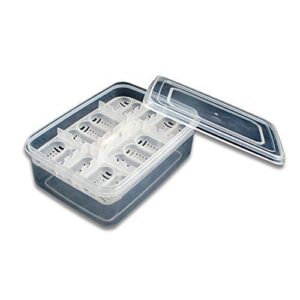
You want hatch rates, not guesses. A clear plastic reptile egg incubation box with a 16-grid tray lets you place up to 16 small eggs in individual pockets, so they don’t roll or touch.
The suspended design keeps minimum egg-to-surface contact and maximum air circulation, which helps reduce drowning and oversaturation in vermiculite or perlite.
At about 6.6×4.8×2.4 inches and 3.52 ounces, it fits neatly in most compact incubators and stacks well between clutches.
| Best For | Reptile owners, breeders, or educators who need a clean, organized way to hatch small reptile or amphibian eggs. |
|---|---|
| Material | Plastic |
| Transparency | Clear/Transparent |
| Reusability | Reusable |
| Ventilation | Air circulation design |
| Suitable Animals | Reptiles, amphibians, birds |
| Easy Cleaning | Washable |
| Additional Features |
|
- 16-grid tray keeps each egg separate for safer hatching.
- Transparent lid lets you watch progress without disturbing the eggs.
- Easy to wash, reuse, and fit inside most small incubators.
- Doesn’t include a thermometer.
- May not fit larger eggs like tortoises.
- Some users report poor lid fit or low ventilation.
2. Reptile Terrarium Containers Set
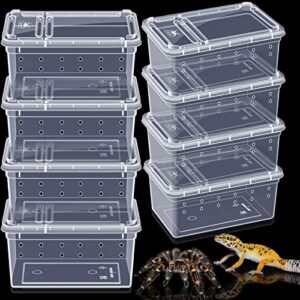
This reptile terrarium containers set offers modular control in a box, providing eight small clear plastic tubs measuring 5.9 x 3.9 x 2.5 inches. These tubs are ideal for sorting clutches, feeders, or holdbacks efficiently.
Multiple small air holes ensure oxygen flow without sacrificing humidity, while the double-opening lid allows for quick spot checks and feeding.
These containers are versatile, suitable for spiders, scorpions, centipedes, insects, or hatchling geckos. They serve multiple purposes, including transport, quarantine, and backup housing, all stackable and within arm’s reach.
| Best For | Hobbyists and breeders needing compact, easy-to-use containers for small reptiles, insects, or hatchlings. |
|---|---|
| Material | Plastic |
| Transparency | Clear |
| Reusability | Reusable |
| Ventilation | Multiple air holes |
| Suitable Animals | Reptiles, amphibians, insects |
| Easy Cleaning | Requires frequent cleaning |
| Additional Features |
|
- Lightweight and stackable for simple setup and storage.
- Double-opening lid makes feeding or cleaning quick.
- Good airflow keeps conditions balanced for small species.
- Too small for adult reptiles or long-term housing.
- Air holes may be risky for tiny slings or jumpers.
- Plastic clarity can appear slightly milky over time.
3. Small Reptile Breeding Containers
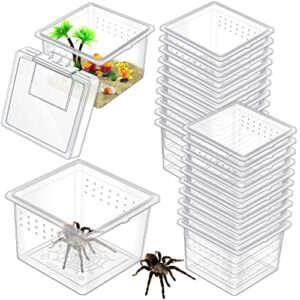
Small breeder boxes keep your hatchlings secure and easy to monitor. This 20-pack of Nuanchu containers measures 2.56 x 2.56 x 1.77 inches each, made from clear, odorless plastic with ventilation holes built into the lid.
They stack neatly, stay lightweight, and suit geckos, mantises, or spider slings. Each box holds shape well but isn’t for heavy use or very tiny hatchlings that might slip out.
Compact, clear housing to track growth without stress or wasted space.
| Best For | Hobbyists or small breeders needing a clear, stackable setup for housing or displaying small reptiles and insects. |
|---|---|
| Material | Plastic |
| Transparency | Clear |
| Reusability | Reusable |
| Ventilation | Lid ventilation holes |
| Suitable Animals | Reptiles, insects |
| Easy Cleaning | Reusable and cleanable |
| Additional Features |
|
- Clear plastic makes it easy to monitor your pets.
- Built-in ventilation keeps airflow consistent.
- Compact and lightweight for easy stacking and transport.
- Too small for larger reptiles or very tiny hatchlings.
- Lid gaps may allow tiny slings to escape.
- Plastic isn’t strong enough for frequent or rough handling.
4. Reptile Egg Incubation Tray
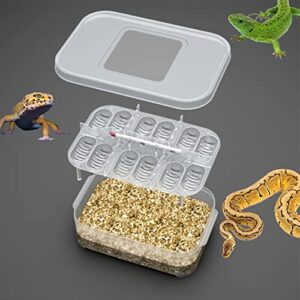
A good egg tray lets you treat every egg like data, not guesswork. This clear plastic 12‑grid box holds gecko‑sized eggs in separate slots, so you can track clutches, genetics, and lay dates at a glance.
The suspended design lifts eggs a few millimeters above the substrate, improving air flow and reducing direct contact. You get easy observation through the transparent lid without opening the incubator.
Just note: it’s too small for ball python eggs and needs added ventilation if your species runs air‑hungry.
| Best For | Small reptile breeders, pet owners, or educators who need to monitor and organize gecko‑sized or similar reptile eggs easily. |
|---|---|
| Material | Plastic |
| Transparency | Transparent |
| Reusability | Reusable |
| Ventilation | Limited ventilation |
| Suitable Animals | Reptiles, amphibians |
| Easy Cleaning | Easy to clean |
| Additional Features |
|
- Clear plastic cover makes it easy to check on eggs without disturbing them.
- 12‑grid layout keeps clutches separated and organized.
- Suspended design helps airflow and reduces moisture buildup beneath eggs.
- Too small for larger eggs like ball pythons.
- Ventilation may need improvement for certain species.
- Size can be smaller than expected, so double‑check measurements before buying.
5. Reptile Humidifier Hide Box Cave
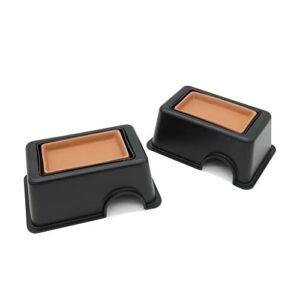
Think of this humidifier hide box as your “set-and-hold” humidity tool. A removable water tank sits on top and drains moisture into the hollow interior, so your gecko or small snake gets a dark, secure, damp space for clean sheds and calm behavior.
The plastic body is light but solid at 6.7 x 4.3 x 2.75 inches, with a 1.7 x 1.2 inch entrance that keeps things tight and safe. Just be ready to refill often; water can disappear fast in warm racks.
| Best For | Small reptiles like geckos or young snakes that need a moist, dark hide to help with shedding and comfort. |
|---|---|
| Material | Plastic |
| Transparency | Black/Opaque |
| Reusability | Reusable |
| Ventilation | Hollow hidden space |
| Suitable Animals | Small reptiles |
| Easy Cleaning | Easy to clean |
| Additional Features |
|
- Removable water tank keeps humidity levels steady.
- Compact design offers security and privacy.
- Easy to clean and refill when needed.
- Water evaporates quickly in warm setups.
- Size may be too small for larger reptiles.
- Needs frequent refilling to stay effective.
6. Reptile Feeding Box Containers
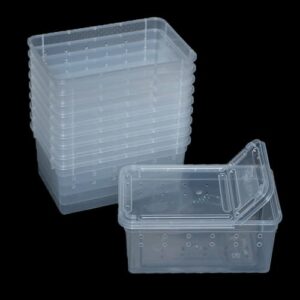
Reptile feeding box containers keep your feeding fast and controlled. A clear plastic body with smooth, non-porous walls lets you see every strike and wipe waste in seconds.
Multiple small air vents along the sides and lid keep airflow steady so crickets don’t crash or mold out.
The double open lid is the real win: flip for quick drops of mealworms, or lift fully to move a small gecko, spider, scorpion, or tree frog without chasing escapees.
| Best For | Pet owners or hobbyists who keep small reptiles, insects, or amphibians and want an easy-to-clean, highly visible habitat. |
|---|---|
| Material | Plastic |
| Transparency | Transparent |
| Reusability | Reusable |
| Ventilation | Multiple air vents |
| Suitable Animals | Reptiles, insects, amphibians |
| Easy Cleaning | Easy to clean |
| Additional Features |
|
- Clear walls make feeding and observation simple.
- Double lid design makes feeding and handling safer.
- Compact and stackable for saving space.
- Too small for larger reptiles or animals needing movement space.
- May feel smaller than expected based on images.
- Not ideal for breeding larger species.
7. Reptile Habitat Boxes Set
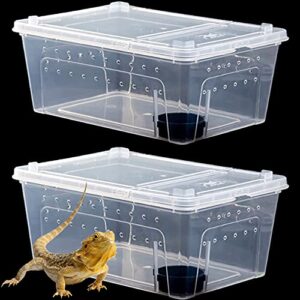
You’ve got feeding under control; now you need boxes that scale with your room, not fight it. A reptile habitat boxes set gives you 10–20 tubs in one system, each built from food‑grade polypropylene with thicker walls than throwaway tubs for better impact resistance and long service.
Clear plastic and rounded corners keep checks quick and rails smooth. Pre‑drilled small vent holes hold airflow without giving bugs a map out.
Stackable lids or rack‑ready footprints turn vertical space into quiet, stable housing for hatchlings, quarantine animals, or feeder colonies. Snap‑on or locking lids keep snakes, geckos, and inverts where you left them, so you open, clean, and rotate tubs fast while your room stays orderly and escape‑free.
| Best For | Keepers with multiple small reptiles or amphibians who need stackable, easy‑to‑clean boxes for breeding, transport, or short‑term housing. |
|---|---|
| Material | Plastic |
| Transparency | Transparent |
| Reusability | Reusable |
| Ventilation | Ventilation design |
| Suitable Animals | Reptiles, amphibians, insects |
| Easy Cleaning | Easy to clean |
| Additional Features |
|
- Transparent design offers a full 360° view for quick checks.
- Ventilation and double openings help maintain airflow and access.
- Lightweight, durable plastic makes cleaning and moving simple.
- Too small for medium or large reptiles.
- Water dishes can shift during transport.
- Packaging and seller communication may vary in quality.
8. Clear Reptile Terrarium Box
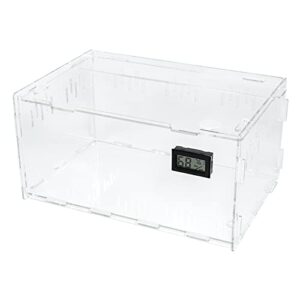
Stacked rack tubs manage volume; this clear acrylic box manages detail work. You get a 11.4″ x 7.7″ x 5.9″ footprint that fits baby geckos, small snakes, frogs, or tarantulas without wasting shelf space.
High‑clarity walls give you a 360‑degree view, so you spot stuck shed or poor feeding before it costs you a clutch.
The sliding top with vent hole keeps air moving and feeding simple, but it’s not escape‑proof or waterproof, so you treat it as a travel, display, or quarantine box—not a forever home.
| Best For | Keepers who need a compact, clear enclosure for baby reptiles, amphibians, or small invertebrates during travel, quarantine, or display. |
|---|---|
| Material | Acrylic |
| Transparency | Clear |
| Reusability | Reusable |
| Ventilation | Ventilation hole |
| Suitable Animals | Reptiles, amphibians, invertebrates |
| Easy Cleaning | Easy to clean |
| Additional Features |
|
- 360‑degree clear acrylic for full visibility.
- Sliding top makes feeding easy and quick.
- Lightweight and simple to assemble or clean.
- Not waterproof; may leak if filled with water.
- Vent hole and sliding lid aren’t escape‑proof.
- Acrylic can flex or warp over time.
9. Natural Cork Bark Bedding Material
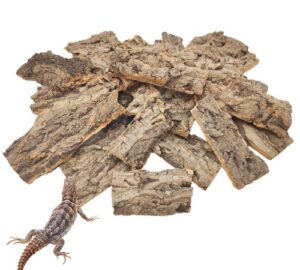
You used that clear box to watch every shed; now you need a floor that works as hard as you do.
This 1.5 lb bundle of natural champagne‑tree cork bark gives you safe, non‑toxic contact for hatchlings and breeders. Pieces stay springy, resist rot, and help smooth out temp and humidity swings at egg level.
Cork holds surface moisture without turning swampy, so geckos, snakes, and turtles keep clean bellies and dry scales. It lasts for months, then composts when you refresh bioactive bins.
| Best For | Reptile owners who want a natural, clean, and sustainable bedding or backdrop that keeps tanks healthy and easy to maintain. |
|---|---|
| Material | Plastic |
| Transparency | Transparent |
| Reusability | Reusable |
| Ventilation | Air circulation design |
| Suitable Animals | Reptiles, amphibians, birds |
| Easy Cleaning | Washable |
| Additional Features |
|
- Natural cork bark helps regulate humidity without molding.
- Safe and non-toxic surface for reptiles and small pets.
- Durable material that looks great and composts easily.
- Some pieces may be thinner or flatter than expected.
- Might need rinsing before first use to remove natural moss.
- Color and texture can vary from piece to piece.
Incubation, Temperature, and Humidity Control
Keeping steady heat and humidity makes or breaks a clutch. The right tools give you precision and peace of mind from day one. Here’s what you need for stable incubation and healthy hatch rates.
Commercial Incubators and Hatch Rates
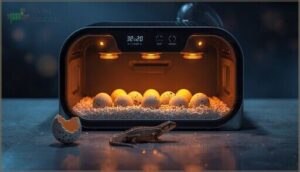
A stable incubator is crucial for the success of your clutch. Reliable systems like the R-Com PX-R90 or Farm Innovators 4250 offer precise Temperature Control and Humidity Management, which are essential for strong hatch rates. Combining good Incubator Maintenance with smart Egg Turning Systems can significantly enhance Reptile Health and Wellness through consistent Reptile Husbandry and Care practices.
A well-maintained incubator with precise temperature, humidity, and egg turning is the quiet engine behind strong, healthy hatch rates
| Model | Features |
|---|---|
| R-Com PX-R90 | PID control, humidity auto-adjust, 0.5°F accuracy |
| Farm Innovators 4250 | Automatic turning, LCD display, even airflow |
| GOYOJO 76L | Large capacity, alarm alerts, stable incubation |
Digital Thermostats for Precise Control
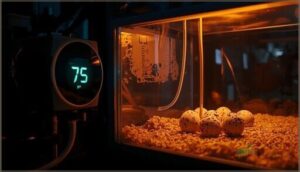
Precision Heating starts with the right Digital Thermostats. For serious Reptile Breeding, Temperature Control within 1–3°C keeps eggs viable and cuts losses fast.
Key features to prioritize:
- Thermostat Modes: on/off, pulse, or dimming — match the mode to your heat source
- Probe Placement: position directly under the basking zone or inside your Incubation box
- Safety Features: audible alarms flag dangerous temperature swings
- Precision Heating: multi-channel units manage several zones at once
Good Reptile Husbandry and Care depends on it.
Humidifiers and Air Circulation Systems

Humidity is a critical factor in hatch success. Ultrasonic foggers with Mist Output Control and Humidity Sensors are essential for precise humidity management.
In any vivarium setup, airflow is equally important. Matching Air Exchange Rates and Ventilation Design ensures a balanced microclimate. Fogger Maintenance is key to maintaining consistent performance and clean reptile care.
| System Feature | Breeder Priority |
|---|---|
| Mist Output Control | Adjusts moisture flow |
| Air Exchange Rates | Balances enclosure air |
| Humidity Sensors | Monitors exact humidity |
| Ventilation Design | Prevents air stagnation |
| Fogger Maintenance | Ensures steady function |
Lighting, Heating, and Habitat Essentials

Good lighting and steady heat keep your breeding setup stable. The right gear helps mimic natural cycles and prevent stress. Here are the essentials that keep your enclosures running right.
UVB Lighting Kits and Heat Bulbs
Strong light means strong health. Your reptiles thrive under balanced UVB lighting and heat sources that mimic real sunlight. Use high-output kits like the Arcadia ProT5 UVB Kit for accurate UVB output and steady thermal control. Maintain a clear difference between day spots and bask zones with:
- Reliable Lighting Kits
- Proper Bulb Replacement
- Measured Reptile Lighting and Heating
- Controlled Temperature Regulation
Heat Mats, Heat Tape, and Radiant Heat
Think of your Heat Sources as levers for Temperature Control. Heat Mats and Heat Tape give you steady belly heat in the mid‑80s to low‑90s for digestion and follicle growth. Pair them with firm Thermostat Settings and temp guns for Heat Mat Safety and clean temperature regulation.
For larger enclosures, use a Radiant Heat Panel for broad, even Radiant Heating within your Reptile Heating and Lighting Solutions.
Creating Naturalistic Breeding Environments
Your reptile breeding thrives in naturalistic habitats mimicking wild homes. Nail Environmental Design with smart Habitat Layout. Use these Reed’s Reptiles picks:
- Bioactive substrates like Terra Flora for rainforest layers.
- Substrate Selection – deep sand-soil blends for nesting.
- Visual Barriers – cork flats reduce stress.
- Climbing Structures – branches boost courtship.
Weave herpetoculture mastery into your reptile habitats for top hatch rates.
Health, Nutrition, and Husbandry Tools

Healthy breeding starts with strong nutrition and consistent care. The right tools make it easier to feed, handle, and track your animals safely.
Here are the essentials every breeder should keep close.
Specialized Diets and Supplements
Dialed-in reptile nutrition is your quiet power tool in Reptile Breeding and Nutrition and long-term reptile keeping. Use plain Calcium Supplements most meals, with Vitamin D3 and Multivitamins on a set rotation so you don’t stack fat‑soluble vitamins.
Pair strong Gut Loading with varied insects to tighten animal nutrition, then add targeted Probiotics after stress or meds to keep Reptile Care and Maintenance on track.
Feeding Tools and Handling Equipment
You tightened reptile nutrition; now you need tight control over feeding tools and Reptile Handling and Safety. Use:
- Feeding Tongs and Reptile Tweezers for live prey.
- Feeding Dishes that block worm and cricket escapes.
- Snake Hooks for lift and guide only.
- Handling Gloves with forearm coverage.
- Secure tubs as calm boxes between sessions for better animal nutrition and Reptile Feeding and Nutrition.
Health Monitoring and Record-Keeping
You locked in tools for safer handling; now you use Health Records to lock in Reptile Health and Maintenance and real Animal Health and Wellness.
Run steady Weight Tracking with gram scales and simple growth notes. Add Environmental Logs for temps, humidity, and incubator ranges.
Note strict Quarantine Procedures. Track Breeding Outcomes. Take clean Husbandry notes.
Share exports with Veterinary Care during Reptile Care checks.
Frequently Asked Questions (FAQs)
How often should breeding pairs be rotated?
You rotate most breeding pairs on monthly Breeding Schedules, using Rotation Intervals that give each female one Pairing Frequency per month within her Breeding Cycles.
That rhythm helps Genetic Diversity, aligns with solid Breeding Guides, and keeps Husbandry and Breeding stress low.
What permits are required for reptile breeding?
Surprisingly, breeding reptiles often needs Federal Permits and State Licenses. You’ll also meet Welfare Standards, Trade Regulations, and Documentation Needs tied to Wildlife Conservation, proving responsible Pet Ownership and solid Husbandry and Breeding practices.
How to prevent inbreeding in small collections?
Prevent inbreeding with strict Genetic Planning, Pedigree Tracking, and Outcross Strategies. Rotate breeders often.
Follow breeding guides and the Reeds Breeder Program for better Reptile Husbandry, stronger Captive Breeding of Reptiles, and improved animal welfare.
When do reptiles reach sexual maturity?
As the saying goes, “growth takes its own time.” In herpetology, size matters more than age.
Lizard Maturity happens by 1–2 years, Snake Maturity varies, and Tortoise Maturity can take decades—Environmental Impact shapes every Reptile’s Breeding readiness.
How to record breeding and genetic lineage?
Use simple Animal Identification codes per breeder notes, then log every pairing, clutch, and hatchling in detailed Breeding Logs and Lineage Records.
Tie these to Husbandry data and Pedigree Management tools so captive breeding promotes long‑term pet wellbeing.
What are bioactive substrates and are they necessary?
Bioactive Vivarium Substrates create a self-sustaining ecosystem using microfauna and a Cleanup Crew for nutrient cycling. This Bio Active setup mimics Natural Habitats but has System Limitations.
Substrate definition: optional, not required for breeders.
How do I choose safe decor for breeding setups?
If your breeding environments look like a toddler’s marble run, decor safety is already off.
Choose non toxic materials, smooth reptile hides, and stable pieces sized for species matching, with simple shapes that clean fast in naturalistic pet environments.
Which plants are best for reptile breeding enclosures?
Boston fern, nerve plants, aluminium plant, bromeliads, and peperomia give safe Plant Species for Egg Laying and Microclimate Creation, while pothos and spider plant handle Humidity Control in Bioactive Substrates and Naturalistic Pet Environments with vining tropical plants.
Where can I find reliable reptile pedigrees or genetics info?
Reliable reptile pedigrees and genetics info live in morph databases like World of Ball Pythons. Use genetic calculators for pairings.
Pedigree platforms such as TruHerd track lineage. DNA testing via MorphMarket verifies traits.
Check reptile enclosures and supplies sites for husbandry tools.
What trends are shaping the reptile breeding supply market?
Smart Climate Systems, Eco Friendly Materials, and Bioactive Designs now define modern Reptile Supply innovation.
Online Sales Growth drives demand for Sustainable Products, pushing new Reptile Enclosures and Reptile Husbandry Supplies toward efficient, connected, Pet Reptile Supplies.
Conclusion
Like a clean scalpel in a surgeon’s hand, the right tools give you control. Your reptile breeding supplies turn random clutches into planned outcomes.
Choose solid boxes, stable heat, and honest numbers. Match each container, light, and hide to one clear job.
Write your data, clutch after clutch. Adjust one variable at a time. When you open each incubator, you shouldn’t feel surprise—only the quiet confirmation that your system works. That’s how real consistency looks.
- https://www.wisconsinherps.org/educational-articles/tutorial-how-to-create-a-humidity-hide-and-also-how-to-create-a-nesting-or-lay-box
- https://www.recoilreptiles.com/product-page/large-humid-hide-lay-box-pvc
- https://www.reptilebasics.com/hide-boxes/humidity-hut-medium-hide-box/
- https://www.aosom.com/blog-how-to-clean-a-reptile-cage-and-disinfect-for-a-healthy-habitat.html
- https://reptiliankingdom.com/products/escape-proof-reptile-feeding-bowl