This site is supported by our readers. We may earn a commission, at no cost to you, if you purchase through links.
A hatchling snake fresh out of the egg carries almost no thermal mass—its tiny body temperature shifts with the environment in minutes, not hours.
Get the heat wrong and digestion stalls, immunity drops, and feeding refusals follow fast.
Most new keepers lose hatchlings not to disease or bad genetics, but to a heating setup that seemed fine on the surface.
The difference between a thriving baby ball python and one that won’t eat often comes down to a 5°F gradient mistake and a heating pad running without a thermostat.
Reptile heating pads for hatchling snakes aren’t one-size-fits-all—wattage, placement, and temperature control all matter more at this fragile life stage.
The picks and setup tips ahead cut through the noise so you choose right the first time.
Table Of Contents
Key Takeaways
- Hatchling snakes can’t regulate their own body heat, so a heating pad paired with a thermostat isn’t optional — it’s the difference between a thriving snake and one that won’t eat.
- A 5°F gradient mistake or an unregulated pad running too hot can cause thermal burns, stalled digestion, and immune failure — all preventable with the right setup.
- Match your pad’s wattage to your tank size (7–16W for 10–20 gallon setups), cover only one-third of the floor, and keep substrate between 0.5 and 1 inch for safe, even heat transfer.
- Run your heating pad continuously with a thermostat — never on a timer — and inspect it weekly for fraying, cracks, or temperature swings bigger than 10°F.
Why Hatchling Snakes Need Heating Pads
Hatchling snakes rely on steady warmth to stay healthy and grow. The right heating pad keeps their environment safe and comfortable.
A custom snake tank layout can help you position heating pads and vents for the most consistent warmth throughout your hatchling’s space.
Let’s look at which options work best for your setup.
Importance of Thermoregulation for Hatchlings
Unlike mammals, hatchling snakes can’t generate their own body heat — so thermoregulation isn’t optional, it’s survival. Reptile heating pads create temperature gradients that directly control metabolic rate, digestion speed, immune function, and growth development.
At 26–30°C, their heart rate hits 90–100 bpm and digestion clears in three to four days. That’s enclosure temperature management working exactly as it should for snake care.
Health Risks of Improper Heating
Getting the temperature wrong and reptile health problems stack up fast. Unregulated reptile heating pads can hit over 95°F — causing thermal burns on belly scales within minutes. Too much heat also triggers heat stroke and chronic dehydration. Too little suppresses thermoregulation entirely, killing immune function and digestion. Poor temperature control even creates a fire hazard.
Every risk here is preventable with the right snake care setup. Ensuring an appropriate cage size helps prevent thermal stress.
Species-Specific Temperature Requirements
Not all hatchlings share the same Species Heat Zones. Temperature control in snake enclosures must match the species:
- Corn Snake Gradient — 80–85°F warm side, 75°F cool side
- Ball Python Warmth — 86–90°F warm hide, 72–80°F cool side
- Hognose Basking Range — 90–95°F hot zone
- Kingsnake Night Temps — stay above 70°F
Use heat mats with a thermostat controller for each setup.
Properly maintain humidity levels to support healthy ball python hatchlings.
Key Features of Reptile Heating Pads

Not all heating pads are built the same — and with hatchlings, the wrong pick can cause real harm. Before you spend a dime, there are four things worth checking on any pad you’re considering.
Here’s what to look for.
Wattage and Size Compatibility for Hatchlings
Too much wattage in a small space burns. Too little, and your hatchling can’t digest properly.
For 10–20 gallon tanks, stick to 7–16W pads — that’s the sweet spot for reptile heating without overheating.
Keep pad area ratio under one-third of the floor.
In cooler rooms (68–72°F), lean toward 10–16W. Warmer rooms? A 7–8W pad manages it fine.
Temperature Control and Thermostats
heating pad without a thermostat controller is like a car with no brakes — powerful, but dangerous. digital thermostats beat analog hands down; analog dials can drift up to 40°F off target.
A heating pad without a thermostat is powerful but dangerous — like a car with no brakes
For hatchlings, PID thermostat precision locks temperatures within 0.1°C.
Pair that precision with proper heat mat placement for milk snake enclosures to give hatchlings a stable, safe thermal gradient from day one.
Place your probe inside the warm hide for accurate belly-heat readings.
Set alarm threshold settings at 95°F high and 70°F low — your snake’s safety net.
Safety Certifications and Materials
Certifications aren’t just stickers — they’re proof that a pad won’t fry your hatchling or your home.
Look for UL Certification and ETL Testing marks; both confirm safe surface temperatures below 122°F.
CE Marking matters for EU buyers.
Quality reptile heating pads use PET substrate for even heat spread and fiberglass reinforcement to seal nichrome wires completely.
Pair any of these with a thermostat controller for reliable temperature control and real reptile care and health.
Waterproof and Fire-Resistant Designs
Water and electricity are a dangerous mix — especially inside a humid terrarium.
That’s why build quality matters so much in reptile heating pads for snake care:
- Sealed Edge Construction and IP67 Water Resistance keep moisture out completely
- PTC Self-Regulation caps surface temps at 55°C, eliminating hotspots
- Thermal Cutoff Systems and Flexible Multi-Layer Insulation shut off heat sources before damage occurs
Top Reptile Heating Pads for Hatchling Snakes
Picking the right heating pad for a hatchling setup doesn’t have to be complicated.
There are a few solid options worth knowing about — each with different strengths depending on your enclosure size and budget.
Here’s what made the cut.
1. BN Link Reptile Thermostat Controller
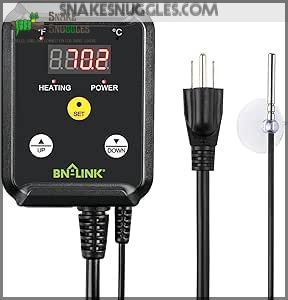
The BN-LINK Thermostat Controller is one of the most reliable options for hatchling setups. It controls temperatures between 40°F and 108°F — plenty of range for most common species.
The 3-button interface is dead simple: hold SET for three seconds, adjust with the UP/DOWN arrows, confirm. Done. The included 4.92 ft waterproof probe sits right inside the enclosure for accurate readings. It’s ETL listed, supports up to 1000W, and the LED indicators let you confirm it’s actually working at a glance.
| Best For | Reptile keepers, hobbyist breeders, and anyone running a fermentation or seedling setup who needs a simple, no-fuss way to keep temperatures dialed in. |
|---|---|
| Power Source | 120VAC 60Hz |
| Primary Use | Temperature control |
| Material | Plastic |
| Weight | 1.14 lbs |
| Safety Feature | ETL listed |
| Additional Uses | Brewing, fermentation |
| Additional Features |
|
- Super easy to set up — three buttons, done in seconds
- ETL listed and handles up to 1000W, so it works with most standard heating devices
- The LED indicators make it easy to confirm at a glance that everything’s running right
- Heating only — if you need cooling control, you’ll need a different unit
- Not great for setups that need temps below 40°F or above 108°F
- The cord length could be a hassle depending on where your setup is
2. Aiicioo 7W Reptile Heating Pad
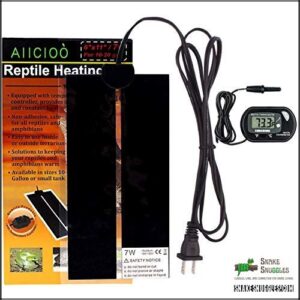
The Aiicioo 7W Reptile Heating Pad is a solid budget pick for small hatchling setups. At 8" x 6" and just 7 watts, it’s built for tanks in the 10–20 gallon range — perfect for a corn snake or ball python neonate.
The PVC construction is durable, and the nichrome wire distributes heat evenly without hot spots. No adhesive means you can reposition it easily. Just pair it with a thermostat — this pad can hit 90–100°F without one, which is too hot when unregulated.
| Best For | Small reptile owners — especially those raising hatchling corn snakes or ball pythons in 10–20 gallon tanks on a budget. |
|---|---|
| Power Source | 120V AC |
| Primary Use | Reptile heating |
| Material | Polyvinyl Chloride |
| Weight | 6.4 oz |
| Safety Feature | Overheat protection |
| Additional Uses | Germination, brewing |
| Additional Features |
|
- No adhesive means you can move it between tanks without the hassle of peeling off sticky residue
- Even heat distribution with no hot spots, so your pet gets a consistent warm zone
- Low 7-watt draw keeps electricity costs minimal over time
- The temperature dial has no clear markings, so you’re basically guessing without a separate thermostat
- Nothing holds it in place — it can shift if your setup gets bumped
- Some users have run into durability issues, so long-term reliability isn’t guaranteed
3. Aiicioo Reptile Heat Lamp Bulb
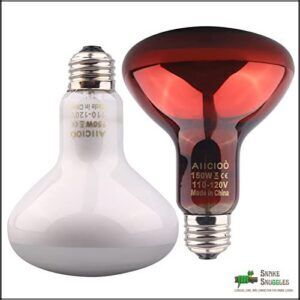
Not every hatchling enclosure needs a heating pad — sometimes an overhead heat source makes more sense.
The Aiicioo Reptile Heat Lamp Bulb runs at 150W and emits infrared heat waves that raise ambient air temperature while keeping visible light low. That red glow won’t disrupt your snake’s night cycle.
Mount it 12–18 inches above the substrate, screw it into an E26 ceramic socket, and pair it with a thermostat to hold basking spots between 88–92°F consistently.
| Best For | Reptile owners who need a low-light overhead heat source for nocturnal species like snakes, bearded dragons, or turtles. |
|---|---|
| Power Source | 120V AC |
| Primary Use | Reptile heating |
| Material | Glass |
| Weight | Not listed |
| Safety Feature | 30-min cool-down |
| Additional Uses | Amphibians, terrariums |
| Additional Features |
|
- That red glow keeps ambient temps up without messing with your reptile’s day/night rhythm
- Screws right into a standard E26 socket — no special setup needed
- 150W puts out solid heat for basking and digestion support
- Some users only got a few weeks out of it, so longevity can be hit or miss
- It runs seriously hot, so you’ll want to wait 30 minutes before touching it after use
- Might not cut it alone for a full 24-hour heat cycle — a backup heat source could be necessary
4. Exo Terra Heat Cable 25W
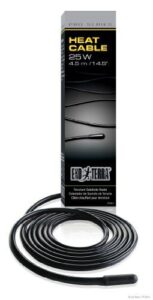
If floor heat works better for your setup, the Exo Terra Heat Cable 25W is worth a close look. It runs 4.5 meters total with a 25W output — plenty for small tubs or rack drawers housing hatchling colubrids, boas, or pythons.
The double silicone insulation keeps things safe in humid enclosures, and the flexible cable lets you lay it in a zig-zag pattern under the tank.
Just never skip the thermostat — running it bare from the wall is asking for trouble.
| Best For | Keepers running small breeder racks or compact terrariums who need reliable, targeted floor heat for hatchlings and smaller reptiles. |
|---|---|
| Power Source | 120V AC |
| Primary Use | Reptile heating |
| Material | Metal/Plastic |
| Weight | 7.1 oz |
| Safety Feature | Double insulation |
| Additional Uses | Breeder racks |
| Additional Features |
|
- Double silicone insulation makes it safe for humid setups
- Flexible cable lays flat easily in a zig-zag under tanks or rack drawers
- Works great with a thermostat for dialed-in temperature control
- Only 6 feet of the cable actually heats — the rest is just power cord
- May fall short for larger enclosures or multi-shelf rack systems
- Some buyers have reported receiving units that arrived used or damaged
5. Zilla Bark Bends Terrarium Decor
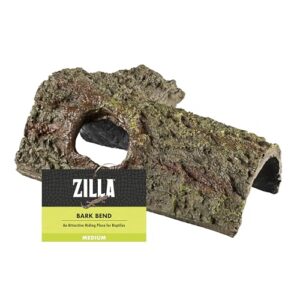
Heat and shelter go hand in hand — and the Zilla Bark Bends Hide is worth adding to any hatchling setup. It’s handcrafted to look like real wood bark, blends naturally into your terrarium, and — more importantly — gives young snakes a secure place to feel safe.
The non‑porous plastic resists bacteria and wipes clean with warm soapy water. The medium size fits most 10–20 gallon tanks perfectly. Multiple openings let you check on your snake without disturbing it.
| Best For | Reptile owners looking for a naturalistic hide that keeps snakes and lizards feeling secure while staying easy to clean. |
|---|---|
| Power Source | N/A |
| Primary Use | Reptile habitat |
| Material | Plastic |
| Weight | 1.1 lbs |
| Safety Feature | Non-porous surface |
| Additional Uses | Aquatic environments |
| Additional Features |
|
- Looks like real wood bark, so it blends right into any terrarium setup
- Non-porous plastic means bacteria don’t stand a chance — just wipe it down and you’re good
- Open ends let you peek in on your reptile without stressing them out
- Some buyers have gotten theirs with sharp edges right out of the box
- The top opening runs small, so larger reptiles might not fit comfortably
- Dimensions can be a little off from what’s listed, so measure your tank before ordering
6. REPTI ZOO Adjustable Reptile Heat Pad
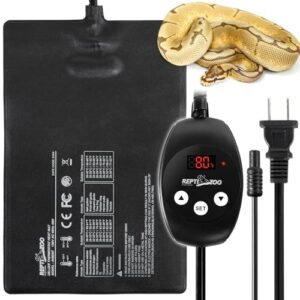
Now that your hatchling has a safe hide, it needs reliable warmth underneath.
The REPTI ZOO Heat Pad delivers exactly that.
Carbon fiber film heats faster and more evenly than old wire-style mats — no hot spots, no cold patches.
The built-in smart chip cuts power automatically above 50 °C.
You get two sizes: 8 W for 5–15 gallon tanks, 24 W for 30–40 gallon setups.
The IPX7 waterproof rating manages humid enclosures without complaint.
| Best For | Reptile owners with mid-to-large tanks who want steady, reliable under-tank heat for turtles, geckos, bearded dragons, or snakes. |
|---|---|
| Power Source | 120V AC |
| Primary Use | Reptile heating |
| Material | PVC |
| Weight | 12.3 oz |
| Safety Feature | Waterproof surface |
| Additional Uses | Seed germination, brewing |
| Additional Features |
|
- Carbon fiber heating warms up fast and spreads heat evenly — no annoying hot spots
- IPX7 waterproof rating holds up fine in humid enclosures
- Built-in smart chip cuts power if temps climb too high, so there’s a safety net
- Some users found the thermostat runs inaccurate, which can lead to overheating if you’re not watching
- The adhesive backing has a reputation for giving up and letting the pad peel away
- Still needs close temperature monitoring — the auto-cutoff isn’t a substitute for a reliable external thermostat
Safe Installation and Use Tips
Getting the setup right matters just as much as picking the right pad.
A few simple habits — proper placement, thermostat checks, and basic electrical safety — will keep your hatchling warm without putting it at risk.
Here’s what you need to know before you plug anything in.
Proper Placement in Hatchling Enclosures
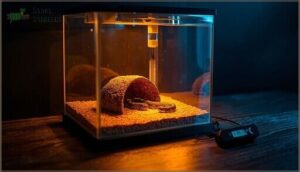
Under-tank positioning matters more than most beginners realize. Attach your heat mat to the exterior bottom — never inside — and cover roughly 30 percent of the enclosure floor on the warm side.
Keep substrate depth between 0.5 and 1 inch for proper insulation. Align your warm hide directly over the hotspot. Verify your temperature gradient with surface thermometers: 88–90°F warm side, 75°F cool side.
Thermostat Calibration and Monitoring
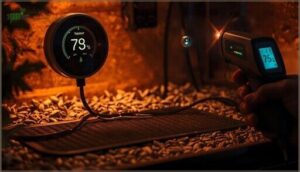
Getting probe placement accuracy right is half the battle. Your thermostat controller is only as reliable as where its sensor sits — place it directly between the heat mat and enclosure floor.
- Infrared temperature verification daily against your digital thermostat reading.
- Weekly temperature audits, re‑adjusting if readings drift beyond 2°F.
- Data logger integration to catch calibration drift detection in humid setups.
Preventing Burns and Electrical Hazards
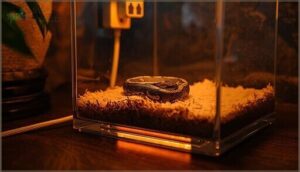
Burns don’t announce themselves — they happen slowly, under a snake that can’t move away fast enough.
Keep at least 1 inch of substrate over your under tank heaters, and stick to low wattage selection: 5W to 7W pads for small enclosures. Use grounded wiring, add surge protection rated above 1000 joules, and follow pad placement guidelines — outside the glass, never inside.
Maintenance and Troubleshooting Advice
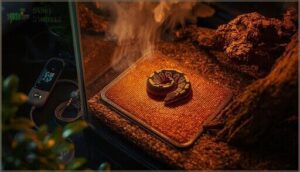
Even the best heating pad won’t last forever — and a neglected one can turn into a real problem fast.
Knowing what to watch for keeps your hatchling safe and your setup running smoothly.
Here’s what you need to stay on top of.
Regular Cleaning and Inspection
Dirt and debris act like insulation — blocking even heat distribution and throwing off your Temperature Control.
For Reptile Care and Maintenance, mix a Vinegar Solution of one part white vinegar to three parts distilled water, applied with Safe Wipe Materials like lint‑free microfiber cloths.
Do Biweekly Surface Wipes every 10–14 days in humid setups.
Run Post Cleaning Tests with an infrared thermometer — confirming 85–95°F before returning Reptile Heating Pads to the enclosure.
Weekly Visual Checks catch fraying and cracks early.
Recognizing Malfunction Signs
Your heating pad rarely fails all at once — it gives warnings first.
Watch for Temperature Fluctuations of 10–15°F within 30 minutes, or Overheat Indicators like surface temps hitting 120°F+.
Physical Damage — cracks, fraying, burn marks — disrupts the Enclosure Temperature Control quickly.
Power Failure shows as no indicator light.
Thermostat Errors like flickering displays or an E1 code mean your Thermostat Controller has lost reliable Heating and Temperature Control, risking Reptile Health.
When to Replace Heating Pads
Most heating pads last 2–5 years — but don’t wait for failure to act. Replace yours when you spot physical damage signs like cracks or burn marks, adhesive degradation lifting edges off the glass, or thermostat accuracy loss beyond year three.
Warranty expiration is your built-in reminder. Material fatigue is real, and in snake care, reliable temperature control isn’t optional — it’s the whole game.
Frequently Asked Questions (FAQs)
Can heating pads work with bioactive hatchling setups?
Bioactive setups with 3–4 inches of substrate block over 50% of heat output. Heating pads struggle here — use overhead halogen or deep heat projectors instead for reliable thermoregulation.
How do I choose substrate thickness over heat mats?
Keep substrate between 5 and 1 inch over heat mats. Thinner layers boost heat transfer efficiency — thicker ones block warmth entirely.
Around 5 inches of coconut fiber reliably delivers 85°F surface temps for hatchling comfort zones.
Are heating pads safe during hatchling shedding cycles?
Yes — with proper thermostat calibration and substrate insulation.
Keep surface temps at 32°C max, maintain 50–70% humidity balance, and consider overhead heat alternatives to prevent heat spot prevention issues during shedding cycles.
Should heating pads run continuously or on a timer?
heat pad continuously — paired with a thermostat for temperature control.
Timers create dangerous swings.
Thermostat reliability beats user convenience every time, keeping temperature stability steady and cutting real safety risks.
Conclusion
A hatchling thriving under steady warmth and one slowly fading from a setup that “looked fine” — that gap almost always traces back to reptile heating pads for hatchling snakes chosen without the right wattage, placement, or thermostat control.
You now know what separates those two outcomes.
Pick the right pad, dial in your gradient, and run everything through a thermostat.
Your hatchling’s job is to grow — your job is to make the heat work.
- https://repticube.com/products/reptile-heating-pads
- https://incubatorwarehouse.com/collections/post-incubation-supplies-reptiles-accessories
- https://www.aussiepythons.com/threads/what-size-heat-mat-watts-for-hatchlings-recommended-setup-for-beginner.75552/
- https://reptifiles.com/corn-snake-care-guide/corn-snake-temperatures-humidity/
- https://www.zenhabitats.com/blogs/reptile-care-sheets-resources/ball-python-complete-lighting-and-heating-guide