This site is supported by our readers. We may earn a commission, at no cost to you, if you purchase through links.

Ball pythons are masters at hiding discomfort. By the time your snake looks obviously sick, the problem has often been building for weeks. That’s the reality of owning a prey species hardwired to suppress any sign of vulnerability.
Recognizing the signs of stress in a ball python early can change outcomes. A snake glass-surfing at noon, refusing food for the third consecutive week, or soaking nonstop in its water bowl isn’t being difficult. It’s communicating a problem. Husbandry gaps, not personality, drive most of these behaviors, and nearly all of them are fixable once you know what to look for.
Table Of Contents
- Key Takeaways
- Behavioral Signs of Stress in Ball Pythons
- Physical Signs Your Ball Python May Be Stressed or Sick
- Normal Ball Python Behavior Vs. Stress
- Common Causes of Stress in Ball Pythons
- How to Calm a Stressed Ball Python and When to Call a Vet
- Frequently Asked Questions (FAQs)
- How to tell if your ball python is stressed?
- How do I destress my ball python?
- What are 5 warning signs of stress?
- What are the signs that a ball python is dying?
- How do I tell if my python is stressed?
- What can stress do to a snake?
- How to tell if a ball python is happy?
- How to calm a stressed snake?
- How does lighting affect ball python stress?
- Can particular foods cause stress in ball pythons?
- Conclusion
Key Takeaways
- Ball pythons instinctively hide illness, so behavioral shifts like daytime glass-surfing, prolonged food refusal, or obsessive soaking are your earliest—and most actionable—warning signs.
- Nearly every stress behavior traces back to a fixable husbandry gap, most commonly incorrect temperatures (warm side 88–92°F), humidity outside the 60–80% range, or insufficient hides.
- Physical red flags like incomplete sheds, labored breathing, open-mouth breathing, and progressive weight loss signal that stress has crossed into illness—don’t wait for these to resolve on their own.
- When you spot persistent stress signals, fix the environment first: correct the temperature gradient, add snug opaque hides on both ends, cut handling for two weeks, and call a vet immediately if breathing is compromised.
Behavioral Signs of Stress in Ball Pythons
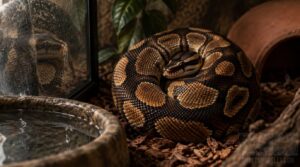
When your ball python’s behavior shifts, take it seriously. Restless movement during the day, glass surfing, or defensive balling signal that something’s off in its environment.
Reviewing safe ball python handling techniques can help you identify whether your approach is contributing to your snake’s stress before assuming the environment is the culprit.
Refusal to eat for weeks or constant soaking in the water bowl tells you the same thing. These aren’t quirks; they’re your snake communicating that its setup or handling routine needs your immediate attention.
When a ball python refuses food or soaks obsessively, it is not misbehaving—it is asking for help
Physical Signs Your Ball Python May Be Stressed or Sick
Behavioral signals are only part of the picture. Physical changes confirm what behavior hints at, and some of them demand immediate action.
Watch for incomplete sheds and retained eye caps. These point to chronic low humidity or dehydration. A rough, patchy shed isn’t cosmetic; it causes local inflammation and permanent vision damage if the retained cap goes untreated. Keeping a reptile shed aid spray on hand lets you soften stuck shed quickly before inflammation sets in.
Rapid or labored breathing, open-mouth breathing, or mucus around the nose signals respiratory disease. Don’t wait to see if it clears up.
Progressive weight loss over several weeks, paired with refusal to eat, shows the body failing to hold condition. Muscle mass shrinks visibly along the spine. Defensive balling that persists well outside handling confirms the snake is under serious physiological stress.
Normal Ball Python Behavior Vs. Stress

Physical symptoms tell you when stress has gone too far, but you also need a baseline. Ball pythons are nocturnal, secretive, and slow. Know what normal looks like before you diagnose a problem.
Tracking subtle shifts over time is easier when you understand typical ball python behavior patterns well enough to spot when something feels off.
| Normal Behavior | Stress Signal | What It Means |
|---|---|---|
| Sleeping coiled in a hide all day | Daytime roaming, glass-surfing | Inadequate hiding spots or temperature humidity factors are off |
| Refusing food during breeding season | Refusing meals after consistent acceptance | Handling mistakes or routine disruption |
| Brief defensive balling when first touched | Tense coil, striking at every approach | Chronic stress or pain |
| Settling quickly after repositioning | Repeated escapes, avoiding the preferred hide | Enclosure conditions need fixing |
One skipped meal isn’t a crisis. Behavioral cues that persist for multiple days, sustained avoidance of the usual hide, escalating defensiveness, or constant escape attempts mean something’s wrong. Track patterns, not single events, then correct the environment before assuming illness.
Common Causes of Stress in Ball Pythons

Most ball python stress traces back to something in their environment or your routine, not the snake itself. The good news is that the five causes below cover the vast majority of cases, and every one of them is fixable. Check your setup against each one so you can pinpoint exactly what’s bothering your snake.
Temperature and Humidity Problems
Think of your enclosure as a thermostat you must set, not a room you hope for. Temperature swings stress your snake fast.
Consistent temperature management is one of the most effective snake escape prevention strategies, since a stable enclosure reduces the thermal stress that triggers restless, escape-driven behavior.
Keep it 88–92°F on the warm side, with 50–60% humidity; anything showing humidity below 50 risks bad sheds. Pairing your setup with a ball python under-tank thermostat keeps warm-side temps locked in that 88–92°F sweet spot without constant manual adjustments.
Check both sides daily, because temperature humidity factors interact: warmer air dries out, so mist more when heat rises.
Inadequate Hides and Clutter
Hide placement and enclosure design determine whether your snake feels secure. Inadequate hides with limited visual barriers force it into excessive open space, and that sustained exposure drives chronic stress.
Watch for these signs:
- Spending long periods half-in, half-out at the hide entrance
- Restless pacing along the glass
- Repeated repositioning instead of settling
- Using clutter, not proper hides, for cover
Feeding and Handling Mistakes
Around feeding time, your choices matter most. Handling mistakes right before an offering shift your snake’s attention from prey to avoidance, triggering defensive behavior fast. Keep handling frequency minimal in the 48 hours surrounding a feed.
Cold or improperly stored prey kills the feeding response. One feeding refusal compounds stress, so if your snake won’t strike, wait a full week.
Relocation and Routine Changes
A ball python moved to a new home can refuse food for two or three weeks. Relocation reshuffles every scent cue and the enclosure setup it previously relied on.
Avoid inconsistent handling routines and keep handling frequency low for at least the first week. Keep routine changes minimal, maintain a consistent feeding schedule, and don’t rearrange its hides right away.
Parasites and Poor Hygiene
One untreated mite infestation can spread to every animal you own within weeks.
Watch for these parasite and hygiene red flags:
- Restless rubbing against décor
- Foul, watery stool
- Retained or patchy shed
- Vent redness or caking
Run a thorough parasite check. Use a strict quarantine protocol for new animals. Parasite prevention starts with clean substrate, disinfected tools, and consistent hygiene.
A dedicated reptile quarantine enclosure kit makes it far easier to isolate new arrivals safely while keeping your existing animals protected.
How to Calm a Stressed Ball Python and When to Call a Vet

Most stressed ball pythons bounce back quickly once you fix the fundamentals. Start with temperature gradient correction: warm side 88-92°F, cool side 76-80°F, with humidity locked between 60-80%. Then step back.
Once your snake is eating well and settled again, our guide to ball python breeding readiness and safe pairings explains how to protect future hatchlings.
- Place a tight, opaque hide on both the warm and cool ends
- Cut handling completely for at least two weeks
- Stick to a consistent feeding schedule without repeatedly offering prey
- Add environmental enrichment like cork bark or climbing branches
- Maintain humidity control using damp substrate and a dedicated humid hide
That last point matters more than most keepers realize. Proper moisture prevents stuck shed and reduces secondary infection risk a lot.
Call a reptile vet immediately if you see open-mouth breathing, persistent wheezing, or rapid decline over hours. Don’t wait.
Frequently Asked Questions (FAQs)
How to tell if your ball python is stressed?
Your python signals stress through glass surfing, defensive balling, and rapid breathing. Temperature swings can drive all three of these behaviors. If your snake consistently stays exposed and won’t retreat into its hide, act immediately.
How do I destress my ball python?
Start with the enclosure first. Confirm your temperature gradient is correct, humidity stays 60-80%, and you’ve got two snug hides. Then minimize handling for at least two weeks and keep feeding on a consistent schedule.
What are 5 warning signs of stress?
Look for open-mouthed breathing. Look for rapid breathing, incomplete sheds, unexplained weight loss, and wobble syndrome.
These five signs aren’t subtle, and they don’t ever appear without a real root cause you need to address.
What are the signs that a ball python is dying?
When do you know it’s no longer just stress? Watch closely for openmouthed breathing, wobbling, repeated regurgitation, and unexplained weight loss. Incomplete sheds alongside collapse-level lethargy can signal critical decline. Seek immediate veterinary care now.
How do I tell if my python is stressed?
Behavioral red flags include glass surfing, consistent food refusal, and visible weight loss over time. These patterns, paired with incomplete sheds or unusual daytime movement, point directly to stress from poor temperatures or humidity settings.
What can stress do to a snake?
Chronic stress hammers your snake’s immune system, making it more vulnerable to infections, disrupted shedding, and gradual weight loss. Persistent hiding or erratic movement often signals a serious problem before you’d notice anything physically obvious.
How to tell if a ball python is happy?
Your content ball python eats on schedule, explores calmly around dusk, and uses both its hides without prolonged stress. Watch for steady weight, full clean sheds, and no unprovoked hissing or extended hiding for days.
How to calm a stressed snake?
Imagine your ball python won’t leave the open enclosure floor after a setup change. Correct the temperature gradient, boost humidity control to at least 60%, add a tight-fitting hide, and pause handling for one week.
How does lighting affect ball python stress?
Lighting disrupts your ball python’s circadian rhythm when it’s too bright or runs too long. Prolonged photoperiods cut into dark-time rest, driving repeated pacing and restlessness at the glass. Maintain a strict 12-hour light/dark cycle.
Can particular foods cause stress in ball pythons?
A rat forced halfway down your ball python’s throat is the clearest visible sign of a serious feeding mistake. Oversized prey causes regurgitation and prolonged stress, driving poor appetite, real weight loss, and stress-induced anorexia.
Conclusion
A snake pressed flat into the corner of its enclosure is already telling you something. Learning to read those signals early is what separates reactive care from confident ownership.
Most signs of stress in a ball python trace back to fixable husbandry gaps, not a difficult animal. Correct the environment, respect the routine, and your snake’s behavior will reflect it. Watch closely, act quickly, and trust what your ball python shows you.