
This site is supported by our readers. We may earn a commission, at no cost to you, if you purchase through links.
Your snake’s open-mouth breathing isn’t normal—it’s a red flag signaling respiratory distress that demands immediate attention. Respiratory infections account for roughly 30% of all reptile veterinary cases, and without intervention within 48-72 hours, bacterial pneumonia can become life-threatening.
Unlike mammals that cough reflexively, snakes lack this defense mechanism, meaning by the time you notice labored breathing or audible wheezing, the infection has already progressed substantially. Temperature drops below species-specific minimums, humidity imbalances, and poor ventilation create the perfect storm for bacterial colonization in your snake’s delicate airways.
Recognizing whether your snake faces an acute emergency or chronic environmental stress determines whether you’re looking at a simple enclosure adjustment or an urgent trip to a reptile-specialized veterinarian.
Table Of Contents
- Key Takeaways
- Why is My Snake Gasping for Air?
- Common Causes of Snake Respiratory Distress
- How Enclosure Conditions Trigger Breathing Problems
- Recognizing Respiratory Distress Symptoms in Snakes
- How Respiratory Problems Affect Snake Behavior
- Diagnosing The Cause of Gasping
- Treatment Options for Snake Respiratory Issues
- Preventing Respiratory Problems in Pet Snakes
- When to Seek Emergency Veterinary Care
- Frequently Asked Questions (FAQs)
- Why is my snake gasping for air?
- What does it mean when my snake keeps opening its mouth?
- How to get rid of respiratory infection in snakes?
- How to treat respiratory in snakes?
- Can snakes recover from respiratory infections without antibiotics?
- Do certain snake morphs have higher respiratory risks?
- How often should enclosure humidity levels be checked?
- Whats the difference between gasping and yawning behaviors?
- Conclusion
Key Takeaways
- Your snake’s open-mouth breathing signals respiratory distress that demands immediate action within 48-72 hours, as bacterial pneumonia can become life-threatening without intervention and snakes lack the cough reflex that would help clear infections early.
- Enclosure failures—specifically temperature drops below species minimums, humidity under 50%, poor ventilation, and substrate dust—create the conditions for bacterial colonization in airways and trigger most respiratory infections in captive snakes.
- Audible wheezing, clicking, or popping sounds you can hear from outside the enclosure indicate severe airway obstruction or fluid accumulation requiring same-day veterinary evaluation, not minor irritation you can fix at home.
- Treatment success depends on combining veterinarian-prescribed antibiotics with immediate corrections to temperature (88-92°F basking, 78-82°F cool side) and humidity (50-70%), as medications alone won’t resolve infections if environmental stressors persist.
Why is My Snake Gasping for Air?
When your snake gasps for air, you’re witnessing a red flag that demands immediate attention—not all breathing patterns signal danger, but gasping rarely occurs without cause.
Labored breathing often pairs with other symptoms like mucus discharge or lethargy, so recognizing the early signs of pneumonia in snakes can help you intervene before the infection becomes life-threatening.
Understanding the difference between normal respiratory behavior and true distress can mean the difference between a quick fix and a life-threatening emergency. Before you panic, you need to identify whether you’re dealing with a passing reaction or a sign of serious illness.
Distinguishing normal breathing from true respiratory distress can mean the difference between a quick fix and a life-threatening emergency
Normal Vs. Abnormal Breathing Patterns
Your snake’s breathing should be nearly invisible—quiet, steady, and smooth with no open-mouth breathing or audible wheezing. Normal respiratory rhythm means:
- Breathing rate stays slow and consistent at rest
- Airways remain open without obstruction
- Gas exchange happens silently through efficient ventilation mechanics
- No nasal discharge or mucus appears
- Chest movements stay gentle and regular
Respiratory distress breaks this pattern—watch for breathing problems that signal urgent respiratory care needs. For more details on, review established respiratory health guidelines.
Immediate Vs. Chronic Respiratory Distress
Respiratory distress shows up in two forms—you’ll see immediate gasping episodes triggered within minutes by environmental irritants or airway obstruction, with visible chest depression and open-mouth breathing.
Chronic respiratory patterns persist for weeks, marked by sustained breathing difficulty, audible wheezing, and lung inflammation from bacterial infections or poor ventilation.
Immediate distress often resolves within hours if you correct the trigger; chronic cases demand veterinary respiratory care and long-term management for snake respiratory health. Understanding the common signs and symptoms of respiratory distress can help you assess and respond to breathing emergencies promptly.
Species-Specific Breathing Behaviors
Beyond general patterns, your snake’s species determines its baseline breathing rhythm and respiratory adaptations. Boas tolerate brief breath-holding during constriction—their large lung structure enables temporary apnea without triggering openmouth breathing.
Pythons take deeper, slower breaths due to well-developed airways. Colubrids show lighter respiratory effort, while vipers maintain higher baseline rates tied to active heat-seeking. Recognizing normal species behaviors helps you spot genuine breathing problems and audible wheezing early.
Common Causes of Snake Respiratory Distress
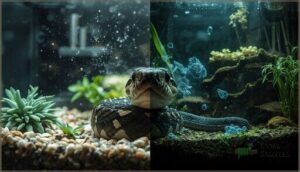
Respiratory distress in snakes doesn’t happen out of nowhere—it’s your enclosure or an infection telling you something’s wrong.
The causes range from bacterial invaders and parasites to poor air quality and temperature swings that stress your snake’s delicate respiratory system. Here’s what triggers breathing problems and how to spot the difference between environmental failures and infectious disease.
Bacterial Respiratory Infections
Your snake’s lungs become battlegrounds when bacteria invade—and bacterial infections account for nearly 30% of reptile veterinary visits. These pathogens multiply rapidly, overwhelming your pet’s immune response and triggering respiratory distress.
Without swift infection control, bacterial load escalates toward respiratory failure. Antibiotic resistance complicates treatment, making early intervention critical. Bacterial respiratory diseases progress fast—you can’t afford to wait.
Viral and Fungal Diseases
When viral load or fungal spores infiltrate your snake’s airways, immune response crumbles—triggering respiratory distress that can cascade into respiratory failure. Disease transmission in shared enclosures accelerates both viral infection and fungal infection outbreaks, demanding immediate veterinary intervention.
Watch for these critical signs of fungal diseases and respiratory disease:
- Heavy nasal discharge with mucus crusting around the mouth
- Granulomatous pneumonia visible on imaging scans
- Systemic weakness, tremors, or unresponsiveness to stimuli
- Lung consolidation and bronchial thickening in severe cases
Parasitic Infestations
Mites, ticks, and internal parasites follow a parasite life cycle that can trigger coughing and wheezing—parasitic respiratory conditions that compound respiratory distress fast.
Snake ectoparasites like mite infestation drain blood and weaken immunity, while respiratory parasites burrow into airways.
You’ll need reptile deworming medications and immediate veterinary intervention to restore snake health and wellness and protect reptile respiratory health before organ damage becomes irreversible.
Environmental Factors and Poor Air Quality
Poor ventilation, indoor irritants, and air pollution from substrate dust or harsh cleaning agents rank among the top husbandry mistakes triggering respiratory distress—accounting for a significant portion of reptile veterinary visits.
Without proper ventilation systems, humidity control, and temperature gradients, your snake’s enclosure becomes a hazard. Immediate respiratory therapy starts with fixing airflow and eliminating chemical fumes before permanent damage sets in.
How Enclosure Conditions Trigger Breathing Problems

Your snake’s enclosure isn’t just a container—it’s a life-support system that directly affects every breath your snake takes. When temperature, humidity, ventilation, or substrate conditions fall outside the safe range, respiratory distress can develop within days.
Here’s how four critical enclosure factors can compromise your snake’s ability to breathe.
Inadequate Temperature Regulation
Your snake’s respiratory distress often starts with husbandry mistakes in temperature gradients. When enclosure design fails—unreliable heat source, poor thermostat calibration, or thermal stress from sudden spikes—your snake can’t thermoregulate properly.
Ball pythons need basking spots and ambient zones with specific temperatures: 88–92°F for basking spots and 78–88°F for ambient zones. Temperature swings trigger respiratory therapy needs fast, compromising snake respiratory health and overall reptile health within hours.
Low Humidity and Dried Airways
When your enclosure humidity drops below 50%, dry air effects strip moisture from your snake’s mucous membranes—triggering airway dehydration, respiratory irritation, and eventual respiratory distress. Without adequate humidity control, mucous clearance fails and airways inflame, increasing the risk of respiratory infections that compromise snake respiratory health and overall reptile respiratory health.
- Dried mucosa allows bacteria and fungi to invade unprotected tissue
- Thickened secretions clog airways and force open-mouth breathing
- Chronic dehydration weakens immune barriers against respiratory problems
- Persistent irritation escalates minor issues into severe respiratory distress episodes
Poor Ventilation and Stale Air
Stale air effects turn your enclosure into a respiratory trap—when fresh air exchange fails, carbon dioxide builds up, airborne contaminants accumulate, and your snake’s airways become irritated by dust, volatile cleaning agents, and microbial particles suspended in stagnant conditions. Poor ventilation creates air quality issues that escalate minor breathing difficulty into full respiratory distress, especially when enclosure design flaws block cross-flow and trap pollutants for hours.
| Ventilation Issue | Respiratory Trigger | Health Impact |
|---|---|---|
| Sealed lids without vents | CO₂ buildup, reduced oxygen | Gasping, open-mouth breathing |
| Clogged filters or gaps | Dust and dander accumulation | Airway inflammation, wheezing |
| No active air exchange | Volatile organic compounds linger | Mucous membrane irritation |
| Uneven airflow patterns | Temperature/humidity microclimates | Respiratory problems, lethargy |
| Poor vent placement | Odor and waste particle concentration | Chronic respiratory distress |
Substrate Dust and Chemical Irritants
Beyond air exchange failures, fine particles and chemical residues create airborne toxin risks that trigger immediate respiratory distress.
Dust particle size matters—silica from sand, wood shavings from pine, and mineral fragments from gravel all irritate airways when inhaled, causing audible wheezing and nasal discharge.
Poor substrate material safety choices—like cedar bedding or ammonia-laden cleaning agents—compromise enclosure air quality, escalate breathing problems, and drive respiratory infections within days.
Recognizing Respiratory Distress Symptoms in Snakes
You need to catch respiratory distress early—your snake’s life depends on it.
The signs aren’t always obvious, but once you know what to look for, you’ll spot trouble before it becomes critical. Watch for these four warning signals that demand your immediate attention.
Open-Mouth Breathing and Nasal Discharge
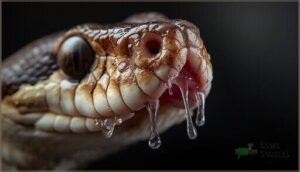
When your snake holds its mouth open for extended periods—especially alongside nasal discharge—you’re witnessing respiratory distress that signals airway obstruction or nasal irritation. This combination often appears when breathing patterns shift to compensate for blocked nasal passages, forcing mouth breathing that can escalate toward respiratory failure without intervention.
Watch for these critical indicators:
- Clear to cloudy discharge draining from one or both nostrils, sometimes tinged with blood
- Thick, crusty mucus accumulating around the nares, requiring careful mucus management
- Persistent open-mouth posture during rest or activity, not just after feeding
- Audible wheezing or crackling sounds accompanying the visual symptoms
Bacterial or viral respiratory infections frequently trigger this paired presentation. You’ll notice the discharge may start subtle—barely visible moisture at the nostril—then progress to obvious fluid that drips or bubbles with each breath. Meanwhile, open-mouth breathing compensates for reduced nasal airflow, but this adaptation dries oral tissues and worsens overall breathing problems. The longer these symptoms persist, the higher the risk of secondary complications and advancing respiratory failure.
Wheezing, Clicking, and Popping Sounds

Those open-mouth symptoms you just spotted rarely arrive alone—audible respiratory noises follow close behind, revealing what’s happening deep inside your snake’s airways. Wheezing, clicking, and popping sounds expose airway obstruction, mucus buildup, and fluid accumulation before visible breathing problems become critical.
Each sound type pinpoints a distinct respiratory issue:
| Sound Type | What It Indicates | Severity Level |
|---|---|---|
| Wheezing | High-pitched whistle from narrowed small airways during exhalation | Moderate to high—signals obstruction or inflammation |
| Clicking | Tracheal turbulence from mucus or structural airway issues | Moderate—often precedes worsening respiratory infections |
| Popping/Crackling | Fluid in lungs or airway collapse creating bubble-like rustling | High—suggests pneumonia or pulmonary edema |
| Stridor | Harsh, vibrating inspiratory sound from upper airway narrowing | Severe—indicates major upper airway blockage |
| Silent Chest | Absence of normal breathing sounds despite effort | Critical emergency—immediate veterinary intervention required |
Listen from outside the enclosure during rest periods—not just after feeding or handling. Respiratory noises you can hear from three feet away indicate significant respiratory distress requiring same-day veterinary evaluation. Bacterial respiratory infections commonly produce progressive crackly breathing that starts soft, then amplifies as mucus accumulates and inflammation spreads through lung tissue.
Wheezing often emerges first as barely detectable high-pitched notes, then transitions toward audible whistling within 24-48 hours if left untreated. You’ll notice clicking sounds appear intermittently—sometimes every few breaths, other times clustering during activity—as mucus shifts position inside airways. Popping resembles tiny bubbles bursting and signals fluid where air should flow freely.
Don’t wait for multiple audible symptoms to stack before acting. A single persistent wheeze paired with reduced appetite demands immediate enclosure review and veterinary consultation within 24 hours. These respiratory noises reveal breathing patterns under stress, and early sound diagnosis prevents minor irritation from advancing toward respiratory failure.
Abnormal Head and Neck Positioning
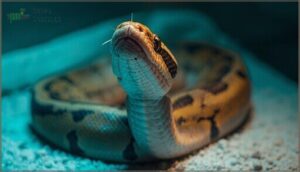
Respiratory distress forces your snake into unnatural head angles you won’t see during healthy rest periods. Abnormal posture signals breathing problems escalating beyond crackly breathing—your snake tilts, elevates, or twists its head to increase airflow through compromised airways.
Watch for these positioning red flags:
- Forward head posture — skull extends unnaturally forward, creating neck muscle strain and visible tension along cervical vertebrae
- Chin hyperextension — head tilts sharply upward, attempting head posture correction to open blocked airways
- Lateral head tilt — abnormal alignment with head shifted sideways, indicating unequal airway function or neurological involvement
- Torticollis-like twisting — head rotates persistently to one side, requiring immediate torticollis treatment evaluation and cervical support assessment
These respiratory problems manifest as static postures your snake maintains for extended periods, not brief movements during exploration.
Lethargy and Appetite Loss
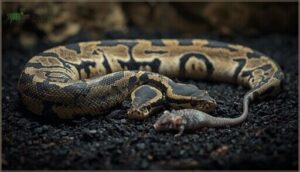
Energy Level Changes and Lack of Appetite indicate respiratory distress overwhelming your snake’s metabolic balance—oxygen deprivation drains reserves needed for digestion and movement.
Weakness appears alongside sudden weight loss as your snake refuses meals for multiple days, conserving diminished energy for labored breathing.
Stress Factors from compromised airways trigger Appetite Suppressants through systemic illness, while Nutrition Deficits compound respiratory failure beyond what enclosure corrections alone can reverse.
How Respiratory Problems Affect Snake Behavior

Respiratory distress doesn’t just affect your snake’s lungs—it changes how they move, eat, and interact with their environment.
These behavioral shifts often appear before the physical symptoms become obvious, giving you a critical window to intervene.
Watch for these four warning signs that indicate your snake is struggling to breathe.
Changes in Activity and Energy Levels
When respiratory distress strikes, you’ll notice your snake acting like it’s running on empty—activity plummets and lethargy takes over. Energy level fluctuations become obvious: longer rest periods, sluggish movements, and reduced feeding behavior signal weakness.
These activity pattern changes worsen as breathing grows harder, and environmental influences like poor ventilation compound respiratory problems, draining your snake’s stamina day by day.
Unusual Resting Postures
When breathing becomes labored, your snake may abandon typical Resting Coil Variations like the S-shaped posture or crossed loops. Instead, you’ll spot Abnormal posture—head elevated unnaturally high, neck stretched awkwardly, or ventral flattening abandoned despite cool temps.
These Body Language Signs reveal Respiratory Distress Symptoms as your snake sacrifices Thermal Regulation and normal Resting Behavior to ease airflow, signaling urgent Reptile Disease Management needs.
Reduced Feeding Response
When your snake ignores prey or shows weak Feeding Cues, respiratory distress may be the hidden culprit.
Illness-driven Appetite Loss stems from airway irritation, Environmental Stress, and lethargy that override normal Hunger Signals. You’ll notice Nutritional Deficits compounding as lack of appetite persists, Weakness sets in, and Dehydration accelerates—turning a breathing problem into a full-blown health crisis demanding immediate veterinary intervention.
Increased Hiding and Avoidance
When your snake suddenly vanishes into the darkest corner and won’t emerge—even at feeding time—you’re witnessing classic Stress Signals that often mask respiratory distress underneath. Hiding Behavior escalates as breathing difficulty worsens, forcing your snake into Social Withdrawal that delays diagnosis and treatment.
Here’s what drives this Snake Anxiety:
- Retreating to tight crevices despite keeper presence or food
- Refusing to leave hides even during normal activity periods
- Seeking abnormally enclosed spaces as a defensive response to illness
- Prolonged avoidance that conceals lethargy and respiratory infection
- Species-specific hiding patterns—arboreal snakes perch high, terrestrial species burrow deep
Environmental Enrichment won’t fix respiratory distress, but recognizing this snake behavior shift tells you it’s time for immediate reptile care and maintenance evaluation—and likely veterinary intervention to protect animal welfare.
Diagnosing The Cause of Gasping

You can’t treat what you haven’t identified—and gasping alone won’t tell you whether your snake is fighting bacteria, parasites, or simply suffocating in poor enclosure conditions.
A proper diagnosis combines hands-on examination with targeted testing to pinpoint the exact cause before you lose critical hours. Here’s how veterinarians piece together the puzzle and what you need to know before that appointment.
Physical Examination Indicators
Your vet will start by observing respiratory patterns and body language as your snake breathes—watching for open-mouth breathing, abnormal posture, or shallow chest movement. They’ll check for nasal discharge, listen for wheezing sounds with a stethoscope, and assess lethargy levels.
A thorough medical history helps distinguish respiratory distress from other respiratory problems.
| What Your Vet Observes | What It Reveals |
|---|---|
| Breathing rate and depth | Severity of distress |
| Mucous membrane color | Oxygenation status |
| Head positioning | Airway obstruction |
Diagnostic Imaging and Laboratory Tests
When clinical signs point to respiratory distress, your veterinarian will run diagnostic imaging and laboratory tests to pinpoint the cause. Radiograph analysis reveals lung consolidation or airway blockages, while CT scan diagnostics provide cross-sectional views of air sacs and sinuses. Blood gas tests measure oxygen and carbon dioxide levels in severe cases.
- Microbiological exams identify bacterial, fungal, or viral infectious diseases through cultures and PCR testing
- Histology reports confirm granulomatous disease or neoplasia affecting airways through biopsy samples
- Complete blood counts detect infection, anemia, or dehydration impacting reptile health and respiratory function
Early Vs. Advanced Respiratory Disease
Once diagnostic imaging confirms respiratory disease, you need to understand where your snake falls on the severity spectrum. Early respiratory decline shows mild breathing difficulty during activity but clears at rest—coughing stays intermittent, lung function drops slightly, and appetite holds steady.
Late-stage disease progression brings labored breathing even at rest, intense wheezing, weight loss, and limited treatment outcomes, shifting focus toward symptom management and quality of life.
Finding a Qualified Reptile Veterinarian
You need a vet with proven reptile expertise—not a generalist who treats cats and dogs. Search the Association of Reptilian and Amphibian Veterinarian (ARAV) directory for board-certified specialists in herpetology or exotic animal veterinary medicine.
Verify the clinic offers diagnostic imaging, emergency care, and experience treating respiratory infections in snakes. Ask about their specialist referrals if complex treatment becomes necessary.
Treatment Options for Snake Respiratory Issues

Once your veterinarian diagnoses the root cause of your snake’s respiratory distress, treatment must begin immediately—delays can allow infections to spread into deeper lung tissue or become systemic.
The approach you’ll follow depends entirely on whether you’re facing a bacterial infection, parasitic invasion, or environmental problem that’s been damaging your snake’s airways. Here’s what each treatment path involves and what you can expect during recovery.
Antibiotic Therapy for Bacterial Infections
Bacterial infections drive nearly 30% of reptile vet visits—and antibiotic therapy is your best weapon against respiratory distress.
Your veterinarian will often order a bacterial culture to identify the pathogen and test drug efficacy, then prescribe agents like enrofloxacin based on dosing guidelines customized to your snake’s weight.
Treatment duration usually spans 10–21 days; stopping early fuels antibiotic resistance and allows infection to return.
Anti-Parasitic Medications
Parasitic infestations in your snake’s lungs or airways demand anti-parasitic medications—ivermectin remains the most effective treatment for parasitic respiratory conditions.
Your reptile health specialist will calculate dosing guidelines based on your snake’s weight and parasite type, balancing medication safety against treatment efficacy.
Drug resistance can emerge if you skip doses, so complete the full course even when respiratory distress improves.
Correcting Enclosure Conditions Immediately
While medications target infection, your husbandry mistakes often fuel respiratory distress—you must correct temperature adjustments, humidity fixes, and ventilation checks within hours, not days.
Test air quality immediately, then deep-clean the enclosure to remove substrate dust and chemical residues. Poor ventilation and low humidity worsen respiratory problems faster than antibiotics can resolve them, so prioritize environmental corrections alongside medical treatment.
Expected Recovery Timeline
Most snakes with respiratory infections show early breathing improvement within 1 to 2 weeks once you correct enclosure conditions and start treatment.
Full recovery from respiratory disease usually takes 2 to 6 weeks, though bacterial infections requiring antibiotics may demand 7 to 14 days of therapy. Severe respiratory distress can extend timelines to 3 months—treatment response and health monitoring determine your snake’s recovery phases.
Preventing Respiratory Problems in Pet Snakes

You can prevent most respiratory problems before they start—and it’s easier than treating a sick snake. The key lies in controlling your enclosure’s environment and staying vigilant about subtle changes in your snake’s health.
Here’s what you need to focus on to keep your snake’s lungs healthy and airways clear.
Optimal Enclosure Setup and Ventilation
Your enclosure’s ventilation systems are the first line of defense against respiratory distress—without proper airflow management, stale air becomes a breeding ground for respiratory problems.
Effective enclosure design demands strategic planning:
- Install intake vents low and exhaust vents high to create natural convection currents that sweep out stagnant air and maintain temperature gradients.
- Position at least two vents on opposite sides to guarantee cross-ventilation without creating direct drafts across your snake’s resting areas.
- Add fine mesh filters to intake vents to block substrate dust and airborne irritants that trigger breathing difficulties.
Maintaining Proper Humidity and Temperature
You can’t stabilize respiratory health without precision climate regulation—temperature control between 88 and 92°F on the warm side and 78 to 82°F on the cool side, paired with humidity levels of 50 to 70 percent, form the foundation of animal husbandry that prevents respiratory distress.
Monitor both parameters twice daily using calibrated thermometers and hygrometers to catch deviations before respiratory problems develop.
Quarantine Practices for New Snakes
Every new arrival brings unknown pathogens—quarantine setup isolates fresh snakes for 60 to 90 days to protect your established collection from respiratory distress and cross contamination.
Implement these biosecurity measures:
- House new snakes in a separate room with dedicated tools and clothing
- Schedule veterinary health screening within 72 hours of arrival
- Follow strict feeding protocols using disposable gloves and separate dishes
- Document all observations before applying reintroduction strategies after veterinary clearance
Routine Health Monitoring and Cleaning
Once quarantine clears, daily checks become your front line against respiratory distress—watch for open-mouth breathing, mucus, and lethargy during spot cleaning each morning.
Hygiene practices matter: scrub water bowls daily, replace substrate every three to four weeks, and disinfect hides with dilute bleach.
Health logging tracks patterns your reptile vet needs, while strict enclosure maintenance and cleaning schedules prevent the bacterial load that triggers respiratory system function failure.
When to Seek Emergency Veterinary Care

You need to recognize when a breathing problem crosses from manageable to life-threatening. Some symptoms demand immediate professional intervention—waiting even 24 hours can mean the difference between recovery and irreversible lung damage.
Watch for these specific red flags that tell you it’s time to contact a herp-knowledgeable veterinarian right now.
Persistent or Worsening Gasping
When respiratory failure repeats every few minutes or intensifies over hours, you’re witnessing it in real time. Airway obstruction from mucus buildup or chronic infection creates gasping patterns that worsen without emergency response.
If your snake shows persistent respiratory distress despite adjusted temperatures and humidity, veterinary care becomes non-negotiable—respiratory disease and respiratory infections progress rapidly in reptiles, demanding immediate professional intervention.
Audible Breathing From Outside The Enclosure
When you hear breathing sounds from across the room, you’re not detecting subtle respiratory distress—you’re hearing severe airflow disruption. This indicates severe respiratory infections or critical airway obstruction, not minor boundary gaps or poor enclosure sealing.
Draft reduction and ventilation holes won’t fix this emergency. Respiratory disease has progressed beyond home intervention when audible wheezing or clicking travels outside the habitat, demanding immediate veterinary response.
Discharge, Mucus, or Severe Lethargy
Respiratory disease announces itself through visible, alarming signs that demand immediate veterinary care. When nasal discharge or mucus production appears—especially alongside severe lethargy—you’re witnessing active infection, not minor irritation.
Watch for these emergency respiratory blockage indicators:
- Clear to yellow-green discharge from nose or mouth
- Thick, layered mucus suggesting bacterial involvement
- Weakness preventing normal movement or alert responses
- Unusual discharge persisting beyond 24-48 hours
Don’t wait for breathing sounds to worsen—act now.
Refusal to Eat for Multiple Days
When your snake refuses food for more than 48 hours while gasping, you’re facing compounded emergency care needs—appetite loss signals deepening illness, not pickiness.
Dehydration risks escalate within 72 hours, especially when lethargy and weakness prevent normal hydration. Sudden weight loss, visible refusal signs like ignoring prey, and persistent lack of appetite demand immediate nutrition support assessment before electrolyte imbalance becomes life-threatening.
Frequently Asked Questions (FAQs)
Why is my snake gasping for air?
If you notice your snake breathing with its mouth open, it’s signaling respiratory distress or an airway blockage—both demand immediate assessment by a reptile veterinarian to prevent serious complications.
What does it mean when my snake keeps opening its mouth?
When your snake keeps opening its mouth, it may be mouth gaping from heat stress, shedding discomfort, or post-feeding jaw realignment—but paired with discharge or lethargy, it signals airway obstruction or respiratory disease demanding immediate attention.
How to get rid of respiratory infection in snakes?
Treatment requires veterinarian-prescribed antibiotics for bacterial respiratory infections, supportive care maintaining proper ambient temperature, nebulization therapy when needed, plus clean water and stress reduction—all essential for your snake’s recovery from respiratory disease.
How to treat respiratory in snakes?
Your vet will prescribe targeted antibiotics after culture testing, often enrofloxacin for bacterial respiratory infections.
Increase enclosure temps to 28–32°C, refine humidity, and guarantee proper ventilation—respiratory therapy demands immediate airway management and veterinary care for snakes.
Can snakes recover from respiratory infections without antibiotics?
Mild respiratory infections may resolve through immune support, environmental control, and alternative healing—but persistent symptoms demand veterinary care for snakes, as infectious diseases in reptiles progress quickly without proper treatment.
Do certain snake morphs have higher respiratory risks?
A snake’s morph genetics can subtly shape airway anatomy and immune resilience—some lines show altered nasal airflow or mucus clearance, raising morph susceptibility to respiratory infections when enclosure conditions slip even slightly.
How often should enclosure humidity levels be checked?
Check enclosure humidity daily during initial setup, then at least once daily for routine maintenance.
Increase monitoring to every 4-6 hours after equipment changes until environmental controls stabilize, preventing respiratory disease from humidity fluctuations.
Whats the difference between gasping and yawning behaviors?
Understanding these breathing patterns can feel like decoding a cryptic message—but your snake’s life may depend on it.
Gasping is rapid shallow and signals distress or obstruction, while yawning involves deliberate, prolonged inhalation with coordinated jaw stretching—a normal physiological reflex unrelated to respiratory disease.
Conclusion
Ironically, the best time to learn about snake gasping for air causes is long before you ever witness it—yet here you’re, armed with knowledge most keepers gain too late.
You now understand that open-mouth breathing isn’t a quirk but a countdown, that temperature drops matter more than you thought, and that your next 24 hours determine your snake’s survival trajectory. Don’t wait for wheezing to worsen—act now, adjust everything, and contact your reptile vet immediately.
- https://vcahospitals.com/know-your-pet/snakes-diseases
- https://veterinarypartner.vin.com/default.aspx?pid=19239&catId=102919&id=8006507
- https://netvet.co.uk/exotic/snakes/septicemia/
- https://www.merckvetmanual.com/exotic-and-laboratory-animals/reptiles/parasitic-diseases-of-reptiles?query=reptile%20respiratory
- http://www.arav.com/