This site is supported by our readers. We may earn a commission, at no cost to you, if you purchase through links.

A ball python tucked into a cork round at 2 a.m. isn’t hiding. It’s telling you the enclosure works. A bare tank with a single water bowl never earns that kind of trust.
Great snake vivarium design ideas do more than look wild. Sealed rock ledges, slate floors, and a thick substrate layer give your snake places to climb, burrow, and vanish, while keeping cleanup fast and escapes impossible. One gap wider than 1/8 inch can undo a perfect build.
Here’s how to combine naturalistic style with safe materials, steady heat, and species-specific details, so your setup looks stunning and runs flawlessly.
Table Of Contents
- Key Takeaways
- Naturalistic and Bioactive Snake Vivarium Design Ideas
- Choosing a Safe Snake Vivarium: Size, Materials, and Placement
- Snake Vivarium Design Essentials: Hides, Climbing, Heating, and Humidity
- Species-Specific Vivarium Designs for Popular Pet Snakes
- Budget-Friendly DIY Snake Vivariums Built for Safety and Easy Maintenance
- Frequently Asked Questions (FAQs)
- What is the best decor for a snake enclosure?
- What do snakes need in their vivarium?
- Do snakes get bored in their enclosure?
- How to build a vivarium for a snake?
- How to decorate a vivarium for a snake?
- How do I Make my snakes home a vivarium?
- How do I choose a snake terrarium decor?
- What is a snake vivarium?
- How do I set up a snake terrarium?
- How to make a snake vivarium soundproof?
- Conclusion
Key Takeaways
- Seal every gap wider than 1/8 inch, use cam locks, and cover vents with fine mesh, because escape-proofing matters more than any design choice.
- Build from non-toxic materials like PVC, HDPE, or sealed marine-grade plywood, and avoid particleboard since it off-gasses formaldehyde.
- Size the enclosure for your adult snake (48 inches minimum for a ball python), then add two snug hides, one at each end, and a thermostat-controlled gradient measured at snake level.
- Go naturalistic or bioactive with slate floors, sealed rock or cork décor, and 4-6 inches of substrate, but tailor depth, climbing space, and humidity to your species.
Naturalistic and Bioactive Snake Vivarium Design Ideas
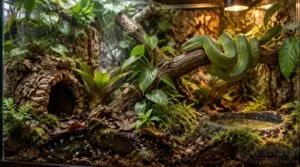
Want a snake vivarium that looks stunning and still stays safe? Your two best options are below, and each one gives you more control over how your snake lives. Pick the naturalistic style that fits your setup, and you’ll guarantee a space you’re proud to show off.
If you’re going bioactive, choosing snake-safe plants for a ball python bioactive setup adds lush greenery while keeping humidity steady and your snake protected.
Naturalistic Layouts With Easy-Clean Decor
Smooth, sealed rocks and resin ledges give your naturalistic terrarium design a wild look without porous surfaces that trap waste. Keep every piece stable and removable, so nothing tips onto your snake.
Lay slate tiles for a wipeable floor, and leave the feeding area open. Place heavy décor on the enclosure floor, not loose substrate, and leave room around hiding spots for quick cleaning.
Bioactive Setups With Live Plants
Ready to take that wipeable layout up a notch? A bioactive setup turns your enclosure into a living world.
Build bioactive substrate 4-6 inches deep over a clay-ball drainage layer and mesh. Add springtails first, then isopods. They’ll clear waste for you. Starting with a healthy springtail culture and 20-30 isopods before the snake moves in gives the cleanup crew time to colonize.
Grow live plants safely: snake plant, peperomia, and bird’s nest fern. Use sturdy reptile planters for terrarium landscaping.
Choosing a Safe Snake Vivarium: Size, Materials, and Placement
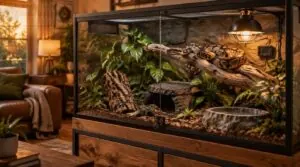
A safe vivarium starts with four smart choices, and you control every one of them. Below, you’ll find the four key safety factors that guarantee a secure, stunning home for your snake. Let’s get your setup right from the very first step.
Once your enclosure is dialed in, you can explore colorful snake breeds that thrive in vivariums to find a species whose patterns and care needs suit your setup.
Species-Appropriate Enclosure Size
An adult ball python needs a 48-inch enclosure minimum. Start adult growth planning now, and match species-specific needs.
Picture these moments:
- Your snake stretches out fully, finally relaxed.
- Your snake turns freely, never squeezed.
- Your snake climbs happily, thriving in vertical climbing space.
Watch space adequacy indicators: full stretching, easy turning, relaxed exploring. Choose the right enclosure size once. Simple.
Escape-Proof Construction
Once your snake has room to roam, keep it inside. A secure enclosure starts with gaps. Anything wider than 1/8 inch is an exit, so seal door frames with foam tape or silicone.
Use cam locks, not flimsy latches. Check secure locks and hinges monthly. Cover ventilation for escape gaps with mesh smaller than your snake’s head. That’s an escapeproof enclosure.
Non-Toxic Enclosure Materials
The safest vivarium starts with nontoxic materials. Choose rigid PVC, food-grade HDPE, or sealed marine-grade plywood, and skip particleboard because it off-gasses formaldehyde. Seal every joint with aquarium-grade silicone, then let it cure 72 hours.
Once the enclosure is built, add snug hides at both ends of the temperature gradient, and this snake vivarium setup guide shows how to layer climbing and digging options.
Material safety extends inside. Pick safe substrate options like aspen or coconut husk, and verify plant safety before planting anything. Your snake depends on it.
Safe Vivarium Placement
Choose your room placement carefully. Secure placement guarantees a calmer snake and a safer home.
Skip these spots:
- Sunny windows that turn glass into an oven
- Drafty vents and radiators
- Busy hallways with kids and pets
- Wobbly shelves or tight corners
Quiet rooms aid stress reduction. Match enclosure size to your stand, and keep escape prevention mechanisms easy to check.
Snake Vivarium Design Essentials: Hides, Climbing, Heating, and Humidity
Hide well, climb high, heat smart, keep moisture steady.
Start with hides. Give your snake two snug ones, one at each end. Tight fit, single entrance, stable surface. A cozy hide beats a roomy cave every time.
Give your snake two snug hides, one at each end, because a tight, cozy hide always beats a roomy cave
Climbing structures come next. Anchor every branch and platform so it won’t shift under your snake’s weight. Offer several routes and resting spots, and keep them away from lamps to avoid burns.
Now build your temperature gradient setup. Put heating elements on a thermostat, with a warm zone on one side and a cool retreat on the other. Measure at snake level, not just air.
Match humidity control to your species. Add a damp humid hide, keep air moving, and track gauges inside.
Species-Specific Vivarium Designs for Popular Pet Snakes
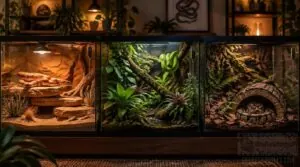
Every snake has its own idea of a perfect home, and you’re the one who gets to build it. Below, you’ll find three species-specific vivarium designs for popular pets, each one built around how that snake actually lives. Pick your snake, follow the setup, and you’ll have a stunning enclosure you control with confidence.
Ball Python Cover and Climbing
Ball pythons are shy, but they’re also secret climbers. Give yours both cover and height.
Place hiding spots on the warm and cool sides, so your snake never has to choose between feeling safe and staying comfortable. Add sturdy branches and cork rounds at different heights, and secure them with silicone. Keep humidity control easy with a damp hide, and watch your python thrive.
Corn Snake Exploration and Burrowing
Corn snakes are born explorers, so give them something to explore. Among the best snake vivarium design ideas, deep burrowing substrate tops the list. Pack in 3-4 inches, or 8-12 for bioactive juveniles.
Add leaf litter, cork flats, and plenty of hiding spots. Keep a temperature gradient: warm hides at 28-32°C, cool at 22-26°C. That’s corn snake exploration and burrowing done right.
Boa Constrictor Space and Support
Boas are heavy and active at night. Boa constrictor space and support starts with a floor six feet long, plus extra height.
- Sturdy climbing structures, like wide cork flats
- Deep substrate, 4 to 6 inches, for burrowing
- Hiding spots on both warm and cool ends
Add a clear thermal gradient and steady humidity control. That guarantees a calm, thriving boa.
Budget-Friendly DIY Snake Vivariums Built for Safety and Easy Maintenance
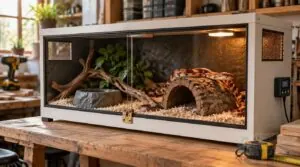
Once you know what your snake needs, building it yourself is easier than you’d think. Budget-Friendly DIY Snake Vivariums start with smart materials. Melamine-coated particleboard runs about $15 to $25 per 4×8 sheet and wipes clean in seconds. A secondhand cabinet can cost you under $20 in hardware.
Safe enclosure construction comes down to the details. Add rubber weatherstripping to door edges, use hasp-and-staple locks, and glue 1/16-inch mesh over every vent. That’s an escapeproof design snakes can’t argue with.
Heat tape paired with a $20 thermostat warms one side only, so your snake picks its own temperature. For an easy maintenance vivarium, choose aspen or paper bedding and line the walls with pond liner. Always match the build to your species-specific needs.
Frequently Asked Questions (FAQs)
What is the best decor for a snake enclosure?
Worried decor crowds snakes? It won’t. Smart decorative elements earn their space.
Add climbing structures like driftwood and cork bark. Nail hide placement under branches. Use naturalistic decor, slate, and pothos. Plant placement guarantees cover.
What do snakes need in their vivarium?
Your snake needs a temperature gradient, with a 86-90°F warm side and 70-75°F cool side. Add snug hides on both ends and a humid hide for shedding. Keep humidity steady, use safe substrate, and offer UVB lighting.
Do snakes get bored in their enclosure?
Yes, they can. Bare tanks cause under-stimulation, and you’ll spot it fast: nose rubbing, glass surfing, constant pushing at walls. Fix it with environmental enrichment: climbing branches, deep substrate, extra hides. Behavioral stimulation guarantees calmer, healthier snakes.
How to build a vivarium for a snake?
Start your Snake Vivarium by matching enclosure size to your adult snake’s length. Add secure locking doors, deep substrate, two snug hides, and a thermostat-guarded temperature gradient.
Offer UVB lighting if your species needs it.
How to decorate a vivarium for a snake?
Think of your vivarium as a wild stage. Decorating a vivarium for a snake starts with two hiding spots, sturdy branches, and snakesafe decor. Add a water bowl.
Naturalistic terrarium design guarantees reptile habitat enrichment.
How do I Make my snakes home a vivarium?
Pick a secure enclosure that fits your species specific needs. Smart enclosure design guarantees safety. Build your Snake Vivarium with substrate, hides, and water, then set a thermal gradient.
Want more? Try a bioactive vivarium.
How do I choose a snake terrarium decor?
Want a snake terrarium that looks stunning and stays safe? Choose reptile-safe decor like cork bark, branches, and leaves. Add several hiding spots across warm and cool zones, plus a basking area.
What is a snake vivarium?
Picture a slice of rainforest floor, tucked behind glass. That’s your snake vivarium: a controlled home built around species-specific needs, mimicking its natural habitat with substrate types, temperature regulation, humidity, hides, and enrichment you control.
How do I set up a snake terrarium?
Your snake won’t read the manual, so you’d better.
Match the enclosure to species specific needs, then add substrate types, hide placement at both ends, and a temperature gradient setup. Offer UVB lighting for reptiles.
How to make a snake vivarium soundproof?
Wrap your vivarium in soundproofing materials like mass-loaded vinyl or foam panels for acoustic damping. Seal gaps without blocking enclosure ventilation or weakening escape prevention.
Set it on a thick polystyrene sheet for vibration reduction.
Conclusion
Picture the glow of a heat lamp sliding across slate, a cork hide cool and dark in the corner, and your snake’s tongue flicking through damp air. That’s the payoff.
The best snake vivarium design ideas all share one backbone: secure, non-toxic construction, steady heat, and hides your snake actually wants to use. Build it right once, and you’ll spend less time fixing and more time watching. Your enclosure isn’t decor. It’s a daily promise.