This site is supported by our readers. We may earn a commission, at no cost to you, if you purchase through links.

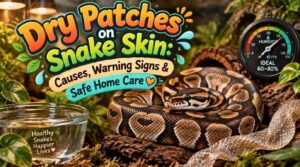
Your snake just shed, and it looks like a sock that got stuck halfway off. Patches of old skin cling to the body, and one eye stares back, dull and cloudy.
That’s dysecdysis, and it’s one of the most common problems I see in pet snakes. Stuck shed isn’t just ugly. A tight ring of dry skin near the tail tip can cut off blood flow, and a retained eye cap can scar the cornea.
So what causes dysecdysis in snakes? Usually it’s something you can fix at home, starting with humidity, hiding spots, and a few habits worth checking today.
Table Of Contents
- Key Takeaways
- Why Does Dysecdysis Happen in Snakes?
- How Do You Know if a Snake Has Dysecdysis?
- When Does Retained Shed Require Veterinary Care?
- How Can You Safely Help a Snake With Stuck Shed?
- How Can You Prevent Dysecdysis in Pet Snakes?
- Frequently Asked Questions (FAQs)
- Does peeling lizard skin hurt them?
- How many times does a snake shed its skin in its lifetime?
- Can snakes see when they’re shedding?
- Is it painful for a snake to shed skin?
- How often do healthy snakes normally shed their skin?
- Is dysecdysis contagious between snakes in the same enclosure?
- Can young snakes experience shedding problems more than adults?
- Should you feed a snake right before shedding?
- How long does a normal shed cycle last?
- Conclusion
Key Takeaways
- Stuck shed usually comes from low humidity, missing rough surfaces, and stress, so keep humidity around 50-60% (higher once your snake’s eyes turn milky) and give it branches or textured rock to scrub against.
- Check your snake after the shed, not during it, by looking for a torn shed, dull retained eye caps, patchy skin along the body and vent, and a darkened tail tip.
- Call your vet right away for retained eye caps or a tight ring of skin around the tail tip, and never pull at either, since you could scar the cornea or cut off circulation.
- For ordinary stuck skin, a shallow lukewarm soak and a damp hide with smooth surfaces are your safest fixes, and repeated shedding trouble points to a deeper health issue like mites, infection, or poor nutrition.
Why Does Dysecdysis Happen in Snakes?
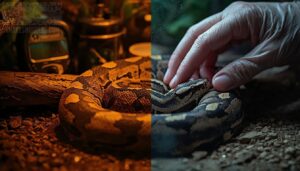
Stuck shed rarely comes out of nowhere, and the cause is usually something you can spot and fix. Most cases trace back to just two buckets: how your snake lives and how your snake is doing inside. Let’s walk through each one so you know exactly where to look first.
If the problem keeps returning even when your setup looks right, this guide to fixing corn snake shedding problems at home shows you which habits to adjust and how to safely loosen retained skin.
Environmental and Husbandry Causes
Skimping on humidity is the classic culprit. Low humidity leaves old skin dry and stubborn. Your setup matters in other ways too:
- A lack of rough surfaces, so nothing helps your snake start the peel.
- Overcrowding, which stresses everybody out.
- Sudden environmental changes, like temperature swings.
Even poor nutrition can’t rescue a badly built habitat, so fix the basics first.
Health and Nutritional Causes
Once your habitat checks out, look inside your snake. Poor nutrition and dietary insufficiency can weaken skin renewal, and vitamin A deficiencies get blamed often, though proof in snakes is thin.
Since feeding needs differ widely between species, it helps to check a species-specific snake diet guide so your snake’s meals actually match what it needs.
Illness matters too. Mites, infections, burns, and chronic disease can wreck a shed. So can shaky hormonal balance. Stuck skin plus other symptoms? Suspect nutritional imbalances or root disorders.
How Do You Know if a Snake Has Dysecdysis?
Now that you know where problems start, let’s talk about spotting them. The trick is checking your snake after the shed, not during the cloudy pre-shed phase.
Run through this quick checklist:
- Examine the shed skin. One intact, inside-out piece is perfect. Torn fragments mean something stayed behind.
- Check both eyes. Retained eye caps leave a dull appearance, and one eye can look fine while the other doesn’t.
- Scan for patchy skin pieces. Look along the body, vent, and tail base for dry rings.
- Inspect the tail tip. Darkening there is serious.
Also watch for behavioral changes, like increased hiding or skipped meals. Your snake can’t say something feels tight, so small shifts in routine are often your first clue.
If your snake seems off for more than a day or two, a quick look at these common signs your snake is unwell can help you decide when it’s time to call a vet.
When Does Retained Shed Require Veterinary Care?
Spotted something on that checklist? Some problems can wait a day. Others can’t.
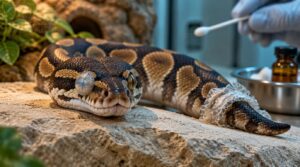
Call your vet right away if you see retained eye caps. Don’t tug at them. Pulling can scar the cornea, and a cloudy or swollen eye may already be infected.
Treat circulation-threatening bands the same way. A tight ring of shed around the tail tip works like a rubber band on a finger. If the tip looks dark or puffy, tissue is at risk.
A tight ring of stuck shed around a snake’s tail tip acts like a rubber band on a finger, cutting off circulation
Book an exam too if you notice redness, discharge, or a bad smell under stuck skin, or if your snake is lethargic, refusing food, or struggling to breathe.
Repeated incomplete shedding or skin retention after your next cycle also deserves prompt veterinary care.
How Can You Safely Help a Snake With Stuck Shed?
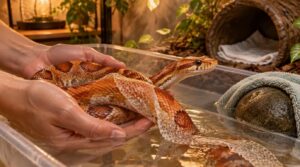
Soaking your snake in a warm water soak is the safest first move. Use a shallow container of lukewarm water, keep it below your snake’s head, and stay beside it the whole time.
Imagine this:
- Lukewarm water barely reaching your snake’s midbody
- A snug hide lined with damp paper towel
- Soft, damp cloth draped over a smooth rock
- Old skin curling away like a loosened sock
- Your hands supporting every inch of coils
Then focus on gentle removal. Let your snake glide over damp, smooth rubbing surfaces, and let friction do the work. Never peel, tug, or use oils. Leave eye caps to your vet.
Fix proper humidity afterward, and ask your vet about nutritional deficiencies if sheds keep sticking.
A humid hide packed with damp sphagnum moss for reptile hides gives your snake a moist retreat that helps future sheds come off cleanly.
How Can You Prevent Dysecdysis in Pet Snakes?

Keep your snake’s world steady, and most shed problems never start. Prevention is mostly boring daily habits, and boring is exactly what you want. Aim for humidity levels of 50-60%, then bump them to 70-80% once your snake’s eyes turn milky. Check a hygrometer daily, because guessing rarely works. Low humidity and poor hydration are among the common shedding problems that can leave retained eye caps or tail skin behind.
- Offer rough surfaces for shedding, like branches or textured rock, so your snake can scrub the old skin off.
- Feed a balanced diet with proper supplementation when your vet recommends it, since vitamin A gaps weaken skin.
- Keep a large water bowl full, and offer a warm water soak if a shed looks sluggish.
Scan for mites every week, and book veterinary care early for scale rot or any repeat shed trouble. If you spot tiny dark specks, a snake-safe mite spray can help, but check with your vet first and always follow the label directions.
Frequently Asked Questions (FAQs)
Does peeling lizard skin hurt them?
Most lizards shed in patches, and loose skin comes off painlessly. Peeling attached skin hurts and causes skin lesions or eye damage.
Skip handling during shedding; ask your vet about pain relief and nutritional deficiencies.
How many times does a snake shed its skin in its lifetime?
Think of a snake’s life as a long series of wardrobe changes. Most snakes shed 80 to 240 times over 20 years, and shedding frequency slows with age.
Proper humidity keeps shedding cycles on track.
Can snakes see when they’re shedding?
Yes, but not well. That cloudy, bluish film is the spectacle, and your snake can still sense light and movement through it. Expect blurry vision until it clears. Retained eye caps keep things foggy.
Is it painful for a snake to shed skin?
Sure, it sounds rough, but normal shedding isn’t painful. Your snake may feel mild discomfort and act shy. Stress from improper handling can worsen things.
Retained eye caps or shedding cycle disruption signal real pain.
How often do healthy snakes normally shed their skin?
One schedule for every snake? Not quite. Shedding frequency runs every 4 to 6 weeks for juveniles, a few times yearly for adults.
Beginners who want a pet that’s easy to handle and forgiving of mistakes can start with these easy-to-care snake species, including the active California Kingsnake.
Environmental factors, humidity levels, nutritional deficiencies, and handling during shedding matter too.
Is dysecdysis contagious between snakes in the same enclosure?
A stuck shed is a warning flare, not a spark that spreads. Dysecdysis isn’t contagious, but parasitic infestations are.
Fix humidity levels and enclosure design, then follow quarantine protocols. Stress from improper handling hurts too.
Can young snakes experience shedding problems more than adults?
Young snakes get more chances to slip up. Their higher shedding frequency means more shed cycles, so humidity levels, nutritional imbalance, or other environmental stressors get more opportunities to interfere.
Age itself isn’t the cause.
Should you feed a snake right before shedding?
Should dinner wait? Usually, yes. Reduced appetite is normal pre-shed, so don’t force it.
Skip handling during shedding, fix poor diet with nutritional support, and keep feeding frequency steady. Wait 1–2 days after the shed.
How long does a normal shed cycle last?
A normal shed cycle lasts one to two weeks. Your snake’s eyes turn cloudy for 4 to 7 days, then clear, and the skin comes off within hours.
Track shedding cycles to spot trouble early.
Conclusion
A humidity reading of 60 to 70 percent during shed is often the difference between a clean peel and a stubborn sock. That’s the heart of what causes dysecdysis in snakes: dry air, rough setups, and missed health clues, not bad luck.
Fix the basics, check that humid hide, and call your vet if skin or eye caps stay stuck. Your snake can’t tell you something’s wrong, but its shed always will. Read it closely.