This site is supported by our readers. We may earn a commission, at no cost to you, if you purchase through links.
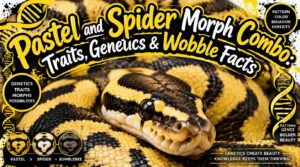
A spider ball python stares at the ceiling, head trembling, and misses the rat in front of it. You’ll see this at feeding time, and you’ll see it for life.
That wobble comes from a malformed inner ear, and it’s one of several ball python morph health concerns the hobby still sells as a quirk. Super Spiders, Super Champagnes, and Super Sables die before they hatch. Super Cinnamons arrive with kinked spines, and Butter Albinos can hatch with undersized eyes.
Some defects trace to genetics. Others trace to a 92°F incubator spike. Knowing which is which protects every snake you’ll ever own.
Table Of Contents
- Key Takeaways
- Ball Python Morph Health Concerns by Type
- Genetic Risks Versus Husbandry and Incubation Problems
- Choosing Ball Python Morphs With Lower Risks
- Caring for Ball Pythons With Morph-Linked Conditions
- Ethical Breeding and Ball Python Morph Welfare
- Frequently Asked Questions (FAQs)
- What ball python morphs have health problems?
- What are the healthiest ball python morphs?
- What are the common causes of death in ball pythons?
- Are there any unethical ball python morphs?
- Can ball pythons live together in one tank?
- How often should I feed my ball python?
- What humidity level prevents respiratory infections best?
- Do ball pythons need UVB lighting for health?
- How can I tell if my python is dehydrated?
- Do morphs live as long as normal ball pythons?
- Conclusion
Key Takeaways
- Spider morphs always carry wobble syndrome, a lifelong inner-ear balance disorder you can’t breed out, and the lethal combinations (Super Spider, Super Champagne, Super Sable, plus Champagne × Spider) mean you should never pair those genes.
- Many defects come from genes, like kinked spines, bug eyes, tiny eyes and infertility in certain morphs, but others come from your own setup, so you should check the timing of the problem (lifelong or sudden) and your temperatures, humidity and incubation heat before blaming genetics.
- You can lower your risk by choosing morphs like Pastel, Enchi, Mojave, Normal or Ghost, but no morph is risk-free, so you need to inspect each snake’s head, spine and eyes yourself and buy only from breeders who give you verifiable records, health guarantees and genetic testing.
- Snakes with morph-linked conditions can live well if you adapt their care with stable feeding surfaces, smooth furnishings for scaleless animals, dim light for albinos, regular vet exams and detailed records, and ethical breeding means putting the animal’s welfare above price and trendy colors.
Ball Python Morph Health Concerns by Type
Not every morph carries the same risks, and you need to know which problems come with which genes. Below, you’ll find the five major concern areas broken out by type, from neurological issues to skin care. Read each one before you commit to a morph, because your snake will live with these traits for 30 years.
Before you buy, it also helps to check current ball python morph market trends and pricing, since the priciest morphs are often the ones carrying the most health baggage.
Spider Wobble and Inner-Ear Abnormalities
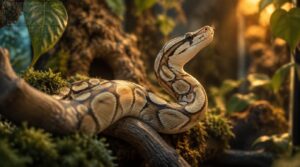
Your spider ball python’s head tremors aren’t a quirky personality trait, they’re the visible sign of a damaged inner ear that throws off its sense of balance. Every spider morph carries this risk. Wobble syndrome stems from inner ear malformations, a vestibular disorder that scrambles balance. Watch for:
- Head tremors that worsen when you handle or startle it.
- Stargazing, with the neck arched backward.
- Missed strikes and failed climbs.
These lifelong balance disorders never fully resolve, so plan your care around them from today.
Reported Spinal and Craniofacial Defects
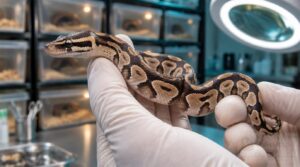
Wobble isn’t the only structural gamble you’ll face. Super Cinnamon and Super Black Pastel morphs show more spinal kinking, from minor tail bends to vertebral malformations that shift internal organs. Rib cage abnormalities can follow.
Craniofacial deformities appear too, including a duckbill snout that hinders feeding. Inbreeding isn’t the cause. Homozygous genes are, so inspect every hatchling’s spine and snout.
Eye Differences and Vision Concerns
Spines and snouts aren’t the only places morphs go wrong. Check the eyes too.
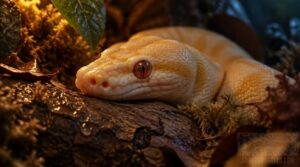
Super Cinnamon and Super Black Pastel hatchlings can show exophthalmos, those oversized "bug eyes," while Super Lesser and Butter Albino snakes risk microphthalmia.
Albino and leucistic types carry less ocular melanin, so bright light bothers them. Keep their enclosures dim.
Reported Fertility Problems and Lethal Combinations
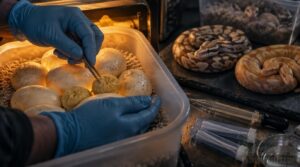
Eyes aren’t the only thing to check before you buy. Fertility issues hide just as quietly. Desert females are consistently infertile, and caramel albino females show subfertility and slugs.
Since breeders often overlook these health trade-offs, a ball python morph guide covering known fertility and health concerns can help you research any morph before committing to a purchase.
Super Spider, Super Champagne, and Super Sable are lethal morphs, and Champagne x Spider fails too. Use genetic testing and responsible breeding to avoid pairings that cost you clutches and hatchlings.
Scaleless Morphs and Skin Care
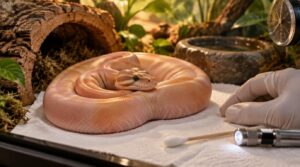
Skin takes the hit in a scaleless morph, so your snake’s armor is gone. Scrapes become skin infections fast, and shedding issues linger. Protect animal welfare:
- Sand rough décor.
- Add a humid hide.
- Clean soiled substrate.
- Check every shed.
- Schedule veterinary examinations for redness.
Persistent redness, blisters or ulcers aren’t cosmetic. Don’t wait, because early treatment spares your snake pain.
Genetic Risks Versus Husbandry and Incubation Problems
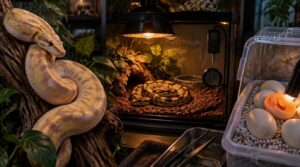
Not every health problem in your ball python comes from its morph genetics. Some trace back to your husbandry, and others start inside the egg during incubation. Here’s how to tell the three apart, so you can protect your snake and any future clutches.
Inherited Morph Risks
Every spider morph carries wobble syndrome. You can’t breed it out, because it’s the gene itself.
| Morph | Inherited risk |
|---|---|
| Spider | Neurological disorders |
| Super cinnamon | Kinks, bug eyes |
Ask about Champagne morph health history too. Responsible breeding practices start with honest records, so demand them. Never pair two spiders, since homozygous eggs die. Buy only animals you can support for life.
Husbandry-Related Health Problems
Picture a ball python stuck in a damp, cold box, its shed clinging in rags around its eyes. That’s husbandry failure, and no morph gene caused it.
Check your thermal gradient daily: 88-92°F warm side, 75-80°F cool. Keep humidity at 50-60%, raised to 70% for shedding, or you’ll see ecdysis problems. Spot-clean waste immediately. Poor substrate hygiene breeds scale rot and respiratory infections.
Incubation-Related Developmental Defects
A clutch sweats in a warm, dark box, and one hot afternoon can rewrite everything inside it. Incubation-induced deformities start quietly during embryonic development.
- Temperature spikes above 92°F
- Missing or tiny eyes
- Severe kinking
- Stuck sheds from dry eggs
- Morph predispositions masking as phenotype variations
Don’t assume genetics. Heat, dryness and rolled eggs cause damage, so always keep conditions steady.
Distinguishing Genetic And Environmental Causes
Is it genes or your setup? Look at timing and pattern. Lifelong signs point to genetic testing and a vet visit; sudden ones point to husbandry or incubation. Responsible breeding practices protect animal welfare.
| Sign | Likely cause |
|---|---|
| Progressive neurological disorders | Disease |
| Whole-spine skeletal deformities | Genetic |
| Missing eyes | Incubation |
Match what you see to this list, then confirm with your vet.
Choosing Ball Python Morphs With Lower Risks
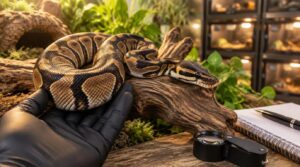
You can’t eliminate every genetic risk, but you can stack the odds in your snake’s favor before you ever hand over any money. The points below walk you through which morphs tend to carry fewer problems, how to screen for neurological trouble, and which pairings to avoid. They also cover how to check an individual animal and how to pick a breeder who’s earned your trust.
Lower-Risk Morph Options
Want a safer start? Choose lower-risk morph options like Pastel, Enchi, or Mojave, which aren’t widely linked to the Spider wobble. But don’t relax.
No morph is guaranteed risk-free, and Ball Python Morph Health Concerns still vary by bloodline. Favor responsible breeding practices, protect genetic diversity, and support ethical breeding. You’re avoiding documented harm, not buying a guarantee of welfare.
Neurological Risk Screening
Even a low-risk pick deserves a quick neurological check. Watch the snake’s head at rest and during feeding. Side-to-side or twisting movements point to wobble syndrome, which is lifelong and doesn’t progress.
Symptoms that appear later or worsen suggest disease, so call your vet. Ask breeders for videos, and keep responsible breeding practices and ethical considerations in mind.
High-Risk Morph Combinations
Some pairings are simply off the table. Never breed a Spider morph to a Champagne, Woma, or Sable. Those combinations can be lethal or leave babies with severe neurological disorders and kinked spines.
Homozygous Spider, Champagne, and Woma animals don’t survive. Pairing Super Cinnamon or Black Pastel types with Champagne or Mojave invites kinking too.
Run genetic testing before every pairing, and let breeding ethics decide.
Individual Health Checks
Genetic testing tells you what an animal carries, not how it’s doing. So put hands and eyes on every snake before it joins your collection.
Watch the head at rest and during feeding. Tremors, swaying, or twisting point to neurological trouble. Feel along the spine for kinks, and check eye symmetry. Track body weight weekly, and book veterinary examinations, fecal screening, bloodwork, and imaging diagnostics when something looks off.
Responsible Breeder Selection
Your hands-on exam only works if the seller was honest first. Responsible Breeder Selection starts with transparent breeding records and genetic testing results you can verify. Ask for:
- Parentage and morph pairings
- Prebreeding veterinary screening reports
- A written health guarantee
- A video tour of the facility
Breeding ethics show in how they answer. Vague replies or refusals mean walk away.
Caring for Ball Pythons With Morph-Linked Conditions
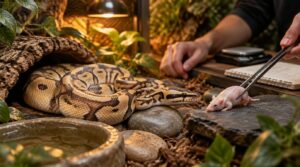
Snakes with morph-linked conditions rely on you for steady care, and small adjustments make a real difference.
If your snake has wobble syndrome, feed it on a stable surface and watch whether it finds and strikes prey reliably. Skip handling during poor-balance episodes, and log every change in coordination.
For spinal kinking or craniofacial defects, schedule veterinary examinations, since the impact depends on the individual animal. Weigh your snake, and track appetite, shed quality, and movement.
Limited vision calls for a familiar enclosure layout and consistent food placement. Scaleless snakes need smooth furnishings, because rough surfaces injure unprotected skin. Retained eye caps deserve a reptile vet.
Genetic testing and responsible breeding reduce future cases, but your records guide today’s care.
Ethical Breeding and Ball Python Morph Welfare
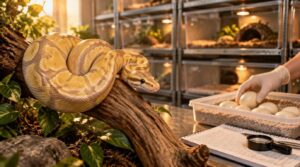
Ethical breeding starts with a simple question: would you be comfortable owning the animal you’re about to produce? If the honest answer is no, don’t make that pairing. Animal welfare has to outrank price tags and trendy colors every time.
Breed only the animal you would be proud to own, because animal welfare must always outrank price tags and trendy colors
Breeding ethics come down to habits you can actually practice:
- Skip any pairing known to produce deformities or neurological problems, and don’t repeat one that already has.
- Protect genetic diversity by avoiding tight inbreeding and resisting the urge to flood the market with one morph.
- Keep records for years, and tell buyers about every problem you’ve seen.
Sustainable practices also mean sound housing, careful incubation, and real feeding plans. Your reputation, and your animals’ quality of life, depend on the choices you make before eggs ever drop.
Frequently Asked Questions (FAQs)
What ball python morphs have health problems?
The spider morph tops the list. Every spider has some degree of wobble syndrome, a neurological flaw you can’t breed out. Others to watch: champagne and woma wobblers, scaleless snakes, and super forms with craniofacial deformities or ocular anomalies.
What are the healthiest ball python morphs?
You’ll find the healthiest picks are normal, pastel, and ghost morphs. Choose responsible breeding that favors outcrossing and genetic diversity, ask about genetic testing accuracy, and use body condition scoring on your prospect before buying.
What are the common causes of death in ball pythons?
Your ball python’s biggest enemy is often the one you can’t see. Respiratory infection and respiratory distress top the list, followed by inclusion body disease, obesity, and egg binding.
Fix your temperatures and humidity first.
Are there any unethical ball python morphs?
Some say it’s color, not cruelty. But the Spider morph causes wobble, and breeding ethics says you shouldn’t knowingly produce it.
Avoid inbred lines, favor outcrossing and genetic diversity, and let selective breeding reward health.
Can ball pythons live together in one tank?
A shared tank turns into a kingdom with one throne. Don’t do it.
Feeding competition, territorial behavior, and hidden stress signals like glass surfing or defensive postures show up fast, so house each snake separately.
How often should I feed my ball python?
A coiled hatchling waits like a tiny spring, hungry and growing fast. Feed it every 5–7 days, juveniles every 7–10, adults every 14– Track weight monthly for obesity prevention, and watch closely for feeding refusal.
What humidity level prevents respiratory infections best?
Funny how the cure for a respiratory infection often starts with too much water. Keep humidity at 50-60%, push to 65-70% during shed, and never hold above 70%. Ventilate your enclosure setup.
Do ball pythons need UVB lighting for health?
UVB lighting isn’t strictly required for your Ball Python, but it helps. Snakes make vitamin D3 from UVB, and whole prey also supplies it. Offer low-output UVB with a shaded hide, and replace lamps on schedule.
How can I tell if my python is dehydrated?
Humidity near 60 percent keeps ball pythons comfortable, and dips cause dehydration issues.
Check hydration status through body weight tracking, skin folds, sunken eyes, stress signals, and feed refusal. Weakness means call a reptile vet.
Do morphs live as long as normal ball pythons?
You might assume bright colors mean short lives, but that’s unproven. With a longevity focus, remember morph viability varies by gene, so genetic screening and responsible breeding matter more than color, and avoid inbreeding depression.
Conclusion
Every morph is a loaded dice roll, and the snake, not the breeder, absorbs the loss. Ball python morph health concerns aren’t abstract. They show up as wobbling heads, kinked spines, and missed meals.
So choose lower-risk morphs, inspect every animal, and question every breeder about incubation temperatures. Your money shapes the market. Spend it on healthy snakes, and the hobby follows. A snake that eats, climbs, and strikes is the only trophy worth chasing.