This site is supported by our readers. We may earn a commission, at no cost to you, if you purchase through links.
Your ball python’s refusing to eat again, and you’re staring at that newspaper lining the bottom of her tank, wondering if you’ve made a terrible mistake. Substrate choice isn’t just about aesthetics or convenience—it’s about creating a microenvironment that directly impacts your snake’s respiratory health, hydration levels, and stress response.
Desert kingsnakes can’t thrive in moisture-retaining coconut fiber any more than rainbow boas can survive on bone-dry aspen shavings. The substrate you choose becomes your snake’s whole world: the surface she explores, the material she burrows through, and the medium that controls the air she breathes.
Getting it right means understanding the difference between substrates that simply look natural and those that actually replicate the conditions your specific species evolved to handle.
Table Of Contents
- Key Takeaways
- Substrate Selection Basics for Snake Terrariums
- Types of Snake Terrarium Substrates
- Top 9 Substrates for Snake Terrariums
- 1. Zoo Med Reptile Soil
- 2. Zilla Reptile Terrarium Bedding Liner
- 3. Zoo Med Forest Floor Bedding
- 4. Zilla Alfalfa Meal Reptile Bedding
- 5. Zoo Med Coconut Fiber Substrate
- 6. Zoo Med Aspen Snake Bedding
- 7. ReptiChip Coconut Reptile Substrate Bedding
- 8. BNOSDM Reptile Soil Substrate
- 9. Riare Natural Coconut Fiber Reptile Bedding
- Substrate Maintenance and Hygiene Tips
- Choosing The Best Substrate for Your Snake
- Frequently Asked Questions (FAQs)
- What is the best substrate for snake enclosures?
- What is the best substrate for snake plants?
- What is the safest bedding for snakes?
- Can I mix different substrates together safely?
- How do I transition my snake to new substrate?
- What substrate works best for hatchling snakes?
- Does substrate choice affect feeding response or behavior?
- How do I dispose of used substrate properly?
- Conclusion
Key Takeaways
- Choose a substrate that matches your snake’s native habitat—desert species like kingsnakes thrive on dry aspen shavings, while tropical pythons need moisture-retaining coconut fiber or cypress mulch to maintain proper humidity levels between 60-80%.
- Prioritize safety by avoiding cedar, pine, and dusty materials that cause respiratory issues, and select deep, loose substrates (2-4 inches) that support natural burrowing behaviors without risking impaction or toxicity.
- Maintain strict hygiene through daily spot cleaning and full substrate replacement every 4-12 weeks depending on species, while keeping humidity under 50% to prevent mold, mites, and bacterial growth that threaten your snake’s health.
- Balance your budget and maintenance preferences with your snake’s biological needs—coconut fiber excels at humidity control but requires monitoring, while aspen offers easy cleaning for dry-climate species, and reptile carpet provides convenience at the cost of natural enrichment.
Substrate Selection Basics for Snake Terrariums
Choosing the right substrate isn’t just about filling your snake’s enclosure—it’s about creating a foundation for their health, comfort, and natural behaviors.
A well-planned naturalistic snake environment starts with substrate that supports burrowing, humidity retention, and easy cleaning.
Different species have wildly different needs, from desert dwellers who thrive in dry environments to tropical snakes that need constant humidity. Let’s break down the essential factors you need to think about before selecting substrate for your scaly friend.
Matching Substrate to Snake Species
Your snake’s native habitat is the blueprint for choosing the right substrate. Desert species like kingsnakes thrive on dry aspen shavings that prevent mold, while tropical pythons need moisture-retaining coconut fiber.
Burrowing snakes require loose, non-compacting materials for tunnel construction. Match substrate to species research—it’s how you replicate their natural environment and support healthy snake behavior without risking substrate toxicity or compromising safety.
To make an informed decision, consider key factors like substrate safety and health considerations.
Humidity and Temperature Requirements
Temperature gradients between 75 to 92°F and humidity control from 40 to 60 percent work for most snakes, but your species dictates the exact climate zones. Desert dwellers need low moisture retention substrates, while tropical species require high humidity retention materials.
Thermal cycling with cooler nights mimics natural conditions! Monitor substrate moisture retention to prevent respiratory issues—moisture management isn’t optional, it’s how you keep your snake healthy.
Safety and Avoiding Hazardous Materials
Beyond managing humidity, you must protect your snake from substrate toxicity and chemical exposure. Always check hazard labels before purchasing—cedar and pine contain respiratory risks, while dusty materials can trigger chronic lung issues.
- Store substrate in sealed containers away from heat and sunlight
- Wear gloves and a mask when handling raw materials to prevent irritation
- Choose non-toxic, pesticide-free options with neutral pH for ideal reptile health and safety
Supporting Natural Behaviors and Enrichment
The right substrate doesn’t just keep your snake safe—it sparks natural behavior support and environmental enrichment that captivate your reptile’s instincts.
Deep, loose layers let burrowing snakes tunnel and hide, while scattered leaf litter encourages foraging strategies and sensory stimulation.
Think of naturalistic landscaping as your snake’s personal playground: varied textures, gentle mounds for burrow design, and moisture gradients transform a static reptile habitat into an adventure zone!
Types of Snake Terrarium Substrates
You’ve got more substrate choices than you might think, and each one brings something different to the table for your snake’s terrarium. Some hold moisture like a champ, others stay dry and clean, and a few even let you recreate a slice of the wild right in your living room.
Let’s break down the main types so you can figure out which one fits your snake’s needs best.
Aspen Shavings and Their Benefits
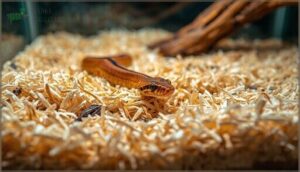
You’ll find aspen shavings are a superstar choice for burrowing snakes like corn snakes and king snakes! This kiln-dried bedding delivers impressive substrate safety and odor control while supporting natural digging behaviors.
Here’s why it rocks:
- Low dust levels protect snake health and respiratory function
- Soft texture provides substrate comfort for active exploration
- Oil-free composition prevents skin irritation in sensitive species
Aspen shavings also create a clean and comfortable environment for reptiles thanks to their natural properties.
Coconut Fiber and Moisture Control
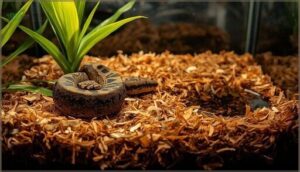
Coconut fiber is your humidity control champion, holding water up to 20 percent of its weight without getting soggy. You’ll love how this substrate maintains moisture levels between 60 to 80 percent for tropical species like ball pythons.
Its fiber density promotes airflow while preventing compaction, and proper substrate depth of 2 to 4 inches facilitates burrowing. Plus, coconut quality matters—choose untreated options for substrate safety and natural odor control.
Cypress Mulch for Humidity Management
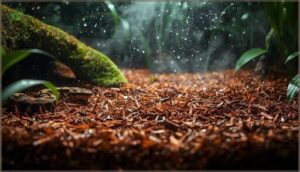
Cypress mulch excels at humidity management because its dense fibers slow evaporation and create moisture pockets around hides. You’ll maintain 60 to 80 percent humidity for tropical species with these layering tips:
- Mulch depth: Use a 2 to 4 inch layer for ideal moisture retention and airflow
- Terrarium ventilation: Pair vented lids with substrate safety checks to prevent mold
- Moisture levels: Light misting rehydrates mulch without soaking it completely
Reptile Carpet for Easy Cleaning
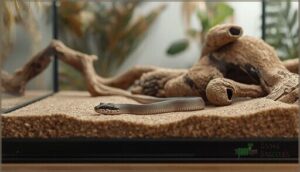
Reptile carpet offers you a low-maintenance substrate that simplifies daily cleaning and odor control. This washable fabric mat prevents impaction risks while keeping your enclosure fresh between deep cleans.
You’ll spend less time on substrate maintenance—just spot clean waste, then machine wash on gentle cycle every week or two. For snake enrichment, pair carpet with hides and branches to create stable basking zones without loose particles shifting underfoot!
Natural Substrates (Bark, Leaves, Moss)
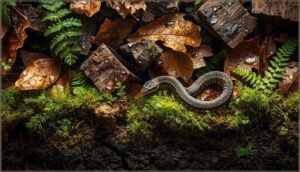
Bringing the forest floor to your snake’s home creates a living terrarium that feels like nature. Natural substrates—bark, leaves, and sphagnum moss—work together through substrate layering to build enriching microhabitats.
Bark options vary in moisture retention, while leaf litter fosters foraging instincts. Moss benefits include exceptional humidity control and soft hiding zones. These substrate materials foster natural enrichment, especially for burrowing substrate lovers like hognose snakes.
DIY Tropical Mixes for Bioactive Setups
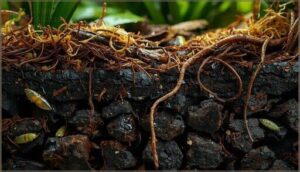
Think of bioactive substrate as building a living ecosystem in a box! Your DIY tropical mix balances moisture retention with drainage—start with equal parts sphagnum moss, tree fern fiber, orchid bark, and peat moss, plus charcoal for odor control.
This bioactive terrarium setup facilitates microfauna integration through: 1. Springtails and isopods thrive in leaf litter layers 2. Coco coir maintains 60-80% humidity control 3. Earthworm castings feed beneficial microbes 4. Live plants root easily in moisture-retentive substrate materials
Top 9 Substrates for Snake Terrariums
Now that you understand the different substrate categories, let’s look at the specific products that actually work in real-world snake keeping.
I’ve tested dozens of options over the years, and these nine consistently deliver on safety, humidity control, and ease of maintenance. Each one caters to different snake species and keeper preferences, so you’ll find the right match for your setup.
1. Zoo Med Reptile Soil
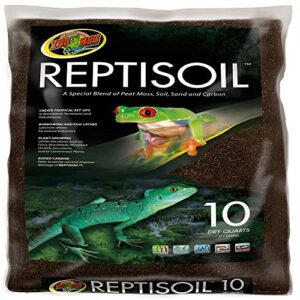
You’re looking at one of the most adaptable options out there—Zoo Med ReptiSoil. This substrate blends peat moss, sand, and coconut carbon to create a natural forest floor feel your snake will love. It’s perfect for burrowing species and accommodates live plants if you’re building a bioactive setup.
The carbon helps beneficial bacteria colonize, keeping odors down naturally. You can grab it in 10-quart or 24-quart bags, and it expands when you add water. Just mix it with moss to cut down on dust.
| Best For | Reptile owners setting up bioactive terrariums or housing burrowing species like ball pythons, hognose snakes, and tropical lizards. |
|---|---|
| Primary Material | Coconut fiber |
| Moisture Retention | High |
| Odor Control | Yes |
| Burrowing Friendly | Yes |
| Bioactive Compatible | Yes |
| Dust Level | Moderate |
| Additional Features |
|
- Creates a natural forest floor environment that’s perfect for burrowing and supports live plants in bioactive setups
- Contains coconut carbon that encourages beneficial bacteria growth and helps control odors naturally
- Retains moisture well, making it ideal for species that need higher humidity levels
- Can be dusty on its own and works best when mixed with moss or other substrates
- Some bags may contain large woodchips, splinters, or small rocks that need to be sifted out
- More expensive than basic substrate options like coconut fiber or aspen
2. Zilla Reptile Terrarium Bedding Liner
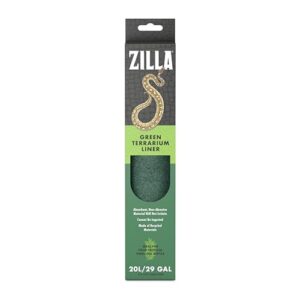
If you’re tired of scooping out loose bedding every week, the Zilla Reptile Terrarium Bedding Liner might be your new best friend. This green polyethylene mat treats waste with a biodegradable enzyme that breaks down odors, so your snake’s home stays fresher between cleanings.
You just rinse it in cold tap water, let it dry, and pop it back in—super easy! It’s absorbent, non-abrasive on delicate belly scales, and won’t crumble into tiny bits your snake could accidentally swallow. Perfect for beginners or non-burrowing species.
| Best For | Beginner reptile owners with non-burrowing pets like snakes, bearded dragons, or leopard geckos who want a low-maintenance, easy-to-clean alternative to loose substrate. |
|---|---|
| Primary Material | Synthetic liner |
| Moisture Retention | Low |
| Odor Control | Yes |
| Burrowing Friendly | No |
| Bioactive Compatible | No |
| Dust Level | Low |
| Additional Features |
|
- Enzyme treatment breaks down waste and minimizes odors between cleanings
- Simple maintenance—just rinse with cold water, dry, and reuse
- Safe design prevents accidental ingestion and won’t irritate sensitive belly scales
- Not suitable for burrowing species that need dig-friendly substrate
- Dried-on waste can be tough to scrub off completely
- Some users report sizing issues that require trimming to fit tanks properly
3. Zoo Med Forest Floor Bedding
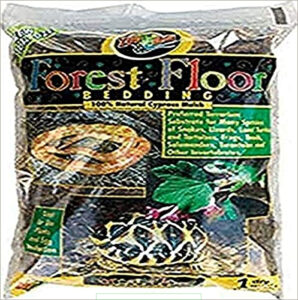
For snakes that love to burrow and need steady humidity—think ball pythons or rainbow boas—Zoo Med Forest Floor Bedding is a solid choice. It’s made from 100 percent cypress mulch that holds moisture without getting soggy, helping you maintain that forest-floor vibe your tropical species crave.
The flat texture lets you spot waste easily (way easier than thick shavings), and it’s gentle on scales. Just mist it occasionally, do daily spot cleaning, and swap it out every few months for a fresh, odor-free habitat.
| Best For | Snake owners with burrowing species like ball pythons or rainbow boas who need a substrate that maintains humidity while staying easy to clean. |
|---|---|
| Primary Material | Cypress mulch |
| Moisture Retention | Moderate to High |
| Odor Control | Moderate |
| Burrowing Friendly | Limited |
| Bioactive Compatible | Limited |
| Dust Level | Moderate to High |
| Additional Features |
|
- Holds moisture effectively without getting waterlogged, making it perfect for tropical species that need consistent humidity
- Flat texture makes it simple to spot waste during daily cleaning, unlike chunky bedding options
- Soft on snake scales and creates a natural forest-floor look that mimics their native environment
- Can be dusty straight out of the bag and may need rinsing before first use
- Sometimes contains oversized pieces you’ll need to pick out manually
- Dries out over time and requires periodic misting or mixing with water to keep humidity levels steady
4. Zilla Alfalfa Meal Reptile Bedding
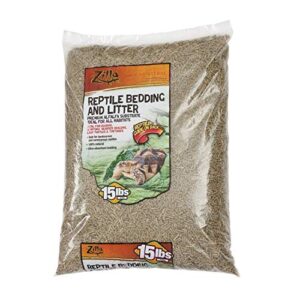
If you’re keeping herbivorous reptiles like bearded dragons or iguanas, Zilla Alfalfa Meal Reptile Bedding offers something different. Made from 100 percent natural alfalfa pellets, it’s ultra-absorbent and safe if your curious snake nibbles it—though it’s really designed for plant-eaters, not carnivorous snakes.
The pelleted form facilitates digging, controls odors well, and you’ll want to replace it every few months. Just watch for moisture: wet pellets can get moldy fast, so spot-clean daily!
| Best For | Herbivorous reptiles like bearded dragons and iguanas that benefit from a natural, digestible substrate. |
|---|---|
| Primary Material | Alfalfa pellets |
| Moisture Retention | Low |
| Odor Control | Yes |
| Burrowing Friendly | Limited |
| Bioactive Compatible | No |
| Dust Level | Low |
| Additional Features |
|
- Made from 100% natural alfalfa that’s safe if accidentally ingested by your reptile
- Ultra-absorbent pellets control odors effectively and provide a good surface for digging
- Biodegradable and made in the USA with a reptile-safe bacteriostatic agent to minimize harmful bacteria
- Gets soggy and can develop mold quickly when wet, requiring daily spot-cleaning
- Strong farm/field smell that some owners find unpleasant
- Not ideal for carnivorous snakes or reptiles that have difficulty walking on pellet surfaces
5. Zoo Med Coconut Fiber Substrate
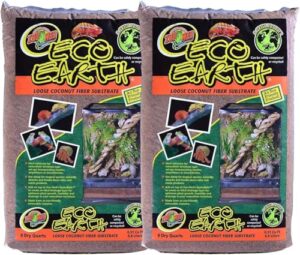
For tropical and humidity-loving snakes, Zoo Med Coconut Fiber is a solid pick. This all-natural coconut husk substrate expands from a compact brick when you add water, creating a fluffy, burrowing-friendly layer that holds moisture beautifully.
It’s non-toxic, odor-absorbing, and perfect for naturalistic setups with live plants. Just monitor moisture levels—too wet and you’ll invite mold, too dry and humidity drops. Spot-clean daily and replace it every 4-6 weeks to keep your snake’s habitat fresh and healthy!
| Best For | Snake owners with tropical or humidity-loving species like ball pythons, rainbow boas, or green tree pythons who want a natural substrate that holds moisture well. |
|---|---|
| Primary Material | Coconut fiber |
| Moisture Retention | High |
| Odor Control | Yes |
| Burrowing Friendly | Yes |
| Bioactive Compatible | Yes |
| Dust Level | Moderate |
| Additional Features |
|
- Holds humidity exceptionally well, making it ideal for species that need consistent moisture levels
- Natural and non-toxic coconut fiber is safe if accidentally ingested during feeding
- Expands significantly from compact bricks, giving you more substrate for your money
- Requires careful moisture monitoring to prevent mold growth in overly wet conditions
- Needs complete replacement every 4-6 weeks, which can get expensive over time
- May arrive very dry and compressed, requiring significant water and prep work before use
6. Zoo Med Aspen Snake Bedding
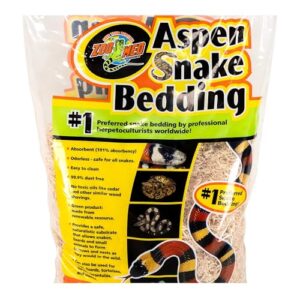
When you’ve got burrowing snakes like corn snakes or milk snakes, Zoo Med Aspen Snake Bedding hits the sweet spot. This 99.9% dust-free substrate is made from 100% natural aspen shavings with zero toxic oils, so your snake can tunnel and nest safely.
It’s crazy absorbent (191% rating!), controls odors like a champ, and stays light and fluffy for easy digging. Spot-clean daily and swap it out every 4-6 weeks. Just remember—aspen doesn’t hold moisture well, making it perfect for dry-climate species but not ideal for humidity lovers!
| Best For | Snake owners with burrowing species like corn snakes, milk snakes, and other dry-climate reptiles that love to dig and tunnel. |
|---|---|
| Primary Material | Aspen shavings |
| Moisture Retention | Low |
| Odor Control | Yes |
| Burrowing Friendly | No |
| Bioactive Compatible | No |
| Dust Level | Very Low |
| Additional Features |
|
- Super absorbent with a 191% rating and controls odors naturally without any harsh chemicals or toxic oils
- 99.9% dust-free so it’s safe for your snake’s respiratory system and won’t create a mess in the tank
- Light and fluffy texture makes it perfect for burrowing behavior and easy to spot-clean daily
- Doesn’t hold moisture well, so it’s not suitable for tropical species or reptiles that need high humidity
- Wet spots don’t always dry completely and need to be removed manually to prevent mold or bacteria
- Requires full changes every 4-6 weeks which can add up in cost over time
7. ReptiChip Coconut Reptile Substrate Bedding
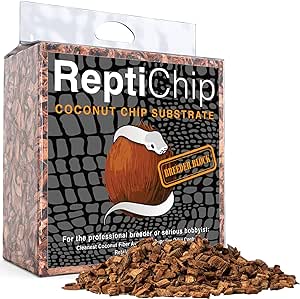
If you’re housing humidity-loving ball pythons or boas, ReptiChip Coconut Substrate is your go-to choice. This 100% organic coconut husk substrate expands from a 72-quart compressed brick to 10 pounds of fluffy, moisture-retaining bedding that’s practically dust-free.
It holds humidity like a dream, absorbs odors naturally, and encourages burrowing behaviors without compacting too quickly. Spot-clean waste regularly and replace every 2-6 months depending on humidity levels. Just keep the surface dry to prevent mold, and you’ll create the perfect tropical microclimate!
| Best For | Snake and reptile owners who need a high-quality, humidity-retaining substrate for tropical species like ball pythons, boas, and other moisture-loving reptiles. |
|---|---|
| Primary Material | Coconut chips |
| Moisture Retention | High |
| Odor Control | Yes |
| Burrowing Friendly | Limited |
| Bioactive Compatible | Yes |
| Dust Level | Moderate |
| Additional Features |
|
- Excellent moisture retention keeps humidity levels stable for tropical species
- Natural odor control and sustainable coconut husk material
- Expands significantly from compact brick form, offering good value per use
- Higher price point compared to basic substrate options
- Can be dusty when first breaking apart the compressed block
- Requires careful moisture management to prevent mold growth
8. BNOSDM Reptile Soil Substrate
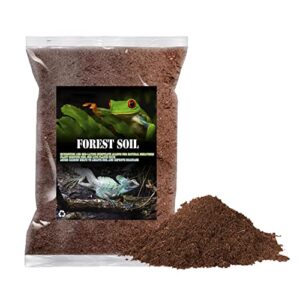
BNOSDM Reptile Soil Substrate transforms from a compact 5-liter brick into fluffy coconut fiber bedding that mimics natural forest floors perfectly. You’ll love how it holds moisture without turning soggy, making it ideal for tropical snakes, tortoises, and even tarantulas.
The small-strand texture cushions delicate belly scales while encouraging natural digging behavior—plus it decomposes waste naturally. Spot-clean daily and replace every 3-6 months. When you’re done, toss it in your garden as fertilizer. Talk about eco-friendly reptile keeping!
| Best For | Reptile owners seeking eco-friendly bedding that maintains humidity for tropical species like snakes, tortoises, and tarantulas while encouraging natural digging behavior. |
|---|---|
| Primary Material | Coconut fiber soil |
| Moisture Retention | High |
| Odor Control | Yes |
| Burrowing Friendly | Yes |
| Bioactive Compatible | Yes |
| Dust Level | Moderate |
| Additional Features |
|
- Expands from compact brick to fluffy substrate that mimics natural forest floor conditions
- Excellent moisture retention without getting waterlogged, perfect for humidity-loving reptiles
- Reusable as garden fertilizer after use, making it an environmentally responsible choice
- Multiple bags needed for large enclosures, which adds up quickly in cost
- Requires complete replacement every 3-6 months, making it pricier than some alternatives
- May need mixing with sand or other materials to achieve proper depth and coverage
9. Riare Natural Coconut Fiber Reptile Bedding
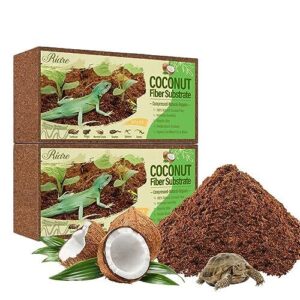
Riare Natural Coconut Fiber Reptile Bedding packs serious expansion power—two 7.8-inch bricks swell into fluffy substrate when soaked! You’re getting odorless, organic coconut husk that retains humidity beautifully while supporting natural burrowing instincts in ball pythons, corn snakes, and other diggers.
The biodegradable material absorbs odors and maintains stable moisture levels without getting waterlogged. Some keepers report the bricks can be stubborn when breaking down, so give them time to properly hydrate. After use? Compost it guilt-free!
| Best For | Reptile owners who need a natural, humidity-retaining substrate for burrowing species like ball pythons, corn snakes, turtles, and hermit crabs. |
|---|---|
| Primary Material | Coconut fiber |
| Moisture Retention | High |
| Odor Control | Yes |
| Burrowing Friendly | Yes |
| Bioactive Compatible | Yes |
| Dust Level | Moderate |
| Additional Features |
|
- Expands significantly when soaked, giving you more substrate per brick
- Retains moisture well and absorbs odors naturally without getting soggy
- Biodegradable and compostable, so you can toss it guilt-free after use
- Can be dusty when handling the dry bricks before hydration
- Some users find the bricks tough to break down even after soaking
- May attract flies when used with certain feeder insects like crickets
Substrate Maintenance and Hygiene Tips
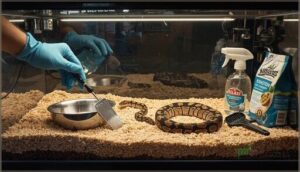
Even the best substrate won’t stay safe if you’re not keeping it clean. A solid maintenance routine prevents health issues like respiratory infections, mites, and impaction—all things that can sneak up on you if you’re not careful.
Here’s how to keep your snake’s home fresh and hygienic.
Daily Spot Cleaning and Odor Control
Spot cleaning removes waste within minutes to prevent set-in odors and bacterial growth—your snake’s health depends on it! Blot fresh urine with white paper towels, then apply a reptile-safe enzyme cleaner directly to break down uric acid.
Target substrate moisture below 60 percent humidity to deter musty smells. A quick wipe-down of water dishes and feeding areas daily keeps odor control manageable and effective.
Full Substrate Replacement Schedule
Beyond those quick daily touch-ups, you’ll need a full substrate replacement to maintain proper humidity control and hygiene.
For tropical species, swap out bedding every 4 to 6 weeks—desert dwellers can stretch to 8 to 12 weeks. Track your cleaning schedules and substrate rotation patterns to catch mold or odor early.
Maintenance tips like these prevent health disasters before they start!
Preventing Mold, Mites, and Parasites
Clean substrate doesn’t just control odor—it blocks mold growth, mite control nightmares, and parasite management headaches. Keep humidity regulation under 50% and swap moldy sections within 24 hours for effective substrate sanitization. Quarantine new decor for two weeks, use mite-resistant materials for burrowing snakes, and check fecal samples every 3–6 months. Your proactive substrate cleaning frequency prevents infestations that cost you time, money, and your snake’s health!
Preventing mold, mites, and parasites requires keeping humidity under 50%, quarantining new items, and maintaining aggressive cleaning schedules
- Maintain humidity below 50% to slow mold prevention efforts
- Remove moldy substrate within 24 hours to stop spread
- Quarantine new items for 2 weeks to catch hitchhiking mites
- Schedule fecal checks every 3–6 months for early parasite detection
Monitoring Substrate Moisture and Cleanliness
Once you’ve tackled mites and mold, your next job is substrate moisture monitoring—because damp but not waterlogged texture keeps humidity management between 40 and 60 percent for most species.
Check daily for dry patches or soaked spots, track moisture retention with a hygrometer, and adjust cleaning schedules when odor control flags dirty bedding. Consistent hygiene practices mean healthier sheds and fewer respiratory issues!
Choosing The Best Substrate for Your Snake
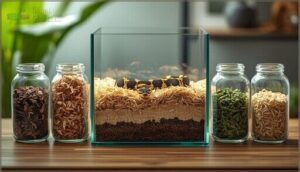
You’ve explored the options, learned the maintenance routines, and now it’s time to make the right choice for your specific snake. Picking the best substrate isn’t about finding a “perfect” option—it’s about matching your snake’s biology, your care style, and your budget.
Let’s break down how to assess your snake’s needs, weigh the pros and cons, and set up a habitat that keeps your pet healthy and thriving.
Assessing Your Snake’s Specific Needs
Your snake’s natural habitat is your roadmap to substrate selection. Species research reveals vital temperature gradients and humidity control needs—ball pythons thrive around 75-80% humidity, while corn snakes prefer drier setups.
Observe snake behavior closely: burrowing attempts signal the need for deeper bedding. Habitat matching isn’t just aesthetic; it’s fundamental to snake health, reptile care success, and overall animal welfare.
Comparing Pros and Cons of Each Substrate
Every reptile substrate brings tradeoffs you’ll need to weigh. Aspen shavings offer excellent moisture control and low dust, perfect for dry-loving snakes, but they mold easily in humid setups. Coconut fiber excels at humidity management and snake enrichment through burrowing, yet it requires careful monitoring to prevent compaction.
Consider these substrate pros and cons:
- Cypress mulch resists mold but can irritate airways if dusty
- Reptile carpet ensures substrate safety but limits natural behaviors
- Natural substrates mimic wild habitats yet harbor pests
- DIY mixes customize reptile enclosure bedding but demand expertise
Budget, Availability, and Owner Preferences
Your wallet and local pet store options will shape your reptile substrate choice just as much as your snake’s biology. Coconut fiber snake bedding runs $8–15 per bag at most pet stores, while aspen costs $5–12 and offers excellent budget substrates value.
Regional availability affects substrate materials access—coastal shops stock more coconut products. Owner priorities matter too: busy keepers prefer easy-clean substrate shopping over naturalistic complexity.
Tips for Safe and Healthy Habitat Setup
Once you’ve nailed substrate selection, complete your reptile habitat creation with three habitat design essentials.
First, create a temperature gradient using heating elements so your snake can thermoregulate. Second, install multiple hiding spots to support natural snake behavior and reduce stress.
Third, pair humidity control with environmental control tools—hygrometers track moisture while terrarium maintenance schedules protect snake health and guarantee substrate safety.
Frequently Asked Questions (FAQs)
What is the best substrate for snake enclosures?
You’ll want to pick reptile substrate that matches your snake’s humidity needs while staying safe and easy to clean.
Good options support natural behaviors, control moisture, and protect snake health without dust or toxicity.
What is the best substrate for snake plants?
Don’t let the name root you in confusion!
Snake plants thrive in well-draining cactus or succulent soil mixed with perlite.
This DIY mix prevents root rot, maintains proper soil pH, and fosters healthy snake plant growth.
What is the safest bedding for snakes?
The safest bedding for snakes includes Aspen shavings, coconut fiber, and reptile carpet—all dust-free, non-toxic substrates that minimize respiratory risks while supporting humidity control and natural behaviors without causing impaction or health complications.
Can I mix different substrates together safely?
Yes, you can mix substrates like coconut fiber with sphagnum moss or cypress mulch, but keep components compatible in moisture needs.
Test a small batch first, ensuring humidity control stays stable and mixing ratios support your snake’s species-specific requirements.
How do I transition my snake to new substrate?
Like adjusting to new shoes, your snake needs gradual introduction to new bedding. Mix old and new substrate over two weeks, maintaining stable humidity and temperature while monitoring your snake’s behavior throughout the environmental adjustment period.
What substrate works best for hatchling snakes?
Hatchling substrate should hold gentle moisture without becoming soggy—coconut fiber works beautifully for ball python babies, while corn snakes prefer drier aspen shavings.
Choose finely textured, absorbent bedding that facilitates burrowing materials and humidity control safely.
Does substrate choice affect feeding response or behavior?
Substrate texture, Humidity Control, and depth directly shape Feeding Behavior and burrowing behavior.
Deeper snake bedding lets shy feeders feel secure, while moisture-holding substrates support Digestive Health and overall Snake Enrichment through natural reptile behavior.
How do I dispose of used substrate properly?
You can compost organic substrates like coconut fiber, turning waste into garden soil.
For disposal safety and odor control, seal used bedding in bags, check local regulations, and never dump near water sources!
Conclusion
The devil’s in the details when you’re selecting the best substrate for snake terrariums—and those details can mean the difference between a thriving animal and one struggling to shed properly.
You’ve got the knowledge now to match humidity needs, burrowing behaviors, and species-specific requirements to the right material. Stop second-guessing that newspaper liner. Commit to a substrate that actually complements your snake’s biology, and watch her transform from surviving to genuinely thriving in her environment.