This site is supported by our readers. We may earn a commission, at no cost to you, if you purchase through links.

Corn snakes have quietly become one of the most practical classroom pets a teacher can choose—calm enough for nervous students, hardy enough to survive a forgotten water refill, and interesting enough to hold a room’s attention without making a sound.
A decade of reptile education work taught me that the enclosure matters more than most teachers expect.
The wrong kit creates daily headaches: escaped snakes, temperature swings, humidity guesswork.
The right corn snake starter kit for classroom pets manages those variables before they become problems, so the snake thrives and you actually enjoy having it there.
Table Of Contents
- Key Takeaways
- Top 7 Corn Snake Starter Kits
- Why Corn Snakes Suit Classrooms
- Must-Have Kit Components
- Escape-proof Terrarium With Secure Locking Lid
- Proper Enclosure Size for Juveniles and Upgrades
- Heat Mat With Digital Thermostat
- Warm-side and Cool-side Thermometers
- UVB Lighting and Timer-controlled Day Cycle
- Aspen or Other Corn Snake-safe Substrate
- Two Hides Plus a Humid Retreat
- Water Dish, Feeding Tongs, and Cleaning Supplies
- Safe Classroom Enclosure Setup
- Daily Care for School Snakes
- How to Choose The Right Kit
- Frequently Asked Questions (FAQs)
- Are corn snakes good classroom pets?
- Do corn snakes make good pets for beginners?
- What do corn snakes need in their tank for beginners?
- What is the biggest trouble with corn snakes as pets?
- What permits or permissions do schools typically require?
- How do students with snake phobias get accommodated?
- What happens if a student has a rodent allergy?
- Who covers veterinary costs for a classroom snake?
- Conclusion
Key Takeaways
- Escape-proof lids and proper thermostat control aren’t optional extras — they’re the two things that will make or break your classroom corn snake setup.
- Most starter kits look complete but quietly leave out critical gear like thermostats or UVB bulbs, so always price out the full setup before buying.
- Corn snakes are forgiving pets for beginners, but their 15–20‑year lifespan means you’re making a long-term commitment, not picking up a semester prop.
- Match the enclosure to where your snake is headed — a hatchling outgrows a small kit fast, and mid-year upgrades in a busy classroom are nobody’s idea of fun.
Top 7 Corn Snake Starter Kits
Not every starter kit is worth your classroom’s money or your snake’s well-being. These seven options made the cut based on security, size, and what actually comes in the box.
Here’s what to know before you choose.
1. HELIME Escape Proof Polycarbonate Terrarium
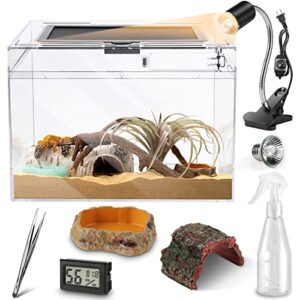
The HELIME terrarium is a solid pick if you’re just getting started and don’t want to hunt down accessories separately. At $39.89, the 7-piece kit bundles a polycarbonate tank, digital hygrometer, hide cave, feeding tongs, sprayer, and more into one purchase.
It’s one of the better corn snake starter kits for apartment living, since everything fits neatly without taking over your space.
The 360° clear walls make classroom observation genuinely easy — students can check on their snake without disturbing it.
Just watch where you place the heat lamp; if too close to the mesh lid, you’ll have melted plastic faster than you’d expect.
| Best For | Beginners, hobbyists, and educators who want a ready-to-go setup for small reptiles, amphibians, or invertebrates without buying accessories separately. |
|---|---|
| Material | Polycarbonate |
| Kit Pieces | 7-piece |
| Ventilation | Mesh lid |
| Escape Prevention | Sliding top lock |
| Hygrometer Included | Yes |
| Hide Cave | Yes |
| Additional Features |
|
- Comes with everything you need out of the box — hygrometer, hide cave, sprayer, tweezers, and more
- Crystal-clear polycarbonate walls make it easy to observe your animals without opening the tank
- Lightweight and stackable, so it’s easy to move, clean, or add a second one
- Heat lamp placement is tricky — too close to the mesh lid and you risk melting the plastic
- Some ventilation holes are large enough that small critters could squeeze through
- Build quality feels a bit flimsy to some users, with loose components over time
2. Exo Terra Snake Starter Kit
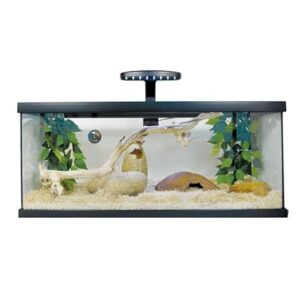
If you’re ready to step up in size and quality, the Exo Terra Snake Starter Kit is worth a close look. The 24 × 18 × 12-inch glass terrarium gives hatchlings and juveniles room to actually move, and the dual front doors mean you’re not reaching over the top every feeding day.
It includes a 16W heat mat, UVB100 bulb, moss mat, reptile cave, and a care guide.
The one catch — budget for a separate thermostat. The heater works, but unregulated heat is a risk you don’t need.
| Best For | New snake owners looking for a solid all-in-one setup for hatchlings or juvenile snakes like corn snakes or ball pythons. |
|---|---|
| Material | Glass/Aluminum |
| Kit Pieces | 7-piece |
| Ventilation | Screen top |
| Escape Prevention | Screen top lid |
| Hygrometer Included | No |
| Hide Cave | Yes |
| Additional Features |
|
- Everything you need comes in one box — tank, heat mat, light fixture, hide, and care guide
- Glass construction and a screen top make it sturdier and better ventilated than basic plastic kits
- Day/night LED fixture helps keep your snake on a natural light cycle
- No built-in thermostat means you’ll need to buy a separate temperature controller to use the heater safely
- Some buyers have received the glass tank cracked or broken, so inspect it carefully on arrival
- It’s a starter size — once your snake grows, you’ll likely need to upgrade to a bigger enclosure
3. AZV Clear Terrarium Escape Lock Mesh
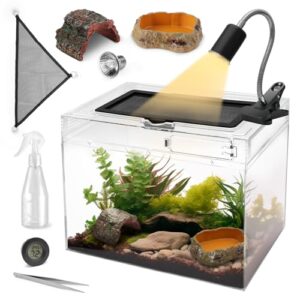
The AZV Clear Terrarium runs smaller — 15.6 × 8 × 10 inches — so it’s best suited for a hatchling or a very young juvenile.
What makes it classroom-friendly is the escape-proof latch and mesh top. Young corn snakes are escape artists, and a lid that stays put matters more than most beginners expect.
The clear polycarbonate walls let students observe without opening the tank, which keeps stress low for both the snake and whoever’s watching.
| Best For | Beginner reptile owners, classrooms, and families who want a compact, easy-to-observe setup for small species like geckos, frogs, or juvenile reptiles. |
|---|---|
| Material | Polycarbonate |
| Kit Pieces | 8-piece |
| Ventilation | Mesh top |
| Escape Prevention | Locking lid latch |
| Hygrometer Included | Yes |
| Hide Cave | Yes |
| Additional Features |
|
- Escape-proof latch and mesh top keep curious reptiles secure and well-ventilated
- Clear polycarbonate walls let you watch your pet without opening the tank
- Waterproof base makes cleaning and humidity management genuinely easy
- The heat lamp can melt the polycarbonate lid if left on high too long — no thermostat included
- Some users have received kits with missing or mismatched screws for the latch
- The hammock is reportedly oversized for the tank, and lamp placement isn’t clearly guided in the instructions
4. AZV Reptile Terrarium Starter Kit
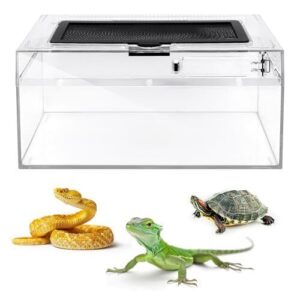
If the first AZV feels a little snug, this version steps things up. The AZV Reptile Terrarium Starter Kit runs 15.6 × 8 × 10 inches and holds 5.3 gallons — still compact, but the 8‑piece bundle does real work: heat lamp, hygrometer‑thermometer, feeding bowl, sprayer, hide cave, and tweezers all included.
The front‑panel escape‑proof locks mean students can watch without opening the lid.
For a hatchling corn snake in a busy classroom, that’s a genuinely useful feature.
| Best For | Beginners, kids, and classroom setups looking for an all-in-one starter kit for small reptiles, amphibians, or insects. |
|---|---|
| Material | Polycarbonate |
| Kit Pieces | 8-piece |
| Ventilation | Mesh top |
| Escape Prevention | Locking lid latch |
| Hygrometer Included | Yes |
| Hide Cave | Yes |
| Additional Features |
|
- Comes with 8 accessories right out of the box — heat lamp, hygrometer, hide cave, and more, so you’re not scrambling for extras
- Leak-proof base makes cleaning and humidity management way less of a headache
- Escape-proof locking lid is a genuine plus in busy spaces like classrooms or homes with curious kids
- The heat lamp can melt the polycarbonate if placed too close, and there’s no built-in mount to keep it at a safe distance
- Some buyers got mismatched or missing screws, which makes securing the lid a frustrating guessing game
- The instructions are reportedly unclear, which could lead to improper lamp setup — not ideal for first-timers
5. Sanosy Reptile Terrarium Starter Kit
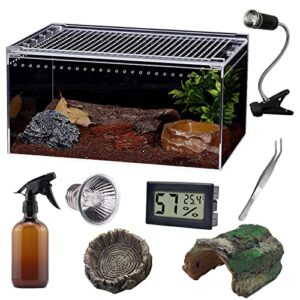
The Sanosy starter kit keeps things simple — and that’s not a bad thing.
You get a polycarbonate tank (11.8 × 5.9 × 7.9 inches), a screened top for ventilation, and an 8-piece accessory set covering tweezers, a dual thermometer/hygrometer, lamp, rock hide, spray bottle, and a food/water bowl.
The anti-escape door lock is a genuine classroom win.
One honest caveat: some units have shown seam and bulb issues, so keep a backup bulb on hand.
| Best For | Beginners setting up a first enclosure for small reptiles, geckos, jumping spiders, or other tiny critters who want a ready-to-go kit without hunting down accessories separately. |
|---|---|
| Material | Polycarbonate |
| Kit Pieces | 8-piece |
| Ventilation | Screened top |
| Escape Prevention | Anti-escape door lock |
| Hygrometer Included | Yes |
| Hide Cave | Yes |
| Additional Features |
|
- Comes with everything you need to get started — tweezers, thermometer, lamp, hide, and more right out of the box
- Clear polycarbonate walls and screened top make it easy to keep an eye on your pet while still allowing solid airflow
- The anti-escape door lock is a smart, practical touch that budget kits often skip
- Some units have reported seam splits and cracking, which doesn’t inspire confidence given the "shatter-resistant" claim
- The included lamp bulb can burn out fast — sometimes within days — so a backup is basically a must
- It’s a tight fit for anything beyond very small or juvenile animals, and the food/water dish is on the small side
6. KAKOOTI Magnetic Acrylic Reptile Terrarium
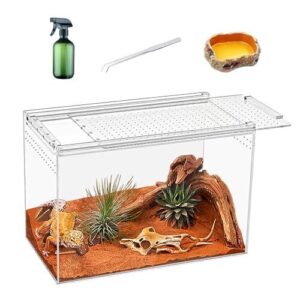
The KAKOOTI takes a different approach — all-acrylic, fully transparent, and genuinely satisfying to use daily. sliding magnetic lid opens in one smooth motion, so feeding goes fast without fuss.
Since timing matters as much as gear, brushing up on ball python feeding best practices helps you pair the right enclosure with the right routine.
At 18 × 8 × 9.5 inches, it gives a juvenile corn snake enough room to move without feeling like empty real estate.
Ventilation holes on the top and sides keep airflow steady.
It ships with a bowl, long tweezers, and spray bottle — ready to go, no assembly required.
| Best For | Small reptile and invertebrate keepers who want clear, easy observation in a compact, shelf-friendly enclosure. |
|---|---|
| Material | Acrylic |
| Kit Pieces | 3-piece |
| Ventilation | Top and side holes |
| Escape Prevention | Magnetic sliding lid |
| Hygrometer Included | No |
| Hide Cave | No |
| Additional Features |
|
- Full 360° acrylic transparency makes it easy to watch your animal without disturbing them
- Magnetic sliding lid opens smoothly for quick feeding and cleaning with no escape risk
- Comes ready to use right out of the box — bowl, tweezers, and spray bottle included
- At 11 × 6 × 8 in, it’s too small for anything beyond tiny species; the included water bowl eats into floor space noticeably
- Ventilation may be too aggressive for humidity-loving species like isopods unless you cover some holes
- A small gap in the lid could be a problem for very tiny or flexible escape artists
7. Kathfly Mini Acrylic Reptile Terrarium
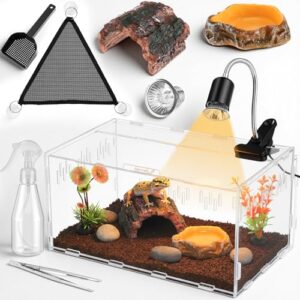
The Kathfly rounds out this list as the most compact option — and honestly, it’s better suited for spiders or tiny geckos than a growing corn snake.
Its acrylic tank measures just 11.81 × 7.87 × 5.91 inches, which is too small for even a juvenile corn snake long-term.
The 13-piece kit includes a heating lamp, thermometer, and hygrometer, which is decent value.
Think of it as a useful temporary or feeding enclosure rather than a permanent home.
| Best For | Beginners who need a compact, temporary enclosure for small spiders, jumping spiders, hermit crabs, or tiny geckos — not for corn snakes or growing reptiles. |
|---|---|
| Material | Acrylic |
| Kit Pieces | 13-piece |
| Ventilation | Top mesh/holes |
| Escape Prevention | Detachable lid |
| Hygrometer Included | Yes |
| Hide Cave | Yes |
| Additional Features |
|
- Comes with 13 pieces right out of the box — lamp, thermometer, hygrometer, tweezers, and more, so you’re not hunting for extras
- Crystal-clear acrylic walls make it easy to watch your pet without poking around inside
- Small and lightweight enough to sit on a desk or shelf without taking over the room
- At under 12 inches long, it’s too cramped for most reptiles beyond the very smallest or youngest
- The heat lamp can get hot enough to warp the acrylic if you’re not careful about placement and distance
- Ventilation gaps are wide enough for tiny spiders to squeeze through, so you may need to add mesh yourself
Why Corn Snakes Suit Classrooms
Corn snakes have a reputation for being easygoing, and that’s not an accident — they genuinely make sense for a classroom setting. Before you set up the enclosure, though, it helps to understand exactly why they work so well and what challenges come with the territory.
Here’s what every teacher should know.
Docile Temperament for Supervised Student Interaction
Ever notice how a calm snake can turn a nervous student into a herpetology hobbyist? Corn snakes, as nonvenomous constrictors, make stress-free handling possible—especially with a Calm Grip Technique. Here’s why they’re ideal for classrooms:
- Gentle Interaction builds Student Confidence.
- Behavioral Cue Recognition keeps sessions safe.
- Low-stress reptile keeping suits beginner snake keepers using Corn Snake starter kits.
Remember that a secure lid essential prevents escape and maintains a safe environment.
Beginner-friendly Care Compared With Many Reptiles
Corn snakes are genuinely forgiving compared to most reptiles. Their simple temperature control — a warm side around 90°F, cool side around 75–82°F — beats managing a bearded dragon’s 115°F basking spot.
Low humidity tolerance means 40–60% is fine. Easy substrate choice, minimal lighting requirements, and a basic feeding protocol make reptile husbandry approachable.
Corn Snake starter kits give beginner snake keepers everything to start right. For ideal heating, consider infrared heat lamp solutions that provide the right IR‑A output.
Predictable Feeding and Maintenance Routines
Structure is what makes a classroom snake actually work. Feed juveniles every 7–10 days, track growth with a kitchen scale, and you’ve got a routine anyone can follow.
- Feeding Record Templates keep substitutes informed
- Prey Storage Management means frozen mice stay ready in a labeled freezer bag
- Cleaning Log Templates hold the whole team accountable
- Hygrometer Calibration checks take under a minute
Quiet, Low-odor Classroom Pet Option
Beyond the predictable schedule, there’s another reason corn snakes work well in classrooms — they’re genuinely quiet. No barking, no chirping, no smell drifting across the room.
Their low-maintenance reptile enclosure stays fresh with quick spot-cleaning and odor-reducing substrate like aspen shavings. Silent Habitat Design with low-noise lighting and good air circulation strategies means your snake stays calm, and so does everyone else.
Long Lifespan and Long-term Classroom Commitment
Here’s the thing — a corn snake isn’t a hamster. Average lifespan runs 15 to 20 years, with some reaching 32. That’s a long-term reptile hobby investment, not a one-semester prop.
A corn snake isn’t a one-semester prop — it’s a 15-to-20-year commitment
Plan for:
- Succession Planning — name a backup caretaker now
- Budget Forecasting — reptile health monitoring, substrate, and bulbs add up yearly
- Alumni Care Transfer — document everything for the next teacher
Common Challenges Teachers Should Expect
long-term commitment also comes with real daily friction. Temperature Monitoring isn’t a one-time setup — classroom rooms shift throughout the day, so your heat mat safety checks matter regularly. Humidity Management means using a hygrometer, not guessing. Feeding Logistics require tongs, frozen-thawed prey, and 48-hour no-touch windows.
Escape Prevention, clear Student Handling Rules, and basic herpetology basics — and you’ve got a genuinely rewarding but demanding classroom responsibility.
Must-Have Kit Components
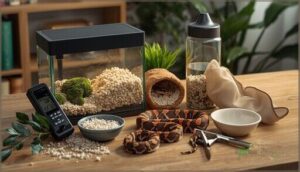
Not every starter kit gives you everything you actually need — and in a classroom, the gaps matter more than usual. Before you pick a kit, it helps to know which components are non-negotiable for keeping a corn snake safe and comfortable.
Here’s what every solid setup should include.
Escape-proof Terrarium With Secure Locking Lid
Corn snakes are Houdini-level escape artists — a loose lid is practically an open door. Your enclosure’s escapeproof design starts with solid-sided panels or front-opening doors paired with a smart Lock Placement Strategy: clips or latches on opposite sides, never just one corner.
- Use purpose-made lid clips, not books stacked on top
- Apply Escape Gap Sealing around every cord and cable hole
- Do a Seal Gap Inspection before and after each cleaning
- Check Lid Clip Design for full contact at multiple points
- Follow Frame Reinforcement Tips — a rigid frame keeps the lid aligned
Proper Enclosure Size for Juveniles and Upgrades
A hatchling doesn’t need a mansion — but it will grow into one. Start juvenile corn snakes in a 10 gallon terrarium, then plan your habitat upgrade as they hit 18 inches or more. Growth-Based Sizing keeps things practical.
| Growth Stage | Recommended Tank Size |
|---|---|
| Hatchling | 10 gallon terrarium |
| Juvenile | 20 gallon tank |
| Sub-adult | 30 gallon |
| Adult | 40+ gallon |
Terrarium Volume Planning and smart Space Utilization — plus Climbing Height of 18–24 inches — matter more than the number on the box.
Heat Mat With Digital Thermostat
A heat mat without a thermostat is just a waiting accident. Your 16W heat mat needs a digital thermostat paired with smart probe placement strategies — position the probe inside the warm hide, not beside it.
Check wattage compatibility, look for alarm features on higher-end models, and confirm grounded power safety before plugging in.
Mat adhesive options keep everything secure, giving your corn snake consistent temperature regulation around the clock.
Warm-side and Cool-side Thermometers
One thermometer won’t cut it — you need dual thermometers to confirm your temperature gradient actually works. Place a digital probe on the warm side (inside the hide, around 85°F) and another on the cool side (low 70s°F). Together, they give you gradient verification at a glance.
- Probe placement: secure probes at snake level, not air level
- Digital probe benefits: continuous monitoring beats stick-on strips every time
- Calibration routine: check both readings daily before students arrive
- Student temperature log: a simple chart builds good habits and catches drift early
UVB Lighting and Timer-controlled Day Cycle
UVB lighting isn’t strictly required for corn snakes, but it genuinely helps their health — and a classroom setup benefits from doing things right. Reptile UVB100 13W bulb keeps UVB intensity low and appropriate.
timer programming set to a 12/12 lighting cycle, and you’re done.
Remember: UVB bulb lifespan fades before burnout, so swap it every six months.
Aspen or Other Corn Snake-safe Substrate
Aspen shavings are your safest starting point — lightweight, easy to dig through, and widely available. Aspen Bedding Benefits shine in dry setups, though spot-clean often to prevent mold.
Need a bit more humidity? Cypress Mulch‘s moisture retention makes it a solid alternative.
Coconut Fiber Digging is great for naturalistic tanks.
Skip cedar and pine entirely — their oils are genuinely harmful.
Two Hides Plus a Humid Retreat
Your corn snake needs more than one safe spot — it needs options. Hide Size Matching matters: snug fits feel secure, not roomy ones. Add a humid retreat packed with sphagnum moss for Moisture Retention Media during shed cycles.
- Place one hide per Retreat Temperature Zone — warm side and cool side.
- Stress Mitigation Benefits increase when the snake can hide without crossing open space.
- Check Maintenance Frequency weekly; damp moss molds fast in warm enclosures.
Water Dish, Feeding Tongs, and Cleaning Supplies
Three small tools pull more weight than you’d think.
Water Dish Medium placed at the cool end gives your snake a clean sip without being beside the thermostat.
tongs for every feeding — tongs sterilization after each meal keeps prey rodents’ residue from building up.
Dedicated Cleaning Kit with proper Disinfectant Contact Time keeps everything honest.
| Tool | Key Spec | Classroom Tip |
|---|---|---|
| Water Dish Medium | Soak-sized | Cool side only |
| 12-inch tongs | Secure grip | Tool Color Coding helps |
| Hygrometer/Digital thermometer combo | Dual-read | Check during shed weeks |
Safe Classroom Enclosure Setup
Getting the enclosure right is the foundation of everything else — a snake that feels safe will eat well, shed cleanly, and actually let students interact with it.
There are a few key setup details that make a real difference in a classroom setting, from where you position the hides to which substrate you should never touch.
Here’s what you need to know before your corn snake moves in.
Creating a Warm-to-cool Temperature Gradient
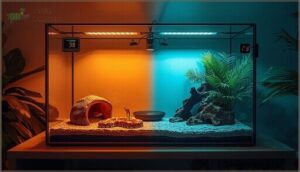
Think of the enclosure as a tiny climate map.
Heat mat placement under one end creates the warm zone — aim for 85–90°F using a 16W heat mat. Set your thermostat probe position on the warm-side substrate inside the hide. The cool side naturally settles around 75–80°F.
This thermal gradient gives your corn snake full temperature control, so it self-regulates all day.
Best Hide Placement for Stress Reduction

Once your temperature gradient is set, hides make or break how settled your snake feels.
Place one hide directly over the warm end — Hide Proximity to Heat matters because the snake needs to stay concealed and warm simultaneously. The second goes at the cool end; corner hide placement works well here.
- Match hide size so the snake touches the walls when coiled
- Keep both hides similar in style — equal safety, both ends
- Weave in some décor around each hide for a less exposed approach path
- Avoid placing hides near lid seams or door edges
Where to Place The Water Dish
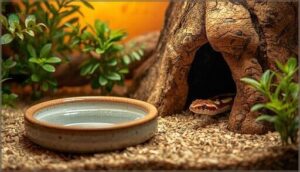
With hides sorted, the water dish placement is straightforward — but it matters more than people expect.
Put it on the cool side, near a hide, on a flat stable base, away from heat. That combo keeps humidity control manageable and water fresher longer.
| Placement Factor | Best Practice |
|---|---|
| Cool-side location | Reduces excess evaporation |
| Near hide | Less stress for shy snakes |
| Flat base | Prevents spills and soggy substrate |
| Away from heat | Slows fouling, steadier humidity |
Pick a low-traffic spot so it stays clean longer.
Safe Lighting and Heating Placement in Schools
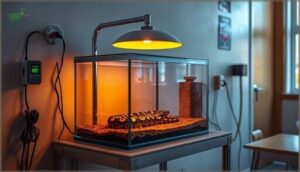
Lighting and heating done wrong is a genuine fire risk — especially in a room full of curious kids. Follow combustible distance rules: keep heat lamps at least 18 inches from paper and 20 inches from your snake.
Use fire-resistant fixture selection with ceramic collars and metal deflectors. Secure mounts prevent tip‑overs.
Cord management practices keep walkways safe.
Pair heat mat placement with thermostat alarm integration for a reliable thermal gradient and consistent UVB exposure.
Ventilation, Screen Tops, and Escape Prevention
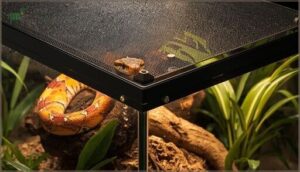
Even a well-fed corn snake will test every seam, slot, and lid edge — just because it can. Your screen top needs Lid Clip Placement at multiple points, not just one side. Check Vent Slot Sizing so Airflow Humidity Balance stays steady without creating gaps, a nose can wedge through.
- Secure Door Seams along front-opening panels
- Escape-proof Mesh Design with no head-sized openings
- Screen top clips locked after every interaction
Avoiding Toxic Substrate and Décor Choices
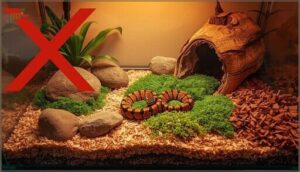
Cedar substrate is a hard ban — cedar and pine oils are genuinely toxic to corn snakes, not just inconvenient. Stick with aspen shavings, an organic substrate, or a bioactive mix with moss mat medium.
Skip sand entirely — the impaction risk is real.
Before adding any resin décor, let it off-gas fully, do a sharp edge inspection, and chemical residue cleaning on every piece.
Setting Up The Habitat Before The Snake Arrives
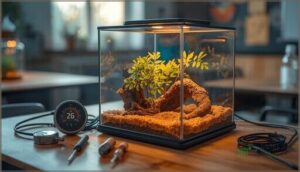
Run your Pre-assembly Checklist the day before the snake arrives — not the morning of. Install the heat mat, connect the thermostat, and run a Temperature Calibration Test overnight, so warm and cool sides hit their targets.
Complete your Substrate Sterilization Procedure, press through a Lid Securement Verification, and do a quick Equipment Safety Inspection.
The enclosure should be fully stable before your corn snake ever sees it.
Daily Care for School Snakes
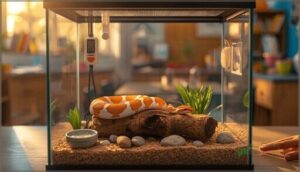
Once the enclosure is set up, the real routine begins — and it’s simpler than most teachers expect. A few consistent habits keep your corn snake healthy all semester long.
Here’s what daily care actually looks like in a classroom setting.
Feeding Schedule for Juvenile Corn Snakes
Juvenile corn snakes do best on a feeding frequency of every 7 to 10 days — simple enough to pencil into any classroom calendar. Skip a meal if your snake’s eyes turn cloudy; that’s pre-shed appetite loss—completely normal.
Keep a feeding log to track body condition scoring over time, so growth monitoring stays easy and nothing slips through the cracks.
Frozen-thawed Prey Sizing for Beginners
Getting prey sizing right is half the battle. Stick to these feeding and nutrition guidelines for captive snakes, and you’ll rarely go wrong with pre‑killed, frozen‑thawed mice:
- Prey Width Rule — match feeder width to your snake’s widest body point
- Weight Percent Guide — aim for roughly 10% of body weight
- Refrigerator Thawing — move frozen prey to the fridge the night before
- Warm Water Prep — finish thawing in a sealed bag in warm water until it hits ~99°F
- Oversize Prevention — if it looks bulky going down, size down next time
Fresh Water and Simple Hygiene Routines
Once feeding is sorted, water care is almost refreshingly simple. Keep a shallow reptile water dish on the cool side — swap it out daily, or sooner if the snake has dragged substrate in. Use Aquatize Terrarium Water Conditioner to neutralize chlorine and heavy metals. Cracked bowls hold bacteria, so replace them promptly.
basic hygiene signage near the enclosure — students touch everything, so clear rules help.
Humidity Checks During Normal Weeks and Shedding
Humidity control is honestly one of those things that sounds fussier than it is. A digital hygrometer placed mid-enclosure gives you honest readings — aim for 40–60% during normal weeks.
When your snake’s eyes go cloudy and skin looks dull, that’s shedding time: bump humidity to 65–75% and refresh the humid hide with damp sphagnum moss. Watch for soggy substrate — mold prevention matters in a classroom.
Safe Handling Rules for Students and Staff
Once humidity is sorted, safe snake handling is the next thing to get right. Keep it calm and supervised — always.
- Use slow movements; sudden grabs stress the snake and trigger defensive behavior.
- Wash hands with soap and water immediately after — hand hygiene isn’t optional.
- Children under 5 stay hands-off; age restrictions protect everyone.
- Skip handling 24–48 hours post-feeding.
Adults supervise every interaction, no exceptions.
When Not to Handle After Feeding
The no-handle rule after feeding isn’t optional. Wait at least 48 hours — that digestion window is real.
Handling too soon triggers regurgitation, which is a health setback, not just a mess.
Bigger meals mean a longer handling delay. If you can still see the food bulge, the snake needs more time.
Keep the enclosure closed and quiet.
Cleaning Schedule for Busy Classrooms
A good enclosure cleaning routine doesn’t have to eat your prep period. Here’s a simple schedule that actually sticks:
- Spot Cleaning Routine — remove waste and wet substrate daily
- Water Refresh Protocol — scrub and refill the dish every day
- Weekly Reset Checklist — wipe décor, check thermostats and timers
- Deep Clean Schedule — full substrate swap every 1–2 months
- Staff Assignment Rotation — shared responsibility keeps it consistent
Good hygiene practices protect reptile health and keep your Corn Snake starter kit working long-term.
How to Choose The Right Kit
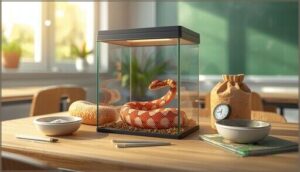
Not every starter kit is built the same, and the wrong one can make classroom life harder than it needs to be.
A few key things — size, included accessories, and how easy it is to clean — will help you separate the genuinely useful kits from the ones that look good on paper.
Here’s look for before you buy.
Matching Kit Size to Classroom Use
Size matters more than most people think when choosing the right corn snake enclosure size for your classroom.
| Planning Factor | Juvenile (Year 1) | Adult (Year 2–3+) |
|---|---|---|
| Space Planning | 10–20 gal tank | 40 gal breeder minimum |
| Growth Projection | Up to 18 inches | 3–5 feet |
| Ventilation Clearance | 6 inches around tank | 6–12 inches around tank |
| Teacher Accessibility | Top-open works | Front-opening preferred |
| Budget Allocation | Starter kit | Full upgrade needed |
Match the enclosure to where your snake is now — and where it’s headed.
Avoiding Starter Kits That Are Too Small
That cute little 3-gallon polycarbonate box might seem perfect today — but your hatchling won’t stay hatchling-sized for long. Future-proof sizing means thinking beyond year one.
Corn snakes hit 3–5 feet within two to three years, so long-term space allocation matters from day one.
Undersized habitats limit temperature gradients and stress the snake. Flexible habitat design saves your classroom a disruptive mid-year upgrade.
Comparing Included Accessories Versus Add-on Costs
bargain price tag doesn’t always tell the whole story. Most corn snake starter kits for beginner snake keepers look complete — until you itemize what’s missing.
The Exo Terra kit skips a thermostat ($20–30 extra), KAKOOTI includes zero heating or substrate ($40–60 add-on), and acrylic options often omit UVB entirely. Accessory price gaps and hidden cost factors can quietly double your budget before the snake arrives.
Prioritizing Safety, Durability, and Easy Maintenance
A classroom enclosure takes more abuse than a home setup — daily openings, curious hands, and routine cleanings add up fast. Here’s what actually holds up:
- Reinforced Frame — resists warping after repeated handling
- Quick-Release Latch — secure but staff-friendly, no fumbling
- Easy-Swap Substrate — aspen shavings clean out in minutes
- Durable Lighting — fixtures that survive weekly repositioning
- Escapeproof Enclosure — tight mesh and locked lids mean no surprise field trips
Corn Snake starter kits with modular and expandable designs make heat and humidity management far less stressful long-term.
Best Kit Features for Teachers and Beginners
The best Corn Snake starter kits for beginners check a few practical boxes. Clear Viewing Panels let you monitor your snake without constant handling — low‑stress reptile keeping starts there.
A Heat mat with thermostat, Quick Assembly design, and Durable Construction mean less troubleshooting on a Monday morning.
Beginner snake keepers also benefit from Efficient Cleaning layouts and Modular and expandable options. Low‑Noise Design keeps your snake — and your class — calm.
When a Budget Kit is Enough
A budget starter kit works well when your school already has classroom temperature stability — the heater only needs to handle small daily swings. Pair that with staff routine consistency, and you’ve got the foundation for solid corn snake care.
For limited space and cost-effective maintenance, a well-chosen starter kit covers the essentials without overcomplicating things — leaving a clear gradual upgrade path as your snake grows.
When to Upgrade Beyond The Starter Kit
Starter kits don’t last forever — and your snake will tell you when it’s time to move on.
Watch for growth milestones like outgrowing the warm hide, behavioral indicators like restless pacing, or shedding frequency that signals poor humidity control.
Temperature instability that won’t stabilize is another clear sign.
When budget constraints ease, scaling habitat as the snake grows into modular and expandable reptile enclosures makes the adjustment straightforward.
Frequently Asked Questions (FAQs)
Are corn snakes good classroom pets?
Yes — corn snakes are genuinely solid classroom pets.
They’re calm, non-venomous, and manageable enough for supervised student engagement, making them a practical choice when a trained adult oversees daily care and snake health monitoring.
Do corn snakes make good pets for beginners?
Absolutely — corn snakes are practically designed for beginners. They’re docile, nonvenomous, and forgiving of minor care mistakes.
With a proper corn snake starter kit and basic health monitoring, most first-timers do just fine.
What do corn snakes need in their tank for beginners?
A corn snake needs five basics: a secure tank, a warm-to-cool heat gradient, two snug hides, safe substrate for burrowing, and fresh water. Get those right first.
What is the biggest trouble with corn snakes as pets?
They’re escape artists at heart. Lid seal failures, thermostat miscalibration, and student handling errors top the list — but shedding complications and noise stress response cause the most overlooked health risks.
What permits or permissions do schools typically require?
Most schools require Principal Approval, Parent Consent forms, Health Screening for allergies, Safety Documentation covering daily care plans, and proof of compliance with Animal Regulations before any snake sets foot in a classroom.
How do students with snake phobias get accommodated?
Most schools use seating strategies, exposure scheduling, and a break pass system. Parent collaboration and inclusion protocols keep anxious students safe without removing the snake entirely from the classroom environment.
What happens if a student has a rodent allergy?
Funny how a snake allergy rarely exists — but a rodent allergy? Very real.
Prey rodents carry proteins in urine and dander that trigger sneezing, hives, or worse in sensitive students.
Staff training and an emergency response plan matter here.
Who covers veterinary costs for a classroom snake?
Vet bills usually fall on the teacher. Some schools help through budget allocation, and parent sponsorship is possible. Keep an emergency fund — unexpected care costs add up fast.
Conclusion
Well-rooted beginnings grow strong—just as a tree’s foundation determines its reach, your corn snake’s habitat shapes its classroom journey.
The right corn snake starter kits for classroom pets transform guesswork into confidence, turning a glass box into a thriving ecology lesson.
With secure locks, precise thermostats, and hides that mimic nature’s nooks, these kits don’t just house a snake—they foster curiosity.
Choose wisely, and your scaly ambassador won’t just survive; it’ll silently teach resilience, routine, and respect for life’s quieter corners.
The rest? Just show up, observe, and let the learning unfold.