This site is supported by our readers. We may earn a commission, at no cost to you, if you purchase through links.

Rescue snakes arrive with baggage—stress from transport, possible parasites, unknown feeding history, and a nervous system on high alert.
You can read hundred forum posts and still miss the detail that matters most for your specific species.
A corn snake recovering from mite exposure needs different support than a garter snake adjusting from outdoor collection, and generic advice often flattens those differences.
The right snake care books for rescue adopters don’t just cover husbandry basics—they help you understand what your snake is communicating before problems escalate.
Here’s what’s worth reading before your new arrival comes home.
Table Of Contents
Key Takeaways
- Rescue snakes need species-specific care books — not generic guides — because a mite-exposed corn snake and a wild-caught garter snake have completely different recovery needs.
- The most useful books for rescue adopters go beyond basic husbandry and cover stress indicators, feeding refusals, and health troubleshooting for snakes with unknown histories.
- Practical tools like a care log book matter just as much as a care guide, since tracking weight, feeding, and shedding patterns is what lets you catch problems before they become emergencies.
- Matching your book to your specific species — corn snake, garter snake, or kingsnake — gives you precise temperature ranges, feeding schedules, and behavioral cues that general handbooks simply can’t deliver.
7 Best Snake Care Books
Finding the right care book makes a real difference when you’re new to rescue snakes. Each title on this list was chosen with adopters in mind — practical, clear, and worth your time.
Several of these picks are also budget-friendly, and you can browse the full snake care books for first-time owners roundup to find the best fit for your shelf.
Here are seven books worth keeping on your shelf.
1. Corn Snake Owners Guide

If you’re new to corn snakes, this book earns its spot on your shelf. Written by experienced breeders Bill and Kathy Love, Corn Snakes: The Complete Owner’s Guide covers everything from housing and feeding to health troubleshooting and morph identification — all in 224 full-color pages.
It’s practical, not padded. You’ll find clear guidance on heat gradients, humidity, and substrate that translates directly to a rescue setup.
At $16.99 for a used copy, it’s an affordable starting point.
| Best For | New corn snake owners and hobbyist breeders who want a single, reliable reference covering setup, feeding, health, and genetics. |
|---|---|
| Price | $16.99 |
| Page Count | 224 |
| Language | English |
| Publisher | CompanionHouse Books |
| Publication Year | 2006 |
| Format | Used paperback |
| Additional Features |
|
- Written by real breeders, so the advice is practical and comes from hands-on experience
- Covers a wide range — from basic housing to morph genetics — so it grows with you as a keeper
- Full-color photos make it easy to identify morphs and spot health issues visually
- Published in 2006, so some husbandry recommendations or product suggestions may be outdated
- Geared toward U.S. readers, so regulations and vet references may not apply everywhere
- It’s a used copy, so minor wear is possible
2. Corn Snake Care Handbook

Another solid option for corn snake adopters is the Corn Snake Care Handbook, published December 2025. At $17.40 for 207 pages, it punches above its price point.
You’ll get concrete guidance on enclosure setup, temperature gradients, humidity management, and feeding schedules — exactly what you need when a rescue snake lands in your care.
It also covers daily health checks and stress indicators, which matter most in those first uncertain weeks.
practical companion, especially if you want straightforward benchmarks without wading through fluff.
| Best For | First-time corn snake owners and rescue adopters who want clear, no-nonsense care guidance without the overwhelm. |
|---|---|
| Price | $17.40 |
| Page Count | 207 |
| Language | English |
| Publisher | Independently published |
| Publication Year | 2025 |
| Format | Paperback |
| Additional Features |
|
- Covers the essentials end-to-end — enclosure setup, temperature, humidity, feeding — so you’re not piecing things together from five different sources.
- Daily health and stress checklists are genuinely useful in those early weeks when you’re still learning what "normal" looks like.
- At $17.40 for 207 pages, it’s an easy buy that saves you from costly trial-and-error mistakes.
- Corn snakes only — if you keep other reptiles, this won’t help you there.
- It’s independently published, so there’s no peer-review stamp behind the advice.
- A physical book isn’t the most convenient thing to flip through mid-tank setup.
3. Complete Garter Snake Care Guide

If your rescue happens to be a garter snake, this one’s worth a look.
The Complete Garter Snake Care Guide covers the full picture — enclosure setup, feeding schedules, health troubleshooting, and even breeding if you go that route.
At 102 pages and $15.00, it stays focused without burying you in detail.
Garter snakes are escape artists, and this guide handles that directly, including heat gradients and humidity targets that your snake actually needs to thrive.
| Best For | New garter snake owners and hobbyists who want a practical, no-fluff reference for setting up a healthy enclosure and keeping their snake thriving long-term. |
|---|---|
| Price | $12.80 |
| Page Count | 176 |
| Language | English |
| Publisher | Independently published |
| Publication Year | 2025 |
| Format | Paperback |
| Additional Features |
|
- Covers everything from day-one setup to breeding, so you’re not hunting across five different websites for answers.
- At $15 and 102 pages, it’s easy to actually finish — and cheap enough to just grab without overthinking it.
- The health troubleshooting section alone could save you a stressful (and pricey) vet visit.
- It’s garter snakes only, so if you’ve got other reptiles, this won’t help you there.
- Complex medical situations really do need a vet — the book can get you started, but it’s not a substitute.
- It’s a physical book with no videos or interactive content, which can make some of the visual setup stuff harder to follow.
4. Snake Care Log Book
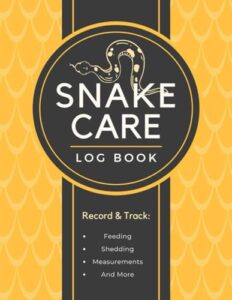
Not every resource you need is a traditional read. The Snake Care Log Book is a hands-on tracking tool — and honestly, one of the most practical things a new adopter can have.
For $9.85, you get space for up to 8 snake profiles, monthly pages for temperature, humidity, feeding, weight, shedding, and more. That’s your vet visit in a binder.
Spot a feeding refusal two weeks running? It’s right there in black and white. 110 pages, spiral-bound, built for daily use.
| Best For | New and experienced snake owners who want a simple, physical way to track their snake’s health and daily care routine. |
|---|---|
| Price | $15.00 |
| Page Count | 102 |
| Language | English |
| Publisher | Independently published |
| Publication Year | 2025 |
| Format | Paperback |
| Additional Features |
|
- Covers all the key metrics — temp, humidity, feeding, shedding, weight — so nothing slips through the cracks
- Holds up to 8 snake profiles, which works well for most hobbyist collections
- At $9.85, it’s an easy, affordable addition to any snake owner’s setup
- No digital version means no backup if the book gets lost or damaged
- Eight profiles might not cut it if you’re keeping a larger collection
- A monthly layout can get a little clunky when you’re juggling multiple snakes at once
5. Kingsnake Identification Habitat Husbandry Guide

Kingsnakes are one of the most misunderstood rescues out there — beautiful, variable, and often surrendered simply because their owner didn’t know what they signed up for.
Their stunning color variation and easy care make them ideal for beginners — explore a full kingsnake and milk snake breed guide to see just how manageable these rescues can be.
This guide covers the genus Lampropeltis from the ground up: identification across 45+ subspecies, natural habitat ranges, enclosure sizing, temperature gradients, humidity needs, and feeding schedules.
At $12 and 118 pages, it’s a focused, affordable reference.
If you’ve just adopted a kingsnake, this fills the gaps fast.
| Best For | New kingsnake owners, hobbyist breeders, and wildlife educators who want a clear, practical reference without paying textbook prices. |
|---|---|
| Price | $9.85 |
| Page Count | 110 |
| Language | English |
| Publisher | Independently published |
| Publication Year | 2023 |
| Format | Spiral-bound |
| Additional Features |
|
- Covers everything from species ID to daily husbandry in one slim, affordable package — great for getting up to speed fast
- Includes breeding guidance and morph genetics, which most beginner guides skip entirely
- At $12, it’s an easy buy even if you just need it to fill one or two knowledge gaps
- Strictly North American kingsnakes — won’t help you if you keep anything outside that scope
- 118 pages keeps it accessible but means serious researchers will likely need additional sources
- Independently published with no peer review, so it’s worth cross-checking any health or veterinary advice
6. Complete Snake Care Handbook

This one earns its spot on the shelf. The Complete Snake Care Handbook covers the full picture — enclosure setup, heat gradients, substrate choices, feeding schedules, health monitoring, and even breeding basics.
At 175 pages and $15.10, it doesn’t waste your time or money.
You get practical guidance on everything from daily visual checks to troubleshooting feeding refusals.
For rescue adopters managing species like corn snakes or ball pythons, it’s a reliable starting point that keeps you grounded in solid husbandry from day one.
| Best For | First-time snake owners and rescue adopters who want a solid, no-fluff foundation in snake husbandry without breaking the bank. |
|---|---|
| Price | $12.00 |
| Page Count | 118 |
| Language | English |
| Publisher | Independently published |
| Publication Year | 2026 |
| Format | Paperback |
| Additional Features |
|
- Covers the full care journey — from enclosure setup and heating to feeding schedules and health monitoring — all in one place.
- At $15.10 for 175 pages, it’s an affordable reference you’ll actually reach for again and again.
- Includes breeding basics and hatchling care, which most beginner guides skip entirely.
- Stays fairly general, so keepers with niche or more exotic species may find it light on the specifics they need.
- No digital version, which makes quick on-the-go lookups a bit less convenient.
- Advanced topics get only a surface-level look — experienced keepers may need to supplement with deeper resources.
7. Corn Snake Care and Breeding Guide

If you’re adopting a corn snake for the first time, this guide pulls double duty.
The Corn Snake Care and Breeding Guide covers the essentials — enclosure sizing, temperature gradients, feeding schedules — and goes further into breeding basics when you’re ready.
At 124 pages and $11.40, it won’t overwhelm you with dense theory.
The seasonal behavior sections are especially useful, helping you understand why your snake acts differently in winter versus spring.
Practical, affordable, and species-specific.
| Best For | First-time corn snake owners, hobbyists, and educators who want a solid, no-fluff introduction to corn snake care and biology without breaking the bank. |
|---|---|
| Price | $15.10 |
| Page Count | 175 |
| Language | English |
| Publisher | Independently published |
| Publication Year | 2025 |
| Format | Paperback |
| Additional Features |
|
- At $11.40 and 124 pages, it’s easy on your wallet and won’t take weeks to get through
- Covers the full picture — from daily care and feeding to seasonal behavior and conservation context
- Great for understanding why your snake behaves the way it does, not just what to do about it
- Too focused on corn snakes to be useful if you keep other reptiles
- Won’t replace a vet — skip it if you’re dealing with a health emergency
- Seasoned herpetologists or researchers will likely find it too surface-level
Choosing Books for Rescue Snakes

Not every snake care book is written with rescue adopters in mind, and that gap matters more than you’d think. The right book meets you where you’re — beginner nerves, unknown history, and a snake that may need extra patience.
Here’s what to look for before you pick one up.
Beginner-friendly Care Instructions
Not all snake care manuals are written with first-timers in mind. For rescue adopters, you need something that walks you through an Essential Equipment List, Water Dish Hygiene, Quiet Room Placement, and Initial Habitat Cleaning without assuming you already know the basics. The best pet snake care manuals break these down simply — so you’re confident before your new snake even arrives home.
Corn snakes, for example, thrive in a juvenile housing size of at least a 10‑gallon tank.
Rescue-specific Transition Guidance
A rescue snake isn’t starting fresh — it’s recovering. That’s why pet snake care manuals that address Transport Stress Mitigation and the reptile surrender and adoption process matter more than generic guides.
A rescue snake isn’t starting fresh — it’s recovering, and its care books should reflect that
Look for books covering Lighting Cycle Management, Feeding Frequency Optimization, Water Quality Monitoring, and a Behavioral Observation Checklist.
Snake husbandry guides with a dedicated adjustment chapter help you build trust from day one.
Species Coverage for Common Adoptees
Not every care book covers the species most likely to land in your arms. Corn snakes, ball pythons, and garter snakes dominate Reptile Rescue Center intake lists, so your snake husbandry guides need to match that reality.
Look for snake species overview books that address Species-Specific Lighting, Prey Size Guidelines, Molt Cycle Timing, Longevity Expectations, and Social Compatibility — the details that actually shape daily decisions.
Clear Feeding and Handling Advice
Knowing what your snake ate — and when — shapes every decision that follows. Good books include Feeding Frequency Charts and clear Prey Size Guidelines, so you’re not guessing. Look for titles that explain Post-Meal Rest, Handling Timing Rules, and Heat-Driven Digestion, because these directly protect pet snake health.
- Wait 48 hours after feeding before handling.
- Warm prey to boost acceptance and reduce strike hesitation.
- Match prey width to the snake’s thickest body section.
Practical Enclosure Setup Details
After sorting feeding routines, you’ll want snake care books that spell out Terrarium Size Guidelines and Barrier Seal Integrity. Good reptile care manuals show how Lighting Spectrum Selection and Ventilation Flow Design shape temperature zoning strategy and humidity control.
For instance, bioactive terrarium design isn’t just pretty—it’s practical. You’re aiming for safe, spacious enclosures that support temperature regulation and stress‑free movement.
Health Troubleshooting for New Adopters
snake health reference covers more than setup. Look for books that explain Shedding Complications, Temperature Stress Effects, and Enclosure Hygiene Issues in plain language.
Vitamin Deficiency Symptoms and Blood Parasite Analysis matter too — especially with unknown rescue histories.
The best reptile health references guide you toward reptile veterinary care before small problems grow, making snake disease treatment far less stressful.
Rescue Setup Guidance to Prioritize
Getting the setup right from day one makes everything easier — for you and your snake. Rescued snakes often come with stress already baked in, so a calm, well-organized enclosure goes a long way.
Here’s what to focus on first.
Quarantine and First-week Routines

Quarantine is your new snake’s reset button. Before your rescue arrives, complete your Isolation Room Prep — a separate space, fully equipped, away from other reptiles.
Then follow these first-week priorities:
- Place fresh water immediately; Water Availability is non-negotiable from day one.
- Start an Initial Weight Recording baseline.
- Follow a Minimal Handling Protocol for the first week.
- Schedule Fecal Testing early.
- Document everything daily.
Quarantine procedures for new reptiles usually run 60–90 days.
Secure Enclosure and Escape Prevention

Once quarantine is underway, your enclosure’s security becomes just as important as any vet visit.
Gasket Sealed Lids and Stainless Steel Hinges eliminate the flex points that snakes exploit.
Nonporous Panel Materials simplify cleaning while Micro Gap Elimination seals every seam.
Solid hiding places, smart enclosure ventilation, and appropriate cage sizes reduce stress-driven escape attempts.
Build your Escape Monitoring Protocols into daily checks — consistency protects your rescue.
Heat Gradient and Thermometer Use

Your snake’s comfort depends on more than just plugging in a heat source. Probe Placement Strategies matter — position your thermostat probe in the warm zone where your rescue actually basks, not directly on the heating element. Surface Air Checks confirm your temperature gradient is real.
Data Logging Benefits shine here too, catching overnight spikes. Use Gradient Validation Techniques after any enclosure change.
Humidity Targets and Shedding Support

Humidity is one of those things rescued snakes feel before you ever notice a problem. Keep these checkpoints in mind:
- Match species targets — corn snakes need 65–75%, garter snakes 35–60%
- Use Humidity Monitoring Tools like a digital probe hygrometer at enclosure level
- Follow Misting Frequency Guidelines — daily misting prevents humidity crashes in winter
- Practice smart Humid Hide Placement — damp sphagnum moss gives shed support without soaking the whole enclosure
- Know Shedding Cycle Timing — juveniles shed every 4–6 weeks; adults, every 3 months
Humidity is kept at the proper level before the cloudy phase begins — not after. For Retained Skin Treatment, a 15‑minute lukewarm soak beats pulling. Shedding and humidity management done right means fewer vet calls and a healthier rescue.
Substrate Choices for Easy Cleanup

Bedding isn’t glamorous, but it determines how fast cleanup happens. Paper Liners and Non-porous Liners make waste removal straightforward — no digging, no mess.
Light-colored Substrate helps you spot soiling fast. Smooth Tiles inside hide wipe clean in seconds.
Skip complex soil substrate selection for your first rescue setup. Reptile husbandry principles are clear: simple surfaces mean fewer problems and healthier snakes.
Hides, Enrichment, and Stress Reduction

A rescue snake doesn’t need toys — it needs predictability. Place hides on both the warm and cool sides so your snake can thermoregulate without feeling exposed. Visual barriers along enclosure sides reduce constant line-of-sight stress.
Keep a predictable routine for feeding and handling. Low stress handling during the first week matters most. That calm consistency is the best environmental enrichment you can offer.
Health Advice Rescue Adopters Need

Rescued snakes often come with health baggage that their previous owners never caught. Knowing what to look for early can make all the difference between a quick fix and a vet emergency.
Here’s what you need to watch for.
Early Signs of Dehydration
Dehydration sneaks up fast. Watch for dry mouth, sunken eyes, and skin that stays "tented" when gently pinched.
Dark urine and reduced urination are early red flags — healthy snakes pass pale, clear waste.
Fatigue and dizziness signal the body’s already compensating.
Your snake’s diet hydration matters too; reptile health references and thorough snake care series often include snake nutrition charts to guide prey moisture content.
Mites and Parasite Warning Signs
Mites don’t announce themselves — they hide. Rescued snakes carry parasites more often than you’d expect, so knowing what to look for matters from day one.
A good reptile health reference or thorough snake care series will flag these signs:
- Scale Redness and rubbing behavior against hides or décor
- Visible mite activity — tiny moving dots near the eyes or water bowl
- Mite egg deposits in enclosure seams and substrate edges
- Abnormal shedding caused by snake mite irritation disrupting the skin cycle
Your local reptile rescue center should screen for parasites before adoption — but always double-check yourself.
Respiratory Infection Red Flags
Parasites aren’t the only silent threat. Respiratory infections can move fast, and catching them early makes all the difference.
Watch for Open-mouth Breathing, Noisy Breathing, like clicking or wheezing, Tail Bobbing at rest, and Mucus Discharge around the nostrils.
Rapid Lethargy paired with any of these signs means call a vet today. A solid reptile health reference will walk you through exactly what each symptom looks like.
Feeding Refusals and Weight Tracking
A skipped meal doesn’t always mean something’s wrong. Stress indicators like hiding, erratic movement, temperature influence on digestion, and prey size matching all play a role.
weight trend analysis with a simple gram scale weekly. Feeding schedule consistency helps you spot patterns fast.
Books like Snakes: Everything About Selection, Care, Nutrition, Diseases, Breeding, and Behavior offer solid reptile health references for exactly this.
When to Call a Reptile Vet
Weight trends tell part of the story, but some signs mean you call a reptile vet today. Sudden Breathing Issues, like open-mouth breathing or wheezing, won’t wait. Neither will Rapid Swelling, Neurological Signs, Visible Injury, or Abnormal Excretion.
Organizations like the Reptile and Amphibian Rescue Network lean on veterinary medicine for reptiles for exactly these moments. Don’t second-guess emergencies.
Daily Observation and Care Logs
A simple log does more than track habits — it builds a health history your vet can actually use.
Each entry should hit five basics:
- Date Stamping and Observer Identification, so every note ties to someone accountable
- Routine Timing, tied to feeding, misting, or handling
- Equipment Checks, Health Indicators, and waste notes in one quick row
Reptile rescue centers and snake care manuals both recommend this kind of record keeping.
Matching Books to Your Species

Not every care book works for every snake, and that gap matters more than most people realize. The right match depends on what species you brought home from the rescue.
Here’s a breakdown by snake type to help you find the book that actually fits your situation.
Best Books for Corn Snake Adopters
Corn snakes are one of the most surrendered species at any reptile rescue center — and the right book makes all the difference when you’re starting from scratch.
| What to Look For | Why It Matters |
|---|---|
| Illustrated Species Profiles | Helps you identify your snake’s morph and health baseline |
| Dietary Supplement Guides | Ensures proper nutrition beyond just feeding frozen prey |
| Habitat Design Principles | Maintains thermal gradients and natural behavior |
| Lighting Spectrum Overview | Affects circadian rhythm and long-term wellness |
| Breeding Behavior Insights | Useful context even if you’re not breeding |
Species-specific books — like those aligned with the Complete snake care series approach — outperform general guides every time. Resources such as Snakes: Everything About Selection, Care, Nutrition, Diseases, Breeding, and Behavior offer solid grounding, but pairing them with corn-snake-focused titles and Snake identification resources gives you the clearest picture. The Reptile and Amphibian Rescue Network echoes this: matched knowledge saves lives.
Best Books for Garter Snake Adopters
Garter snakes show up at every Reptile Rescue Center, yet finding solid species nutrition and seasonal care details in general books is surprisingly rare. Look for titles with illustrated guides and strong author credibility — resources aligned with the Reptile and Amphibian Rescue Network’s standards work best.
- Eastern and western species coverage
- Feeding schedules for juveniles versus adults
- Humidity and shedding support
Best Books for Kingsnake Adopters
Kingsnakes are deceptively rewarding rescues — confident, adaptable, and forgiving of beginner mistakes when you have the right guidance behind you.
Common Kingsnakes by Northern Gecko Inc and Robert Applegate’s Kingsnakes and Milksnakes in Captivity are your two anchors. Together, they cover Habitat Design Principles, Molting Cycle Guidance, and Dietary Supplement Charts with real practical depth.
| Resource | Best For | Key Strength |
|---|---|---|
| Common Kingsnakes – Northern Gecko | Housing and feeding setup | Species-specific enclosure layout |
| Kingsnakes and Milksnakes in Captivity – Applegate | Long-term care | Beginner-friendly maintenance sections |
| ReptiFiles Care Sheets | Day-to-day husbandry | Quick reference tips |
| Kingsnake Identification Habitat Husbandry Guide | Subspecies recognition | Color patterns and habitat context |
| Veterinary Care References + Snake taxonomy references | Health and ID verification | Provides Snakes of the World Synopsis of Snake Generic Names Vol 1 cross-checks |
For Kingsnake Breeding Guides and deeper context, supplement with an extensive snake care series that includes Snake breeding literature. Don’t overlook The Snake Book for foundational knowledge either.
General Guides for Mixed Rescue Needs
When your rescue intake spans multiple species, a single species guide won’t cut it.
An extensive snake care series — paired with herpetocultural library resources and a solid reptile field guide compilation — gives you Integrated Care Strategies, Long-Term Habitat Planning, and Emergency Preparedness Plans under one roof.
That’s the kind of range a reptile rescue center recommends when your adoption questionnaire lists more than one resident species.
When a Species-specific Book is Better
Sometimes one species deserves the full spotlight.
When you’ve adopted a single animal — say, a corn snake — a species-specific book delivers Precise Temperature Ranges, Specific Nutrition Plans, and Habitat Microclimate Details you won’t find buried in a general guide. It also gives you Species-specific Disease Profiles and Behavioral Cue Identification so you catch problems faster.
That focused depth is exactly what reptile rescues recommend for committed single-species adopters.
When a General Handbook is Enough
Not every rescue situation calls for that level of detail, though. If you’re managing a mixed collection — maybe a ball python alongside a corn snake — Universal Species Guidelines cover Standard Enclosure Dimensions, Basic Nutrition Recommendations, and General Health Monitoring without overwhelming you.
Books like Snakes: Everything About Selection, Care, Nutrition, Diseases, Breeding, and Behavior work well here:
- Simple Care Documentation keeps routines consistent across species
- General feeding and handling baselines reduce early mistakes
- Health checklists help you spot warning signs fast
Frequently Asked Questions (FAQs)
How do I find a reptile vet nearby?
Not sure where to start? Try the Association of Reptile and Amphibian Veterinarians directory first.
Reptile Vet Directories and Local Keeper Recommendations beat a basic search when you need a real specialist fast.
Can rescued snakes live with other pets?
Yes, but with care. Pet Compatibility Assessment matters because rescued snakes arrive stressed.
Use Enclosure Visual Barriers, practice Scent Management Strategies, and watch for Stress Signal Recognition signs before any introduction.
How long does rescue snake quarantine last?
Most rescue snakes need a holding period of 30 to 90 days minimum.
If health history is unclear, plan for at least three months of isolation before introducing them anywhere near other animals.
What permits do I need for exotic snakes?
Permit requirements vary by state. Hamburg requires formal approval for giant or venomous snakes, while Munich mandates registration with local authorities.
CITES documentation governs imports, and Hesse may grant exceptions with proven legitimate interest.
How do I handle a snake that bites?
A bite can feel like the end of the world, but stay calm.
Move away, keep still, call 911, and skip the ice or suction — emergency transport and antivenom administration save lives, not home remedies.
Conclusion
As you welcome your new scaly friend home, the journey ahead will be filled with discovery and growth. Your rescue snake’s story is just beginning, and with the right guidance, you’ll navigate challenges with confidence.
The best snake care books for rescue adopters become trusted companions, offering expert advice on husbandry, health, and habitat. By investing in your snake’s well-being, you’ll create a sanctuary where they can thrive, and your bond will flourish naturally over time, together, always.
- http://www.eboz.com/cgi-bin/collator/amsearch.pl?mode=books&keyword=reptile+medicine&Submit=Search&template=template2.shtml&tag=herpnetsreptilea&f1=herpetology.com%2Fmm.gif&f2=herpetology.com%2Fbooks.html
- https://www.rspca.org.uk/adviceandwelfare/pets/other/cornsnake
- https://www.petmd.com/reptile/corn-snake-care-sheet