This site is supported by our readers. We may earn a commission, at no cost to you, if you purchase through links.

corn snake owners are surprised to learn their snake could outlive their dog. A corn snake kept under the right conditions can reach 20 years or more—some documented individuals have hit 32—yet the average captive snake dies well before its potential, often from husbandry gaps that compound quietly over years.
Wild corn snakes rarely make it past 6 to 8 years, not because of genetic limitations, but because predators, disease, and food scarcity cut lives short.
Remove those pressures and replace them with precise temperature gradients, consistent feeding schedules, and routine veterinary oversight, and you’ve handed your snake a fundamentally different trajectory.
Proper husbandry is the single strongest variable in corn snake longevity, and the details matter more than most keepers realize.
Table Of Contents
- Key Takeaways
- How Long Do Corn Snakes Live?
- Key Longevity Factors
- Ideal Corn Snake Enclosure
- Temperature and Heating Guidelines
- Humidity and Shedding Support
- Feeding for Lifelong Health
- Growth Stages and Age Clues
- Stress Reduction and Handling
- Cleaning and Disease Prevention
- Veterinary Care and Health Monitoring
- Frequently Asked Questions (FAQs)
- Conclusion
Key Takeaways
- Captive corn snakes regularly live 15–20 years—sometimes past 30—because you can eliminate the predation, disease, and food scarcity that cap wild snakes at just 6–8 years.
- Stable temperatures (75–85°F warm side, 70–75°F cool), humidity between 40–60%, and a secure escape-proof enclosure are the non-negotiables that determine whether your snake thrives or just survives.
- Feeding prey matched to your snake’s midbody width, adjusting frequency by life stage (every 5–7 days for hatchlings, every 10–14 days for adults), and tracking body condition monthly prevents both obesity and chronic deficiency.
- Annual vet exams, consistent weight monitoring, and learning to spot early warning signs—appetite loss, breathing changes, lethargy—are what turn good intentions into a genuinely long life for your snake.
How Long Do Corn Snakes Live?
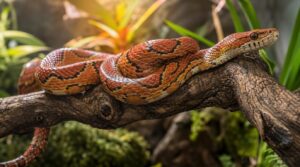
Corn snakes are one of the longer-lived colubrids you can keep, and knowing what to expect from the start helps you plan for a real commitment. A well-cared-for corn snake can share your home for 15 to 20 years, sometimes longer.
Getting their environment right from day one makes a huge difference, so brushing up on corn snake habitat essentials is well worth your time.
Here’s what shapes that lifespan and what an impressive one actually looks like in practice.
Average Captive Corn Snake Lifespan
Most captive corn snakes live 10 to 15 years under average home care, but consistent good husbandry pushes that number higher. Captive lifespan statistics show some individuals reaching 23 years, and Record Age Documentation confirms at least one corn snake lived 32 years and 3 months.
Longevity research findings, including early telomere studies, suggest genetics play a measurable role alongside meeting your snake’s environmental requirements.
Ensuring optimal temperature and humidity is key for longevity.
Wild Versus Captive Lifespan Differences
Wild corn snakes rarely survive past 6–8 years. Predation Pressure, Disease Exposure, and Environmental Variability cut lives short before genetics even get a chance to shine.
Your captive snake sidesteps most of that — Nutritional Consistency stays steady, Stress Levels drop, and health monitoring catches problems early. Comparing wild and captive corn snake lifespans makes one thing clear: controlled environments are a genuine lifesaver.
Captive corn snakes live longer because controlled environments eliminate the predation, disease, and stress that cut wild lives short
What Counts as Exceptional Longevity
So where does notable actually begin? Most keepers agree that 20+ years mark the threshold — anything beyond the typical 15–20 year captive range earns that label.
Documented cases reaching up to 25 years exist, but they’re rare and credible only when hatch-year records support the claim. Genetic impact on snake lifespan, particularly telomere maintenance, plays a real role here.
Four hallmarks of genuine notable longevity:
- Verified documentation standards — known hatch year, not guesswork
- Body condition consistency across many years, not just late-life weight checks
- Minimal health setbacks — no recurring infections or parasite cycles
- Longevity case profiles showing stable husbandry from hatchling onward
Why Proper Husbandry Extends Lifespan
Those unusual cases don’t happen by accident.
Meeting the environmental requirements for captive corn snakes — stable temperatures, consistent photoperiod, quality water sources, and ideal nutrition for corn snakes — directly reduces stress hormone management burdens on the body. Genetic longevity markers matter, but they only express fully when enclosure maintenance and hygiene, microbial load control, veterinary care and preventive health, and stress management and handling practices work together consistently.
Key Longevity Factors
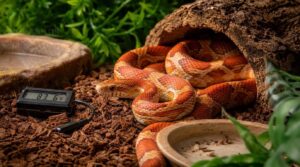
long, healthy life for your corn snake doesn’t happen by chance — it comes down to a handful of factors you can actually control. Some are about the environment you create, others about the care you give day-to-day, and a few come down to biology.
Here’s what matters most.
Stable Enclosure Conditions
Think of your corn snake’s enclosure as a life-support system — every variable working in concert. Thermostat Calibration keeps temperatures honest, while Airflow Uniformity prevents stagnant humidity pockets. Substrate Consistency holds moisture levels steady, and Lighting Timer Reliability anchors your snake’s circadian rhythm. Don’t overlook Noise Level Management either — chronic vibrations cause chronic stress.
- Maintain a 75–85 °F temperature range on the warm side
- Keep humidity levels between 30–50% daily
- Use dry, stable substrate to prevent soggy microclimates
- Guarantee balanced ventilation without harsh drafts
- Schedule regular enclosure cleaning to prevent bacterial buildup
Appropriate Feeding and Body Condition
corn snake eats — and how often — shapes its health more than almost anything else. Aim for a body condition score where ribs are felt but not sharply defined.
Match prey size to your snake’s mid-body width, apply calcium supplementation every meal, and practice consistent prey thawing technique. Use feeding frequency adjustment and rib definition monitoring to catch seasonal metabolism shifts before obesity prevention becomes urgent.
Low-stress Daily Care
Stress quietly shortens lives — and that’s easy to overlook.
Quiet Room Placement keeps your snake away from foot traffic and sudden noise, while Consistent Routine Timing means lighting and checks happen predictably.
Minimal Enclosure Disturbance preserves familiarity; snakes settle faster in unchanged spaces.
Gentle Observation Practices and a Low-Noise Environment support stress prevention and lifespan extension more reliably than any single handling technique or environmental enrichment upgrade.
Genetics and Inherited Health
Your snake’s lifespan isn’t entirely in your hands — genetics plays a quiet but real role. Genetic markers linked to telomere maintenance directly influence cellular aging, and hereditary disease markers can shape health outcomes across generations through variable expressivity.
Morph-specific longevity matters too; Blood Red morphs, for instance, tend to outlive standard morphs.
Understanding morph-associated health risks and the genetic impact on snake lifespan helps you make smarter choices from the start.
Preventive Veterinary Care
Annual wellness exams do more than catch problems — they build a health baseline your vet can actually use.
Regular checkups cover skin, eyes, oral health, and breath sounds, while parasite screening catches hidden infestations before they drain your snake’s condition.
Diagnostic bloodwork flags early organ stress in older animals.
Record keeping and timely follow-up visits keep disease prevention ahead of any crisis.
Ideal Corn Snake Enclosure
Getting the enclosure right is one of the most direct things you can do to support a long, healthy life for your corn snake. Every choice—from tank size to hide placement—affects how comfortable and secure your snake feels day-to-day.
Here’s what a well-built setup actually looks like across each stage of your snake’s life.
Minimum Enclosure Size by Life Stage

Your corn snake’s enclosure isn’t one-size-fits-all — it needs to grow alongside them. Matching enclosure size requirements to each life stage keeps temperatures stable and reduces stress substantially.
- Hatchling footprint size: A small, snug tub with easy access to hides, water, and heat
- Juvenile floor space: A mid-sized enclosure allowing full-body coiling between warm and cool hides
- Adult enclosure dimensions: Minimum 36 inches long, supporting active exploration across a clear thermal gradient
- Senior accessibility layout: Same gradient, but simplified — fewer obstacles, closer hide placement for reduced travel
- Growth-stage space needs: Upgrade when your hatchling, juvenile, subadult, or adult repeatedly presses against enclosure edges
Secure, Escape-proof Housing
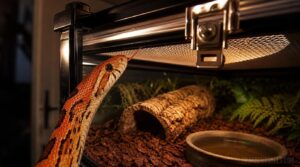
Once you’ve matched enclosure size to your snake’s life stage, the next priority is keeping them inside it. Corn snakes are surprisingly determined escape artists — a gap barely wider than their head is an open invitation.
| Security Feature | What to Look For | Why It Matters |
|---|---|---|
| Locking Lid Design | Latches positioned beyond reach | Prevents manipulation from inside |
| Vent Panel Gaps | Mesh secured with internal fasteners | No exploitable openings |
| Interlocking Seals | Overlapping edges with heat-resistant rubber | Eliminates channel gaps over time |
A secure enclosure also means solid Base Escape Barriers beneath cable entry points, Transport Container Locks during any handling transfers, and an escapeproof enclosure with no loose removable panels. Your adequately sized enclosure setup only works if your snake stays in it.
Warm and Cool Side Setup

With your enclosure locked down tight, it’s time to think about what happens inside it. A proper temperature gradient isn’t just about comfort — it’s how your corn snake regulates digestion, immune function, and energy levels.
- Place your Heat Source Placement on the warm side only, never centered
- Target 75–85 °F for the warm side, 70–75 °F on the cool side
- Gradient Length Design requires enough enclosure space that both zones stay distinct
- Substrate Thermal Conductivity matters — dense substrates hold heat longer near the warm end
- Cool Side Ventilation keeps the unheated end stable without creating cold drafts
Side-specific Lighting provides a natural photoperiod without disrupting thermal gradient stability. Your enclosure setup only works when the warm side and cool side each serve their own clear purpose.
Hides, Water Dish, and Climbing Enrichment

Once your thermal zones are set, the next layer of your enclosure setup is what actually makes the space livable.
Hide placement matters more than most keepers expect — one hide box per temperature zone, opaque, with smooth rounded edges for stress‑free entry.
Your water dish size should allow full soaking.
Branch texture keeps climbing enrichment safe.
| Element | Key Requirement |
|---|---|
| Hide shape | Opaque, snug, smooth-edged |
| Water cleanliness | Refresh after every shed |
| Hide placement | One warm side, one cool side |
| Branch texture | Stable grip, splinter‑free |
Space Upgrades as The Snake Grows
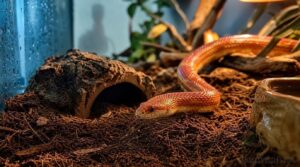
As your corn snake moves through its growth stages, the enclosure has to keep pace. Three upgrades matter most:
- Heat Zone Expansion — recheck warm-side temperatures after moving to a larger footprint
- Substrate Depth Increase — more bedding stabilizes humidity control across a wider floor
- Barrier Fit Adjustment — seal Ventilation Gap Management points and make sure Clutter Path Clearance, so the temperature gradient stays predictable and habitat enrichment remains accessible.
Temperature and Heating Guidelines
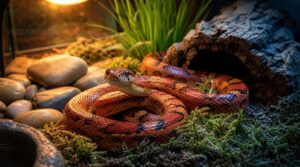
Getting the temperature right isn’t just a nice-to-have — it’s one of the most direct ways you influence your corn snake’s health and lifespan. Too warm or too cool — everything from digestion to immune function starts to slip.
Here’s what you need to know about setting up a proper thermal environment.
Proper Warm-side Temperature Range
Your warm side should hover between 80 and 85°F for daytime air temperature, with the basking spot gradient pushing slightly higher—around 88 to 90°F at the surface. That surface-air difference matters because corn snakes regulate body temperature by moving between zones.
Warm side monitoring with a thermostat and thermometer prevents temperature spikes above the low 90s, keeping the thermal gradient within safe environmental requirements for captive corn snakes.
Proper Cool-side Temperature Range
While the warm side gets most of the attention, your cool side does equal work—it’s where your snake retreats to digest and rest without overheating.
Aim for 70 to 75°F using smart thermostat tuning, proper insulation methods, and thoughtful ventilation design.
That heat gradient balance keeps cooling zone consistency steady, supporting reliable temperature regulation without humidity levels creeping out of range.
Safe Nighttime Temperature Drops
At night, a 2–5°F drop facilitates natural thermal regulation without stressing your snake. Good insulation techniques and heat retention design, slow cooling pace management, preventing rapid temperature swings.
Apply a zone selection strategy by keeping both hides accessible, and use draft prevention measures around vents and cable openings. Seasonal temperature and humidity management protects your temperature gradient year-round.
Thermostats, Probes, and Thermometer Placement
Your thermostat is only as reliable as where you place its probe. For heat mat setups, rest the probe on top of the substrate directly over the mat — that’s your Heat Mat Reading.
On the cool side, keep it on the substrate surface. Avoid Glass Contact, and follow a Vent Placement Strategy to maintain consistent temperature gradient readings throughout your enclosure.
Dangers of Overheating and Chilling
Both extremes hurt your snake more than you might expect. Overheating past 90 °F triggers Thermal Stress Symptoms — lethargy, reduced appetite, and even Heat Burn Injuries if your snake contacts the heat lamp directly. Heat Source Malfunction can push temperatures dangerously high before you notice.
Cold Immunosuppression from chilling slows digestion and invites illness, while Rapid Temp Swings compound both risks, disrupting thermoregulation entirely.
Humidity and Shedding Support
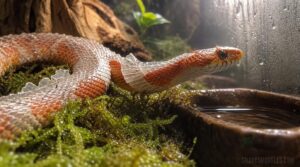
Humidity might not be the first thing you think about when setting up a corn snake enclosure, but it plays a bigger role in your snake’s health than most people realize.
Getting it right means fewer shedding problems, better hydration, and less stress on your animal overall.
Here’s what you need to know to manage moisture effectively.
Ideal Humidity for Corn Snakes
Corn snakes thrive in a humidity range of 40–60%, though some keepers push closer to 65–75% for added comfort. Hygrometer placement matters — position it mid‑tank for a reliable average reading.
Water dish evaporation naturally raises moisture levels, while substrate moisture retention varies by material. Temperature and humidity control in enclosures are closely linked, so adjusting one often shifts the other.
When to Use a Humid Hide
Once humidity levels are well‑managed day‑to‑day, the humid hide becomes your targeted tool for shedding support. Watch for pre‑shed behavior — dull skin cue, milky eyes, reduced feeding response, and increased hide usage.
That’s when you raise hide moisture to around 70%, keeping the substrate damp but never dripping. Proper humidity and temperature management here make shedding frequency and humidity requirements far easier to meet consistently.
Signs of Dehydration or Stuck Shed
Even with a humid hide ready, dehydration can still sneak up on your snake. Watch for these four signs:
- Dry Skin Texture — skin looks dull or slightly wrinkled
- Cloudy Eye Caps — eyes appear opaque or "dirty"
- Pinched Tail Bands — constricted rings of retained shed
- Patchy Scale Flakes — islands of old skin clinging to scales
Lethargic Feeding Refusal often follows, signaling your humidity and temperature control needs immediate attention.
Ventilation and Moisture Balance
Think of ventilation as the invisible hand managing your enclosure’s moisture.
Strategic Vent Placement Strategy—low intake, high exhaust—creates an Airflow Path Design that pulls humid air upward and out, directly supporting temperature and humidity control.
Screen tops prevent moisture buildup, while Substrate Moisture Management keeps bedding evenly damp rather than wet-patchy, supporting Mold Inhibition Techniques and Condensation Prevention across all environmental requirements for captive corn snakes.
| Ventilation Factor | Effect on Humidity |
|---|---|
| Screen tops | Reduces moisture accumulation |
| Low-intake vents | Encourages upward airflow |
| Damp substrate patches | Creates localized humidity spikes |
Seasonal Humidity Adjustments
Seasons shift your enclosure’s baseline more than you might expect. Gradual Humidity Shifts matter more than big corrections.
In winter, dry indoor heating pulls humidity levels down quickly, so a Winter Humidity Boost through careful Seasonal Misting Schedule adjustments keeps conditions stable.
Summer Humidity Reduction prevents soggy substrate during warmer months. Track readings with proper Humidity Sensor Placement, supporting consistent humidity and shedding management year‑round.
Feeding for Lifelong Health
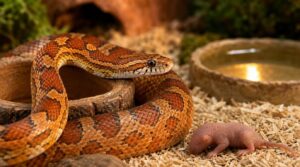
What your corn snake eats — and how often — shapes its health more than almost any other factor in its care.
Getting the details right means thinking about prey size, preparation method, and feeding frequency at every stage of your snake’s life. Here’s what you need to know across each of those areas.
Correct Prey Size Selection
Getting prey size right is the single most impactful feeding decision you’ll make. Prey Width Matching means selecting a rodent whose width closely matches your snake’s midbody girth — not its head size alone. Correct prey size selection facilitates a smooth Head First Swallow and keeps your snake within a safe Feeding Size Window.
- Use Growth Adjusted Prey as your snake gains mass, not just age
- Watch for Regurgitation Signs — they almost always mean the prey was too large
- A slightly rounded belly after feeding is normal; a lumpy, extended bulge isn’t
- Consistent diet quality and rodent prey size directly shape long-term nutrition
Frozen-thawed Versus Live Prey
Frozen-thawed prey is the safer, smarter default for most corn snake keepers. It eliminates prey safety risks from live rodents, preserves nutrient stability when stored correctly, and gives you schedule flexibility without maintaining live feeders.
| Factor | Frozen-Thawed Prey |
|---|---|
| Prey Safety | No bite or scratch risk |
| Bacterial Growth | Controlled with proper thawing |
| Nutrient Stability | Strong if stored under 6 months |
| Cost Efficiency | Bulk buying saves money |
| Schedule Flexibility | Store and feed on your terms |
Hatchling and Juvenile Feeding Schedules
Hatchling meal timing starts at once every 5–7 days — small, appropriately sized prey that matches the snake’s midbody width. As your juvenile grows, feeding intervals shift toward every 7–10 days, guided by body condition rather than the calendar.
Pause feeding during shedding, then resume once the shed completes. Prey size progression should always follow growth-driven portioning, scaling up gradually to support healthy juvenile development and nutrition.
Adult and Senior Feeding Schedules
Adult corn snakes thrive on a feeding schedule of every 10–14 days, with Frequency Adjustments guided by Weight Trend Tracking rather than a fixed calendar.
As metabolism slows in senior snakes, Metabolic Rate Considerations shift nutrition needs — smaller prey, longer gaps. Always allow 24–48 hours of Post-Feeding Rest. Watch for Seasonal Diet Shifts that signal emerging health changes.
Preventing Obesity and Underfeeding
Both overfeeding and underfeeding chip away at your snake’s long-term health, so Caloric Portion Control matters as much as the schedule.
Use body condition scoring monthly — a healthy spine shouldn’t feel sharp or disappear into rolls.
Feeding Frequency Adjustment, Seasonal Appetite Monitoring, and a Stress-Free Feeding Environment work together to keep your snake’s proper diet balanced without guesswork nudging it toward obesity or chronic deficiency.
Growth Stages and Age Clues
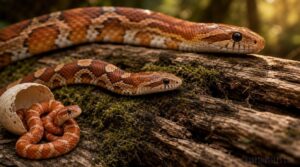
Knowing where your corn snake falls in its life cycle changes how you care for it at every stage. Size, weight, and behavior all shift in predictable ways from hatchling to senior, and recognizing those shifts helps you respond before small problems become bigger ones.
Here’s what to expect at each stage.
Hatchling Size and Growth Expectations
When a corn snake hatches, it’s a small but perfectly formed survivor. The initial length range generally falls between 20 and 35 cm, with most hatchlings weighing just 8–12 g.
Weight gain tracking matters more than length here—a consistent growth chart reveals whether your feeding schedule and temperatures are working. Incubation influence and genetic growth variation mean no two hatchlings grow identically, even from the same clutch.
- Temperature metabolism effect: cooler setups slow digestion and stall progress
- Hatchling 0–6 months: expect rapid size gains with correct feeding frequency
- Prey too large disrupts the growth rate and discourages feeding
- Individual genetics quietly shape how fast each snake fills out
Juvenile Growth Milestones
juvenile window—roughly 6 months to 2 years—is where growth curve tracking becomes genuinely useful.
Molt frequency climbs as length and weight gain accelerate, so keeping a growth chart helps you fine-tune feeding frequency and prey size progression.
Body condition scoring prevents both underfeeding and overfeeding, keeping juvenile development and nutrition on track through weight monitoring.
Adult Size and Weight Ranges
Once juveniles hit their stride, adult corn snakes generally settle between 3.5 and 5 feet, weighing 250 to 600 grams. Sexual dimorphism plays a role here—females often are larger than males. Morph weight variation and prey size impacts final build, too.
Your growth chart and body condition scoring matter more than chasing a number; seasonal weight fluctuations and weight monitoring keep adult size expectations realistic.
Senior Corn Snake Changes
Around the 8-year mark, subtle shifts start showing up.
Activity Decline becomes noticeable—your snake rests longer, shows Exploration Reduction between warm and cool sides, and Heat Seeking Changes settle into a more fixed routine.
Shedding Variability increases, with patchy or incomplete sheds appearing more often.
Watch for Red Flag Symptoms like weight loss or persistent lethargy, making Weight Monitoring essential at this stage.
Why Length Alone Cannot Confirm Age
Length tells part of the story, but not all of it. Growth rate variability, sexual dimorphism, and morphological variation mean two snakes at the same length can be years apart in age. Without hatch records, a growth chart only estimates.
- Feeding history shapes adult size
- Temperature drives metabolic pace
- Sex influences juvenile stage benchmarks
- Measurement inconsistencies skew comparisons
- Health influences alter life stage development
Stress Reduction and Handling
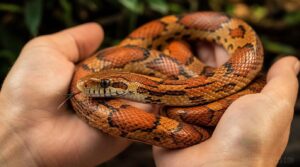
How you handle your corn snake matters more than most keepers realize — stress is a quiet but steady threat to a long, healthy life. Everything from the way you pick them up to how often you do it plays a role in their overall well-being.
Here’s what you need to know to keep handling safe and stress-free.
Safe Handling Techniques
Good handling starts with gentle full-body support — slide one hand under the mid-body grip point and let the snake drape naturally across both palms. Avoid head grasp at all costs; guiding the body, not forcing the head, keeps defensive reactions minimal.
Practice low surface transfers to limit fall risk, and always finish with thorough hand hygiene practices to prevent contamination.
How Often to Handle Corn Snakes
How often should you actually be picking up your corn snake? Adults do well with 1–2 sessions per week, while younger snakes benefit from 2–3 sessions to build comfort.
Your handling schedule should always account for shed cycle timing and a 48-hour post-feeding wait. Adjust handling frequency across life stages, dialing back for seniors, and keep each session to 5–10 minutes for steady stress reduction.
Signs of Stress in Corn Snakes
Your corn snake can’t tell you when something’s wrong, but its body will. Watch for a defensive posture, hissing, or striking during handling, since these signal rising stress levels. Excessive hiding, abnormal shedding, loss of appetite, and musking episodes are equally telling.
Environmental consistency is your first stress reduction technique—when conditions stay stable, these warning signs rarely appear.
When to Avoid Handling
Knowing when not to handle is just as important as knowing how. Five situations call for a clear pause:
- Post-meal handling — wait at least 48 hours after feeding to avoid regurgitation.
- Shed cycle — dulling skin and cloudy eyes mean hands-off time.
- Sick snake — stress worsens illness and spreads pathogens.
- Heat stress — unstable temperatures trigger defensive strikes.
- Wound care — fresh injuries need rest, not contact.
Creating a Calm Care Routine
Think of your care routine as a contract your snake silently signs onto — predictable handling times, quiet observation routine, low disruption feeding, and calm nighttime checks all tell it that the world is safe.
Keep scent consistency by using the same tools and hands each session.
Pair that with stable temperatures and a clean enclosure, and your stress reduction techniques practically run themselves.
Cleaning and Disease Prevention
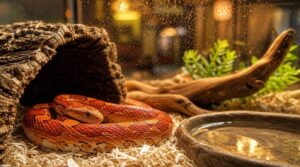
A clean enclosure is one of the most direct ways to protect your corn snake’s health over the long term. Waste, bacteria, and parasites build up faster than you might expect, and a consistent cleaning routine keeps those threats from taking hold.
Here’s what that routine should look like.
Daily Spot-cleaning Tasks
Daily spot-cleaning is your first line of defense against bacterial buildup. Each day, scan for waste — especially under hides, where corn snakes commonly defecate — and remove soiled substrate immediately using a dedicated scoop.
Check the water dish for debris or cloudiness, replacing it as needed.
Wipe high-contact glass surfaces with a damp cloth, avoiding fragranced cleaners that stress your snake. Always wash your hands after.
Substrate Replacement Schedule
Spot-cleaning addresses daily messes, but substrate hygiene runs deeper than that.
For loose bedding, plan a full swap every two to four months — sooner if waste saturation triggers persistent odors or visible grime. Moisture timing matters too: wetter setups degrade faster, raising mold prevention intervals to urgent. A complete enclosure cleaning schedule with full swap timing prevents the buildup that no daily scoop can fix.
Disinfecting Hides, Décor, and Water Bowls
Beyond swapping substrate, your hides, décor, and water bowl need their own hygiene protocol. Use a reptile‑safe disinfectant and follow proper hygiene practices for material cleaning:
- Soak items for 10–15 minutes to guarantee full contact time.
- Rinse residue thoroughly — multiple passes for bowls rinsed after bleach.
- Complete drying procedures before returning anything to the enclosure.
Pet‑safe products matter here — always check the label.
Parasite Prevention and Monitoring
Keeping your enclosure clean lays the groundwork, but parasite prevention and monitoring require an extra layer of diligence. Quarantine protocols for new snakes, fecal testing at annual checkups, targeted treatment only when confirmed, bedding management, and vector control — blocking insects and rodents from the enclosure area — together form a reliable defense.
Parasite load management isn’t complicated; it just takes consistency.
Reducing Respiratory Infection Risks
Respiratory infections usually trace back to fixable conditions — poor ventilation, unstable humidity levels, or a temperature range that drifts too low.
Quarantine protocols for new arrivals, dust-free substrates, and careful airflow management reduce that risk considerably.
Consistent hand hygiene and tool disinfection between enclosures stop pathogens from spreading mechanically.
Get those environmental basics right, and respiratory infections rarely get a foothold.
Veterinary Care and Health Monitoring
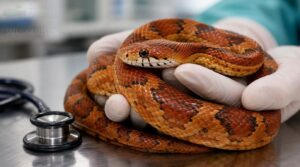
Even the best enclosure setup won’t protect your corn snake if health problems go unnoticed until they’ve progressed. regular vet care and consistent monitoring are what turn good husbandry into genuinely long-term care.
Here’s what you should be watching for and doing throughout your snake’s life.
Annual Reptile Vet Exams
Think of your corn snake’s annual health checkups as its yearly report card — you’ll catch problems long before they become serious.
A reptile veterinary visit covers more than a quick look-over:
- Blood Panel Review assesses organ function and red and white blood cell counts
- Fecal Parasite Screening detects hidden internal parasites through microscopic examination
- X-ray Imaging reveals masses, fluid, or skeletal abnormalities
Sedation Protocols may apply for temperamental individuals, and consistent Health Record Keeping across visits facilitates long-term reptile wellness monitoring.
Tracking Weight and Body Condition
Weighing your corn snake every four weeks — always on the same scale, before feeding — turns scattered numbers into a real trend you can act on. Log weight in grams alongside girth measurement at midbody and your feeding correlation notes.
Body condition scoring guidelines for reptiles help you feel for spine prominence and fat distribution. catches obesity in snakes and slow declines that single readings miss entirely.
Early Signs of Illness
Your corn snake can’t tell you something feels off, so learning to read the early signals is everything.
Watch for Appetite Loss across multiple feedings, Breathing Changes, like wheezing or open-mouth gaping, Skin Abnormalities, including dull coloring or troubled shedding, Lethargy Indicators, beyond normal rest, and Waste Irregularities such as watery stool or straining — all red flags that stress, respiratory infections, or impaction may be developing.
Age-related Health Changes
As your corn snake crosses the 8-year mark, subtle shifts start signaling a quieter phase of life.
Immune Decline means infections take hold faster and recovery slows. Metabolic Slowing changes how efficiently food converts to energy. Behavioral Shifts — reduced activity, patchier sheds from lower Skin Hydration, and narrowing Organ Reserve — all deserve closer attention:
- Adjust feeding intervals gradually to avoid weight gain
- Monitor shed quality and boost humidity during cycles
- Schedule more frequent vet checks to catch decline early
When to Seek Urgent Veterinary Care
Some situations simply can’t wait for your next scheduled appointment. Sudden breathing distress — open-mouth gasping, wheezing, or labored breathing at rest — means go now.
The same applies to collapse seizures, severe bleeding that won’t stop, urinary obstruction, or toxin ingestion.
Conditions like respiratory infections, impaction, metabolic bone disease, and parasites can escalate quickly in senior snakes, so when something feels wrong, trust that instinct and call your vet.
Frequently Asked Questions (FAQs)
How long do albino corn snakes live?
Albino corn snakes can live what feels like a small lifetime — generally 15 to 20 years in captivity, with some reaching This morph carries no genetic drawbacks that shorten lifespan expectations.
How long do corn snakes live?
In captivity, corn snakes normally live 15–20 years, with well-cared-for individuals sometimes reaching 25 years or beyond. Wild snakes average just 6–8 years, largely due to predation pressure and harsher conditions.
How old is a corn snake?
Think of a corn snake’s age like rings in a tree — layered, readable, and shaped by its environment. Most live 15–20 years in captivity, with some reaching their late 20s.
Can corn snakes survive in captivity?
Yes, corn snakes thrive in captivity. With owner commitment and proper environmental requirements met, they routinely outlive their wild counterparts, often reaching 15–20 years or more under consistent, attentive care.
Can snakes hear you coming?
Sort of — but not the way you’d expect. Your corn snake senses your approach through jaw-transmitted vibrations in the ground, picking up low-frequency movement before you’re even visible.
How long can a corn snake be out of its enclosure?
Keep handling sessions to 15–20 minutes. Temperature drop impact and dehydration signs rise quickly outside the enclosure. Always wait 48 hours after feeding to avoid digestion stress and regurgitation risk.
Do corn snakes need companions or thrive solo?
Corn snakes are naturally solitary. Social isolation isn’t neglect — it’s what they need.
Companion risk is real: territory disputes, parasite transmission, and captivity stress all rise sharply when two snakes share one enclosure.
How does brumation impact corn snake longevity?
Brumation acts like a reset switch — slowing metabolism, shutting down digestion, and dimming immune response. Managed well, it promotes longevity. Mishandled, it shortens it.
Conclusion
An ounce of prevention is worth a pound of cure—and nowhere does that ring truer than in proper husbandry corn snake longevity.
Every temperature gradient you dial in, every feeding schedule you maintain, every vet visit you don’t skip quietly compounds into years of healthy life.
Your snake can’t tell you when something’s wrong, so the enclosure, the routine, and your attention become its entire world.
Build that world carefully, and 20 years isn’t a ceiling—it’s a reasonable expectation.