This site is supported by our readers. We may earn a commission, at no cost to you, if you purchase through links.

A corn snake purchased as a hatchling today could still be with you in 2046. That’s not wishful thinking—captive corn snakes routinely live 15–20 years, and the record holder reached 32 years and 3 months. Most new owners don’t realize the commitment they’re making when that small, copper-colored snake coils around their fingers for the first time.
Wild corn snakes rarely see their eighth birthday. Predators, food scarcity, and untreated illness cut those numbers down fast. Captivity changes everything—stable temperatures, consistent feeding, and routine care basically double their natural lifespan.
Knowing what drives that difference puts you in control of the outcome.
Table Of Contents
- Key Takeaways
- How Long Do Corn Snakes Live?
- Wild Versus Captive Lifespan
- Corn Snake Lifespan Compared
- Key Lifespan Factors
- Ideal Enclosure for Longevity
- Temperature and Humidity Needs
- Feeding for a Longer Life
- Health Problems That Shorten Lifespan
- Stress and Handling Effects
- Helping Your Corn Snake Thrive
- Frequently Asked Questions (FAQs)
- How long do corn snakes live in captivity?
- Are corn snakes hybrids?
- Are corn snakes good pets?
- How long do corn snakes live in the UK?
- How long can corn snakes be held?
- How long does a corn snake live as a pet?
- Do corn snakes like to be held?
- Are corn snakes aggressive?
- How many times can you hold a corn snake a day?
- Do corn snakes get lonely and need companions?
- Conclusion
Key Takeaways
- Captive corn snakes live 15–20 years on average — nearly double the 6–8 years that wild individuals reach — because stable temperatures, consistent feeding, and veterinary care remove the threats that kill wild snakes early.
- The single biggest longevity levers you control are enclosure setup (85–90 °F warm side, 70–80 °F cool side, 40–50% humidity) and a feeding schedule matched to a prey size proportional to the snake’s thickest body segment.
- Chronic stress from cohabitation, frequent enclosure changes, or over-handling suppresses immune function just as surely as disease does, making solo housing and calm, predictable routines non-negotiable for long-term health.
- Early detection through weekly weight logs, routine fecal parasite screening, and annual reptile vet exams catches the five most common killers — respiratory infections, mouth rot, fungal infections, mites, and regurgitation — before they become life-shortening problems.
How Long Do Corn Snakes Live?
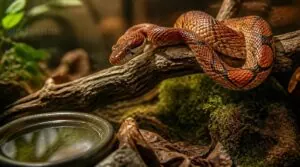
Corn snakes are one of the longer-lived pet reptiles you can own, and knowing what to expect helps you plan for the commitment ahead. In captivity, they average 15–20 years with good care, while wild individuals usually only reach 6–8 years. Here’s a closer look at what the numbers actually show.
If you’re ready to take on that 15–20 year commitment, browsing local corn snake adoption options is a great place to start your search.
Average Captive Lifespan
With the right care, a corn snake can share your life for a surprisingly long time. Captive corn snakes average 15–20 years, and many well-managed individuals push past 20.
That kind of longevity doesn’t happen by accident — stable nutrition, proper housing, and routine health checks all play a direct role in how many years your snake thrives. routine veterinary examinations help detect health issues early, extending lifespan in captivity.
Average Wild Lifespan
Wild corn snakes face a much harder road. The average lifespan in the wild sits at just 6–8 years, cut short by predators, disease, and habitat fragmentation that limits food and shelter.
- Predation pressure peaks during the juvenile stage
- Seasonal prey shortages slow growth and raise mortality
- Untreated parasites drain energy with no intervention available
Captivity changes everything.
Oldest Recorded Corn Snake
Captivity changes everything — and one snake proved just how far.
The oldest recorded corn snake lived 32 years and 3 months, a standard tracked through hobbyist records and owner documentation that herpetologists use to study captive longevity trends.
Genetics play a role, but consistent care matters more.
Most captive individuals reach 15–20 years, with excellent specimens pushing well past 20.
Wild Versus Captive Lifespan

The gap between a wild corn snake’s lifespan and a captive one’s isn’t small — it’s roughly double. A few specific factors explain why wild snakes rarely make it past eight years, and why the same species can thrive for two decades in the right hands. Here’s what makes the difference.
Predator Risks
For a corn snake in the wild, the landscape is full of threats.
- Aerial predators like hawks and owls hunt from above
- Ambush hunters — foxes, raccoons, and bobcats — attack without warning
- Habitat exposure along open edges raises encounter rates
Camouflage helps, but movement gives a snake away instantly. Predator detection cues like shadow or motion can trigger an immediate chase.
Food Scarcity
Hunting depends on finding prey — and that’s where the wild gets much harder.
Drought and climate shocks can crash rodent populations dramatically, stripping the landscape of the mice and voles corn snakes rely on. Pest damage to crops ripples outward, disrupting entire food chains. When prey grows scarce, snakes face prolonged hunger, burning fat reserves and weakening their immunity over time.
| Scarcity Driver | Effect on Prey Supply | Corn Snake Impact |
|---|---|---|
| Drought | Shrinks rodent habitat | Fewer feeding opportunities |
| Pest damage | Disrupts local food chains | Irregular prey availability |
| Climate shocks | Shifts prey population cycles | Extended hunger periods |
Untreated Illness
Illness left untreated doesn’t stay local — it spreads.
Three conditions hit wild snakes hardest:
- Respiratory infections impair breathing and reduce oxygen to tissues
- Mouth rot (infectious stomatitis) and scale rot trigger tissue breakdown
- Fungal skin infections drive chronic inflammation that steadily exhausts immunity
Dehydration follows quickly. Once organ function declines, recovery becomes unlikely — even if treatment eventually arrives.
Stable Captive Care
When you remove the threats wild snakes face — predators, scarce food, untreated illness — captive lifespan nearly triples. That gap isn’t luck; it’s proper husbandry. Consistent feeding, thermal gradient management, clean water, and secure lid safety all close the door on the conditions that kill wild snakes early.
| Care Element | Target Standard | Lifespan Benefit |
|---|---|---|
| Basking temperature | 85–90 °F warm side | Promotes digestion and immune response |
| Cool side temperature | 72–78 °F | Allows natural temperature regulation |
| Humidity control | 40–60% | Prevents dehydration; aids shedding |
| Habitat hygiene workflow | Weekly spot-clean | Limits bacterial and parasite load |
| Enrichment selection | Two hides, stable décor | Lowers chronic stress levels |
Consistent light cycles and enrichment selection strategies round out the foundation — small details that, over 15–20 years, add up to everything.
Corn Snake Lifespan Compared
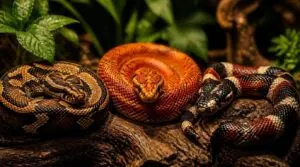
Corn snakes aren’t the longest-lived pet snakes out there, but they hold their own compared to most popular species. How they stack up really depends on whether you’re comparing wild lifespans or captive ones. Here’s a look at three common species and where corn snakes fall in the mix.
Ball Python Lifespan
Ball pythons are marathon runners of the reptile world. In captivity, they usually live 20 to 30 years, with the oldest verified individual reaching an astonishing 62 years. That dwarfs the corn snake’s 15–20 year average.
Habitat enrichment and weight monitoring matter here — obesity causes fatty liver disease, cutting years off their life. Proper metabolic health keeps these snakes thriving long-term.
Tracking feeding responses alongside weight trends helps catch early warning signs — explore common health issues in ball pythons to recognize symptoms before they become serious.
Boa Constrictor Lifespan
Boa constrictors are a step up in scale — and in years. In captivity, they usually live 20 to 30 years, with some well‑kept individuals pushing past 40.
That’s a longer potential run than a corn snake, though the gap isn’t enormous. Managing weight is critical here too, since obesity shortens their life just as it does for corn snakes.
Garter Snake Lifespan
Garter snakes sit at the short end of the spectrum. Wild garter snakes usually live just two to four years, with juveniles facing especially high mortality from predators.
In captivity, that number climbs to six to ten years — occasionally reaching 15 with attentive care.
Compared to a corn snake’s 15–20 captive years, that’s a noticeable gap.
Why Corn Snakes Differ
So what puts corn snakes in the middle of the pack?
Genetic factors play a big role. Corn snakes carry lineage disease resistance built from diverse wild populations with strong regional color adaptation — traits tied to the same pigmentation gene control that drives morph variation. That breed health diversity promotes a steadier growth rate and, ultimately, longer captivity vs wild lifespan outcomes than garter snakes manage.
Key Lifespan Factors
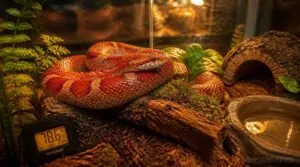
A corn snake’s lifespan doesn’t come down to just one thing — it’s shaped by several factors working together over the years. Some you can’t control, like genetics, but most are squarely in your hands. Here’s what makes the biggest difference.
Genetics and Breeding
Your corn snake’s genetic foundation shapes how long it lives. Healthier bloodlines tend to produce more resilient animals.
Five genetic factors influencing lifespan:
- Inheritance of disease resistance
- Growth rate from selective breeding
- Recessive disorder risk from inbreeding
- Genetic variation supporting immune function
- Epigenetic influences on gene expression
Choose reputable breeders who prioritize genetic health.
Diet Quality
What you feed your corn snake matters as much as genetics. The diet is simple — frozen-thawed mice only — but getting it right takes consistency.
Prey should be slightly wider than the snake’s thickest body segment, which promotes safe digestion and prevents regurgitation.
Rotate in occasional quail or rat meals monthly to round out nutritional balance and avoid deficiencies.
Enclosure Setup
Diet sets the foundation, but where your snake lives shapes its long-term health just as much.
Ideal floor space starts at 4 × 2 ft for adults. Pair that with a thermal gradient — 85–90 °F warm side, 72–78 °F cool — monitored by dual digital probes. Use aspen or coconut coir as safe substrate types, and place hides at both ends for security.
Stress Levels
Chronic stress quietly chips away at your corn snake’s lifespan. When the fight-or-flight response fires too often — from excessive handling, loud environments, or missing hides — cortisol floods the body long-term.
Prolonged cortisol exposure suppresses immune function, disrupts digestion, and can trigger stress-induced obesity. Snakes under chronic stress get sick more easily and recover more slowly. Calm, consistent conditions aren’t optional; they’re lifespan insurance.
Chronic stress quietly suppresses immunity and shortens lives—calm, consistent conditions are lifespan insurance
Veterinary Care
Regular vet visits catch problems before they spiral. A reptile-savvy vet will assess body condition, check for mites, and examine the mouth and respiratory tract during routine wellness exams.
Fecal testing screens for internal parasites. If illness strikes, diagnostic imaging or bloodwork guides treatment — not guesswork. Early intervention keeps minor issues from becoming the thing that cuts your snake’s life short.
Ideal Enclosure for Longevity
Your corn snake’s enclosure isn’t just a home — it’s one of the biggest factors in how long they live. Getting the setup right doesn’t have to be complicated, but a few things genuinely matter. Here’s what to focus on.
Proper Tank Size
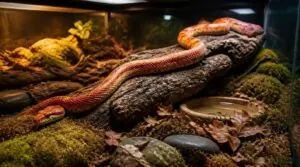
Tank size matters more than you’d think. A 40-gallon vivarium gives your corn snake room to stretch and thermoregulate — the backbone of proper husbandry.
Three snake enclosure size guidelines:
- Minimum girth requirements — width must exceed the snake’s widest point.
- Linear space benefits — 4 × 2 feet accommodates movement and microclimate creation.
- Enclosure growth transitions — start at 20 gallons, upgrade when needed.
Secure Locking Lid
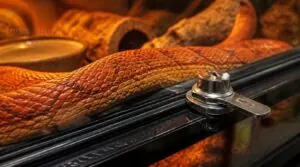
Corn snakes are escape artists — full stop. A secure locking lid isn’t optional; it’s what stands between your snake and a behind-the-fridge adventure.
Look for enclosures with cam lock mechanisms, which rotate into place and hold firm without rattling loose over time. Gaskets wear out, so check them periodically and replace when compressed flat.
Warm and Cool Hides
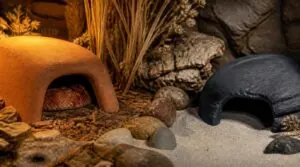
Two hides are non-negotiable: one on the warm side, one on the cool side. This setup lets your snake self‑regulate body temperature without exposure.
Each hide should fit snugly — your snake wants to feel walls, not wander. Use opaque, non‑porous materials so the interior stays dark and easy to clean.
Place them roughly 6–12 inches from heat sources.
Safe Substrate Choices
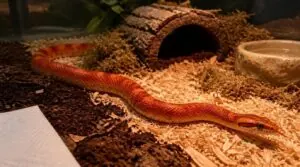
What you put on the floor of the enclosure matters more than most beginners expect. Your four main options are aspen shavings, coconut coir, cypress mulch, and paper towels — each with real trade-offs.
Paper towels work well for hatchlings or sick snakes; they’re easy to swap and let you inspect waste clearly. Avoid cedar or pine entirely — their aromatic oils stress reptiles fast.
Room to Stretch
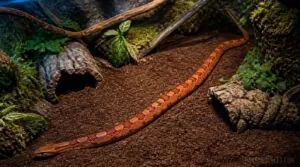
Space is just as important as substrate. Adult corn snakes commonly reach 5 feet, so your enclosure needs at least 48 inches of horizontal length — enough to let the snake stretch fully without pressing against both walls.
A 4 × 2-foot footprint covers that minimum.
Stable climbing branches and clear floor corridors give your snake natural movement routes throughout the day.
Temperature and Humidity Needs

Getting the temperature and humidity right inside your corn snake’s enclosure is one of the most direct ways to protect its long-term health. Even small, consistent imbalances can quietly stress your snake over months or years. Here’s what you need to get right:
Basking Temperature Range
Getting the basking zone right is one of the most direct things you can do for your snake’s health.
The basking air temperature should sit between 85–90 °F (30–32 °C). Three things to monitor daily:
- Surface temperature using an infrared thermometer
- Air temp at basking height
- Wattage output after seasonal shifts
A stable thermal gradient lets your corn snake thermoregulate on its own terms.
Cool Side Range
Once basking is dialed in, the cool side completes the thermal gradient. Keep it between 70–80°F, giving your snake a microhabitat for thermoregulation and a quiet shedding refuge. A thermostat and substrate heat transfer shape stable temperatures here, so daily cool zone monitoring keeps enclosure conditions steady.
| Aspect | Detail |
|---|---|
| Range | 70–80°F |
| Tool | Thermostat |
| Substrate | Aspen/coir |
| Hide | Cool zone |
| Check | Daily |
Ideal Humidity Range
Temperature isn’t the whole story — humidity matters just as much. Aim for 40–50% relative humidity, checked daily with a digital hygrometer at snake level. Go below 30% and desiccation risk climbs; push past 60% and mold or fungal issues can creep in.
- Moisture-retentive substrate (coconut coir) buffers swings
- Humid hide creates a moisture gradient
- Daily hygrometer checks catch drift early
Shedding Support
Shedding goes smoother when conditions already align. Set up a humidity hide — a plastic container with a hole cut in it, packed with damp sphagnum moss — on the warm side.
During the blue phase, limit handling entirely. A large, stable water dish lets your snake soak naturally.
Add cork bark for rough texture access to help the shed peel cleanly.
Optional Low UVB
Since corn snakes are nocturnal, you might wonder if UVB lighting even matters. It’s optional, but low-output UVB helps vitamin D3 synthesis, which aids calcium absorption and bone health.
Place the lamp above the basking spot, use a meter for UVB safety monitoring, and avoid overexposure. Paired with a solid temperature gradient, it’s a small addition that rounds out good reptile husbandry and long‑term snake longevity.
Feeding for a Longer Life
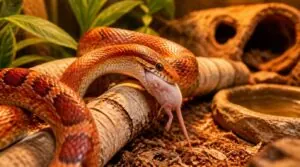
Feeding your corn snake right matters just as much as keeping its tank warm. The size of each meal, the type of food, and how often it eats all shape how long it sticks around. Here’s what you need to know to get feeding right, from hatchling days to adulthood.
Frozen-thawed Rodents
Live prey is risky—frozen-thawed mice and rats remove that danger entirely while still delivering the dietary protein your snake needs.
Store rodent prey species in sealed, airtight bags to prevent freezer burn and dried-out patches. Thaw in warm water, never the microwave, until flesh feels pliable and fur looks fresh. Never refreeze leftovers. Check for off odors before feeding—quality control matters as much as the feeding schedule itself.
Correct Prey Size
Prey that’s too large causes regurgitation — a serious digestion strain that repeatedly stresses your snake. Match prey diameter to your snake’s thickest body segment, staying within one to two body widths.
Follow these stepwise size increases:
- Hatchlings: pinky mice
- Juveniles: fuzzies to hoppers
- Adults: small mice or small rats
Adjust every one to two months as your snake steadily grows.
Hatchling Feeding Schedule
A hungry hatchling is a busy hatchling. Offer pinkies every five to seven days, presented on tongs to trigger a strike response.
A rounded belly within 48 hours confirms good digestion. Short fasting gaps are normal — just recheck warm‑side temps if your snake skips past two weeks without eating.
Adult Feeding Schedule
Once your corn snake matures, feeding frequency settles into every 7–14 days, giving its gut time to fully digest each meal.
Choose rodent size matching its thickest girth—never force a too-large meal.
Use a kitchen scale monthly to track weight, then adjust:
- Gaining weight — stretch the interval
- Losing weight — feed slightly sooner
- Stable weight — stay the course
- Cold months — slow things down
Preventing Obesity
Overfeeding is one of the quietest threats to a corn snake’s long-term health. Regular weight monitoring catches creeping weight gain before it becomes a problem. If your snake feels noticeably thicker or sluggish, stretch the feeding interval slightly.
Prey size matters too — keep it proportional to the snake’s mid-body width, and resist upsizing just because it seems hungry.
Health Problems That Shorten Lifespan
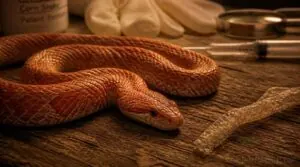
Even with great care, corn snakes can still run into health issues that quietly chip away at their lifespan. Catching problems early makes all the difference between a minor setback and a serious threat. Here are the five most common conditions to watch for.
Respiratory Infections
When your corn snake breathes with effort instead of quietly, that’s a warning sign. Look for:
- Open-mouth breathing
- Wheezing or bubbling sounds
- Mucus around the mouth or nares
- Persistent tail bobbing
- Reduced activity and appetite
Cold spots and poor airflow make infections more likely. Seek veterinary care early — delays allow mild upper respiratory signs to progress into serious lung involvement.
Mouth Rot
A snake that won’t eat may be fighting more than appetite loss. Mouth rot, also called necrotizing stomatitis, is a bacterial infection causing oral lesions, pus, and tissue erosion inside the mouth.
Watch for swelling, drooling, or refused meals — early feeding impairment signs.
Left untreated, it becomes life‑threatening. Quick veterinary care and proper husbandry stop it before damage spreads.
Fungal Skin Infections
Damp substrate and poor ventilation invite fungal infection, often spread through contact with contaminated bedding.
Watch for discolored, scaly patches rather than blisters — a classic superficial sign.
Though rarely fatal, fungal skin infections linger without dry husbandry.
Keeping humidity controlled and substrate fresh prevents this moisture-loving illness from taking hold in captivity.
Parasites and Mites
Mites slip in through shared hides or direct contact, then burrow into skin layers, causing irritation and crusting. Regular observation catches these ectoparasites before numbers grow.
- Check scales weekly for specks.
- Quarantine new snakes first.
- Clean bedding regularly.
Stress reduction and quarantine protocols block reinfestation, protecting captivity health against this common health issue.
Regurgitation Concerns
When food comes back up, it’s rarely just a one-off accident. Post-feeding handling stress is a leading trigger — even brief disturbance disrupts esophageal motility, preventing normal forward movement.
Each event strips nutrients before absorption occurs. Repeated losses drive visible weight decline fast.
Watch for feeding refusal signs afterward. Mucus, labored breathing, or recurring episodes signal a reptile vet visit, not another meal.
Stress and Handling Effects
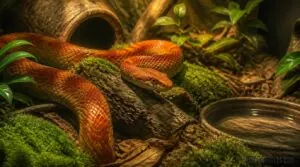
Chronic stress is one of the quieter threats to a corn snake’s lifespan — easy to overlook, but real in its effects. How you house and handle your snake shapes its stress levels more than most owners realize. A few straightforward habits make a significant difference, starting with these.
Solo Housing
Corn snakes are naturally solitary animals. Housing two together causes chronic stress that quietly chips away at lifespan. Keep yours alone — always. Three reasons this matters:
- Competition for hides triggers anxiety
- Feeding aggression risks serious injury
- Disease spreads instantly between cohabitants
A single, well-equipped enclosure — with compact multi-functional zones for basking, hiding, and exploring — gives your snake everything it needs.
Gentle Handling
Slow, deliberate movements make all the difference. Approach from the side, not above — overhead movement mimics a predator and triggers a defensive stress response. Scoop with an open hand, supporting the body fully, and let the snake explore rather than grip tight.
Keep sessions to 5–10 minutes, watch for tense posturing, and handle consistently. Predictability builds tolerance over time.
Escape Prevention
Ever opened an empty tank and felt your stomach drop? Corn snakes are natural escape artists, squeezing through tiny gaps. Combat this with:
- Latch security mechanisms requiring two-step locks
- Perimeter barrier tech sealing gaps
- Smart enclosure alerts flagging open doors
- Daily latch checks
Pair enclosure size with secure hiding places, surveillance monitoring systems, and staff protocol drills for escape prevention.
Hide Availability
A snake without a hide is a snake on edge.
Dual hide placement—one warm, one cool—lets your corn snake choose its space and find thermal refugia when temperatures shift.
Correct hide sizing matters too: snug enough to feel secure, roomy enough to coil.
This simple step eases stress in captive snakes and builds confidence.
Reduced Enclosure Changes
Once hides are set, leave them be. Constant rearranging disrupts microhabitats your snake depends on for security and warmth.
Limiting changes to once every two to four months keeps environmental cues stable, supporting feeding and shedding cycles. This steady setup prevents humidity swings, reduces environmental stress, and helps real longevity over time.
Helping Your Corn Snake Thrive

Long-term care comes down to a handful of habits you can build into your routine. None of them take much time, but each one adds up over the years. Here’s what helps your corn snake live its healthiest, longest life.
Routine Weight Checks
Pick up a digital scale and weigh your corn snake weekly, logging results for true growth trend tracking:
- Steady, age-appropriate gains
- Stable readings post-digestion
- No sudden, unexplained drops
- Early obesity or illness signs
A consistent log beats guesswork, protecting body condition through every season.
Reptile Vet Visits
Weighing your snake weekly tells one story — a vet tells the rest. Schedule a baseline exam within two weeks of acquiring your corn snake, then annual checkups after that.
| Visit Type | Recommended Timing |
|---|---|
| Baseline exam | Within first 2 weeks |
| Routine checkup | Once yearly minimum |
| Senior snake (8–10+ yrs) | Twice yearly |
| New health concern | As symptoms appear |
Vets check weight, run fecal parasite screening, and review your enclosure setup. That husbandry review alone often catches problems before they shorten your snake’s life.
Clean Habitat Routine
Vets catch internal problems, but a clean enclosure prevents many from starting. Daily spot cleaning removes feces and shed debris before buildup takes hold.
Swap out damp substrate sections promptly — wet bedding breeds bacteria fast. Scrub the water bowl during each deep clean, and disinfect surfaces with an animal-safe product after fully removing substrate.
Always rinse and dry before returning your snake.
Healthy Growth Milestones
Tracking growth tells you a lot about how your corn snake is doing overall. Five milestones worth watching:
- Hatchlings reach 10–15 inches at birth
- Juveniles gain several inches monthly with consistent feeding
- Adults usually hit 3–5 feet by year three
- Shedding every 4–6 weeks signals healthy growth spurts
- Steady weight gain confirms proper prey size ratios
Sudden weight drops deserve immediate attention.
Long-term Care Checklist
Every habit you build now compounds over time.
Refresh water daily, spot-clean substrate weekly, and schedule a full substrate replacement before dampness encourages mold.
Check your thermostat monthly — heat output drifts quietly.
Inspect lid seams for gaps; corn snakes probe every edge.
Wash hands between enclosures to prevent pathogen transfer.
Consistent care, not perfect execution, is what reaches year twenty.
Frequently Asked Questions (FAQs)
How long do corn snakes live in captivity?
With good husbandry, captive corn snakes usually live 15 to 20 years. Some reach their mid-20s, and the record sits at just over 32 years.
Are corn snakes hybrids?
Pure corn snakes (Pantherophis guttatus) aren’t hybrids. Captive hybrid morphs do exist — like the Creamsicle corn or Jungle corn — but those are intentional crosses. Wild hybridization is rare.
Are corn snakes good pets?
Yes, corn snakes make excellent beginner pets. They’re calm, manageable in size, and tolerate handling well. With proper care, they’re one of the most accessible and rewarding reptiles you can keep.
How long do corn snakes live in the UK?
Think of a well-kept corn snake as a long-term housemate — in the UK, captive individuals commonly live 10 to 15 years, with many reaching their mid-teens under consistent, attentive care.
How long can corn snakes be held?
Most corn snakes tolerate 15–20 minutes of handling per session. Stick to two or three sessions weekly, and always wait 48 hours after feeding before picking them up.
How long does a corn snake live as a pet?
A pet corn snake is a long-term commitment — much like adopting a dog. With consistent, quality care, your snake will usually live 10 to 15 years, and some reach 20 or beyond.
Do corn snakes like to be held?
Most corn snakes tolerate handling well when approached calmly. With regular, gentle sessions, many grow comfortable with human contact — some will even explore your arms freely. Watch for hissing or tight coiling; those are clear signals to stop.
Are corn snakes aggressive?
No, corn snakes aren’t aggressive. They’re naturally non-confrontational, preferring escape over conflict. Bites usually stem from stress, sudden handling, or feeding reflexes — not true aggression. Calm, consistent care keeps defensive behavior minimal.
How many times can you hold a corn snake a day?
Most experts suggest one session per day at most, keeping it to 10–15 minutes. Avoid handling within 48 hours of feeding to prevent regurgitation. Watch for stress signals like gaping or frantic movement.
Do corn snakes get lonely and need companions?
No, corn snakes don’t get lonely. They’re naturally solitary and don’t need a companion to stay healthy. Single housing is actually safer and makes monitoring their health much easier.
Conclusion
What kind of life do you want your snake to have? A good corn snake lifespan doesn’t happen by accident—it’s built, one careful decision at a time.
Get the temperatures right. Feed appropriately. Visit a reptile vet before problems escalate. These aren’t complicated demands.
That small hatchling coiling around your fingers today carries real potential. Twenty years is achievable. Treat that number like a goal, not a guarantee, and you’ll give your snake every reason to reach it.