This site is supported by our readers. We may earn a commission, at no cost to you, if you purchase through links.

Corn snakes don’t demand the same space as a ball python or the same nerves as a hot snake. They’re calm, manageable, and genuinely rewarding to keep — which is exactly why shelters and rescues across the country are full of them.
Thousands of corn snakes sit in rescue facilities right now, waiting for owners who never came back. A job change, a move, a lease that didn’t allow pets — life happens, and these snakes pay the price.
The good news? Finding corn snake adoption near me is more straightforward than most people expect. You just need to know where to look, what to ask, and how to show up prepared.
Table Of Contents
- Key Takeaways
- Check Local Corn Snake Availability
- Compare Adoption Sources Carefully
- Prepare Your Corn Snake Setup
- Complete The Adoption Application
- Bring Your Corn Snake Home
- Frequently Asked Questions (FAQs)
- What should I do with a corn snake?
- Can corn snakes live with other snakes?
- Should you adopt a snake?
- What should I give my corn snake to hide in?
- How can you help a corn snake shed properly?
- Can snake discovery take in XL reptiles?
- What is the average lifespan of a corn snake?
- What is the biggest trouble with corn snakes as pets?
- Is a 40 gallon tank big enough for a corn snake?
- What not to do with a corn snake?
- Conclusion
Key Takeaways
- Corn snakes are abundant in rescues nationwide, making adoption a realistic and ethical first step before turning to breeders.
- Your enclosure must be fully set up and photo-documented before most rescues will approve your application.
- Watch for red flags in rehoming listings — vague health details, anonymous contacts, and suspicious payment requests signal untrustworthy sources.
- Corn snakes live 15–20 years, so adopting one means committing to decades of precise care, vet visits, and ongoing costs.
Check Local Corn Snake Availability

Finding a corn snake near you is more straightforward than you might think — you just need to know where to look. Several reliable options exist right in your area, from rescue organizations to local communities. Here are the best places to start your search.
If you’re not sure where to begin, browsing a curated list of corn snake breeders near you can help you quickly identify reputable sources in your region.
Search Nearby Reptile Rescues
Start your search with a reptile rescue directory — these list 5 to 25 rescues within a 50-mile radius. Sites like Search Adopt a Snake let you filter by location and species.
Many reptile rescues in the US post available animals on social media, so check their pages too. Animal rescue organizations vary widely, so note whether each rescue is a verified nonprofit before reaching out. You can explore various reptile rescues in the United States to find a compatible new pet.
Contact Animal Shelters
Local animal shelters are worth checking — many take in reptiles and post them under exotic animal adoption listings. Search your city and county name plus "humane society" or "animal shelter" online.
Most shelters list a main phone line and contact email on their website. Call ahead to ask specifically about corn snakes, since staff may know of animals not yet listed online.
Browse Herpetological Societies
Shelters are a solid start, but herpetological societies open different doors. Groups like the Chicago Herpetological Society or Texas Herpetological Society often share snake adoption leads through member networks before listings go public.
Search "adopt a snake" plus your region to find local chapters. Many host community herping events where you can ask directly:
- Regional reptile clubs
- Niche species groups
- Online member forums
- Society newsletters
- Facebook community pages
Ask Local Exotic Vets
Your vet network can surprise you. Many exotic vets quietly know local reptile owners looking to rehome corn snakes before any listing goes public.
Call clinics that treat reptiles and simply ask. A reptile specialist sees these situations regularly.
- Exotic animal hospitals
- Reptile-focused vet practices
- Exotic pet rescue referrals
- Animal adoption services contacts
Join Regional Reptile Groups
Joining a regional reptile group might be the easiest move you haven’t tried yet. These communities meet monthly, run beginner handling workshops, and often coordinate directly with a local reptile rescue center on snake adoption placements.
Members swap enclosure gear at meet-ups and share mentorship one-on-one. Search "adopt a snake" or reptile rehoming through group forums — surrendered corn snakes get listed there before anywhere else.
Compare Adoption Sources Carefully
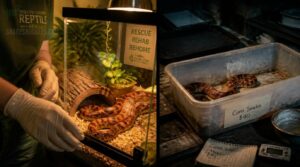
Not all adoption sources are created equal, and knowing what to look for can save you a lot of headaches down the road. From rescue organizations to private rehoming listings, each option comes with its own set of standards, policies, and potential pitfalls. Here’s what to weigh before you commit.
Rescue Organization Standards
Not every rescue is built the same. When you search adopt a snake, look for a trustworthy reptile sanctuary with charity legal status and published annual reports. Good rescue organizations carry board liability insurance, conduct financial audits, and enforce conflict of interest policies.
Once you’ve found a reputable rescue, brush up on day-to-day care basics like humidity and handling with this guide to corn snake care for new owners.
- Verified legal registration
- Transparent annual financial reports
- Independent financial audits
- Conflict of interest policies for board members
Shelter Adoption Policies
When you adopt a reptile through a shelter, expect structure. Each rescue organization uses a screening checklist covering your home, other pets, and lifestyle. Renters often need landlord consent proof. Some shelters request veterinary history for previously owned animals. Intake transfer protocols may also require a health evaluation before release.
| Policy Area | What to Expect |
|---|---|
| Landlord consent | Written proof required for renters |
| Veterinary history | Prior pet records may be requested |
| Intake transfer | Health check before animal release |
| Post-adoption survey | Follow-up within 30–60 days |
| Screening checklist | Covers home setup and lifestyle |
The post-adoption survey matters — it confirms your snake is settling well.
Rehoming Listing Red Flags
Not every snake for adoption listing is trustworthy. When you search adopt a snake through pet rehoming services or reptile adoption sites, watch for these red flags:
- Vague health details — no age, history, or temperament listed
- Reused listing photos — images don’t show the actual animal
- Unverifiable vet records — no paperwork confirming medical status
- Suspicious payment methods — gift cards or wire transfers requested
- Anonymous contact channels — no verifiable name or animal rescue affiliation
Breeder Versus Adoption
Breeders offer lineage documentation and genetic health testing, so you know exactly what you’re getting. Rescues can’t always provide that — but adoption gives a snake a second chance.
Breeders offer certainty; adoption offers a snake its second chance
Upfront costs differ too. Breeder corn snakes run higher, while reptile rescue fees stay lower.
One honest trade-off: rescue intake cycles mean availability varies. As a new pet owner, patience pays off.
Corn Snake Adoption Fees
Fees usually run $20 to $75, depending on the rescue and the snake. Rare morphs or older animals can push costs higher.
Some rescues bundle vet checks or starter supplies into the fee — others don’t. Always ask what’s included before you commit.
Don’t forget hidden setup costs like enclosures and heating equipment, which you’ll buy separately.
Prepare Your Corn Snake Setup
Before your corn snake arrives, you’ll want your setup ready to go. Getting the enclosure right from the start makes settling in so much easier for both of you. Here’s what you need to have in place:
Proper Enclosure Size

Size matters a lot here. Adult corn snakes need real room to move inside their reptile enclosure.
- Minimum tank volume: 40 gallons or larger for adults
- Horizontal floor area: 4–6 times the snake’s girth in length
- Adult length requirements: a 4–6 foot enclosure for mature snakes
- Vertical climbing space: allow height for branches without crowding the floor
- Enclosure upgrade timing: upgrade within weeks if the current fit feels tight
Escape-Proof Lid Options

Once your enclosure size is sorted, the lid becomes your next priority.
Corn snakes are escape artists. A loose lid means a missing snake.
| Lid Type | Key Benefit |
|---|---|
| Sliding panel locks | Auto-lock when closed |
| Magnetic latch security | Resists jostling and tipping |
| Silicone gasket seals | Stops gap escapes |
Look for integrated ventilation vents with fine mesh too.
Heating and Temperature Gradient

With the lid locked down, heat is next.
Corn snakes need a thermal gradient — a warm side around 85–90°F and a cool side near 75–80°F. This lets them move between zones to regulate their own body temperature. Getting that temperature balance right is only half the equation — maintaining proper humidity is equally critical, as outlined in this corn snake housing humidity guide.
Place hides on both ends of the enclosure so your corn snake can feel secure no matter which temperature zone it’s resting in — why corn snakes benefit from multiple hides explains how proper hide placement supports natural thermoregulation.
Use an under-tank heater with a thermostat to keep temperatures steady. Place digital thermometer probes at both ends to monitor the gradient daily.
Humidity and Water Needs

Once temperatures are dialed in, humidity comes next. Keep levels between 40 and 60 percent using a digital hygrometer — it’s the most reliable way to catch dry spells before they cause a failed shed.
Place a soaking-sized water dish away from the heat source. Clean it daily. In dry winter months, light misting helps maintain steady moisture without risking fungal growth.
Hides, Substrate, and Enrichment

Think of hides as your snake’s sense of security — place one on the warm side and one on the cool side so it can thermoregulate freely.
Use coconut fibre mixed with sphagnum moss as substrate, kept 2–4 inches deep for burrowing. Skip cedar or pine entirely.
Add a climbing branch or cork round to encourage movement and keep your snake mentally sharp.
Complete The Adoption Application

Once your setup is ready, the next step is filling out the adoption application. Most rescues take this part seriously — and for good reason. Here’s what you’ll usually need to prepare before you can bring your corn snake home.
Required Setup Photos
Most rescues won’t approve your application without seeing your setup first. When you search adopt a snake platforms, photo requirements are standard practice.
Submit these key shots:
- Full enclosure angle with lid secured and dimensions visible
- Thermometer placement showing warm and cool zone readings
- Substrate depth proof at 2–4 inches, clean and debris-free
Label each photo clearly before uploading.
Enclosure Approval Process
Once your photos are submitted, the rescue board reviews your entire cage setup before releasing any animal to you. They check dimensions, materials, heating equipment, and whether your space meets safety standards.
Approval timelines vary — some rescues respond in days, others take longer. Keep your enclosure ready to inspect and document your maintenance plan if asked.
Feeding Supply Requirements
Before your application clears, rescues want proof you can feed a corn snake properly.
Stock up on these essentials first:
- Safe feeding tongs to present thawed prey without risking a defensive strike
- Frozen rodents sized to match the widest part of your snake’s body
- A feeding log to track dates, prey size, and meal acceptance
Health Observation Periods
Some rescues, like Saving Scales in Michigan, require a minimum two-week observation period before processing your application.
During this window, check your snake daily. Watch for breathing changes, cloudy eyes, or unusual waste. Limit handling — stress can hide early illness signs.
Keep tools separate and wash hands every time. If symptoms appear, the clock resets.
Post-Adoption Follow-Up
After your snake is successfully rehomed, don’t disappear. Hudson Valley Reptile Rescue offers post-adoption follow-up contact to make sure your corn snake settles in properly.
Expect check-ins focused on monitoring health progress, seeing how their behavior changes, and evaluating nutritional adequacy. If you’re struggling, support resources are available — rescues want the pet adoption process to work for everyone.
Bring Your Corn Snake Home

The hard part is over — your corn snake is approved and ready to come home. Now it’s time to make sure that first day goes smoothly for both of you. Here’s what to focus on from transport to your very first vet visit.
Safe Transport Tips
Getting your corn snake home safely starts before you even leave. Place them in a rigid, snug carrier with a breathable lid — no wiggle room means no escape risk.
Keep the car between 75 and 85°F, away from vents or direct sun. A small battery-powered thermometer helps you monitor this easily.
Bring adoption paperwork and the rescue’s contact number, just in case.
First Week Acclimation
Once your corn snake is home, resist the urge to interact much.
- Keep the room quiet and stable at 26–28°C
- Limit handling to 5–10 minutes daily
- Log temperature, humidity, and behavior every single day
Clear eyes and smooth scales are good signs. If your snake refuses food, wait 3–4 days and try again — that’s normal during acclimation.
Feeding Schedule Basics
Now that your snake is settling in, food comes next.
Feed hatchlings every 5–7 days. Adults eat every 7–10 days. Match prey size to your snake’s widest point — too large causes regurgitation.
| Age Stage | Feeding Frequency |
|---|---|
| Hatchling | Every 5–7 days |
| Juvenile | Every 7 days |
| Sub-adult | Every 7–10 days |
| Adult | Every 10–14 days |
| Senior | Every 10–14 days |
Always use feeding tongs. Never your fingers. Afterward, don’t handle your snake for 48–72 hours — digestion needs uninterrupted warmth. Tongue flicking means hunger. Consistent refusal over two meals signals a vet visit.
Handling After Adoption
Digestion handled — now comes trust.
Wait at least one week before your first handling session. Keep it short: 5–10 minutes max. Loud rooms, sudden grabs, and post-meal contact are all stress triggers.
- Approach from the side, not above
- Support the full body
- Stay calm and slow
- Stop if they tense or musk
- Log each session weekly
Consistency builds confidence — theirs and yours.
Exotic Vet Planning
Find a reptile vet near me before you ever need one. Many exotic vets recommend a checkup within 48 hours of adoption — reptiles hide illness well.
Ask about after-hours emergency protocols upfront. Not every clinic treats exotic species.
Your vet can also review heating, humidity, and feeding to build a preventive care routine that keeps emergencies rare.
Frequently Asked Questions (FAQs)
What should I do with a corn snake?
Like a lifelong companion waiting to be found, a corn snake asks for daily care and decades of commitment. Feed it, house it safely, and plan for exotic vet access and long-term costs.
Can corn snakes live with other snakes?
Corn snakes are naturally solitary. They don’t need — or want — a companion. Cohabitation risks include stress, injury, and even cannibalism. Plan for separate enclosures if you’re adopting more than one.
Should you adopt a snake?
Snakes demand everything — yet give back nothing you’d expect. Adoption means lifelong care, real costs, and daily responsibility. If your lifestyle fits a snake’s basic needs, adopting is a deeply rewarding, ethical choice.
What should I give my corn snake to hide in?
Your corn snake needs at least two hides — one on the warm side, one on the cool side. Choose snug, smooth options like cork bark or ceramic logs.
How can you help a corn snake shed properly?
Shedding looks scary, but your snake experiences it naturally. Raise humidity to 60–70% and offer a damp sphagnum moss hide. Soak stuck skin in lukewarm water for 20 minutes. Never pull shed — it injures skin.
For extra support during difficult sheds, some keepers turn to corn snake shedding supplements that promote scale health, though they work best alongside consistent humidity management.
Can snake discovery take in XL reptiles?
Yes, Snake Discovery can take in XL reptiles, but space must be available. Call ahead to confirm. XL intake capacity varies monthly, and all large arrivals require quarantine and specialized XL housing before adoption.
What is the average lifespan of a corn snake?
Like a tortoise and the hare, slow and steady wins the race. Corn snakes live 15–20 years in captivity — sometimes reaching In the wild, they usually survive just 6–8 years.
What is the biggest trouble with corn snakes as pets?
The biggest trouble is the long-term commitment. Corn snakes live 15–20 years and need specialized veterinary care, precise humidity, and consistent feeding — costs and responsibilities that add up fast over a lifetime.
Is a 40 gallon tank big enough for a corn snake?
A 40-gallon tank works for most adult corn snakes. Aim for 36–48 inches of floor space. Upgrade to 75 gallons if your snake exceeds 4 feet and needs room to roam.
What not to do with a corn snake?
Avoid cedar or pine substrates — they irritate lungs. Never handle after feeding for 48 hours. Don’t use oversized prey. Watch for lethargy or wheezing. Skipping vet checks puts your snake at serious risk.
Conclusion
Somewhere, a snake sits still, waiting. Finding corn snake adoption near me doesn’t have to feel overwhelming — the path is clearer than you think.
Rescues need you. These calm, curious creatures have already lived one life; you’re offering them another. Set up the enclosure. Submit the application. Show up prepared. The process rewards patience, and the snake on the other side of it rewards everything else.