This site is supported by our readers. We may earn a commission, at no cost to you, if you purchase through links.

Arthritis doesn’t care that your ball python still needs dinner. A stiff hinge, a shaky grip, or a strike that lands too close to your wrist turns feeding time into a dreaded chore instead of a routine one. That’s where the right tool changes everything.
The best snake feeding tongs for seniors aren’t just longer versions of what you already own. They’re built with wider grips, lighter alloys, and smoother pivots that take the strain off aging joints while keeping your hand well outside striking range.
Below, you’ll find three tong options worth your money, plus the exact lengths, angles, and grip features that make feeding safer, faster, and far less nerve-wracking.
Table Of Contents
- Key Takeaways
- Top 3 Snake Feeding Tongs for Seniors
- Senior-Friendly Tong Features
- Best Tong Lengths by Snake
- Safer Feeding for Older Keepers
- Cleaning and Maintenance Tips
- Frequently Asked Questions (FAQs)
- Are snake tongs safe?
- How to feed a stubborn snake?
- Should I feed my snake with tongs?
- Is it better to feed snakes live or frozen?
- How do I choose the right tong material?
- Are these tongs field-tested by herpetology professionals?
- Can one tong work for insects and rodents?
- What temperature should thawed prey be before feeding?
- Conclusion
Key Takeaways
- Look for tongs with wide, textured grips and lightweight stainless steel (about 17% lighter than traditional steel) to reduce joint strain and hand fatigue during feeding.
- Match tong length to snake size: 8-12 inches for hatchlings, 16-18 inches for three-foot pet snakes, and 20-24 inches for constrictors over five feet to maintain a safe strike-zone distance of 8-18 inches. For a deeper dive into sizing options and other gear considerations, check out this guide to choosing the right snake feeding tools before you buy.
- Always use tongs instead of bare hands to prevent your snake from associating human scent with food, and present frozen-thawed prey warmed to 100-105°F with gentle, deliberate movement.
- Maintain tongs by washing after every use, disinfecting with a 3% bleach solution between snakes, drying thoroughly to prevent rust, and storing with jaws open rather than locked.
For added confidence, review these feeding tong safety tips for nervous snake handlers before choosing your reach.
Top 3 Snake Feeding Tongs for Seniors
Feeding time shouldn’t feel like a wrestling match, especially when arthritis or hand weakness makes gripping tools harder than it used to be.
That’s where a good pair of feeding tongs earns its keep, giving you distance and control without demanding a tight grip—here’s a closer look at why corn snakes benefit from feeding tongs.
The right tongs take pressure off your joints while keeping your fingers safely out of strike range.
Here are three options built with exactly that kind of comfort and control in mind.
1. Stainless Steel Reptile Feeding Tongs
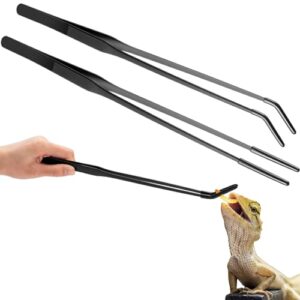
Fifteen inches of reach, two tip styles, and a build that won’t rust after a hundred washes — this set earns its spot for a reason.
You get one straight tip and one curved tip, so you’re covered whether you’re feeding a snake head-on or reaching around tank decor. Rubber-coated ends protect your snake’s mouth on contact.
At under ten ounces, your wrist won’t tire mid-feeding. Stainless steel construction means soap, water, and repeated disinfecting won’t wear it down.
| Best For | Reptile and aquarium keepers who want a safe, hygienic way to feed animals or manage tank decor from a distance. |
|---|---|
| Material | Stainless steel with rubber tips |
| Tip Style | Straight and curved |
| Length | 15 in |
| Grip Safety | Rubber-coated tips |
| Corrosion Resistance | Rust-resistant |
| Pieces Per Set | 2 pieces |
| Additional Features |
|
- Two tip styles (straight and curved) cover a range of feeding angles and tank layouts
- Rust-resistant stainless steel holds up to frequent washing and disinfecting
- Lightweight design (under 10 oz) makes extended use comfortable
- The two tongs have different tips rather than being an identical matched pair
- 15-inch length can feel unwieldy in smaller enclosures
- Only one tool of each tip style, so there’s no backup if a specific shape is needed
2. Long Stainless Steel Curved Feeding Tongs
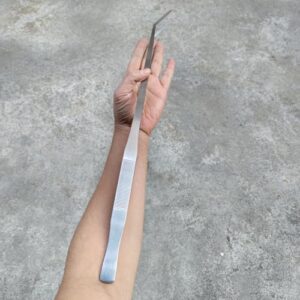
Nearly nineteen inches puts real distance between your hand and a defensive strike, which matters most with larger or bolder feeders.
The curved tip guides prey toward the mouth without forcing an awkward angle, and rigid stainless steel holds its shape even under repeated pressure. At 198 grams, your arm won’t tire during longer feeding sessions.
Rust resistance means this one survives frequent washing and disinfecting without pitting or weakening at the tip.
| Best For | Reptile keepers who feed larger or defensive snakes and lizards in deep terrariums and want maximum distance from a potential strike. |
|---|---|
| Material | Stainless steel and silicone |
| Tip Style | Serrated scissor tips |
| Length | 15 in |
| Grip Safety | Silicone grip handles |
| Corrosion Resistance | Rust-proof |
| Pieces Per Set | 2 pieces |
| Additional Features |
|
- Extra-long 18.7-inch reach keeps your hand well away from defensive feeders
- Curved tip guides prey naturally toward the mouth for smoother feedings
- Rust-resistant stainless steel holds up to frequent washing and disinfecting
- Manual operation only, no automated or spring-assisted feeding
- Ships as a single unit, so backups aren’t included
- Length may feel unwieldy for smaller enclosures or shorter reach needs
3. Long stainless steel aquarium tweezers
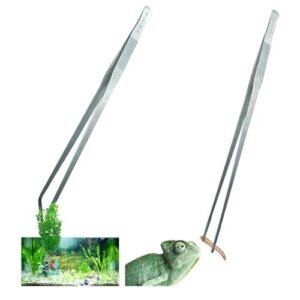
Not every reptile keeper sticks to snakes alone, and that’s where these tweezers earn their spot. Built from SUS 304 stainless steel, they resist corrosion even with daily rinsing.
The rubber-coated tips add a gentle grip too, making these a smart pick if you’re comparing beginner-friendly snake feeding tongs for daily use.
The 18.9-inch reach keeps your hand clear of tank water and defensive strikes alike. You get both straight and curved tips in one two-pack, with rubber covers protecting your grip and cushioning contact for bearded dragons or turtles sharing your feeding routine.
| Best For | Reptile keepers and aquascapers who need a secure, long-reach tool for feeding bearded dragons and turtles or planting in deep tanks. |
|---|---|
| Material | Stainless steel and rubber |
| Tip Style | Straight and curved |
| Length | 10.6 in |
| Grip Safety | Rubberized tips |
| Corrosion Resistance | Rust-resistant |
| Pieces Per Set | 2 pieces |
| Additional Features |
|
- 18.9-inch length keeps hands safely away from water and defensive strikes
- Corrosion-resistant SUS 304 stainless steel holds up to daily rinsing
- Two-pack includes both straight and curved tips with rubber grip covers
- Rubber tips can wear down with extended heavy use
- Large size may be awkward to maneuver in small nano tanks
- Extra length could feel unwieldy for quick, simple feedings
Senior-Friendly Tong Features

Not every tong on the market works well for hands that ache or tire easily. The right design can make feeding sessions calmer and safer, so comfort matters as much as reach. Here’s what to look for before you buy.
Wide Arthritis-friendly Handles
Ever notice how a thin handle makes your knuckles ache after just a few minutes? That’s grip strain talking, and it’s exactly what wider grips solve.
Built-up grips boost palm contact by 25%, cutting joint pressure. They also:
- Reduce ulnar deviation
- Cushion vibration by 15%
- Fit reptile feeding tongs up to 1 inch
Textured ribbing adds precision grip stability when hands get sweaty. Using ergonomic contoured grips can further help reduce hand pain and discomfort.
Lightweight Stainless Steel
Modern alloys shave about 17% off the weight of traditional steel tongs, so an 18-inch pair feels almost weightless in your hand.
That matters over a 20-minute feeding session, when arm fatigue usually sets in. Thinner-walled construction, up to 20% slimmer, keeps strength intact while easing the load on tired shoulders and wrists, so control stays steady from first strike to last bite.
Non-slip Grip Control
Wet hands don’t stand a chance against a good grip. Textured surface friction and diamond-pattern traction keep tongs locked in your palm, even mid-feeding.
- Micro-patterned grip stability for damp fingers
- Hydrophobic coating repels moisture and prey residue
- Nonslip handle resists slick oils
Moisture resistant materials mean fewer accidental drops, so ergonomic design translates directly into safety and convenience during every feeding session.
Left-handed Feeding Comfort
If you’re left-handed, wrist twist during feeding gets old fast. Left-handed snake feeding tongs follow a natural leftward motion, so your grip stays relaxed and your line of sight lines up with the jaw for improved target accuracy.
Precision thumb rests support natural palm alignment, keeping reptile feeding tongs steady and maintaining that all-important safety distance without fighting the tool’s design.
Smooth Hinge Movement
A stiff hinge fights you every time you reach for prey, and that’s the last thing your hands need. Precision Pin Engineering keeps rotation fluid, while Hinge Friction Reduction and Mechanical Binding Prevention stop snagging mid-motion.
Adjustable Tension Settings let you fine-tune resistance. Quality snake feeding tongs pair this Reliable Mechanism with smart Ergonomic Design, though Lubrication Maintenance keeps things gliding, boosting safety and convenience with every feeding.
Best Tong Lengths by Snake
Not every snake needs the same tool, so length matters more than most people think. A tong that’s perfect for a hatchling can put you at real risk with a five-foot constrictor. Here’s how to match the right length to your snake, size by size.
Hatchlings Under Two Feet

Hatchlings under two feet need 8 to 12-inch tongs, small enough for precision feeding without overwhelming tiny jaws. These snakes grow fast, adding 6 to 12 inches yearly, so gentle handling matters.
Their delicate skin, higher humidity needs, and shedding-cycle appetite dips mean you’re working with a fragile patient. Weigh them regularly, feed prey sized to their body, and let the tongs do the careful work.
Three-foot Pet Snakes

Corn snakes and garter snakes hit this three-foot mark most often, and a 16 to 18-inch tong gives you full control without straining your reach.
Growth from hatchling to this size takes 6 to 12 months, so sizing changes fast.
Feed every 5 to 7 days, matching prey width to body girth, and keep those enclosures warm-side 75 to 85°F for proper digestion.
Large Constrictor Safety

Once your snake tops five feet, the game changes entirely. You need 20 to 24-inch tongs to keep hands clear of the strike zone, and solo handling isn’t worth the risk. Bring a second person for control and quick response, and watch for gaping or rapid tongue flicks—early stress signs. Keep an emergency plan ready in case constriction happens.
Deep Enclosure Reach

Big constrictors need room to move, not just longer tongs. Enclosure depth planning matters as much as tong length—7 to 9 feet behind the snake, more for larger species.
- Smooth, snag-free barrier surfaces
- Non-reflective faces for distance judgment
- Bright, glare-free lighting
- 12-inch strike arc margins
Good reptile handling gear only works with an enclosure built for safe, ergonomic reach.
Safe Strike-zone Distance

Space matters as much as tools. Strike zone measurement runs 8 to 18 inches for adults, measured mouth-tip to tong-tip. Align the tong with your snake’s mouth midline, then watch for forward posture or tongue flicks, those behavioral cues mean it’s ready to strike.
Side-feeding redirects defensive strikes away from your hand. That’s proper prey placement precision, backed by real safety equipment for handlers.
Safer Feeding for Older Keepers
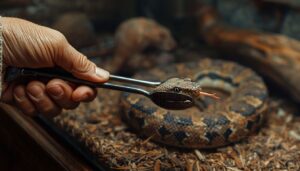
Good tongs solve half the problem, but how you use them matters just as much. A few simple habits at feeding time can lower your risk of a bite even further, especially if your grip or reflexes aren’t what they used to be. Here’s what to keep in mind every time you feed.
Frozen-thawed Prey Presentation
Frozen-thawed rodents need a full, slow thaw, never a microwave shortcut that leaves hot spots. Warm water baths work best, replaced as needed until the surface hits 100 to 105°F. Check with an infrared thermometer for true temperature uniformity.
Once warmed, use your snake feeding tongs to add gentle, deliberate movement, mimicking prey motion and triggering that natural strike response safely.
Avoiding Hand Association
Picking up prey by hand teaches your snake to link human warmth with dinner, and that habit gets dangerous fast. Snake feeding tongs create a safety barrier that keeps your scent off the meal entirely.
Using tongs helps with:
- Human heat reduction
- Scent protein removal
- Behavioral habit prevention
- Direct strike redirection
- Consistent neutral feeding stance
That’s how you keep preventing snake bites long-term.
Side-feeding Positioning
Turn your body sideways instead of squaring off with the enclosure, and feeding gets a lot easier on your joints. This lateral presentation angle keeps your elbow tucked near your torso for a stable, low-motion arc.
Offer prey at shoulder height to cut wrist strain, and you’ll also get a wider field of view, helpful if your snake moves faster than expected.
Protecting Snake Teeth
Snake teeth aren’t disposable, but they’re not indestructible either. Thanks to polyphyodont tooth replacement, worn teeth get swapped for fresh ones underneath—still, hard impacts from bare metal tongs stress the jaw joint and wear enamel faster than nature intended.
That’s why silicone tip covers matter: they cushion contact, protecting enamel while keeping your snake’s grip reflex satisfied during every feeding.
Reducing Bite Risk
A defensive strike is a snake’s way of saying "not my hand-scent, not my problem"—which is exactly why snake feeding tongs matter. Keep a proper strike zone buffer, use side presentation to redirect defensive lunges away from your face, and hold prey at 98-102°F.
Consistent tong use builds scent association prevention, so your hands stay off the menu entirely.
Cleaning and Maintenance Tips

A good set of tongs won’t last long if you skip the basics, so a little upkeep after every session goes a long way.
It’s not complicated, but it does need to be consistent, since skipped steps add up to rust, bacteria, or worn hinges over time.
Here’s what that routine should look like, step by step.
Wash After Every Feeding
Blood, slime, and prey residue cling to your tongs after every single use, and that residue carries bacteria you don’t want near your next feeding session.
- Wash immediately with hot water and mild dish soap
- Scrub away tissue and slime thoroughly
- Rinse fully—no leftover suds
- Towel or air dry completely
- Inspect for rust or bent tips
Disinfect Between Snakes
One tong touching two snakes without disinfecting is how illness spreads through your whole collection. Wipe down with a 3% bleach solution, giving it a full 5-minute contact time, then rinse thoroughly. Keep dedicated tongs per snake when possible, or run a proper cleaning station between uses. Log each disinfection with dates and products used—simple documentation catches problems before they become outbreaks.
One tong touching two snakes without disinfecting is how illness spreads through your whole collection
Dry to Prevent Rust
Drying matters as much as disinfecting. Wipe your snake feeding tongs with a lint-free cloth, then air dry in low humidity for 30-60 minutes—check grooves and joints where moisture hides.
- Warm airflow speeds evaporation without heat damage
- Confirm complete surface dryness before storage
- Add a thin oil barrier for extra rust protection
Stainless steel resists corrosion, but only when kept genuinely dry.
Check Bent Tips
Once your tongs are dry, run your fingers along the jaw line and check for tip misalignment. A bent tip throws off grip stability, letting prey slip loose mid-delivery. Look for uneven curvature, especially after a drop.
If you spot a bend, straighten gently with pliers, don’t force it, and add rubber tip covers afterward for cushioning and better prey control.
Store With Jaws Locked
Straightened tips deserve a proper home. Store with jaws open, not locked — leaving reptile feeding tongs clamped shut day after day strains the spring and invites tool creep.
Reserve the locking mechanism for active feeding only, then release it fully before hanging your snake tongs. Locking hemostats and non-locking hemostats follow the same rule: relaxed jaws mean less fatigue, safer one-handed release, and no accidental pinching next time you reach for them.
Frequently Asked Questions (FAQs)
Are snake tongs safe?
Yes, snake tongs are no gimmick, they’re your bite risk prevention frontline. Proper strike zone distance, secure jaw grip, and defensive strike redirection keep hands safe while giving you confident, reliable control during every feeding session.
How to feed a stubborn snake?
Try prey type switching, tease-feed with forceps to trigger a strike, mist enclosures for tropical species, and always offer food in the same consistent location — small consistency cues reduce feeding stress and encourage stubborn snakes to strike naturally.
Should I feed my snake with tongs?
A keeper who fed by hand once got nipped mid-strike; switching to tongs solved it fast. Bite prevention and strike zone safety matter most, so yes, tongs give you control, consistency, and confidence during every feeding routine.
Is it better to feed snakes live or frozen?
Frozen prey wins for safety: it cuts parasite transmission risks, prevents prey escape, and stops bites during feeding.
Nutritional profiles stay stable, hunting impulse drops, and it aligns with ethical reptile feeding—paired with proper feeding tongs and thawed presentation technique.
How do I choose the right tong material?
A surgeon’s scalpel is chosen for precision, not price. Pick tongs the same way: stainless steel resists corrosion and cleans easily, titanium cuts weight for tired hands, and rubber tip covers protect against chipped enamel finishes.
Are these tongs field-tested by herpetology professionals?
Yes—Midwest Tongs advertises field testing by respected herpetologists like Mark O’Shea and Simon Keys. That’s real-world credibility, though independent verification reports aren’t published, so treat endorsements as promotional insight rather than formal safety certification.
Can one tong work for insects and rodents?
Picture one tool sliding from a cricket to a mouse without a hitch. Adjustable tension and stainless tips make this real, giving you grip pressure control for fragile insects and firmer rodent holds, so one pair truly covers both.
What temperature should thawed prey be before feeding?
Aim for 100 to 105°F across the whole body, checked with an infrared thermometer at the thickest points. Uniform thawing avoids cold centers, while proper feeding technique with your tongs triggers a natural feeding response every time.
Conclusion
Get a grip, because that’s what this really comes down to.
The right snake feeding tongs for seniors won’t cure arthritis, but they’ll take the ache out of feeding day. A wider handle, a smoother hinge, a few extra inches of reach, these changes add up to steady hands and calmer snakes.
Rust-free steel and a length that keeps wrist clear, that’s the real safety net. Feeding shouldn’t hurt. With the right tool, it won’t.