This site is supported by our readers. We may earn a commission, at no cost to you, if you purchase through links.

Most snake bites don’t happen in the wild. They happen in living rooms, at the exact moment someone grabs a "calm" snake the wrong way and gets a startle strike for their trouble. Ball pythons and corn snakes make gentle pets, but gentle doesn’t mean predictable, and a snake’s body language shifts fast if you miss the signs.
That’s where technique separates confident handlers from nervous ones. The safe way to handle snake encounters isn’t instinct, it’s a sequence: reading mood, prepping gear, supporting the body correctly. Get that sequence right, and handling becomes routine instead of risky.
Here’s how to build that skill, one deliberate step at a time.
Table Of Contents
- Key Takeaways
- Prepare a Safe Handling Space
- Check Your Snake’s Mood
- Use Proper Handling Gear
- Lift and Support Correctly
- Handle, Finish, and Respond Safely
- Frequently Asked Questions (FAQs)
- What material can snakes not bite through?
- What to do if a snake coils around you?
- How do you get a snake to stop biting you?
- Can you hold a snake without it biting you?
- How often should you handle a pet snake?
- What age should snakes be before first handling?
- Can two different snake species be handled together?
- How soon after eating can you handle snakes?
- What temperature is unsafe for handling sessions?
- Conclusion
Key Takeaways
- Read your snake’s body language before you touch it—calm tongue flicks and loose coils mean go, while hissing, S-curving, or a fixed hunting stare mean back off and wait.
- Set up your space and gear first: a quiet, low-vibration room with sealed gaps, plus dry hands, closed-toe shoes, protective clothing, and a snake hook keep both of you safer.
- Lift correctly by approaching from the side, supporting the mid-body with two hands, and never grabbing near the head, since that’s what triggers most defensive strikes.
- Keep handling sessions short (5-15 minutes), wash your hands afterward, and know your bite-response plan in case something still goes wrong.
Prepare a Safe Handling Space

Before you ever pick up a snake, the room around you does half the work. A calm space keeps a calm snake, and that starts well before your hands make contact. Here’s what to check off first.
Dim the lights, silence sudden noises, and give your snake a few quiet minutes to settle before you approach, following this guide to safely picking up a pet snake for the full rundown.
Quiet, Low-vibration Room
Before your snake ever leaves its enclosure, the room itself needs work. Snakes feel vibration through their bellies, so pick a space with a low-vibration environment — away from washing machines, foot traffic, or thumping bass. Keep lighting between 100 and 300 lux, soft enough to calm, bright enough to read body language. Environmental calmness starts here, before you make a single move.
Closed Doors and Windows
With the quiet room setup sorted, close every door and window in the space, full stop. A draft or sudden slam can trigger a strike reflex fast.
- Full door latching, not just pulled shut
- Windows sealed for window seal integrity
- Vents checked for airflow control
- Confirm an escapeproof room before handling
Escape Gaps Sealed
Even with doors latched, gaps under thresholds are where escapes really happen. Get down and check: any gap under doors less than 13 cm wide gets sealed, using rigid draft stoppers rather than flimsy foam.
Peek behind closets too, since gap integrity there matters just as much for enclosure security.
This step finishes your escapeproof room before handling begins.
Clear Floor Hazards
With door gaps sealed, turn your attention downward. A cluttered floor undoes your prep fast if you trip mid-lift.
- Sweep debris and dust hiding small obstacles
- Keep pathways 36 inches wide minimum
- Secure cords or hoses off the walking route
- Clean spills immediately with neutral cleaners
- Make sure lighting reveals texture changes and stress signals
Stable Enclosure Conditions
A stressed enclosure breeds a stressed snake, so check conditions before you ever open the lid. Confirm the temperature gradient sits between 24-28°C, humidity holds 50-70%, and the ventilation rate keeps air moving without drafts. Verify substrate moisture and light cycle are on schedule.
Stable conditions mean calmer behavior, and calmer behavior means a safer handling session for you both. Maintaining optimal humidity range helps keep the snake in a stable thermoneutral zone.
Check Your Snake’s Mood

Before you ever lift a snake, read it first. Its body tells you exactly what kind of mood it’s in, and that mood decides whether handling is a good idea right now. Here’s what to look for before you reach in.
If the snake tightens its coils around you, staying calm and knowing how to safely handle a constricting boa can make all the difference in the moment.
Calm Tongue Flicking
That flicking tongue tells you more than most beginners realize. Loosely coiled gentle tongue flicking at a steady rhythm signals normal chemosensory exploration, your snake calmly scent-sampling its enclosure under proper 100 to 300 lux lighting. Relaxed tongue flicks paired with slow, unhurried movement mean it’s comfortable with enclosure familiarity.
Irregular or frantic flicking, though, often flags stress signals worth pausing for before you proceed.
Loose Body Posture
Run your eyes down the whole body, not just the head. A relaxed loose posture shows loose coils, a smooth tail curve, and a head aligned with the midline. Breathing calmly, muscles holding even tone rather than rigid tension, confirms genuine comfort.
Support your snake’s body along that gentle arc, and this body language interpretation becomes second nature fast.
Hissing or S-curving
A sharp hiss means stop right there. It’s produced by air forced through a narrowed glottis, sometimes hitting 70 decibels up close.
Watch for S-curving, a flattened neck, or sudden jerky retreats. These threat assessment cues signal genuine distress, not mere annoyance.
Back off, give space, and postpone handling. Pushing forward now invites a strike.
Shedding Warning Signs
Cloudy eyes and dull, faded skin mean your snake’s entering its shedding cycle, not the mood for handling. Watch for rubbing behavior against enclosure décor and reduced activity overall.
Mouth opening or slow lip movements often accompany this pre-shed discomfort. These body language cues signal genuine stress signals, so respect handling time limits and postpone sessions until the shed completes.
Feeding-mode Behavior
A snake tracking movement with locked focus isn’t curious, it’s hunting. That fixed stare and head-swaying pattern are feeding cues, not greeting behavior.
Wait 48 hours after feeding before handling, since strike latency drops sharply near mealtime and prey response instincts stay primed. Skip sessions if Feeding Tongs or dishes are nearby, and respect your feeding schedule adherence to avoid triggering feeding response near typical feeding time of day.
Use Proper Handling Gear
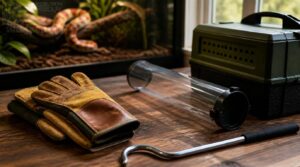
Once you’ve read your snake’s mood, gear becomes your next line of defense. The right setup won’t guarantee a bite-free session, but it stacks the odds firmly in your favor. Here’s what you need on hand before you make contact.
Clean, Dry Hands
Grip starts with your hands. Wash for a full twenty seconds, then pat dry, don’t rub — paper towels work best.
- Reuse cloth towels only once before laundering
- Air dryers work fine in a pinch
- Moisturize afterward to prevent cracked, dry skin
Damp palms slip. Dry, supple hands hold steady, and that steadiness is what keeps both of you safe.
Closed-toe Shoes
From hand care, your feet come next. Closed-toe shoes keep toes fully covered, guarding against strikes and stubbed impact alike.
| Style | Best Use |
|---|---|
| Snake boots | Field handling, low strikes |
| Reinforced leather | Daily enclosure work |
| Composite-toe | Higher-hazard settings |
Choose a proper fit with a roomy toe box — crowding invites blisters, and workplace safety standards demand consistent coverage.
Thick Protective Clothing
Once your feet are covered, work upward. Long sleeves and thick protective clothing add real defense — layered fabric with trapped air pockets resists punctures while managing heat buildup. Choose moisture-wicking inner layers for comfort, with a durable, snug outer shell.
A proper protective fit prevents bulk from slowing your reflexes when a strike comes fast.
Bite-resistant Gloves
Between clothing and hook lies the hand itself. Bite-resistant gloves pair a cut-resistant outer layer with Kevlar or UHMWPE threads, stopping fangs cold.
Look for a snug fit and comfort balance, moisture-wicking liners, and textured dexterity features for grip. Run inspection routines before each use, checking mesh for fraying — then follow hand hygiene protocol once gloves come off.
Snake Hook Basics
A hook is your extension arm, keeping you 30 to 60 centimeters from strike range. For hook selection guide purposes, match size to the snake’s girth and temperament.
Grip technique basics: hold firm but relaxed, using proper hook angles under the mid-body for lift. Inspect regularly, then store hooks clean and dry, hung vertically to prevent warping between sessions.
Lift and Support Correctly
Once your gear is on, the next skill to master is how you actually pick the snake up. Lifting the wrong way puts strain on its spine and invites a defensive strike, so technique matters as much as confidence. Here’s what proper support looks like in practice.
Approach From The Side

Why sneak up like a predator when snakes read head-on stares as threats? Angle your side approach, staying in peripheral vision, shoulders toward the enclosure.
- Move slowly, gently
- Stand feet shoulder-width
- Keep hands low
- Use calm 100-300 lux lighting
Wear closed-toe shoes. Watch tongue flicks—signs you’re welcome, not warned off.
Support The Mid-body
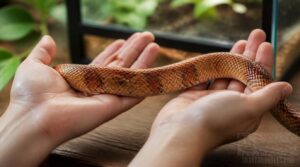
Once you’re in position, cradle the mid-section with even, flat-palm contact—no pinching, no single-point pressure. This is where spinal support handling matters most: distribute weight along the whole mid-body, not one rib.
Watch for rigid coiling or blanching; either signals stress signals needing a pause. Smooth, gentle lifting keeps stability during lifting steady until both hands take over.
Use Two Hands
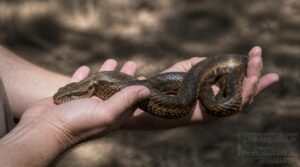
One hand alone can’t do this job. Use two hands for balanced weight distribution, one supporting the front, one trailing the mid-body, so no single section bears the load.
- Keep grip firm but relaxed
- Move together, never twisting
- Let both palms track the snake’s motion
This body support mechanics approach keeps gentle lifting techniques smooth and controlled throughout.
Avoid Head Grabbing

Grabbing near the head triggers a defensive strike reflex almost instantly. Stick to a Mid-Body Focus instead, using Gentle Tail Guidance behind it.
Avoid Frontal Reach entirely; approach from the side, not head-on. Proper Hand Placement here isn’t optional, it’s what keeps everyone, snake included, calm and unbitten throughout the lift.
Support Large Snakes Safely

Big-bodied constrictors demand teamwork, not solo heroics. Once a snake passes 8 feet, bring in a second handler, each supporting 3 to 4 foot sections. Keep every coil close against your torso for real body control and even weight distribution.
Support the body every 3 to 4 feet along its length. Skip the middle third, and you’re gambling with safe grip zones.
Handle, Finish, and Respond Safely

Once your snake is lifted and supported, the real work of handling begins. This part covers how to end the session on good terms and what to do if things go wrong. Here’s what you need to know, step by step.
Keep Sessions Short
Rarely does a snake need more than 5 to 15 minutes of handling at once. Start with short sessions near the enclosure, aiming for the lower end when your snake shows calm tongue flicking. Use a timer, announce the end time, and avoid chasing slow exploration.
Brief sessions curb overheating, dehydration, and stress buildup across daily handling.
Watch Stress Signals
Even short sessions can turn stressful fast, so keep your eyes on the snake, not the clock. Watch for eye narrowing, gaping, tail flicks, or lateral body movements — early defensive posture cues.
Rigid muscles, tight coiling, or heavy breathing mean stop now. Pupil dilation paired with stillness often signals real discomfort. Trust what the body’s telling you.
Return Gently to Enclosure
Once stress signals fade, guide the snake toward the enclosure with a calm descent and slow release. Support its body fully, allowing it to slither off before closing the door.
Three keys matter most:
- Quiet return near the entrance
- Secure entry, hands low
- Handle regularly, 2–3 times weekly
Never let coils near your face during this final stretch.
Wash Hands Afterward
The door’s latched, but you’re not done yet. Reptiles carry Salmonella naturally, so wash hands afterward with soap, scrubbing palms, nails, and wrists for a full twenty seconds.
This posthandling hygiene step blocks germ transfer before you touch your face, phone, or a doorknob. Dry with a clean towel. No sanitizer nearby? Use it now, then wash properly once you can.
Know Bite-response Steps
Bites happen even to careful handlers, so know your emergency plan before you need it.
Don’t cut, suck, or ice the wound. Wash with soap, immobilize the limb at heart level, and apply a pressure bandage. Call emergency services immediately, confirm antivenom accessibility at nearby hospitals, and monitor for swelling, dizziness, or breathing changes en route.
Never cut, suck, or ice a snakebite—wash it, immobilize the limb at heart level, and get emergency help fast
Frequently Asked Questions (FAQs)
What material can snakes not bite through?
No fang on earth shreds through Dyneema fabrics — layered right, they stop punctures cold. Add Cordura nylon barriers, thick leather gaiters, and puncture-resistant gloves, and you’ve got real, tested protection against strikes.
What to do if a snake coils around you?
Stay calm, create space, and unwind from the tail with steady counter-pressure. Keep the head turned away, breathe steadily, and signal for help. Seek medical evaluation if breathing feels restricted or bites occur.
How do you get a snake to stop biting you?
Spoiler: yanking your hand back never works. Freeze instead, let the snake release on its own, then ease it off gently. Reading body language beforehand prevents most bites—defensive posture is your cue to wait.
Can you hold a snake without it biting you?
Yes, it’s entirely possible, provided you read body language first, use gloves and a snake hook for initial contact, then apply gentle mid-body support with two hands, approaching from the side rather than overhead.
How often should you handle a pet snake?
Two to three sessions weekly works for most species, adjusted by mood. Avoid handling 48 hours before or after feeding, watch for stress signals, and keep early sessions short, five to ten minutes, building trust gradually.
What age should snakes be before first handling?
Rushing a new snake to handling day one is like shaking hands before it’s even settled in. Give hatchlings 5 to 7 days to acclimate, then wait 24-48 hours post-feeding before that first short session.
Can two different snake species be handled together?
Better not to. Species compatibility matters more than convenience — mismatched temperaments, sizes, and stress responses raise bite risk and predation danger. One handler, one snake, one session: that’s the rule keeping both animals and you safe.
How soon after eating can you handle snakes?
Digestion is a quiet countdown clock ticking beneath the scales. Give most snakes 48 hours minimum after eating, checking for relaxed posture and steady tongue flicks before handling resumes safely.
If a coil tightens instead of relaxing, don’t force the issue—these ball python bite prevention techniques can help you read those warning signs before they escalate.
What temperature is unsafe for handling sessions?
Anything above 90°F signals heat stress risk, while readings past 100°F hinder reptile temperature regulation entirely. Pair that with humidity over 60%, and even 85°F becomes dangerous. Below 32°F brings cold stress limits, slowing reactions and complicating safe control.
Conclusion
Slow hands, steady eyes, quiet room, calm snake — that rhythm is the safe way to handle snake encounters without incident. Confidence isn’t luck; it’s the product of reading mood correctly, supporting the body fully, and respecting stress signals before they escalate.
Skip a step, and even a gentle python reminds you why technique matters. Master this sequence, and handling stops feeling risky. It becomes second nature — a quiet trust built one deliberate session at a time.