This site is supported by our readers. We may earn a commission, at no cost to you, if you purchase through links.

Grab your ball python at noon, and you’ll likely get a hiss, a coil, and a snake that wants nothing to do with you. Grab it at 8 PM, and it’s a different animal entirely, alert, curious, ready to explore your hands instead of retreat from them. That’s not bad luck. That’s biology.
Every snake runs on an internal clock shaped by millions of years of hunting and hiding on a schedule. Ignore that clock, and you’re handling a stressed, defensive animal no matter how gently you approach. Work with it, and handling gets easier, safer, and far less dramatic for everyone involved.
The best time to handle snake species depends on whether your pet naturally rises with the sun or waits for the dark.
Table Of Contents
- Key Takeaways
- Best Time to Handle Your Snake
- Check Your Snake’s Readiness Signals
- When Not to Handle Your Snake
- Wait After Feeding Before Handling
- Pause Handling During Shedding
- Let New Snakes Acclimate First
- Set Safe Handling Frequency
- Adjust Timing by Snake Species
- Handle Safely and Finish Promptly
- Frequently Asked Questions (FAQs)
- When should you not handle a snake?
- What month are snakes least active?
- Which smell do snakes hate?
- Do snakes enjoy being handled?
- Can you handle a snake right after purchase?
- Does handling frequency change with the seasons?
- What temperature is too cold for handling?
- Should you handle a snake before or after cleaning its enclosure?
- Conclusion
Key Takeaways
- Match handling time to your snake’s natural rhythm—diurnal species like corn and garter snakes do best between 9 AM and 5 PM, while nocturnal species like ball pythons and boas wake up between 7 PM and midnight.
- Always check your snake’s body language before reaching in, since relaxed tongue flicks, clear eyes, and loose posture mean it’s ready, while hissing or tight coiling means back off.
- Skip handling entirely after feeding (wait 24-72 hours depending on meal size), during shedding, when your snake seems sick or stressed, and for the first one to two weeks after bringing a new snake home.
- Keep sessions short and consistent—5-10 minutes a few times a week for juveniles, up to 20 minutes once to three times a week for adults—and return your snake promptly if it starts feeling cool to the touch.
If you’re unsure whether your snake is truly ready, learning how hooks can affect a stressed snake will help you spot the signs before reaching for one.
Best Time to Handle Your Snake

Timing matters just as much as technique for handling your snake safely. Your snake has its own internal clock, and working with it instead of against it makes every session smoother. Here’s how to read that clock and pick the right moment to reach in.
Before you even open the enclosure, check for the calm posture and relaxed muscle tone described in this guide to corn snake body language, since a settled snake tells you it’s ready to be handled.
Follow Natural Activity Patterns
Every snake runs on an internal clock, driven by light and dark cycles, not your schedule. That clock controls alertness, so matching handling to your snake’s natural rhythm prevents stress and bites.
Watch for time of day, nocturnal vs diurnal habits, and body language before reaching in. Work with biology, not against it.
Diurnal Window: 9 AM–5 PM
Corn snakes and garter snakes, both diurnal, do best when handled between 9 AM and 5 PM. Daylight keeps their internal clock aligned, sharpening alertness.
Good windows to try:
- Late morning, after basking
- Early afternoon, before the dip
- Mid-afternoon, once activity picks back up
Watch for the 3-to-5 PM slump. That’s just biology catching up.
Nocturnal Window: 7 PM–midnight
Ball pythons and boas wake up once the house quiets down. Between 7 PM and midnight, nocturnal behavior kicks in, so watch for steady nighttime tongue flicks, not sluggish ones.
Use hand-over-hand movement in low light, keep rooms warm despite cooler evening temps, and check post-feeding digestion wait times first.
| Species | Best Window | Watch For |
|---|---|---|
| Ball Python | 7–10 PM | Active flicking |
| Boa | 8 PM–midnight | Loose posture |
| Room Temp | 70–75°F | Chilling risk |
It’s important to allow sufficient time for digestion before handling, as snakes need rest to process their meals properly. Post-feeding handling guidelines provide essential details on safe waiting periods.
Use Twilight for Crepuscular Snakes
Rosy boas and some corn snakes split the difference, waking during the 30–90 minutes around sunrise or sunset. This twilight window brings increased tongue-flicking and curious movement, since dim light cuts glare without triggering full alertness or full sleep.
Match room lighting to this shift gradually, dimming instead of flipping switches, so your snake reads it as natural dusk or dawn.
Prioritize Alertness Over Clocks
If your snake’s schedule doesn’t match the clock, trust the snake. Time of day is just a guideline; real readiness shows in the body.
Check these signals first:
- Relaxed tongue flicks
- Clear, alert eyes
- Loose posture
- Smooth movement
- No stress signs
A calm snake outside its "window" beats an alert-but-tense one inside it.
A relaxed snake outside its ideal window beats a tense one inside it
Check Your Snake’s Readiness Signals
Timing gets you in the right window, but your snake still has the final say. Before you reach in, take a few seconds to read its body language, because a calm, alert snake behaves very differently than one that’s on edge. Here are the five signs that tell you it’s safe to go ahead.
Active, Steady Tongue Flicking

That flickering tongue is your snake’s radar, and it tells you a lot. Steady, active flicks mean it’s running normal chemical sampling behavior, pulling scent particles up to sample its surroundings.
Watch the tongue flick rate—brisk and rhythmic beats sluggish or absent. Warm temperatures support this, so check that room conditions are comfortable before you reach in.
Relaxed and Curious Movement
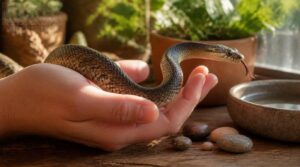
Curiosity has a rhythm you can spot right away. A snake in explore mode moves slow and smooth, no jerky lunges, with balanced body movement and steady weight distribution.
Watch for curious pause patterns—brief stops to check scent or heat—followed by fresh direction changes toward objects or your hand. That’s relaxed body language, not stress.
Loose, Comfortable Body Posture
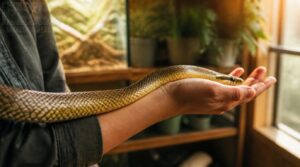
Think of a garden hose left in the sun, not one coiled tight and ready to strike. That’s a loose, comfortable body posture, and it’s your green light for handling.
Check for:
- No tight coiling or bunching
- Smooth muscle tone, not rigid
- Body drapes naturally over your hand
- No tail-shaking or hiding
- Weight settles evenly, not braced
Support your snake’s body fully, keeping your stance relaxed, shoulders down, spine neutral.
If you’re still choosing a first snake, picking a naturally calm species makes gentle handling like this much easier to master—here’s a helpful guide to snakes with the best temperament.
Clear, Visually Responsive Eyes

Eyes tell you more than you’d think. Corneal clarity should be glossy, not hazy, and pupils need to react when light shifts.
Cloudy eyes with a blue sheen? That’s the shedding cycle talking, not readiness.
Watch for steady tracking, too. Sluggish response or dull tear film often signals your snake isn’t fully alert yet, so wait.
No Defensive Warning Signals

A hissing, coiled snake is telling you something loud and clear: back off. Defensive posturing—hissing, rigid coiling, a pulled-back neck—means stress, not readiness.
Signs your snake wants to be left alone:
- Hissing or striking position
- Tightly coiled body
- Rapid, jerky movements
- Puffed-up appearance
- Head tucked defensively
Respect these cues. Early warning detection keeps both of you safe and builds real trust.
When Not to Handle Your Snake

Timing matters, but so does reading the moment in front of you. Even during a perfect activity window, your snake can give you clear signs that today just isn’t the day. Here are the situations where it’s best to close the enclosure and try again later.
Sleeping or Deeply Resting
Your snake curled up tight with slow tongue flicks and fixed pupils? Let it be. Sleep cycle patterns mean deeper rest brings slower breathing and dulled reflexes, so waking it risks a startled strike. Handling during rest is one of three critical periods to skip entirely.
| Sign | Resting | Alert |
|---|---|---|
| Tongue flicks | Slow | Steady |
| Pupils | Fixed | Responsive |
| Response | Sluggish | Curious |
Defensive or Avoidant Behavior
A resting snake is one thing, but a snake actively telling you "not now" is another. Watch for head-hiding, tail-shaking, or a coiled defensive posture—these stress signs in snakes mean back off.
Body language interpretation matters here: forcing contact when they show you they don’t want to be held teaches distrust, not calm. Respect the signal, try again later.
Visible Stress or Illness
Beyond posture, look for heavy breathing, gaping, or clicking sounds—signs of respiratory illness that mean skip handling entirely. Unexplained weight loss, dull skin, or stuck shed also signal your snake isn’t well.
A stressed snake often shows rigid coiling or defensive hissing. When in doubt, watch first, handle later—your snake’s health always comes before your handling schedule.
Unsuitable Room Temperatures
Room temperature affects handling as much as timing does. Snakes are cold-blooded, so temperature regulation depends entirely on their surroundings—the ideal room range sits between 70–75°F.
Watch for temperature stress signs like sluggishness or restlessness. Avoid drafts, radiators, and direct sunlight; these heat sources create unsafe hot spots. Let your snake’s enclosure temperature guide handling frequency—comfort first, always.
Sudden Lethargy or Weakness
Notice your snake dragging its body instead of gliding, or struggling to right itself? That’s sudden lethargy, and it’s not something to power through.
Weakness causes range from low blood sugar to dehydration to infection. Pair lethargy with head tilting, breathing trouble, or refusal to move, and skip handling—vet check reptiles showing these stress signals fast, rather than waiting to see if energy returns.
Wait After Feeding Before Handling

Feeding time changes everything about how your snake tolerates being handled. Its body is busy digesting, so any jostling can cause real problems. Here’s what you need to know before you reach back into that enclosure.
Allow 24–72 Hours
Would you pick up a full-course dinner guest mid-bite? Give your snake a feeding recovery period of 24–72 hours before handling—digestive rest time matters.
That post-meal waiting window prevents regurgitation and lets species digestion times play out naturally:
- Small meals: closer to 24 hours
- Average meals: 48 hours
- Large meals: 72 hours
- Any doubt: wait longer
Quality beats quantity here.
Consider Meal Size
Size matters more than the clock here. A pinky-sized snack clears out fast, but a rat sized for an adult ball python sits heavy, raising regurgitation risk if you handle too soon.
| Meal Size | Extra Caution |
|---|---|
| Small | Shorter wait |
| Average | Standard 48 hrs |
| Large (40%+ body mass) | Extend past 72 hrs |
Follow Species-specific Digestion Times
Not every snake digests on the same clock, so your species digestion pace matters as much as meal size. Ambush hunters like ball pythons run a longer metabolic digestion pause than active foragers.
Give your snake its full 24–72 hours after feeding to prevent regurgitation, then check activity before resuming your once or twice weekly touch sessions.
Prevent Stress and Regurgitation
Picking up your snake too soon after a meal is basically asking for trouble. Digestion demands blood flow and stillness, so handling during that window stirs up stress hormones and can trigger regurgitation.
Watch for restlessness or hiding, then hold off. Sticking to that 24–48 hours after feeding window (up to 72 for bigger meals) keeps digestion smooth and your snake calm.
Resume After Normal Activity
So how do you know it’s safe to try again? Watch your snake, not the calendar. Once digestion wraps up, you’ll see normal exploring, steady tongue flicks, and relaxed movement return.
Good signs to resume:
- Alert, curious body language
- No bulge or visible lump
- Regular basking or hiding patterns
Wash your hands, support the body fully, and check your environment before lifting.
Pause Handling During Shedding

Shedding throws a wrench into your usual handling routine, and that’s okay. Your snake’s body is busy working on something important, so hands-off is the rule here. Here’s what to watch for and how to handle the whole process from start to finish.
Recognize The Blue Phase
Ever notice your snake’s eyes turning milky blue overnight? That’s the blue phase, your snake’s built-in warning sign. Fluid builds between old and new skin, clouding vision for days. Scales dull too.
Your snake feels vulnerable, jumpy, even ornery—so avoid handling your snake during shedding cycles until those eyes clear back up.
Wait Until Shedding Finishes
Patience pays off here. Don’t touch your snake again until shedding finishes completely—check for one whole piece, clear eyes, no stuck skin near toes or tail tip.
Fresh skin underneath stays sensitive and vulnerable for a bit, so complete shed confirmation matters before you resume contact. Corn snakes may be ready in 24 hours; boas often need 48 or more.
Maintain Appropriate Enclosure Humidity
That waiting game gets a lot easier with the right humidity, since dry air is often why sheds stall out in the first place.
Keep tropical species around 60-80% using a humid hide, moisture-rich substrate, misting, and balanced ventilation. Check levels with a hygrometer at snake level, not the enclosure top.
Check for Retained Skin
Good humidity gets skin moving, but don’t call the shed done yet. Do a full skin inspection once your snake looks clear-eyed again.
Check the tail tip and around the mouth for retained patches—dull, wrinkled, or discolored spots. Run a quick scale examination down the spine, too, since ridges there mean leftover skin.
Resume With Gentle Sessions
Skin’s clear, patches are gone—now ease back in. Give your snake 48 hours past full shed before that first gentle session.
Watch tongue flicks, body posture, and eyes for readiness. Start short sessions, five minutes max, then build trust with gradual increases—two extra minutes each time, up to 20, three sessions weekly, until routine handling frequency resumes naturally.
Let New Snakes Acclimate First
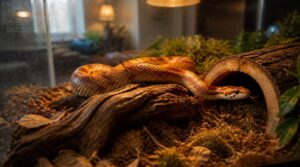
Bringing home a new snake is exciting, but patience matters more than enthusiasm here. Your new pal needs quiet time to settle in before hands start reaching into its space. Here’s what that settling-in period should actually look like.
Allow One to Two Weeks
That new snake needs a full acclimation period before you even think about opening the lid, seven days minimum, two weeks if you want real stress reduction. Rushing the handling delay disrupts enclosure stability and can stall feeding altogether.
Let it settle, watch it explore, and hold off touching until it’s truly ready.
Confirm Normal Feeding Behavior
Appetite tells you more than any calendar. Watch for any calendar. Watch for steady tongue flicking frequency and real prey tracking behavior at feeding time, that’s healthy hunger cue recognition kicking in. Once your snake’s eaten, expect quieter post-feeding activity while digestion runs its course. Give it 24-48 hours before handling, and don’t touch a full belly, ever.
Minimize Early Enclosure Disturbances
Think of that first fortnight as quiet time, not playtime. Reduce enclosure openings to once daily, keep visual disturbances low, and watch body language like a conversation instead of testing patience.
- Steady warmth builds trust
- Fewer disturbances mean less stress
- Calm surroundings speed adjustment
- Patience now pays off later
Stable conditions matter more than affection right now.
Begin With Five-minute Sessions
Five minutes on the clock, that’s it. Keep that first session short and low-pressure, just enough to build trust without overwhelming your new snake. Start with once-weekly sessions, watching body language like a conversation.
| Snake Age | First Session |
|---|---|
| Juvenile | 5 min |
| Adult | 5 min |
Increase Handling Time Gradually
Once your snake controls that first five-minute round calmly, it’s time to level up. Increase handling time gradually, adding a few minutes each week while you watch your snake’s body language like a conversation.
- Steady tongue flicks show curiosity, not fear
- Loose posture means comfort, not tension
- Juvenile snake care stays short and frequent
- Adult snake care allows longer weekly sessions
- Stress signs mean scale back immediately
Set Safe Handling Frequency

Timing your sessions right is only half the job, because how often you handle your snake matters just as much. Too much contact stresses your snake out, while too little makes them flighty and harder to work with. Here’s how to find that sweet spot for frequency and length.
Handle One to Three Times
Most snakes settle into a rhythm with one to three handling days each week, and that range covers nearly every pet snake out there. Space sessions 48 to 72 hours apart so rest days actually mean something.
Watch tongue flicks and body tone to guide frequency. A simple log tracking handling days and behavior builds a consistent, stress-free routine over time.
Keep Sessions Under 20 Minutes
Once you’ve settled on how many days a week, the clock matters just as much. Cap every session at 20 minutes to protect snake comfort and avoid a cold room chilling your pet before it’s back home.
- Set a timer alert
- Watch for early stress
- Stop early if needed
- Track session length
- Return snake promptly
Shorten Sessions for Juveniles
Baby snakes aren’t mini adults, so treat them that way. Juveniles need brief, frequent contact: 2-4 times weekly, just 5-10 minutes each. Think of it like short probation check-ins rather than a long sentence—small, steady progress beats one long stretch. This builds trust gradually, reduces stress, and keeps handling calm for snakes and beginners alike.
For a deeper breakdown of ideal schedules by age and species, this guide to snake handling frequency walks you through pacing sessions as your snake matures.
| Age Group | Session Length |
|---|---|
| Juveniles | 5-10 min, 2-4x/week |
| Adults | Up to 20 min, 1-3x/week |
| New arrivals | Wait 1-2 weeks first |
Avoid Excessive Daily Handling
More isn’t better here. Daily interaction can stress even docile snakes, so frequency limits matter as much as session length.
Skip handling during two windows: 24-72 hours after feeding, and through shedding cycles when vision’s impaired. A consistent weekly schedule—one focused 10-15 minute session—beats scattered daily contact and helps prevent handling fatigue for you both.
Adjust for Individual Temperament
Because no two snakes read the same rulebook, watch snake temperament closely. Track a Tongue Flick Baseline, posture, and defensive signs.
- Bold snakes: 2-3x weekly
- Shy ones: once weekly
- Adjust Session Length per stress cues
- Log scores on a Temperament Scoring Scale
- Review Monthly Progress Tracking trends
This Frequency Flexibility Guide approach reduces stress and builds trust gradually.
Adjust Timing by Snake Species

Not every snake runs on the same clock, and that’s the piece a lot of new owners miss. Your corn snake wants sunshine while your ball python is just waking up for the night shift. Let’s break down what each species actually prefers.
Corn Snake Daytime Handling
Corn snakes are creatures of habit, and daytime sessions work best once they’re truly awake. Check the morning temperature range—aim for 70–75°F—then observe your pet’s body language: steady tongue flicks and clear eyes signal readiness.
Wash your hands first, use gentle hand support, and keep it short. Even a five-minute session builds trust without overwhelming your corn snake.
Ball Python Evening Handling
Once the sun dips, your ball python wakes right up. Aim for a 7 PM to midnight window when it’s already exploring, not resting.
Check for calm tongue flicks, watch for shedding cues, and skip handling within 24-72 hours of feeding—digestive rest matters more than convenience.
Boa Constrictor Evening Handling
Your boa is a night owl by nature, so evening sessions fit its Boa Activity Rhythms best. Handle between 7 PM and midnight, keeping the room 70–75°F for comfort and digestion. Watch for smooth movement and steady tongue flicks—true readiness signs.
Keep sessions under 20 minutes, skip handling within 24-72 hours after feeding, and stick to a consistent routine for lasting trust.
Garter Snake Daylight Handling
Sunbathers at heart, garter snakes want their sessions between 9 AM and 5 PM, matching their daytime alertness. Morning Light Exposure helps them wake up properly.
Watch for shade seeking behavior in overly hot rooms—stick to a 70–75°F comfort range. Keep humidity control daytime steady, sessions under 10 minutes, and always support their fast, wiggly bodies fully.
Respect Individual Activity Routines
Ever notice your snake ignoring the "textbook" schedule? That’s normal. General species guidelines are a starting point, not gospel, so observe personal rhythms and adjust.
Monitor daily activity for a week or two. Some snakes shift their active hours slightly, and that’s fine, tailor interaction timing to what you actually see, not what the book says.
Handle Safely and Finish Promptly

You’ve picked the right time and your snake’s giving you the green light, so now it’s all about technique. A good session isn’t just about picking your snake up, it’s about how you handle every second from start to finish. Here’s what to keep in mind so the whole thing stays calm, safe, and quick.
Wash Hands Before Handling
Before you even open the enclosure, wash your hands with soap and water for a full 20 seconds. This simple hygiene practice protects both of you: it stops salmonella from reaching your snake, and prevents cross contamination between what you’ve touched and its skin.
Good hand hygiene for reptiles isn’t optional—it’s the foundation of every safe handling session.
Approach Slowly and Calmly
Clean hands, calm mind. Now move toward the enclosure like you’ve got nowhere else to be—slow, deliberate movements read as safe, while quick ones scream predator.
- Approach from the side, not overhead
- Keep a low, even voice
- Pause at a safe distance first
- Watch for loose tongue flicks before touching
This builds trust and cuts stress before contact even starts.
Support The Entire Body
Once your snake feels settled in your grip, let it flow across both hands instead of dangling from one point. Support your snake’s body at mid-body, hips, and tail base so weight distributes evenly.
| Common Mistake | Better Approach |
|---|---|
| Gripping the tail | Cradle mid-body |
| One-hand hold | Both hands, full support |
Let your snake move over you naturally—that’s real trust.
Stop When Stress Appears
Full support builds trust, but even a calm hold can turn tense fast. Watch your snake’s body language for stress signals: hissing, rigid coiling, or a sudden defensive posture.
- Hissing or striking
- Rapid recoil
- Muscle tension
- Repeated escape attempts
The moment tension appears, pause, breathe, and give space before deciding to resume or end the session.
Return Before Your Snake Chills
Because snakes can’t shiver to warm up, every minute outside the enclosure is a minute their body temp drops. Watch your snake’s body language for slower tongue flicks, an early chill sign, then run a quick surface temp check. Follow this rapid return protocol:
| Sign | Action | Why |
|---|---|---|
| Cool touch | Return now | Prevents heat loss |
| Slow flicks | End session | Digestion risk |
| 15+ min | Return snake | Temp recovery time |
Frequently Asked Questions (FAQs)
When should you not handle a snake?
Skip handling after feeding and during digestion, during shedding periods, or when you spot signs of stress or illness. Also hold off with a new arrival still settling in, or any snake showing defensive posturing like hissing or rigid coiling.
What month are snakes least active?
January usually wins the prize for least active month, thanks to winter brumation slowing metabolism to a crawl. Cold climate dormancy varies by region, so check local temperature drops before assuming your snake’s just being lazy.
Which smell do snakes hate?
Cinnamon and clove top the list of scents snakes dislike, along with garlic, vinegar, and citrus. These are outdoor deterrents, though, not handling tools, so wash your hands before sessions to avoid confusing your snake.
Do snakes enjoy being handled?
Not the way dogs do. Lacking a limbic system, they can’t feel affection, only tolerance built through habit. Watching your snake’s body language—loose coils versus tight defensive posture—tells you comfort from mere endurance, and that difference matters for trust building.
Can you handle a snake right after purchase?
Hold off. Give your new snake an acclimation period of one to two weeks before handling. This settling time reduces stress, helps with normal feeding, and lets you start watching your snake’s body language for real readiness cues.
Does handling frequency change with the seasons?
Yes, big time. Winter rest and brumation slow digestion and movement, so cut back to one focused 10–15 minute session per week. Summer activity and better temperature tolerance make handling easier and more predictable.
What temperature is too cold for handling?
Chilly conditions cause real trouble. Keep ambient temps above 65°F and surface heat above 75°F. Below that, cold stress signs like hissing and flattening appear, since species tolerance varies—garter snakes handle 60°F fine, but boas need warmth above 72°F.
Should you handle a snake before or after cleaning its enclosure?
Both, really. Handle before cleaning only to move your snake to a secure temporary enclosure, then wait for full drying before returning it. Always wash your hands, keep the transfer brief, and restore the familiar layout for less stress.
Conclusion
Timing your sessions is like reading tide charts before you swim, get it right and everything flows easier, get it wrong and you’ll fight a strong, stubborn current.
The best time to handle snake companions isn’t a fixed hour, it’s a window that opens when your snake feels alert, calm, and genuinely curious. Watch its signals, respect its rhythm, and trust builds naturally. Master that window, and handling stops feeling risky, it becomes second nature.