This site is supported by our readers. We may earn a commission, at no cost to you, if you purchase through links.
You notice your snake’s gums look a shade darker than usual, and your stomach drops a little. Most owners land here after a routine shed check turns up something that doesn’t sit right, and the two most likely explanations, mouth rot vs normal shedding, can look surprisingly similar at first glance. One involves harmless, temporary tissue changes; the other, a bacterial infection that worsens fast without treatment. Knowing which one you’re facing changes everything about your next move, from waiting it out to calling your vet tonight. Let’s break down exactly what separates a healthy shed from a genuine emergency.
Table Of Contents
- Key Takeaways
- Mouth Rot Vs Normal Shedding: Key Differences
- Normal Shedding Around a Snake’s Mouth
- Mouth Rot Signs in Snakes
- Common Causes and Risk Factors
- How to Check Your Snake Safely
- What to Do for Each Condition
- When Mouth Symptoms Need a Veterinarian
- Frequently Asked Questions (FAQs)
- Does mouth rot go away?
- How to identify mouth rot?
- Can mouth rot spread?
- Is mouth rot a bacterial infection?
- Can mouth rot spread to other snakes nearby?
- Is mouth rot contagious to humans or pets?
- How long does mouth rot treatment usually take?
- Can mouth rot heal without antibiotics or medication?
- Does mouth rot come back after successful treatment?
- Conclusion
Key Takeaways
- Normal shedding shows clear saliva, pale pink gums, and mild appetite dips lasting only a few days, while mouth rot brings ropey discharge, red or purple gum tissue, and feeding refusal that stretches past ten days.
- Never peel stuck shed skin yourself, since tearing the delicate tissue underneath can invite a bacterial infection within just 24 hours.
- Mouth rot usually takes hold when husbandry slips—think unstable temperatures, poor humidity, dirty enclosures, or nutritional gaps—so steady care is your best prevention.
- Persistent swelling, foul odor, pus, bleeding, or breathing trouble are all signs to call a reptile veterinarian right away rather than waiting to see if things improve on their own.
Mouth Rot Vs Normal Shedding: Key Differences
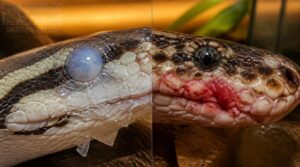
When your snake starts shedding, it’s natural to watch every little change around its mouth with a bit of worry. The good news is that normal shedding and mouth rot leave very different clues, once you know where to look.
If you’re ever unsure whether it’s just dry skin or something more serious, this guide to common corn snake health issues breaks down the warning signs to watch for.
Let’s break down the five key differences that will help you tell the two apart with confidence.
Appearance of Mouth Tissue
A quick peek in your snake’s mouth tells a story, if you know what to read. Healthy oral mucosa looks smooth and slightly glossy; shedding skin appears thin and translucent. Mouth rot brings rough, leathery tissue with raised bumps.
| Normal Shedding | Mouth Rot |
|---|---|
| Smooth, moist | Rough, leathery |
| Translucent skin | Dark crusts |
| No pitting | Small depressions |
| Minimal swelling | Enlarged jaw |
Saliva, Pus, and Blood
Beyond tissue texture, your snake’s mouth tells you plenty through what’s flowing (or not) inside it. Clear, watery saliva signals health; thick, ropey saliva clinging to gums points toward mouth rot. Yellowish pus and blood-tinged fluid confirm active infection, not shedding.
| Sign | Normal | Mouth Rot |
|---|---|---|
| Saliva | Clear, thin | Ropey, thick |
| Pus | Absent | Yellow-green |
| Blood | None | Streaks present |
Gum Color Changes
Fluid isn’t the only tell — color matters too. Healthy oral mucosa stays a uniform light pink, while mouth rot turns gums red, crimson, or purple from inflammation.
| Gum Color | Likely Meaning |
|---|---|
| Light pink | Healthy circulation |
| Yellowing | Low humidity, bile buildup |
| Red/purple | Active infection |
Brown staining often just means substrate residue, not disease.
Appetite and Activity
Color tells part of the story, but behavior fills in the rest. Two to four days before shedding, snakes often eat more eagerly — then pause 1-3 days as shedding begins.
Mouth rot looks different: feeding refusal past ten days and activity dropping below two hours daily, alongside real weight loss, signal infection rather than a normal cycle.
Symptom Duration and Progression
Since timing tells you more than any single symptom, track how things change day by day. Normal shed wraps up in 5 to 7 days, uniform and steady. Mouth rot behaves differently: lesion expansion rate runs 2-3mm daily, gum redness can appear within 24 hours, and untreated cases hit chronic phase onset by day 30.
| Sign | Shed | Mouth Rot |
|---|---|---|
| Saliva thickening timeline | None | Day 3-5 |
| Swelling progression | Minimal | Doubles in 48hrs |
| Recovery duration average | 7-10 days | 14-21 days |
Normal Shedding Around a Snake’s Mouth

Once you know what mouth rot looks like, it helps just as much to know what a healthy shed looks like, so you’re not second-guessing every little change around your snake’s face.
Normal shedding follows a fairly predictable pattern, and once you’ve seen it a few times, you’ll start to recognize it with confidence.
Here’s what to expect when everything’s going the way it should.
Loose, Translucent Skin
That papery, see-through skin around your snake’s mouth isn’t a warning sign, it’s biology at work. Enzymes loosen the old layer, mucus lubricates detachment, and skin holds up to 15% of body water during the cycle. Good hydration keeps that layer flexible; skin elasticity depends on it.
If shedding seems stuck or delayed, dialing in proper humidity and temperature levels often makes all the difference.
Give reptile habitat humidity attention, and normal shed proceeds smoothly, unlike mouth rot’s raw lesions.
Clean Lips and Gums
A healthy mouth should look almost boring: pink gums, smooth lips, nothing dramatic. Gentle lip cleaning with a soft, lint-free cloth and lukewarm water keeps oral mucosa free of debris without irritation.
Good signs include:
- Firm, pink gum tissue
- No crusting near the jaw
- Smooth, symmetrical lips
Occasional chlorhexidine solution use (diluted 1:10) helps too, alongside steady oral hydration.
No Discharge or Swelling
What’s absent tells you as much as what’s present. During a routine shed, you shouldn’t see any fluid weeping from the lips, jaw corners, or nostrils.
No swelling, clear saliva, and healthy gums mean the shedding process is running smoothly, not tipping toward a reptile mouth infection. Keep monitoring reptile health daily, and confirm the temperature gradient helps normal breathing throughout the cycle.
Brief Pre-Shed Appetite Changes
Ever notice your snake suddenly snubbing its favorite mouse? A brief appetite dip 24 to 48 hours before shedding is normal, lasting one to three days. You may see less interest in food, a shift toward softer prey, and slightly increased water intake. Feeding frequency naturally drops for a feeding or two. This isn’t loss of appetite from illness, it’s just reptile shedding prep.
Normal Post-Shed Recovery
Recovery follows a fairly predictable rhythm. Your snake should seek out water within a day, with appetite return by day three and full activity resuming within the week.
Watch for weight stabilization and smooth, rehydrated skin, no cracking, no lingering dullness. Steady reptile behavior and normal tongue-flicking are reassuring signs that reptile health monitoring can ease up.
Mouth Rot Signs in Snakes
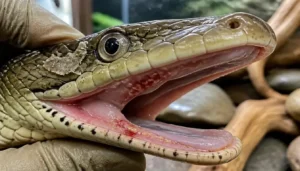
Once you know what healthy shedding looks like, spotting mouth rot becomes a lot easier, since the two conditions rarely look alike up close.
Mouth rot often announces itself through a handful of clear warning signs, each one worth checking for on its own.
Let’s walk through what you should be watching for in your snake’s mouth, lips, and jaw.
Red or Purple Gums
When gum color shifts from your snake’s normal pale pink toward deep red or purple, tissue tone is telling you something. Healthy gums stay uniform, never mottled or dark.
- Bright red mottling
- Purple or crimson patches
- Color worsening over days
Track this progression daily. Darkening gums signal possible stomatitis and warrant reptile veterinary consultation before lesions develop.
Thick, Ropey Saliva
Once gum color raises a flag, saliva often confirms it. Healthy saliva flows clear and thin; mouth rot thickens it past 100 centipoise, stretching into visible strands.
Try a simple saliva viscosity test: does a drop stream or stubbornly pool? Watch for amber color, sour odor, or gritty debris—these signal active oral mucositis and warrant veterinary evaluation, not home remedies.
Crusts, Pus, or Bleeding
Past saliva changes, look closer at the tissue itself. Crust color tells its own story: yellowish crusts point to dried pus, while brown or black crusts mean dried blood. Firmly attached crusts that reveal a red, moist base underneath signal active oral infection, not healing. Any bleeding pattern or foul-smelling pus warrants prompt veterinary assessment.
Swollen Lips and Jaw
Crusted lesions often bring lip swelling along for the ride, and this deserves its own look. Bacterial swelling feels warm, doubling lip thickness within 48 hours, while fungal cases produce soft, spongy tissue.
- Jaw misalignment or lateral deviation
- Fluid-filled (fluctuant) vs. firm swelling
- Foul odor detectable nearby
- Restricted jaw opening
- Measure with a ruler; ask your veterinary expert
Refusal to Eat
An empty food bowl tells its own story. A day or two of skipped meals during shedding is normal, but refusal lasting beyond 14 days points toward mouth rot, especially with painful lesions making feeding unbearable.
Stress-induced anorexia, brumation, or environmental triggers can also cause loss of appetite, so track weight weekly to catch true refusal early.
Common Causes and Risk Factors

Mouth rot rarely shows up out of nowhere; it usually follows a string of small setbacks in your snake’s daily care. Understanding what tips the scales toward infection helps you catch trouble before it starts, rather than after you’re already treating it.
Here’s what usually puts snakes at risk, so you know exactly where to focus your attention.
Poor Temperature or Humidity
Think of your snake’s tank as its whole world: get the thermal gradient wrong, and everything else suffers. Cleo’s setup (85°F warm, 70°F cool) works well, but swings or humidity spikes above 70% invite trouble.
- Temperature drops below 70°F delay shedding
- Swings over 8°F disrupt rhythm
- Humidity below 30% cracks skin
- Humidity above 80% breeds bacteria
- Unstable ranges weaken immunity
A stable environment matters more than getting everything just right.
Retained Shed and Injuries
When shed skin won’t budge, resist the urge to peel it—forced removal tears delicate mucosa, inviting infection risk.
| Risk | Effect |
|---|---|
| Retained shed | Jaw restriction, reduced gape |
| Torn tissue | Bacterial colonization within 24 hrs |
Watch for reduced tongue-flicking, a pain behavior indicator worth noting during handling.
Dirty Enclosure Conditions
A messy enclosure does more damage than most owners realize. Damp substrate left in place for more than 48 hours breeds bacteria and fungi tied directly to oral infection.
Fecal removal frequency matters too—waste sitting past 12 hours releases ammonia that irritates gum tissue. Combine that with poor ventilation improvement, standing water, and skipped enclosure disinfection routine, and you’ve built the perfect setup for mouth rot.
Nutritional Deficiencies
Can a diet cause mouth rot? Absolutely—nutritional gaps weaken oral tissue from the inside out.
- Low Vitamin A dries and cracks mucosa
- Poor calcium balance slows healing
- Insufficient protein delays repair
- Missing D3 supplementation softens jawbone
- Off mineral ratios trap bacteria
Skimping on calcium powder or varied prey invites trouble—reptile nutrition and steady weight monitoring matter here.
Stress and Weakened Immunity
Stress hits harder than most owners realize—cortisol spikes can suppress mucosal antibodies by 40%, leaving mouth tissue defenseless. Studies show stressed snakes develop mouth rot up to 4.2 times faster, with delayed wound healing and compromised gut barriers letting pathogens spread.
Reduce handling, add hiding spots and enrichment, and maintain quarantine for new snakes to protect your reptile’s immune system.
How to Check Your Snake Safely
Once you know what you’re looking for, checking your snake becomes a calm, methodical process rather than a stressful guessing game.
You don’t need special tools or veterinary training to spot early warning signs, just a bit of patience and a gentle approach.
Here’s how to give your snake a thorough at-home check without causing unnecessary stress.
Observe Before Handling

Before your hands ever touch your snake, let your eyes do the first round of work. Watch quietly from outside the enclosure for a few minutes, noting tongue flicks, posture, and general alertness.
If you’re still building confidence reading these cues, this guide to safe snake species for handling can help you gauge what calm, ready behavior looks like before you begin.
- Calm, steady tongue flicking with no hesitation
- Relaxed body resting near a hide, not pressed into a corner
- Even breathing without gaping or wheezing
A gentle approach now prevents unnecessary stress later.
Inspect Lips Without Forcing
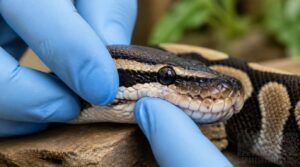
Once your snake seems settled, move to a gentle lip examination under bright, shadow-free light. Use light pressure with a gloved fingertip along the lip margin, checking for smooth oral mucosa versus crusty or loose sloughing skin in mouth. This non-invasive inspection should never involve prying the jaw open.
If your snake resists, pause—stress-free handling matters more than finishing the check.
Compare Both Jaw Sides
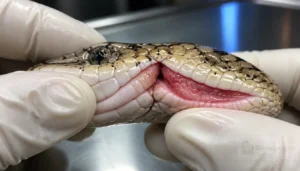
With lips checked, a jaw symmetry check comes next: gently compare both sides for swelling, color, and texture. Healthy sides stay flush and pale pink; mouth rot shows one side redder, spongier, or crusty with discharge.
Any one-sided warmth, pus, or ropey texture near the oral mucosa warrants a veterinary consultation rather than a wait-and-see approach.
Track Weight and Feeding

Numbers tell you what eyes might miss. Weigh weekly on a gram-accurate scale, same day and time, logging weight alongside temperature and recent feeds.
A 5% loss over two weeks signals trouble; healthy adults vary under 3%. Watch appetite, droppings, and urates closely—refused meals or skipped feedings often precede visible mouth rot symptoms by days.
Photograph Changes Daily

Since eyes miss gradual change, let your camera catch it. Snap the mouth daily at the same hour, same 5000K lighting, same tripod angle and manual focus, so subtle differences stand out clearly.
Name files by date, back them up, and review weekly. Watch for sloughing skin versus a stubborn scab—photos reveal mucosal healing progress that memory simply can’t.
What to Do for Each Condition
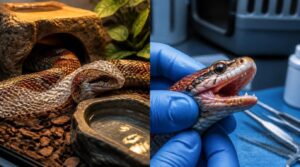
Once you’ve figured out whether you’re looking at ordinary shedding or something more concerning, the next step is knowing how to respond, and that response looks very different depending on which one you’re dealing with.
Some situations call for a little patience and a few small tank adjustments, while others call for a vet visit sooner rather than later.
Here’s how to handle each condition properly, one step at a time.
Support a Healthy Shed
Think of a good shed as your snake’s own renewal cycle, and your job is simply to set the stage for it. Keep the temperature gradient steady, offer enrichment like branches, and stock hiding spots on both ends.
- Stable warm/cool zones
- Rough climbing surfaces
- Calm, low-stress hides
- Consistent feeding schedule with calcium dusting
Correct Humidity and Hydration
When shedding stalls, humidity is usually the culprit, so aim for 55-70% relative humidity using a calibrated hygrometer at mid-height. Place the water dish on the cool side, refresh it daily, and keep substrate moisture balanced enough to prevent scale rot.
Mist during dry spells, and make sure the temperature gradient and hides support proper hydration throughout the cycle.
Never Peel Attached Skin
That patch of stuck skin around your snake’s mouth isn’t stubborn, it’s protective. Peeling it early tears the mucosal lining and invites infection within a day.
Stuck skin isn’t stubborn, it’s protective—peel it early and you tear the lining, inviting infection within a day
Let enzymes finish dissolving the basal layer naturally—usually 7-10 days.
- Reduce stress with proper hides
- Maintain temperature gradients
- Wait for edges to loosen on their own
If skin lingers past 14 days, call your vet.
Avoid Home Mouth Treatments
Reaching for the medicine cabinet feels productive, but it rarely helps. Over-the-counter antibiotics breed resistance without a proper diagnosis, while bleach or alcohol rinses cause chemical burns and mucosal damage within minutes.
Misdiagnosis without an exam often mistakes shedding for infection.
Skip DIY treatments entirely—reduce stress, maintain your temperature gradient, offer hiding spots, and let a reptile veterinarian guide actual treatment.
Arrange Prompt Veterinary Care
Once you suspect active disease, call a reptile-experienced vet right away, and describe symptoms, feeding history, and enclosure conditions clearly.
Transport your snake in a secure, dim, warm container, minimizing handling.
Share intake details honestly—duration, appearance, discharge.
The vet may prescribe treatment, pain relief, or imaging, then outline a recovery plan suited to your snake’s needs.
When Mouth Symptoms Need a Veterinarian
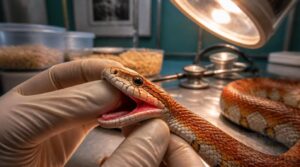
Most mild cases resolve with better husbandry, but some signs mean it’s time to stop guessing and call your vet. Knowing which symptoms cross that line can save your snake from a much longer recovery. Here’s what should prompt a same-week appointment rather than a wait-and-see approach.
Persistent Swelling or Redness
When redness lingers past five to seven days, that’s your body telling you something bacteria or fungi are winning. Track duration honestly: mild oral lesions from shedding resolve fast, while true mucosal inflammation deepens.
Watch for rising warmth or firmness, too. If home care shows no real improvement within three days, arrange veterinary consultation, since untreated swelling risks jawbone involvement.
Pus, Blood, or Odor
Beyond swelling, your nose and eyes catch what words can’t: thick, ropey discharge, often yellow-green, signals true stomatitis rather than sloughing skin in the mouth.
Fresh blood clots quickly; older stains turn dark and sticky. Odor matters too—sulfide compounds create that sour, metallic smell preceding visible pus in most cases. Any combination warrants a same-week veterinary visit, since delayed care lets infection dig deeper.
Worsening Appetite or Lethargy
A smell or stain tells you something’s wrong today, but appetite and energy tell you how long it’s been brewing. Healthy pre-shed appetite dips briefly, then rebounds.
Feeding frequency decline toward zero over five days, paired with sluggish movement, points to infection, not sloughing. Track these patterns daily; a reptile veterinary consultation is warranted once lethargy outlasts a normal shed cycle.
Jaw Damage or Ulcers
Lethargy tells you time has passed; a jaw that won’t close right tells you damage has begun. Watch for swelling above normal contour, or a mouth that won’t open past 45 degrees.
Sores 2-8mm wide, raised borders, or bleeding suggest infectious or necrotic ulcers, not shed. Retained skin or sharp cage edges can cause trauma-induced lesions too. Either way, this needs veterinary eyes, not home care.
Breathing or Swallowing Trouble
When your snake breathes with its mouth open or wheezes on each inhale, don’t wait it out—that’s airway obstruction, not shedding.
- Gasping instead of resting comfortably
- Regurgitating meals within minutes
- Refusing food entirely, dropping weight fast
- Drooling because the mouth won’t close
Sloughing skin lodged near the glottis or swelling from infection both demand same-day veterinary care.
Frequently Asked Questions (FAQs)
Does mouth rot go away?
Like Achilles’ heel, mouth rot won’t heal on its own. It needs veterinary-directed care, since untreated infection progresses to deeper tissue damage, tooth loss, and jaw harm rather than resolving with time alone.
Dental plaque buildup can lead to similar oral health issues in reptiles as in mammals, making early intervention important. tooth decay prevention
How to identify mouth rot?
Check gum color, saliva texture, and swelling first. Watch for bright red or purple gums, ropey saliva, foul odor, or asymmetric swelling around the jaw, paired with appetite loss lasting beyond normal brumation cycles.
Can mouth rot spread?
Yes, direct contact, shared water dishes, and contaminated hands all spread it fast. Quarantine new snakes thirty days, disinfect tools between snakes, and wash hands thoroughly to keep your collection’s temperature gradient and hygiene routine protective.
Is mouth rot a bacterial infection?
Bacteria don’t send an RSVP before crashing your snake’s mouth. Yes, mouth rot is a bacterial infection, usually Aeromonas hydrophila, invading damaged oral mucosa and causing oral inflammation—confirmed through culture or PCR testing, then resolved with targeted antibiotics like enrofloxacin.
Can mouth rot spread to other snakes nearby?
Absolutely, through direct mouth contact, shared water bowls, and contaminated feeding tools, since Aeromonas survives on surfaces up to 72 hours. High population density speeds spread, so quarantine new snakes and disinfect enclosures, hides, and tongs regularly.
Is mouth rot contagious to humans or pets?
It’s rarely a snake-to-human "hiss-tory" repeat—transmission needs direct contact with pus or saliva. Risk rises with open cuts touching discharge, so gloves, handwashing, and separating pets from bedding keep everyone safe during treatment.
How long does mouth rot treatment usually take?
Most mild cases clear up within 10 to 14 days of antibiotics, with improvement by day five to seven. Severe infections needing surgery or a 21-day course may stretch recovery to 3–6 weeks before full healing.
Can mouth rot heal without antibiotics or medication?
Some mild cases do resolve on their own, especially with proper humidity and clean water, but true stomatitis with oral ulcers or pus rarely clears without antifungal medications and veterinary care—waiting risks jaw damage.
Does mouth rot come back after successful treatment?
Yes, relapse risk stays real: studies show roughly 4-15% recurrence rates, often tied to cold temperatures, low humidity, or retained shed.
Steady temperature gradients, weekly checks, and reduced stress usually extend remission well past six months.
Conclusion
Think of your snake’s mouth as a window, one glance tells you whether it’s cloudy with worry or clear with health. Once you know the difference between mouth rot vs normal shedding, that window stops feeling foggy.
Loose skin and quiet gums mean nature’s doing its job. Redness, pus, or refusal to eat mean it’s time to call for help. Trust what you’ve learned, watch closely, and act early. Your vigilance is your snake’s best defense.